


Key takeaways
What this article covers, in order:
- ITC ਕਲੇਮ ਦੀ ਬੁਨਿਆਦ: books ਨਹੀਂ, ਕਾਨੂੰਨੀ ਸਬੂਤ
- ਕਿਹੜੀਆਂ ਸ਼ਰਤਾਂ ਪੂਰੀਆਂ ਹੋਣ ਤੇ ਹੀ credit ਬਣਦਾ ਹੈ
- GSTR-2B, supplier filing ਅਤੇ ਤੁਹਾਡਾ purchase register ਇਕੋ ਗੱਲ ਨਹੀਂ
- Blocked credits: ਸਹੀ invoice ਹੋਵੇ ਤਾਂ ਵੀ ਹਮੇਸ਼ਾਂ credit ਨਹੀਂ ਮਿਲਦਾ
- Mixed supplies, exempt turnover ਅਤੇ reversals ਨੂੰ ਹਲਕੇ ਵਿੱਚ ਨਾ ਲਵੋ
- Table 4 ਨੂੰ ledger ਤੋਂ ਨਹੀਂ, classification ਤੋਂ ਭਰੋ
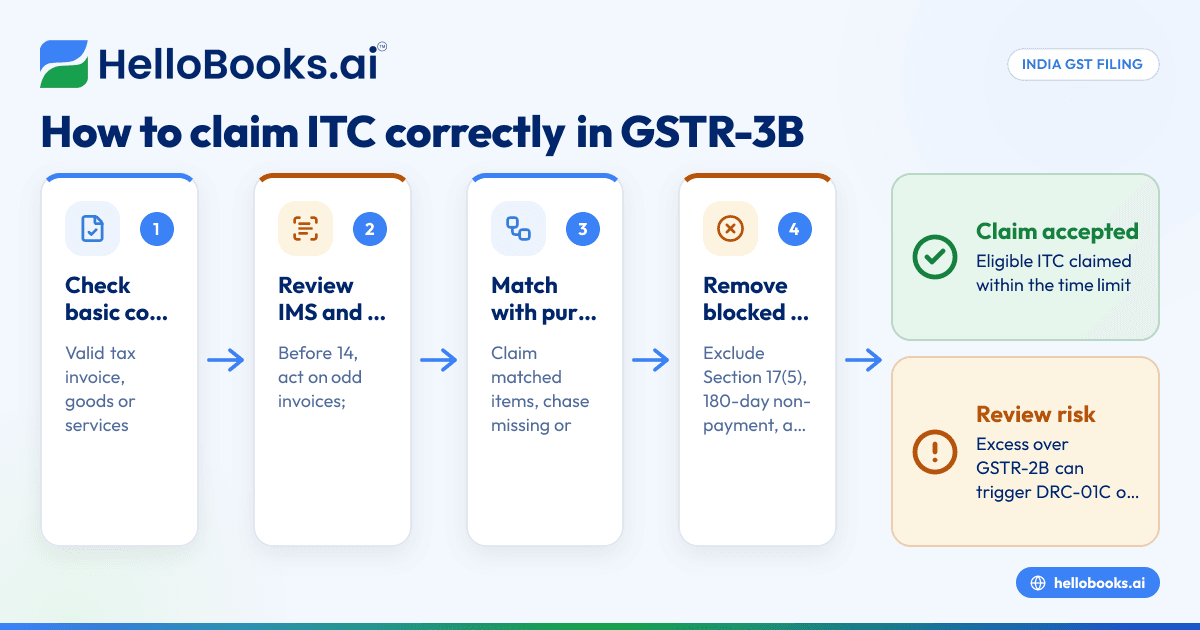
ਭਾਰਤ ਵਿੱਚ GSTR-3B ਵਿੱਚ input tax credit (ITC) ਸਹੀ ਤਰੀਕੇ ਨਾਲ ਕਲੇਮ ਕਰਨ ਦਾ ਛੋਟਾ ਜਵਾਬ ਇਹ ਹੈ: ਤੁਸੀਂ ਉਹੀ GST credit ਲਵੋ ਜੋ Central Goods and Services Tax Act, 2017 ਦੇ ਹਿਸਾਬ ਨਾਲ ਯੋਗ ਹੋਵੇ, ਜਿਸ ਲਈ ਤੁਹਾਡੇ ਕੋਲ ਵੈਧ tax invoice ਹੋਵੇ, supply ਅਸਲ ਵਿੱਚ ਮਿਲੀ ਹੋਵੇ, ਅਤੇ ਉਹ invoice GSTN ਦੇ GST portal ਉੱਤੇ ਤੁਹਾਡੀ GSTR-2B ਵਿੱਚ ਦਿਖ ਰਹੀ ਹੋਵੇ। ਫਿਰ blocked credits, reversals, reverse charge ਅਤੇ business-use restrictions ਕੱਟ ਕੇ ਹੀ GSTR-3B ਭਰੋ। ਮੌਜੂਦਾ ਨਿਯਮ, instructions ਅਤੇ figures CBIC ਅਤੇ GST portal ਉੱਤੇ published ਹੁੰਦੇ ਹਨ।
ITC ਕਲੇਮ ਦੀ ਬੁਨਿਆਦ: books ਨਹੀਂ, ਕਾਨੂੰਨੀ ਸਬੂਤ
ਕਈ ਵਪਾਰੀ ਸੋਚਦੇ ਹਨ ਕਿ purchase register ਵਿੱਚ ਜਿੰਨਾ GST ਦਿਖਦਾ ਹੈ, ਉਹ ਸਾਰਾ GSTR-3B ਵਿੱਚ ਲਿਆ ਜਾ ਸਕਦਾ ਹੈ। ਭਾਰਤ ਵਿੱਚ ਇਹ ਸੋਚ risk ਬਣ ਜਾਂਦੀ ਹੈ। GST law ਵਿੱਚ credit automatic ਹੱਕ ਨਹੀਂ; ਇਹ ਸ਼ਰਤਾਂ ਨਾਲ ਮਿਲਦਾ ਹੱਕ ਹੈ। ਇਸ ਲਈ ਜੇ ਤੁਹਾਡੀਆਂ books ₹, rupee ਜਾਂ INR ਵਿੱਚ ਕੁਝ ਹੋਰ ਦਿਖਾਉਣ, ਪਰ GST portal ਦੀ GSTR-2B ਕੁਝ ਹੋਰ, ਤਾਂ filing ਵੇਲੇ portal-side evidence ਵੱਧ ਮਹੱਤਵ ਰੱਖਦਾ ਹੈ।
Central Goods and Services Tax Act, 2017 ਦੀ Section 16 ITC ਦੀ eligibility ਦਾ ਆਧਾਰ ਹੈ, ਅਤੇ blocked credits ਲਈ Section 17 ਮਹੱਤਵਪੂਰਨ ਹੈ. ਇਨ੍ਹਾਂ ਧਾਰਾਵਾਂ ਦੀ ਤਾਜ਼ਾ wording ਅਤੇ related rules CBIC ਦੀ notifications, circulars ਅਤੇ GST portal documentation ਵਿੱਚ ਮਿਲਦੀ ਹੈ। ਇਸੀ ਕਰਕੇ ਸਹੀ ITC claim ਦਾ ਕੰਮ accounting ਤੋਂ ਜ਼ਿਆਦਾ compliance exercise ਬਣ ਜਾਂਦਾ ਹੈ।
ਇਹ ਵੀ ਯਾਦ ਰੱਖੋ ਕਿ GSTR-3B self-declared return ਹੈ, ਪਰ self-declared ਦਾ ਮਤਲਬ guesswork ਨਹੀਂ। ਜੇ claim books ਤੋਂ ਕੀਤਾ ਗਿਆ, ਪਰ supplier data, invoice details, place of supply, tax head split, ਜਾਂ business purpose support ਨਾ ਕਰੇ, ਤਾਂ later scrutiny ਵਿੱਚ ਮੁਸ਼ਕਲ ਆ ਸਕਦੀ ਹੈ।
ਕਿਹੜੀਆਂ ਸ਼ਰਤਾਂ ਪੂਰੀਆਂ ਹੋਣ ਤੇ ਹੀ credit ਬਣਦਾ ਹੈ
ITC ਕਲੇਮ ਕਰਨ ਤੋਂ ਪਹਿਲਾਂ ਆਮ ਤੌਰ ਤੇ ਇਹ ਗੱਲਾਂ ਸੱਚ ਹੋਣੀਆਂ ਚਾਹੀਦੀਆਂ ਹਨ:
- ਤੁਹਾਡੇ ਕੋਲ ਵੈਧ tax invoice ਜਾਂ debit note ਹੋਵੇ, ਜਿਸ ਵਿੱਚ supplier ਦਾ GSTIN ਅਤੇ ਤੁਹਾਡਾ GSTIN ਠੀਕ ਹੋਵੇ.
- Goods ਜਾਂ services ਅਸਲ ਵਿੱਚ ਮਿਲੀਆਂ ਹੋਣ.
- Invoice supplier ਵੱਲੋਂ report ਹੋ ਕੇ ਤੁਹਾਡੀ GSTR-2B ਵਿੱਚ reflect ਹੋਵੇ, ਜਿਵੇਂ GST law ਅਤੇ GSTN system design ਲਾਗੂ ਕਰਦੇ ਹਨ.
- Tax supplier side ਤੇ properly dealt with ਹੋਇਆ ਹੋਵੇ, ਕਿਉਂਕਿ law credit chain ਨੂੰ genuine tax payment ਨਾਲ ਜੋੜਦਾ ਹੈ.
- ਤੁਸੀਂ ITC ਨੂੰ ਸਹੀ period ਦੇ GSTR-3B ਵਿੱਚ report ਕਰੋ.
ਇੱਕ ਹੋਰ practical point payment discipline ਦਾ ਹੈ। ਕੁਝ ਹਾਲਤਾਂ ਵਿੱਚ supplier ਨੂੰ invoice value ਅਤੇ tax component ਦੀ payment ਨਾ ਹੋਵੇ ਤਾਂ reversal ਦੀ ਲੋੜ ਪੈ ਸਕਦੀ ਹੈ, ਜਿਸਦਾ current treatment CGST Act, CGST Rules, CBIC guidance ਅਤੇ GST portal instructions ਦੇ ਹਵਾਲੇ ਨਾਲ verify ਕਰਨਾ ਚਾਹੀਦਾ ਹੈ, ਕਿਉਂਕਿ operational interpretation facts ਉੱਤੇ ਨਿਰਭਰ ਕਰ ਸਕਦੀ ਹੈ।
ਸੇਵਾਵਾਂ ਅਤੇ goods ਵਿੱਚ receipt proof ਵੀ ਸੰਭਾਲੋ। Delivery challan, goods inward note, lorry receipt, e-way bill trail, work completion proof, email acceptance, agreement, bank payment trail—ਇਹ ਸਾਰੇ later defence ਵਿੱਚ ਕੰਮ ਆਉਂਦੇ ਹਨ। ਜੇ ਤੁਹਾਡਾ vendor Punjab, Delhi ਜਾਂ Maharashtra ਵਿੱਚ ਹੋਵੇ ਅਤੇ ਤੁਸੀਂ inter-state supply ਲੈ ਰਹੇ ਹੋ, ਤਾਂ IGST ਲਾਗੂ ਹੋਵੇਗਾ ਜਾਂ CGST+SGST, ਇਹ invoice ਤੋਂ ਹੀ ਨਹੀਂ, transaction facts ਤੋਂ ਵੀ ਸਾਬਤ ਹੁੰਦਾ ਹੈ।
GSTR-2B, supplier filing ਅਤੇ ਤੁਹਾਡਾ purchase register ਇਕੋ ਗੱਲ ਨਹੀਂ
GST portal ਤੁਹਾਡੇ purchase register ਨੂੰ ਸਿਰਫ਼ ਇਸ ਲਈ final truth ਨਹੀਂ ਮੰਨਦਾ ਕਿ ਉਹ ਤੁਹਾਡੀ book ਵਿੱਚ ਲਿਖਿਆ ਹੈ। Portal ecosystem supplier-side reporting ਨੂੰ ਵੀ ਦੇਖਦਾ ਹੈ। ਇਸ ਲਈ GSTR-2B ਮਹੱਤਵਪੂਰਨ ਬਣਦੀ ਹੈ। ਤੁਹਾਡੀ accounts team ਕਹੇ ਕਿ bill ਆ ਗਿਆ, stock inward ਹੋ ਗਿਆ, payment NEFT ਜਾਂ UPI ਨਾਲ ਹੋ ਗਈ—ਇਹ ਸਭ useful ਹੈ, ਪਰ ITC claim ਤਦ ਵੀ supplier compliance ਨਾਲ ਜੁੜਿਆ ਰਹਿੰਦਾ ਹੈ।
ਇਸਦਾ practical ਨਤੀਜਾ ਇਹ ਹੁੰਦਾ ਹੈ ਕਿ ਹਰ month ਜਾਂ tax period ਤੁਸੀਂ ਚਾਰ buckets ਵਿੱਚ bills ਵੇਖਦੇ ਹੋ:
- books ਵਿੱਚ ਵੀ ਹਨ ਅਤੇ GSTR-2B ਵਿੱਚ ਵੀ;
- books ਵਿੱਚ ਹਨ ਪਰ GSTR-2B ਵਿੱਚ ਨਹੀਂ;
- GSTR-2B ਵਿੱਚ ਹਨ ਪਰ books ਵਿੱਚ ਨਹੀਂ;
- ਦੋਵੇਂ ਵਿੱਚ ਹਨ ਪਰ values mismatch ਹਨ.
ਦੂਜਾ bucket ਸਭ ਤੋਂ dangerous ਹੁੰਦਾ ਹੈ, ਕਿਉਂਕਿ owner ਸਮਝਦਾ ਹੈ ਕਿ tax paid ਹੈ, ਇਸ ਲਈ ITC ਲੈ ਲਓ। ਪਰ portal view ਇਹ ਪੁੱਛੇਗਾ ਕਿ supplier ਨੇ report ਕੀਤਾ ਕਿੱਥੇ ਹੈ। ਤੀਜਾ bucket fraud ਜਾਂ error ਦਿਖਾ ਸਕਦਾ ਹੈ: ਕਿਸੇ ਨੇ ਗਲਤ GSTIN quote ਕੀਤਾ, duplicate invoice report ਹੋਈ, ਜਾਂ ਤੁਹਾਡੇ ਨਾਮ ਉੱਤੇ unrelated bill ਆ ਗਿਆ।
ਇਥੇ reconciliation ਸਿਰਫ਼ accountant ਦਾ back-office ਕੰਮ ਨਹੀਂ ਰਹਿੰਦਾ; ਇਹ cash-flow protection ਹੈ। ਜੇ ਤੁਸੀਂ ਹਰ month GSTR-2B ਨਾਲ purchase register ਮਿਲਾਉਂਦੇ ਹੋ, ਤਾਂ missing ITC jaldi ਪਤਾ ਲੱਗਦਾ ਹੈ। GST return filing workflow ਵਾਲਾ system ਇਸ ਲਈ useful ਬਣਦਾ ਹੈ ਕਿ books ਤੋਂ return ਬਣਾਉਣ ਤੋਂ ਪਹਿਲਾਂ 2A/2B mismatches ਦਿੱਸ ਜਾਂਦੀਆਂ ਹਨ। HelloBooks ਵਿੱਚ OCR ਨਾਲ supplier purchase bills capture ਹੋ ਜਾਣ, GSTR-2A/2B reconciliation ਨਾਲ missing invoices flag ਹੋ ਜਾਣ, ਅਤੇ ITC tracking ਇਕੋ screen ਤੇ ਆ ਜਾਵੇ, ਤਾਂ owner ਅਤੇ accountant ਦੋਵੇਂ ਇੱਕੋ dataset ਤੋਂ ਕੰਮ ਕਰਦੇ ਹਨ।
Blocked credits: ਸਹੀ invoice ਹੋਵੇ ਤਾਂ ਵੀ ਹਮੇਸ਼ਾਂ credit ਨਹੀਂ ਮਿਲਦਾ
ITC ਦੀ ਸਭ ਤੋਂ ਵੱਡੀ ਗਲਤੀ ਇਹ ਹੈ ਕਿ ਲੋਕ ਮੰਨ ਲੈਂਦੇ ਹਨ: GST ਲੱਗੀ ਹੈ, ਤਾਂ credit ਮਿਲੇਗਾ ਹੀ। ਭਾਰਤ ਵਿੱਚ Section 17(5) of the CGST Act ਇਸ ਧਾਰਨਾ ਨੂੰ ਸਿੱਧਾ ਤੋੜਦੀ ਹੈ। ਕੁਝ inward supplies ਉੱਤੇ credit blocked ਰਹਿੰਦਾ ਹੈ, ਭਾਵੇਂ invoice perfect ਹੋਵੇ ਅਤੇ supplier ਨੇ GST properly report ਕੀਤਾ ਹੋਵੇ।
ਆਮ business situations ਵਿੱਚ ਧਿਆਨ ਇਥੇ ਜਾਂਦਾ ਹੈ:
- passenger vehicles ਅਤੇ related expenses, subject to statutory exceptions;
- food, beverages, outdoor catering, beauty treatment, health services, cosmetic procedures, again subject to business-use or statutory exceptions;
- club, health, fitness membership;
- certain employee benefit related expenses;
- works contract and construction-related inward supplies in specified cases;
- personal consumption;
- lost, stolen, destroyed, written-off goods, gifts and free samples.
ਇਹ categories ਦਾ exact scope CGST Act, related rules, CBIC circulars ਅਤੇ judicial developments ਦੇ ਨਾਲ evolve ਹੋ ਸਕਦਾ ਹੈ, ਇਸ ਲਈ edge cases—ਜਿਵੇਂ demo stock, staff welfare, promotional kits, company car, director travel, canteen recovery, plant-versus-building dispute—ਵਿੱਚ document-based review ਲਾਜ਼ਮੀ ਹੈ.
ਇੱਕ illustrative ਅਤੇ invented ਸਥਿਤੀ ਲਓ: Ludhiana ਦਾ ਇੱਕ trader ਆਪਣੀ business meetings ਲਈ ਇੱਕ vehicle ਖਰੀਦਦਾ ਹੈ, office pantry ਲਈ packaged food ਲੈਂਦਾ ਹੈ, ਅਤੇ Diwali gifting ਲਈ branded hampers ਖਰੀਦਦਾ ਹੈ। Invoices ਉੱਤੇ GST clearly charged ਹੈ। ਪਰ ਇਹ figures ਸਿਰਫ਼ illustrative ਅਤੇ invented ਹਨ, ਅਤੇ calculation ਵਿੱਚ case-law nuances, contractual facts ਅਤੇ statutory exceptions ਛੱਡੇ ਗਏ ਹਨ। ਇਨ੍ਹਾਂ ਹਾਲਾਤਾਂ ਵਿੱਚ ਪੂਰਾ ITC claim ਕਰਨਾ risky ਹੋ ਸਕਦਾ ਹੈ, ਕਿਉਂਕਿ Section 17(5) analysis ਹਰ line item ਲਈ ਅਲੱਗ ਹੋ ਸਕਦੀ ਹੈ।
Mixed supplies, exempt turnover ਅਤੇ reversals ਨੂੰ ਹਲਕੇ ਵਿੱਚ ਨਾ ਲਵੋ
ਜੇ ਤੁਸੀਂ ਸਿਰਫ਼ taxable outward supplies ਨਹੀਂ ਕਰਦੇ, ਤਾਂ ITC claim ਹੋਰ tricky ਹੋ ਜਾਂਦੀ ਹੈ। ਬਹੁਤ businesses ਇਕੱਠੇ taxable, exempt, nil-rated, non-business ਜਾਂ personal-use elements ਰੱਖਦੇ ਹਨ। ਉਦਾਹਰਨ ਲਈ school supplies trader taxable stationery ਵੀ ਵੇਚੇ ਅਤੇ exempt items ਵੀ; clinic taxable cosmetic services ਵੀ ਦੇਵੇ ਅਤੇ exempt healthcare ਵੀ; landlord commercial rental ਵੀ ਕਮਾਏ ਅਤੇ exempt income ਵੀ ਹੋਵੇ।
ਇਥੇ full input tax credit claim ਕਰਕੇ ਬਾਅਦ ਵਿੱਚ adjust ਕਰਨ ਦੀ ਆਦਤ notice-trigger ਬਣ ਸਕਦੀ ਹੈ। CGST Act ਅਤੇ CGST Rules apportionment ਅਤੇ reversal ਦੀ framework ਦਿੰਦੇ ਹਨ। Current method, formulae ਅਤੇ return reporting instructions CBIC material ਅਤੇ GST portal help content ਵਿੱਚ published ਹੁੰਦੇ ਹਨ। ਕਿਉਂਕਿ figures, definitions ਅਤੇ treatment fact-specific ਹੋ ਸਕਦੇ ਹਨ, final working file maintain ਕਰਨਾ ਜ਼ਰੂਰੀ ਹੈ।
Reverse charge ਵੀ ignore ਨਾ ਕਰੋ। ਕੁਝ inward supplies ਵਿੱਚ tax liability recipient side ਉੱਤੇ ਆ ਸਕਦੀ ਹੈ, ਅਤੇ ITC timing ਉਸ liability ਦੀ proper discharge ਨਾਲ ਜੁੜ ਸਕਦੀ ਹੈ। HelloBooks ਵਿੱਚ reverse charge entries ਅਤੇ TDS/TCS treatment accounting level ਉੱਤੇ capture ਹੋ ਜਾਣ ਤਾਂ GSTR-3B preparation ਵੇਲੇ side spreadsheet ਉੱਤੇ ਨਿਰਭਰਤਾ ਘੱਟ ਹੁੰਦੀ ਹੈ।
ਇੱਕ illustrative ਅਤੇ invented working ਸੋਚੋ: Amritsar ਦਾ ਇੱਕ business premises rent, accountant fees, office supplies ਅਤੇ exempt-side activity ਲਈ common electricity ਵਰਤਦਾ ਹੈ। ਕੁੱਲ GST input ਵਿੱਚੋਂ ਕੁਝ ਹਿੱਸਾ direct taxable use ਲਈ ਹੈ, ਕੁਝ exempt activity ਨਾਲ ਜੁੜਿਆ ਹੈ, ਅਤੇ ਕੁਝ common pool ਹੈ। ਇੱਥੇ ਜੇ owner ਸਾਰਾ credit claim ਕਰ ਲਏ, ਤਾਂ later reversal ਆ ਸਕਦੀ ਹੈ। ਇਹ figures illustrative ਅਤੇ invented ਹਨ; ਇਨ੍ਹਾਂ ਵਿੱਚ annual true-up, blocked credits, capital goods treatment ਅਤੇ judicial interpretation deliberately leave out ਕੀਤੀ ਗਈ ਹੈ।
Table 4 ਨੂੰ ledger ਤੋਂ ਨਹੀਂ, classification ਤੋਂ ਭਰੋ
GSTR-3B ਦਾ Table 4 ਕਈ businesses ਲਈ confusion ਦਾ ਕੇਂਦਰ ਹੈ, ਕਿਉਂਕਿ ਇੱਥੇ sirf total purchase GST ਚੜ੍ਹਾ ਦੇਣਾ ਸਹੀ ਤਰੀਕਾ ਨਹੀਂ। ਪਹਿਲਾਂ ਇਹ ਨਿਰਧਾਰਤ ਕਰੋ ਕਿ ਤੁਹਾਡਾ input tax credit ਕਿਹੜੀਆਂ categories ਵਿੱਚ ਹੈ: eligible ITC, ineligible ITC, blocked credit, reversal-requiring credit, reverse charge based credit, import-related credit, ISD-linked credit where applicable, ਅਤੇ prior-period adjustments where legally supportable. Exact table instructions GSTN return schema, GST portal instructions ਅਤੇ CBIC guidance ਵਿੱਚ ਵੇਖਣੀਆਂ ਚਾਹੀਦੀਆਂ ਹਨ।
ਭਾਰਤ ਦੇ SMEs ਵਿੱਚ practical ਸਮੱਸਿਆ ਇਹ ਹੈ ਕਿ accountant ਕੋਲ Tally data ਇੱਕ ਪਾਸੇ, scanned bills ਦੂਜੇ ਪਾਸੇ, bank statement PDF ਵੱਖਰਾ, ਅਤੇ GST portal download ਵੱਖਰਾ ਹੁੰਦਾ ਹੈ। ਇਸ fragmentation ਕਰਕੇ Table 4 guesswork ਨਾਲ ਭਰ ਜਾਂਦਾ ਹੈ। ਜਦੋਂ purchase bills OCR ਨਾਲ system ਵਿੱਚ ਆ ਜਾਣ, bank statement upload ਕਰਕੇ AI reconciliation ਨਾਲ payments trace ਹੋਣ, ਅਤੇ ledger-to-return mapping maintained ਰਹੇ, ਤਾਂ claim ਅਤੇ reversal ਦਾ trail better ਬਣਦਾ ਹੈ। HelloBooks ਇਸ context ਵਿੱਚ useful ਹੈ, ਖ਼ਾਸ ਕਰਕੇ ਉਹਨਾਂ teams ਲਈ ਜੋ AI bookkeeping support, bank reconciliation ਅਤੇ accounting software for Indian small businesses ਇਕੱਠੇ ਚਾਹੁੰਦੀਆਂ ਹਨ।
ਸਹੀ tax head split ਵੀ ਇੱਥੇ matter ਕਰਦਾ ਹੈ। ਜੇ inward supply inter-state ਸੀ ਪਰ books ਵਿੱਚ CGST/SGST ਚੜ੍ਹ ਗਿਆ, ਜਾਂ local supply ਸੀ ਪਰ IGST ਲੱਗ ਗਿਆ, ਤਾਂ ITC classification itself problematic ਹੋ ਸਕਦੀ ਹੈ। Outward side ਉੱਤੇ ਵੀ ਇਹੀ ਗਲਤੀ purchase-side scrutiny ਨੂੰ ਜਨਮ ਦਿੰਦੀ ਹੈ। ਇਸ ਲਈ GST invoice recording ਵੇਲੇ place of supply, GSTIN, HSN/SAC, ਅਤੇ tax head split clean ਹੋਣੇ ਚਾਹੀਦੇ ਹਨ। Smart invoicing ਅਤੇ GST-compliant accounting ਵਰਗਾ setup ਇਸ ਲਈ compliance ਨੂੰ accounting ਤੋਂ ਵੱਖ ਨਹੀਂ ਹੋਣ ਦਿੰਦਾ।
ਪੰਜਾਬ ਦੇ traders, manufacturers ਅਤੇ service firms ਲਈ practical ITC routine
Punjab ਦੇ businesses ਲਈ ITC ਦੀ discipline location-specific ਤਰੀਕੇ ਨਾਲ ਵੀ ਮਹੱਤਵਪੂਰਨ ਹੈ। Jalandhar, Ludhiana, Mohali, Amritsar ਜਾਂ Mandi Gobindgarh ਦੇ trader/manufacturer ecosystem ਵਿੱਚ goods movement, transporter documents, e-way bill, stock receipt ਅਤੇ vendor follow-up ਇਕੱਠੇ ਚਲਦੇ ਹਨ। Service firms ਲਈ contract copy, work completion, retainer invoice ਅਤੇ bank proof equally important ਹਨ।
ਇੱਕ workable monthly routine ਕੁਝ ਇਸ ਤਰ੍ਹਾਂ ਬਣਦਾ ਹੈ:
- supplier bills receive ਹੁੰਦੇ ਹੀ capture ਕਰੋ;
- GSTIN, invoice number, date, tax head, place of supply verify ਕਰੋ;
- goods inward ਜਾਂ service acceptance proof attach ਕਰੋ;
- payment trail bank statement, UPI, NEFT, RTGS ਜਾਂ IMPS reference ਨਾਲ map ਕਰੋ;
- GSTR-2B ਨਾਲ reconcile ਕਰੋ;
- missing invoices ਲਈ supplier ਨੂੰ follow-up ਕਰੋ;
- blocked credits ਅਤੇ personal-use items alag mark ਕਰੋ;
- exempt/common-use items ਲਈ reversal working ਬਣਾਓ;
- ਫਿਰ ਹੀ GSTR-3B final ਕਰੋ.
ਜੇ goods movement ਵੀ ਹੈ, ਤਾਂ invoice, e-invoice IRN where applicable, signed QR, e-way bill details ਅਤੇ stock receipt aligned ਹੋਣੇ ਚਾਹੀਦੇ ਹਨ। HelloBooks ਵਿੱਚ invoice ਤੋਂ e-way bill raise ਕਰਨਾ ਅਤੇ e-invoicing cases ਵਿੱਚ IRN/signed QR workflow same record ਨਾਲ ਜੁੜ ਜਾਣਾ duplicate entry ਘਟਾਉਂਦਾ ਹੈ। Inventory-based business ਲਈ stock movement ਅਤੇ purchase entry same system ਵਿੱਚ ਹੋਵੇ, ਤਾਂ fake ITC ਅਤੇ unreceived goods ਵਾਲੀ ambiguity ਘੱਟ ਹੁੰਦੀ ਹੈ। Inventory management ਅਤੇ e-way bill workflow ਇਸੇ ਕਾਰਨ ITC discipline ਨਾਲ ਵੀ indirectly ਜੁੜਦੇ ਹਨ।
CA firms ਅਤੇ growing businesses, ਜਿਹੜੇ ਅਜੇ ਵੀ Tally ecosystem ਤੋਂ ਦੂਰ ਪੂਰੀ ਤਰ੍ਹਾਂ ਨਹੀਂ ਗਏ, ਉਹਨਾਂ ਲਈ migration friction ਵੀ real issue ਹੈ। Isliye Tally data continuity, comparison, ਜਾਂ gradual shift helpful ਹੋ ਸਕਦੀ ਹੈ। Tally alternative options ਜਾਂ HelloBooks vs Tally ਵੇਖ ਕੇ process fit assess ਕੀਤਾ ਜਾ ਸਕਦਾ ਹੈ।
Supplier follow-up, documents ਅਤੇ audit trail ਬਿਨਾਂ ITC ਕੱਚਾ ਰਹਿੰਦਾ ਹੈ
ITC ਸਿਰਫ਼ claim ਕਰਨਾ ਹੀ ਕੰਮ ਨਹੀਂ; ਉਸਨੂੰ defend ਵੀ ਕਰਨਾ ਪੈਂਦਾ ਹੈ। Agar officer query ਕਰੇ ਕਿ credit ਕਿਉਂ ਲਿਆ, ਤਾਂ ਤੁਹਾਨੂੰ ਇਹ chain ਦਿਖਾਉਣੀ ਪੈ ਸਕਦੀ ਹੈ:
- vendor genuine ਸੀ;
- GSTIN valid ਸੀ;
- invoice valid ਸੀ;
- supply ਮਿਲੀ ਸੀ;
- business use ਸੀ;
- payment trail ਸੀ;
- GSTR-2B support ਸੀ;
- blocked credit ਨਹੀਂ ਸੀ;
- reversal, if any, ਕੀਤਾ ਗਿਆ ਸੀ.
ਇਸ ਲਈ free checks useful ਹੁੰਦੇ ਹਨ। GSTIN validate ਕਰਨਾ, invoice fields cross-check ਕਰਨਾ, HSN/SAC verify ਕਰਨਾ, reconciliation sanity test ਚਲਾਉਣਾ—ਇਹ ਸਾਰੇ basic controls ਹਨ। Readers GSTIN validator, HSN code search, GST invoice validator, GST reconciliation checker ਅਤੇ GST calculator ਵਰਗੇ tools ਨਾਲ ਪਹਿਲਾ self-check ਕਰ ਸਕਦੇ ਹਨ।
Business owners ਜੋ WhatsApp ਉੱਤੇ ਹੀ accountant ਨਾਲ ਗੱਲ ਕਰਦੇ ਹਨ, ਉਹਨਾਂ ਲਈ operational convenience ਵੀ matter ਕਰਦੀ ਹੈ। HelloBooks ਦਾ Noor assistant WhatsApp ਉੱਤੇ Hindi, English ਅਤੇ Hinglish ਵਿੱਚ bookkeeping context ਸਮਝਾਉਣ ਵਿੱਚ help ਕਰ ਸਕਦਾ ਹੈ, ਪਰ final legal position ਲਈ act, rules, CBIC circulars ਅਤੇ qualified advisor ਦਾ review ਹੀ safe ਰਹਿੰਦਾ ਹੈ। Multi-GSTIN businesses—ਜਿਵੇਂ Punjab ਅਤੇ Haryana ਦੋਵੇਂ ਵਿੱਚ registration ਹੋਵੇ—ਇੱਕ login ਤੋਂ alag GSTIN-wise compliance track ਕਰ ਸਕਣ, ਤਾਂ IGST, CGST, SGST split ਅਤੇ state-wise return review manageable ਰਹਿੰਦਾ ਹੈ।
ITC ਵਿੱਚ ਸਭ ਤੋਂ ਵੱਡੀ ਗਲਤੀ: compliance ਨੂੰ afterthought ਬਣਾਉਣਾ
India ਵਿੱਚ GST ITC cash-flow ਦਾ engine ਵੀ ਹੈ ਅਤੇ notice risk ਦਾ source ਵੀ। ਜਿਹੜਾ business purchase bill ਆਉਣ ਨਾਲ ਹੀ credit mentally count ਕਰ ਲੈਂਦਾ ਹੈ, ਪਰ supplier filing, 2B match, blocked credit review, reverse charge, exempt proportion ਅਤੇ document trail ਨਹੀਂ ਵੇਖਦਾ, ਉਹ ਆਪਣੀ working capital picture ਨੂੰ inflate ਕਰ ਸਕਦਾ ਹੈ। ਰੁਪਏ ਵਿੱਚ ਇਹ ਛੋਟਾ gap ਲੱਗਦਾ ਹੈ, ਪਰ quarter ਜਾਂ year ਵਿੱਚ lakh ਅਤੇ crore level mismatch ਬਣ ਸਕਦਾ ਹੈ।
ਸਹੀ approach ਇਹ ਹੈ: ITC ਨੂੰ accounting entry ਨਹੀਂ, documented tax position ਮਾਨੋ। Books, GST portal, vendor follow-up, bank proof, inventory record, e-way bill trail, e-invoice data ਅਤੇ legal classification ਇਕੱਠੇ ਰੱਖੋ। GSTR-1 ਅਤੇ GSTR-3B direct filing ਵਾਲਾ setup ਇਸ ਲਈ useful ਹੈ ਕਿ outward data books ਨਾਲ tied ਰਹਿੰਦਾ ਹੈ, inward side reconciliation visible ਰਹਿੰਦੀ ਹੈ, ਅਤੇ final return manual copy-paste ਤੋਂ ਬਚਦੀ ਹੈ। HelloBooks ਬਾਰੇ ਹੋਰ ਜਾਣਨਾ ਹੋਵੇ ਤਾਂ India page, pricing ਜਾਂ demo ਵੇਖ ਸਕਦੇ ਹੋ.
ਆਖ਼ਰੀ ਗੱਲ ਸਧਾਰਣ ਹੈ: ITC ਉਹ ਨਹੀਂ ਜੋ ਤੁਸੀਂ claim ਕਰਨਾ ਚਾਹੁੰਦੇ ਹੋ; ITC ਉਹ ਹੈ ਜੋ CGST Act, CGST Rules, CBIC guidance ਅਤੇ GSTN/GST portal data ਦੇ ਹਿਸਾਬ ਨਾਲ ਤੁਸੀਂ support ਕਰ ਸਕਦੇ ਹੋ। ਜੇ ਕੋਈ specific figure, cut-off, reversal formula, due date, threshold ਜਾਂ time limit ਤੁਹਾਡੇ decision ਨੂੰ ਪ੍ਰਭਾਵਿਤ ਕਰਦੀ ਹੈ, ਤਾਂ ਉਸਦਾ current version official source ਉੱਤੇ verify ਕਰੋ—ਕਿਉਂਕਿ ਇਹ numbers law change, notification ਜਾਂ portal instruction ਨਾਲ update ਹੋ ਸਕਦੇ ਹਨ. NEEDS EXPERT REVIEW


