


Key takeaways
What this article covers, in order:
- zero-rated म्हणजे GST नाही इतकंच नाही
- service export ठरते कधी, आणि गोंधळ नेमका कुठे होतो
- LUT आणि IGST-paid export: cash flow कोणता बदलतो
- LUT घेताना invoice, BRC/FIRC, shipping trail यांची साखळी जुळली पाहिजे
- GSTR-1, GSTR-3B आणि refund मध्ये mismatch कुठे निर्माण होतो
- purchase-side ITC आणि refund readiness: exporter ने inward bills कसे सांभाळावेत
India मध्ये goods किंवा services export करत असाल, तर GST मध्ये अशा supplies साधारणपणे zero-rated म्हणून हाताळल्या जातात. याचा सरळ अर्थ असा: परदेशी ग्राहकाला invoice करताना tax तुमचा खर्च व्हायलाच हवा असे नाही. बहुतेक exporters दोन मार्गांपैकी एक निवडतात—LUT देऊन IGST न भरता export करणे, किंवा IGST भरून नंतर refund मागणे. पण नेमकी अट, place of supply, documentation, GST return reporting आणि bank realisation यांची सांगड बसली नाही तर refund अडकू शकतो.
zero-rated म्हणजे GST नाही इतकंच नाही
Indian GST law मध्ये zero-rated supply हा शब्द फक्त “invoice वर tax शून्य” एवढ्यावर थांबत नाही. Integrated Goods and Services Tax Act, 2017 मधील zero-rated supplies संबंधी तरतुदी काय लागू होतात, याची अधिकृत माहिती CBIC आणि GST Portal/GSTN वर प्रकाशित मार्गदर्शक, notifications आणि statutory updates मधून तपासली जाते. या चौकटीत exports आणि काही SEZ supplies वेगळ्या पद्धतीने हाताळल्या जातात.
हे exempt supply पेक्षा वेगळं आहे. Exempt supply मध्ये outward tax लागू नसला तरी inward purchases वरचं input tax credit अनेकदा अडतं. पण zero-rated supply मध्ये, अटी पूर्ण असतील तर, export साठी वापरलेल्या inputs/input services वर भरलेला GST credit म्हणून राहू शकतो आणि पुढे refund च्या रूपात मागता येऊ शकतो, subject to the law, rules and portal process.
म्हणजेच, Pune मधून US client ला software development service दिली, payment foreign currency मध्ये आली, आणि place-of-supply नियमांनुसार ती export of service ठरली, तर invoice वर domestic CGST+SGST लावण्याचा प्रश्न तसाच उरत नाही. पण हे निष्कर्ष फक्त client foreign आहे म्हणून निघत नाहीत; law मधल्या सगळ्या अटी जुळल्या पाहिजेत.
service export ठरते कधी, आणि गोंधळ नेमका कुठे होतो
Services साठी exporter चा सर्वात मोठा practical प्रश्न हा असतो: “माझा client India बाहेर आहे; मग ही service आपोआप export आहे का?” नेहमीच नाही.
Export of services बद्दलची अट IGST Act मध्ये आहे, आणि त्याचे operational guidance CBIC circulars, GST law text आणि GST Portal वरील help content मध्ये पाहिले जाते. broadly पाहिलं तर supplier India मध्ये असणे, recipient India बाहेर असणे, place of supply India बाहेर येणे, payment permitted foreign exchange मध्ये किंवा RBI परवानगी देत असेल तशा भारतीय रुपयांत मिळणे, आणि supplier-recipient हे फक्त same person चे establishments नसणे अशा अटी महत्त्वाच्या ठरतात.
गोंधळ सर्वात जास्त place of supply मध्ये होतो. उदाहरणार्थ:
- India मधल्या immovable property शी संबंधित service
- India मध्ये physically performed होणाऱ्या काही services
- event, admission, on-site work अशा case-specific services
Client Dubai, Singapore किंवा UK मध्ये असला तरी service चं taxation India मधेच settle होऊ शकतं, जर law तसं सांगत असेल. म्हणून consultancy, SaaS support, design, ad services, code development या क्षेत्रांतले exporters “foreign client = export” असा shortcut वापरतात तेव्हा धोका वाढतो.
इथे accounting system ने योग्य tax head लावणं महत्त्वाचं असतं. HelloBooks मध्ये place-of-supply आणि tax head split invoice वेळी बसवलं, तर domestic sale वर CGST/SGST, interstate case मध्ये IGST, आणि export documentation वेगळं ठेवणं सोपं होतं. चुकीचा tax head हा नंतर GSTR-1, GSTR-3B आणि refund paperwork मध्ये मोठा mismatch बनतो.
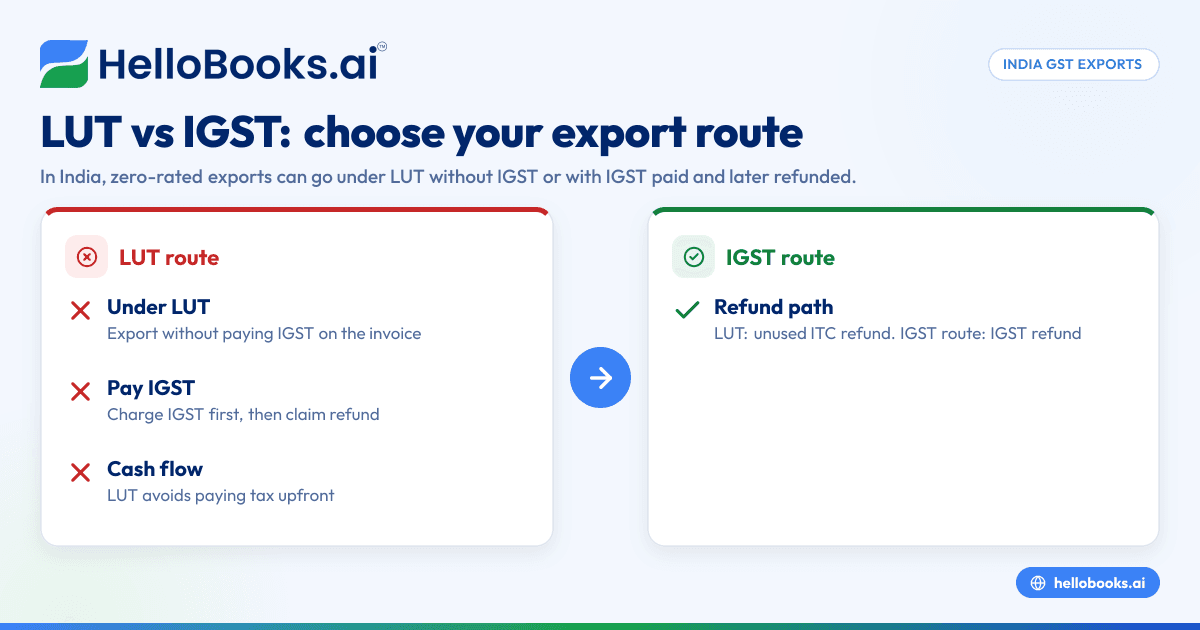
LUT आणि IGST-paid export: cash flow कोणता बदलतो
Exporters समोरचा practical निर्णय हा कायदेशीर theory पेक्षा cash flow चा असतो. Two routes broadly दिसतात:
- LUT under export without payment of IGST
- Export on payment of IGST and later claim/refund as per law
Letter of Undertaking म्हणजे काय, ते Central Goods and Services Tax Rules मधील संबंधित provisions, CBIC notifications आणि GST Portal वरील LUT furnishing module मध्ये स्पष्ट केलेलं असतं. Current eligibility conditions, form mechanics आणि year-wise filing instructions तिथेच तपासाव्यात.
बहुतेक service exporters, freelancers, agencies आणि smaller goods exporters LUT route पसंत करतात कारण outward invoice वर आधी tax fund करण्याची वेळ येत नाही. जर तुमचा business already working capital ताणाखाली असेल—उदा. salary rupee मध्ये द्यायची, vendor bills INR मध्ये भरायच्या, payment NEFT/RTGS/IMPS किंवा bank transfer ने reconcile करायचे—तर IGST आधी भरून refund ची वाट बघणं जड जाऊ शकतं.
दुसरीकडे, काही businesses law आणि facts नुसार IGST-paid route निवडतात. कोणता route योग्य, हे sector, documentation quality, refund pattern आणि advisor च्या view वर ठरतं.
एक छोटी illustrative आणि invented situation घ्या: Nashik मधल्या एक exporter ने overseas buyer ला ₹8 lakh equivalent goods पाठवले, आणि export साठी inputs वर ₹72,000 इतका GST credit books मध्ये आहे, असे समजू. ही रक्कम पूर्णपणे काल्पनिक आहे, आणि freight classification, blocked credits, exchange fluctuation, customs-side details आणि refund formula मधले इतर variables इथे मुद्दाम सोडले आहेत. LUT route घेतला तर outward side वर tax fund करण्याची वेळ टळू शकते; IGST-paid route घेतला तर आधी payment आणि नंतर refund trackingची गरज पडू शकते. प्रत्यक्ष claim मात्र law, portal validations आणि supporting records वर अवलंबून असतो.
LUT घेताना invoice, BRC/FIRC, shipping trail यांची साखळी जुळली पाहिजे
LUT फक्त एक online declaration आहे असा समज अनेकांचा असतो. प्रत्यक्षात तो documentary discipline ची मागणी करतो.
Current LUT filing path, applicable form name, financial year validity आणि acknowledgements याबद्दलची अधिकृत माहिती GST Portal वर user services मध्ये आणि CBIC materials मध्ये प्रकाशित असते. Validity, compliance conditions किंवा extension-related specifics नेहमी तिथे verify करावेत NEEDS EXPERT REVIEW.
Exporter ने साधारणपणे खालील साखळी व्यवस्थित ठेवणं महत्त्वाचं:
- export invoice
- customer master with country and tax treatment
- shipping bill / courier evidence / logistics proof, as relevant
- e-way bill, if movement rules require it under GST and e-way bill system
- bank realisation support such as FIRC/BRC or equivalent banking documentation, where relevant
- LUT acknowledgement reference
- purchase-side GST trail for ITC/refund support
Goods exporters साठी shipping documentation आणि e-way bill trail अनेकदा central बनतो. Service exporters साठी bank receipt evidence आणि contract/scope documents तितकेच महत्त्वाचे ठरतात.
जर तुम्ही invoice manually Excel मध्ये, stock Tally मध्ये, bank entries वेगळ्या sheet मध्ये आणि GST return consultant कडे independent summary म्हणून पाठवत असाल, तर mismatch होण्याची शक्यता वाढते. HelloBooks मध्ये export invoice तयार करताना GST invoicing logic consistent ठेवता येतो; eligible businesses साठी e-invoicing लागू असेल तर IRN आणि signed QR workflow same records वर build होतो; goods movement असल्यास e-way bill invoice वरून उचलता येतो. त्यामुळे invoice, dispatch आणि return reporting एकाच data trail वर राहतात.
GSTR-1, GSTR-3B आणि refund मध्ये mismatch कुठे निर्माण होतो
Export केल्यानंतर अनेकांना वाटतं की “invoice issue झाला, payment आली, काम संपलं.” प्रत्यक्षात GST compliance इथे सुरू होते.
Exports कसे report करायचे, amendments कशा हाताळायच्या, tax paid vs without payment route चा return effect काय आहे, हे CGST Act, IGST Act, संबंधित rules, CBIC instructions आणि GSTN/GST Portal utilities मध्ये पाहावं लागतं. Current return table mapping portal वरच verify करणं उत्तम.
Mismatch चे मोठे कारणे:
- invoice date आणि export date वेगळे असणे
- LUT reference न ठेवणे किंवा चुकीची narration
- goods export असून shipping data books मध्ये न जुळणे
- service export असून inward remittance proof व्यवस्थित न जपणे
- GSTR-1 मधील export values आणि GSTR-3B मधील reporting वेगळी असणे
- credit note/forex difference accounting न केल्याने mismatch वाढणे
- purchase-side ITC वर supplier compliance issues
Refund claim करताना department किंवा portal logic याच trail कडे परत बघतो. म्हणून return filing हा “अखेरचा clerical step” नसून books चं output आहे. HelloBooks मध्ये GSTR-1 and GSTR-3B filing books मधल्या invoices वरून थेट केल्यास summary वेगळ्या spreadsheet मधून बनवण्याची गरज कमी होते. Purchase side वर GSTR-2A/2B reconciliation आणि ITC trackingमुळे supplier ने upload न केलेली bills लवकर दिसतात; refund exposure समजायला मदत होते.
purchase-side ITC आणि refund readiness: exporter ने inward bills कसे सांभाळावेत
Export zero-rated असला तरी refund claim चं foundation inward records मध्ये असतं. तुम्ही packaging, freight, professional fees, raw material, cloud services, subcontractor bills, office rent, software licences किंवा job work यावर GST भरला असेल, तर त्याचा documentary trail मजबूत हवा.
Input tax credit च्या eligibility, restriction आणि documentation requirements या CGST Act आणि CGST Rules मध्ये आहेत; त्याबद्दलचे current interpretations CBIC circulars, court rulings आणि GST Portal guidance मध्ये वेळोवेळी बदलू शकतात. म्हणून “हे bill आहे म्हणजे refund मिळेलच” असा समज धोकादायक आहे.
खास practical मुद्दे:
- supplier GSTIN बरोबर आहे का
- invoice वर mandatory fields आहेत का
- HSN/SAC आणि tax head योग्य आहेत का
- RCM लागू असेल का
- TDS/TCS accounting books मध्ये वेगळं capture झालं आहे का
- bill GSTR-2B मध्ये reflect झालं आहे का
- payment trail bank statement मध्ये स्पष्ट आहे का
HelloBooks मध्ये purchase bills OCR ने capture करून inward entry टाकता येते, bank statement upload करून India-specific AI reconciliation करता येते, आणि ITC trackingमुळे missing supplier uploads दिसतात. Exporter साठी याचा अर्थ spreadsheet-hunting कमी. विशेषतः जेव्हा payments UPI, NEFT, RTGS, IMPS आणि foreign inward remittance अशा मिसळलेल्या modes मधून ये-जात असतात, तेव्हा bank matching हा refund readiness चा भाग बनतो, फक्त bookkeeping चा नाही.
goods exporter आणि service exporter यांची कामाची यादी सारखी नसते
India मधील export GST चर्चा अनेकदा services भोवती फिरते, पण goods exporter ची compliance reality वेगळी असते.
Goods exporter कडे सहसा:
- inventory movement
- dispatch date vs invoice date
- e-way bill applicability
- transporter details
- shipping/customs evidence
- rate differences from purchase to export lot
अशा अतिरिक्त layers असतात. अशा वेळी inventory register वेगळं, invoicing वेगळं आणि GST working वेगळं ठेवलं तर reconciliation जड होतं. HelloBooks मध्ये inventory records sale/purchase सोबतच हलतात, त्यामुळे export lot चं book position अधिक स्पष्ट राहतं. जर business Tally वरून migrate होत असेल, तर Tally alternative किंवा connector-based transitionमुळे historical books आणि current GST workflow एकदम तुटत नाहीत.
Service exporter कडे दुसरी checklist असते:
- contract wording
- milestone billing
- exchange conversion policy
- overseas receipt proof
- place-of-supply analysis
- related party / branch structure questions
यात stock नसतो, पण legal characterisation जास्त महत्त्वाचं ठरतं. Agency, consultant, freelancer, SaaS implementer, designer, developer—सगळ्यांची facts वेगळी असतात. म्हणून invoice tool पुरेसं नसून books, receipt proof आणि return reporting यांची जोड आवश्यक असते.
multi-GSTIN business, CA coordination आणि portal-ready records
काही exporters कडे एकापेक्षा जास्त GSTIN असतात—उदा. Maharashtra आणि Karnataka registration, किंवा goods एका state मधून आणि support services दुसऱ्यातून. अशा वेळी LUT, invoices, branch expenses, stock transfer, export reporting आणि bank reconciliation एकच spreadsheet सांभाळू शकत नाही.
HelloBooks मध्ये multi-GSTIN setup आणि unlimited usersमुळे owner, accountant आणि CA एकाच base records वर काम करू शकतात. हे विशेषतः तेव्हा उपयोगी पडतं जेव्हा one GSTIN वर domestic sales आहेत, दुसऱ्यावर export turnover आहे, आणि return filing वेगवेगळ्या teams कडून होतं. Mobile app मुळे travel करताना invoice किंवा expense capture करता येतो; तर Noor assistant on WhatsApp वर Hindi, English किंवा Hinglish मध्ये book-related queries विचारता येतात. Export law opinion तो देत नाही; पण day-to-day bookkeeping clarity वाढवतो.
Readersना official filing करण्यापूर्वी basic checks हवे असतील तर HelloBooks चे काही India tools उपयुक्त ठरतात—उदा. GSTIN validator, HSN code search, GST invoice validator, किंवा preliminary GST calculator. यामुळे final legal conclusion निघत नाही, पण input errors कमी होतात.
या विषयात कोणत्या गोष्टी official source वरूनच verify करायच्या
Export GST मध्ये bare-fact shortcuts टाळणं फार महत्त्वाचं आहे. Current rate, threshold, due date, interest, penalty, e-invoicing applicability turnover limit, LUT validity mechanics, refund filing timelines, remittance window, bond requirements—हे सर्व CBIC, GST Portal/GSTN, relevant rules/notifications, आणि banking side मुद्द्यांसाठी RBI publications वरून verify करावेत. Company law disclosure किंवा audit-side प्रश्न असतील तर Companies Act, 2013 आणि MCA publications relevant होऊ शकतात. Data handling च्या policy side वर DPDP Act context लागू होऊ शकतो, पण तो GST classification चा पर्याय नाही.
जर तुम्ही freelancer असाल, agency चालवत असाल, Amazon/global marketplace supplier असाल, किंवा manufacturing exporter असाल, तर एक practical rule लक्षात ठेवा:
- foreign client असणे पुरेसे नाही,
- invoice पुरेसा नाही,
- payment आले की case बंद होत नाही,
- आणि refund हा bookkeeping quality वरही उभा असतो.
म्हणूनच records एकाच ठिकाणी ठेवणं exporter साठी luxury नाही. Accounting software for small business किंवा full accounting software India setup तेव्हाच उपयोगी ठरतं जेव्हा ते GST invoicing, export treatment, purchase reconciliation, bank statement upload, inventory आणि direct return filing एकत्र जोडतं.
जर तुम्हाला India साठी suitable setup पाहायचा असेल, तर HelloBooks चं India page, pricing आणि demo पाहू शकता. पण filing किंवा refund strategy final करण्यापूर्वी तुमच्या facts वर CA किंवा GST practitioner चा सल्ला घ्या—विशेषतः place-of-supply, LUT eligibility, refund route आणि documentation sufficiency याबद्दल.


