
Key takeaways
What this article covers, in order:
- Why this comes up / what goes wrong
- Step-by-step
- Example (fictional figures)
- Common mistakes
- Doing this in HelloBooks
- Frequently asked questions
Accounting software for fitness centers is designed to handle the unique financial and compliance needs of gyms, yoga studios, and other fitness businesses. These businesses often juggle multiple revenue streams like memberships, personal training sessions, and merchandise sales, which require accurate invoicing, GST filing, and expense tracking. This article explains why fitness centers seek specialized accounting software, guides you through the selection process with clear steps, highlights common pitfalls, and provides a detailed example for a gym in Bhopal. It also describes how HelloBooks can reduce manual data entry with OCR for purchase bills.
Why this comes up / what goes wrong
Fitness center owners and accountants face challenges managing diverse income sources and expenses while ensuring GST compliance. Many still rely on spreadsheets, Tally, or manual bill books, which increases errors and time spent on reconciliation. Fitness businesses have to track membership fees, class packages, equipment purchases, and staff payments, all of which complicate bookkeeping. Without industry-specific software, vital details like HSN codes for fitness goods or SAC codes for services may be missed, leading to incorrect GST returns. This creates a need for software that simplifies invoicing, expense capture, and GST filing tailored to fitness services.
Step-by-step
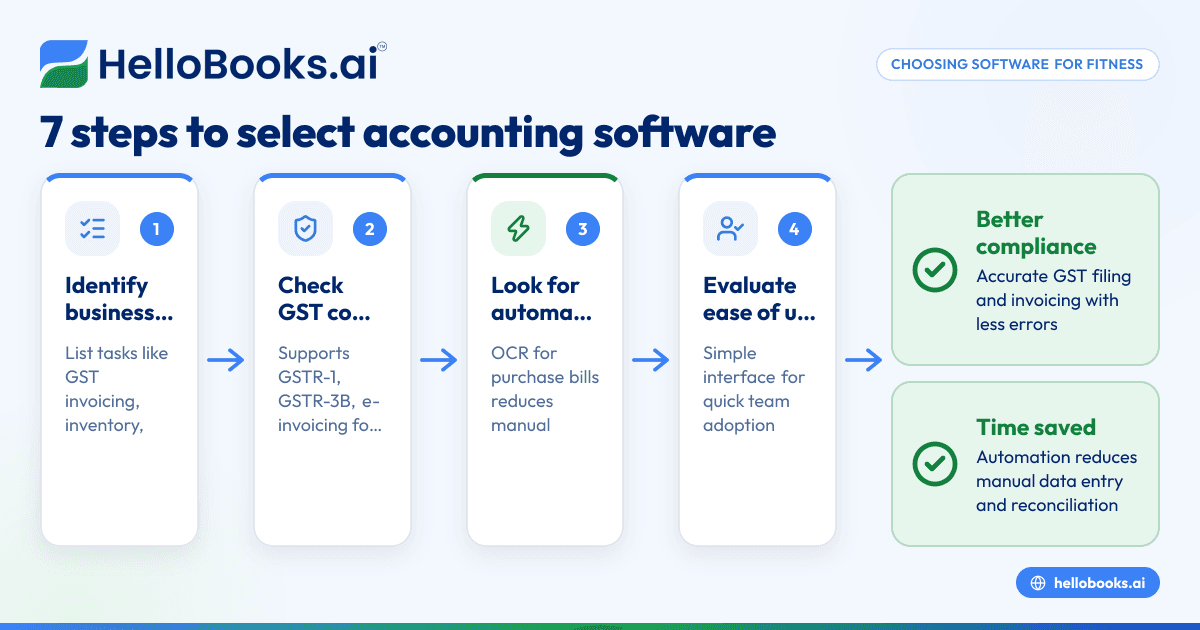
- Identify your business needs: List all accounting tasks your fitness center requires, such as GST invoicing, inventory tracking for merchandise, expense management, and bank reconciliation.
- Check GST compliance features: Ensure the software supports GSTR-1 and GSTR-3B filing, e-invoicing if applicable, and can handle GST rates relevant to fitness services.
- Look for automation: Features like OCR for purchase bills reduce manual entry and errors. This is crucial for bills related to equipment or supplies.
- Evaluate ease of use: Choose software with a simple interface that your team can learn quickly, especially if you currently use spreadsheets or Tally.
- Consider integration: The software should allow bank statement uploads and generate financial reports to monitor cash flow and profitability.
- Compare pricing and plans: Review the cost relative to features offered and whether the software supports multiple GSTINs if you have more than one location.
- Test with a trial: Use a free plan or demo to verify the software meets your needs before full adoption.
For more on choosing software for small businesses, see accounting software for small business.
Example (fictional figures)
Consider a gym in Bhopal with the following monthly transactions for April 2024:
- Membership fees collected: ₹2,50,000
- Personal training sessions: ₹75,000
- Merchandise sales: ₹30,000
- Equipment purchase bills: ₹1,20,000
Step 1: Calculate total revenue
₹2,50,000 + ₹75,000 + ₹30,000 = ₹3,55,000
Step 2: Calculate GST collected on revenue (assumed illustrative GST rate 18%)
₹3,55,000 × 18% = ₹63,900
Step 3: Calculate input tax credit (ITC) on equipment purchase
₹1,20,000 × 18% = ₹21,600
Step 4: Calculate net GST payable
₹63,900 - ₹21,600 = ₹42,300
The gym files GSTR-1 and GSTR-3B reporting ₹3,55,000 as taxable turnover and pays net GST of ₹42,300. Using OCR-enabled software, purchase bills worth ₹1,20,000 are captured automatically, reducing manual errors.
Common mistakes
- Not tracking all revenue streams separately: Prevent by setting up distinct ledger accounts for memberships, training, and merchandise.
- Ignoring GST compliance deadlines: Use software reminders or calendar alerts to file GSTR-1 and GSTR-3B on time.
- Manual entry of purchase bills leading to errors: Use OCR features to capture bills from photos or PDFs.
- Failing to reconcile bank statements monthly: Schedule monthly reconciliations to catch discrepancies early.
- Choosing software without GST filing support: Confirm the software supports GST returns relevant to your business.
- Overlooking inventory management for merchandise: Track stock levels to avoid losses and maintain accurate financials.
Learn more about accounting software options in India at accounting software in India.
Doing this in HelloBooks
HelloBooks offers OCR for purchase bills, allowing fitness centers to capture supplier bills from photos or PDFs instead of manual entry. This reduces errors and saves time when entering equipment or supply expenses. HelloBooks also supports GST invoicing, GSTR-1 and GSTR-3B filing, and bank statement reconciliation, making it suitable for fitness businesses managing compliance and bookkeeping. Visit HelloBooks for India to explore features.
Frequently asked questions
What features should accounting software for fitness centers have?
It should support GST invoicing, multiple revenue streams, expense tracking, bank reconciliation, and ideally OCR for purchase bills to reduce manual data entry.
Can accounting software handle GST filing for fitness services?
Yes, software that supports GSTR-1 and GSTR-3B filing can help you comply with GST regulations applicable to fitness centers.
Is OCR important for fitness center accounting?
OCR saves time by capturing purchase bills from photos or PDFs, minimizing manual entry errors, especially for equipment and supply invoices.
How do I know if software suits my small fitness business?
Try free plans or demos to check if the interface is easy to use and if it covers your invoicing, GST, and expense needs. See Local service businesses for industry-specific insights.
Can I manage inventory like merchandise in accounting software?
Yes, many accounting solutions include inventory tracking to manage stock levels and cost of goods sold.
Key takeaways
- Fitness centers need accounting software that handles multiple revenue streams and GST compliance.
- Verify GST filing support, invoicing, and expense management features before choosing software.
- Using OCR for purchase bills reduces manual data entry and errors.
- Regular bank reconciliation and inventory tracking improve financial accuracy.
- Trial periods help ensure the software fits your business needs.
Start managing your fitness center’s books more efficiently. Start on the Free plan (200 transactions a year, GSTR-1 and 3B filing for one GSTIN).