
Key takeaways
What this article covers, in order:
- Key takeaways
- What are quarterly estimated taxes and why do freelancers need to pay them?
- How to calculate quarterly estimated tax payments accurately?
- What IRS deadlines should freelancers know for quarterly estimated taxes?
- How does AI quarterly estimated tax automation help freelancers?
- What key expenses should freelancers track for estimated tax deductions?
Successfully managing quarterly estimated tax payments can save freelancers in the United States from costly penalties and cash flow surprises. Using AI bookkeeping tools makes this process easier by automating income tracking, expense categorization, and tax calculations, providing timely reminders for payments and helping freelancers plan their finances effectively.
Key takeaways
- Quarterly estimated tax payments are required for freelancers to avoid penalties and interest.
- AI bookkeeping software simplifies tracking income and expenses for accurate tax estimation.
- Understanding IRS deadlines and calculating payments based on your earnings are essential.
- Keeping detailed records helps support your payments and streamline annual tax filing.
- Utilizing automated reminders and reports can prevent missed payments.
- AI quarterly estimated tax features reduce manual data entry and improve accuracy.
What are quarterly estimated taxes and why do freelancers need to pay them?
Quarterly estimated taxes are periodic payments of income tax made four times a year to the IRS and potentially to state tax agencies. Freelancers, unlike traditional employees, don’t have taxes withheld on their earnings, so they must pay these estimates to cover federal income tax and self-employment tax obligations.
Without timely quarterly payments, freelancers risk underpayment penalties and interest charges. Estimated taxes also help spread out tax liabilities, preventing a large lump sum due during tax season. They provide better cash flow management by aligning payments with income earned.
How to calculate quarterly estimated tax payments accurately?
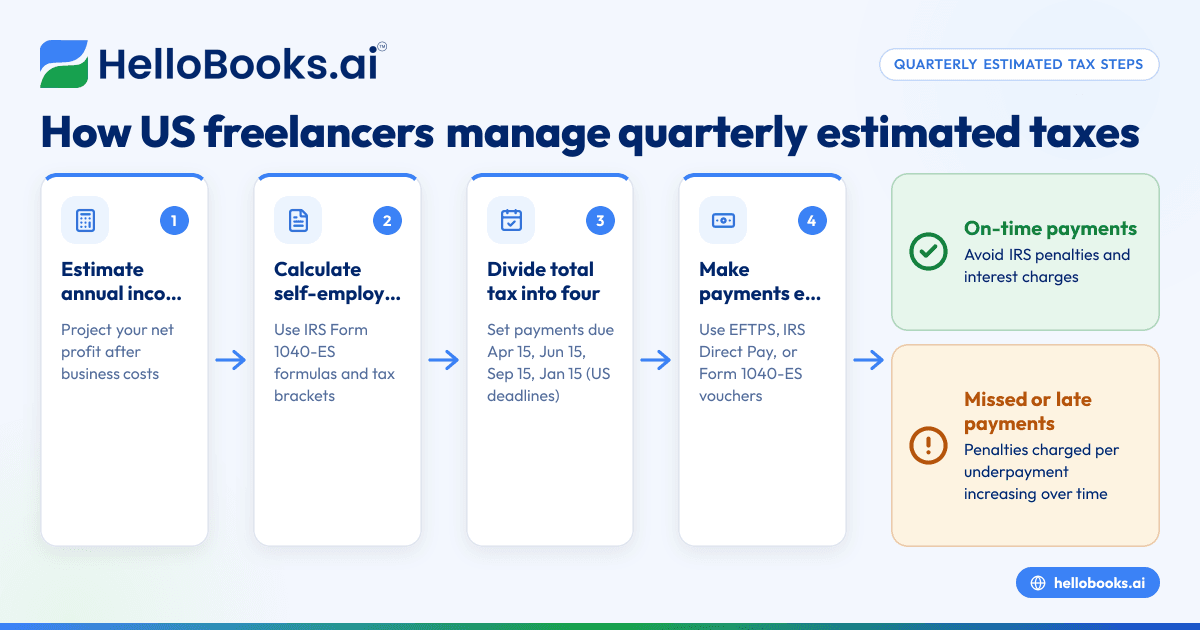
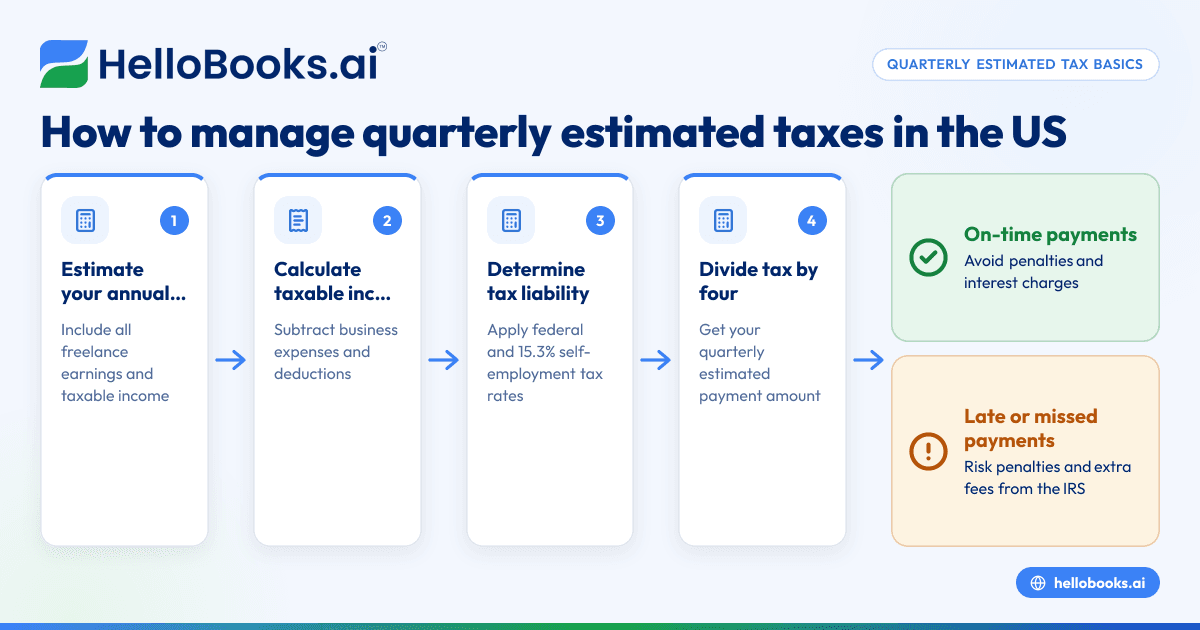
AI bookkeeping software can automate many of the calculations needed for quarterly estimated tax payments. You start by estimating your expected adjusted gross income, taxable income, deductions, and credits for the year. The IRS Form 1040-ES provides worksheets and rates to help break down your annual tax obligation into four payments.
- Review your prior year’s tax return as a baseline.
- Use AI tools to analyze your current year’s bookkeeping data regularly.
- Estimate income and deductible expenses for the quarter.
- Calculate the quarterly tax based on your marginal tax rate and self-employment tax.
- Adjust payments if your income fluctuates significantly.
Calculating payments well in advance and updating your estimates each quarter reduces surprises. AI tools streamline this by pulling data directly from transactions and generating tax projections, so you don’t have to track everything manually.
What IRS deadlines should freelancers know for quarterly estimated taxes?
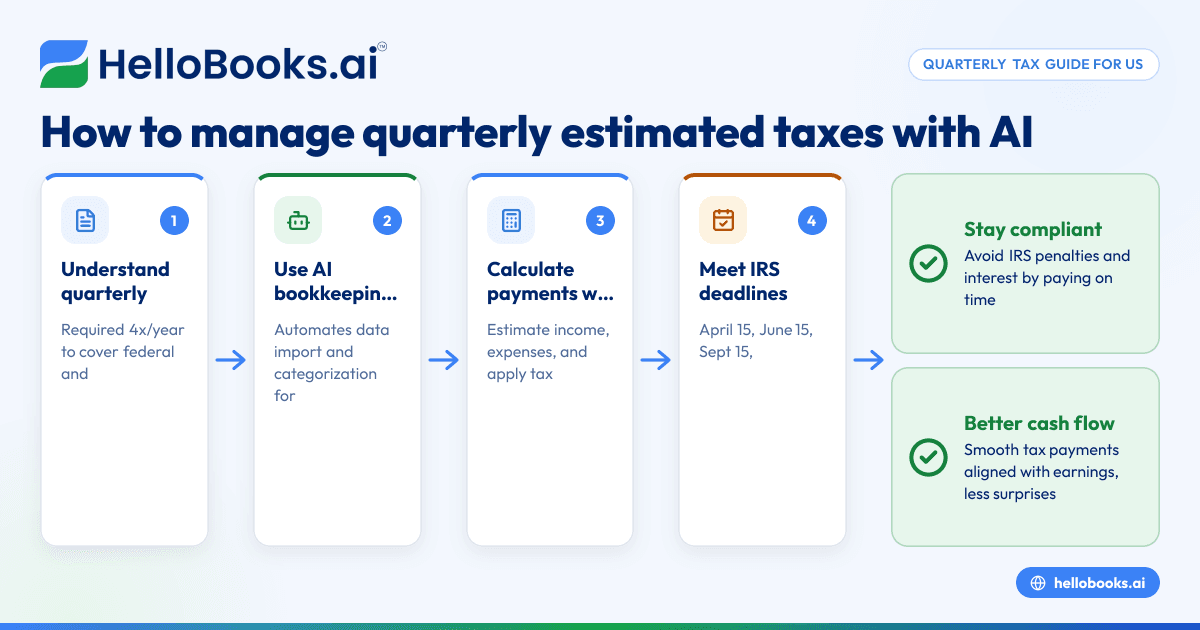
The IRS has set deadlines for quarterly estimated payments each year:
- April 15: First quarter payment (January 1 – March 31)
- June 15: Second quarter payment (April 1 – May 31)
- September 15: Third quarter payment (June 1 – August 31)
- January 15 of the following year: Fourth quarter payment (September 1 – December 31)
If a due date falls on a weekend or holiday, the deadline moves to the next business day. Missing these deadlines can result in penalties unless you qualify for an extension or waiver.
State tax agencies often have similar quarterly deadlines for state income tax, so check your state’s tax board. Cities like Chicago or Detroit may have additional local taxes requiring estimated payments.
How does AI quarterly estimated tax automation help freelancers?
AI quarterly estimated tax automation tracks your revenue, expenses, and deductions in real time to suggest accurate quarterly tax payment amounts. It learns your business patterns, improves forecasts over time, and sends payment reminders ahead of IRS deadlines.
By integrating bank feeds and invoicing data, AI can automatically update your tax projections as you earn and spend, reducing manual bookkeeping tasks. This reduces errors and the risk of underpayment, ensuring freelancers stay compliant without constant tax season stress.
Many AI bookkeeping platforms also generate custom quarterly tax reports that freelancers or their accountants can share directly with the IRS or state tax authorities, streamlining the payment and filing process.
What key expenses should freelancers track for estimated tax deductions?
Freelancers reduce taxable income by tracking business expenses carefully. Common deductible expenses include:
- Office supplies and equipment
- Home office expenses (a portion of rent, utilities)
- Professional services (accountants, consultants)
- Business travel and mileage
- Marketing and advertising costs
- Software subscriptions for business tools
AI bookkeeping helps identify and categorize these expenses automatically from bank statements and credit card feeds. Organising expenses properly lets you maximize deductions and lower your estimated taxes each quarter.
Keeping digital receipts and documentation in the software supports your deductions in case of an IRS audit.
What if my income varies throughout the year – how should I adjust my estimated taxes?
Seasonal or contract-based freelance income is common, leading to fluctuating earnings each quarter. In such cases, reassess your quarterly tax payments regularly.
- Use AI bookkeeping software to monitor updated income and expenses monthly.
- Adjust your estimated tax calculations accordingly.
- File a revised payment with the IRS using the "Annualized Income Installment Method" if needed.
- Avoid underpayment by increasing your next quarterly payment if you underpaid earlier.
Accurate, real-time bookkeeping makes it easier to stay on top of these changes without guesswork and helps prevent penalties.
Can AI bookkeeping help with state and local quarterly estimated taxes?
Yes. Many states require freelancers to pay estimated income tax quarterly, along with specific city taxes in some jurisdictions. Advanced AI bookkeeping software can support multi-jurisdiction tax calculations and reminders for:
- State income tax payments
- Local city or county business taxes
- Sales or use taxes where applicable
Automated tax management helps freelancers in diverse locations like Houston or Detroit by consolidating compliance tasks in one place.
Streamlining these payments reduces the chances of missing deadlines or overpaying taxes.
How does quarterly estimated tax fit into year-end tax filing for freelancers?
Quarterly estimated tax payments reduce the amount owed at tax time by covering your tax liability throughout the year. If you properly estimated and paid on time, you might owe little to no additional tax or receive a refund after filing your Form 1040.
AI bookkeeping software compiles your quarterly payments alongside income and expenses into ready-to-file tax reports. This cuts down time spent gathering records and improves accuracy when submitting your Schedule C, self-employment tax forms, and any state returns.
For freelancers using software like QuickBooks or generating invoices through Stripe, integrating AI bookkeeping can unify records and simplify the tax filing season.
Is it complicated to switch from spreadsheets or manual bookkeeping to AI bookkeeping for quarterly taxes?
Transitioning from manual bookkeeping or spreadsheets to AI-powered bookkeeping is increasingly straightforward. Most AI platforms offer:
- Automated bank and payment integrations
- User-friendly dashboards summarizing income and expense trends
- AI quarterly estimated tax projections using your actual data
- Exportable tax reports compatible with tax software or accountants
You can start by migrating recent transaction data and then let AI handle ongoing categorization and tax tracking. This shift reduces errors common in manual processes and saves time for freelancers focused on business growth.
Getting started with AI accounting software for your freelance business
If you’re ready to take the stress out of quarterly tax payments, consider exploring AI accounting software designed to meet freelancers' unique needs. Features like automated bookkeeping, accurate tax estimates, expense management, and reminders help keep your business compliant and organized.
HelloBooks.ai offers tailored solutions that integrate directly with your bank and payment accounts, making quarterly estimated tax calculation seamless. You can book a demo to see how it fits your freelance business or compare features on our pricing page.
Frequently asked questions
What happens if I miss a quarterly estimated tax payment deadline?
If you miss a deadline, the IRS may charge penalties and interest on the unpaid amount. It’s important to make the payment as soon as possible to reduce additional charges. Keeping track with AI bookkeeping reminders can help you avoid missed payments in the future.
Can I adjust my estimated tax payments if my freelance income drops?
Yes. Freelancers can adjust future quarterly payments to reflect changes in income. Use the annualized income method or updated income estimates when recalculating payments mid-year to avoid underpayment penalties.
How do self-employment taxes factor into quarterly estimates?
In addition to income tax, freelancers owe self-employment tax to cover Social Security and Medicare. AI bookkeeping tools calculate this alongside income tax when generating quarterly tax estimates, ensuring you pay the correct total tax each quarter.
Do I need to make estimated tax payments for state taxes too?
Many states require freelancers to pay estimated state income tax quarterly. Check your state's department of revenue website for specific rules and deadlines. Some AI bookkeeping software automates both federal and state tax tracking and payment reminders.
Are quarterly estimated tax payments required even if I don’t owe much tax?
If you expect to owe $1,000 or more after withholding and credits, estimated tax payments are required. If your tax liability is lower, you may not need to pay quarterly, but it’s best to verify based on your specific income situation.
How does AI bookkeeping improve accuracy compared to manual spreadsheet tracking?
AI bookkeeping automates data import, categorizes expenses, and updates tax calculations in real time. This reduces manual errors and overlooked deductions common with spreadsheets, leading to more accurate quarterly estimated tax payments and better compliance.
Read next
This article covers one part of a bigger topic. For the complete picture, read our guide to quarterly estimated tax.