
Key takeaways
What this article covers, in order:
- Key takeaways
- What is quarterly estimated tax and who needs to pay it?
- How do I calculate quarterly estimated tax for my freelance business?
- How is AI quarterly estimated tax technology changing tax filing for freelancers?
- What are the deadlines for quarterly estimated tax payments?
- Can I pay quarterly estimated taxes online in the USA?
Simplifying Quarterly Estimated Tax Payments for Freelancers and Independent Contractors in the United States
Quarterly estimated tax payments are the advance income tax payments freelancers and independent contractors make to the IRS. These payments help avoid penalties and a large tax bill at year-end by covering your self-employment and income taxes throughout the year.
Key takeaways
- Freelancers and independent contractors must pay quarterly estimated taxes if they expect to owe $1,000 or more in taxes.
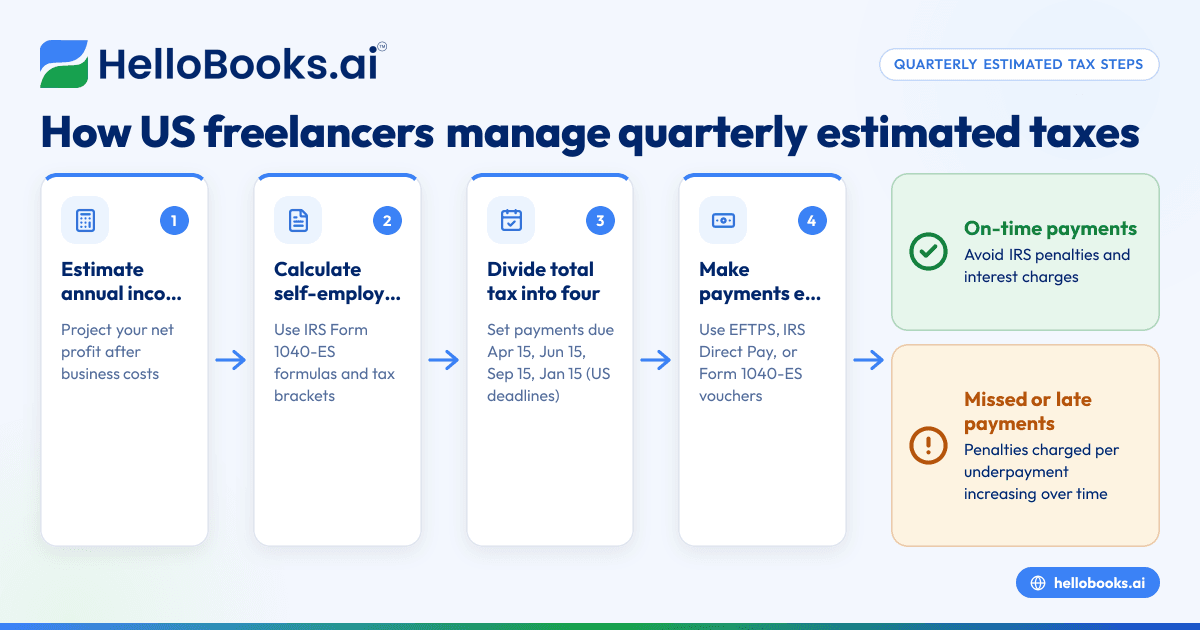
- Payments are due on April 15, June 15, September 15, and January 15 of the following year.
- Calculating quarterly taxes requires estimating your income, expenses, and applicable tax deductions.
- Using AI quarterly estimated tax tools can streamline calculations, reminders, and payment tracking.
- Staying current with state-specific taxes and 1099 income reporting is essential.
- Automating bookkeeping and bank reconciliation reduces data entry errors and saves time.
What is quarterly estimated tax and who needs to pay it?
Quarterly estimated tax is a method by which self-employed individuals, including freelancers and independent contractors, pay income tax and self-employment tax in four installments throughout the year. Unlike employees whose taxes are withheld by employers, these taxpayers must calculate and submit their taxes directly to the IRS and applicable states.
If you expect to owe $1,000 or more in federal taxes after subtracting withholdings and credits, you generally need to make estimated payments. This includes income from contracts, side businesses, or any freelance work. Failure to pay on time can result in penalties and interest.
For many freelancers in cities like Chicago or Houston, managing these payments can be complicated by diverse state sales taxes or local business regulations, but the core quarterly schedule remains consistent.
How do I calculate quarterly estimated tax for my freelance business?
Calculating quarterly estimated tax is a step-by-step process:
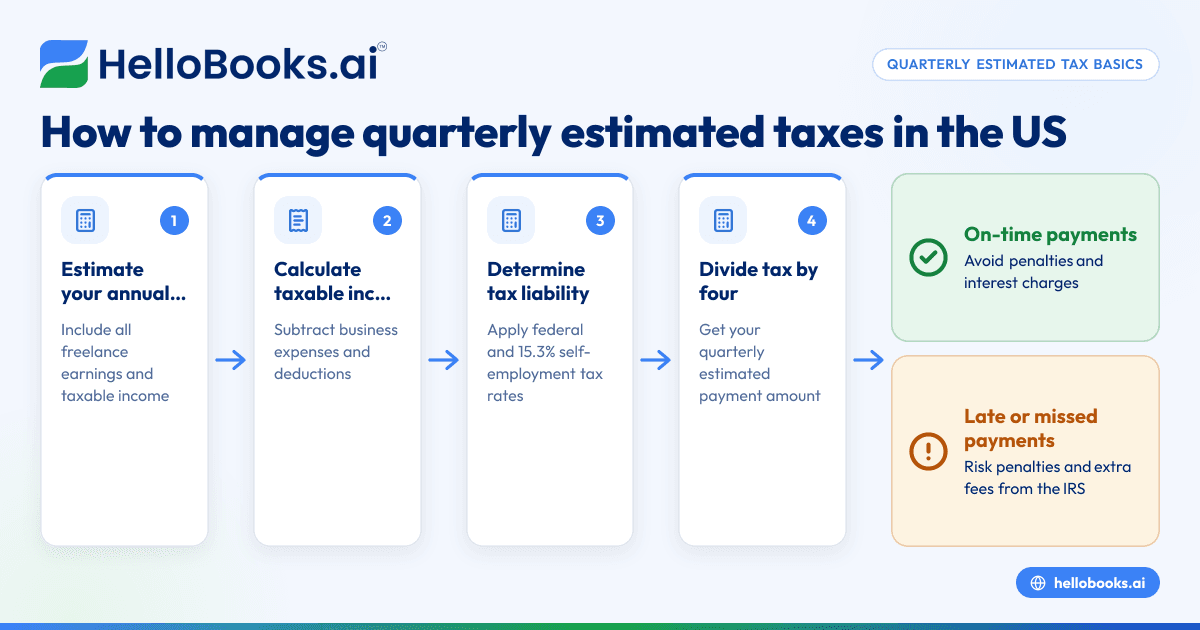
- Estimate your total income for the year: Include all freelance earnings and other sources of taxable income.
- Subtract business expenses and deductions: Use valid expenses to reduce taxable income.
- Calculate your adjusted gross income (AGI): This is your income minus deductions.
- Estimate your tax liability: Apply federal tax rates and self-employment tax (currently 15.3%) on your net earnings.
- Subtract any tax credits or withholdings already made.
- Divide the remaining tax owed by four: This gives you your quarterly estimated payment amount.
Using accounting software for small business can simplify this process. Many modern tools include AI-powered features that automate data entry and calculate your quarterly estimated tax for you, helping avoid errors.
How is AI quarterly estimated tax technology changing tax filing for freelancers?
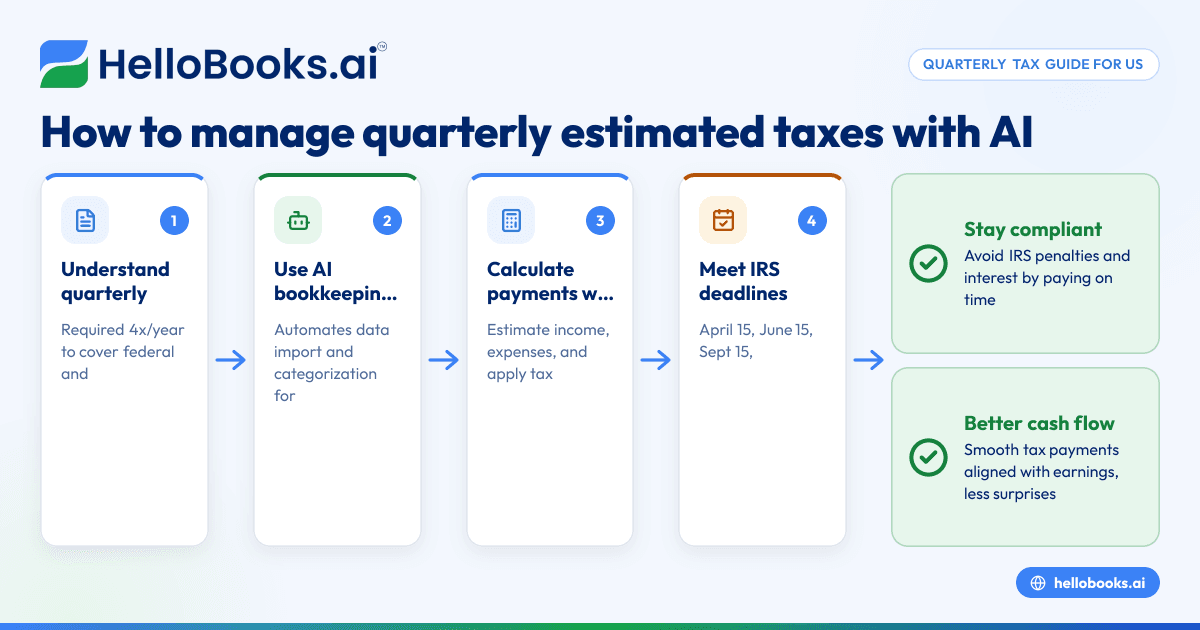
AI quarterly estimated tax technology helps you automate calculations, track payment schedules, and generate reminders. This eliminates the manual process of pulling data from spreadsheets or invoices, reducing mistakes and saving hours for busy freelancers.
By analyzing your income and expenses continuously, AI tools provide more accurate tax estimates, especially for fluctuating freelance cash flow. They also integrate with bank reconciliation software to verify that payments align with actual expenses and revenue.
HelloBooks.ai offers solutions that combine AI bookkeeping and expense management software to streamline your quarterly tax compliance in one place.
What are the deadlines for quarterly estimated tax payments?
Tax payments are due on these four dates:
- April 15 (for income earned January 1–March 31)
- June 15 (for income earned April 1–May 31)
- September 15 (for income earned June 1–August 31)
- January 15 of the following year (for income earned September 1–December 31)
If a date falls on a weekend or federal holiday, the deadline shifts to the next business day. Mark these on your calendar or use automated payment services to avoid late fees.
Can I pay quarterly estimated taxes online in the USA?
Yes, the IRS provides several online payment options, including the Electronic Federal Tax Payment System (EFTPS), IRS Direct Pay, and credit/debit card payments. Most states also have online portals for estimated tax payments.
Setting up recurring payments with reminders can help you stay organized. Many AI accounting software applications integrate directly with the IRS payment systems or allow you to track when payments are made within the same dashboard.
What state-specific taxes should I consider when making quarterly payments?
Besides federal taxes, you may owe state income or business taxes. States like California, Texas, or Michigan may require separate estimated tax payments. Check with your state’s department of revenue for deadlines and payment methods.
Remember to track 1099 income from clients, which is reported both to you and the IRS. Proper bookkeeping ensures you capture all taxable income and file correctly.
How does AI bookkeeping software help with quarterly estimated tax compliance?
AI bookkeeping software automates data entry from invoices, bank statements, and receipts. It categorizes transactions, flags deductible expenses, and reconciles your bank accounts daily.
This continuous process keeps your financial records updated and ready for estimated tax calculations. Integration with invoicing and expense management software means you have a real-time view of income and tax obligations.
HelloBooks.ai offers AI accounting software specifically tailored to freelancers and small businesses, making quarterly estimated tax calculations and compliance easier.
What records should I keep for quarterly estimated tax calculation and filing?
Keep detailed records of:
- All income sources, including 1099 forms received from clients.
- Business expenses with receipts or digital proof.
- Bank and credit card statements.
- Records of previous tax payments and credits.
Organizing these through digital bookkeeping platforms reduces the risk of missing deductions and simplifies filing your annual Schedule C and Form 1040-ES.
How can I avoid penalties on quarterly estimated tax payments?
To avoid penalties:
- Pay at least 90% of your current year’s tax liability or 100% of the prior year’s tax liability via estimated payments.
- Submit your payments on or before the due dates.
- Keep accurate records and adjust estimates quarterly based on actual income.
- Use tax software or AI tools to automate reminders.
If your income fluctuates significantly during the year, revising your estimates regularly helps you stay compliant without overpaying.
What if I miss a quarterly estimated tax payment deadline?
If you miss a payment, pay as soon as possible to reduce penalties and interest. The IRS calculates penalties based on how late the payment is and the amount owed.
Using bookkeeping software that supports bank reconciliation and payment tracking can alert you if a payment is missed or underpaid. Some apps even automate penalty calculations to give you a clear picture of your liabilities.
How do I file quarterly estimated tax payments?
You file estimated tax payments using IRS Form 1040-ES. The form includes vouchers for submitting payments by mail if you choose, but online payment options are faster and more secure.
Your tax professional or AI accounting software can help you complete and file these forms correctly. Remember to also file your annual income tax return by April 15, reconciling total income and taxes paid.
Why should I switch from spreadsheets or basic tools to AI accounting software?
Spreadsheets and manual tracking are prone to errors, time-consuming, and do not sync with bank accounts or invoicing automatically. AI accounting software brings:
- Automation of bookkeeping, invoicing, and tax calculations.
- Real-time financial insights.
- Integration with payment gateways and banks.
- Alerts and reminders to meet compliance deadlines.
If you want to reduce data entry and streamline quarterly estimated tax payments, consider solutions like HelloBooks.ai that specialize in the needs of freelancers and small business owners.
To see how AI-powered accounting software can simplify your quarterly estimated taxes and daily bookkeeping, you can book a demo or check out our plans at [/pricing].
Frequently asked questions
Who needs to pay quarterly estimated taxes in the United States?
If you expect to owe $1,000 or more in taxes after subtracting withholdings and credits, you generally must make estimated tax payments. This applies to freelancers and contractors who don’t have taxes withheld through an employer.
How do I know how much estimated tax to pay each quarter?
Estimate your annual income and deductible expenses, apply federal and self-employment tax rates, subtract credits, then divide by four. Using AI tools can make this easier and more accurate.
What happens if I miss a quarterly estimated tax payment?
Late payments may incur interest and penalties. Paying as soon as possible reduces these costs. Maintaining good records and using automated alerts helps prevent missed deadlines.
Can I adjust my quarterly estimated tax if my income changes?
Yes, you should recalculate your estimated taxes each quarter based on actual income. Underpaying can lead to penalties, so adjusting helps you stay compliant.
Are state quarterly tax payments separate from federal?
Usually, yes. Most states have their own estimated tax payment requirements and schedules. Check your state’s revenue department website for specific rules.
Can HelloBooks.ai help me manage my quarterly estimated taxes?
HelloBooks.ai offers AI accounting software that automates bookkeeping, tracks income and expenses, and calculates quarterly estimated tax payments, helping you stay compliant effortlessly.
Read next
This article covers one part of a bigger topic. For the complete picture, read our guide to quarterly estimated tax.