Key takeaways
What this article covers, in order:
- How accurate is AI bookkeeping for small business?
- What are the typical limitations of AI bookkeeping for small business?
- How does AI bookkeeping software handle bank reconciliation?
- Why must I keep checking AI bookkeeping accuracy regularly?
- How do I get started with AI bookkeeping at my small business?
- Example: AI bookkeeping in a Mumbai-based small manufacturing firm
Small businesses in India often juggle multiple roles, and bookkeeping can become a time-consuming task. Many are turning to ai bookkeeping for small business to ease this burden. But how accurate is AI bookkeeping, and what should you know before relying on it for your financial records? This article aims to clarify what AI bookkeeping can offer and the key points to watch out for.
How accurate is AI bookkeeping for small business?
AI bookkeeping software can accurately automate routine data entry, bank reconciliations, and invoice processing by recognising patterns and learning from existing data. However, it still requires oversight for exceptions, manual adjustments, and compliance checks, especially given the complexities of GST and other regulations in India.
AI-powered bookkeeping tools use machine learning algorithms to scan invoices, payments, and expenses, automatically categorising entries and reconciling accounts. This reduces human error and speeds up the process, particularly for repetitive transactions like GST filing or expense claims. For example, an AI tool can recognise invoice formats from suppliers like IndiaMART or JustDial and fetch the relevant details instantly, saving hours of manual typing.
Yet, the accuracy in AI software depends heavily on the quality and consistency of your input data. Inconsistent receipts, handwritten bills, or transactions with missing details may confuse automation. Also, exceptions like advance payments, credit notes, or cross-state GST complexities can require human intervention to ensure correctness. Automated processes still need periodic review to catch discrepancies, confirm GST rates, and adjust entries reflecting returns or compliance updates.
What are the typical limitations of AI bookkeeping for small business?
AI bookkeeping is a significant leap from traditional spreadsheets or manual Tally entries but isn’t fully independent. It works best when integrated with your current systems and used by someone who understands accounting principles and Indian GST norms.
Some limitations include:
- Handling unusual transactions: AI is trained mostly on common patterns. An unusual payment term or a one-off government fee might not be categorised correctly.
- Complying with changing GST rules: GST rates or e-invoicing mandates evolve, and AI models need updates to stay current.
- Drawing insights beyond numbers: AI tracks data but does not understand your business strategy or cash flow nuances.
- Data privacy considerations under DPDP Act 2023, requiring cautious handling especially when integrating multiple software or cloud services.
Despite these caveats, AI automation accelerates many bookkeeping tasks and improves accuracy compared to unstructured manual entry. You still need regular audits and an accountant or finance lead reviewing your ledgers.
How does AI bookkeeping software handle bank reconciliation?
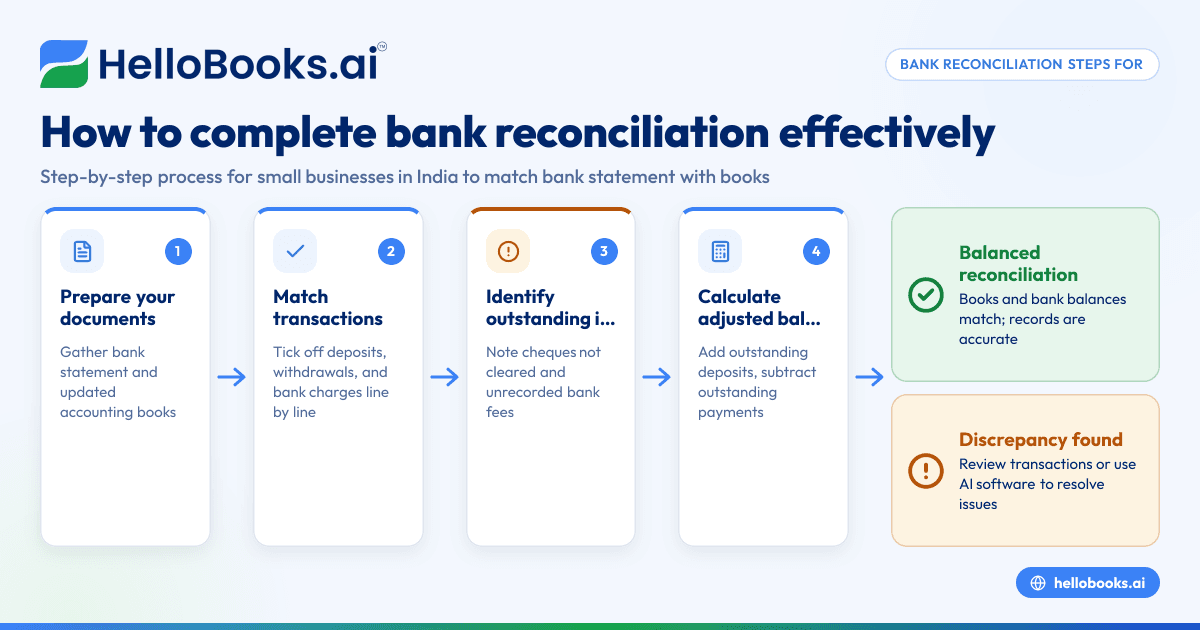
AI automation software matches bank statement entries with invoices, payments, and expenses recorded in your books, flagging any mismatches or missing transactions.
Bank reconciliation is tedious but vital to confirm your cash balance matches bank records. AI tools scan digital bank statements, like those from SBI or ICICI, and look for matching amounts, dates, and invoice references in your accounting software. When an entry can’t be matched automatically, the system alerts you for manual review. Over time, the AI learns your transaction patterns, improving match accuracy.
This automated reconciliation saves hours compared to manual tracing, identifies duplicates or missed entries quickly, and reduces errors that could impact GST filings or cash flow forecasts.
Why must I keep checking AI bookkeeping accuracy regularly?
AI bookkeeping reduces routine errors but is not infallible. Regular review catches exceptions, software misinterpretations, or input mistakes, ensuring books are audit-ready and GST-compliant.
India’s complex tax environment and frequent rule changes mean AI systems need guidance. For example, if a GST rate for a product changes, AI may misclassify sales tax until updated. Without human checks, you risk incorrect GST filings or under/overstated liabilities.
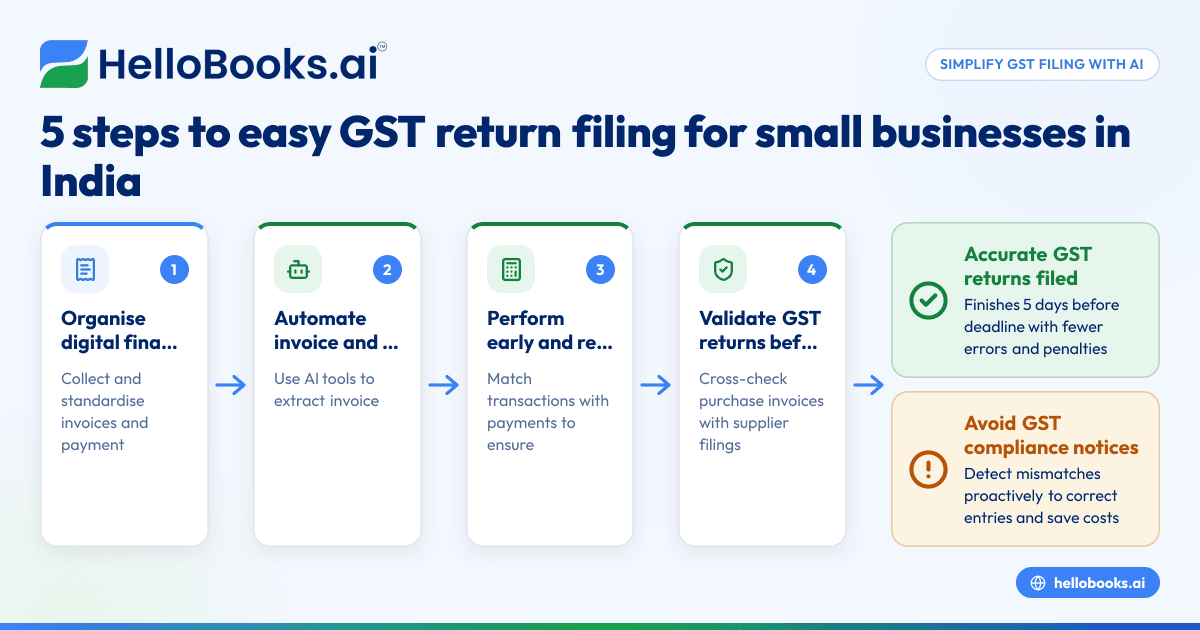
Compliance deadlines for GST return filing (like GSTR-1 and GSTR-3B) require authentic, reconciled data. A finance lead in Bengaluru or Pune should review reports generated by AI-powered bookkeeping before submission. Periodic audits also help detect fraud or data leaks.
How do I get started with AI bookkeeping at my small business?
Start by choosing AI accounting software that integrates well with your existing tools—whether that’s a Tally alternative or invoice software that supports GST e-invoicing. Upload or sync your invoices, bank statements, and expense records.
Train your team to input clean data and review AI-suggested entries daily or weekly. Gradually, as the AI tool builds understanding of your business transactions, its accuracy will improve. Use the software’s reporting features to keep track of cash flow, outstanding payments, and GST obligations.
Remember to backup your data and maintain compliance with DPDP Act 2023 regulations on data privacy. If you are unsure, find a capable accountant familiar with AI tools and Indian tax laws to support you.
Example: AI bookkeeping in a Mumbai-based small manufacturing firm
ABC Manufacturing in Mumbai has around ₹80 lakh in yearly revenue and buys raw materials from vendors through IndiaMART. They use helloBooks.ai as their AI-powered bookkeeping software. Instead of manually entering purchase bills into Tally, their finance lead uploads supplier PDFs. The AI tool automatically extracts invoice details, matches payments received via Razorpay and UPI, and reconciles them with bank statements from HDFC.
The AI automation flags discrepancies whenever GST rates change for specific items or when an unexpected credit note is issued. The finance lead reviews these alerts weekly, correcting entries before filing GST returns. This process has cut data entry time by over 50% while improving the accuracy of their monthly financial reports.
How do I keep AI bookkeeping accurate as my business grows?
Keep your bookkeeping system updated with your latest invoices, expenses, and bank data regularly. When you introduce new products or services, ensure your AI software is trained or updated to recognise new transaction types and GST classifications.
Review automated entries frequently—especially around GST return deadlines—and address mismatches or unusual entries promptly. Train your staff in the interplay between AI tools and manual compliance needs, including maintaining privacy under DPDP Act 2023.
Integrate AI bookkeeping within your broader accounting workflow and maintain communication with your accountant or finance expert to handle complex cases or audits. Doing this keeps your books tidy as your Bengaluru or Pune based SME scales from lakhs to crores in turnover.
Using AI bookkeeping for small business can significantly reduce time spent on routine tasks and improve financial accuracy. But it requires an informed approach and human oversight to leverage it fully and comply with India’s tax environment.
Ready to streamline your bookkeeping with AI? You can book a demo to see helloBooks.ai in action or compare plans to find what suits your business needs.
Related reading
- AI bookkeeping
- How Small Businesses Can Use AI Bookkeeping Tools Without Losing Control, Supported with Caveats
- What to Know Before Using AI Bookkeeping for Your Small Business in India
Read next
This article covers one part of a bigger topic. For the complete picture, read our guide to supported with caveat.