


Key takeaways
What this article covers, in order:
- GSTR-3B ਅਸਲ ਵਿੱਚ ਕੀ ਹੈ, ਤੇ ਇਹ free filing ਕਿੱਥੇ ਹੁੰਦੀ ਹੈ?
- Portal ਖੋਲ੍ਹਣ ਤੋਂ ਪਹਿਲਾਂ ਕਿਹੜੇ ਰਿਕਾਰਡ ready ਹੋਣੇ ਚਾਹੀਦੇ ਹਨ
- GSTR-3B ਦੇ numbers ਕਿਥੋਂ ਆਉਂਦੇ ਹਨ, ਅਤੇ ਕਿਥੇ ਧਿਆਨ ਦੇਣਾ ਪੈਂਦਾ ਹੈ
- GST Portal ‘ਤੇ GSTR-3B file ਕਰਨ ਦਾ practical flow
- Punjab ਦੇ traders ਅਤੇ service businesses ਜਿੱਥੇ ਵੱਧ ਫਸਦੇ ਹਨ
- ਇੱਕ ਇਮਾਨਦਾਰ illustration: invented figures ਨਾਲ ਸਮਝੋ return ਕਿਵੇਂ ਬਣਦੀ ਹੈ
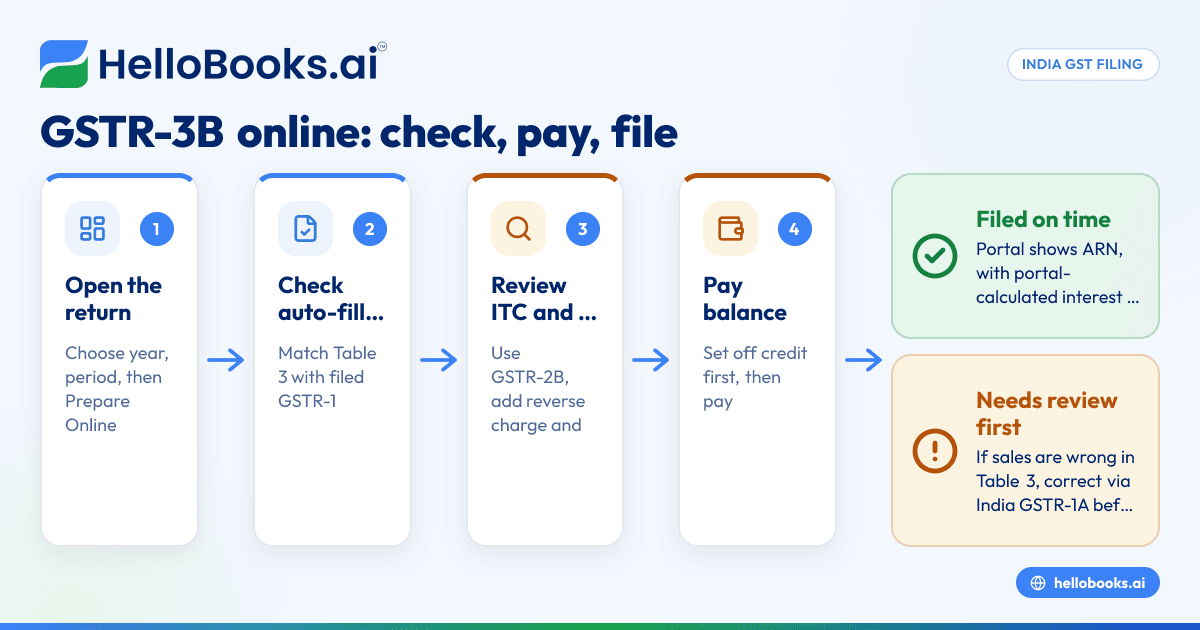
India ਵਿੱਚ GSTR-3B ਫ੍ਰੀ ਆਨਲਾਈਨ ਫਾਈਲ ਕਰਨ ਦਾ ਸਿੱਧਾ ਤਰੀਕਾ ਇਹ ਹੈ: GST Portal ‘ਤੇ ਜਾ ਕੇ ਆਪਣਾ tax period ਚੁਣੋ, auto-filled outward supplies ਨੂੰ ਆਪਣੇ GSTR-1 ਨਾਲ ਮਿਲਾਓ, GSTR-2B ਦੇ against ITC ਚੈੱਕ ਕਰੋ, reverse charge ਅਤੇ reversals verify ਕਰੋ, electronic cash ledger/credit ledger set-off ਵੇਖੋ, ਫਿਰ return submit ਅਤੇ file ਕਰੋ। GSTR-3B ਭਰਨ ਦਾ ਅਸਲ ਕੰਮ typing ਨਹੀਂ, reconciliation ਹੈ—ਅਤੇ ਇਹੀ ਜਗ੍ਹਾ ‘ਤੇ ਪੰਜਾਬ ਦੇ traders, service providers ਅਤੇ small businesses ਸਭ ਤੋਂ ਵੱਧ ਫਸਦੇ ਹਨ।
GSTR-3B ਅਸਲ ਵਿੱਚ ਕੀ ਹੈ, ਤੇ ਇਹ free filing ਕਿੱਥੇ ਹੁੰਦੀ ਹੈ?
GSTR-3B ਇੱਕ summary return ਹੈ ਜੋ Goods and Services Tax regime ਹੇਠ file ਹੁੰਦੀ ਹੈ। ਇਸਦੀ legal framework Central Goods and Services Tax Act, 2017 ਅਤੇ ਉਸ ਨਾਲ ਜੁੜੀਆਂ rules ਵਿੱਚ ਬੈਠਦੀ ਹੈ, ਅਤੇ practical filing GSTN ਵੱਲੋਂ ਚਲਾਏ ਜਾਂਦੇ GST Portal ‘ਤੇ ਹੁੰਦੀ ਹੈ, ਜਦਕਿ indirect tax administration ਦਾ regulator CBIC ਹੈ। ਜੇ ਤੁਸੀਂ ਕਿਸੇ ਵੀ current table structure, advisory, filing flow, validation rule, due date ਜਾਂ system change ਬਾਰੇ ਪੱਕਾ ਜਾਣਨਾ ਚਾਹੁੰਦੇ ਹੋ, official source GST Portal ਦੇ advisories/news ਅਤੇ CBIC notifications/circulars ਹਨ।
"Free" ਦਾ practical ਮਤਲਬ ਆਮ ਤੌਰ ‘ਤੇ ਇਹ ਹੁੰਦਾ ਹੈ ਕਿ ਤੁਸੀਂ portal ‘ਤੇ ਖੁਦ return file ਕਰ ਰਹੇ ਹੋ, software fee ਦਿੱਤੇ ਬਿਨਾਂ। ਪਰ free filing ਦਾ ਮਤਲਬ ਇਹ ਨਹੀਂ ਕਿ reconciliation ਆਪ ਹੋ ਜਾਏਗੀ। ਜੇ ਤੁਹਾਡੀਆਂ invoices, purchase bills, bank receipts, e-invoice data, e-way bill movements ਅਤੇ GSTIN-wise books scattered ਹਨ, ਤਾਂ portal free ਹੋਣ ਦੇ ਬਾਵਜੂਦ ਸਮਾਂ ਅਤੇ rework ਮਹਿੰਗਾ ਪੈਂਦਾ ਹੈ।
Portal ਖੋਲ੍ਹਣ ਤੋਂ ਪਹਿਲਾਂ ਕਿਹੜੇ ਰਿਕਾਰਡ ready ਹੋਣੇ ਚਾਹੀਦੇ ਹਨ
GSTR-3B file ਕਰਨ ਤੋਂ ਪਹਿਲਾਂ ਸਿਰਫ sales total ਜਾਣਨਾ ਕਾਫੀ ਨਹੀਂ। India ਵਿੱਚ ਇੱਕ clean filing ਲਈ ਆਮ ਤੌਰ ‘ਤੇ ਇਹ ਚੀਜ਼ਾਂ ready ਹੋਣੀਆਂ ਚਾਹੀਦੀਆਂ ਹਨ:
- ਉਸ tax period ਦੀ outward supply summary, preferably filed GSTR-1 ਦੇ basis ‘ਤੇ
- GSTR-2B, ਤਾਂ ਜੋ ITC claim blindly ਨਾ ਹੋਵੇ
- purchase bills, ਖਾਸ ਕਰਕੇ ਜਿੱਥੇ supplier data late reflect ਹੁੰਦਾ ਹੈ
- reverse charge ਵਾਲੀਆਂ inward supplies ਦਾ record
- credit notes, debit notes, advances ਜਾਂ adjustments ਜਿੱਥੇ relevant ਹੋਣ
- electronic cash ledger ਅਤੇ electronic credit ledger ਦੀ position
- bank statement, ਤਾਂ ਜੋ receipts ਅਤੇ tax payments books ਨਾਲ ਮਿਲ ਜਾਣ
- ਜੇ goods move ਹੋਏ ਹਨ, ਤਾਂ related e-way bill trail
ਇੱਥੇ ਇੱਕ practical Punjab-style issue ਆਉਂਦਾ ਹੈ: ਕਈ businesses invoice Tally ਵਿੱਚ, bank reconciliation Excel ਵਿੱਚ, purchase bills WhatsApp/PDF ਵਿੱਚ, ਅਤੇ GST working CA ਦੀ side sheet ਵਿੱਚ ਰੱਖਦੇ ਹਨ। ਨਤੀਜਾ—GSTR-1, GSTR-3B ਅਤੇ books ਵਿੱਚ mismatch। ਇਸ ਕਰਕੇ ਕੁਝ businesses bank reconciliation software ਜਾਂ accounting software india ਵਰਗੇ tools ਵਰਤਦੇ ਹਨ, ਜਿੱਥੇ bank statement upload ਕਰਕੇ AI reconciliation ਹੋ ਜਾਂਦੀ ਹੈ, OCR ਨਾਲ purchase bills capture ਹੋ ਜਾਂਦੇ ਹਨ, ਅਤੇ GST figures return ਤੱਕ consistent ਰਹਿੰਦੇ ਹਨ।
GSTR-3B ਦੇ numbers ਕਿਥੋਂ ਆਉਂਦੇ ਹਨ, ਅਤੇ ਕਿਥੇ ਧਿਆਨ ਦੇਣਾ ਪੈਂਦਾ ਹੈ
ਬਹੁਤ ਲੋਕ ਸੋਚਦੇ ਹਨ ਕਿ GSTR-3B ਇੱਕ manual form ਹੈ। ਹਕੀਕਤ ਵਿੱਚ, ਹੁਣ return ਦਾ ਵੱਡਾ ਹਿੱਸਾ source data ‘ਤੇ ਨਿਰਭਰ ਕਰਦਾ ਹੈ। Outward liability ਦਾ logic GSTR-1 data ਨਾਲ ਜੁੜਿਆ ਹੋਇਆ ਹੈ। ITC side GSTR-2B ਨਾਲ tightly linked ਹੈ। ਇਸ ਲਈ GSTR-3B ਇੱਕ "last-mile check" return ਬਣ ਚੁੱਕੀ ਹੈ।
ਤੁਹਾਨੂੰ ਖਾਸ ਤੌਰ ‘ਤੇ ਇਹ ਚੀਜ਼ਾਂ ਵੇਖਣੀਆਂ ਪੈਂਦੀਆਂ ਹਨ:
- ਕੀ outward taxable supplies books, invoices ਅਤੇ GSTR-1 ਵਿੱਚ same logic ਨਾਲ report ਹੋਈਆਂ ਹਨ?
- ਕੀ place of supply ਸਹੀ ਸੀ, ਤਾਂ ਜੋ CGST+SGST ਜਾਂ IGST split ਗਲਤ ਨਾ ਹੋਇਆ ਹੋਵੇ?
- ਕੀ reverse charge ਵਾਲੀ liability miss ਤਾਂ ਨਹੀਂ ਹੋਈ?
- ਕੀ GSTR-2B ਤੋਂ ਬਾਹਰ ਵਾਲਾ ITC गलਤੀ ਨਾਲ claim ਤਾਂ ਨਹੀਂ ਹੋ ਰਿਹਾ?
- ਕੀ blocked credit, personal use ਜਾਂ exempt business proportion ਕਾਰਨ ਕੋਈ reversal ਲਾਗੂ ਹੈ?
- ਕੀ cash ledger ਵਿੱਚ deposit ਅਤੇ liability set-off properly ਹੋਏ ਹਨ?
ਇਹੀ ਥਾਂ ‘ਤੇ clean invoicing matter ਕਰਦੀ ਹੈ। ਜੇ sale ਬਣਾਉਂਦੇ ਸਮੇਂ ਹੀ GSTIN, place of supply, HSN/SAC ਅਤੇ tax head split ਸਹੀ ਹੋਵੇ, ਤਾਂ 3B ਵੇਲੇ surprises ਘੱਟ ਹੁੰਦੇ ਹਨ. ਇਸ ਲਈ businesses ਆਮ ਤੌਰ ‘ਤੇ smart invoicing ਜਾਂ gst return filing software ਵਰਗਾ setup ਲੈਂਦੇ ਹਨ, ਜਿੱਥੇ invoice ਤੋਂ return ਤੱਕ same base data ਚਲਦਾ ਹੈ। HelloBooks ਵਿੱਚ GST invoice ਬਣਾਉਂਦੇ ਸਮੇਂ CGST, SGST ਜਾਂ IGST split place-of-supply ਦੇ ਨਾਲ consistent ਰਹਿੰਦਾ ਹੈ, ਅਤੇ same entries ਤੋਂ GSTR-1 ਅਤੇ GSTR-3B direct filing ਹੋ ਸਕਦੀ ਹੈ।
GST Portal ‘ਤੇ GSTR-3B file ਕਰਨ ਦਾ practical flow
Portal experience time ਨਾਲ ਬਦਲ ਸਕਦਾ ਹੈ, ਇਸ ਲਈ exact screen labels ਜਾਂ validations ਲਈ GST Portal ਦੇ current instructions follow ਕਰੋ। Broad practical flow ਆਮ ਤੌਰ ‘ਤੇ ਇਹ ਹੁੰਦਾ ਹੈ:
ਪਹਿਲਾਂ GST Portal ਵਿੱਚ login ਕਰਕੇ return dashboard ‘ਤੇ ਆਪਣਾ financial year ਅਤੇ tax period select ਕਰੋ। ਉੱਥੇ GSTR-3B ਖੋਲ੍ਹੋ। ਕੁਝ sections auto-populate ਹੋ ਸਕਦੇ ਹਨ, ਇਸ ਲਈ form open ਕਰਦੇ ਹੀ figures accept ਨਾ ਕਰੋ—cross-check ਕਰੋ।
ਫਿਰ outward supplies ਵਾਲਾ ਹਿੱਸਾ ਵੇਖੋ। ਜੇ ਤੁਹਾਡੇ records ਵਿੱਚ inter-state supplies ਸਨ, verify ਕਰੋ ਕਿ ਉਹ IGST side ‘ਤੇ ਹੀ carry ਹੋ ਰਹੀਆਂ ਹਨ; local Punjab sale ਜਾਂ same-state supply ਲਈ CGST/SGST logic ਹੀ ਹੋਣਾ ਚਾਹੀਦਾ ਹੈ। Goods movement ਹੋਈ ਹੋਵੇ ਤਾਂ e-way bill trail ਨਾਲ sales dispatch consistency ਵੀ ਦੇਖੋ।
ਅਗਲਾ critical part ITC ਹੈ। GSTR-2B ਦੇ figures ਵੇਖੋ, ਪਰ purchase register, supplier bills ਅਤੇ actual eligibility ਨਾਲ compare ਵੀ ਕਰੋ। ਸਿਰਫ ਇਸ ਲਈ credit ਨਾ ਲਓ ਕਿ invoice WhatsApp ‘ਤੇ ਮਿਲ ਗਿਆ ਸੀ। ITC claim ਦੀ current eligibility, restrictions ਅਤੇ conditions Central Goods and Services Tax Act, 2017, related rules, CBIC circulars ਅਤੇ GST Portal guidance ਵਿੱਚ published ਹੁੰਦੀਆਂ ਹਨ; ਕੋਈ current claim position facts-specific ਹੋਵੇ ਤਾਂ NEEDS EXPERT REVIEW.
Reverse charge ਵਾਲੀਆਂ inward supplies ignore ਨਾ ਕਰੋ। Advocate fee, GTA, certain notified services ਜਾਂ ਹੋਰ notified cases ਜਿੱਥੇ applicable ਹੋਣ, ਉਹਨਾਂ ਦੀ liability business ਦੇ ਆਪਣੇ records ਤੋਂ ਆਉਂਦੀ ਹੈ; supplier statement ‘ਤੇ rely ਕਰਨਾ ਕਾਫੀ ਨਹੀਂ। Reverse charge applicability notified categories ਅਨੁਸਾਰ CBIC notifications ਵਿੱਚ published ਹੁੰਦੀ ਹੈ; specific transaction classification NEEDS EXPERT REVIEW.
ਫਿਰ set-off stage ‘ਤੇ electronic credit ledger ਅਤੇ electronic cash ledger check ਕਰੋ। Cash payment bank ਤੋਂ ਆਉਣੀ ਹੈ, ਪਰ portal filing ਤੋਂ ਪਹਿਲਾਂ books ਵਿੱਚ bank debit, challan/payment trail ਅਤੇ liability logic align ਹੋਣਾ ਚਾਹੀਦਾ ਹੈ। ਜੇ ਤੁਸੀਂ NEFT, RTGS, IMPS ਜਾਂ ਹੋਰ banking rails ਰਾਹੀਂ working capital manage ਕਰਦੇ ਹੋ, ਤਾਂ monthly bank statement upload ਕਰਕੇ reconciliation ਪਹਿਲਾਂ ਕਰਨਾ filing-day stress ਘਟਾਂਦਾ ਹੈ। HelloBooks ਵਿੱਚ India ਲਈ bank statement upload ਅਤੇ AI reconciliation ਨਾਲ receipt/invoice matching ਹੋ ਜਾਂਦੀ ਹੈ, ਤਾਂ portal filing ਤੋਂ ਪਹਿਲਾਂ books cleaner ਰਹਿੰਦੇ ਹਨ।
ਸਭ ਕੁਝ verify ਹੋਣ ‘ਤੇ preview/download summary ਵੇਖੋ, authorized signatory validation complete ਕਰੋ, ਫਿਰ file ਕਰੋ। Filing method ਅਤੇ authentication flow ਦਾ current process GST Portal ‘ਤੇ published ਹੁੰਦਾ ਹੈ।
Punjab ਦੇ traders ਅਤੇ service businesses ਜਿੱਥੇ ਵੱਧ ਫਸਦੇ ਹਨ
Punjab ਵਿੱਚ wholesale trade, transport-linked supply chains, agri-input distribution, machine parts, textile, hardware, job work, clinics, consultancies ਅਤੇ local services ਵਿੱਚ ਇੱਕ pattern ਵਾਰ-ਵਾਰ ਵੇਖਣ ਨੂੰ ਮਿਲਦਾ ਹੈ: sales report ਹੋ ਜਾਂਦੀ ਹੈ, ਪਰ supporting records fragmented ਰਹਿੰਦੇ ਹਨ।
ਕੁਝ typical trouble spots ਇਹ ਹਨ:
1) Inter-state vs intra-state mix-up
Ludhiana ਤੋਂ Haryana, Delhi ਜਾਂ Jammu dispatch ਹੋਇਆ, ਪਰ invoice local tax head ਨਾਲ ਬਣ ਗਿਆ। ਇਸ ਨਾਲ GSTR-1, 3B ਅਤੇ customer ITC chain ਤਿੰਨਾਂ ‘ਚ issue ਬਣ ਸਕਦਾ ਹੈ। Place-of-supply mistakes ਲਈ law CGST/IGST framework ਅਤੇ CBIC/GST Portal guidance ਵਿੱਚ explain ਕੀਤਾ ਜਾਂਦਾ ਹੈ; transaction-level interpretation NEEDS EXPERT REVIEW.
2) Purchase bill book ਵਿੱਚ ਹੈ, ਪਰ GSTR-2B ਵਿੱਚ ਨਹੀਂ
Supplier ਨੇ upload late ਕੀਤਾ, wrong GSTIN ਲਾਇਆ, ਜਾਂ invoice report ਹੀ ਨਾ ਕੀਤਾ। Business owner ਨੇ bill ਦੇ photo ਦੇ ਆਧਾਰ ‘ਤੇ ITC count ਕਰ ਲਿਆ। Return ਵੇਲੇ mismatch ਖੜ੍ਹਾ ਹੋ ਗਿਆ। HelloBooks ਵਿੱਚ OCR ਨਾਲ purchase bills capture ਕਰਕੇ GSTR-2A/2B reconciliation ਅਤੇ ITC tracking ਹੁੰਦੀ ਹੈ, ਤਾਂ missing supplier invoices ਪਹਿਲਾਂ ਨਜ਼ਰ ਆ ਜਾਂਦੀਆਂ ਹਨ।
3) E-invoice ਅਤੇ books ਵਿੱਚ disconnect
ਜੇ business ‘ਤੇ e-invoicing apply ਕਰਦੀ ਹੈ, ਤਾਂ IRN ਅਤੇ signed QR ਵਾਲਾ invoice data books ਨਾਲ aligned ਹੋਣਾ ਚਾਹੀਦਾ ਹੈ। Applicability thresholds ਅਤੇ notifications bare fact ਵਜੋਂ quote ਕਰਨ ਦੀ ਥਾਂ current figure CBIC notifications ਅਤੇ GST Portal advisories ਵਿੱਚ check ਕਰੋ। HelloBooks ਵਿੱਚ eligible businesses ਲਈ invoice save ਵੇਲੇ IRN ਅਤੇ signed QR workflow handle ਹੋ ਜਾਂਦਾ ਹੈ, ਜਿਸ ਨਾਲ JSON juggling ਘੱਟ ਹੁੰਦੀ ਹੈ।
4) E-way bill dispatch ਹੈ, ਪਰ sale posting late ਹੈ
Goods nikal ਗਏ, e-way bill ਬਣ ਗਿਆ, ਪਰ books ਵਿੱਚ invoice ਜਾਂ date mismatch ਰਹਿ ਗਿਆ। Month-end return ਵੇਲੇ outward liability reconstruction ਕਰਨੀ ਪੈਂਦੀ ਹੈ। Dispatch-heavy businesses ਲਈ e-way bill software ਅਤੇ inventory-linked invoicing ਇਸ gap ਨੂੰ ਘਟਾਉਂਦੇ ਹਨ।
5) Multiple GSTINs, one messy workbook
Punjab ਦੇ ਨਾਲ Chandigarh, Delhi ਜਾਂ Haryana GSTIN separately operate ਕਰ ਰਹੇ businesses ਅਕਸਰ one-sheet accounting ਕਰਦੇ ਹਨ। ਫਿਰ IGST, branch-wise stock, receivables ਅਤੇ return data mix ਹੋ ਜਾਂਦੇ ਹਨ। HelloBooks ਵਿੱਚ multi-GSTIN handling ਇੱਕ login ਹੇਠ possible ਹੈ, ਇਸ ਲਈ state-wise filing cleaner ਰਹਿੰਦੀ ਹੈ।
ਇੱਕ ਇਮਾਨਦਾਰ illustration: invented figures ਨਾਲ ਸਮਝੋ return ਕਿਵੇਂ ਬਣਦੀ ਹੈ
ਹੇਠਾਂ ਦਿੱਤੇ figures illustrative ਅਤੇ invented ਹਨ। ਇਹ ਕਿਸੇ real taxpayer ਦੇ numbers ਨਹੀਂ ਹਨ, ਅਤੇ ਇਹ calculation ਹਰ fact pattern cover ਨਹੀਂ ਕਰਦੀ—ਜਿਵੇਂ exempt supplies ratio, complex reversals, sector-specific notifications, amendments, credit notes timing, valuation disputes ਜਾਂ litigation points ਇਸ simplified illustration ਵਿੱਚ ਸ਼ਾਮਲ ਨਹੀਂ ਹਨ.
ਮੰਨ ਲਓ Amritsar ਦੇ ਇੱਕ trader ਨੇ ਇੱਕ tax period ਵਿੱਚ total taxable outward supplies ₹8,40,000 report ਕੀਤੀਆਂ। ਇਨ੍ਹਾਂ ਵਿੱਚੋਂ ₹5,00,000 same-state sales ਹਨ ਅਤੇ ₹3,40,000 inter-state sales ਹਨ। Books ਵਿੱਚ ਕੁਝ purchase bills ਦਾ total ₹4,90,000 ਹੈ, ਪਰ GSTR-2B ਵਿੱਚ eligible reflected invoices ਸਿਰਫ ₹4,20,000 ਦੇ ਮਿਲ ਰਹੇ ਹਨ। ਇੱਕ legal service bill reverse charge category ਵਿੱਚ ਆ ਸਕਦਾ ਹੈ, ਜਿਸਦੀ value illustration ਲਈ ₹12,000 ਮੰਨ ਲਵੋ.
ਇਸ situation ਵਿੱਚ practical filing logic ਇਹ ਹੋਵੇਗਾ:
- outward tax liability ਦਾ base sales reporting ਤੋਂ ਆਵੇਗਾ, not guesswork
- same-state sales ਲਈ CGST ਅਤੇ SGST split local nature ਮੁਤਾਬਕ ਬਣੇਗਾ
- inter-state sales ਲਈ IGST side reflect ਹੋਵੇਗੀ
- purchase register ਵਿੱਚ ਜੋ bills ਹਨ, ਉਹਨਾਂ ਵਿੱਚੋਂ ITC ਲਈ ਸਿਰਫ eligible and reflected credits ‘ਤੇ conservative view ਲਿਆ ਜਾਵੇਗਾ, subject to law and facts
- reverse charge bill ਨੂੰ separate liability angle ਨਾਲ ਵੇਖਿਆ ਜਾਵੇਗਾ
- ਜੇ electronic credit ledger ਨਾਲ liability fully set-off ਨਹੀਂ ਹੁੰਦੀ, balance cash ledger ਤੋਂ ਭਰੀ ਜਾਵੇਗੀ
ਇਸ example ਦਾ point number ਯਾਦ ਕਰਵਾਉਣਾ ਨਹੀਂ, logic ਸਮਝਾਉਣਾ ਹੈ: GSTR-3B books, invoices, GSTR-1, GSTR-2B ਅਤੇ liability set-off ਦੇ बीच reconciliation exercise ਹੈ। ਜੇ base entries ਸਹੀ ਹਨ, return relatively easy ਹੈ; ਜੇ entries messy ਹਨ, portal free ਹੋਣ ਦੇ ਬਾਵਜੂਦ return expensive mistake ਬਣ ਸਕਦੀ ਹੈ।
Free portal filing ਕਦੋਂ ਠੀਕ ਹੈ, ਤੇ ਕਦੋਂ process tool ਲੈਣਾ ਚਾਹੀਦਾ ਹੈ
ਜੇ ਤੁਹਾਡਾ business simple ਹੈ—ਮਤਲਬ limited invoices, one GSTIN, low purchase volume, no serious reverse charge complexity, limited stock movement—ਤਾਂ GST Portal ‘ਤੇ self-filing workable ਹੋ ਸਕਦੀ ਹੈ। Current official filing utilities, advisories ਅਤੇ instructions GST Portal ‘ਤੇ published ਹੁੰਦੀਆਂ ਹਨ.
ਪਰ ਜੇ ਤੁਹਾਡੇ ਕੋਲ ਇਹਨਾਂ ਵਿੱਚੋਂ ਕਈ situations ਹਨ, ਤਾਂ सिर्फ portal ਕਾਫੀ ਨਹੀਂ ਰਹਿੰਦਾ:
- ਹਰ ਮਹੀਨੇ hundreds of invoices
- inventory movement ਅਤੇ dispatches
- e-invoice/IRN requirements
- regular inter-state sales
- supplier mismatch problems
- purchase bills mostly PDF/photo form ਵਿੱਚ
- Tally data migration ਜਾਂ parallel books issue
- multiple staff handling accounts
- CA ਨੂੰ last-day compilation ਭੇਜਣ ਦੀ ਆਦਤ
ਅਜਿਹੇ cases ਵਿੱਚ software ਦੀ value filing button ਨਹੀਂ, bookkeeping discipline ਹੁੰਦੀ ਹੈ। HelloBooks ਇਸ context ਵਿੱਚ useful ਹੁੰਦਾ ਹੈ ਕਿਉਂਕਿ invoice ਤੋਂ return ਤੱਕ same data flow ਰਹਿੰਦਾ ਹੈ: GST invoices, e-invoicing where applicable, GSTR-1 ਅਤੇ GSTR-3B direct filing, OCR purchase capture, GSTR-2A/2B reconciliation, inventory movement, TDS/TCS and reverse charge handling, ਅਤੇ financial reports ਸਭ ਇੱਕ ਹੀ workflow ਵਿੱਚ ਆ ਜਾਂਦੇ ਹਨ। ਜੇ ਤੁਸੀਂ Tally ਤੋਂ move ਕਰ ਰਹੇ ਹੋ ਜਾਂ compare ਕਰਨਾ ਚਾਹੁੰਦੇ ਹੋ, tally alternative ਅਤੇ HelloBooks vs Tally ਵਾਲੀ comparison useful ਹੋ ਸਕਦੀ ਹੈ। Pricing ਲਈ number quote ਕਰਨ ਦੀ ਥਾਂ current plans pricing ‘ਤੇ ਵੇਖੋ, ਜਾਂ direct demo ਮੰਗ ਸਕਦੇ ਹੋ।
Filing ਤੋਂ ਪਹਿਲਾਂ final checks ਜੋ ਵਾਕਈ ਕੰਮ ਆਉਂਦੇ ਹਨ
Return file ਕਰਨ ਤੋਂ ਥੋੜ੍ਹਾ ਪਹਿਲਾਂ ਇਹ short checklist practical ਤੌਰ ‘ਤੇ ਸਭ ਤੋਂ useful ਹੁੰਦੀ ਹੈ:
- GSTR-1 figures ਅਤੇ GSTR-3B outward liability logic aligned ਹਨ?
- inter-state/intra-state split sane ਲੱਗਦੀ ਹੈ?
- GSTRIN of major customers/suppliers typo-free ਹਨ?
- GSTR-2B ਤੋਂ ਬਾਹਰ ਵਾਲਾ ITC accidentally count ਤਾਂ ਨਹੀਂ ਹੋਇਆ?
- reverse charge cases separately reviewed ਹਨ?
- purchase bills photo/PDF form ਵਿੱਚ pending ਤਾਂ ਨਹੀਂ?
- bank statement ਨਾਲ major receipts/payments reconcile ਹਨ?
- e-way bill dispatches ਅਤੇ invoices quantity/date side ‘ਤੇ broadly match ਕਰਦੇ ਹਨ?
- multiple GSTIN business ਹੈ ਤਾਂ correct GSTIN ਵਿੱਚ ਹੀ return ਖੁੱਲੀ ਹੈ?
ਜਿੱਥੇ doubt ਹੋਵੇ, portal ‘ਤੇ file ਕਰਨ ਤੋਂ ਪਹਿਲਾਂ official GST Portal guidance, CBIC notifications/circulars ਅਤੇ Central Goods and Services Tax Act, 2017 ਦੀ relevant provisions ਵੇਖੋ। Interest, late fee, penalty, deadlines, thresholds ਜਾਂ form behavior ਬਾਰੇ ਕੋਈ ਵੀ current figure official source ਤੋਂ verify ਕਰੋ; otherwise NEEDS EXPERT REVIEW.
ਜੇ ਤੁਹਾਨੂੰ filing ਤੋਂ ਪਹਿਲਾਂ ਸਿਰਫ ਇੱਕ quick sanity check ਚਾਹੀਦੀ ਹੈ, ਤਾਂ free tools ਵੀ ਕੰਮ ਦੇ ਹਨ—ਜਿਵੇਂ GSTIN validator, HSN code search, GST calculator ਜਾਂ GST reconciliation checker।
ਅਖੀਰਲੀ ਗੱਲ ਸਧੀ ਹੈ: GSTR-3B free file ਕਰਨਾ ਮੁਸ਼ਕਲ ਨਹੀਂ; messy data ਨਾਲ correctly file ਕਰਨਾ ਮੁਸ਼ਕਲ ਹੈ। India ਵਿੱਚ ਜੋ business invoice, purchase bill, bank statement, e-invoice, e-way bill ਅਤੇ GST reconciliation ਨੂੰ month-end ਤੋਂ ਪਹਿਲਾਂ control ਕਰ ਲੈਂਦਾ ਹੈ, ਉਸ ਲਈ portal filing routine ਬਣ ਜਾਂਦੀ ਹੈ—panic day ਨਹੀਂ।


