


Key takeaways
What this article covers, in order:
- GSTR-1 नेमकं कशासाठी आहे, आणि भारतात ते इतकं महत्त्वाचं का आहे
- Login करण्याआधी भारतातल्या व्यापाऱ्यांनी काय पडताळून पाहावं
- GSTR-1 मधल्या कोणत्या tables बहुतेक व्यवसाय प्रत्यक्षात वापरतात
- GST portal वर manually filing करताना प्रत्यक्ष flow कसा असतो
- Books मधून direct file केल्यावर workload कसा बदलतो
- एक प्रामाणिक, illustrative आणि invented गणित पाहूया
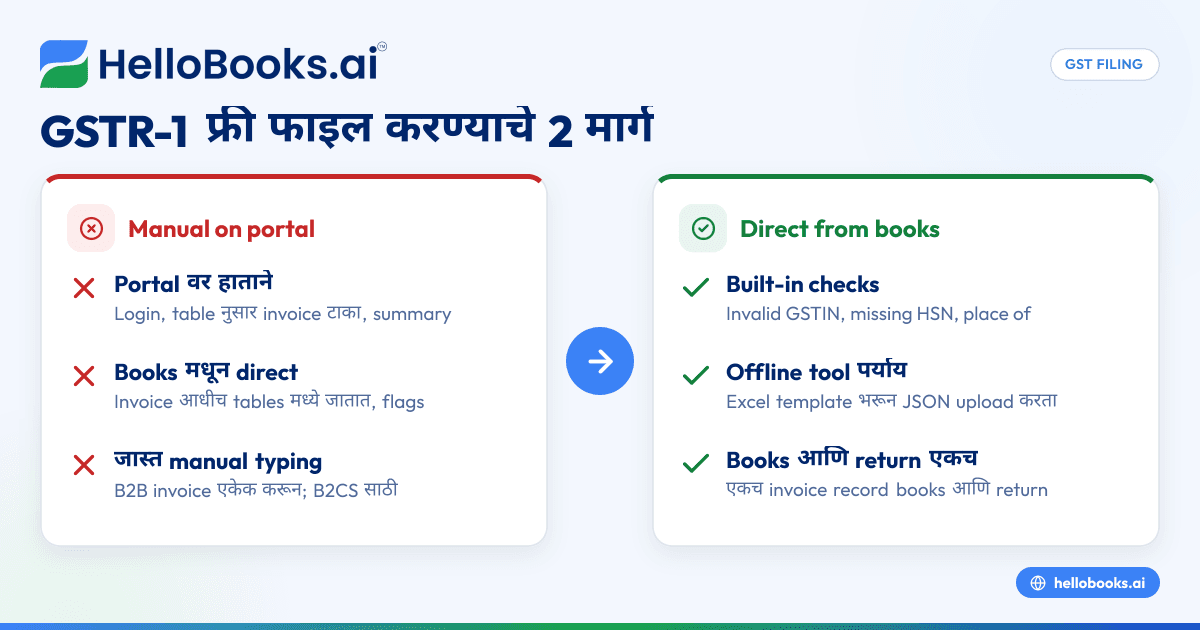
भारतामध्ये GSTR-1 ऑनलाइन फाइल करण्यासाठी तुम्ही साधारण दोन मार्ग वापरता: GSTN चालवलेल्या GST portal वर स्वतः invoice data भरून, किंवा तुमच्या accounting records मधून return तयार करून direct file करून. जर invoices कमी असतील तर portal पुरेसं असू शकतं; पण GSTIN, place of supply, CGST/SGST विरुद्ध IGST, credit notes, HSN summary आणि documents series यांत चुका टाळायच्या असतील तर books-first पद्धत जास्त सुरक्षित ठरते. GSTR-1 हा outward supplies चा return आहे, आणि त्याचं framework Central Goods and Services Tax Act, 2017 आणि संबंधित नियमांखाली Central Board of Indirect Taxes and Customs (CBIC) व GSTN/GST portal वर प्रकाशित केलं जातं.
GSTR-1 नेमकं कशासाठी आहे, आणि भारतात ते इतकं महत्त्वाचं का आहे
GSTR-1 म्हणजे तुमच्या outward supplies ची statement. तुम्ही B2B sales केल्या असतील, B2C supplies दिल्या असतील, credit note/debit note काढले असतील, export केले असेल, SEZ supply केली असेल, किंवा e-commerce operator मार्फत काही व्यवहार झाले असतील, तर त्याचं reporting इथे येतं. Current filing frequency, applicability, tables आणि instructions या सर्व गोष्टी GST law अंतर्गत CBIC च्या notifications, rules आणि GST portal वरील return instructions मध्ये प्रकाशित केल्या जातात; specific current numbers portal वर verify कराव्यात.
याचं practical महत्त्व फक्त compliance इतकंच नाही. तुमच्या buyer ला ITC दिसणं, तुमच्या books आणि GSTR-3B मध्ये consistency राहणं, आणि पुढे notice आला तर sales register, invoice copies, e-invoice IRN, e-way bill आणि bank entries यांची chain जुळणं—हे सगळं याच्याशी जोडलेलं असतं. म्हणून GSTR-1 हे “एक return” नसून invoice discipline चं extension आहे.
जर तुम्ही invoice बनवतानाच customer GSTIN, place of supply, HSN/SAC, आणि tax head split बरोबर ठेवला, तर filing comparatively सोपं होतं. म्हणून smart invoicing आणि accounting software india ही फक्त billing ची साधनं नाहीत; ती return-ready data तयार करतात.
Login करण्याआधी भारतातल्या व्यापाऱ्यांनी काय पडताळून पाहावं
Portal उघडण्यापूर्वी अर्धा तास दिलात, तर नंतरचा त्रास निम्मा होतो. विशेषतः India context मध्ये खालील गोष्टी तपासल्या नाहीत, तर GSTR-1 मध्ये mismatch होणं खूप सामान्य आहे:
- त्या tax period मधील सर्व sales नोंदल्या आहेत का—cash, UPI, NEFT, RTGS, IMPS, marketplace settlements, सगळं धरून.
- प्रत्येक B2B invoice वर buyer चा GSTIN अचूक आहे का.
- Place of supply बरोबर आहे का; कारण त्यावर IGST की CGST+SGST हे ठरतं.
- Invoice number series मध्ये gap, cancellation किंवा duplicate numbering आहे का.
- Credit notes/debit notes मूळ invoice शी लिंक केले आहेत का.
- Services साठी advance मिळाले असतील तर त्याची योग्य नोंद आहे का; current treatment GST law आणि CBIC guidance नुसार portal वर verify करावी.
- HSN/SAC coding सातत्याने आहे का.
- Reverse charge लागू होणारे व्यवहार वेगळे ओळखले आहेत का.
- जर e-invoicing लागू असेल, तर IRN आणि signed QR तयार झाले आहेत का, आणि invoice copy त्याच्याशी जुळते का. E-invoicing applicability चे current turnover criteria CBIC notifications आणि GST portal/e-invoice portal वर प्रकाशित केलेले असतात.
- Goods movement असेल तर e-way bill details स्वतंत्र spreadsheet मध्ये आणि invoice data मध्ये वेगळे पडले नाहीत ना.
यात सर्वात मोठी practical चूक म्हणजे local sale वर IGST किंवा inter-state sale वर CGST/SGST लावणं. एकदा place of supply आणि registration state mismatch झाला की GSTR-1, GSTR-3B आणि customer reconciliation सगळीकडे ripple effect दिसतो. त्यामुळे invoice बनवतानाच tax head split automatically सुचणं उपयुक्त ठरतं.
GSTR-1 मधल्या कोणत्या tables बहुतेक व्यवसाय प्रत्यक्षात वापरतात
GSTR-1 intimidating वाटतो कारण tables जास्त आहेत. पण सर्व tables प्रत्येकाला लागू होत नाहीत. तुमच्या business model वर ते ठरतं.
बहुतेक लहान व मध्यम व्यवसायांसाठी practical वापर साधारण असा असतो:
- B2B invoices: registered buyers साठी
- Large inter-state B2C invoices: current invoice-value rule GST portal वर जशी प्रकाशित आहे तशी तपासावी NEEDS EXPERT REVIEW
- B2CS summary: बाकी unregistered customer sales, state/rate summary मध्ये
- Credit/debit notes
- Nil-rated, exempt, non-GST supplies, लागू असल्यास
- Advances, applicable असल्यास current law नुसार
- HSN summary
- Documents issued summary
- E-commerce supplies, लागू असल्यास
- Export/SEZ tables, लागू असल्यास
उदाहरणार्थ, पुण्यातील एक consultant फक्त B2B services देत असेल तर त्याला B2B, HSN आणि documents tables जास्त relevant असू शकतात. पण नागपूरमधील retailer कडे B2CS summary, stock-linked billing, occasional B2B invoices, e-way bill आणि returns consistency हे सगळं एकत्र येऊ शकतं. म्हणून table selection हा “form भरायचा” प्रश्न नसून “तुम्ही transactions कसे record केले” यावर अवलंबून असतो.
GST portal वर manually filing करताना प्रत्यक्ष flow कसा असतो
जर invoices कमी असतील, तर GST portal वर filing करणं खर्चाशिवाय शक्य असतं. Portal चा flow वेळोवेळी GSTN बदलू शकतं, त्यामुळे exact button names आणि screens current portal वर पाहाव्यात.
सामान्य क्रम असा असतो:
Return dashboard मध्ये relevant financial year आणि period निवडा. तिथून GSTR-1 उघडा. Nil filing applicable आहे का, हे portal विचारू शकतं; sales झाल्या असतील तर चुकीने nil निवडू नका.
यानंतर applicable table मध्ये data भरा. B2B मध्ये buyer GSTIN, invoice number, invoice date, taxable value, tax rate, place of supply, आणि invoice type यासारखी fields भरावी लागतात. B2CS मध्ये line-by-line invoices ऐवजी summary reporting लागू होऊ शकते, परंतु current structure GST portal instructions वर verify करावी.
खूप invoices असतील तर manual entry जड जाते. Portal चे offline utilities किंवा upload-based methods उपलब्ध असू शकतात; current availability GSTN च्या portal documentation मध्ये पाहावी. पण spreadsheet ते JSON ते upload या चक्रात data cleansing वेगळंच काम बनतं.
Filing च्या आधी summary generate करून preview पाहणं महत्त्वाचं आहे. Sales register, invoice totals, tax breakup, credit notes आणि HSN summary यांच्याशी जुळतंय का ते पडताळा. Authorised signatory, EVC किंवा DSC हे entity type नुसार लागू होतात; current requirement Companies Act, GST law आणि GST portal instructions मध्ये verify करावी.
Portal वर manually filing करताना सर्वात जास्त वेळ खालील गोष्टींमध्ये जातो:
- repeated typing
- GSTIN validation issues
- place of supply mismatch
- credit notes वेगळे पडणं
- HSN summary आणि documents table विसरणं
- browser timeout किंवा session logout
म्हणूनच फक्त “फ्री” म्हणून manual portal filing निवडणं नेहमी स्वस्त ठरत नाही; bookkeeping वेळ आणि correction effort यालाही किंमत असते.
Books मधून direct file केल्यावर workload कसा बदलतो
जर invoices आधीच software मध्ये बरोबर बसलेले असतील, तर GSTR-1 तयार करणं खूप वेगळं वाटतं. Sale होताना invoice मध्ये GSTIN, HSN/SAC, place of supply, tax split, item value, credit note linkage आणि inventory movement आधीच capture झालं असेल, तर return हा स्वतंत्र typing exercise राहत नाही.
HelloBooks मध्ये GST invoice बनवताना customer state आणि GSTIN नुसार place-of-supply logic आणि CGST/SGST विरुद्ध IGST split सांभाळता येतो, त्यामुळे outward supply data return-ready बनत जातो. जर तुमच्या business ला e-invoicing लागू असेल, तर IRN आणि signed QR invoice lifecycle मध्येच मिळत असल्याने portal साठी वेगळी JSON धावपळ कमी होते. त्याच books मधून gst return filing software वापरून GSTR-1 आणि GSTR-3B direct file करता येतात, त्यामुळे invoice register आणि filed return यांच्यात consistency राखणं सोपं होतं.
Goods movement करणाऱ्या व्यापाऱ्यांसाठी invoice वरून e-way bill उचलता येणंही practical आहे, कारण transporter details पुन्हा टाइप करावी लागत नाहीत. म्हणून e-way bill software हा filing च्या बाहेरचा विषय वाटला तरी outward supplies चं recordkeeping अधिक स्वच्छ करतो. Inventory असलेल्या businesses मध्ये stock sale सोबत हलत असेल, तर quantity mismatch, cancelled invoice आणि purchase-vs-sales trail लगेच दिसू शकतो; अशा वेळी inventory booking आणि GST reporting हे वेगळे islands राहत नाहीत.
ज्यांच्या books अजून Tally मध्ये आहेत, त्यांच्यासाठी migration किंवा connector महत्त्वाचा होतो. कारण “संपूर्ण system बदलल्यावरच filing सोपं होईल” असं नसतं; काही firms transition दरम्यान Tally data सोबत चालतात. यासाठी tally alternative किंवा compare hellobooks vs tally सारख्या pages आधी पाहणं उपयोगी ठरू शकतं.
एक प्रामाणिक, illustrative आणि invented गणित पाहूया
समजा हा पूर्णपणे illustrative आणि invented महिना आहे; हे आकडे खरे नाहीत, आणि calculation मध्ये cess, export complexity, amendments, special rate cases आणि industry-specific exceptions घेतलेले नाहीत. मुंबईतील एका trader कडे एका महिन्यात 18 B2B invoices, 46 B2C invoices, 3 credit notes आणि 2 goods dispatches आहेत असं धरू.
या invented उदाहरणात B2B taxable sales ₹3,20,000, Maharashtra मधील B2C sales ₹82,000, Karnataka कडे गेलेली inter-state B2C sale ₹28,000, आणि credit notes मिळून taxable value adjustment ₹14,000 आहे असं मानू. जर place of supply सुरुवातीपासून अचूक नोंदला असेल, तर local supplies वर CGST/SGST split आणि inter-state supply वर IGST books मध्ये आधीच बसलेला असेल. मग GSTR-1 साठी तुम्हाला transaction categorisation नव्याने करावी लागत नाही; फक्त B2B, B2CS, notes, HSN summary आणि documents issued यांची review-level पडताळणी पुरेशी राहू शकते.
पण हेच data spreadsheet मध्ये विखुरलेलं असेल—काही invoices PDF मध्ये, काही UPI receipts WhatsApp वर, काही NEFT credits bank statement मध्ये, आणि credit notes स्वतंत्र Excel मध्ये—तर “फ्री filing” असूनही दोन ते तीन तास data chasing मध्ये जाऊ शकतात. म्हणून bank statement upload करून AI reconciliation करणं उपयुक्त ठरतं: live bank feed नव्हे, तर uploaded statement वरून entries जुळवल्या जातात. HelloBooks मध्ये India साठी bank statement upload करून bank reconciliation software flow मध्ये receipts match करता येतात, ज्यामुळे sales recorded आहेत का ते filing पूर्वी स्पष्ट होतं.
Supplier bills चं OCR capture आणि GSTR-2A/2B reconciliation याचा GSTR-1 शी indirect संबंध असला तरी books accuracy साठी तो महत्त्वाचा आहे. Outward supply नीट नोंदवली आणि inward side गोंधळलेली ठेवली, तर GSTR-3B आणि overall monthly close पुन्हा mismatch होऊ शकतो. त्यामुळे purchase bills photo किंवा PDF मधून capture होणं आणि ITC tracking वेगळ्या spreadsheet शिवाय होणं फायदेशीर असतं.
मराठी वापरकर्त्यांसाठी India-specific filing friction कुठे येतो
भारतामध्ये filing करताना friction फक्त tax law चा नसतो; तो व्यवहार पद्धतीचा असतो. बरीच businesses invoice ERP मध्ये, collection UPI किंवा IMPS मध्ये, dispatch e-way bill portal वर, e-invoice IRN वेगळ्या flow मध्ये, आणि CA review email किंवा WhatsApp वर चालवतात. Data तुकड्यांत राहिला की GSTR-1 शेवटच्या दिवशीच अवघड होतो.
मराठी speaking owner साठी आणखी एक मुद्दा म्हणजे terminology. “Place of supply”, “taxable value”, “reverse charge”, “document issued”, “amendment”, “B2CS” हे शब्द portal वर इंग्रजीत दिसतात, पण actual bookkeeping स्थानिक भाषेत होतं. अशा वेळी mobile app वर invoice लगेच टाकता येणं, bill चा फोटो OCR ने capture होणं, आणि गरज पडल्यास WhatsApp वर Hinglish किंवा Hindi/English मध्ये प्रश्न विचारता येणं practical ठरतं. HelloBooks चा mobile app iOS आणि Android वर entry speed वाढवतो, आणि Noor assistant WhatsApp वर basic bookkeeping/GST context मध्ये मदत करू शकतो; पण filing authority, legal interpretation आणि disputed treatment साठी tax professional चा सल्ला वेगळा घ्यावा.
Multi-state operations असतील तर complexity वाढते. एका business कडे Maharashtra आणि Karnataka अशी दोन GSTINs असू शकतात. अशा वेळी multi-GSTIN handling उपयोगी पडते, कारण outward supplies statewise वेगळ्या books/returns मध्ये control करता येतात. Team-based work असेल तर unlimited users मुळे owner, accountant, warehouse आणि CA review flow वेगळा ठेवता येतो.
Free tools, checks आणि filing आधीची अंतिम पडताळणी
Filing करण्याआधी काही लहान checks खूप उपयोगी असतात. GSTIN validate करणं, HSN code तपासणं, invoice field sanity पाहणं, आणि reconciliation drift तपासणं—ही कामं portal filing पेक्षा आधीची आहेत. म्हणून GSTIN validator, HSN code search, GST invoice validator आणि GST reconciliation checker सारखी free India tools उपयोगी पडतात. Tax estimate किंवा working note साठी GST calculator काही cases मध्ये मदत करू शकतो, पण filed return चा आधार नेहमी actual books आणि official portal instructions असावेत.
Final review करताना हे जुळवा:
- sales register vs GSTR-1 summary
- credit notes/debit notes vs books
- e-invoice IRN data vs tax invoices, लागू असल्यास
- e-way bill dispatches vs goods invoices, लागू असल्यास
- bank receipts vs recorded sales
- HSN summary vs line items
- document series vs issued/cancelled invoices
- GSTR-1 outward figures vs GSTR-3B tax liability view
जर तुम्ही अजून software निवडत असाल, तर in, demo आणि in pricing pages वर India setup, workflow आणि commercial details पाहू शकता.
शेवटी काय लक्षात ठेवावं
GSTR-1 भारतात “portal वर form भरायचं” एवढंच नाही. तो GST law, CBIC guidance, GSTN workflows, invoice discipline, e-invoice IRN, e-way bill, bank reconciliation, inventory trail आणि buyer ITC visibility यांचा संगम आहे. म्हणून कमी invoices असतील तर portal वर manual filing चालू शकतं; पण व्यवसाय वाढल्यावर books-first पद्धत अधिक विश्वसनीय ठरते.
Current rates, thresholds, due dates, penalties, interest, QRMP applicability, e-invoicing turnover limits, table-specific rules आणि form instructions या सर्व गोष्टींची अंतिम पडताळणी CBIC notifications, GST portal, GSTN help content, आणि आवश्यक असल्यास qualified GST practitioner किंवा CA कडून करा. Tax positions मध्ये ambiguity असेल तर NEEDS EXPERT REVIEW.


