


Key takeaways
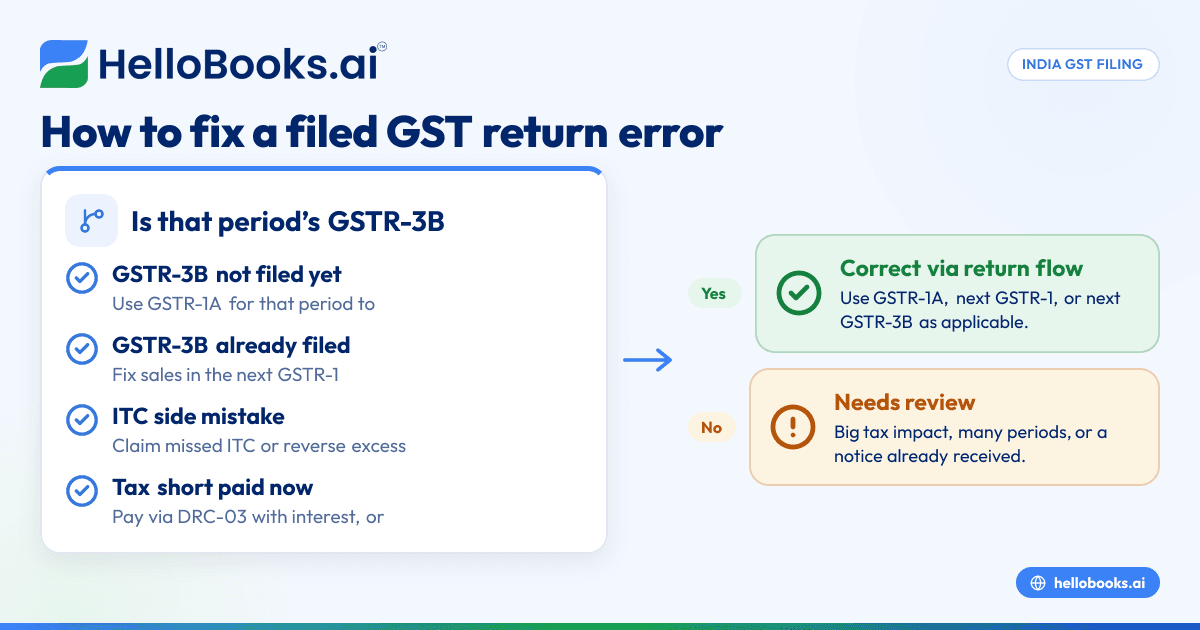
What this article covers, in order:
- ਸਭ ਤੋਂ ਪਹਿਲਾਂ ਇਹ ਪਤਾ ਕਰੋ: ਗਲਤੀ ਵਿਕਰੀ ਵਾਲੀ ਹੈ ਜਾਂ ITC ਵਾਲੀ
- GSTR-1 file ਹੋ ਚੁੱਕੀ ਹੈ, ਪਰ GSTR-3B ਹਾਲੇ ਨਹੀਂ ਹੋਈ
- ਜੇ sales invoice ਹੀ ਛੁੱਟ ਗਿਆ ਜਾਂ ਘੱਟ value ਨਾਲ report ਹੋ ਗਿਆ
- ਜੇ invoice ਦੋ ਵਾਰੀ report ਹੋ ਗਿਆ, value ਵੱਧ ਚਲੀ ਗਈ ਜਾਂ buyer GSTIN ਗਲਤ ਪੈ ਗਿਆ
- IGST ਦੀ ਥਾਂ CGST+SGST ਲੱਗ ਗਿਆ, ਜਾਂ ਉਲਟ
- ITC claim ਰਹਿ ਗਿਆ, ਜ਼ਿਆਦਾ claim ਹੋ ਗਿਆ ਜਾਂ supplier bill mismatch ਹੈ
ਭਾਰਤ ਵਿੱਚ filed GST ਰਿਟਰਨ ਦੀ ਗਲਤੀ ਆਮ ਤੌਰ ਤੇ ਉਸੇ ਰਿਟਰਨ ਨੂੰ “edit” ਕਰਕੇ ਠੀਕ ਨਹੀਂ ਹੁੰਦੀ; ਸਹੀ ਰਾਹ ਇਹ ਹੁੰਦਾ ਹੈ ਕਿ ਤੁਸੀਂ ਪਹਿਲਾਂ ਦੇਖੋ ਗਲਤੀ GSTR-1 ਵਿੱਚ ਹੈ ਜਾਂ GSTR-3B ਵਿੱਚ, ਫਿਰ GSTN ਦੇ GST portal ਉੱਤੇ ਉਪਲਬਧ amendment, ਅਗਲੀ ਰਿਟਰਨ ਜਾਂ DRC-03 ਵਰਗਾ ਠੀਕ ਮਕੈਨਿਜ਼ਮ ਵਰਤੋ। ਕਿਹੜਾ ਰਾਹ ਠੀਕ ਹੈ, ਇਹ Central Goods and Services Tax Act, 2017, Integrated Goods and Services Tax Act, 2017 ਅਤੇ CBIC ਦੇ ਨਿਯਮਾਂ ਅਨੁਸਾਰ ਗਲਤੀ ਦੀ ਕਿਸਮ ਤੇ ਨਿਰਭਰ ਕਰਦਾ ਹੈ। ਮੌਜੂਦਾ ਸਮਾਂ-ਸੀਮਾਵਾਂ, ਵਿਆਜ ਅਤੇ ਪ੍ਰਕਿਰਿਆਵਾਂ CBIC notifications, circulars ਅਤੇ GST portal ਉੱਤੇ published ਹੁੰਦੀਆਂ ਹਨ।
ਸਭ ਤੋਂ ਪਹਿਲਾਂ ਇਹ ਪਤਾ ਕਰੋ: ਗਲਤੀ ਵਿਕਰੀ ਵਾਲੀ ਹੈ ਜਾਂ ITC ਵਾਲੀ
ਹਰ mistake ਦਾ ਇਲਾਜ ਇਕੋ ਨਹੀਂ ਹੁੰਦਾ। ਜੇ ਤੁਸੀਂ sales invoice, buyer GSTIN, place of supply, IRN-linked invoice data, tax head split ਜਾਂ taxable value ਗਲਤ report ਕੀਤੀ ਹੈ, ਤਾਂ ਮੁੱਖ ਧਿਆਨ GSTR-1 side ਉੱਤੇ ਜਾਵੇਗਾ। ਜੇ ਗਲਤੀ purchase bills, ITC claim, reverse charge, ਜਾਂ tax payment side ਉੱਤੇ ਹੈ, ਤਾਂ GSTR-3B ਅਤੇ ਕਈ ਵਾਰ DRC-03 relevant ਬਣ ਜਾਂਦੇ ਹਨ।
ਇਹ ਭੇਦ ਇਸ ਲਈ ਜ਼ਰੂਰੀ ਹੈ ਕਿਉਂਕਿ GSTN ਦਾ return flow source data ਉੱਤੇ ਟਿਕਿਆ ਹੁੰਦਾ ਹੈ। ਜੇ invoice ਹੀ ਗਲਤ ਬਣਿਆ, ਤਾਂ ਅਗਲੀ filing ਵਿੱਚ correction ਵੀ invoice-level logic ਨਾਲ ਹੀ ਕਰਨੀ ਪੈਂਦੀ ਹੈ। ਇਸੇ ਕਾਰਨ ਬਹੁਤ ਸਾਰੇ businesses invoice ਬਣਾਉਂਦੇ ਸਮੇਂ place of supply ਅਤੇ tax head split ਆਟੋਮੈਟਿਕ ਚੈੱਕ ਕਰਨਾ ਪਸੰਦ ਕਰਦੇ ਹਨ; smart invoicing ਅਤੇ accounting software india ਵਰਗੀ setup ਨਾਲ CGST, SGST ਅਤੇ IGST ਦੀ ਗਲਤ ਬਾਂਟ ਘੱਟ ਹੁੰਦੀ ਹੈ।
ਜੇ ਤੁਹਾਡਾ business e-invoice regime ਵਿੱਚ ਆਉਂਦਾ ਹੈ, ਤਾਂ invoice save ਸਮੇਂ IRN ਅਤੇ signed QR generate ਹੋਣ ਵਾਲੀ workflow ਵੀ manual re-entry ਘਟਾਉਂਦੀ ਹੈ; e-invoicing software ਇਸ ਤਰ੍ਹਾਂ ਦੀਆਂ mismatch problems ਘਟਾਉਣ ਵਿੱਚ ਮਦਦ ਕਰ ਸਕਦੀ ਹੈ।
GSTR-1 file ਹੋ ਚੁੱਕੀ ਹੈ, ਪਰ GSTR-3B ਹਾਲੇ ਨਹੀਂ ਹੋਈ
ਇਹ ਉਹ stage ਹੈ ਜਿੱਥੇ ਕੁਝ ਗਲਤੀਆਂ ਨੂੰ relatively ਘੱਟ ਨੁਕਸਾਨ ਨਾਲ ਠੀਕ ਕੀਤਾ ਜਾ ਸਕਦਾ ਹੈ। GST portal ਉੱਤੇ ਉਸ tax period ਲਈ ਜੋ correction route available ਹੈ, ਉਹੀ ਵਰਤਣਾ ਚਾਹੀਦਾ ਹੈ। ਕਿਉਂਕਿ GST return system source tables ਤੋਂ liability ਖਿੱਚਦਾ ਹੈ, ਇਸ ਲਈ sales-side error ਨੂੰ 3B ਵਿੱਚ manually “override” ਕਰਨ ਦੀ ਉਮੀਦ ਨਹੀਂ ਰੱਖਣੀ ਚਾਹੀਦੀ। ਮੌਜੂਦਾ system behaviour GSTN releases ਅਤੇ GST portal advisories ਵਿੱਚ ਵੇਖਣਾ ਚਾਹੀਦਾ ਹੈ, ਕਿਉਂਕਿ return architecture ਸਮੇਂ-ਸਮੇਂ ਤੇ update ਹੁੰਦੀ ਰਹਿੰਦੀ ਹੈ.
ਜੇ ਤੁਸੀਂ ਇੱਕ sales invoice ਛੱਡ ਦਿੱਤਾ, taxable value ਘੱਟ report ਕਰ ਦਿੱਤੀ, ਜਾਂ B2B invoice ਦਾ buyer GSTIN ਗਲਤ map ਕਰ ਦਿੱਤਾ, ਤਾਂ ਪਹਿਲਾਂ ਇਹ ਦੇਖੋ ਕਿ ਉਸ period ਦੀ 3B ਹਾਲੇ ਬਾਕੀ ਹੈ ਜਾਂ ਨਹੀਂ। ਜੇ ਹਾਲੇ ਬਾਕੀ ਹੈ, ਤਾਂ same period ਦੀ correction window available ਹੋ ਸਕਦੀ ਹੈ. ਪਰ ਹਰ field editable ਨਹੀਂ ਹੁੰਦੀ; buyer GSTIN ਵਰਗੀਆਂ ਕੁਝ corrections ਲਈ next-period amendment ਹੀ practical ਰਾਹ ਬਣ ਜਾਂਦਾ ਹੈ। ਇਸ ਲਈ GST portal ਦੀ ਉਸ date ਦੀ live utility, help text ਅਤੇ CBIC/GSTN guidance ਚੈੱਕ ਕਰਨਾ ਲਾਜ਼ਮੀ ਹੈ.
ਜੇ ਤੁਸੀਂ HelloBooks ਵਿੱਚ invoice entry stage ਤੋਂ GSTIN validation, HSN/SAC discipline ਅਤੇ place-of-supply logic ਨਾਲ ਕੰਮ ਕਰਦੇ ਹੋ, ਤਾਂ GSTR-1 build ਹੁੰਦੀ ਵੇਲੇ manual mismatch ਘੱਟ ਪੈਂਦਾ ਹੈ। ਇੱਥੇ gst return filing software useful ਹੈ, ਕਿਉਂਕਿ GSTR-1 ਅਤੇ GSTR-3B ਉਹੀ books data ਤੋਂ ਬਣਦੇ ਹਨ ਜੋ ਪਹਿਲਾਂ ਹੀ record ਹੋਇਆ ਹੁੰਦਾ ਹੈ, ਨਾ ਕਿ ਦੁਬਾਰਾ portal ਉੱਤੇ ਟਾਈਪ ਕਰਨ ਨਾਲ।
ਜੇ sales invoice ਹੀ ਛੁੱਟ ਗਿਆ ਜਾਂ ਘੱਟ value ਨਾਲ report ਹੋ ਗਿਆ
ਇਹ ਸਭ ਤੋਂ common problem ਹੈ। Law side ਤੋਂ ਇਹ outward supply ਦੀ reporting ਅਤੇ tax liability ਦਾ matter ਹੈ, ਜਿਸ ਨੂੰ CGST Act, 2017 ਅਤੇ ਸੰਬੰਧਤ Rules govern ਕਰਦੇ ਹਨ; administration CBIC ਅਤੇ system operation GSTN/GST portal ਰਾਹੀਂ ਹੁੰਦੇ ਹਨ। Current amendment method, tables ਅਤੇ deadlines GST portal instructions, CBIC notifications ਅਤੇ official return manuals ਵਿੱਚ published ਮਿਲਣੀਆਂ ਚਾਹੀਦੀਆਂ ਹਨ.
ਪ੍ਰੈਕਟਿਕਲ ਤੌਰ ਤੇ, ਜੇ ਉਸ period ਦੀ 3B file ਹੋ ਚੁੱਕੀ ਹੈ, ਤਾਂ ਛੁੱਟਿਆ invoice ਆਮ ਤੌਰ ਤੇ next eligible return cycle ਵਿੱਚ report ਹੁੰਦਾ ਹੈ, ਉਸਦੀ ਅਸਲੀ invoice date ਅਤੇ correct particulars ਦੇ ਨਾਲ, subject to the correction facility then available on the GST portal. ਇਸ ਨਾਲ liability later period ਵਿੱਚ reflect ਹੋ ਸਕਦੀ ਹੈ, ਅਤੇ ਜਿੱਥੇ law applicable ਬਣੇ, ਉੱਥੇ interest computation portal behaviour ਅਤੇ statutory provisions ਦੇ ਅਧੀਨ ਹੋਵੇਗੀ. Interest ਦੀ ਮੌਜੂਦਾ ਦਰ, applicability ਅਤੇ calculation method bare fact ਵਾਂਗ ਮੰਨਣ ਦੀ ਬਜਾਏ Section 50 of the CGST Act, 2017, CBIC notifications ਅਤੇ GST portal computation references ਤੋਂ verify ਕਰਨੀ ਚਾਹੀਦੀ ਹੈ.
ਮਿਸਾਲ ਲਈ, ਸਿਰਫ਼ illustrative ਅਤੇ invented ਗਿਣਤੀ ਲਓ: ਮੰਨ ਲਓ ਇੱਕ B2B invoice ₹80,000 taxable value ਦਾ ਸੀ ਅਤੇ tax amount ਵੀ invoice ਵਿੱਚ ਬਣਦਾ ਸੀ, ਪਰ ਉਹ July ਦੀ outward supplies ਵਿੱਚ report ਨਹੀਂ ਹੋਇਆ। ਜੇ ਉਹ ਬਾਅਦ ਵਿੱਚ next period ਵਿੱਚ report ਕੀਤਾ ਜਾਂਦਾ ਹੈ, ਤਾਂ liability timing shift ਹੋ ਸਕਦੀ ਹੈ. ਇਹ invented example compliance logic ਸਮਝਾਉਣ ਲਈ ਹੈ; ਇਸ ਵਿੱਚ interest calculator, credit notes, recipient ITC timing, e-invoice cancellation rules, litigation risk ਅਤੇ sector-specific facts ਸ਼ਾਮਲ ਨਹੀਂ ਹਨ.
ਜੇ invoices books ਵਿੱਚ ਹੀ properly captured ਹੋਣ, ਤਾਂ missed invoice ਦੀ ਸੰਭਾਵਨਾ ਘੱਟ ਹੁੰਦੀ ਹੈ। HelloBooks ਵਿੱਚ GST invoice ਬਣਦੇ ਸਮੇਂ tax split ਅਤੇ buyer details ਇਕੱਠੇ capture ਹੋ ਜਾਣ ਕਾਰਨ GSTR-1 compilation ਦੌਰਾਨ omission ਘੱਟ ਹੁੰਦੀ ਹੈ; smart invoicing ਇਸ ਲਈ relevant ਹੈ।
ਜੇ invoice ਦੋ ਵਾਰੀ report ਹੋ ਗਿਆ, value ਵੱਧ ਚਲੀ ਗਈ ਜਾਂ buyer GSTIN ਗਲਤ ਪੈ ਗਿਆ
ਇਹ ਤਿੰਨੋਂ outward supplies ਦੀਆਂ ਵੱਖ-ਵੱਖ errors ਹਨ, ਪਰ remedy ਦਾ ਮੂਲ ਵਿਚਾਰ ਇਕੋ ਹੈ: already filed period ਨੂੰ rewrite ਕਰਨ ਦੀ ਬਜਾਏ amendment trail ਬਣਾਉਣਾ। CGST Rules ਵਿੱਚ invoice amendment framework ਦਾ structure ਦਿੱਤਾ ਗਿਆ ਹੈ, ਅਤੇ live usability GST portal tables ਉੱਤੇ depend ਕਰਦੀ ਹੈ। ਇਸ ਲਈ exact table name, field-level availability ਅਤੇ timeline official GST portal help content ਤੋਂ confirm ਕਰੋ.
Invoice duplicate report ਹੋਇਆ: ਅਕਸਰ next amendment cycle ਵਿੱਚ excess outward supply ਨੂੰ neutralise ਕੀਤਾ ਜਾਂਦਾ ਹੈ. ਜੇ excess tax cash ਵਿੱਚ pay ਵੀ ਹੋ ਗਿਆ, ਤਾਂ adjustment, set-off ਜਾਂ refund route facts ਦੇ ਅਨੁਸਾਰ ਵੱਖ ਹੋ ਸਕਦਾ ਹੈ. Refund mechanism GST law ਅਤੇ CBIC procedure ਨਾਲ govern ਹੁੰਦਾ ਹੈ; exact eligibility bare statement ਵਾਂਗ ਨਹੀਂ ਮੰਨਣੀ ਚਾਹੀਦੀ.
Taxable value ਵੱਧ report ਹੋ ਗਈ: ਇਸ ਵਿੱਚ amendment support documents ਸੰਭਾਲ ਕੇ ਰੱਖੋ—original invoice, corrected commercial note trail, buyer communication ਅਤੇ books reconciliation. ਜੇ e-invoice apply ਹੁੰਦੀ ਸੀ, ਤਾਂ IRN record ਅਤੇ signed QR data ਵੀ evidence trail ਦਾ ਹਿੱਸਾ ਬਣਦੇ ਹਨ.
Buyer GSTIN ਗਲਤ ਹੋ ਗਿਆ: ਇਹ ਖਾਸ ਕਰਕੇ painful ਹੁੰਦਾ ਹੈ, ਕਿਉਂਕਿ recipient ਦੀ GSTR-2B visibility ਪ੍ਰਭਾਵਿਤ ਹੋ ਸਕਦੀ ਹੈ. ਇੱਥੇ next amendment cycle ਦੀ importance ਵੱਧ ਜਾਂਦੀ ਹੈ. Buyer ਨੂੰ proactively ਦੱਸਣਾ ਚਾਹੀਦਾ ਹੈ ਕਿ corrected invoice reporting ਕਦੋਂ visible ਹੋਵੇਗੀ, ਕਿਉਂਕਿ ਉਹਨਾਂ ਦੇ ITC planning ਉੱਤੇ ਅਸਰ ਪੈਂਦਾ ਹੈ.
ਜਿਹੜੇ businesses GSTIN entry manual ਕਰਦੇ ਹਨ, ਉਹਨਾਂ ਤੋਂ ਇਹ error ਵੱਧ ਹੁੰਦੀ ਹੈ. ਇਸ ਲਈ tools/gstin-validator ਵਰਗਾ validator ਜਾਂ filing ਤੋਂ ਪਹਿਲਾਂ invoice field checks useful ਹਨ. ਜੇ ਤੁਹਾਡੇ ਕੋਲ ਕਈ state registrations ਹਨ, ਤਾਂ multi-GSTIN setup ਨਾਲ wrong GSTIN selection ਦੀ risk ਵੀ ਘਟਦੀ ਹੈ.
IGST ਦੀ ਥਾਂ CGST+SGST ਲੱਗ ਗਿਆ, ਜਾਂ ਉਲਟ
ਇਹ sirf return error ਨਹੀਂ; ਇਹ place-of-supply ਅਤੇ tax head classification ਦੀ error ਹੈ. ਇੱਥੇ IGST Act, 2017, CGST Act, 2017 ਅਤੇ state GST laws relevant ਹੁੰਦੇ ਹਨ, ਜਦਕਿ administration CBIC ਅਤੇ GST portal system flows ਰਾਹੀਂ ਚਲਦਾ ਹੈ. Inter-state vs intra-state determination bare intuition ਨਾਲ ਨਹੀਂ ਕਰਨੀ ਚਾਹੀਦੀ; current legal position official law text, CBIC circulars ਅਤੇ portal guidance ਤੋਂ ਦੇਖੋ.
ਜਦੋਂ wrong head ਵਿੱਚ tax pay ਹੋ ਜਾਂਦਾ ਹੈ, ਤਾਂ practical correction ਦੋ layers ਵਿੱਚ ਹੁੰਦੀ ਹੈ:
- invoice/reporting side ਉੱਤੇ place of supply ਅਤੇ supply classification ਨੂੰ ਸਹੀ ਕਰਨਾ,
- payment side ਉੱਤੇ correct tax head ਵਿੱਚ discharge ਅਤੇ wrong head payment ਲਈ law-permitted relief/refund route evaluate ਕਰਨਾ.
Section references ਅਤੇ relief conditions statute ਵਿੱਚ ਦਿੱਤੀਆਂ ਹਨ, ਪਰ exact relief availability facts-driven ਹੁੰਦੀ ਹੈ. ਇਸ ਲਈ current section wording on the official Acts, CBIC clarifications ਅਤੇ GST portal process जरूर ਦੇਖੋ. Interest ਨਾ ਲੱਗਣ ਜਾਂ ਲੱਗਣ ਬਾਰੇ categorical claim bare fact ਵਾਂਗ ਨਹੀਂ ਕਰਨਾ ਚਾਹੀਦਾ ਜਦ ਤੱਕ ਉਹ official source ਨਾਲ cross-check ਨਾ ਹੋਵੇ. NEEDS EXPERT REVIEW
ਇੱਕ illustrative ਅਤੇ invented ਹਾਲਤ ਲਓ: ਮੰਨ ਲਓ Ludhiana ਤੋਂ Chandigarh supply ਸਮਝ ਕੇ ਤੁਸੀਂ invoice ਵਿੱਚ CGST ਅਤੇ SGST ਲਾ ਦਿੱਤਾ, ਪਰ ਬਾਅਦ ਵਿੱਚ facts ਨਾਲ ਪਤਾ ਲੱਗਾ ਕਿ place of supply ਤੇ billing structure ਕਰਕੇ IGST ਬਣਦਾ ਸੀ. ਇੱਥੇ invented numbers ਮੰਨੋ ₹1,20,000 taxable value ਦੇ. ਇਹ example ਸਿਰਫ਼ logic ਦੱਸਦਾ ਹੈ; actual correction contract terms, dispatch proof, consignee details, e-way bill trail, recipient registration status ਅਤੇ jurisdictional interpretation ਤੋਂ ਪ੍ਰਭਾਵਿਤ ਹੋ ਸਕਦੀ ਹੈ.
ਇਸ ਕਿਸਮ ਦੀ ਗਲਤੀ ਨੂੰ ਪਹਿਲੇ ਦਿਨ ਘਟਾਉਣ ਲਈ place-of-supply automation ਬਹੁਤ ਕੰਮ ਆਉਂਦੀ ਹੈ. HelloBooks invoice ਬਣਾਉਂਦੇ ਸਮੇਂ tax head split ਨੂੰ address logic ਨਾਲ align ਕਰ ਸਕਦਾ ਹੈ, ਇਸ ਲਈ local sale ਤੇ inter-state sale mix-up ਘੱਟ ਹੁੰਦਾ ਹੈ. ਜੇ goods movement ਵੀ ਹੈ, ਤਾਂ invoice ਤੋਂ e-way bill software workflow useful ਰਹਿੰਦੀ ਹੈ, ਕਿਉਂਕਿ consignment data ਮੁੜ-ਮੁੜ ਨਹੀਂ ਟਾਈਪ ਕਰਨਾ ਪੈਂਦਾ.
ITC claim ਰਹਿ ਗਿਆ, ਜ਼ਿਆਦਾ claim ਹੋ ਗਿਆ ਜਾਂ supplier bill mismatch ਹੈ
Input tax credit ਵਾਲੀਆਂ ਗਲਤੀਆਂ ਨੂੰ outward supply errors ਨਾਲ mix ਨਹੀਂ ਕਰਨਾ ਚਾਹੀਦਾ. ITC ਦਾ core framework CGST Act, 2017 ਦੇ eligibility provisions, blocked credit rules ਅਤੇ return matching ecosystem ਨਾਲ ਚਲਦਾ ਹੈ. GSTR-2A/2B visibility, supplier filing status, possession of tax invoice, receipt of goods/services ਅਤੇ other statutory conditions matter ਕਰਦੇ ਹਨ. Current cut-off dates ਅਤੇ conditions CBIC notifications, the Act, Rules ਅਤੇ GST portal help content ਵਿੱਚ published ਹੁੰਦੀਆਂ ਹਨ.
ITC claim ਰਹਿ ਗਿਆ: ਜੇ invoice eligible ਹੈ ਅਤੇ applicable statutory time limit ਦੇ ਅੰਦਰ ਹੈ, ਤਾਂ later GSTR-3B ਵਿੱਚ claim ਹੋ ਸਕਦਾ ਹੈ, subject to portal design and legal conditions then in force. ਇੱਥੇ bare due date ਜਾਂ statutory cut-off ਬਿਨਾਂ source ਦੇ quote ਨਾ ਕਰੋ; official publication ਚੈੱਕ ਕਰੋ.
ITC ਜ਼ਿਆਦਾ claim ਹੋ ਗਿਆ: Excess claim ਨੂੰ reverse ਕਰਨਾ ਪੈਂਦਾ ਹੈ. ਜੇ excess credit utilise ਵੀ ਹੋ ਗਿਆ ਹੋਵੇ, ਤਾਂ interest implications ਵੱਖ ਬਣ ਸਕਦੀਆਂ ਹਨ. Section 50 of the CGST Act, 2017, CBIC clarifications ਅਤੇ GST portal calculation behaviour ਤੋਂ current treatment verify ਕਰੋ.
Supplier bill books ਵਿੱਚ ਹੈ, ਪਰ 2B ਵਿੱਚ ਨਹੀਂ: ਇਹ ਬਹੁਤ Indian ground reality ਵਾਲੀ ਸਮੱਸਿਆ ਹੈ—supplier ਨੇ return ਨਹੀਂ ਭਰੀ, GSTIN mismatch ਹੈ, invoice number error ਹੈ, ਜਾਂ OCR/manual entry ਵਿੱਚ issue ਆ ਗਿਆ. ਇਸ ਕਰਕੇ purchase-side discipline important ਹੈ. HelloBooks ਵਿੱਚ purchase bills ਨੂੰ OCR ਨਾਲ capture ਕਰਨਾ ਅਤੇ ਫਿਰ gst reconciliation checker ਜਾਂ built-in GSTR-2A/2B reconciliation logic ਨਾਲ compare ਕਰਨਾ missed ITC ਅਤੇ wrong ITC ਦੋਵੇਂ ਘਟਾਉਂਦਾ ਹੈ. ai bookkeeping ਅਤੇ bank reconciliation software ਇਸ ਸਮੇਂ useful ਬਣਦੇ ਹਨ, ਪਰ ਧਿਆਨ ਰਹੇ ਕਿ India ਵਿੱਚ reconciliation uploaded bank statement ਤੋਂ ਹੁੰਦੀ ਹੈ, live bank feed ਤੋਂ ਨਹੀਂ। NEFT, RTGS, IMPS ਜਾਂ UPI collections bank statement upload ਰਾਹੀਂ books ਨਾਲ match ਕੀਤੀਆਂ ਜਾਂਦੀਆਂ ਹਨ.
ਜਿਹੜੇ businesses purchase bills phone photo ਜਾਂ PDF ਰਾਹੀਂ ਲੈਂਦੇ ਹਨ, ਉਹਨਾਂ ਲਈ OCR data capture helpful ਹੈ, ਕਿਉਂਕਿ supplier name, GSTIN, invoice number ਅਤੇ tax amount manual typing ਤੋਂ ਵੱਧ consistent ਰਹਿੰਦੇ ਹਨ.
GSTR-3B ਵਿੱਚ tax ਘੱਟ ਭਰਿਆ, nil ਭਰ ਦਿੱਤਾ ਜਾਂ cash/credit set-off ਗਲਤ ਹੋ ਗਿਆ
ਇਹ ਸਭ ਤੋਂ sensitive ਹਿੱਸਾ ਹੈ, ਕਿਉਂਕਿ ਇੱਥੇ sirf reporting ਨਹੀਂ, actual discharge of liability ਵੀ ਸ਼ਾਮਲ ਹੁੰਦਾ ਹੈ. Governing provisions CGST Act, 2017, associated Rules ਅਤੇ CBIC-administered recovery/voluntary payment procedures ਵਿੱਚ ਮਿਲਦੇ ਹਨ. DRC-03 ਦੀ ਵਰਤੋਂ ਕਦੋਂ ਕਰਨੀ ਹੈ, ਇਹ official GST portal process notes ਅਤੇ law ਦੇ current text ਨਾਲ verify ਕਰਨੀ ਚਾਹੀਦੀ ਹੈ.
ਜੇ liability ਘੱਟ pay ਹੋਈ ਹੈ, ਤਾਂ taxpayer ਅਕਸਰ ਦੋ ਰਾਹ evaluate ਕਰਦਾ ਹੈ:
- next return cycle ਵਿੱਚ lawful correction,
- ਜਾਂ voluntary payment through DRC-03 where appropriate.
ਕਿਹੜਾ ਰਾਹ ਸਹੀ ਹੈ, ਇਹ ਗਲਤੀ ਦੀ nature, detection stage, notice issue ਹੋਇਆ ਜਾਂ ਨਹੀਂ, ਅਤੇ books/reconciliation evidence ਉੱਤੇ depend ਕਰਦਾ ਹੈ. Current interest implications official source ਤੋਂ ਹੀ verify ਕਰੋ.
ਇੱਕ illustrative ਅਤੇ invented ਹਾਲਤ ਲਓ: ਮੰਨ ਲਓ outward liability books ਅਨੁਸਾਰ ₹54,000 ਬਣਦੀ ਸੀ, ਪਰ filed 3B ਵਿੱਚ ਸਿਰਫ਼ ₹45,000 discharge ਹੋਈ. ਇਹ invented number set sirf concept ਸਮਝਾਉਂਦਾ ਹੈ. ਇਸ ਵਿੱਚ late fee, notice stage, electronic credit ledger availability, prior-period amendments, RCM, TDS/TCS effects ਜਾਂ cash ledger balance ਸ਼ਾਮਲ ਨਹੀਂ ਹਨ. Actual correction ਲਈ GST portal figures, electronic liability register ਅਤੇ CA review ਨਾਲ ਕੰਮ ਕਰੋ.
ਜੇ nil return ਗਲਤੀ ਨਾਲ file ਹੋ ਗਈ, ਤਾਂ ਇਹ “undo” button ਵਾਲਾ ਮਾਮਲਾ ਨਹੀਂ ਹੁੰਦਾ. Return status, period lock ਅਤੇ available correction mechanism live portal functionality ਨਾਲ check ਕਰਨੇ ਪੈਂਦੇ ਹਨ. ਇਸ ਕਿਸਮ ਦੀ ਤਕਲੀਫ਼ ਅਕਸਰ ਤਦੋਂ ਹੁੰਦੀ ਹੈ ਜਦ books finalized ਹੀ ਨਹੀਂ ਸਨ. ਇਸ ਲਈ monthly books closing, bank statement upload, invoice completeness ਅਤੇ purchase capture ਇੱਕੋ workflow ਵਿੱਚ ਹੋਣਾ better ਹੈ. HelloBooks ਵਿੱਚ uploaded bank statement reconciliation, OCR purchase capture ਅਤੇ financial reports ਇਕੱਠੇ ਮਿਲਣ ਨਾਲ filing ਤੋਂ ਪਹਿਲਾਂ sanity check ਕਰਨਾ ਆਸਾਨ ਹੋ ਜਾਂਦਾ ਹੈ.
ਪੰਜਾਬੀ business context ਵਿੱਚ future mistakes ਕਿਵੇਂ ਘੱਟ ਕਰਨੀਆਂ
Ludhiana, Jalandhar, Amritsar, Mohali ਜਾਂ ਕਿਸੇ ਵੀ state registration ਵਾਲੇ trader ਲਈ GST mistakes ਅਕਸਰ portal knowledge ਦੀ ਘਾਟ ਨਾਲ ਨਹੀਂ, data entry fragmentation ਨਾਲ ਹੁੰਦੀਆਂ ਹਨ. Invoice Tally ਵਿੱਚ, purchase WhatsApp/PDF ਵਿੱਚ, stock notebook ਵਿੱਚ, collection bank statement ਵਿੱਚ, ਅਤੇ return portal ਉੱਤੇ ਵੱਖ—ਇਸ setup ਵਿੱਚ mismatch ਬਣਨਾ ਆਸਾਨ ਹੈ.
ਇਸ ਲਈ preventive system simple ਹੋਣਾ ਚਾਹੀਦਾ ਹੈ:
- invoice ਬਣਦੇ ਹੀ GSTIN, HSN/SAC, place of supply ਅਤੇ tax head validate ਹੋਣ,
- e-invoice applicable ਹੋਵੇ ਤਾਂ IRN trail books ਨਾਲ ਜੁੜੀ ਰਹੇ,
- goods movement ਹੋਵੇ ਤਾਂ e-way bill invoice data ਤੋਂ ਬਣੇ,
- purchase bills OCR ਨਾਲ capture ਹੋਣ,
- 2A/2B reconciliation filing ਤੋਂ ਪਹਿਲਾਂ ਹੋਵੇ,
- bank statement upload ਕਰਕੇ receipts/payments match ਕੀਤੇ ਜਾਣ,
- inventory movement ਅਤੇ tax invoices ਇਕੋ system ਵਿੱਚ ਰਹਿਣ,
- financial reports ਨਾਲ GST figures cross-check ਹੋਣ.
ਜੇ ਤੁਸੀਂ ਅੱਜ ਵੀ Tally ਤੋਂ migrate ਕਰਨ ਬਾਰੇ ਸੋਚ ਰਹੇ ਹੋ, ਤਾਂ direct switch ਇਕੱਲਾ ਰਾਹ ਨਹੀਂ. tally alternative ਜਾਂ compare/hellobooks-vs-tally ਦੇਖਣ ਤੋਂ ਪਹਿਲਾਂ ਇਹ ਵੇਖੋ ਕਿ data continuity ਕਿਵੇਂ ਰਹੇਗੀ. Tally connector/migration support ਨਾਲ parallel transition ਹੋ ਸਕਦੀ ਹੈ. Multi-GSTIN businesses ਲਈ ਇਹ ਹੋਰ ਵੀ useful ਹੈ, ਖ਼ਾਸ ਕਰਕੇ ਜਦ ਇੱਕ entity ਦੇ ਵੱਖ states ਵਿੱਚ GSTIN ਹਨ.
Owners ਜੋ desk ਤੋਂ ਦੂਰ ਰਹਿੰਦੇ ਹਨ, ਉਹਨਾਂ ਲਈ mobile app ਵੀ practical ਹੈ, ਅਤੇ ਜੇ ਕਿਸੇ ਨੂੰ WhatsApp ਉੱਤੇ Hinglish, Hindi ਜਾਂ English ਵਿੱਚ bookkeeping help ਚਾਹੀਦੀ ਹੈ, ਤਾਂ Noor assistant ਵਰਤਣ ਨਾਲ quick clarification ਮਿਲ ਸਕਦੀ ਹੈ. ਪਰ final tax position ਲਈ CA review ਫਿਰ ਵੀ ਜ਼ਰੂਰੀ ਹੋ ਸਕਦੀ ਹੈ.
authority source ਕਿੱਥੇ ਵੇਖੋ, ਅਤੇ ਕਦੋਂ expert ਨੂੰ involve ਕਰੋ
GST ਵਿੱਚ rates, thresholds, deadlines, amendment windows, late fee, interest treatment, e-invoicing turnover applicability, e-way bill rules, ITC cut-off ਅਤੇ refund procedure ਸਮੇਂ-ਸਮੇਂ ਤੇ ਬਦਲ ਸਕਦੇ ਹਨ. ਇਸ ਲਈ ਕੋਈ ਵੀ current number bare statement ਵਾਂਗ ਯਾਦ ਰੱਖਣ ਦੀ ਬਜਾਏ ਇਹ sources ਚੈੱਕ ਕਰੋ:
- CBIC ਦੁਆਰਾ published notifications, circulars ਅਤੇ Acts/Rules text
- GSTN/GST portal ਉੱਤੇ advisories, return instructions ਅਤੇ help सामग्री
- e-invoice ਅਤੇ e-way bill system guidance ਜਿੱਥੇ relevant ਹੋਵੇ
- state-specific SGST administration notes ਜੇ issue jurisdictional ਹੋਵੇ
ਜੇ matter ਵਿੱਚ IGST vs CGST/SGST head swap, large rupee exposure, buyer ITC blockage, refund implication, DRC-03, reverse charge, TDS/TCS interaction, notice ਮਿਲਣਾ, ਜਾਂ Companies Act/MCA audit trail impact ਆ ਰਿਹਾ ਹੈ, ਤਾਂ expert involve ਕਰਨਾ best ਹੈ. Data privacy ਅਤੇ records handling ਕਰਦੇ ਸਮੇਂ DPDP Act context ਵੀ ਦਿਮਾਗ ਵਿੱਚ ਰੱਖੋ, ਖ਼ਾਸ ਕਰਕੇ ਜਦ invoices, bank statements ਅਤੇ GSTIN data multiple staff ਨਾਲ share ਹੁੰਦਾ ਹੋਵੇ.
ਜੇ ਤੁਸੀਂ filing ਤੋਂ ਪਹਿਲਾਂ quick checks ਕਰਨਾ ਚਾਹੁੰਦੇ ਹੋ, ਤਾਂ tools/gst-calculator, tools/hsn-code-search ਅਤੇ tools/gst-invoice-validator ਵਰਗੇ tools useful ਹੋ ਸਕਦੇ ਹਨ. Product fit, workflow ਜਾਂ India setup ਦੇਖਣਾ ਹੋਵੇ ਤਾਂ demo ਜਾਂ in/pricing ਵੇਖੋ.
ਸਾਰ ਇਹ ਹੈ: filed GST return ਦੀ ਗਲਤੀ ਅਕਸਰ irreversible ਨਹੀਂ ਹੁੰਦੀ, ਪਰ correction ਦਾ ਰਾਹ ਗਲਤੀ ਦੀ category ਦੇ ਅਨੁਸਾਰ ਬਦਲਦਾ ਹੈ. ਪਹਿਲਾਂ identify ਕਰੋ ਕਿ issue sales ਹੈ, ITC ਹੈ ਜਾਂ tax payment; ਫਿਰ official source ਨਾਲ current rule verify ਕਰੋ; ਅਤੇ ਜਿੱਥੇ rupee impact ਵੱਡਾ ਹੋਵੇ, ਉੱਥੇ books, portal data ਅਤੇ expert review ਨੂੰ ਇਕੱਠੇ ਲਿਆਓ.


