
Key takeaways
What this article covers, in order:
- How does AI automation improve GST return filing accuracy?
- What can AI software in bookkeeping do beyond filing?
- Related reading
- Read next
How AI Bookkeeping Can Help Indian SMEs Manage GST Return Filing Efficiently, Supported with Caveats
====================================================================================================
Failing to manage GST return filing properly can lead to heavy penalties, cash flow disruption, blocked input tax credit (ITC), and strained relations with tax authorities. For Indian SMEs, where resources and expertise may be limited, manual GST compliance often means hours lost in correcting errors, reconciling data, and keeping up with frequent rule changes. These inefficiencies not only hurt the bottom line but also distract from growing the business.
Fortunately, AI bookkeeping offers practical solutions by automating error-prone tasks and improving data accuracy. However, adopting AI-powered approaches requires understanding what it can and cannot do well, along with some attention to compliance details.
Mistake 1: Treating AI Software as a Magic Fix for GST Filing
Many business owners expect that simply installing AI bookkeeping software will automatically tackle all GST compliance challenges. They imagine that the AI tool will flawlessly prepare and file returns without any need for oversight.
This happens because “automation” sounds complete. But in reality, AI bookkeeping for small business in India works best as an assistant automating repetitive tasks like invoice data extraction, bank reconciliation, and error flagging. It reduces manual data entry and catches inconsistencies early. Yet, the final GST return filing must be reviewed by the finance lead or accountant to ensure adjustments, exceptions, and last-minute changes are properly handled. The software will help gather and structure data faster, but human judgment remains essential to compliance and audit readiness.
Mistake 2: Ignoring Data Quality at the Source
One common cause of GST return errors is poor data quality—missed invoices, incorrect GSTIN details, or inaccurate tax rates entered in sales and purchase records.
This happens when businesses rely on spreadsheets, loose documents or legacy software without regular updates or validation. AI-powered bookkeeping tools depend on clean, consistent source data to deliver accuracy. Automated with AI, the software cannot correctly auto-populate GST return forms if invoices are unreadable or GSTINs mismatched between vendors.
The fix is to start with organised digital records of sales, purchases, and inventory, preferably collected through integrated invoice software or e-invoicing systems compliant with GST rules. Regularly reconciling input data, updating vendor GSTINs, and training staff in correct data entry will greatly improve the effectiveness of AI bookkeeping.
Mistake 3: Overlooking the Importance of Timely Bank Reconciliation
“My accounts look fine but GST returns still don’t match bank statements,” is a frequent complaint from SMEs. A mismatch between declared turnover and actual receipts can trigger GST scrutiny or blocked ITC claims.
Why does this happen? Often, businesses don’t reconcile their bank accounts with sales data each month. Hence, refunds, advances, or payment adjustments fail to appear in GST returns.
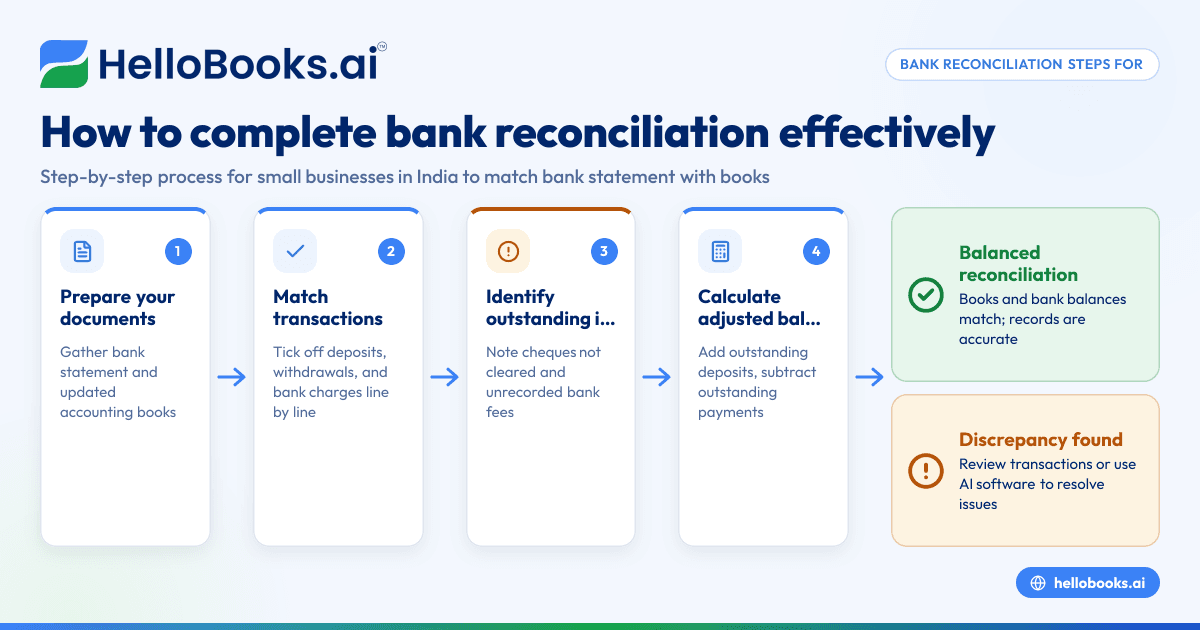
Bank reconciliation software that is automated with AI can match bank transactions with invoice records, flag missing receipts or duplicated payments, and ensure the turnover figure reported on GST returns matches actual cash movements. Timely bank reconciliation enables SMEs to file accurate returns and plan working capital.
Mistake 4: What can AI automate in GST Return Filing?
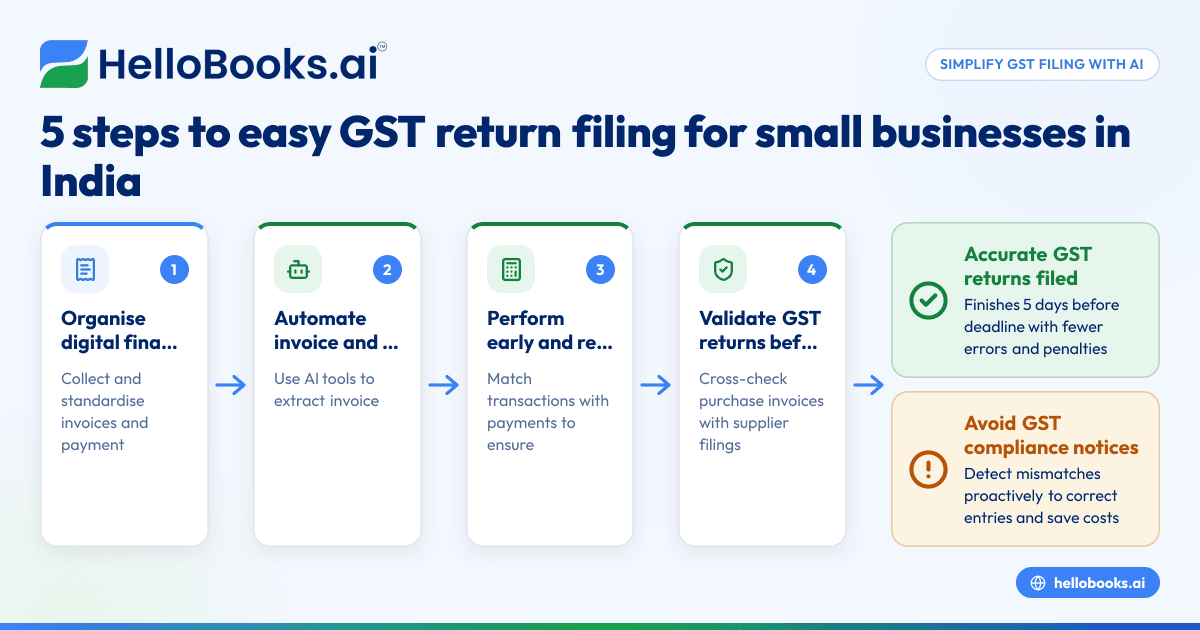
AI tools expedite GST processes by automatically reading invoice details, classifying transactions for correct tax treatment, and suggesting schedules for filing. It reduces manual data entry errors and accelerates pre-filing checks such as ITC availability and mismatch detection.
AI software helps maintain compliance with e-invoicing mandates for B2B transactions with turnover over ₹10 crore (FY 2023-24) by generating valid Invoice Reference Numbers (IRNs). It also supports GST refund filings by summarising eligible credit claims neatly. However, AI does not replace the need for legal knowledge—complex cases involving tax disputes, advance rulings, or valuations still require expert human intervention.
Mistake 5: Not Integrating with E-invoicing and GSTN Portals
An error-prone manual reconciliation and filing process happens when businesses try to copy GST return data from spreadsheets into government portals by hand or upload CSV files inconsistently.
Connecting AI-powered bookkeeping software with the GST Network (GSTN) and e-invoicing systems reduces duplication and filing errors. Automation streamlines GSTR-1 (sales) and GSTR-3B (summary) return preparation and filing timelines under the monthly deadlines.
Integration also updates invoice statuses instantly, tracks pending e-way bills, and reconciles supplier data automatically. SMEs operating in Bengaluru, Mumbai, or Pune benefit the most when their accounting software syncs with government systems for smoother GST compliance.
Mistake 6: How to keep data private while using AI bookkeeping software?
Small businesses often hesitate over the DPDP Act 2023 and data confidentiality when adopting cloud-based AI tools.
Small companies must ensure their chosen AI bookkeeping software complies with Indian data privacy regulations by securing sensitive financial and customer data with encryption and role-based access controls. Selecting software designed for Indian SMEs—like hellobooks.ai—which explicitly states adherence to DPDP requirements protects you against legal risk. Data privacy needs ongoing assessment to avoid breaches or penalties.
How does AI automation improve GST return filing accuracy?
AI automation reduces errors by extracting invoice data accurately and flagging inconsistencies early, cutting down manual data entry mistakes. It streamlines reconciliation and pre-filing validation, which enhances the correctness of GST returns and avoids penalty-triggering mismatches.
Accurate and speedy data capture means SMEs spend less time fixing mistakes after filing. However, the final review by a human accountant remains essential to catch exceptions and ensure compliance with current GST rules.
What can AI software in bookkeeping do beyond filing?
AI software does more than prepare GST returns; it assists with automatic classification of transactions for GST treatment, real-time bank reconciliation, and monitoring input tax credits. It integrates with e-invoicing platforms generating required Invoice Reference Numbers automatically and helps track e-way bills.
This ai-powered functionality frees up finance teams from routine tasks and provides insights to manage working capital. Yet, it doesn't replace professional judgment—complex tax issues still need expert advice.
A simple routine to avoid them
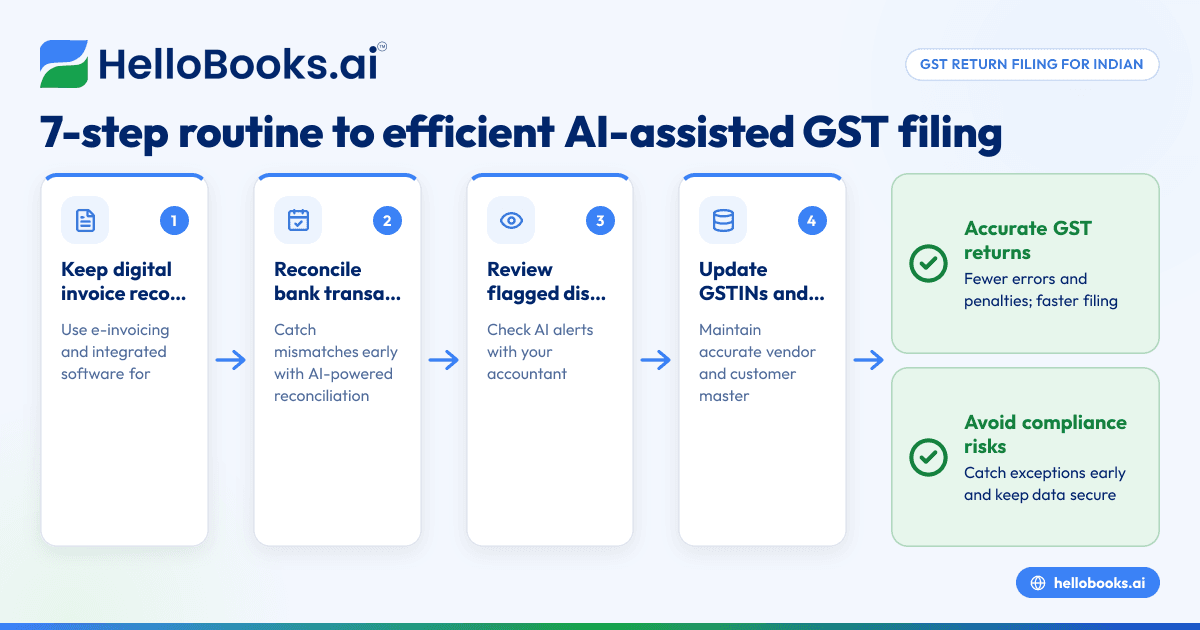
- Maintain a clean, digital record of sales and purchase invoices, ideally through e-invoicing and integrated invoice software.
- Reconcile bank transactions using bank reconciliation software or AI automation tools weekly to catch data mismatches early.
- Review flagged discrepancies and exceptions in your AI bookkeeping dashboard with your accountant before filing GST returns.
- Verify GSTINs and tax rates are updated on vendor master lists and customer databases monthly.
- Use AI-powered GST return filing software that integrates natively with GSTN portals to automate return uploading.
- Train your accounting or finance team every quarter on regulatory updates relevant to GST and e-invoicing.
- Check regularly that data privacy controls meet the DPDP Act 2023 compliance standards in your AI software provider.
Realising efficient GST return filing with AI-powered bookkeeping helps Indian SMEs save days of work every month. It improves accuracy, reduces penalties, and frees teams to focus on business growth. But success requires strong data hygiene, timely reconciliations, and a clear understanding of the limits of AI automation.
Schedule a book a demo with HelloBooks to see how AI bookkeeping for small business can streamline your GST compliance seamlessly and compliantly. Explore our pricing plans designed for growing Indian SMEs today.
Related reading
- How Small Businesses Can Use AI Bookkeeping Tools Without Losing Control, Supported with Caveats
- How AI Bookkeeping Can Help Small Businesses in the United States Stay Compliant with State and Local Sales Tax Rules
Read next
This article covers one part of a bigger topic. For the complete picture, read our guide to supported with caveat.