


Key takeaways
What this article covers, in order:
- GSTR-1 और GSTR-3B एक ही चीज़ नहीं हैं
- Buyer, supplier और ITC के नज़रिये से असली फर्क
- GST law में दोनों returns का रोल कहाँ बैठता है
- रोज़मर्रा के business में इसे कैसे समझें
- एक invented, illustrative स्थिति से फर्क साफ़ करें
- आज के portal flow में दोनों return कैसे जुड़े हैं
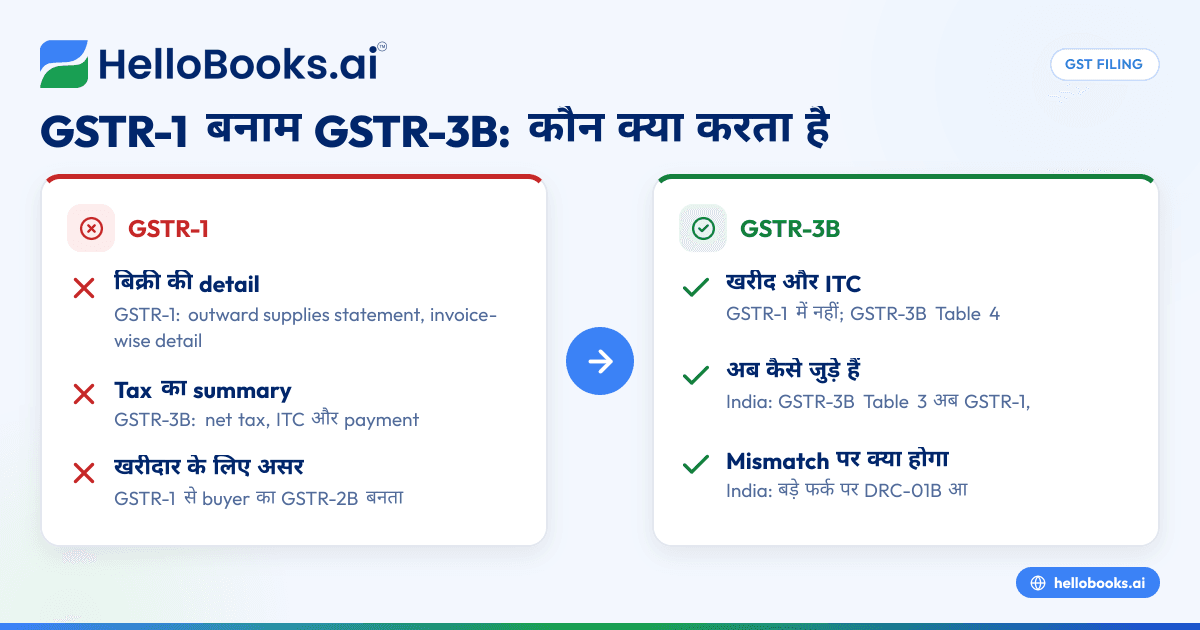
India में GSTR-1 और GSTR-3B का सीधा फर्क यह है: GSTR-1 आपकी outward supplies यानी बिक्री का invoice-level बयान है, और GSTR-3B आपका summary self-declaration है जिसमें आप output tax, input tax credit (ITC) और net tax payable दिखाते हैं। GST कानून के तहत दोनों return अलग उद्देश्य पूरे करते हैं, लेकिन GSTN और GST Portal पर filing के समय ये एक-दूसरे से गहराई से जुड़े रहते हैं। अगर आप seller हैं, तो buyer के लिए आपका GSTR-1 ज़्यादा अहम होता है; आपके cash payment और ITC claim के लिए GSTR-3B।
GSTR-1 और GSTR-3B एक ही चीज़ नहीं हैं
बहुत से business owners, traders और service providers का practical सवाल यही होता है: "जब sale मैंने एक return में बता दी, तो दूसरी में फिर क्यों?" जवाब GST framework की design में है।
Central Goods and Services Tax Act, 2017 (CGST Act) के तहत outward supplies की reporting और tax payment/summary declaration अलग-अलग compliance actions हैं। GSTR-1 outward supplies का statement है। GSTR-3B summary return है जिसमें liability, eligible ITC, reverse charge की position और net payment का असर आता है। इन returns का operational framework Central Goods and Services Tax Rules, 2017 (CGST Rules) में दिया गया है, और current filing behaviour, validations, advisories और table-population logic GSTN तथा GST Portal पर प्रकाशित guidance से समझा जाता है. Specific due dates, fee, interest, thresholds या filing restrictions की current position हमेशा CBIC notifications, CBIC circulars, CGST Rules और GST Portal advisories में verify करनी चाहिए.
सादा भाषा में कहें तो GSTR-1 कहता है: "मैंने किसे क्या बेचा।" GSTR-3B कहता है: "मेरी कुल tax liability क्या बनी, मैंने कितना ITC लिया, और मुझे कितना tax cash में भरना है।"
Buyer, supplier और ITC के नज़रिये से असली फर्क
GSTR-1 का असर सिर्फ आपकी books तक सीमित नहीं रहता। जब आप किसी registered buyer को GST invoice जारी करते हैं और उसे सही GSTIN, place of supply, tax head split और invoice details के साथ report करते हैं, तो वही data आगे buyer की reconciliation और ITC visibility के लिए आधार बनता है। इसी वजह से B2B trade में GSTR-1 की accuracy बहुत महत्वपूर्ण है। Buyer आम तौर पर आपका GSTR-3B नहीं देखता; उसे यह देखना होता है कि उसका purchase invoice सही तरह report हुआ या नहीं.
दूसरी ओर GSTR-3B में purchase-side picture आती है। यहीं आप अपने eligible ITC को consider करते हैं, reverse charge की liability देखते हैं, और net tax settlement करते हैं। इसीलिए practical difference यह है:
- GSTR-1 buyer-facing है
- GSTR-3B tax-settlement-facing है
- GSTR-1 detail-heavy है
- GSTR-3B total-heavy है
यही कारण है कि invoice में GSTIN की typo, गलत HSN/SAC, गलत IGST बनाम CGST/SGST split, या place of supply की गलती पहले GSTR-1 को बिगाड़ती है, और बाद में उसका असर 3B reconciliation, 2A/2B matching और customer relationship तक पहुँचता है।
GST law में दोनों returns का रोल कहाँ बैठता है
CGST Act की compliance architecture में outward supply disclosure, input tax credit controls और tax payment को अलग layers में रखा गया है। GSTR-1 outward supplies के लिए statement है। GSTR-3B self-assessed summary return है। इनकी process GSTN system पर चलती है, लेकिन legal backing CGST Act, CGST Rules, CBIC notifications और CBIC द्वारा जारी clarifications से आती है।
अगर आप current legal position देखना चाहते हैं, तो ये figures और conditions कहाँ मिलते हैं:
- tax rates: GST rate notifications published by CBIC under GST law
- return due dates and late fee structure: GST Portal, relevant CGST Rules, and CBIC notifications
- e-invoicing applicability and IRN rules: CBIC notifications and GSTN e-invoice system documentation
- e-way bill requirements: e-Way Bill system guidance, GST rules, and CBIC notifications
- TDS/TCS or reverse charge treatment: Income Tax Act, 1961 for direct-tax TDS; CGST Act/Rules for GST reverse charge, as published by CBDT or CBIC respectively
यह distinction ज़रूरी है क्योंकि India में compliance सिर्फ accounting exercise नहीं है; यह law, portal behaviour और transaction evidence—तीनों का मेल है।
रोज़मर्रा के business में इसे कैसे समझें
एक wholesaler, manufacturer, freelancer, distributor या retailer के लिए सबसे आसान mental model यह है कि GSTR-1 आपकी sales register की statutory reporting है, जबकि GSTR-3B आपका monthly or periodic tax summary है। लेकिन इसे "sales register बनाम cashbook" जैसा कहना अधूरा होगा, क्योंकि GSTR-3B सिर्फ payment नहीं है; इसमें ITC claim, reverse charge और tax head-wise liability का treatment भी शामिल है।
मान लीजिए आप Karnataka से Maharashtra में goods बेचते हैं। Invoice बनाते समय place of supply और inter-state nature सही पकड़ना जरूरी है, वरना IGST की जगह CGST/SGST लग सकता है या उल्टा। यह error पहले invoice में घुसेगा, फिर GSTR-1 में जाएगा, फिर buyer की books और आपकी GSTR-3B liability दोनों को disturb करेगा। इसी जगह accounting software का फर्क पड़ता है। HelloBooks में invoice बनाते समय GSTIN, place of supply और tax head split साथ में काम करते हैं, इसलिए local sale पर CGST/SGST और inter-state sale पर IGST जैसी classification ज़्यादा consistent रहती है। अगर business e-invoice regime में आता है, तो IRN और signed QR invoice flow में ही जुड़ जाते हैं, जिससे बाद की reporting कम manual होती है. Related reading: smart invoicing and e-invoicing software.
एक invented, illustrative स्थिति से फर्क साफ़ करें
मान लीजिए यह पूरी तरह illustrative और invented स्थिति है; इसमें current rate, threshold, due date, late fee, interest, exemption nuances, blocked credit rules, debit note timing, and sector-specific complications deliberately शामिल नहीं किए गए हैं। सिर्फ logic समझने के लिए numbers रखे जा रहे हैं।
दिल्ली का एक trader एक tax period में तीन sales करता है:
- Invoice A: एक registered buyer को ₹1,20,000 taxable value की B2B sale
- Invoice B: दूसरे state में ₹80,000 taxable value की sale
- Invoice C: local unregistered customer को ₹50,000 taxable value की retail sale
और उसी period में उसे purchases पर कुछ eligible ITC भी दिखाई देता है, मान लीजिए illustrative तौर पर ₹18,000.
अब फर्क देखिए:
- GSTR-1 में focus होगा invoice reporting पर: buyer GSTIN, invoice number, date, taxable value, place of supply, और tax breakup जैसी sales details.
- GSTR-3B में focus होगा aggregate output tax, eligible ITC, reverse charge अगर applicable हो, और net payable amount पर.
यदि Invoice B inter-state थी, तो उसका tax head IGST logic से जुड़ता है। यदि Invoice A local B2B थी, तो CGST/SGST split relevant होगा। यह invoice-level treatment GSTR-1 की accuracy तय करेगा। फिर GSTR-3B में इन्हीं outward supplies की summary liability आएगी, और purchases से available ITC reduce होकर net tax निकल सकता है। अगर GSTR-1 में outward supply ज़्यादा report हुई लेकिन GSTR-3B में कम liability settle की गई, तो mismatch scrutiny trigger कर सकता है as per the GST system controls and notices framework published on the GST Portal and under CBIC-backed rules. Exact limits or notice mechanics should be checked in current law and portal advisories NEEDS EXPERT REVIEW.
आज के portal flow में दोनों return कैसे जुड़े हैं
India में GST compliance का practical pain point यहीं है: पहले लोग GSTR-1 और GSTR-3B को दो अलग टापू मानते थे; अब portal validations और auto-population ने इनके रिश्ते को कहीं ज़्यादा सख्त बना दिया है। कौन-सी table auto-populate होती है, कहाँ edit restriction है, किस period के बाद क्या block हो सकता है—यह सब current GSTN release notes, GST Portal advisories, CBIC notifications और CGST Rules के latest text में देखना चाहिए, क्योंकि ये system changes समय-समय पर update होते रहते हैं।
Business owner के लिए actionable point यह है: GSTR-1 को हल्के में लेना अब unsafe है। अगर sale data source पर गलत गया, तो बाद में summary return में clean-up की गुंजाइश सीमित हो सकती है। इसलिए books, invoices, e-invoice data, e-way bill data और bank-realisation picture को filing से पहले मिलाना उपयोगी होता है।
यहीं software workflow मदद करता है। HelloBooks में GSTR-1 और GSTR-3B direct filing उसी data से होती है जो invoices और purchases में record हुआ है, इसलिए duplicate typing कम होती है। Purchase bills फोटो या PDF से OCR के जरिए capture हो सकते हैं, और GSTR-2A/2B reconciliation से supplier-side mismatches पहले दिख जाते हैं, जिससे ITC tracking ज़्यादा disciplined रहती है. Filing के पहले uploaded bank statement को AI reconciliation के साथ match करना भी useful है, खासकर जब receipts NEFT, RTGS, IMPS या UPI references के साथ आती हों और books में narration अलग हो. More here: gst return filing software, bank reconciliation software, and ai bookkeeping.
GSTR-1 की गलती कहाँ से शुरू होती है
अकसर mismatch return screen पर नहीं, invoice बनाते समय शुरू होता है। India में खास तौर पर ये errors बार-बार दिखते हैं:
- buyer का GSTIN गलत capture होना
- place of supply गलत चुनना
- intra-state sale पर IGST या inter-state sale पर CGST/SGST लगा देना
- B2B invoice को B2C treat कर देना
- credit note/debit note को period में सही तरह reflect न करना
- e-invoice applicable होने पर IRN flow और books flow अलग रखना
- goods movement होने पर e-way bill details को invoice से disconnected रखना
- Tally export, Excel working और portal entry—तीन अलग versions बन जाना
जब business multi-state होता है, multiple GSTINs manage करता है, या stock movement भी साथ चलता है, तब complexity और बढ़ती है। HelloBooks में multi-GSTIN setup और unlimited users का मतलब यह है कि एक group entity या CA team अलग GSTINs के data को एक ही system में organize कर सकती है। Inventory movement sales और purchases के साथ चलने से stock records और tax reporting के बीच gap कम होता है। अगर आप पहले से Tally पर हैं, तो tally alternative या HelloBooks vs Tally जैसी तुलना practical हो सकती है, खासकर जब migration या connector workflow चाहिए और parallel working करनी हो। Inventory-heavy businesses के लिए inventory भी relevant है।
GSTR-3B की गलती सिर्फ tax payment की गलती नहीं होती
कई लोग मानते हैं कि GSTR-3B में सिर्फ payment का concern है। यह आधा सच है। GSTR-3B में liability summary आती है, लेकिन यहीं ITC claim discipline भी matter करता है। Supplier ने invoice upload नहीं किया, purchase bill books में है पर 2B में reflect नहीं हो रहा, reverse charge applicable transaction miss हो गया, या exempt/nil-rated/non-GST treatment गलत कर दिया—तो issue सिर्फ payment नहीं, पूरे compliance posture का हो सकता है।
इसलिए purchase-side controls ज़रूरी हैं:
- supplier invoice जल्दी capture हो
- OCR या manual entry के बाद GSTIN/amount/tax fields verify हों
- GSTR-2A/2B से मिलान हो
- ineligible vs eligible ITC clearly tracked हो
- reverse charge transactions अलग दिखें
- books और bank statement uploaded data एक-दूसरे से reconcile हों
HelloBooks इस हिस्से में OCR-based purchase capture, GSTR-2A/2B reconciliation, ITC tracking, और reverse charge handling को एक ही workflow में जोड़ता है। इससे CA, accountant या owner को Excel sheets कम घुमानी पड़ती हैं। Financial reports भी उसी ledger data से निकलते हैं जिससे GST compliance बन रही होती है, इसलिए P&L, receivables और tax returns के बीच consistency बेहतर रहती है. If you are comparing broader bookkeeping options, accounting software India and accounting software for small business are useful starting points.
किस तरह का business किस return को ज़्यादा गंभीरता से देखे
यह सवाल "कौन-सा return ज़्यादा important है" नहीं, बल्कि "किस वजह से important है" होना चाहिए।
- अगर आप B2B supplier हैं, तो GSTR-1 की accuracy commercial relationship के लिए critical है, क्योंकि buyer का ITC experience उस पर निर्भर करता है।
- अगर आप high-purchase business हैं, तो GSTR-3B में ITC discipline critical है।
- अगर goods move करते हैं, तो invoice, e-way bill और stock records एक chain बनाते हैं।
- अगर e-invoice applicable है, तो IRN, signed QR, invoice data और return data का alignment जरूरी है।
- अगर payments fragmented हैं—कुछ UPI, कुछ bank transfer, कुछ cash—तो uploaded bank statement reconciliation books की cleanliness के लिए अहम है।
- अगर direct tax side पर TDS भी चलता है, तो books में TDS entries और GST entries को अलग logic से संभालना होता है, क्योंकि TDS Income Tax Act, 1961 के तहत governed है, जबकि GST liabilities CBIC-administered GST law के तहत।
यानी GSTR-1 vs GSTR-3B का फर्क समझना सिर्फ exam-style definition नहीं; यह business process design का सवाल है।
Hindi-speaking owners के लिए practical filing rhythm
भारत में बहुत से MSME owners CA पर depend करते हैं, लेकिन day-to-day billing खुद करते हैं—कभी mobile app से, कभी laptop से, कभी WhatsApp पर accountant से बात करके। ऐसे setup में सबसे बड़ा risk यह होता है कि invoice एक system में बना, purchase किसी और sheet में गई, bank matching बाद में हुई, और filing के समय सब कुछ जोड़ना पड़ा। यही जगह errors पैदा करती है।
अगर owner Hindi, English या Hinglish में काम करता है, तो उसे ऐसी system language चाहिए जो compliance को डरावना न बनाए। HelloBooks की mobile app से invoice और expense entry phone पर हो सकती है, और Noor assistant पर WhatsApp में Hindi, English या Hinglish में bookkeeping-related सवाल पूछे जा सकते हैं। लेकिन core बात फिर भी यही है: filing से पहले source data साफ़ होना चाहिए। GST invoice सही बने, e-invoice applicable हो तो IRN flow सही रहे, e-way bill invoice से जुड़े, purchase bills OCR से capture हों, और uploaded bank statement से receipts match हों—तभी GSTR-1 और GSTR-3B में alignment naturally बेहतर होता है.
जो businesses GST basics validate करना चाहते हैं, वे GST calculator, GSTIN validator, HSN code search, GST invoice validator और GST reconciliation checker जैसे India tools भी use कर सकते हैं.
याद रखने लायक सबसे साफ़ फर्क
GSTR-1 को ऐसे याद रखें: यह आपकी sale story है, detail के साथ, buyer visibility के असर के साथ। GSTR-3B को ऐसे याद रखें: यह आपकी tax position है, summary के साथ, ITC और payment के असर के साथ।
दोनों में से कोई भी दूसरे की जगह नहीं लेता। GSTR-1 के बिना buyer-side trust और statutory sales disclosure अधूरा है। GSTR-3B के बिना tax settlement, ITC claim और liability reporting अधूरी है। India के GST framework में compliance अब data-entry का नहीं, data-consistency का खेल है—invoice, IRN, e-way bill, GSTIN, ITC, bank statement, stock और returns सबको एक ही कहानी बोलनी चाहिए।
अगर आप software evaluate कर रहे हैं, तो overview के लिए India page, pricing details के लिए /in/pricing, और guided walkthrough के लिए demo देख सकते हैं.


