


Key takeaways
What this article covers, in order:
- మూడు documents ఒకే వ్యాపారం గురించి మాట్లాడతాయి, కానీ ఒకే source నుంచి రావు
- DRC-01B సాధారణంగా ఎప్పుడు trigger అవుతుంది
- DRC-01C ఎక్కువగా ITC discipline బలహీనంగా ఉన్నప్పుడు కనిపిస్తుంది
- ASMT-10, scrutiny letters, show cause trail ఎలా పెద్ద సమస్యగా మారుతుంది
- mismatch తగ్గించాలంటే invoice stage నుంచే control పెట్టాలి
- monthly reconciliation అంటే Excel punishment కాదు; అది notice insurance
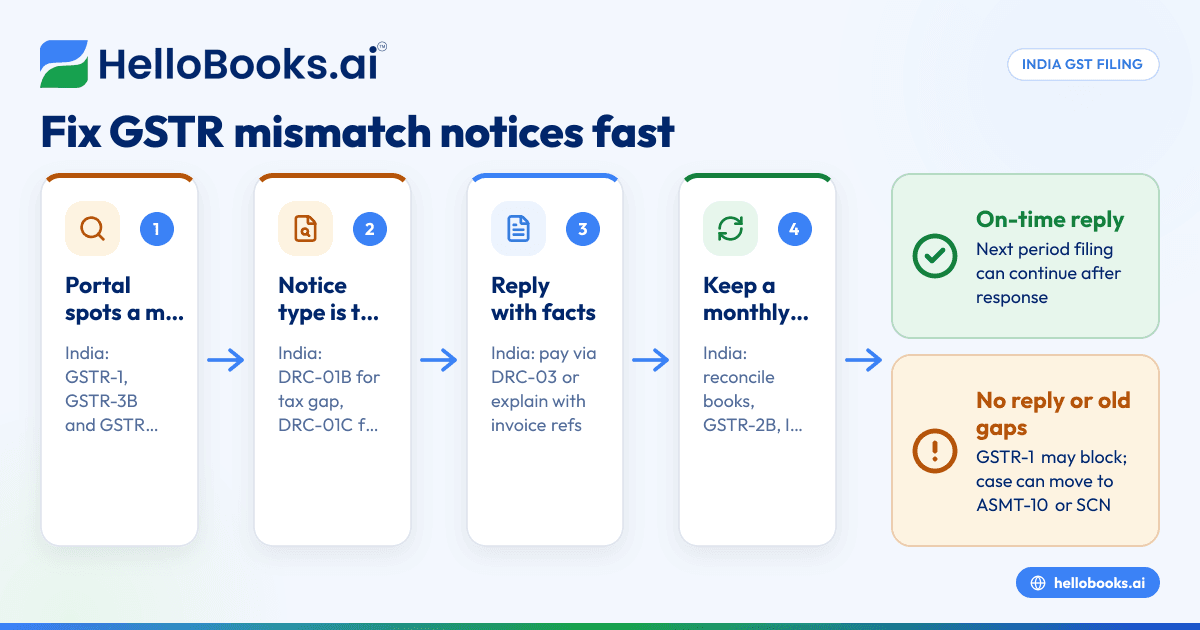
Indiaలో GSTR-1, GSTR-3B, GSTR-2B figures ఒక్కదానితో ఒకటి సరిపోకపోతే GST Portal, GSTN మరియు CBIC framework కింద మీకు DRC-01B లేదా DRC-01C లాంటి intimation రావచ్చు; కొన్ని సందర్భాల్లో scrutiny notice కూడా వస్తుంది. దీనికి మూల కారణం సాధారణంగా ఒకటే: sales register, purchase register, bank receipts, supplier reporting, tax payment summary అన్నీ ఒకే నెలకు ఒకే కథ చెప్పకపోవడం. దీన్ని ముందే పట్టుకుంటే notice stageకు వెళ్లకముందే సరిచేయడం సాధ్యమే.
మూడు documents ఒకే వ్యాపారం గురించి మాట్లాడతాయి, కానీ ఒకే source నుంచి రావు
GSTR-1లో మీరు outward supplies ఎలా report చేశారో కనిపిస్తుంది. GSTR-3Bలో అదే periodకు మీరు self-assessed summary liability, input tax credit, tax payment ఎలా చూపించారో ఉంటుంది. GSTR-2Bలో మీ suppliers తమ GSTR-1/IFF మరియు ఇతర prescribed sources ద్వారా మీ GSTINకు report చేసిన inward credit snapshot కనిపిస్తుంది. ఇవన్నీ Central Goods and Services Tax Act, 2017 మరియు సంబంధిత Rules కింద పనిచేసే GST systemలో భాగాలు; current filing structure, tables, advisories, validations GST Portal మరియు CBIC/GSTN official updatesలో publish అవుతుంటాయి.
కాబట్టి mismatch అనేది ఎప్పుడూ fraud అని అర్థం కాదు. చాలా సార్లు ఇది data timing సమస్య. ఉదాహరణకు Andhra Pradesh లేదా Telanganaలో business invoice మార్చిలో raise చేసి, buyer payment UPI లేదా NEFT ద్వారా ఏప్రిల్లో receive అయి, accountant entry ఇంకో dateతో pass చేస్తే books ఒకలా, GSTR-1 ఇంకోలా, bank narration మరోలా కనిపించవచ్చు. అదే supplier bill OCR లేకుండా later entry అయితే GSTR-2B reconciliation మళ్లీ ఆలస్యం అవుతుంది.
DRC-01B సాధారణంగా ఎప్పుడు trigger అవుతుంది
DRC-01B అనేది outward tax liability difference గురించి intimation. ఇది CGST Rulesలో Rule 88C framework కింద వస్తుంది. ఒక tax periodకు GSTR-1 లేదా IFFలో report అయిన liability, GSTR-3Bలో paid liability కంటే prescribed limit దాటి ఎక్కువగా ఉంటే system intimation issue చేయవచ్చు. ఆ limit, logic, release behaviour గురించి current position CBIC notifications/circulars మరియు GSTN advisoriesలో చూడాలి; ఏ specific percentage లేదా rupee trigger అయినా official source నుంచి verify చేయాలి.
ప్రాక్టికల్గా ఇది ఎలా జరుగుతుందంటే:
- sales invoice GSTR-1లో ఉంది, కానీ 3B liabilityలో పూర్తిగా reflect కాలేదు
- amendment or credit note ఒక returnలో పడింది, మరోదాంట్లో period mismatch అయింది
- inter-state supplyకి IGST బదులు booksలో CGST/SGST split చేసి summary తీసుకున్నారు
- one GSTINకు చెందిన sale మరో branch GSTIN booksలో పోయింది
- e-invoice IRN generate అయ్యింది, కానీ final accounting entry pendingగా ఉంది
కొన్ని recent system changes వల్ల కొన్ని periodsలో GSTR-3B liability auto-population ఎక్కువ కట్టుదిట్టంగా ఉండొచ్చు. కానీ అందువల్ల అన్ని historical periods లేదా exceptional casesలో mismatch అసాధ్యం అవుతుందని అనుకోవడం ప్రమాదం. Multi-GSTIN businessesలో ఇది ఇంకా ఎక్కువగా జరుగుతుంది.
DRC-01C ఎక్కువగా ITC discipline బలహీనంగా ఉన్నప్పుడు కనిపిస్తుంది
DRC-01C అనేది input tax credit difference మీద వచ్చే intimation. ఇది CGST Rulesలో Rule 88Dతో సంబంధం కలిగి ఉంటుంది. ఒక periodకు GSTR-3Bలో claimed ITC, GSTR-2Bలో reflected eligible credit కంటే prescribed validation limit దాటి ఎక్కువగా ఉంటే portal intimation ఇవ్వవచ్చు. Current comparison logic, tolerance parameters, response workflow GST Portal help content, GSTN advisories, CBIC issued materialలో check చేయాలి.
ఇది especially traders, manufacturers, agencies, contractors దగ్గర ఎక్కువగా కనిపించే కారణాలు:
- supplier bill booksలో ఉంది కానీ supplier ఇంకా file చేయలేదు
- supplier wrong GSTINకు upload చేశాడు
- import-related credit, reverse charge, re-claim, debit note timing లాంటివి team సరిగ్గా map చేయలేదు
- ineligible ITC reversal and re-avail working spreadsheetలో ఉంది కానీ returnలో context లేకుండా claim అయింది
- purchase bills photo/PDF నుంచి manual entry చేస్తూ invoice number typo అయింది
- one branch purchase మరో branch GSTINలో claim అయింది
GSTR-2Bని final truthలా blindly తీసుకోవడం కూడా సరైంది కాదు; booksలో ఉన్న ప్రతి billను 2Bలో claim చేయడం కూడా సరైంది కాదు. రెండింటి మధ్య law-based reconciliation అవసరం. Eligibility rules Central Goods and Services Tax Act, 2017, related Rules, and CBIC clarifications ఆధారంగా చూడాలి. ఏ credit వెంటనే claim చేయవచ్చో, ఏది wait చేయాలో, ఏది reverse చేయాలో official law text మరియు professional adviceతో నిర్ణయించాలి.
ASMT-10, scrutiny letters, show cause trail ఎలా పెద్ద సమస్యగా మారుతుంది
అన్ని mismatchలు DRC-01B లేదా DRC-01Cగానే ఉండవు. కొన్ని casesలో scrutiny route వస్తుంది. ASMT-10 అనేది scrutiny of returns processలో ఒక ముఖ్యమైన communication. ఇది CGST Act scrutiny provisions మరియు Rules ప్రకారం proper officer return data, annual pattern, liability, ITC usage, e-way bill trail, e-invoice trail, or external data compare చేసి issue చేయవచ్చు. Current format and response mechanics CBIC materials మరియు GST Portal instructionsలో చూడాలి.
ఇది ఎక్కువగా ఇలా పెరుగుతుంది:
- ఒక చిన్న mismatch చాలామాసాలు unresolvedగా ఉండటం
- outward supplies books, e-way bill movement, e-invoice IRN data, and GSTR-1 మధ్య consistency లేకపోవడం
- 2Bకి సరిపోని ITC repeatedగా claim అవుతూ ఉండటం
- bank statementలో receipts కనబడుతున్నా corresponding tax invoices summary weakగా ఉండటం
- MCA filings, Companies Act financials, P&L turnover మరియు GST turnover మధ్య unexplained gap ఉండటం
ఇక్కడ business owners చేసే పెద్ద పొరపాటు ఏంటంటే notice పేరు చూసి మాత్రమే react అవడం. అసలు ప్రశ్న “ఏ document truth source?” అనేది. Sales కోసం invoice register. Receipt కోసం bank statement. Credit కోసం supplier-backed document set plus 2B reconciliation. Movement కోసం e-way bill/e-invoice trail. ఇవన్నీ కలిపి same story చెప్పాలి.
mismatch తగ్గించాలంటే invoice stage నుంచే control పెట్టాలి
Mismatchను return filing dayన solve చేయలేరు; అది invoice creation day నుంచే prevent చేయాలి. Indiaలో GST తప్పులు ఎక్కువగా tax head selection, place of supply, GSTIN capture, invoice amendment discipline దగ్గర మొదలవుతాయి. అదే కారణంగా smart invoicing మరియు accounting-software-india type workflow useful అవుతుంది, provided system actual transaction flowకే దగ్గరగా వాడాలి.
Invoice raise చేసే సమయంలో customer GSTIN, state, place of supply, HSN/SAC, tax head split సరిగ్గా capture అయితే CGST/SGST vs IGST confusion చాలా తగ్గుతుంది. HelloBooks ఈ stageలో GST invoice తయారుచేస్తూ correct place-of-supply logic మరియు tax head splitను maintain చేయడానికి సహాయపడుతుంది; అందువల్ల inter-state saleని local saleలా లేదా local saleని IGSTగా report చేసే పొరపాట్లు తగ్గుతాయి. E-invoicing mandate వర్తించే businessesలో IRN మరియు signed QR invoice save సమయంలోనే రావడం వల్ల portal JSON upload delay వల్ల వచ్చే data gaps కూడా తగ్గుతాయి. దీనికి సంబంధించి current applicability threshold, document classes, exemptions e-invoice schema notifications, CBIC notifications, and GSTN/e-invoice portal publicationsలో verify చేయాలి.
Inventory-linked businessesలో stock outward మరియు invoice outward విడిగా నడిస్తే trouble మొదలవుతుంది. Invoice ఉంది కానీ stock issue లేదు, లేదా stock move అయింది కానీ invoice later created అయ్యింది అంటే e-way bill, books, GST summary మధ్య fracture వస్తుంది. HelloBooksలో inventory movement sales and purchasesతో కలిసి update అవుతుండటం వల్ల closing stock, outward register, purchase consumption story ఒకే systemలో కనిపిస్తుంది.
monthly reconciliation అంటే Excel punishment కాదు; అది notice insurance
ప్రతి నెల CAని వేచి చూసి quarter-endలో reconcile చేస్తే ఆలస్యం అవుతుంది. Better practice ఏంటంటే month close routine పెట్టుకోవడం:
- sales register vs GSTR-1 draft compare చేయడం
- GSTR-1 liability vs GSTR-3B liability summary cross-check చేయడం
- purchase register vs GSTR-2B compare చేయడం
- missing supplier invoices tag చేయడం
- ineligible / hold / reverse charge / re-claim items వేరు చూపించడం
- bank receipts and major expense payments match చేయడం
- branch-wise GSTIN mapping verify చేయడం
ఈ routineను practicalగా చేయడానికి gst-return-filing-software, bank-reconciliation-software, ai-bookkeeping వంటి connected workflow ఉపయోగపడుతుంది. HelloBooksలో GSTR-1 మరియు GSTR-3B direct filing ఉండటం వల్ల return figures manually retype చేయాల్సిన అవసరం తగ్గుతుంది. GSTR-2A/2B reconciliation మరియు ITC tracking వల్ల supplier invoice 2Bలో reflect కాలేదా, wrong value వచ్చిందా, wait చేయాలా అనే picture ముందుగానే కనిపిస్తుంది. Purchase billsను photo లేదా PDF నుంచి OCRతో capture చేయడం వల్ల invoice number, taxable value, GST amount manual typoలు తగ్గుతాయి.
Bank sideలో India businesses చాలా సార్లు UPI, IMPS, NEFT, RTGS, cash deposit, cheque mixగా collections తీసుకుంటాయి. Receipt match చేయకుండా leave చేస్తే turnover proof later weak అవుతుంది. HelloBooksలో bank statement upload చేసి AI reconciliation చేయొచ్చు; live bank feed claim చేయకుండా, uploaded statement ఆధారంగా receipts and payments invoices, expenses, ledger entriesతో match అవుతాయి. ఇది especially “sales booksలో తక్కువ, bankలో ఎక్కువ” లేదా “invoice ఉంది కానీ collection trace లేదు” వంటి scrutiny questionsకు groundwork ఇస్తుంది.
ఒక చిన్న illustrative scenario చూసితే mismatch mechanics సులభంగా అర్థమవుతుంది
ఇక్కడి figures పూర్తిగా illustrative and invented మాత్రమే; current law-based tax treatment, eligibility, set-off order, interest, or response drafting మొత్తం ఇందులో cover కాలేదు. Official computation కోసం CBIC law text, GST Portal instructions, and your tax professional advice అవసరం.
ఉదాహరణకు Hyderabadలో ఒక wholesalerకి April periodలో మూడు outward invoices ఉన్నాయి అనుకుందాం: Invoice A taxable value ₹1,20,000, Invoice B taxable value ₹80,000, Invoice C taxable value ₹50,000. ఇందులో A మరియు B local Telangana sales, C Karnataka buyerకి inter-state sale అని అనుకుందాం. Team booksలో మూడు invoices save చేసింది. కానీ return compile చేసే సమయంలో Invoice C accidentally wrong branch GSTINలో classify అయింది. అదే monthలో supplier purchase billsలో రెండు 2Bలో కనిపించాయి, ఒకటి ఇంకా supplier file చేయకపోవడంతో కనిపించలేదు. Business 3B prepare చేస్తూ books-based ITC మొత్తం తీసుకుంది.
దీంతో ఏమవుతుందంటే:
- outward liability GSTR-1లో ఒక patternగా report అవుతుంది
- GSTR-3Bలో branch mapping తప్పు వల్ల liability differentగా పడుతుంది
- GSTR-2Bలో కనిపించని supplier bill credit booksలో ఉంది కానీ portal-backed ITC snapshotలో లేదు
ఈ setupలో Rule 88C side నుంచి DRC-01B risk, Rule 88D side నుంచి DRC-01C risk రెండూ ఏర్పడవచ్చు. Problem invoice value పెద్దదా చిన్నదా అన్నది కాదు; same transaction అన్ని placesలో same way చెప్పారా లేదా అన్నదే ప్రధాన విషయం.
notice వచ్చిన తర్వాత reply ఇవ్వడంలో emotion కాదు, evidence ముఖ్యం
DRC-01B లేదా DRC-01C వచ్చినప్పుడు first reaction panic అవుతుంది, especially next period filing block అవుతుందేమో అనిపించినప్పుడు. కానీ reply quality ఎక్కువ matter అవుతుంది. Replyలో broad statements కంటే specific mapping అవసరం:
- invoice number / date
n- supplier invoice reference
- period involved
- whether difference is timing, amendment, omitted document, wrong GSTIN mapping, reverse charge, re-claim, or clerical error
- whether tax/amount has been paid through appropriate route or will be corrected in lawful manner
- supporting workings
ఏ payment, interest, response timeline, or portal response window అయినా bare factగా గుర్తుపెట్టుకోవద్దు. అవి CGST Act, CGST Rules, CBIC notifications, and GST Portal process pagesలో currentగా ఎలా publish అయ్యాయో అదే source నుంచి verify చేయాలి. అదే విధంగా DRC-03 usage, table reporting implications, or subsequent amendment handling గురించి professional review తీసుకోవడం మంచిది.
Business records scatteredగా ఉంటే reply తయారుచేయడమే కష్టమవుతుంది. HelloBooksలో invoices, purchase bills, reconciled bank entries, financial reports ఒకే placeలో ఉండటం వల్ల notice-specific working pull చేయడం సులభమవుతుంది. Receivables ageing, sales summary, purchase summary, branch-wise reporting వంటి reports ద్వారా “books ఏమంటున్నాయి?” అన్న ప్రశ్నకు త్వరగా సమాధానం దొరుకుతుంది. Mobile app ద్వారా owner fieldలో ఉన్నప్పటికీ bills capture చేయడం, invoice status చూడడం సాధ్యమవుతుంది. WhatsAppలో పని చేయడం అలవాటైన owners కోసం Noor assistant Hindi, English, Hinglishలో bookkeeping-related ప్రశ్నలు answer చేయగలదు; Telugu workflowకు ఇది direct replacement కాదు కానీ mixed-language business teamsకి useful bridge అవుతుంది.
Telugu-speaking India businesses కోసం practical control framework
Telugu marketలో ఒక common pattern ఏమిటంటే owner sales and collections చూస్తాడు, accountant Tally లేదా spreadsheet maintain చేస్తాడు, CA final GST filing చూసేస్తాడు. ఈ మూడు layers మధ్య handoff ఎక్కువైతే mismatch అవకాశం కూడా ఎక్కువ. అందుకే process ఇలా ఉండాలి:
- invoice అదే రోజు raise చేయాలి
- customer GSTIN validate చేయాలి; అవసరమైతే gstin-validator ఉపయోగించాలి
- HSN/SAC doubt ఉంటే hsn-code-searchతో initial check చేయాలి
- invoice fields sanity కోసం gst-invoice-validator ఉపయోగించాలి
- month-endకు ముందు 2B reconciliation చేయాలి
- missing creditsని “claim now” కాకుండా “follow up with supplier” bucketలో పెట్టాలి
- e-way bill applicable movement ఉంటే invoice and transport data same source నుంచి తీసుకోవాలి; e-way-bill-software workflow ఇక్కడ సహాయపడుతుంది
- old Tally data ఉంటే migration or connector ద్వారా books continuity ఉంచాలి; tally-alternative మరియు compare/hellobooks-vs-tally చూసి fit evaluate చేయొచ్చు
HelloBooks ఈ practical flowలో useful అయ్యే చోట్లే value ఇస్తుంది: GST invoicing, e-invoicing with IRN and signed QR, direct GSTR-1 and GSTR-3B filing, GSTR-2A/2B reconciliation with ITC tracking, OCR purchase capture, bank statement upload with AI reconciliation, inventory management, TDS/TCS and reverse charge handling, multi-GSTIN operation, and reports. All capabilities ప్రతి businessకి ఒకేలా అవసరం కాదు; కానీ mismatch-heavy setupలో ఇవి same dataని మళ్లీ మళ్లీ type చేయాల్సిన అవసరం తగ్గిస్తాయి.
tools, review cadence, and when to get expert help
Mismatch preventionకి technology సరిపోదు; review cadence కూడా కావాలి. Month close తర్వాత one owner review, one accountant review, one CA review అన్న మూడు-layer check helpful. Free checks కోసం gst-reconciliation-checker లేదా gst-calculator ఉపయోగించవచ్చు. Software fit, India workflow, and implementation details కోసం demo లేదా India-specific information కోసం /in, pricing context కోసం /in/pricing చూడొచ్చు.
చివరగా, DRC-01B, DRC-01C, ASMT-10ల్ని separate disastersలా కాకుండా ఒకే messageగా చూడండి: your invoice data, tax payment summary, supplier credit evidence, and bank trail ఒకే భాషలో మాట్లాడడం లేదు. India GST systemలో అది ఎంత త్వరగా సరిచేస్తే అంత మంచిది. Law పేరు CGST Act, regulator sideలో CBIC, system railగా GSTN/GST Portal — కానీ day-to-day survival మాత్రం మీ books qualityపై ఆధారపడి ఉంటుంది.


