


Key takeaways
What this article covers, in order:
- FY 2026-27ರಲ್ಲಿ ಮೊದಲು ನೋಡಿ: ನಿಮ್ಮ filing pattern ಏನು?
- Official due date ಅನ್ನು ಎಲ್ಲಿಂದ confirm ಮಾಡಬೇಕು?
- Monthly compliance looks simple only when invoices are clean
- QRMP businesses usually miss the calendar in the first two months, not the third
- GSTR-1 ಮತ್ತು GSTR-3B filingಗೆ calendarಕ್ಕಿಂತ reconciliation ಮುಖ್ಯ
- Karnataka businessಗೆ due date risk ಬೇರೆ, multi-state groupಗೆ ಬೇರೆ
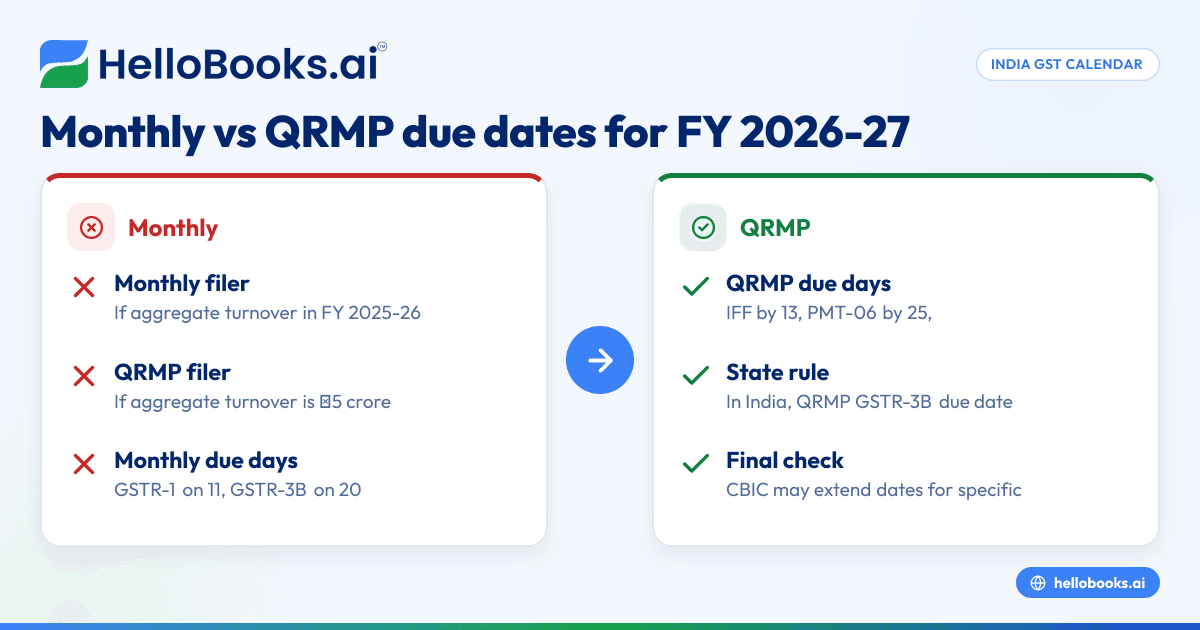
Indiaನಲ್ಲಿ FY 2026-27ಕ್ಕೆ GST return due dates ಒಂದೇ fixed wall-calendar ಆಗಿ ನೋಡಬಾರದು: ನಿಮ್ಮ business monthly filerನಾ, QRMPನಾ, ನಿಮ್ಮ GSTIN ಯಾವ stateನಲ್ಲಿ issue ಆಗಿದೆ, ಮತ್ತು Central Goods and Services Tax Act, 2017 ಹಾಗೂ ಅದರ Rules ಅಡಿಯಲ್ಲಿ CBIC ಮತ್ತು GSTN/GST Portal ಯಾವ notification ಅಥವಾ advisory publish ಮಾಡುತ್ತವೆ ಎಂಬುದರ ಮೇಲೆ dates ಬದಲಾಗಬಹುದು. ಆದ್ದರಿಂದ safest answer ಇದು: official calendar ಅನ್ನು GST Portal ಹಾಗೂ CBIC notifications ಜೊತೆ verify ಮಾಡಿ, ಮತ್ತು ನಿಮ್ಮ books ಅನ್ನು return-ready ಆಗಿ ಇರಿಸಿ so that date change ಆದರೂ panic ಆಗಬಾರದು.
FY 2026-27ರಲ್ಲಿ ಮೊದಲು ನೋಡಿ: ನಿಮ್ಮ filing pattern ಏನು?
GST return calendar ಅರ್ಥಮಾಡಿಕೊಳ್ಳುವಲ್ಲಿ ದೊಡ್ಡ ತಪ್ಪು date memorise ಮಾಡೋದು ಅಲ್ಲ; wrong filing pattern assume ಮಾಡೋದು. ಭಾರತದಲ್ಲಿ GST compliance practical ಆಗಿ ಎರಡು rhythmsನಲ್ಲಿ ನಡೆಯುತ್ತದೆ: monthly filing ಅಥವಾ QRMP structure. ನೀವು ಯಾವ bucketನಲ್ಲಿ ಇದ್ದೀರಿ ಎಂಬುದು Central Goods and Services Tax Rules, 2017 ಅಡಿಯಲ್ಲಿ exercised option, aggregate turnover rules, ಮತ್ತು GST Portal profile ಮೇಲೆ ತೋರುತ್ತದೆ. Current eligibility conditions, opt-in/opt-out windows, and operational rules are published by the GSTN on the GST Portal and by CBIC through notifications and circulars.
ಇಲ್ಲಿ bare threshold numberನ್ನು headline fact ಆಗಿ ನಂಬುವುದಕ್ಕಿಂತ official source check ಮಾಡೋದು ಒಳ್ಳೆಯದು, ಏಕೆಂದರೆ turnover-based eligibility changes ಅಥವಾ clarifications notification ಮೂಲಕ ಬರಬಹುದು. ನಿಮ್ಮ accountant, CA, ಅಥವಾ tax team ಮೊದಲಿಗೆ GST Portal return dashboardನಲ್ಲಿ filing preference confirm ಮಾಡಬೇಕು. ಅದೇ ನಿಮ್ಮ whole year workflow ತೀರ್ಮಾನಿಸುತ್ತದೆ.
Monthly filer ಆಗಿದ್ದರೆ outward supplies data, tax liability, input tax credit review, bank matching, and payment cycle ಪ್ರತಿತಿಂಗಳು close ಆಗುತ್ತದೆ. QRMPನಲ್ಲಿ ಇದ್ದರೆ return filing quarterly rhythmನಲ್ಲಿ ಇರಬಹುದು, ಆದರೆ books monthly discipline ಇಲ್ಲದೇ ಸಾಗುವುದಿಲ್ಲ. UPI, NEFT, RTGS, IMPS receipts ಎಲ್ಲವೂ regular matching ಬೇಕೇ ಬೇಕು; ಇಲ್ಲದಿದ್ದರೆ quarter-end rushನಲ್ಲಿ mismatchಗಳು ಹೆಚ್ಚಾಗುತ್ತವೆ.
Official due date ಅನ್ನು ಎಲ್ಲಿಂದ confirm ಮಾಡಬೇಕು?
GST due date ಬಗ್ಗೆ safest source social media post ಅಥವಾ old PDF ಅಲ್ಲ. ಭಾರತದಲ್ಲಿ current dates confirm ಮಾಡಲು ಈ order ಬಳಸಿರಿ:
- GST Portal ನಲ್ಲಿ relevant return tile, dashboard, and advisories
- CBIC notifications, circulars, and press releases under the CGST Act, 2017 and related Rules
- State-specific relief ಇದ್ದರೆ notified order
- Portal functionality change ಇದ್ದರೆ GSTN advisory
Due date, late fee, interest, or cut-off related ಯಾವುದೇ current figure official source ಇಲ್ಲದೇ quote ಮಾಡೋದರಿಂದ confusion ಬರುತ್ತದೆ. ಅದಕ್ಕಾಗಿಯೇ ನೀವು ಯಾವ specific date ನೋಡಿದರೂ, ಅದು CGST Act/Rules ಅಡಿ CBIC publish ಮಾಡಿದ notification ಅಥವಾ GST Portal advisoryನಲ್ಲಿ current ಆಗಿದೆಯೇ ಎಂದು verify ಮಾಡಬೇಕು.
Practical tip: one printed calendar ಸಾಕಾಗುವುದಿಲ್ಲ. Diwali season, year-end stock count, audit prep, TDS working under the Income-tax Act, 1961, MCA filings under the Companies Act, 2013, and vendor follow-ups—all collide. ನಿಮ್ಮ tax calendar ಒಂದು legal calendar ಮಾತ್ರ ಅಲ್ಲ; ಅದು operations calendar ಕೂಡ ಆಗಿದೆ.
Monthly compliance looks simple only when invoices are clean
Monthly filerಗಳಿಗೆ calendarದ ದೊಡ್ಡ problem dates ಅಲ್ಲ, data quality. Invoice issue ಮಾಡುವಾಗ place of supply ತಪ್ಪಿದರೆ CGST/SGST vs IGST split ತಪ್ಪುತ್ತದೆ. Customer GSTIN wrong ಆಗಿದ್ದರೆ B2B invoice treatment itself distort ಆಗಬಹುದು. E-invoice applicable entity ಆಗಿದ್ದರೆ IRN ಮತ್ತು signed QR requirements separate portal routine ಆಗಿ turn ಆಗಬಹುದು. Goods movement ಇದ್ದರೆ e-way bill details invoice data ಜೊತೆ align ಆಗಬೇಕು.
ಈ ಕಾರಣಕ್ಕೆ return due date article ಓದುವಾಗ filing dateಗಿಂತ ಮೊದಲು invoice readiness ಬಗ್ಗೆ ಯೋಚಿಸಬೇಕು. HelloBooksನಲ್ಲಿ GST invoicing ಮಾಡುವಾಗ customer GSTIN ಮತ್ತು place of supply ಆಧಾರವಾಗಿ intra-state saleಗೆ CGST/SGST ಅಥವಾ inter-state supplyಗೆ IGST split consistently handle ಆಗುತ್ತದೆ, so Rule 46-style invoice fields manual rework ಕಡಿಮೆಯಾಗುತ್ತದೆ. E-invoicing applicable businessesಗೆ invoice save ಮಾಡುವ flowಲ್ಲೇ IRN ಮತ್ತು signed QR capture ಆಗುವುದರಿಂದ separate JSON upload chore ಕಡಿಮೆಯಾಗುತ್ತದೆ. Goods dispatch ಇರುವ businessesಗೆ e-way bill software style workflowನಲ್ಲಿ invoice dataದಿಂದ EWB generate ಮಾಡಬಹುದು, ಆದ್ದರಿಂದ consignment details ಅನ್ನು ಮತ್ತೆ type ಮಾಡುವ risk ಕಡಿಮೆಯಾಗುತ್ತದೆ.
ಇದು calendar articleಗೆ relevant ಯಾಕೆ? ಯಾಕೆಂದರೆ GSTR-1 ಮತ್ತು GSTR-3B late ಆಗೋದು ಬಹಳ ಬಾರಿ tax team lazy ಆದ್ದರಿಂದ ಅಲ್ಲ; invoice layer messy ಆಗಿರುವುದರಿಂದ.
QRMP businesses usually miss the calendar in the first two months, not the third
QRMP ಬಗ್ಗೆ popular misunderstanding ಏನೆಂದರೆ “quarterly filing” ಅಂದ್ರೆ “quarterly accounting.” Indiaನಲ್ಲಿ ಅದು dangerous shortcut. QRMP structureನ operational detailಗಳು CGST Rules ಮತ್ತು GST Portal documentationನಲ್ಲಿ ಪ್ರಕಟವಾಗುತ್ತವೆ. Current payment method rules, optional invoice furnishing utility, and state-group driven GSTR-3B timing—all official sourceನಲ್ಲಿ check ಮಾಡಬೇಕು.
QRMP taxpayerಗೆ practical stress point quarter end ಅಲ್ಲ; first and second month. Vendor bills late ಬರುತ್ತವೆ, purchase invoices OCR ಇಲ್ಲದೇ desk drawerನಲ್ಲಿ ಉಳಿಯುತ್ತವೆ, bank entries reconcile ಆಗದೇ ಇರುತ್ತವೆ, ಮತ್ತು third month ಬಂದಾಗ GSTR-1, liability, ITC view, and payment all pile up.
ಅದಕ್ಕೇ monthly discipline QRMPಗೂ ಅಗತ್ಯ. Supplier bills photo ಅಥವಾ PDFನಿಂದ capture ಮಾಡಲು OCR ಬಳಸಿದರೆ purchase register faster build ಆಗುತ್ತದೆ. Uploaded bank statementನಿಂದ AI reconciliation ಮಾಡಿದರೆ India business receipts ಮತ್ತು payments books ಜೊತೆ match ಆಗುತ್ತವೆ—live bank feed ಅಲ್ಲ, statement upload workflow. That distinction matters. HelloBooksನಲ್ಲಿ monthly bank statement upload ಮಾಡಿ reconciliation ಮಾಡಿದರೆ UPI collection, NEFT transfer, IMPS receipt, cheque clearing—ಎಲ್ಲವನ್ನು invoice or expense entries ಜೊತೆ tie ಮಾಡಬಹುದು. Quarter-endಗೆ “ಈ credit ಯಾರದು?” ಅನ್ನೋ ಪ್ರಶ್ನೆ ಕಡಿಮೆಯಾಗುತ್ತದೆ.
GSTR-1 ಮತ್ತು GSTR-3B filingಗೆ calendarಕ್ಕಿಂತ reconciliation ಮುಖ್ಯ
FY 2026-27 due dates ಹುಡುಕುವವರು ಸಾಮಾನ್ಯವಾಗಿ ಎರಡು returns ಬಗ್ಗೆ immediate concern ಇಟ್ಟುಕೊಂಡಿರುತ್ತಾರೆ: GSTR-1 ಮತ್ತು GSTR-3B. ಆದರೆ practical risk date miss ಅಲ್ಲದೇ, wrong figures file ಆಗುವುದು. Outward supplies one side, books another side, bank receipts another side, purchase ITC another side ಇದ್ದರೆ return on time ಆಗಿದ್ದರೂ trouble ಮುಂದೇ ಬರುತ್ತದೆ.
India GST systemನಲ್ಲಿ inward tax credit claim approachಗೆ supplier compliance visibility critical. Current legal conditions for ITC claim are governed by the Central Goods and Services Tax Act, 2017 and Rules, as clarified by CBIC notifications/circulars and reflected on GST Portal documentation. So any particular cut-off or restriction figure must be taken only from those official publications.
HelloBooksನಲ್ಲಿ GSTR-2A/2B reconciliation ಮತ್ತು ITC tracking ಬಳಸಿ supplier invoice reflected ಆಗಿದೆಯೇ, missing ಇದೆಯೇ, mismatch ಇದೆಯೇ ಅನ್ನೋದನ್ನು filingಗೆ ಮುಂಚೆ review ಮಾಡಬಹುದು. ಅದೇ dataನಿಂದ GST return filing software workflowನಲ್ಲಿ GSTR-1 ಮತ್ತು GSTR-3B direct filing ಮಾಡಬಹುದಾದ್ದರಿಂದ return figures and source invoices ನಡುವೆ gap ಕಡಿಮೆಯಾಗುತ್ತದೆ. Purchase sideಗೆ OCR helpful; sales sideಗೆ smart invoice structure helpful; bank sideಗೆ uploaded statement reconciliation helpful. ಈ ಮೂರು together ಇದ್ದಾಗ calendar manageable ಆಗುತ್ತದೆ.
Free verification ಬೇಕಾದರೆ GSTIN validator, HSN code search, ಮತ್ತು GST reconciliation checker ತರಹದ India tools quick sanity checkಗೆ ಉಪಯೋಗವಾಗುತ್ತವೆ.
Karnataka businessಗೆ due date risk ಬೇರೆ, multi-state groupಗೆ ಬೇರೆ
Kannada readerಗೆ ಒಂದು real issue ಇದೆ: “ನನ್ನ business Bengaluruನಲ್ಲಿ ಇದೆ, ಆದರೆ buyers Indiaभर ಇರುತ್ತಾರೆ; date ಯಾವದನ್ನು ನೋಡಬೇಕು?” Answer: customer location calendar decide ಮಾಡುವುದಿಲ್ಲ. Your registration pattern matters. GSTIN state, filing profile, supply pattern, e-invoice applicability, e-way bill activity, and branch structure—all combine into your compliance workload.
Single-GSTIN Karnataka traderಗೆ challenge straightforward ಇರಬಹುದು: local sales ಮೇಲೆ CGST/SGST, interstate dispatch ಮೇಲೆ IGST, frequent e-way bill needs, and fast month-end closing. ಆದರೆ one companyಗೆ Karnataka, Tamil Nadu, Maharashtra like multiple GSTINs ಇದ್ದರೆ dates, data owners, stock transfers, and reconciliation complexity ಹೆಚ್ಚುತ್ತದೆ. Books ಒಂದೇ spreadsheetನಲ್ಲಿ handle ಮಾಡಲು ಹೋದರೆ quarter-end disaster ಆಗಬಹುದು.
HelloBooksನಲ್ಲಿ multi-GSTIN handling ಇರುವುದರಿಂದ ಒಂದೇ loginನಲ್ಲಿ ಹಲವು registrations manage ಮಾಡಬಹುದು ಮತ್ತು unlimited users ಇರೋದರಿಂದ owner, accountant, CA, warehouse person—ಪ್ರತ್ಯೇಕ accessతో ಕೆಲಸ ಮಾಡಬಹುದು. Place-of-supply logic tax head splitಗೆ ಸಹಾಯ ಮಾಡುವುದರಿಂದ branch-wise invoice mistakes ಕಡಿಮೆಯಾಗುತ್ತವೆ. Inventory movement invoice ಮತ್ತು purchase entries ಜೊತೆ update ಆಗುವುದರಿಂದ stock register ಮತ್ತು GST outward supply story ನಡುವೆ mismatch ಕಡಿಮೆಯಾಗುತ್ತದೆ. Tally ಇಂದೇ continue ಮಾಡುತ್ತಿರುವ firmsಗೆ tally alternative ಅಥವಾ migration/connector route useful ಆಗಬಹುದು, especially when CA firm phased transition ಬಯಸುತ್ತದೆ.
Calendar control means building a monthly close, not waiting for a deadline
ಒಂದು sound GST calendar ಅನ್ನು wall ಮೇಲೆ ಬರೆಯುವುದರಿಂದ maintain ಮಾಡಲಾಗೋದಿಲ್ಲ. India business contextನಲ್ಲಿ monthly close ritual ಬೇಕು. ಇದನ್ನು finance team languageನಲ್ಲಿ ಹೇಳುವುದಾದರೆ: close books before you close returns.
ಒಂದು workable rhythm ಹೀಗೆ ಇರುತ್ತದೆ:
- sales invoices issue ಆದ ದಿನವೇ GST-ready ಆಗಿ record ಆಗಬೇಕು
- e-invoice applicable ಇದ್ದರೆ IRN failure backlog ಆಗಬಾರದು
- goods dispatch ಇದ್ದರೆ e-way bill linkage same flowನಲ್ಲಿ ಇರಬೇಕು
- purchase bills weekly capture ಆಗಬೇಕು
- supplier GSTIN, HSN/SAC, tax heads validate ಆಗಬೇಕು
- uploaded bank statement weekly ಅಥವಾ fortnightly reconcile ಆಗಬೇಕು
- GSTR-2B view against purchase register compare ಆಗಬೇಕು
- reverse charge, TDS/TCS impacts side spreadsheetನಲ್ಲಿ ಉಳಿಯಬಾರದು
- month-end P&L, receivables ageing, and tax liability same booksನಿಂದ ಬರಬೇಕು
HelloBooks ಈ operational sideನಲ್ಲಿ useful ಆಗೋದು ಇದೇ ಕಾರಣಕ್ಕೆ. Smart invoicing and accounting software India style workflowನಲ್ಲಿ invoices, expenses, inventory, and reports same systemನಲ್ಲಿ ಇದ್ದರೆ GST return prep detached activity ಆಗುವುದಿಲ್ಲ. Financial reports month-wise ಬರುತ್ತಿರುವುದರಿಂದ turnover trend, debtor delays, and tax outflow visibility ಕೂಡ better ಆಗುತ್ತದೆ. Mobile appನಿಂದ owner on the move ಇದ್ದರೂ invoice/expense capture ಮಾಡಬಹುದು. Noor assistant on WhatsAppನಲ್ಲಿ Hindi, English, Hinglish support owner-level quick clarificationಗೆ practical ಆಗಿರಬಹುದು, especially team spreadsheet-based explanationಗಿಂತ conversational help ಬಯಸಿದಾಗ.
ಒಂದು illustrative, invented scenario: date miss ಆಗುವ ಮುಂಚೆ data miss ಆಗುತ್ತದೆ
ಈ figures ಸಂಪೂರ್ಣ illustrative and invented; current legal rates, interest, late fee, thresholds, or deadlines represent ಮಾಡುವುದಿಲ್ಲ. Calculationವು sector-specific exemptions, credit blocks, valuation issues, amendments, and legal nuances ಅನ್ನು leave out ಮಾಡುತ್ತದೆ.
ಮನೆಮಠಿ example ತಗೋಣ. Mysuruನಲ್ಲಿ ಒಂದು wholesalerಗೆ April monthನಲ್ಲಿ invented outward sales ₹8,40,000 ಇವೆ ಎಂದು ತೆಗೆದುಕೊಳ್ಳಿ. ಅದರಲ್ಲಿ ₹5,00,000 Karnataka ಒಳಗಿನ supplies, ₹3,40,000 interstate supplies. Purchase bills invented total ₹4,90,000. Uploaded bank statementನಲ್ಲಿ UPI, NEFT ಮತ್ತು IMPS receipts ಸೇರಿ ₹6,10,000 reflect ಆಗಿವೆ. ಆದರೆ booksನಲ್ಲಿ two customer receipts unmatched, one supplier credit note unrecorded, and three purchase bills drawerನಲ್ಲಿ ಉಳಿದಿವೆ.
What happens next?
- outward register one figure ತೋರಿಸುತ್ತದೆ
- bank reconciliation another figure ತೋರಿಸುತ್ತದೆ
- purchase ITC support incomplete ಇರುತ್ತದೆ
- GSTR-1 prepare ಮಾಡುವಾಗ one B2B invoice customer GSTIN typo ಕಾರಣ mismatch ಆಗುತ್ತದೆ
- GSTR-3B draft liability and eligible credit tentative ಆಗುತ್ತದೆ
ಈ stageನಲ್ಲಿ date calendar ನೋಡಿ panic ಆಗೋದು easy. ಆದರೆ root cause deadline ಅಲ್ಲ, workflow. Same invented caseನಲ್ಲಿ invoices issue ಮಾಡುವಾಗ GSTIN validation, place-of-supply split, and e-invoice where applicable clean ಇದ್ದರೆ; purchase bills OCR ಮೂಲಕ capture ಆಗಿದ್ದರೆ; bank statement upload ಮಾಡಿ reconciliation weekly ಆಗಿದ್ದರೆ; GSTR-2A/2B check done ಆಗಿದ್ದರೆ—return prep one-hour review ಆಗಿರುತ್ತಿತ್ತು, one-week rescue operation ಅಲ್ಲ.
FY 2026-27ಕ್ಕೆ Kannada business owners ಏನು bookmark ಮಾಡಬೇಕು?
Kannada article ಓದುತ್ತಿರುವ small business ownerಗೆ practical shortlist ಇದು:
- official datesಗಾಗಿ GST Portal ಮತ್ತು CBIC notifications ಮಾತ್ರ final
- law basis: Central Goods and Services Tax Act, 2017 and Rules
- company secretarial overlap ಇದ್ದರೆ Companies Act, 2013 under MCA timeline ಕೂಡ mindನಲ್ಲಿ ಇರಲಿ
- TDS side issues ಇದ್ದರೆ Income-tax Act, 1961 obligations ಬೇರೆ calendarನಲ್ಲಿ track ಮಾಡಿ
- data privacy sensitive records handle ಮಾಡುತ್ತಿದ್ದರೆ Digital Personal Data Protection Act, 2023 implications internal processನಲ್ಲಿ consider ಮಾಡಿ
- payments UPI/NEFT/RTGS/IMPS ಆಗಿದ್ದರೂ books reconciliation mandatory
- invoice, e-invoice, IRN, e-way bill, GST return, and bank matching same systemನಲ್ಲಿ ಇದ್ದರೆ stress ಕಡಿಮೆ
ನೀವು tools first approach ಇಷ್ಟಪಟ್ಟರೆ bank reconciliation software, e-invoicing software, ಮತ್ತು accounting software for small business workflows ನೋಡಿ. Pricing ಬೇಕಿದ್ದರೆ straight pricing page ನೋಡಿ; demo ಬೇಕಿದ್ದರೆ demo request ಮಾಡಬಹುದು.
Finally, FY 2026-27 GST due dates ಬಗ್ಗೆ safest Kannada answer ಹೀಗಿದೆ: ಒಂದು static tableಗೆ blind trust ಮಾಡಬೇಡಿ. ನಿಮ್ಮ filing pattern confirm ಮಾಡಿ, current date ಅನ್ನು CBIC/GST Portalನಲ್ಲಿ verify ಮಾಡಿ, ಮತ್ತು books ಅನ್ನು monthly return-ready ಆಗಿ ಇಡಿ. Date extension ಬಂದರೂ ನೀವು safe; extension ಬರದಿದ್ದರೂ ನೀವು ready.


