


Key takeaways
What this article covers, in order:
- Rule 46 ਹੇਠ invoice ‘ਤੇ ਕੀ ਕੁਝ ਲਾਜ਼ਮੀ ਹੁੰਦਾ ਹੈ
- Supplier ਅਤੇ buyer ਦੀ ਜਾਣਕਾਰੀ ਵਿੱਚ ਲੋਕ ਕਿੱਥੇ ਫਸ ਜਾਂਦੇ ਹਨ
- HSN/SAC, item description ਅਤੇ taxable value ਨੂੰ ਹਲਕੇ ਵਿੱਚ ਨਾ ਲਓ
- CGST + SGST ਕਦੋਂ, ਅਤੇ IGST ਕਦੋਂ
- Serial number, issue timing ਅਤੇ copies ਵਾਲੇ ਨਿਯਮ ਕਿਉਂ matter ਕਰਦੇ ਹਨ
- E-invoice, IRN, signed QR ਅਤੇ e-way bill ਦਾ invoice ਨਾਲ ਰਿਸ਼ਤਾ
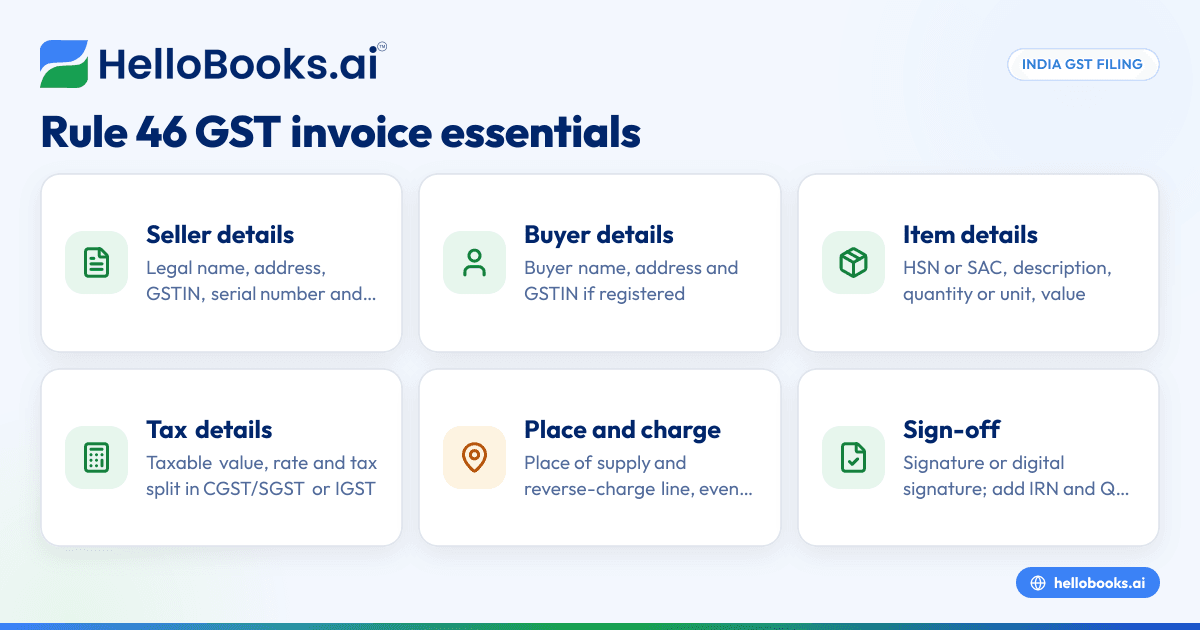
India ਵਿੱਚ GST invoice ਦਾ ਸਵਾਲ ਆਉਂਦੇ ਹੀ ਸਭ ਤੋਂ ਛੋਟਾ ਸਹੀ ਜਵਾਬ ਇਹ ਹੈ: tax invoice ਦਾ ਡਿਜ਼ਾਈਨ ਤੁਹਾਡੀ ਮਰਜ਼ੀ ਦਾ ਹੋ ਸਕਦਾ ਹੈ, ਪਰ ਉਸ ਦੇ ਖ਼ਾਨੇ CGST Act ਅਤੇ Central Goods and Services Tax Rules, 2017 ਦੇ Rule 46 ਮੁਤਾਬਕ ਹੋਣੇ ਚਾਹੀਦੇ ਹਨ, ਜਿਸ ਦੀ ਅਧਿਕਾਰਿਕ ਪ੍ਰਕਾਸ਼ਨਾ CBIC ਅਤੇ GST Portal/GSTN ecosystem ਰਾਹੀਂ ਮਿਲਦੀ ਹੈ। ਆਮ ਤੌਰ ‘ਤੇ ਤੁਹਾਡਾ ਨਾਂ, ਪਤਾ, GSTIN, serial number, date, buyer details, HSN/SAC, taxable value, tax breakup, place of supply, reverse charge note ਅਤੇ authorised signatory ਵਾਲੀ ਜਾਣਕਾਰੀ ਚਾਹੀਦੀ ਹੈ।
Rule 46 ਹੇਠ invoice ‘ਤੇ ਕੀ ਕੁਝ ਲਾਜ਼ਮੀ ਹੁੰਦਾ ਹੈ
Punjab ਹੋਵੇ, Delhi ਹੋਵੇ ਜਾਂ Tamil Nadu, GST invoice ਦਾ ਕਾਨੂੰਨੀ ਆਧਾਰ ਇੱਕੋ ਹੀ ਹੈ: CGST Act, 2017 ਅਤੇ CGST Rules, 2017। Invoice ਦੇ ਲਾਜ਼ਮੀ particulars ਦਾ ਮੁੱਖ ਹਵਾਲਾ Rule 46 of the Central Goods and Services Tax Rules, 2017 ਹੈ। ਇਸ Rule ਦਾ ਤਾਜ਼ਾ ਪਾਠ, ਨਾਲ ਹੀ notifications ਅਤੇ circulars, CBIC ਦੀ ਵੈੱਬਸਾਈਟ ਅਤੇ GST Portal ‘ਤੇ publish ਹੁੰਦੇ ਹਨ; practical filing behaviour ਤੁਹਾਨੂੰ GSTN ਦੇ systems ਵਿੱਚ ਵੀ ਨਜ਼ਰ ਆਉਂਦਾ ਹੈ।
ਇੱਕ compliant tax invoice ਵਿੱਚ ਆਮ ਤੌਰ ‘ਤੇ ਇਹ ਬੁਨਿਆਦੀ ਹਿੱਸੇ ਹੁੰਦੇ ਹਨ:
- supplier ਦਾ legal name
- supplier ਦਾ address
- supplier ਦਾ GSTIN
- ਇੱਕ unique serial number
- issue date
- recipient ਦਾ name and address
- recipient ਦਾ GSTIN, ਜੇ ਉਹ registered person ਹੈ
- HSN code for goods ਜਾਂ SAC for services, ਜਿੱਥੇ ਲਾਗੂ ਹੋਵੇ
- goods/services ਦਾ description
- quantity ਅਤੇ unit, ਜਿੱਥੇ goods ਹਨ
- total value
- taxable value after discount/abatement, ਜਿੱਥੇ ਲਾਗੂ ਹੋਵੇ
- tax amount ਦਾ breakup, ਜਿਵੇਂ CGST, SGST, IGST, UTGST ਜਾਂ cess, ਜਿੱਥੇ ਲਾਗੂ ਹੋਵੇ
- place of supply, inter-state cases ਵਿੱਚ
- delivery address, ਜੇ bill-to ਤੋਂ ਵੱਖਰਾ ਹੋਵੇ
- reverse charge ਲਾਗੂ ਹੈ ਜਾਂ ਨਹੀਂ
- signature ਜਾਂ digital signature of authorised representative
ਇਹ ਯਾਦ ਰੱਖੋ ਕਿ ਕੋਈ ਇੱਕ “government template” prescribed ਨਹੀਂ। ਮਤਲਬ logo, colour, layout, bilingual format, Punjabi/English wording—ਇਹ ਤੁਸੀਂ ਆਪਣੀ branding ਮੁਤਾਬਕ ਰੱਖ ਸਕਦੇ ਹੋ। ਪਰ required fields ਛੱਡ ਨਹੀਂ ਸਕਦੇ। ਇਸੇ ਕਰਕੇ ਬਹੁਤ businesses smart invoicing ਵਰਤਦੇ ਹਨ, ਤਾਂ ਕਿ ਹਰ invoice ਵਿੱਚ GSTIN, HSN/SAC, taxable value ਅਤੇ tax head split ਇੱਕੋ ਤਰ੍ਹਾਂ consistently ਆਵੇ।
Supplier ਅਤੇ buyer ਦੀ ਜਾਣਕਾਰੀ ਵਿੱਚ ਲੋਕ ਕਿੱਥੇ ਫਸ ਜਾਂਦੇ ਹਨ
Invoice ਦਾ ਸਭ ਤੋਂ visible ਹਿੱਸਾ party details ਹੁੰਦਾ ਹੈ, ਪਰ error ਵੀ ਇੱਥੇ ਹੀ ਸਭ ਤੋਂ ਵੱਧ ਹੁੰਦੀ ਹੈ। ਖਾਸ ਕਰਕੇ ਜਦੋਂ buyer registered ਵੀ ਹੋ ਸਕਦਾ ਹੈ, unregistered ਵੀ, ਅਤੇ delivery location billing location ਤੋਂ ਵੱਖਰੀ ਹੋ ਸਕਦੀ ਹੈ।
Supplier side ‘ਤੇ ਆਮ ਤੌਰ ‘ਤੇ ਤੁਹਾਡਾ legal trade identity ਸਪੱਸ਼ਟ ਹੋਣਾ ਚਾਹੀਦਾ ਹੈ—ਨਾਂ, address, GSTIN। ਜੇ business ਕੋਲ multiple GSTINs ਹਨ, ਉਦਾਹਰਨ ਲਈ Punjab ਅਤੇ Haryana ਵਿੱਚ ਵੱਖ registrations, ਤਾਂ ਹਰ branch ਤੋਂ issued invoice ‘ਤੇ ਸਹੀ GSTIN ਆਉਣਾ ਜ਼ਰੂਰੀ ਹੈ। Multi-location businesses ਲਈ ਇਹ manual template ਵਿੱਚ ਜ਼ਿਆਦਾ ਗਲਤੀ ਕਰਵਾਂਦਾ ਹੈ; ਇੱਕ accounting setup ਜੋ multi-GSTIN support ਦੇਂਦਾ ਹੋਵੇ, ਉਹ ਇੱਥੇ practical ਬਣ ਜਾਂਦਾ ਹੈ।
Buyer side ‘ਤੇ ਸਭ ਤੋਂ ਪਹਿਲਾਂ ਇਹ ਤੈਅ ਹੁੰਦਾ ਹੈ ਕਿ recipient registered person ਹੈ ਜਾਂ ਨਹੀਂ। Registered recipient ਹੋਵੇ ਤਾਂ ਉਸ ਦਾ GSTIN invoice ‘ਤੇ ਆਮ ਤੌਰ ‘ਤੇ ਲਿਖਿਆ ਜਾਂਦਾ ਹੈ। Unregistered buyer ਲਈ ਵੀ certain cases ਵਿੱਚ name, address ਅਤੇ delivery state details ਮਹੱਤਵਪੂਰਣ ਹੋ ਜਾਂਦੇ ਹਨ। ਕਿਹੜੀ value limit ‘ਤੇ ਕਿਹੜੀ detail mandatory ਬਣਦੀ ਹੈ, ਇਹ bare fact ਵਜੋਂ ਇੱਥੇ ਨਹੀਂ ਲਿਖਣਾ ਚਾਹੀਦਾ, ਕਿਉਂਕਿ ਅਜਿਹੇ figures notifications ਨਾਲ ਬਦਲ ਸਕਦੇ ਹਨ; current position CBIC notifications, CGST Rules ਅਤੇ GST Portal help content ਵਿੱਚ check ਕਰਨੀ ਚਾਹੀਦੀ ਹੈ.
ਜੇ buyer ਦਾ GSTIN ਗਲਤ capture ਹੋ ਗਿਆ, ਤਾਂ aage ਚੱਲ ਕੇ GSTR-1 data mismatch, customer ਦੀ ITC issue, ਅਤੇ payment hold ਵਰਗੇ real business problems ਬਣਦੇ ਹਨ। ਇਸ ਲਈ GSTIN validate ਕਰਨਾ basic hygiene ਹੈ। ਇਸ ਕੰਮ ਲਈ GSTIN validator ਵਰਗੇ tool ਨਾਲ ਪਹਿਲਾਂ check ਕਰਨਾ useful ਹੁੰਦਾ ਹੈ।
HSN/SAC, item description ਅਤੇ taxable value ਨੂੰ ਹਲਕੇ ਵਿੱਚ ਨਾ ਲਓ
ਕਈ ਛੋਟੇ businesses ਸਮਝਦੇ ਹਨ ਕਿ invoice compliance ਸਿਰਫ GSTIN ਅਤੇ tax amount ਨਾਲ ਪੂਰੀ ਹੋ ਜਾਂਦੀ ਹੈ। ਅਸਲ ਵਿੱਚ item classification ਵੀ ਉਤਨੀ ਹੀ important ਹੈ। Goods ਲਈ HSN, services ਲਈ SAC, ਅਤੇ line-item description ਸਾਫ਼ ਹੋਣੀ ਚਾਹੀਦੀ ਹੈ।
HSN ਦੇ digits ਕਿੰਨੇ ਲਗਣਗੇ, ਇਹ ਆਮ ਤੌਰ ‘ਤੇ turnover-based compliance framework, notification changes ਅਤੇ invoice type ‘ਤੇ depend ਕਰ ਸਕਦਾ ਹੈ। ਇਸ ਬਾਰੇ current requirement CBIC ਦੀ notifications series, CGST Rules, ਅਤੇ GST Portal guidance notes ਵਿੱਚ publish ਹੁੰਦੀ ਹੈ। ਇਸ ਲਈ “ਹਮੇਸ਼ਾ 4 digit” ਜਾਂ “ਹਮੇਸ਼ਾ 6 digit” ਜਿਹੀ blanket line ਬਿਨਾਂ source ਦੇ ਲਿਖਣਾ unsafe ਹੈ. NEEDS EXPERT REVIEW
Item description vague ਨਹੀਂ ਹੋਣੀ ਚਾਹੀਦੀ। “Goods sold” ਜਾਂ “service charges” ਲਿਖ ਦੇਣਾ accounting ਲਈ internally ਚੱਲ ਜਾਵੇ, ਪਰ customer scrutiny ਜਾਂ departmental query ਵਿੱਚ ਕਮਜ਼ੋਰ ਸਾਬਤ ਹੋ ਸਕਦਾ ਹੈ। Better wording ਉਹ ਹੁੰਦੀ ਹੈ ਜਿਸ ਵਿੱਚ commercial identity ਸਮਝ ਆ ਜਾਵੇ—ਜਿਵੇਂ electrical fittings, repair service, design fee, consultancy retainer, printed cartons, spare parts, software support hours.
Taxable value ਵੀ total amount ਤੋਂ ਵੱਖ concept ਹੈ। Discounts, credit adjustments, freight treatment, incidental expenses, inclusive-vs-exclusive pricing—ਇਹ ਸਭ effect ਪਾ ਸਕਦੇ ਹਨ। Rate ਜਾਂ calculation approach supply nature ਉੱਤੇ depend ਕਰ ਸਕਦੀ ਹੈ, ਇਸ ਲਈ current tax treatment CBIC notifications, classification rulings ਅਤੇ your tax adviser ਦੇ basis ‘ਤੇ confirm ਕਰਨਾ ਚਾਹੀਦਾ ਹੈ.
Practical level ‘ਤੇ businesses ਜਦੋਂ inventory ਅਤੇ invoicing ਇੱਕੋ system ਵਿੱਚ ਰੱਖਦੇ ਹਨ, ਤਾਂ description, unit, HSN, stock movement ਅਤੇ taxable value ਦੀ consistency ਸੁਧਰਦੀ ਹੈ। ਇਸੀ ਕਰਕੇ inventory linked invoicing helpful ਬਣਦੀ ਹੈ, ਖ਼ਾਸ ਕਰਕੇ trading ਅਤੇ wholesale setups ਵਿੱਚ ਜਿੱਥੇ Tally ਤੋਂ migration ਜਾਂ connector ਵਾਲਾ phase ਵੀ ਚੱਲ ਰਿਹਾ ਹੋਵੇ।
CGST + SGST ਕਦੋਂ, ਅਤੇ IGST ਕਦੋਂ
Invoice format ਦੀ ਸਭ ਤੋਂ ਮਹਿੰਗੀ ਗਲਤੀ tax head split ਦੀ ਹੁੰਦੀ ਹੈ। ਜੇ supply intra-state ਹੈ, ਤਾਂ ਆਮ ਤੌਰ ‘ਤੇ CGST + SGST ਦਾ question ਆਉਂਦਾ ਹੈ; inter-state ਹੋਵੇ ਤਾਂ ਆਮ ਤੌਰ ‘ਤੇ IGST। ਪਰ ਇਹ buyer ਦੇ head office city ਨਾਲ ਨਹੀਂ, supply ਦੀ nature ਅਤੇ place of supply rules ਨਾਲ determine ਹੁੰਦਾ ਹੈ। Place of supply ਦਾ ਕਾਨੂੰਨੀ ਆਧਾਰ Integrated Goods and Services Tax Act, 2017 ਹੈ, ਅਤੇ ਇਸ ਦੀ interpretation ਲਈ CBIC circulars, Act text ਅਤੇ official guidance dekhna chahiye.
Services ਵਿੱਚ ਇਹ ਹੋਰ tricky ਹੋ ਸਕਦਾ ਹੈ, ਕਿਉਂਕਿ billing address, actual performance location, immovable property location, event venue, intermediary rule, online supply facts—ਇਹ ਸਾਰੇ matter ਕਰ ਸਕਦੇ ਹਨ। Goods ਵਿੱਚ bill-to/ship-to situation ਵੀ confusion create ਕਰਦੀ ਹੈ। ਇਸ ਕਰਕੇ invoice ‘ਤੇ sirf state name ਹੀ ਨਹੀਂ, tax head selection ਦੀ logic ਵੀ internally ਸਹੀ ਹੋਣੀ ਚਾਹੀਦੀ ਹੈ.
ਇੱਥੇ software assistance genuinely useful ਹੋ ਜਾਂਦੀ ਹੈ। Agar system buyer GSTIN, delivery state ਅਤੇ place-of-supply logic ਦੇ ਆਧਾਰ ‘ਤੇ CGST/SGST ਜਾਂ IGST split suggest ਕਰ ਦੇਵੇ, ਤਾਂ manual error ਘੱਟ ਹੁੰਦੀ ਹੈ। accounting software india ਦੇ context ਵਿੱਚ ਇਹ feature सिर्फ convenience ਨਹੀਂ, compliance control ਵੀ ਹੈ.
ਹੇਠਾਂ ਇੱਕ illustrative ਅਤੇ invented ਹਿਸਾਬ ਵੇਖੋ; ਇਹ sirf concept samjhāuṇ ਲਈ ਹੈ, official rate advice ਨਹੀਂ। ਮੰਨ ਲਓ Ludhiana ਦੀ ਇੱਕ registered firm ਨੇ Chandigarh ਦੇ buyer ਨੂੰ goods ਵੇਚੇ, ਅਤੇ facts ਐਸੇ ਹਨ ਕਿ supply inter-state treat ਹੁੰਦੀ ਹੈ। Invoice lines ਦੀ taxable value illustrative ਤੌਰ ‘ਤੇ ₹48,000 ਰੱਖੀ ਗਈ। ਮੰਨ ਲਓ official notified GST rate, ਜੋ current date ‘ਤੇ CBIC tariff notifications ਅਤੇ classification guidance ਤੋਂ verify ਕਰਨੀ ਚਾਹੀਦੀ ਹੈ, illustrative example ਲਈ 18% liya ਗਿਆ। ਤਦ invoice ‘ਤੇ IGST ₹8,640 ਬਣੇਗਾ ਅਤੇ gross invoice value ₹56,640 ਹੋਵੇਗੀ। ਇਹ figures invented ਹਨ, freight, insurance, discount adjustments, cess, rounding policy ਅਤੇ exact classification disputes ਨੂੰ ignore ਕਰਦੀਆਂ ਹਨ.
ਉਸੇ invented logic ਵਿੱਚ, ਜੇ ਉਹੀ supply Punjab ਦੇ ਅੰਦਰ intra-state facts ਨਾਲ ਹੁੰਦੀ, ਤਾਂ illustrative ਤੌਰ ‘ਤੇ total GST ₹8,640 ਹੀ ਰਹਿੰਦਾ ਪਰ breakup CGST ₹4,320 ਅਤੇ SGST ₹4,320 ਵਾਂਗ ਦਿਖਾਇਆ ਜਾਂਦਾ। ਇਹ ਵੀ invented illustration ਹੈ; actual liability always law, facts, notified rate ਅਤੇ adviser review ‘ਤੇ depend ਕਰਦੀ ਹੈ.
Serial number, issue timing ਅਤੇ copies ਵਾਲੇ ਨਿਯਮ ਕਿਉਂ matter ਕਰਦੇ ਹਨ
ਕਈ businesses invoice compliance ਨੂੰ ਸਿਰਫ tax amount ਤੱਕ ਸੀਮਿਤ ਸਮਝਦੇ ਹਨ, ਪਰ documentation discipline ਵੀ equally important ਹੈ। Serial number unique ਅਤੇ traceable ਹੋਣਾ ਚਾਹੀਦਾ ਹੈ। Financial year-based series, branch-wise series, document-type prefixes—ਇਹ ਸਭ practical ਹਨ, ਜਦ ਤੱਕ rule framework ਦੇ ਅੰਦਰ ਰਹਿਣ। Exact technical conditions, including character limit or allowed patterns, current CGST Rules text ਅਤੇ official updates ਵਿੱਚ verify ਕਰਣੀਆਂ ਚਾਹੀਦੀਆਂ ਹਨ.
Invoice ਕਦੋਂ issue ਕਰਨਾ ਹੈ, ਇਹ goods ਅਤੇ services ਲਈ ਵੱਖ provisions ਨਾਲ linked ਹੋ ਸਕਦਾ ਹੈ। Current timelines bare fact ਵਜੋਂ quote ਕਰਨ ਦੀ ਬਜਾਇ, ਇਹ check ਕਰੋ ਕਿ CGST Act, CGST Rules, ਅਤੇ CBIC notifications/circulars ਇਸ ਵੇਲੇ ਕੀ ਕਹਿੰਦੇ ਹਨ। Delayed invoicing books, GSTR-1 reporting ਅਤੇ customer payment cycle ਤਿੰਨਾਂ ‘ਤੇ असर ਕਰ ਸਕਦੀ ਹੈ.
Physical copies ਬਾਰੇ ਵੀ businesses ਵਿੱਚ ਪੁਰਾਣੀਆਂ habits ਚੱਲਦੀਆਂ ਹਨ—“original”, “duplicate”, “triplicate” wording ਆਦਿ। Digital recordkeeping, e-invoice applicability ਅਤੇ logistics workflow ਨੇ practice ਬਦਲੀ ਹੈ। Current documentary expectations ਲਈ latest CBIC position ਅਤੇ GST Portal instructions ਵੇਖਣੇ ਚਾਹੀਦੇ ਹਨ.
ਜੇ ਤੁਹਾਡਾ team mobile ਤੋਂ invoice raise ਕਰਦਾ ਹੈ, branch users ਵੱਖ states ਵਿੱਚ ਹਨ, ਜਾਂ owner अक्सर field ਵਿੱਚ ਹੁੰਦਾ ਹੈ, ਤਾਂ mobile-based workflow useful ਬਣ ਜਾਂਦਾ ਹੈ। iOS/Android app ਤੋਂ invoice issue ਕਰਨਾ, later bank receipt match ਕਰਨਾ, ਅਤੇ reports ਦੇਖਣਾ field-led Indian businesses ਲਈ practical advantage ਹੈ—ਖਾਸ ਕਰਕੇ ਜਿੱਥੇ collections UPI, IMPS, NEFT ਜਾਂ RTGS ਰਾਹੀਂ ਆਉਂਦੀਆਂ ਹੋਣ ਪਰ bookkeeping delay ਨਾਲ ਹੋਵੇ.
E-invoice, IRN, signed QR ਅਤੇ e-way bill ਦਾ invoice ਨਾਲ ਰਿਸ਼ਤਾ
ਹਰ GST invoice e-invoice ਨਹੀਂ ਹੁੰਦਾ। India ਵਿੱਚ e-invoicing ਦਾ framework notified classes of taxpayers ‘ਤੇ apply ਹੁੰਦਾ ਹੈ, ਅਤੇ applicability turnover criteria ਅਤੇ government notifications ਨਾਲ ਬਦਲ ਸਕਦੀ ਹੈ। ਇਸ ਲਈ current threshold ਜਾਂ effective date ਇੱਥੇ bare fact ਵਜੋਂ ਨਹੀਂ ਦੇਣੀ ਚਾਹੀਦੀ; ਇਸ ਦੀ authoritative source CBIC notifications, GST Portal advisory pages ਅਤੇ NIC/Invoice Registration Portal guidance ਹੈ.
ਜਿੱਥੇ e-invoicing apply ਕਰਦਾ ਹੈ, ਉੱਥੇ invoice ਦਾ compliance landscape ਬਦਲ ਜਾਂਦਾ ਹੈ, ਕਿਉਂਕਿ invoice data Invoice Registration Portal ਤੱਕ ਜਾਂਦਾ ਹੈ, IRN generate ਹੁੰਦਾ ਹੈ, ਅਤੇ signed QR code ਦਾ importance ਆ ਜਾਂਦਾ ਹੈ। Practical business point ਇਹ ਹੈ ਕਿ PDF ਸੁੰਦਰ ਦਿਖਣਾ enough ਨਹੀਂ; IRN-linked authenticity ਅਤੇ data consistency ਵੀ matter ਕਰਦੀ ਹੈ। ਇਸ ਲਈ businesses ਜੋ e-invoicing software ਵਰਤਦੇ ਹਨ, ਉਹ save time ‘ਤੇ IRN ਅਤੇ signed QR capture ਕਰਕੇ manual portal work ਘਟਾ ਸਕਦੇ ਹਨ.
ਇਸੇ ਤਰ੍ਹਾਂ goods movement ਵਾਲੇ cases ਵਿੱਚ e-way bill invoice data ਨਾਲ ਨਜ਼ਦੀਕੀ ਤੌਰ ‘ਤੇ ਜੁੜਿਆ ਹੁੰਦਾ ਹੈ। EWB applicability, distance-based exceptions, consignment rules, document carriage requirements—ਇਹ ਸਭ CGST/State GST rules, CBIC guidance ਅਤੇ official e-way bill system publications ਵਿੱਚ verify ਕਰਣੇ ਚਾਹੀਦੇ ਹਨ। Par business workflow ਵਿੱਚ ਫਾਇਦਾ ਇਹ ਹੁੰਦਾ ਹੈ ਕਿ ਜੇ invoice ਤੋਂ ਹੀ e-way bill software ਬਣ ਜਾਵੇ, ਤਾਂ transporter, vehicle, quantity ਅਤੇ value details ਦੁਬਾਰਾ type ਕਰਨ ਦੀ ਲੋੜ ਘੱਟ ਪੈਂਦੀ ਹੈ.
Invoice ਸਹੀ ਹੋਵੇ ਤਾਂ GSTR-1 ਅਤੇ books ਵੀ ਸਹੀ ਰਹਿੰਦੇ ਹਨ
Invoice format ਦਾ ਮਸਲਾ sirf document appearance ਦਾ ਨਹੀਂ; ਇਹ downstream compliance ਦਾ seed data ਹੈ। GSTR-1 ਵਿੱਚ outward supplies ਦੀ reporting invoice-level data ਤੋਂ ਬਣਦੀ ਹੈ। ਜੇ invoice ‘ਤੇ GSTIN, taxable value, tax head, place of supply ਜਾਂ HSN ਹੀ ਗਲਤ ਹੈ, ਤਾਂ return mismatch natural result ਹੈ.
ਇਸ ਕਰਕੇ invoice entry ਅਤੇ GST return workflow ਨੂੰ ਵੱਖ ਨਾ ਰੱਖੋ। Jis system ਵਿੱਚ invoice ਬਣਦਾ ਹੈ, ਉਸੀ ਤੋਂ gst return filing software ਰਾਹੀਂ GSTR-1 ਅਤੇ GSTR-3B file ਕਰਨ ਦੀ ability ਹੋਵੇ, ਉੱਥੇ reconciliation ਸੁਖਾਲੀ ਹੁੰਦੀ ਹੈ। Customer-side ITC issues ਨੂੰ dekhne ਲਈ purchase side ‘ਤੇ GSTR-2A/2B reconciliation ਅਤੇ ITC tracking ਵੀ useful ਰਹਿੰਦਾ ਹੈ, ਤਾਂ ਕਿ supplier bills missing ਹੋਣ ਤਾਂ ਉਹ ਪਹਿਲਾਂ ਹੀ ਦਿਸ ਜਾਣ.
Books side ‘ਤੇ bhi invoice compliance isolated ਨਹੀਂ ਹੈ। Receipts bank statement ਵਿੱਚ reflect ਹੋਣਗੇ, outstanding ageing report ਵਿੱਚ ਦਿਸਣਗੇ, expense bills OCR ਨਾਲ capture ਹੋ ਸਕਦੇ ਹਨ, ਅਤੇ P&L/reporting same ledger data ਤੋਂ ਬਣੇਗੀ। India context ਵਿੱਚ live bank feed claim ਨਹੀਂ ਕਰਨੀ ਚਾਹੀਦੀ; practical workflow ਇਹ ਹੈ ਕਿ business ਆਪਣਾ bank statement upload ਕਰਦਾ ਹੈ, ਫਿਰ AI reconciliation receipts ਨੂੰ invoices ਨਾਲ match ਕਰਦੀ ਹੈ। ਇਸ ਲਈ bank reconciliation software ਖ਼ਾਸ ਕਰਕੇ ਉਹਨਾਂ firms ਲਈ useful ਹੈ ਜੋ NEFT, RTGS, IMPS, cheque ਅਤੇ UPI settlement references ਨੂੰ manually track ਕਰਦੀਆਂ ਹਨ.
Punjabi business owner ਲਈ ਇੱਕ practical invoice review routine
Invoice law ਦੀ language formal ਹੈ, ਪਰ review routine simple ਹੋ ਸਕਦੀ ਹੈ। Send ਕਰਨ ਤੋਂ ਪਹਿਲਾਂ ਆਪਣੇ ਆਪ ਨੂੰ ਇਹ questions ਪੁੱਛੋ:
- ਕੀ ਇਹ ਸਹੀ GSTIN ਤੋਂ issue ਹੋ ਰਿਹਾ ਹੈ?
- Buyer registered ਹੈ ਤਾਂ ਉਸ ਦਾ GSTIN validate ਕੀਤਾ?
- Item description generic ਤਾਂ ਨਹੀਂ?
- HSN/SAC latest classification ਮੁਤਾਬਕ ਹੈ?
- Taxable value discount ਤੋਂ ਬਾਅਦ ਸਹੀ ਆਈ?
- Place of supply ਅਤੇ tax head split facts ਨਾਲ match ਕਰਦੇ ਹਨ?
- Reverse charge line applicable facts ਮੁਤਾਬਕ ਹੈ?
- E-invoice applicability ਹੈ ਤਾਂ IRN/signed QR capture ਹੋਇਆ?
- Goods movement ਹੈ ਤਾਂ e-way bill requirement check ਕੀਤੀ?
ਜੇ ਤੁਸੀਂ ਅਜੇ ਵੀ Excel, Word template ਜਾਂ purane Tally print format ‘ਤੇ ਨਿਰਭਰ ਹੋ, ਤਾਂ risk sirf appearance ਦਾ ਨਹੀਂ—duplicate data entry, GSTR-1 mismatch, stock inconsistency ਅਤੇ delayed collections ਦਾ ਵੀ ਹੈ। ਇਸੇ ਲਈ ਕਈ SMEs tally-alternative options ਜਾਂ Tally connector route ਦੇਖਦੀਆਂ ਹਨ, ਤਾਂ ਕਿ migration staged ਰਹੇ ਪਰ invoicing discipline improve ਹੋ ਜਾਵੇ। Pricing ਵੇਖਣੀ ਹੋਵੇ ਤਾਂ India pricing ‘ਤੇ check ਕਰ ਸਕਦੇ ਹੋ, ਅਤੇ hands-on flow ਦੇਖਣ ਲਈ demo ਲੈ ਸਕਦੇ ਹੋ.
ਇੱਕ ਆਖਰੀ Indian business reality ਵੀ ਯਾਦ ਰੱਖੋ: invoice sirf tax paper ਨਹੀਂ, payment trigger ਵੀ ਹੈ। Customer accounts team, CA, transporter, warehouse, sales staff ਅਤੇ owner—ਸਭ ਇਸੇ document ਨੂੰ ਵੱਖ angle ਨਾਲ ਦੇਖਦੇ ਹਨ। Isliye ਸਹੀ invoice ਉਹ ਹੈ ਜੋ CBIC ਦੇ law framework, GSTN reporting logic ਅਤੇ actual business process ਤਿੰਨਾਂ ਨਾਲ fit ਬੈਠੇ.
ਜੇ ਤੁਸੀਂ quick self-check ਕਰਨਾ ਚਾਹੁੰਦੇ ਹੋ, ਤਾਂ GST invoice validator, HSN code search ਅਤੇ GST calculator ਵਰਗੇ free India tools preliminary review ਲਈ helpful ਹੋ ਸਕਦੇ ਹਨ. Final legal position, especially rates, thresholds, deadlines, reverse charge scope, e-invoice applicability ਅਤੇ special sector rules ਲਈ, ہمیشہ current CBIC, GST Portal, relevant GST law text ਅਤੇ apne tax professional ਦੀ advice follow ਕਰੋ.


