


Key takeaways
What this article covers, in order:
- Rule 46 નો અર્થ invoice design નથી, invoice data છે
- કયા fields વગર GST tax invoice અધૂરું ગણાય
- Gujaratના વેપારમાં સૌથી જરૂરી ભેદ: CGST+SGST કે IGST?
- HSN અથવા SAC કેટલા detailમાં બતાવવું?
- e-invoice, IRN અને signed QR: દરેક invoice પર નહીં, પણ લાગુ પડે ત્યાં ફરજિયાત
- એક જ sale માટે invoice પર કઈ line ક્યાંથી આવે છે — એક પ્રામાણિક દૃશ્ય
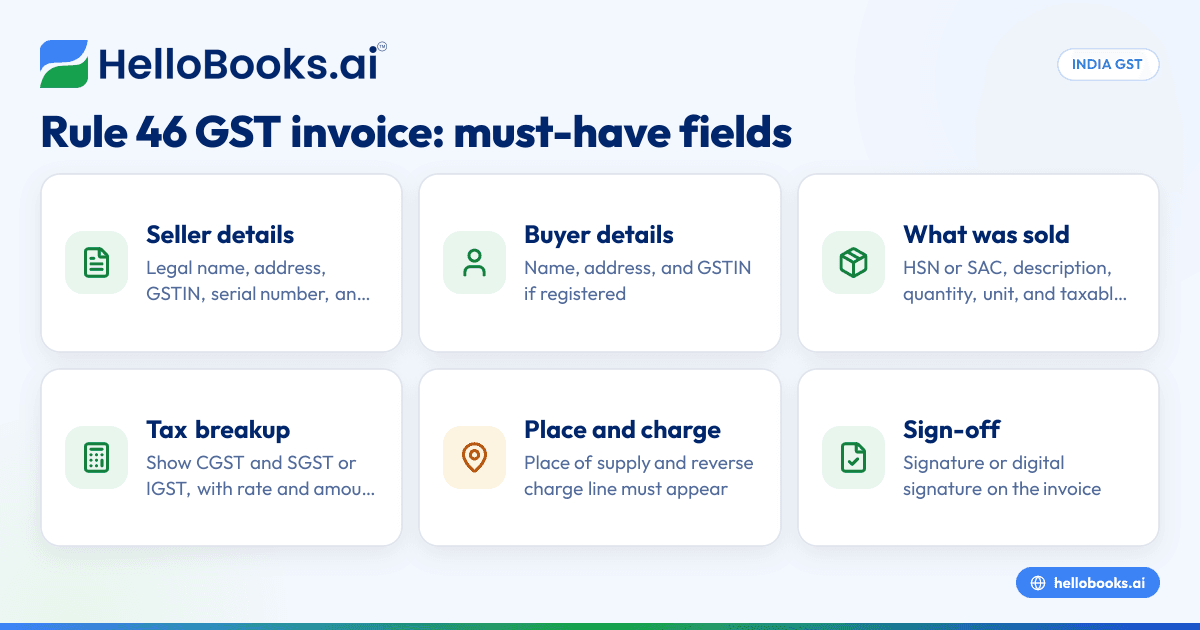
India માં GST tax invoice માન્ય રહેવા માટે તમને Rule 46 મુજબ ચોક્કસ વિગતો આપવી પડે છે: supplierનું legal name, address અને GSTIN, unique serial number, date, buyerની સંબંધિત વિગતો, goods/servicesનું description સાથે HSN અથવા SAC, taxable value, place of supply જ્યાં જરૂરી હોય ત્યાં, CGST/SGST અથવા IGST નો યોગ્ય split, reverse charge લાગુ પડે તો તેની નોંધ, અને authorised signature અથવા electronic authentication. આ માગણીઓ Central Goods and Services Tax Rules, 2017 ના Rule 46, જે CGST Act, 2017 હેઠળ બનેલા છે, તેમાં છે; સત્તાવાર લખાણ CBIC અને GST Portal/GSTN પર પ્રકાશિત થાય છે.
Rule 46 નો અર્થ invoice design નથી, invoice data છે
ઘણા business owner માને છે કે “GST invoice format” એટલે સરકારનું fixed template. India માં એવું નથી. CBIC કોઈ એક page layout ફરજિયાત નથી કરતી. તમે logo ક્યાં મૂકો, font શું રાખો, item table કેવી રીતે બતાવો, rupee amount wordsમાં લખો કે નહીં—આ બધું largely business choice છે. કાનૂનને layout કરતાં data fields જોઈએ છે.
એટલે સાચો સવાલ “મારો invoice કેવો દેખાય?” નહીં, પણ “મારા invoice પર કઈ information અનિવાર્ય છે?” એવો છે.
જો તમે smart invoicing જેવી systemમાં invoice બનાવો, તો design કરતા વધુ મહત્વપૂર્ણ ભાગ—GSTIN, HSN/SAC, place of supply, tax head split—consistent રહે છે. ખાસ કરીને Gujarat જેવા stateમાં, જ્યાં local sale પર CGST+SGST અને out-of-state sale પર IGST વચ્ચે ભૂલ સરળતાથી થઈ જાય છે.
કયા fields વગર GST tax invoice અધૂરું ગણાય
Rule 46 મુજબ, સામાન્ય રીતે tax invoice પર નીચેની categoriesની માહિતી જોઈએ:
1) Supplierની ઓળખ
- registered personનું નામ
- address
- GSTIN
આથી buyer અને tax authorities બંનેને ખબર પડે કે supply કોણે કરી.
2) Invoice control details
- consecutive serial number
- financial year માટે unique રહે તેવું numbering logic
- date of issue
Serial number વિશે current wording માટે CGST Rules, 2017 ના Rule 46 નું text CBIC પર જોવું જોઈએ. Characters, format અને sequence બાબતે software discipline રાખવું સારું, કારણ કે manual booksમાં duplication બહુ થાય છે.
3) Recipientની વિગતો
Buyer registered હોય તો સામાન્ય રીતે:
- name
- address
- GSTIN/UIN
Buyer unregistered હોય, ત્યારે કઈ additional વિગતો જોઈએ તે supplyની nature અને value પર આધાર રાખે છે. આ માટે current position CGST Rules અને CBIC notifications માં published હોય છે; કોઈ ચોક્કસ threshold bare fact તરીકે માનતા પહેલા official text ચેક કરો.
4) Supplyનું વર્ણન
- goods/servicesનું description
- HSN code for goods અથવા SAC for services જ્યાં લાગુ પડે
- quantity અને unit, જ્યાં goods હોય ત્યાં
- total value
- discount/abatement પછી taxable value
5) Tax breakup
- tax rate(s)
- tax amount(s)
- CGST, SGST/UTGST, IGST, cess જ્યાં applicable હોય ત્યાં અલગ બતાવવું
અહીં સૌથી વધુ practical ભૂલો થાય છે. Invoice પર tax એક total line તરીકે નહીં, પણ યોગ્ય head હેઠળ દેખાવું જોઈએ.
6) Place of supply અને destination details
Inter-State supplyમાં state name સાથે place of supply મહત્વનું બને છે. Ship-to address અલગ હોય તો તેની relevance પણ invoice structureમાં આવે છે.
7) Reverse charge indication
Reverse charge લાગુ પડે છે કે નહીં તેની નોંધ જરૂરી બની શકે છે. Current wording અને applicable cases CGST Act, CGST Rules અને CBIC notificationsમાં published છે.
8) Authentication
- signature
- digital signature
- અથવા valid electronic authentication, જ્યાં allowed હોય ત્યાં
જો તમે electronic invoices બનાવો છો, તો authentication અને audit trail વ્યવસ્થિત હોવું ખાસ મહત્વનું બને છે.
Gujaratના વેપારમાં સૌથી જરૂરી ભેદ: CGST+SGST કે IGST?
Invoice format સમજતી વખતે Gujarat marketમાં સૌથી ઉપયોગી બાબત place of supply સમજવી છે. Buyer અમદાવાદમાં office ધરાવે છે એટલે local supply એવું માનવું ખોટું થઈ શકે. Tax head buyerના head office પર નહીં, GST law હેઠળ place of supply rules પર નક્કી થાય છે. આ rules Integrated Goods and Services Tax Act, 2017 (IGST Act) અને સંબંધિત provisionsમાં છે; official text CBIC અને GST Portal પર મળે છે.
સાદા શબ્દોમાં:
- Gujaratની અંદર taxable local supply હોય તો સામાન્ય રીતે CGST અને SGST split દેખાય
- Gujaratથી Maharashtra, Rajasthan, Karnataka જેવી બીજી stateમાં taxable inter-State supply હોય તો સામાન્ય રીતે IGST દેખાય
પણ servicesમાં picture વધુ nuanced બને છે. Consulting, installation, event, transport, intermediary, immovable property-related services જેવી બાબતોમાં place of supply અલગ rulesથી નક્કી થાય છે. એટલે service invoice માટે “party Gujaratની છે એટલે CGST+SGST” એવો shortcut જોખમી છે.
અહીં softwareનું વાસ્તવિક કામ invoice pretty બનાવવાનું નહીં, પણ transaction facts પરથી યોગ્ય tax head પસંદ કરવાનું છે. HelloBooks invoice બનાવતી વખતે place-of-supply અને tax head splitને line item અને party details સાથે જોડે છે, જેથી inter-State sale પર ભૂલથી CGST/SGST લાગવાની શક્યતા ઘટે. પછી એ જ invoices પરથી gst return filing software મારફતે GSTR-1 અને GSTR-3B file થાય, ત્યારે books અને return વચ્ચે mismatch ઓછી થાય છે.
HSN અથવા SAC કેટલા detailમાં બતાવવું?
આ સવાલનો એક templated જવાબ આપવો યોગ્ય નથી, કારણ કે HSN digits માટેની current requirement turnover, B2B/B2C context અને notified changes પર આધાર રાખી શકે છે. India માં આ બાબતના updated rules CBIC notifications અને GST Portal પર પ્રકાશિત થાય છે. તેથી કોઈ fixed digit rule વાંચો તો official source સામે verify કરો.
મુખ્ય વાત એ છે કે invoice પર HSN/SAC “છોડી દઈએ” એવો વિચાર ન કરો. HSN/SAC બે કારણથી મહત્વનો છે:
- invoice validity અને classification discipline
- return reporting અને reconciliation
ખોટો HSN એટલે ખોટો rate apply થવાનો જોખમ, ખોટું disclosure, અને buyerના ITC review દરમિયાન query. જો doubt હોય, તો first-level check માટે HSN code search ઉપયોગી રહી શકે, પણ final classification માટે product facts અને official notifications સામે ચકાસણી કરવી જ પડે.
e-invoice, IRN અને signed QR: દરેક invoice પર નહીં, પણ લાગુ પડે ત્યાં ફરજિયાત
GST tax invoice formatની ચર્ચામાં ઘણીવાર લોકો સામાન્ય invoice અને e-invoiceને mix કરી દે છે. બંને એક જ વસ્તુ નથી.
E-invoicing હેઠળ notified taxpayersને prescribed invoice data Invoice Registration Portal મારફતે report કરવો પડે છે, જ્યાં IRN generate થાય છે અને signed QR code મળે છે. આ framework CGST Act, CGST Rules અને CBIC notifications હેઠળ છે. કોણે e-invoice follow કરવું પડે તેની current turnover threshold અને scope official source પર જ published હોય છે; તેથી કોઈ number સાંભળીને system બદલી ન નાખો—official notification જુઓ.
જ્યારે e-invoicing લાગુ પડે છે, ત્યારે invoice “PDF બનાવી મોકલી દીધું” એટલાથી કામ નથી ચાલતું. IRN અને signed QR વગર document tax invoice તરીકે defectively treated થવાનો જોખમ ઉભો થઈ શકે છે, subject to law and current circulars.
જો તમે notified categoryમાં આવો છો, તો HelloBooks invoice save સમયે IRN અને signed QR સાથે e-invoice workflow handle કરે છે, એટલે portal માટે અલગ JSON upload કરવાની manual દોડધામ ઘટે છે. Gujaratમાંથી dispatch થતી goods માટે આ પછી e-way bill software સાથે consignment details ફરીથી retype ન કરવી પડે એ પણ practical ફાયદો છે.
એક જ sale માટે invoice પર કઈ line ક્યાંથી આવે છે — એક પ્રામાણિક દૃશ્ય
આ ગણતરી illustrative અને invented છે. Figures માત્ર સમજાવવા માટે છે; actual GST rate, HSN classification, notification changes, exemption position, valuation disputes, freight treatment, discount timing, TDS impact, reverse charge issues અને contract-specific clauses આમાં ગણવામાં આવ્યા નથી. Final tax treatment માટે official law text અને professional advice જોઈએ.
ધારો કે વડોદરાની “Shree Fasteners” અમદાવાદની registered buyerને industrial items વેચે છે. બંને Gujaratમાં છે, અને facts local taxable supply દર્શાવે છે. Invented figures પ્રમાણે taxable value ₹1,00,000 રાખીએ. Illustrative રીતે માનીએ કે applicable tax structure local split છે. ત્યારે invoice tableમાં taxable value સામે CGST અને SGST જુદા દેખાશે, એક combined unnamed tax તરીકે નહીં. Invoice પર supplierનું name, address, GSTIN; buyerનું name, address, GSTIN; invoice number; date; item description; HSN; quantity; taxable value; CGST amount; SGST amount; total invoice value; reverse charge note; authorised signatory—આ બધું visible રહેવું જોઈએ.
હવે બીજી invented situation લો: એ જ goods વડોદરાથી Jaipur મોકલાય છે, અને facts inter-State supply તરફ જાય છે. એવામાં invoice પર CGST અને SGST split બતાવવાને બદલે IGST line આવવી જોઈએ. Buyerનું billing address અને ship-to address જુદાં હોય તો place of supply analysis વધારે ધ્યાનથી કરવો પડે.
આથી સમજાય છે કે invoice format માત્ર stationery issue નથી; એ classification, valuation અને jurisdiction issue પણ છે.
Reverse charge, TDS અને buyer compliance: invoice draftingને side issue ન માનો
કેટલાક businesses invoice બનાવે ત્યારે માને છે કે GST માત્ર sellerનું matter છે. India માં એવો view અધૂરો છે. Buyer ITC claim કરે ત્યારે invoiceની quality સીધી matters. Return data, supplier disclosure અને buyer reconciliation જોડાયેલા છે.
જો supplier invoice booksમાં સાચી રીતે દાખલ ન થાય, તો પછી GSTR-2A/2B reconciliation વખતે mismatch દેખાય શકે છે. HelloBooks purchase bills માટે OCRથી data capture કરે છે અને GSTR-2A/2B reconciliation તથા ITC trackingમાં missing or mismatched entries દેખાડે છે, જેથી buyer side પર પણ invoice discipline જળવાય.
ત્યાંજ કેટલીક transactionsમાં reverse charge અથવા TDS/TCS treatment relevance ધરાવે છે. કઈ transactionમાં શું લાગુ પડે છે તે CGST Act, Income-tax Act, 1961, સંબંધિત rules અને CBIC અથવા Income Tax Department ના official publications પરથી ચકાસવું પડે. Invoice draftingમાં wrong note અથવા missing note પછી accounting અને compliance બંનેમાં friction આવે છે.
Manual books, Tally export અને bank matching: invoice સચોટ હોવો accounting માટે પણ જરૂરી છે
Gujaratના ઘણા traders આજે પણ invoice Excel, Tally, printed pad અને WhatsApp approvalsના mix પર ચલાવે છે. Problem invoice issue કરતી વેળાએ નહીં, settlement વખતે દેખાય છે.
એક invoiceમાં customer name slightly જુદું, બીજા invoiceમાં GSTIN ખોટું, ત્રીજા invoiceમાં item description vague—પછી bank receipt match કરતી વખતે confusion થાય. UPI, NEFT, RTGS કે IMPS દ્વારા આવતી collections narration-based હોય છે; એ narration invoice data સાથે ગોઠવાતી ન હોય તો receivables ageing ખસી જાય.
આથી invoice formatનું discipline bank reconciliationમાં પણ મદદ કરે છે. HelloBooksમાં bank statement upload કરીને AI reconciliation થાય છે, જેથી receipt lines invoices સામે match થાય. જો તમારું back office હજુ Tally પર છે, તો tally-alternative વાંચવા જેવું છે; migration અથવા connector approachથી parallel transition સરળ બને છે. Stock-based businesses માટે invoice line items inventory movement સાથે જોડાય ત્યારે closing stock અને sales register પણ નજીક આવે છે, ખાસ કરીને inventory tracking કરતી firms માટે.
Gujaratના business માટે invoice issue કરતાં પહેલાં આ practical checks કરો
એક useful pre-send habit રાખો:
- buyerનું GSTIN official source સામે verify થયું છે?
- bill-to અને ship-to જુદા છે?
- place of supply facts પરથી નક્કી કર્યું છે કે assumption પરથી?
- goods માટે HSN અને services માટે SAC યોગ્ય છે?
- taxable value discount પછીની સાચી value છે?
- CGST/SGST કે IGST યોગ્ય head હેઠળ બતાવ્યું છે?
- reverse charge line relevant છે?
- e-invoice લાગુ પડે છે તો IRN અને signed QR આવ્યા છે?
- dispatch છે તો e-way bill requirement અલગથી ચકાસી છે?
આમાંથી કેટલીક checks free toolsથી પણ થઇ શકે. શરૂઆત માટે GSTIN validator, GST invoice validator અને GST calculator ઉપયોગી રહે છે. જો તમારે current system Gujaratથી multiple statesમાં expand થતી entity માટે પૂરતો છે કે નહીં તે જોવું હોય, તો accounting software India અથવા in પેજ પરથી India-specific setup જુઓ.
આખી વાતનો સાર
India માં માન્ય GST invoice માટે “nice format” કરતાં “complete and correct fields” વધુ મહત્વના છે. આધાર CGST Rules, 2017 ના Rule 46, સંબંધિત CGST Act, અને inter-State casesમાં IGST Act છે; updated figures, scope, thresholds અને notifications માટે હંમેશા CBIC, GSTN/GST Portal, અને જ્યાં relevant હોય ત્યાં Income Tax Department અથવા અન્ય official regulator publications જુઓ.
જો તમે Gujaratમાં goods અથવા services વેચો છો, તો સૌથી અગત્યની ચાર બાબતો છે: buyer અને supplierની ઓળખ સાચી રાખવી, HSN/SAC ગેરહાજર ન રાખવું, place of supply પરથી યોગ્ય tax head પસંદ કરવો, અને e-invoice લાગુ પડે ત્યાં IRN/QR ચૂકી ન જવું. બાકીની compliance—GSTR-1, GSTR-3B, ITC reconciliation, e-way bill, bank matching—આ foundation પર જ ઉભી રહે છે.
HelloBooks જેવી systemનો ફાયદો એ છે કે invoice entry, e-invoicing, GSTR-1/GSTR-3B filing, reconciliation, bank statement matching અને inventory એકબીજાથી કટકટા ન રહી એક જ flowમાં કામ કરે. Pricing માટે pricing જુઓ અથવા walkthrough માટે demo બુક કરો.


