


Key takeaways
What this article covers, in order:
- ફ્રી GST software એટલે ખરેખર શું?
- ભારતમાં ફ્રી plan પસંદ કરતી વખતે પહેલી નજર ક્યાં હોવી જોઈએ
- portal ફ્રી છે, તો software શા માટે?
- ફ્રી planમાં invoiceથી return સુધીનો સાચો workflow કેવો હોય છે
- illustrative અને invented ગણતરીથી સમજીએ કે free tool ક્યાં ખરેખર બચત કરાવે છે
- ભારતમાં free plan ક્યારે કામનું રહે છે અને ક્યારે પૂરતું નથી
Indiaમાં ફ્રી GST filing software શોધતા હો તો સીધો જવાબ એવો છે: માત્ર “ફ્રી invoice app” પૂરતું નથી. તમને એવું tool જોઈએ કે જે GST invoice સાચા CGST/SGST કે IGST split સાથે બનાવે, GSTR-1 અને GSTR-3B તમારા entriesમાંથી તૈયાર કરે, GSTR-2A/2B સાથે ITC reconcile કરાવે, અને જરૂર પડે ત્યાં e-invoice, e-way bill, bank statement upload, inventory અને reportsને એક જ flowમાં જોડે. ભારતમાં GST compliance CBICના કાયદાકીય ફ્રેમવર્ક, GSTN અને GST portalની actual filing reality સાથે બંધાયેલું છે; એટલા માટે free planની સાચી કીમત તેની filing workflowમાં છે, sticker priceમાં નહીં.
ફ્રી GST software એટલે ખરેખર શું?
ભારતમાં બહુ apps “free GST” કહે છે, પણ એનો અર્થ ઘણી વાર ફક્ત billing હોય છે. એટલે તમે tax invoice બનાવી શકો, પણ return filing માટે ફરી GST portal પર જઈને data upload કરવો પડે, JSON export કરવું પડે, અથવા Excelમાં turnover, output tax, ITC અને payable amount મળતા આવે છે કે નહીં તે હાથથી ચકાસવું પડે.
સાચું free GST filing software એ છે જેમાં accounting entries, sales invoice, purchase bills અને collections એકબીજા સાથે જોડાયેલા હોય. એટલે GSTR-1 માટે વેચાણ અલગથી ફરી ભરવું ન પડે અને GSTR-3B માટે output tax અને input tax credit side spreadsheetમાં maintain કરવી ન પડે.
ભારતમાં આ ખાસ મહત્વનું છે કારણ કે GST માત્ર invoice બનાવવાનો વિષય નથી. તેમાં place of supply, tax head split, supplierની 2B visibility, e-way bill movement, કેટલીક categoriesમાં e-invoice IRN, અને ઘણી businesses માટે TDS/TCS અથવા reverse charge જેવી બાબતો જોડાયેલી હોય છે. Companies Act, 2013 હેઠળ bookkeeping discipline અને Income-tax Act, 1961 હેઠળ records રાખવાની practical જરૂરિયાત પણ એ જ data પરથી ઊભી થાય છે. MCA, CBIC અને GSTN દ્વારા ચલાતી reporting ecologyમાં disconnected tools લાંબા ગાળે મુશ્કેલી ઊભી કરે છે.
ભારતમાં ફ્રી plan પસંદ કરતી વખતે પહેલી નજર ક્યાં હોવી જોઈએ
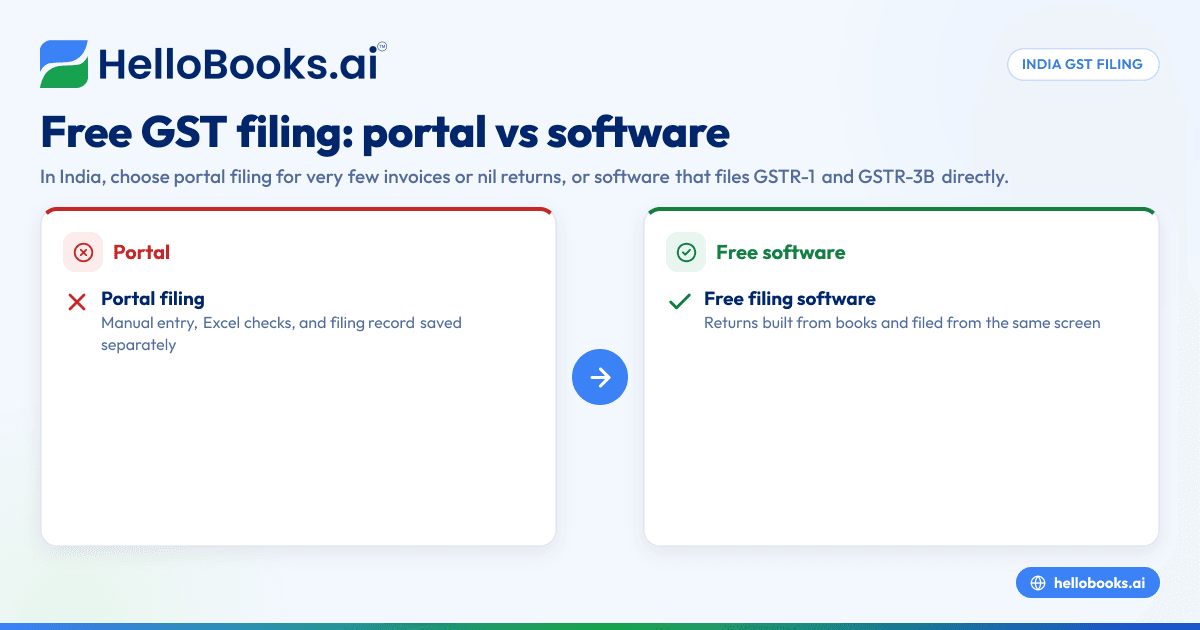
ફ્રી plan પસંદ કરતાં પહેલાં આ સવાલ પૂછો: “શું આ software return file કરે છે કે ફક્ત return માટે data તૈયાર કરે છે?” બંને વચ્ચે બહુ ફરક છે.
ભારતમાં ઉપયોગી planમાં ઓછામાં ઓછું આ હોવું જોઈએ:
- GST invoice જેમાં customerના GSTIN, HSN/SAC અને supply nature પ્રમાણે CGST/SGST અથવા IGST split સાચું આવે
- GSTR-1 અને GSTR-3B સીધું file કરવાની workflow
- GSTR-2A/2B reconciliation જેથી ITC claim પહેલાં mismatch દેખાય
- purchase bills capture કરવાની સરળ રીત, જેમ કે OCRથી bill વાંચી entry બનાવવા
- bank statement upload પછી receipts અને payments match કરાવવાની સગવડ
- reports જેથી books અને GST figures વચ્ચે disconnect તરત દેખાય
HelloBooksમાં આ ઉપયોગી બને છે કારણ કે sales invoiceથી returns સુધીનું flow તૂટતું નથી. GST invoice બનાવતા સમયે place of supply અને tax head splitનો આધાર લઈને local supplyમાં CGST/SGST અને interstate supplyમાં IGST લાગુ થવામાં મદદ મળે છે. પછી એ જ dataમાંથી GST return filing software તરીકે GSTR-1 અને GSTR-3B direct filing સુધી કામ આગળ વધે છે. જો purchase side પર supplier bills scattered હોય, તો OCRથી bills capture કરીને અને GSTR-2A/2B reconciliationથી ITC tracking કરીને month-end કામ સરળ બને છે.
portal ફ્રી છે, તો software શા માટે?
આ સવાલ બહુ સાચો છે. GST portal પર filing માટે અલગ software લેવું ફરજિયાત નથી. GSTના figures, due dates, late fee, interest, filing frequency, eligibility conditions અથવા e-invoice applicability જેવી current બાબતો સંબંધિત tax law હેઠળ CBIC notifications, GST Council decisions, GSTN advisories અને GST portal પર પ્રકાશિત થાય છે; specific figures હંમેશાં ત્યાંથી verify કરવા જોઈએ.
પણ portal ફ્રી હોવા છતાં bookkeeping ફ્રી થતું નથી.
જો તમારી પાસે દર મહિને થોડાં B2B invoices હોય, purchase bills email, PDF, photo અને WhatsAppમાં ફેલાયેલા હોય, અને payments UPI, NEFT, RTGS કે IMPSથી આવ્યા હોય, તો portalમાં છેલ્લે ફક્ત filing થાય છે; preparationનું મોટું કામ portalની બહાર થાય છે. ત્યાં errors થાય છે:
- customer GSTIN ખોટો
- intrastate sale પર IGST કે interstate sale પર CGST/SGST
- purchase bill booksમાં છે પણ GSTR-2Bમાં નથી
- collection bankમાં દેખાય છે પણ invoice સામે knock off નથી
- stock વેચાઈ ગયું છે પણ inventory register update નથી
HelloBooks જેવી connected systemમાં bank statement upload કરીને AI reconciliationથી bank entries invoices સામે match કરાય છે; live bank feedનો પ્રશ્ન અહીં લાગુ પડતો નથી, કારણ કે ભારતમાં workflow uploaded bank statement આધારિત છે. આ ખાસ નાના વેપારી, distributor, service firm અથવા CA-assisted business માટે મહત્વનું છે, કારણ કે reconciliation વગર GST અને accounts બંને બગડે છે. આ માટે bank reconciliation software અને ai bookkeeping જેવા ઉપયોગી ભાગો filingને practical બનાવે છે.
ફ્રી planમાં invoiceથી return સુધીનો સાચો workflow કેવો હોય છે
ભારતમાં સારું GST workflow monthly ritual નથી; day-to-day discipline છે.
સૌપ્રથમ sales side. જ્યારે તમે invoice બનાવો, ત્યારે place of supply, customer GSTIN, item HSN/SAC અને supply type સાચું હોય તો આગળ GSTR-1માં mismatch ઓછા થાય. જો business e-invoice regimeમાં આવે, તો current applicability threshold અને notified classes Central Goods and Services Tax Act, 2017 હેઠળ CBIC notifications અને NIC/Invoice Registration Portal documentationમાં publish થાય છે; તે figures official source પરથી verify કરવાના. HelloBooksમાં relevant businesses માટે invoice save કરતી વખતે IRN અને signed QR સાથે e-invoicing handle થાય છે, જેથી portal પર ફરી JSON upload કરવાની અડચણ ઘટે. વધુ વિગત માટે e-invoicing software જોઈ શકાય.
પછી goods movement. જ્યાં e-way bill જરૂરી બને, ત્યાં legal requirementના current thresholds, distance rules, exemptions અને document conditions Central Goods and Services Tax Rules, 2017 તથા e-Way Bill system advisoriesમાં publish થાય છે. Softwareનો ફાયદો એ છે કે invoice પરથી e-way bill ઊભો થાય, એટલે vehicle, consignee, item અને value ફરીથી double-entryમાં ન જવું પડે. આ workflow e-way bill softwareમાં ખાસ ઉપયોગી બને છે.
ત્યારબાદ purchase side. Supplier bill PDF કે photoમાં આવે છે. જો એને હાથથી ટાઈપ કરશો તો time પણ જશે અને ITC tracking પણ ઢીલી પડશે. OCRથી purchase bill capture થાય, પછી GSTR-2A/2B reconciliationમાં કયો invoice supplierએ upload કર્યો નથી કે delay કર્યો છે તે દેખાય, તો GSTR-3B પહેલાં decision વધુ સ્પષ્ટ બને છે.
છેલ્લે filing. GSTR-1 અને GSTR-3B અલગ દુનિયા નહીં રહે; invoices, bills, reversals, reverse charge impact અને tax liability booksમાંથી આવે. આ કારણથી free planમાં સૌથી મોટો પ્રશ્ન “કેટલા invoices મફત?” નહીં, પણ “શું filing સુધી without re-entry પહોંચાડે છે?” એવો હોવો જોઈએ.
illustrative અને invented ગણતરીથી સમજીએ કે free tool ક્યાં ખરેખર બચત કરાવે છે
માનો કે અમદાવાદની એક invented trading firm છે. આ આંકડા illustrative અને invented છે; આ real tax advice નથી, current rates, eligibility, offsets, blocked credits, sector-specific rules, composition issues, exempt supplies, advances, debit-credit notes અને law-specific adjustments અહીં છોડવામાં આવ્યા છે.
ધારો કે એક મહિને firmએ રૂપીયા ₹4,80,000ના taxable sales કર્યા. તેમાંમાંથી illustrative રીતે ₹3,00,000 ગુજરાતની અંદરના sales છે અને ₹1,80,000 ગુજરાત બહારના interstate sales છે. હવે intrastate portion પર CGST અને SGST લાગશે અને interstate portion પર IGST લાગશે, પરંતુ exact rate item classification, notification અને law મુજબ official source પરથી check કરવો પડે. જો booksમાં place of supply ખોટું ભરાયું હોય, તો sales registerમાં tax head split જ ખોટો જશે. પરિણામે GSTR-1 અને પછી GSTR-3B mismatch દેખાડે.
આ જ businessએ illustrative રીતે ₹2,20,000ના purchase bills booksમાં નાખ્યા, પણ GSTR-2Bમાં માત્ર ₹1,90,000 equivalent eligible-looking invoices દેખાય છે. હવે owner જો portalમાં ફક્ત total purchase figure જોશે તો વધારે ITC assume કરી શકે છે. Software reconciliation બતાવે છે કે કયા supplier invoice pending છે. એટલે decision document-backed બને છે.
પછી collections side. માનીએ કે month-end bank statement upload કરતાં ₹3,65,000 receipts દેખાય છે, જેમાંથી થોડાં UPI, થોડાં NEFT અને થોડાં IMPS entries છે. જો manual system છે, તો ownerએ invoices સામે match કરવા કલાકો ખર્ચવા પડે. AI-assisted reconciliationથી outstanding receivables list વધુ સાફ થાય છે. GST filing માટે આ indirect રીતે મદદરૂપ થાય છે, કારણ કે cancelled, partially paid કે duplicate-looking entries વહેલી ઝડપે દેખાય છે.
અથવા કહીએ તો free softwareથી “tax ઓછો” નથી થતો; bookkeeping re-entry, mismatch અને missed follow-up ઓછાં થાય છે.
ભારતમાં free plan ક્યારે કામનું રહે છે અને ક્યારે પૂરતું નથી
બધા business માટે free plan યોગ્ય નથી. પણ કેટલાક use casesમાં તે પૂરતું હોઈ શકે:
- એક GSTINવાળો small trader
- service provider જેને limited monthly invoices હોય
- freelancer અથવા consultant જે GST અને accountsને basic disciplineમાં રાખવા માગે
- CA સાથે કામ કરતું micro business જે books shared systemમાં રાખવા માગે
પરંતુ કેટલીક પરિસ્થિતિમાં free plan ઝડપથી તંગ પડે:
- એકથી વધુ state registration એટલે multiple GSTINs
- inventory-heavy business જ્યાં stock movement crucial છે
- e-invoice applicable entity
- frequent goods dispatch જ્યાં e-way bill routine છે
- purchase-heavy business જ્યાં 2B reconciliation વિના ITC tracking મુશ્કેલ છે
- TDS/TCS અથવા reverse charge entries regular છે
HelloBooks અહીં useful બને છે કારણ કે business મોટું થતા invoicing અને filing વચ્ચે platform બદલવો ન પડે. એક GSTINથી શરુ કરનાર વેપારી પછી multi-GSTIN structureમાં જાય તો same loginમાંથી અલગ registrations manage કરી શકે છે, અને unlimited users હોવાથી owner, accountant અને CA મળીને કામ કરી શકે છે. Inventory matters હોય તો inventory ભાગ invoices અને purchases સાથે stock move કરાવે છે. Reporting side પર receivables, P&L અને other financial reports books અને GST dataને જોડે છે, જેથી month-end discussion “portalનું figure સાચું કે booksનું?” પર અટકે નહીં.
ગુજરાત અને ભારતના નાના business માટે ખાસ ધ્યાન આપવાના practical મુદ્દા
ગુજરાતમાં ઘણા વેપારીઓ હજુ Tally, Excel અને WhatsAppના mix પર ચાલે છે. એ real-world setup છે, ખામી નહીં. પ્રશ્ન એ છે કે filing પહેલાં data ક્યાં clean થાય છે.
જો તમે પહેલેથી Tally વાપરો છો, તો software switch કરવાનો અર્થ બધું ફરીથી શરૂ કરવું એવો હોવો જોઈએ નહીં. HelloBooksમાં Tally migration અને connector હોવાથી parallel trial શક્ય બને છે. આ ખાસ CA firms અને SMEs માટે કામનું છે, કારણ કે legacy records છોડ્યા વગર GST filing workflow modernise કરી શકાય. જો તમે alternatives compare કરતા હો, તો tally-alternative અને compare/hellobooks-vs-tally જેવા pages મદદરૂપ થઈ શકે.
ઘણા owners desk પર નહીં પણ fieldમાં હોય છે. એવા સમયે mobile appથી invoice, expense કે purchase capture થઈ શકે છે. WhatsApp પર કામ કરનાર owner માટે Noor assistant Hindi, English અને Hinglishમાં basic accounting-related મદદરૂપ બની શકે છે, જોકે formal filing decisions માટે law, regulator guidance અને professional review જરૂરી જ રહે છે.
ઉપરાંત, free tool પસંદ કરતા પહેલાં GSTIN, HSN અથવા invoice fields validate કરવાની જરૂર પડે તો account બનાવ્યા વગરનાં India tools પણ ઉપયોગી છે, જેમ કે GSTIN validator, HSN code search, GST invoice validator અને GST reconciliation checker. આ નાના checks ઘણી વખત filing પહેલાંની મોટી ગડબડ રોકે છે.
law, regulator અને compliance reality: numbers ક્યાંથી verify કરવાના
ભારતમાં GST સંબંધિત tax rates, exemption conditions, return due dates, late fee, interest, QRMP-related frequency options, e-invoice applicability, e-way bill thresholds અને similar current figures bare memory પરથી માનવા નહીં. તે Central Goods and Services Tax Act, 2017, Integrated Goods and Services Tax Act, 2017, સંબંધિત Rules, CBIC notifications, GST Council recommendations, GSTN advisories અને GST portal પર પ્રકાશિત current material પરથી verify કરવાના.
એ જ રીતે TDS માટે current sections, rates, limits અને procedural guidance Income-tax Act, 1961 અને Income Tax Departmentની official publicationsમાં જોવાના. Banking rails જેમ કે UPI, NEFT, RTGS અને IMPS RBI-regulated ecosystemનો ભાગ છે, પણ accounting treatment booksમાં transaction nature પ્રમાણે કરવો પડે છે. Customer data, invoice copies અને personal information રાખતાં DPDP Act, 2023 હેઠળ data handling વિશે internal discipline રાખવું સમજદારીભર્યું છે, ભલે small business level પર તેનો અર્થ practical record governance જ કેમ ન હોય.
આથી software પસંદ કરતી વખતે એક thumb rule રાખો: જે tool regulatory change absorb કરી શકે અને booksમાંથી filing સુધી traceability આપે, તે spreadsheet કરતા લાંબા ગાળે વધુ સલામત છે.
અંતે શું પસંદ કરવું?
ભારતમાં free GST filing software પસંદ કરતી વખતે “મફત છે?” એ પહેલો સવાલ નહીં હોવો જોઈએ. સાચો સવાલ છે: “શું આ મારા rupee-level bookkeepingને GST portal filing સુધી વગર re-entry પહોંચાડે છે?”
જો તમને માત્ર invoice બનાવવો છે, તો simple billing app ચાલે. જો તમને actual compliance workload ઘટાડવો છે, તો GST invoicing, place-of-supply logic, GSTR-1 અને GSTR-3B filing, 2A/2B reconciliation, OCR purchase capture, uploaded bank statement reconciliation, e-way bill, inventory, Tally connectivity અને reports સાથેનું system જોઈએ. HelloBooks એ જ practical India workflow પર બેસે છે. તમે વધુ જાણવું હોય તો accounting software India, smart invoicing, accounting software for small business, in, અથવા pricing details માટે /in/pricing જોઈ શકો છો. Demo માટે /demo ઉપલબ્ધ છે.
ટૂંકમાં: free plan લો, પણ free re-entry, free mismatch અને free last-minute panic ન લો.


