


Key takeaways
What this article covers, in order:
- रेस्टॉरंटच्या GST मध्ये खरा गोंधळ कुठे होतो
- dine-in, takeaway आणि self-delivery यांची books मध्ये वेगळी नोंद का ठेवावी
- Swiggy आणि Zomato orders: turnover तुमचा, tax liability नेहमीच तुमची असेलच असे नाही
- ITC बद्दल “bill वर GST आहे, म्हणजे claim होईल” असा समज धोकादायक आहे
- एक काल्पनिक पण प्रामाणिक चित्र: पुण्यातल्या कॅफेची invented नोंद
- “फ्री GST filing” उपयोगी कधी, आणि अपुरी कधी पडते
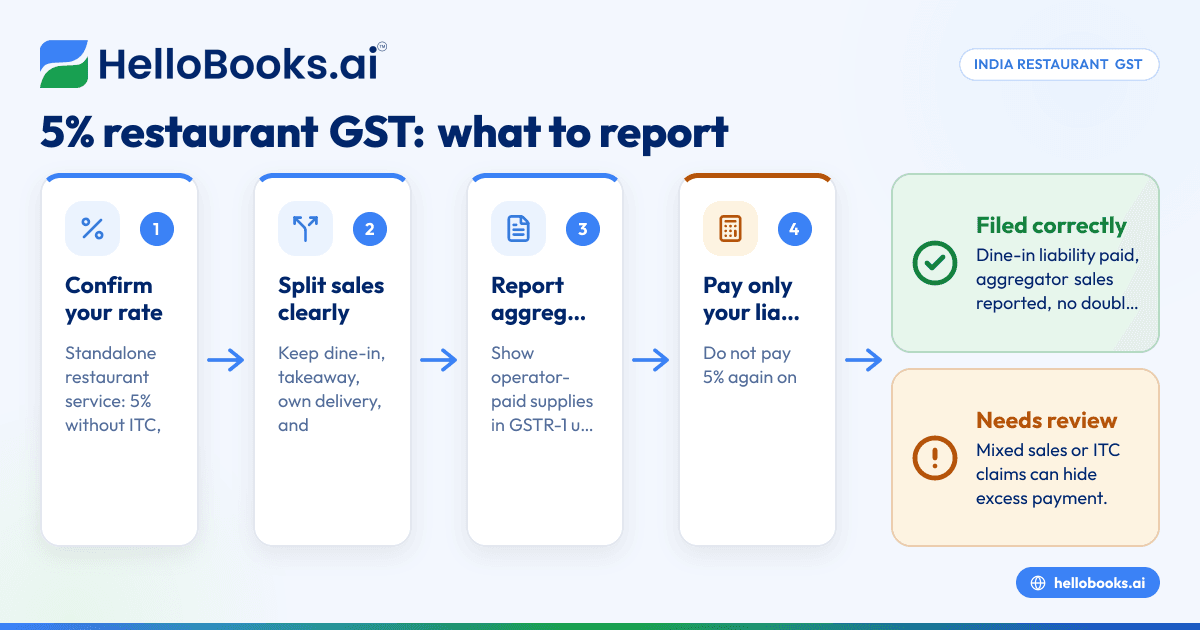
भारतामध्ये रेस्टॉरंट किंवा कॅफेसाठी GST फाइलिंग समजायची सर्वात महत्त्वाची गोष्ट अशी: dine-in, takeaway आणि तुमची स्वतःची delivery यांचा कर उपचार एकसारखा असू शकतो, पण Swiggy किंवा Zomato सारख्या e-commerce operator मार्फत गेलेल्या orders, input tax credit, आणि GSTR-1 व GSTR-3B मधील रिपोर्टिंग वेगळे पाहावे लागते. म्हणूनच फक्त invoice वर rupee amount टाकून काम होत नाही; GST law, CBIC च्या notifications, आणि GSTN/GST Portal वर दिसणाऱ्या return tables यांचा संदर्भ घेऊन books ठेवावी लागतात.
रेस्टॉरंटच्या GST मध्ये खरा गोंधळ कुठे होतो
कॅफे मालकाला साधारण तीन गोष्टी सोप्या वाटतात: bill काढणे, UPI/NEFT/IMPS ने पैसे मिळणे, आणि महिन्याअखेरीस accountant ला summary पाठवणे. पण भारतात restaurant service साठी गोंधळ बहुतेक वेळा येथे होतो:
- sale कोणती: dine-in, takeaway, self-delivery, banquet, की packaged goods
- place of supply आणि त्यानुसार CGST+SGST की IGST
- aggregator order वर tax कोण भरतो
- supplier bills वरील GST ला ITC मिळतो की तो खर्चात जातो
- GSTR-1 मध्ये turnover कसा फोडायचा आणि GSTR-3B मध्ये liability कशी दाखवायची
हे विषय Central Goods and Services Tax Act, 2017, Integrated Goods and Services Tax Act, 2017, आणि संबंधित CBIC notifications मध्ये हाताळलेले आहेत. चालू rate entries, category-specific clarifications, आणि reporting guidance साठी अधिकृत प्रकाशन CBIC, GST Council releases, आणि GST Portal वर उपलब्ध instructions पाहाव्या; तुमच्या facts वर त्यांचा परिणाम CA किंवा GST practitioner ने तपासणे योग्य राहते.
जर तुम्ही invoice बनवताना योग्य tax head split ठेवला, तर पुढचा अर्धा गोंधळ कमी होतो. म्हणून smart invoicing आणि gst return filing software उपयोगी पडते, विशेषतः जेव्हा तुमच्या sale lines मध्ये restaurant service आणि इतर taxable items मिसळलेले असतात.
dine-in, takeaway आणि self-delivery यांची books मध्ये वेगळी नोंद का ठेवावी
अनेक रेस्टॉरंट्स एका POS summary वर अवलंबून राहतात. पण books मध्ये एकाच “sales” ledger मध्ये सगळे receipts टाकले, तर परताव्याच्या वेळी चूक होते. उदाहरणार्थ:
- dine-in sale वर customer ला tax invoice लागू शकतो
- takeaway किंवा self-delivery ला देखील restaurant service treatment लागू होऊ शकतो, पण facts महत्त्वाचे असतात
- packaged cold drink, snack hamper, merchandise किंवा bakery retail items काही वेळा वेगळ्या HSN/SAC logic ने बघावे लागतात
याच ठिकाणी Rule 46 type invoice fields, GSTIN, place of supply, आणि tax head split महत्त्वाचे होतात. हे CGST Act व GST Rules च्या चौकटीत येते आणि field-level validations GSTN infrastructure वरून practical पातळीवर दिसतात. चालू invoice-field requirements अधिकृतरित्या GST Portal, CBIC resources, आणि NIC/GSTN documentation मध्ये प्रकाशित होतात.
HelloBooks मध्ये invoice तयार करताना place-of-supply आणि tax head split एकाच flow मध्ये बसवता येतो, त्यामुळे local sale ला चुकून IGST किंवा inter-state sale ला चुकून CGST/SGST लागू करण्याची शक्यता कमी होते. जर तुमच्या business कडे एकापेक्षा जास्त GSTIN असतील—उदा. महाराष्ट्र आणि गोवा—तर multi-GSTIN setup वेगळा उपयोगी पडतो.
Swiggy आणि Zomato orders: turnover तुमचा, tax liability नेहमीच तुमची असेलच असे नाही
भारतामध्ये restaurant owners साठी सर्वाधिक गैरसमज Section 9(5), Central Goods and Services Tax Act, 2017 भोवती होतो. काही notified restaurant services बाबत e-commerce operator tax collect आणि deposit करतो. याचा सध्याचा scope, notified operators, आणि operational treatment CBIC notifications व GST Portal guidance मध्ये प्रकाशित असतो. म्हणून specific situations—विशेषतः mixed supplies, cloud kitchen structures, franchise models, आणि own app विरुद्ध marketplace—नेहमी अधिकृत source वर verify कराव्यात.
याचा practical अर्थ असा असू शकतो:
- order value तुमच्या turnover मध्ये मोजली जाऊ शकते
- पण त्या sale वरील GST liability operator discharge करत असेल
- तरीही तुमच्या GSTR-1 reporting मध्ये ती sale वेगळ्या bucket मध्ये दाखवावी लागू शकते
- operator commission, listing fee, logistics fee यांवर आलेला GST वेगळा मुद्दा आहे
इथे accounting discipline फार महत्त्वाची आहे. Swiggy settlement report मध्ये gross order, discount sharing, commission, TCS/TDS deductions, net payout, आणि timing difference असू शकतो. जर तुम्ही फक्त bank credit बघून entry केली, तर turnover, expense आणि receivable तिन्ही बिघडतात.
HelloBooks मध्ये bank statement upload करून AI reconciliation वापरल्यास monthly settlement ची तुलना books मधल्या invoices आणि payouts सोबत बसवणे सोपे होते. OCR ने purchase bills capture होतात, आणि aggregator-ledger वेगळा ठेवल्यास GSTR-1 आणि P&L मध्ये consistency राहते. TDS/TCS handling असणेही उपयुक्त ठरते, कारण marketplace statements मध्ये या deductions मुळे net receipt कमी दिसतो.
ITC बद्दल “bill वर GST आहे, म्हणजे claim होईल” असा समज धोकादायक आहे
रेस्टॉरंट व्यवसायात मोठा खर्च food inputs, packaging, rent, kitchen equipment maintenance, cleaning contracts, software subscriptions, आणि repairs वर होतो. पण bill वर GST दिसतो म्हणून तो input tax credit म्हणून उपलब्ध होईलच असे नाही. उपलब्धता supply category, notification, blocking provisions, आणि business structure वर अवलंबून असते. यासाठी CGST Act मधील input tax credit संबंधी तरतुदी, blocked credits, आणि CBIC कडील rate/eligibility clarifications तपासणे आवश्यक आहे. चालू positions GST Portal व CBIC circulars मध्ये प्रकाशित होतात.
म्हणून accountant ला फक्त purchase register नको असते; त्याला supplier GSTIN, document type, invoice date, tax breakup, आणि 2B reflection बघावी लागते. जिथे ITC लागू नाही किंवा blocked आहे, तिथे तो GST खर्चात जातो. हे menu pricing साठीही महत्त्वाचे असते, कारण rupee margin paper वर दिसणाऱ्या margin पेक्षा वेगळी असू शकते.
जर तुमच्याकडे supplier bills चा ढीग असेल, तर gst reconciliation checker किंवा gstin validator सारखी tools प्राथमिक पडताळणीसाठी उपयोगी ठरू शकतात. Larger setup मध्ये GSTR-2A/2B reconciliation आणि ITC tracking books व returns जुळवण्यासाठी अधिक उपयुक्त असते.
एक काल्पनिक पण प्रामाणिक चित्र: पुण्यातल्या कॅफेची invented नोंद
समजा, हे आकडे पूर्णपणे illustrative आणि invented आहेत; हे कायदेशीर मत नाही, आणि यात employee salaries, cash pilferage, wastage, discounts च्या सर्व permutations, municipal levies, आणि state-specific licence costs धरलेले नाहीत.
पुण्यातील एका कॅफेने एखाद्या महिन्यात खालील sales केल्या असे धरू:
- dine-in आणि counter takeaway: ₹4,80,000
- स्वतःच्या staff मार्फत local delivery: ₹1,20,000
- Swiggy/Zomato मार्फत food orders: ₹3,40,000
- packaged retail items: ₹40,000 NEEDS EXPERT REVIEW
त्याच महिन्यात खर्च असे धरू:
- raw materials आणि packaging bills: ₹2,10,000 plus GST as per supplier invoice NEEDS EXPERT REVIEW
- rent invoice: ₹90,000 plus GST as per lease treatment NEEDS EXPERT REVIEW
- aggregator commission and fees: ₹62,000 plus GST as per operator invoice NEEDS EXPERT REVIEW
या invented उदाहरणात owner ने फक्त bank credit पाहून sale ₹6,10,000 धरली, कारण aggregator net payout कमी आला. ही चूक आहे. books मध्ये gross order values, deductions, आणि operator-settled tax treatment वेगळे दिसले पाहिजेत. GSTR-1 साठी dine-in/self-delivery आणि operator-covered supplies स्वतंत्र buckets मध्ये जाऊ शकतात; exact table mapping चालू GSTN return schema आणि official instructions वर तपासावी.
यात packaged retail items restaurant service पेक्षा वेगळे निघू शकतात; म्हणून HSN/SAC classification वर CA ने review करणे आवश्यक आहे. म्हणूनच invent केलेल्या या figures वरून कोणताही rate निष्कर्ष काढू नये.
“फ्री GST filing” उपयोगी कधी, आणि अपुरी कधी पडते
रेस्टॉरंटला फक्त return submit करून उपयोग नाही; return मधील numbers books मधून नीट यायला हवेत. “फ्री filing” खरोखर उपयोगी ठरते जेव्हा:
- तुम्ही regular books ठेवता
- invoices system मधून तयार होतात
- sales channels वेगळे tags ने ठेवलेले असतात
- purchase bills वेळेवर नोंदतात
- bank statement upload करून receipts reconcile होतात
अपुरी पडते जेव्हा:
- POS, Excel, Tally आणि aggregator statements चार वेगळ्या जगात असतात
- multiple GSTIN आहेत पण data central नाही
- e-invoice applicability आली आहे आणि manual portal work वाढला आहे
- inventory आणि cost of goods वेगळे track होत नाहीत
HelloBooks चा उपयोग इथे practical आहे: तुम्ही invoices आणि GST books एकाच system मध्ये ठेवल्या, तर GSTR-1 आणि GSTR-3B direct filing करताना source data पुन्हा type करावा लागत नाही. inventory movements sales आणि purchases सोबत दिसतात; financial reports मधून monthly P&L काढताना GST books पासून वेगळे Excel बनवावे लागत नाही. Tally वरून migrate करायचे असल्यास tally-alternative किंवा compare/hellobooks-vs-tally संदर्भ उपयुक्त ठरू शकतात.
e-invoice, IRN, e-way bill: कॅफेला लागू होईलच असे नाही, पण दुर्लक्षही नको
सगळ्या कॅफेना e-invoice लागू होतोच असे नाही. applicability turnover-based आणि notification-based असते. ही मर्यादा, वर्ग, exclusions, आणि current implementation CBIC notifications आणि NIC/e-invoice system documentation मध्ये प्रकाशित होतात. म्हणून तुमच्या PAN-level turnover, group structure, आणि supply type वरून applicability पडताळणे महत्त्वाचे आहे.
जर e-invoicing लागू होत असेल, तर IRN आणि signed QR शिवाय invoice compliance प्रश्न निर्माण होऊ शकतो. तसेच, food ingredients, packaged stock, central kitchen-to-outlet movement, किंवा event supply साठी e-way bill लागू होण्याच्या situations असू शकतात. त्यांचे thresholds, exemptions, and documentary requirements संबंधित GST law, Rules, आणि e-way bill system guidance मध्ये अधिकृतरीत्या प्रकाशित असतात; specific number साठी नेहमी current official source पहा.
HelloBooks मध्ये e-invoicing applicable असल्यास IRN आणि signed QR workflow उपयुक्त पडतो, आणि consignment movement असल्यास e-way bill software सोबत invoice data पुन्हा टाइप करावी लागत नाही. ही सुविधा खास मोठ्या किंवा growing restaurant groups साठी उपयोगी ठरते.
cash, UPI, bank आणि books: reconciliation नसेल तर GST बरोबर असूनही accounts चुकतात
भारतात रेस्टॉरंट receipts अनेक मार्गांनी येतात: cash, UPI, card settlements, NEFT, RTGS, IMPS, wallet payouts, आणि aggregator settlements. GST return technically बरोबर असला, तरी books चुकीचे असू शकतात जर:
- same-day UPI receipts batch settlement मध्ये दुसऱ्या दिवशी आले
- payment gateway deduction expense म्हणून पकडली नाही
- aggregator refunds customer-level वर असून books मध्ये gross sales कमी केल्या
- cash deposit bank मध्ये गेला, पण sale entry आधीच होती
यामुळे turnover mismatch, unexplained differences, आणि year-end audit/assessment चा त्रास वाढू शकतो. Companies Act, 2013 अंतर्गत company structure असेल तर MCA reporting expectations वेगळ्या येऊ शकतात; proprietorship/partnership साठीही Income-tax Act, 1961 अंतर्गत books आणि expense evidence महत्त्वाचीच असते. RBI हे payment systems ecosystem चे regulator आहे, पण GST treatment मात्र CBIC/GST law ठरवते. Data handling करताना Digital Personal Data Protection Act, 2023 चा विचार करणेही शहाणपणाचे आहे, विशेषतः customer details आणि staff access controls बाबत.
म्हणून bank reconciliation software आणि accounting software india हे GST filing पासून वेगळे विषय नाहीत; ते त्याचाच पाया आहेत. Mobile app असल्याने outlet manager किंवा owner ला खर्चाची image upload करणे, bill नोंदवणे, किंवा quick sales check करणे सोपे जाते.
भारतात रेस्टॉरंट GST सांभाळताना काय verify करावे
खालील प्रत्येक मुद्दा official source वर verify करा; current figures, deadlines, thresholds आणि classifications हे CBIC, GSTN/GST Portal, Income Tax Department, किंवा MCA च्या अधिकृत प्रकाशनात तपासावेत:
- तुमची registration liability कोणत्या turnover rule ने ठरते
- तुमची supply “restaurant service” म्हणूनच बसते का, की काही items goods म्हणून वेगळे आहेत
- aggregator channel Section 9(5) notification मध्ये तुमच्या exact model ला cover करतो का
- ITC eligibility कोणत्या invoices वर आहे आणि कोणत्या blocked आहे
- multiple GSTIN असल्यास branch-wise reporting कशी ठेवायची
- e-invoice किंवा e-way bill applicability लागते का
- TDS/TCS entries books मध्ये net payout पासून वेगळ्या कशा दाखवायच्या
प्राथमिक तपासणीसाठी gst-calculator, hsn code search, आणि gst-invoice-validator उपयोगी पडू शकतात. पण restaurant classification, mixed supply, packaged retail, banquet, outdoor catering, franchise, आणि operator-led models यांसाठी professional review घेणे सुरक्षित आहे.
जर तुम्हाला invoices, purchases, bank statement upload, reconciliation, inventory, आणि GSTR-1/GSTR-3B एकाच ठिकाणी ठेवायचे असतील, तर HelloBooks भारतासाठी बनवलेले workflow देते. अधिक माहिती किंवा setup पाहण्यासाठी demo पाहू शकता, आणि plans साठी pricing वर जा.


