


Key takeaways
What this article covers, in order:
- Direct filing आणि software filing यात मूळ फरक काय आहे?
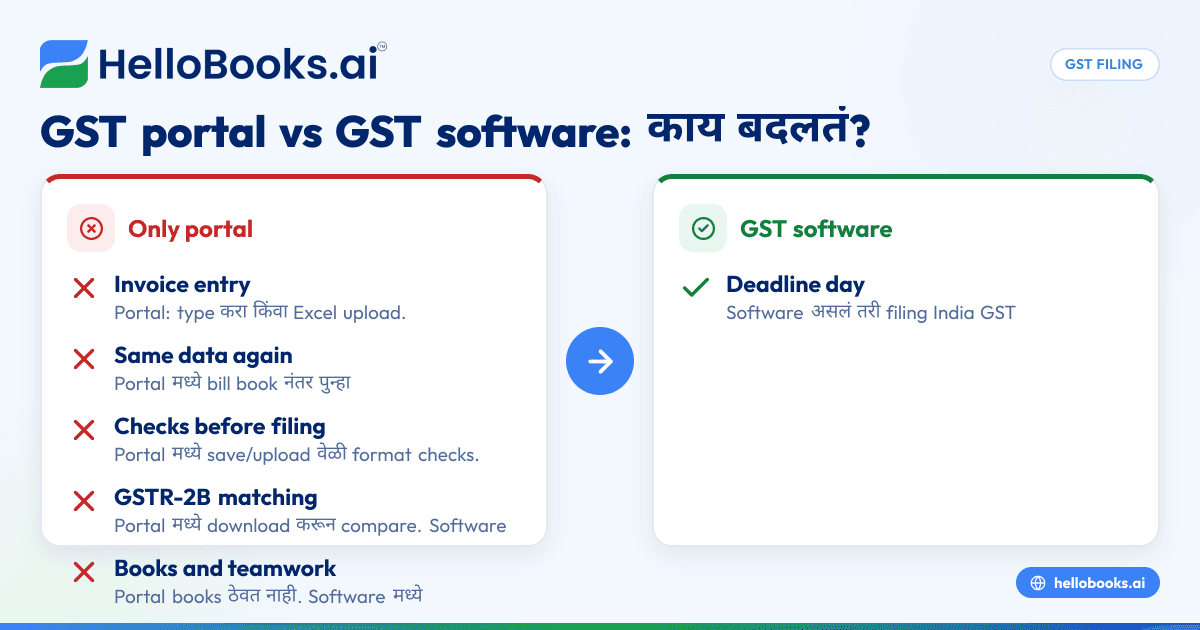
- GST Portal वर थेट filing करताना प्रत्यक्षात काय काम वाढतं?
- Software कुठे खऱ्या अर्थाने वेगळं पडतं?
- Portal पुरेसं कधी असू शकतं?
- Software कधी स्पष्टपणे जिंकतं?
- एक प्रामाणिक illustrative हिशोब: वेळ कुठे वाचतो, आणि कुठे नाही
India मध्ये GST return शेवटी एकाच अधिकृत ठिकाणी—GST Portal वर, तुमच्या GSTIN खाली—फाइल होतो; फरक इतकाच की तुम्ही data तिथे हाताने नेता की books मधून तयार करून पाठवता. कमी invoices, nil return किंवा अगदी साधा case असेल तर portal पुरेसा असू शकतो. पण B2B invoices, GSTR-2B matching, e-invoice, e-way bill, stock, bank entries आणि CA सोबत समन्वय वाढला की software वेळ, rework आणि चुका कमी करतं.
Direct filing आणि software filing यात मूळ फरक काय आहे?
सगळ्यात आधी एक गैरसमज दूर करूया: software मधून GSTR-1 किंवा GSTR-3B फाइल करणं म्हणजे “दुसरीकडे filing” नाही. India मध्ये GST चं कायदेशीर framework Central Goods and Services Tax Act, 2017 आणि संबंधित rules खाली चालतं; administration साठी CBIC आणि system layer साठी GSTN काम करतात, आणि actual filing अधिकृत GST Portal वरच reflect होतं.
म्हणजे निवड ही portal विरुद्ध सरकार अशी नसते. निवड ही साधारण अशी असते:
- portal वर online values हाताने भरायच्या
- spreadsheet/offline utility मधून तयार करून upload करायचं
- accounting/GST software मध्ये आधीपासून असलेल्या invoices, purchase bills आणि reconciled figures वरून return तयार करून GST Portal ला फाइल करायचं
ज्या व्यवसायाकडे महिन्याला मोजके invoices आहेत, payments साधे आहेत, आणि purchase side वर ITC tracking खूप कमी आहे, त्याला direct portal filing व्यवस्थित जाऊ शकतं. पण जर तुमचा व्यवसाय rupee-wise लहान असला तरी transaction-count ने मोठा असेल—उदा. अनेक small invoices, mixed intra-state/inter-state sales, place of supply issues, e-way bill requirements, किंवा multiple staff—तर “free portal” पेक्षा “once-enter, reuse everywhere” हा workflow जास्त उपयोगाचा ठरतो.
GST Portal वर थेट filing करताना प्रत्यक्षात काय काम वाढतं?
Portal अधिकृत आहे, आवश्यक आहे, आणि काही प्रकरणांत पुरेसाही आहे. पण थेट portal वापरण्याचा अर्थ बहुतेक वेळा हा असतो की business data आणि return data वेगवेगळ्या ठिकाणी राहतात.
GSTR-1 भरताना तुम्हाला invoice-level details, customer GSTIN, taxable value, tax split, credit/debit notes, HSN/SAC summary, documents information वगैरे नीट सांभाळावं लागतं. GSTR-3B मध्ये outward liability, ITC availability, reversals, reverse charge implications, cash/credit utilisation अशा गोष्टी तपासाव्या लागतात. कोणती table कशी pre-filled आहे, कोणता figure system-generated आहे, आणि कोणता तुम्हाला verify करायचा आहे हे समजून घ्यावं लागतं.
हे सर्व GSTN च्या portal architecture मध्ये होतं, पण source data कुठून येतो हा मुख्य प्रश्न असतो. जर तुम्ही invoice आधी paper bill book मध्ये, मग Excel मध्ये, मग portal वर असा तीनदा हाताळत असाल, तर error surface area वाढतो.
Indian business reality मध्ये अजून काही practical points असतात:
- customer payment UPI, NEFT, RTGS किंवा IMPS ने येतो, पण invoice शी match वेगळं करावं लागतं
- supplier bill PDF किंवा photo मध्ये येतो; त्याला books मध्ये आणणं वेगळं
- transport साठी e-way bill लागतो, पण invoice details आधीच type केलेले असतात
- intra-state sale ला CGST+SGST आणि inter-state sale ला IGST योग्य बसलं का हे पुन्हा पाहावं लागतं
Portal यापैकी बराचसा business-process भाग करत नाही; तो filing endpoint आहे. त्यामुळे direct portal filing “फाइलिंग” म्हणून चालतं, पण “books + controls + audit trail” म्हणून नेहमीच पुरेसं पडत नाही.
Software कुठे खऱ्या अर्थाने वेगळं पडतं?
Software चा फायदा portal replace करण्यात नाही; source data एकदाच नीट capture करून त्याच डेटा वर invoice, return, reconciliation आणि reports उभे करण्यात आहे.
उदाहरणार्थ, तुम्ही invoice तयार करतानाच customer GSTIN, place of supply आणि tax head split योग्य बसवला, तर नंतर CGST/SGST की IGST हा मूलभूत प्रश्न return stage ला परत उभा राहत नाही. India मध्ये inter-state vs intra-state classification practical level वर खूपच महत्त्वाची आहे, कारण चुकीचा tax head business relationship आणि correction work दोन्ही बिघडवू शकतो.
HelloBooks सारखं software याच ठिकाणी उपयोगी पडतं: invoice बनवताना GST-compliant fields नीट capture होतात, place of supply नुसार tax split सांभाळला जातो, आणि त्याच invoices वरून GST return filing तयार होतं. त्यामुळे GSTR-1 आणि GSTR-3B साठी वेगळं re-typing कमी होतं.
जर तुमच्यावर e-invoice rules लागू होत असतील, तर IRN आणि signed QR हा flow invoice save करतानाच हाताळला जाणं portal वर JSON upload करण्यापेक्षा जास्त practical असू शकतं. तसेच goods movement असेल तर invoice वरूनच e-way bill उभारणं repeated typing कमी करतं.
Purchase side वर OCR ने supplier bills capture झाले, आणि GSTR-2A/2B reconciliation मध्ये missing/mismatched invoices दिसले, तर ITC claim करण्यापूर्वी issue समोर येतो. हे विशेषतः useful आहे कारण ITC position फक्त books वर नाही तर supplier compliance वरही परिणामित होते. Current eligibility rules, restrictions आणि documentation expectations यासाठी CGST Act, संबंधित rules आणि CBIC/GST Portal वरील latest guidance पाहावी; specific treatment बदलत राहू शकतो, म्हणून case-specific reading महत्त्वाची असते.
Portal पुरेसं कधी असू शकतं?
काही व्यवसायांसाठी direct portal filing खरोखरच योग्य पर्याय आहे.
ते कधी?
- महिन्यात nil return किंवा जवळपास nil activity असेल
- invoices अगदी कमी असतील
- purchase bills कमी असल्यामुळे GSTR-2B matching सोपं असेल
- books वेगळ्या प्रणालीत व्यवस्थित ठेवले जात असतील, आणि portal फक्त last-mile filing असेल
- एकच GSTIN असेल आणि business model straightforward असेल
उदा., एक स्वतंत्र consultant ज्याचे दोन-तीन B2B clients आहेत, inventory नाही, e-way bill नाही, reverse charge complexity कमी आहे, आणि payments थेट bank मध्ये येतात—अशा case मध्ये portal perfectly reasonable असू शकतो.
पण even अशा व्यवसायातही जर client invoices regular असतील, TDS track करायचा असेल, किंवा year-round receivables report लागणार असेल, तर direct portal filing पुरेसं असलं तरी efficient असेलच असं नाही. GST return हा accounting चा substitute नाही.
Software कधी स्पष्टपणे जिंकतं?
ज्या क्षणी filing हा तुमच्या compliance process चा शेवटचा टप्पा न राहता रोजच्या operations चा परिणाम बनतो, त्या क्षणी software जास्त अर्थपूर्ण ठरतं.
ही काही Indian-market signs आहेत:
- महिन्याला अनेक B2B invoices
- multiple suppliers आणि active ITC tracking
- stock movement आणि SKU-level inventory
- एकापेक्षा जास्त GSTIN
- accountant, owner, sales team, CA अशा अनेक users ना access हवा असणं
- Tally मध्ये जुना data असणं पण नवीन workflow modern हवा असणं
- bank statement upload करून receipts/payouts reconcile करायची गरज
- mobile वरून invoice/expense capture करण्याची गरज
HelloBooks मध्ये bank statement upload करून AI reconciliation केल्यावर UPI, NEFT, RTGS, IMPS अशा receipts ना invoices शी जुळवणं manual tallying पेक्षा सोपं होतं. Supplier bills photo/PDF मधून OCR ने आणले तर purchase entry वेगवान होते. जर तुमचा business अजून Tally वरून migrate होत असेल, तर Tally alternative म्हणून trial घेणं किंवा connector वापरून transition करणे practical होऊ शकतं.
Inventory-heavy businesses साठी एक वेगळीच अडचण असते: sales register, stock register आणि GST data हे तीन वेगळे universe बनतात. जर invoice झाल्यावर stock लगेच update होत असेल, तर financial reports आणि GST figures मध्ये consistency ठेवणं सोपं जातं. हे खास करून traders, distributors आणि small manufacturers साठी महत्त्वाचं आहे.
एक प्रामाणिक illustrative हिशोब: वेळ कुठे वाचतो, आणि कुठे नाही
धरा हा पूर्णपणे illustrative आणि invented case आहे: Pune मधील एक trader महिन्याला 84 sales invoices करतो, 36 supplier bills असतात, आणि दोन states मध्ये customers असल्यामुळे काही invoices वर IGST तर काहींवर CGST+SGST लागू होतात. समजा owner direct portal route घेतो. तो invoices आधी Excel मध्ये ठेवतो, नंतर portal वर details verify/enter करतो, मग bank statement मधील receipts manually tick करतो, आणि GSTR-2B सोबत purchase bills compare करतो.
आता धरा, प्रत्येक sales invoice हाताळायला average 2-3 मिनिटे, purchase verification ला invoice मागे 1-2 मिनिटे, आणि bank matching ला महिन्याला काही तास जातात. अशा invented calculation मध्ये total effort साधारण 5 ते 8 तास होऊ शकतो. Software workflow मध्ये हाच data invoice बनवतानाच system मध्ये आला, bank statement upload झाला, OCR ने bills आले, आणि GSTR-2B mismatch list आधीच दिसली, तर manual effort materially कमी होऊ शकतो.
पण हा हिशोब सर्वांसाठी खरा नाही. यात internet issues, portal load, staff training time, CA review, corrections, credit notes, reverse charge nuances, e-invoice applicability, transport exceptions, आणि business-specific controls गृहित धरलेले नाहीत. म्हणून figures illustrative आणि invented आहेत; तुमचा actual outcome वेगळा असेल.
कायदेशीर जबाबदारीत मात्र फरक पडत नाही
हा मुद्दा महत्त्वाचा आहे: software वापरलं म्हणून कायदेशीर जबाबदारी software provider कडे shift होत नाही. Return तुमच्या GSTIN खाली फाइल होतो, आणि त्याची accuracy, supporting records, tax positions, classification, documentation आणि payments यांची primary responsibility registered person/business वरच राहते.
India मध्ये GST compliance व्यतिरिक्त इतर कायदेही business data वर परिणाम करतात. कंपनी structure असेल तर Companies Act, 2013 आणि MCA reporting context येऊ शकतो. TDS accounting बाबतीत Income-tax Act, 1961 लागू होतो. Data handling आणि privacy बाबतीत Digital Personal Data Protection Act, 2023 च्या अपेक्षा लक्षात ठेवाव्या लागतात, विशेषतः customer/supplier data system मध्ये store होत असेल तर. Payment flows bank channels मधून जात असताना broader financial ecosystem वर RBI regulated rails चा practical परिणाम असतो, जरी GST filing स्वतः RBI regime खाली नसली तरी.
म्हणजे tool काहीही असो, तुम्हाला records, reconciliations, invoice trail, purchase support, e-invoice/IRN evidence, e-way bill trail, आणि tax workings सांभाळावेच लागतात.
Marathi business owner ने निवड करताना काय पाहावं?
“Portal free आहे” आणि “software paid आहे” इतक्यावर निर्णय घेऊ नका. India मध्ये योग्य प्रश्न असे आहेत:
- माझे invoices महिन्याला किती आणि किती प्रकारचे आहेत?
- माझ्याकडे B2B जास्त आहेत की B2C?
- GSTR-2B matching manually टिकू शकतं का?
- माझ्याकडे inventory आहे का?
- bank statement reconciliation bookkeeping चा bottleneck आहे का?
- माझं काम एकाच GSTIN मध्ये आहे का multiple registrations मध्ये?
- CA ला books मध्ये direct access द्यायचा आहे का फक्त screenshots?
- मला mobile वरून काम करावं लागतं का?
- मी अजून Tally वापरतो का, आणि बदल gradual हवा का?
जर उत्तरं complexity कडे झुकत असतील, तर accounting software India किंवा smart invoicing type workflow अधिक उपयोगी ठरतो. जर तुम्ही अजून evaluate करत असाल, तर demo घेणं अधिक sensible आहे; prices साठी India pricing वेगळं पाहा.
कधी कधी full software घेण्याआधी छोटी पडताळणी पुरतेही useful असते. उदा. GSTIN तपासण्यासाठी GSTIN validator, HSN/SAC पाहण्यासाठी HSN code search, किंवा rough tax maths cross-check साठी GST calculator उपयोगी पडू शकतात.
निष्कर्ष: portal की software?
योग्य उत्तर “नेहमी portal” किंवा “नेहमी software” असं नाही. India मध्ये जर तुमचा GST compliance footprint लहान, stable आणि low-volume असेल, तर direct portal filing practical आहे. पण ज्या क्षणी invoice creation, IRN, signed QR, e-way bill, purchase OCR, GSTR-2A/2B reconciliation, bank statement upload, inventory, TDS entries, reports आणि multi-user coordination एकमेकांशी जोडले जातात, त्या क्षणी software हा luxury नसून workflow control बनतो.
म्हणून thumb rule असा: portal filing हा destination आहे; software वापरायचं की नाही हा decision journey किती manual, repeatable आणि error-prone आहे यावर घ्या. अधिकृत figures—rates, thresholds, due dates, penalties, interest, applicability—हे नेहमी संबंधित tax law, CBIC notifications/circulars आणि GST Portal/GSTN वरील current publications मधूनच verify करा; business-specific position साठी tax professional चा सल्ला घ्या.


