


Key takeaways
What this article covers, in order:
- GST filing என்பது portal-ல் submit செய்வது மட்டும் அல்ல
- எந்த business DIYக்கு பொருந்தும், எந்த business CA reviewக்கு பொருந்தும்?
- செலவு என்று சொல்வது CA fee மட்டும் இல்லை
- இந்தியாவில் அதிகம் நடக்கும் தவறு: books clean இல்லை, filing மட்டும் செய்யப்படுகிறது
- CA இல்லாமலுமே செய்யலாம் — ஆனால் இந்த checks pass ஆகும்போது மட்டும்
- CA அவசியம் இருக்கும் இந்தியச் சூழல்கள்
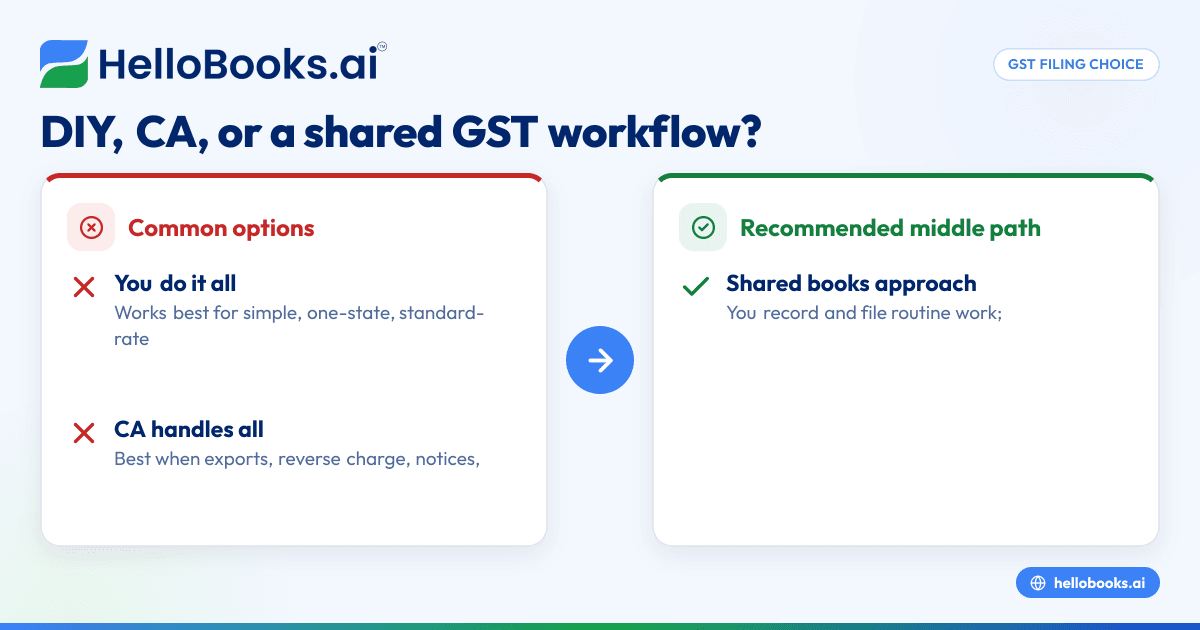
இந்தியாவில் GST filingக்கு ஒரு நேரடியான பதில் இதுதான்: உங்கள் business ஒரு GSTIN, சுத்தமான invoices, குறைந்த வாங்கல்-விற்பனை, சிக்கலில்லாத ITC pattern என்ற அளவுக்குள் இருந்தால் routine வேலைகளை நீங்களே செய்யலாம்; ஆனால் reverse charge, export, e-invoice, e-way bill, multiple GSTIN, notice, அல்லது books itself mismatch ஆக இருந்தால் CA review இல்லாமல் போவது அபாயம். பெரும்பாலான வளர்ந்து வரும் businessesக்கு சிறந்த நடைமுறை full DIY அல்ல, full handoff-மும் அல்ல; தினசரி entries நீங்களே செய்து, filingக்கு முன் CA review செய்வது.
GST filing என்பது portal-ல் submit செய்வது மட்டும் அல்ல
பல உரிமையாளர்கள் GST என்றால் GST portal-ல் login செய்து GSTR-1, GSTR-3B submit செய்வதைத்தான் நினைக்கிறார்கள். ஆனால் இந்தியாவில் Central Goods and Services Tax Act, 2017, Integrated Goods and Services Tax Act, 2017, மற்றும் அதற்குட்பட்ட Rules கீழ் practical compliance என்பது அதற்கு முன் தொடங்குகிறது. Regulator பக்கம் பார்க்க வேண்டிய official sources என்றால் CBIC notifications/circulars, GSTN நடத்தும் GST portal guidance, மற்றும் e-invoice அல்லது e-way bill systems.
அதாவது வேலை நான்கு அடுக்குகள் கொண்டது:
- sale நேரத்தில் சரியான GST invoice உருவாக்குவது
- purchase bills capture செய்து ITCக்கு தகுதியானவையா என்று பார்க்குவது
- GSTR-2A/2B உடன் reconcile செய்து books மற்றும் portal data ஒத்திருக்கிறதா என்பதை உறுதிப்படுத்துவது
- அதன் பிறகுதான் GSTR-1, GSTR-3B filing மற்றும் tax payment
இங்கே தான் “நான் return file பண்ணிட்டேன்” என்பதுக்கும் “நான் compliance properly maintain பண்ணுகிறேன்” என்பதுக்கும் வித்தியாசம் வருகிறது. Invoice-ல் place of supply தவறாக இருந்தால் CGST/SGST போக வேண்டிய இடத்தில் IGST போகலாம், அல்லது அதற்கு மாறாக போகலாம். Supplier bill books-ல் இருந்தும் GSTR-2B-ல் இல்லாவிட்டால் ITC claim செய்வதற்கு முன் அது ஆய்வு செய்ய வேண்டிய விஷயம். இந்த முடிவுகள் software இல்லாமல் spreadsheet-ல் செய்யலாம்; ஆனால் error risk அதிகமாகும்.
எந்த business DIYக்கு பொருந்தும், எந்த business CA reviewக்கு பொருந்தும்?
DIY safe ஆக இருக்கக்கூடிய profile பொதுவாக இது போன்றது:
- ஒரு மாநிலத்தில் ஒரு GSTIN
- domestic B2B அல்லது B2C sales மட்டும்
- invoice count குறைவு; ownerக்கு numbers மீது control உண்டு
- regular suppliers சிலர் மட்டுமே
- reverse charge transactions அரிது அல்லது இல்லவே இல்லை
- stock movement simple
- previous notices இல்லை
இதற்கு ஒரு illustrative, invented நிலையை பார்ப்போம்: சென்னைலுள்ள ஒரு design studio மாதத்துக்கு 18 invoices issue செய்கிறது, எல்லாமே இந்திய clients, payments UPI, NEFT, IMPS அல்லது bank transfer வழியாக வருகிறது, purchase bills சில software subscriptions மற்றும் local vendor செலவுகள் மட்டுமே. இந்த நிலைமையில் owner invoices சரியாக raise செய்து, bank statement upload செய்து collections match செய்து, purchase bills OCR மூலம் capture செய்து, GSTR-2B mismatch ஏதும் உள்ளதா என்று பார்த்து, பிறகு GSTR-1 மற்றும் GSTR-3B file செய்வது practical. இந்த illustration professional advice, sector-specific exemptions, blocked credit issues, litigation risk போன்றவற்றை உள்ளடக்கவில்லை.
ஆனால் CA தேவைப்படும் profile வேறுபடும்:
- multi-state operations அல்லது பல GSTIN
- branch transfer, stock transfer, inter-state supplies
- e-invoice applicability இருக்கக்கூடிய turnover band; current threshold figure CBIC notifications மற்றும் GST portal-ல் published ஆகிறது
- export, SEZ, LUT/refund related positions
- reverse charge entries
- TDS/TCS interaction books-ல் clean-ஆக reflect ஆக வேண்டிய நிலை
- goods movement காரணமாக e-way bill dependency
- old period corrections, notices, scrutiny, departmental query
இங்கு CAவின் மதிப்பு data entryயில் இல்லாமல் judgement-ல் இருக்கும். Law என்ன சொல்கிறது, CBIC circular எப்படி explain செய்கிறது, GST portal-ல் transaction எப்படி reflect ஆகிறது என்பதை இணைத்து பார்க்க வேண்டியிருக்கும்.
செலவு என்று சொல்வது CA fee மட்டும் இல்லை
DIY vs CA comparison பேசும்போது பலர் “CA fee எவ்வளவு?” என்று ஆரம்பிக்கிறார்கள். ஆனால் இந்திய businessக்கு உண்மையான cost நான்கு பகுதிகள் கொண்டது:
- software மற்றும் record-keeping cost
- owner அல்லது accounts staff செலவிடும் நேரம்
- filing தவறால் உருவாகும் rework
- notice அல்லது ITC dispute வந்தால் அதன் opportunity cost
ஒரு illustrative, invented comparison: கோயம்புத்தூரில் உள்ள ஒரு trading business மாதத்துக்கு 90 sales invoices, 55 purchase bills, occasional e-way bill requirement, ஒரு rupee amount ஆக ₹72 lakh annual turnover போன்ற profile வைத்திருக்கிறது என்று வைத்துக் கொள்ளலாம். இந்த business full DIY செய்தால் owner மாதந்தோறும் 10-14 மணி நேரம் GST cleanupக்கு செலவிட வேண்டியிருக்கும் என்று கருதலாம்; full outsourcing செய்தால் documents CA officeக்கு தொடர்ந்து அனுப்பியும் clarification callsக்கும் நேரம் போகலாம்; shared model-ல் data business-இலேயே timely capture ஆக, CA review only exceptions பார்க்கலாம். இந்த figures illustrative and invented; sector, city, staff skill, transaction mix, மற்றும் present compliance health ஆகியவற்றை இது காட்டாது.
அதனால் “CA வைக்கலாமா வேண்டாமா?” என்பதைக் கட்டணமாக மட்டும் பார்க்காதீர்கள். நீங்கள் late-ஆக books close செய்வீர்களா? bank receipts untagged ஆக கிடக்கிறதா? purchase bills WhatsApp, email, paper ஆகிய மூன்றிலும் சிதறி கிடக்கிறதா? அப்படியானால் CA இல்லாததால் அல்ல, clean system இல்லாததால் தான் GST pain அதிகமாக இருக்கும்.
இந்தியாவில் அதிகம் நடக்கும் தவறு: books clean இல்லை, filing மட்டும் செய்யப்படுகிறது
GST law கீழ் return numbers books-இல் இருந்து வர வேண்டும். Practical-ஆக பல SMEs என்ன செய்கின்றன என்றால் invoice ஒரு app-ல், stock வேறொரு register-ல், purchases paper file-ல், bank reconciliation pending, பிறகு filing weekல் totals மட்டும் சேர்க்கிறார்கள். இதுவே risk.
இதில் relevant automation மிக முக்கியம். HelloBooks போன்ற system-ல் GST invoice உருவாக்கும்போதே customer GSTIN, place of supply, HSN/SAC, மற்றும் CGST/SGST அல்லது IGST split சரியாக pull ஆக உதவினால், Rule 46க்கு உட்பட்ட invoice fields consistent-ஆக நிரம்பும். e-invoice applicable businessகளுக்கு IRN மற்றும் signed QR save செய்யும் flow மூலம் portal JSON upload repeat வேலை குறையும்; current applicability threshold CBIC notifications மற்றும் GST portal advisories-ல் official-ஆக published ஆகிறது. Goods movement உள்ள businessக்கு invoice data-விலிருந்தே e-way bill raise ஆகும் போது duplicate typing குறையும்.
இந்த cleanup filingக்கு முன் முடிந்தால் GSTR-1 மற்றும் GSTR-3B direct filing meaningful ஆகும். இல்லையெனில் return submit செய்தாலும் books later mismatch ஆகலாம்.
CA இல்லாமலுமே செய்யலாம் — ஆனால் இந்த checks pass ஆகும்போது மட்டும்
DIY செய்ய விரும்புபவர் தன்னிடம் இந்த operational discipline இருக்கிறதா என்று நேர்மையாக கேட்க வேண்டும்:
- எல்லா sales invoicesயும் same month-ல் book ஆகிறதா?
- cash, UPI, bank, card receipts எல்லாம் bank statement மற்றும் books-ல் match ஆகிறதா?
- supplier bills photo/PDF/paper எல்லாவற்றிலிருந்தும் timely capture ஆகிறதா?
- GSTR-2B-ல் இல்லாத invoices மீது ITC claim செய்வதற்கு முன் someone checks the mismatch?
- inter-state sale, local sale வேறுபாட்டை place of supply அடிப்படையில் consistently apply செய்கிறீர்களா?
- reverse charge entries வந்தால் அவை spreadsheet நினைவில் அல்ல, books-லேயே record ஆகிறதா?
இந்த checklist-இல் “ஆம்” அதிகமாக இருந்தால் DIY reasonable. அதற்காக ownerக்கு accounting degree வேண்டியதில்லை. ஆனால் system வேண்டும். Purchase bill photo-களை OCR மூலம் books-க்கு கொண்டு வருவது, uploaded bank statement-ஐ AI reconciliation மூலம் invoices/receipts-க்கு match செய்வது, GSTR-2A/2B reconciliation screen-ல் missing ITC trace செய்வது போன்றவை இருந்தால் monthly close practical ஆகிவிடும்.
Phone-ல் வேலை செய்வோர் இருந்தால் mobile app மூலம் invoice அல்லது expense entry உடனே போடலாம். Team-ல் owner, accountant, external CA மூவரும் சேர்ந்து வேலை பார்க்க வேண்டுமெனில் unlimited users மற்றும் multi-GSTIN setup useful. குறிப்பாக Tamil Nadu-க்கு வெளியேயும் registration வைத்திருக்கும் tradersக்கு இது முக்கியம்.
CA அவசியம் இருக்கும் இந்தியச் சூழல்கள்
சில சூழல்களில் “software இருக்கு, நாமே manage பண்ணிக்கலாம்” என்று நினைப்பது போதாது.
1) notice அல்லது old mismatch
GST portal-ல் status clean இல்லை, prior period data mismatch, department query, அல்லது CBIC interpretation பற்றிய uncertainty இருந்தால் CA representation தேவைப்படலாம். இது filing task அல்ல; legal reading மற்றும் response drafting task.
2) reverse charge, TDS/TCS, complex vendor flows
Income Tax Act context-ல் TDS bookkeeping, GST reverse charge treatment, supplier settlement ஆகியவை ஒன்றுடன் ஒன்று படர்ந்திருக்கும். Books-ல் TDS/TCS மற்றும் reverse charge handling clean-ஆக இருந்தால் review எளிதாகும்; இல்லையெனில் year-end confusion அதிகம்.
3) inventory-heavy businesses
Inventory, stock transfer, wastage, purchase return, sales return, e-way bill, dispatch timing — இவை ஒன்றாக சேரும்போது GST impact pure service business விட கடினமாகும். Inventory management books-இன் உட்பகுதியாக இருந்தால் closing stock, outward movement, inward purchase records ஒரே இடத்தில் இருக்கும். ஆனால் classification disputes அல்லது valuation issues வந்தால் CA அல்லது tax expert உதவி அவசியம்.
4) Tally legacy data
பல இந்திய businesses இன்னும் Tally-யை மையமாக வைத்து நடத்துகின்றன. Data migration, parallel run, accountant habit change ஆகியவை sudden switchக்கு தடையாக இருக்கும். Tally migration மற்றும் connector இருப்பது transitional pain குறைக்கலாம்; CA firm Tally-யை தொடர்ந்தும், business HelloBooks-ல் daily operations capture செய்தும் சில காலம் parallel-ஆக வேலை செய்ய முடியும். Compare பார்க்க வேண்டுமெனில் Tally alternative மற்றும் HelloBooks vs Tally உதவும்.
இந்திய businessக்களுக்கு நடுவழி ஏன் பல நேரங்களில் சிறந்தது
நடுவழி model என்பது owner routine bookkeepingஐ control-இல் வைத்துக்கொள்வதும், CA judgement-heavy பகுதிகளை review செய்வதும். இது especially Indian SME realityக்கு பொருந்தும், ஏனெனில் transaction information business-க்குள்ளேதான் முதலில் தெரியும். CAக்கு later PDF bundle அனுப்பும்போது context இழக்கப்படுகிறது.
இந்த model எப்படி இயங்கும்?
- business sales invoice அதே நாளில் issue செய்கிறது
- purchase bills OCR மூலம் capture செய்கிறது
- bank statement upload செய்து receipts/payments reconcile செய்கிறது
- GSTR-2B reconciliation செய்து missing ITC list உருவாக்குகிறது
- CA exception items மட்டும் பார்க்கிறார்: reverse charge, classification doubt, inter-state issue, amendment need, notice risk
- final numbers ready ஆனதும் GSTR-1, GSTR-3B direct filing நடக்கிறது
இந்த approachல் ownerக்கு numbers மீது visibility இருக்கும். Financial reports மூலம் receivables, expense trends, P&L ஆகியவை GST entries உடனே இணைந்து கிடைக்கும். அதனால் compliance மற்றும் business decision இரண்டும் பிரியாமல் இருக்கும். Small businessக்கு பார்க்க வேண்டுமெனில் accounting software for small business, accounting software India, GST return filing software, bank reconciliation software, inventory, smart invoicing போன்ற வழிகளை ஒப்பிடலாம்.
ஒரு illustrative, invented நிலை: full DIY, full CA, அல்லது shared model
மதுரையில் உள்ள ஒரு wholesale + retail business இரண்டு GSTIN வைத்திருக்கிறது என்று எடுத்துக்கொள்வோம்; monthly outward invoices 140, inward bills 85, சில consignmentsக்கு e-way bill தேவை, சில customers inter-state. ஒரு மாதத்தில் books-ல் sales ₹9.8 lakh, purchases ₹6.1 lakh, collections பல UPI/NEFT/RTGS entries, மற்றும் சில supplier debit notes உள்ளன என்று கற்பனைப் படுத்தலாம். இந்த numbers illustrative and invented; actual tax positions, valuation issues, blocked credits, sector exemptions, current published thresholds அல்லது deadlines ஆகியவற்றை இது பிரதிபலிக்காது.
- Full DIY: owner அல்லது in-house accountant invoice, stock, bank, GST அனைத்தையும் கையாள வேண்டும். Process discipline நல்லதாக இருந்தால் cost save ஆகலாம். ஆனால் இரண்டு GSTIN, inter-state supply, e-way bill, ITC mismatch இருந்தால் error risk அதிகம்.
- Full CA handoff: documents எல்லாம் CA officeக்கு போகும். Owner time save ஆகலாம். ஆனால் source data late-ஆகச் சென்றால் filing week stress நீங்காது. Business visibility குறையலாம்.
- Shared model: business invoices, inventory, bank reconciliation, purchase capture maintain செய்கிறது; CA மாத இறுதியில் exception review செய்கிறார். Multi-GSTIN ஒரே login-ல் manage செய்து, final return data shared books-இலிருந்து வரும்போது rework குறையும்.
இந்த third route தான் many Indian SMEsக்கு practical. இது “நாமே எல்லாம் தெரிஞ்சிருக்கணும்” என்பதுமில்லை; “எதுவும் தெரியாம CAக்கு அனுப்பிடலாம்” என்பதுமில்லை.
HelloBooks இங்கு practical-ஆக உதவும் இடங்கள்
இந்தக் கேள்விக்கு relevant ஆன அளவுக்கு பார்த்தால், routine GST discipline strong ஆக இருக்க வேண்டும் என்பதுதான் மையம். அதற்கு HelloBooks-ல் invoice போடும் போது GSTIN அடிப்படையில் place-of-supply மற்றும் tax head split சரியாக நிரம்புவது local vs inter-state errors குறைக்க உதவும். e-invoice applicable cases-ல் IRN மற்றும் signed QR invoice flow-இலேயே வருவது manual portal round-trip ஐச் சுருக்கலாம். Goods businessesக்கு e-way bill invoice-இலிருந்து உருவாகும் போது dispatch data duplicate entry தவிர்க்கலாம்.
Return side-ல் invoices மற்றும் purchase entries ஏற்கனவே books-ல் இருந்தால் GSTR-1, GSTR-3B direct filing என்பது last-minute compilation அல்ல, normal close process-ன் தொடர்ச்சி ஆகிவிடும். GSTR-2A/2B reconciliation மற்றும் ITC tracking missing supplier upload-களை முன்கூட்டியே காட்டும். Bank statement upload செய்து AI reconciliation செய்வதால் Indian bank narration chaos இருந்தாலும் collections match செய்வது வேகமாகும். Purchase bill OCR daily entry burden குறைக்கும். Inventory-heavy businessக்கு stock movement same system-ல் இருக்கும். CA collaboration வேண்டுமெனில் unlimited users useful; owner, staff, CA ஒரே books-ல் பார்க்கலாம். Tally-யிலிருந்து நகர்வதில் தயக்கம் இருந்தால் migration/connector bridge ஆகும்.
Phone-first ownersக்கு mobile app உண்டு; quick help தேவைப்பட்டால் Noor assistant on WhatsApp மூலம் Hindi, English, Hinglish-ல் books தொடர்பான basic guidance பெறலாம். மேலும் GSTIN validate செய்ய, HSN தேட, invoice field check செய்ய account இல்லாமல்கூட சில India tools உதவும்: GSTIN validator, HSN code search, GST invoice validator, GST reconciliation checker, GST calculator. Product fit அல்லது workflow பார்க்க demo request செய்யலாம்; plans பார்க்க pricing.
முடிவு: நீங்கள் செய்ய வேண்டியது filing choice அல்ல, control choice
உங்கள் businessக்கு சரியான தேர்வு “DIY vs CA” என்ற binary அல்ல. சரியான கேள்வி: day-to-day transaction control business-க்குள்ளே இருக்க வேண்டுமா, இல்லை entirely வெளியே போக வேண்டுமா? இந்தியாவில் GST compliance CBIC rules, GSTN systems, e-invoice/IRN flows, e-way bill movement records, bank proof, purchase evidence, ITC discipline ஆகியவை ஒன்றோடொன்று இணைந்திருக்கும். அதனால் routine records உங்கள் கையில், difficult interpretation CA review-இல் என்ற அமைப்பு பல நேரங்களில் மிகச் சரியான சமநிலை.
ஒரு GSTIN, simple domestic business என்றால் நீங்களே செய்யலாம். ஆனால் published figures, current thresholds, due dates, penalties, interest, and procedural updates அனைத்தும் CBIC notifications, GST portal, GSTN advisories, மற்றும் சம்பந்தப்பட்ட சட்ட உரைங்களில் மாறக்கூடியவை என்பதால் final decisionக்கு உங்கள் CA அல்லது tax professional-ஐ அணுகுவது நல்லது. DIY செய்வீர்களானாலும், numbers timely capture ஆகும் system இல்லாமல் செய்யாதீர்கள்.


