
Key takeaways
What this article covers, in order:
- Why this comes up / what goes wrong
- Step-by-step
- Example (fictional figures)
- Common mistakes
- Frequently asked questions
- Key takeaways
Dental practice insurance exit strategy software helps dental business owners and accountants plan and manage insurance policies and exit strategies efficiently. This software supports tracking insurance coverages, evaluating financial risks, and preparing for ownership transitions. This article explains why dental practices need such software, the steps to select it, a worked example with Indian figures, common mistakes to avoid, and answers key questions.
Why this comes up / what goes wrong
Dental practices in India often face challenges when planning their exit strategy, especially regarding insurance coverage and financial protection. Owners or accountants may struggle with managing multiple insurance policies, assessing liabilities, and ensuring smooth ownership transfer or sale. Without proper software, they spend excessive time on manual tracking, risk missing critical deadlines or coverage gaps, and fail to align insurance with their exit plans. This is particularly important for small and growing practices where resources are limited and expertise in financial services like insurance and exit strategies is scarce.
Step-by-step
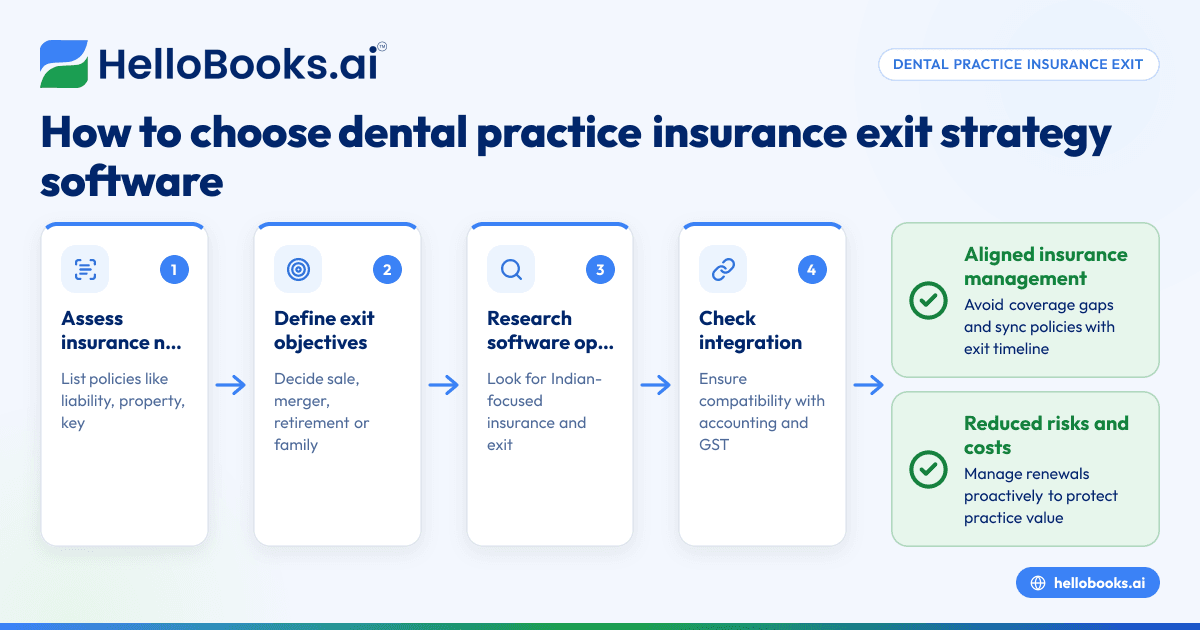
- Assess Your Practice’s Insurance Needs: List all existing insurance policies relevant to your dental practice, such as professional liability, property, business interruption, and key person insurance. Check coverage limits and expiry dates.
- Define Your Exit Strategy Objectives: Decide if the exit will be a sale, merger, retirement, or transfer to family. This affects insurance needs and timing.
- Research Software Options: Look for software tailored to financial services or insurance management that supports Indian businesses. Check if it offers features like policy tracking, renewal alerts, financial risk analysis, and reporting.
- Evaluate Integration Capabilities: Verify if the software can integrate with your accounting tools or GST invoicing systems, as this helps maintain consistent financial data. Learn more about GST invoicing to understand integration benefits.
- Check Compliance and Security: Ensure the software complies with Indian regulations and safeguards sensitive financial data.
- Request Demos and Trial Periods: Test usability, reporting features, and customer support responsiveness.
- Compare Pricing and Support Services: Consider total cost of ownership and availability of local support.
- Plan Implementation and Training: Prepare your team to use the software effectively to avoid disruptions.
- Regularly Review and Update Insurance Data: Use the software to monitor policy changes and align with exit plan milestones.
Example (fictional figures)
Dr. Mehta owns a dental practice in Mumbai and wants to plan an exit strategy involving selling the practice in two years. He has three insurance policies:
- Professional liability insurance: ₹5,00,000 coverage, renewal on 01/01/2025
- Property insurance: ₹10,00,000 coverage, renewal on 01/06/2024
- Key person insurance: ₹15,00,000 coverage, renewal on 01/12/2024
Dr. Mehta uses insurance exit strategy software to track these policies and plan renewals aligned with his exit timeline.
He sets alerts 3 months before each renewal:
- For property insurance: ₹10,00,000 coverage Renewal alert date = 01/06/2024 − 3 months = 01/03/2024
- For professional liability insurance: ₹5,00,000 coverage Renewal alert date = 01/01/2025 − 3 months = 01/10/2024
- For key person insurance: ₹15,00,000 coverage Renewal alert date = 01/12/2024 − 3 months = 01/09/2024
This helps Dr. Mehta avoid lapses in coverage and manage costs ahead of the sale.
Common mistakes
- Ignoring Alignment of Insurance with Exit Timeline: Not syncing insurance renewals or coverage changes with the planned exit date can cause gaps or excess costs. Prevent this by setting calendar alerts and reviewing exit milestones.
- Choosing Generic Software Without Industry Features: Using software not designed for insurance or financial services leads to missing critical tracking or reporting features. Avoid by researching options that cater to insurance agents or financial businesses like those in Insurance agents, NBFCs and financial services.
- Overlooking Integration with Accounting Systems: Lack of integration causes data duplication and errors. Check if the software supports integration with your accounting or GST invoicing tools to streamline workflows.
- Neglecting Data Security and Compliance: Dental practices handle sensitive financial data. Using software without proper security or regulatory compliance risks data breaches and penalties. Verify compliance before purchase.
- Underestimating Training Needs: Poor user adoption leads to underutilization. Plan training sessions and provide user manuals.
- Failing to Monitor Policy Changes Post-Implementation: Insurance terms can change. Regularly update the software data to reflect new policies or amendments.
Frequently asked questions
What features should dental practice insurance exit strategy software have?
Look for policy management, renewal alerts, financial risk analysis, reporting, and integration with accounting or GST invoicing systems. These features help track insurance effectively and align it with your exit plans.
Can this software help with GST invoicing for dental practices?
While primarily for insurance and exit strategy, some software may offer or integrate with GST invoicing tools. Understanding GST invoicing is useful for comprehensive financial management.
How do I ensure the software complies with Indian regulations?
Check if the vendor states compliance with Indian data protection laws and financial regulations. Ask for documentation or certifications.
Is the software suitable for small dental practices?
Yes, but ensure it is scalable and affordable for small businesses. Trial periods help assess suitability.
How do I integrate insurance exit strategy software with my existing accounting system?
Look for software that supports data import/export or API integration. This reduces manual entry and errors.
Key takeaways
- Choose software tailored to insurance and exit strategy needs of dental practices.
- Align insurance policy management with your exit timeline.
- Verify integration with accounting and GST invoicing systems for smoother workflows.
- Ensure compliance with Indian regulations and data security standards.
- Avoid common mistakes by planning training and regular data updates.
For more insights on financial services software, see our guide on Insurance agents, NBFCs and financial services.
To explore options for your dental practice, Compare plans for India.