


Key takeaways
What this article covers, in order:
- Credit note, debit note ਜਾਂ amendment: ਅਸਲ ਚੋਣ ਕਿਵੇਂ ਕਰੋ
- ਵੈਧ GST credit note ਜਾਂ debit note ਵਿੱਚ ਕੀ ਹੋਣਾ ਚਾਹੀਦਾ ਹੈ
- GSTR-1 ਵਿੱਚ notes ਅਤੇ amendments ਕਿੱਥੇ ਦਿਖਦੇ ਹਨ
- GSTR-3B, ITC trail ਅਤੇ buyer mismatch ਦਾ ਅਸਰ
- ਪੰਜਾਬ ਦੇ ਵਪਾਰ ਵਿੱਚ ਜ਼ਿਆਦਾ ਦਿਖਣ ਵਾਲੀਆਂ ਹਕੀਕਤੀ ਸਥਿਤੀਆਂ
- ਇੱਕ ਇਮਾਨਦਾਰ illustrative ਹਿਸਾਬ, ਤਾਂ ਕਿ ਫਰਕ ਪੱਕਾ ਹੋ ਜਾਵੇ
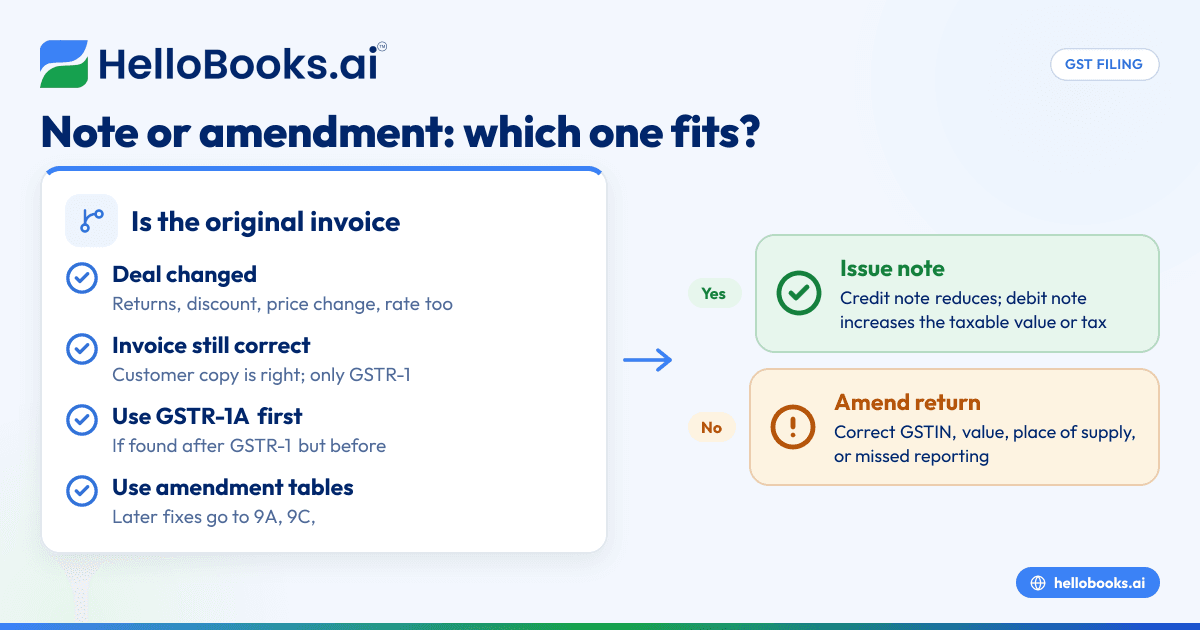
India ਵਿੱਚ GST ਲਈ ਸਧਾਰਣ ਨਿਯਮ ਇਹ ਹੈ: ਜੇ ਇਨਵੌਇਸ ਜਾਰੀ ਹੋਣ ਤੋਂ ਬਾਅਦ ਅਸਲ ਸੌਦਾ ਬਦਲਿਆ ਹੈ—ਜਿਵੇਂ ਮਾਲ ਵਾਪਸ ਆਇਆ, ਬਾਅਦ ਦਾ discount ਦਿੱਤਾ ਗਿਆ, ਜਾਂ value ਘਟੀ/ਵਧੀ—ਤਾਂ credit note ਜਾਂ debit note ਦੀ ਲੋੜ ਹੁੰਦੀ ਹੈ। ਪਰ ਜੇ ਸੌਦਾ ਠੀਕ ਸੀ ਅਤੇ ਗਲਤੀ ਸਿਰਫ਼ GST return reporting ਵਿੱਚ ਹੋਈ—ਜਿਵੇਂ ਗਲਤ GSTIN, place of supply, taxable value ਜਾਂ tax head split—ਤਾਂ amendment ਕਰੋ। ਇਹ ਫਰਕ Central Goods and Services Tax Act, 2017 ਅਤੇ ਉਸ ਹੇਠਲੇ GST Rules ਅਨੁਸਾਰ practical compliance ਦਾ ਕੇਂਦਰ ਹੈ, ਅਤੇ current tables/filing behaviour GST Portal ਤੇ GSTN/CBIC ਦੀਆਂ official instructions ਵਿੱਚ publish ਹੁੰਦੇ ਹਨ.
Credit note, debit note ਜਾਂ amendment: ਅਸਲ ਚੋਣ ਕਿਵੇਂ ਕਰੋ
ਸਭ ਤੋਂ ਵਧੀਆ test ਇਹ ਹੈ: ਕੀ ਗਾਹਕ ਨੂੰ ਦਿੱਤਾ ਮੁੱਢਲਾ invoice ਅੱਜ ਵੀ ਵਪਾਰਕ ਹਕੀਕਤ ਨੂੰ ਦਰਸਾਂਦਾ ਹੈ?
- ਜੇ ਹਾਂ, ਪਰ return ਵਿੱਚ reporting ਗਲਤ ਹੋ ਗਈ, ਤਾਂ amendment ਕਰੋ।
- ਜੇ ਨਹੀਂ, ਕਿਉਂਕਿ supply ਦੀ value, quantity, discount ਜਾਂ tax position ਬਾਅਦ ਵਿੱਚ ਬਦਲ ਗਈ, ਤਾਂ credit note ਜਾਂ debit note ਜਾਰੀ ਕਰੋ।
ਕੁਝ typical Indian situations ਵੇਖੋ:
- Ludhiana ਤੋਂ tiles ਭੇਜੇ, ਕੁਝ cartons ਟੁੱਟੇ ਹੋਏ ਨਿਕਲੇ, buyer ਨੇ ਮਾਲ ਵਾਪਸ ਕੀਤਾ → credit note.
- Sale ਤੋਂ ਬਾਅਦ contract ਅਨੁਸਾਰ turnover discount ਦਿੱਤਾ → credit note.
- Invoice ਘੱਟ value 'ਤੇ ਬਣ ਗਿਆ ਸੀ ਅਤੇ ਬਾਅਦ ਵਿੱਚ differential amount charge ਕਰਨਾ ਹੈ → debit note.
- Invoice ਠੀਕ ਸੀ, ਪਰ GSTR-1 ਵਿੱਚ buyer ਦਾ GSTIN typo ਨਾਲ ਚਲਾ ਗਿਆ → amendment.
- Invoice local Punjab sale ਸੀ, ਪਰ return ਵਿੱਚ inter-state ਮੰਨ ਕੇ IGST report ਕਰ ਦਿੱਤਾ → amendment, ਕਿਉਂਕਿ place of supply/tax head reporting ਗਲਤ ਸੀ.
- ਇੱਕ invoice issue ਹੋਇਆ ਪਰ GSTR-1 ਵਿੱਚ miss ਹੋ ਗਿਆ → ਆਮ ਤੌਰ 'ਤੇ omission ਨੂੰ subsequent reporting ਜਾਂ relevant correction route ਨਾਲ ਲਿਆ ਜਾਂਦਾ ਹੈ; exact treatment period ਅਤੇ return status 'ਤੇ depend ਕਰਦਾ ਹੈ, ਇਸ ਲਈ GST Portal ਦੀ current filing utility check ਕਰੋ.
ਜੇ ਤੁਸੀਂ accounting software ਵਿੱਚ invoice ਬਣਾਉਂਦੇ ਸਮੇਂ ਹੀ place of supply ਦੇ ਅਧਾਰ 'ਤੇ CGST/SGST ਜਾਂ IGST split ਠੀਕ ਰੱਖੋ, ਤਾਂ ਇਹ category confusion ਕਾਫ਼ੀ ਘਟ ਜਾਂਦੀ ਹੈ. HelloBooks ਇਸੇ ਜਗ੍ਹਾ helpful ਹੈ, ਕਿਉਂਕਿ invoice ਬਣਾਉਂਦਿਆਂ buyer ਦੇ GSTIN, state ਅਤੇ supply nature ਦੇ ਹਿਸਾਬ ਨਾਲ tax head split consistent ਰੱਖਿਆ ਜਾ ਸਕਦਾ ਹੈ.
ਵੈਧ GST credit note ਜਾਂ debit note ਵਿੱਚ ਕੀ ਹੋਣਾ ਚਾਹੀਦਾ ਹੈ
Credit note ਅਤੇ debit note ਸਿਰਫ਼ commercial memo ਨਹੀਂ ਹਨ; GST context ਵਿੱਚ ਇਹ documents ਨੂੰ CGST Act, 2017 ਦੀ section 34 ਅਤੇ Central Goods and Services Tax Rules, 2017 ਦੇ invoicing/document provisions ਨਾਲ read ਕੀਤਾ ਜਾਂਦਾ ਹੈ. Exact document particulars official law text, CBIC notifications/circulars ਅਤੇ GST Portal guidance ਵਿੱਚ publish ਹੁੰਦੇ ਹਨ.
ਆਮ ਤੌਰ 'ਤੇ note ਵਿੱਚ ਇਹ consistency ਹੋਣੀ ਚਾਹੀਦੀ ਹੈ:
- supplier ਦਾ legal name, address ਅਤੇ GSTIN
- serial number ਅਤੇ date
- recipient ਦੇ details; registered person ਹੋਵੇ ਤਾਂ ਉਸ ਦਾ GSTIN
- original tax invoice ਦਾ reference
- taxable value ਵਿੱਚ reduction ਜਾਂ increase ਦਾ ਸਾਫ਼ breakup
- applicable GST treatment
- reason, ਜਿਵੇਂ sales return, post-sale discount, rate correction, shortage, quality issue
Indian practice ਵਿੱਚ ਇੱਕ ਵੱਡੀ practical mistake ਇਹ ਹੁੰਦੀ ਹੈ ਕਿ business credit note ਤਾਂ ਜਾਰੀ ਕਰ ਦੇਂਦਾ ਹੈ, ਪਰ original invoice linkage clear ਨਹੀਂ ਰੱਖਦਾ. ਇਸ ਨਾਲ buyer ਦੇ books, supplier ਦੇ GSTR-1 ਅਤੇ buyer ਦੀ GSTR-2B/ITC trail ਵਿੱਚ mismatch ਆ ਜਾਂਦਾ ਹੈ.
ਜੇ ਤੁਸੀਂ smart invoicing ਵਰਤਦੇ ਹੋ, note ਨੂੰ original invoice ਨਾਲ tag ਕਰਨਾ ਅਤੇ tax treatment consistently ਲਿਜਾਣਾ ਆਸਾਨ ਹੋ ਜਾਂਦਾ ਹੈ. ਜਿੱਥੇ e-invoice regime ਲਾਗੂ ਹੈ, ਉੱਥੇ invoice data, IRN ਅਤੇ signed QR ਦੀ integrity ਵੀ practical audit trail ਨੂੰ ਮਜ਼ਬੂਤ ਕਰਦੀ ਹੈ; ਇਸ ਬਾਰੇ updated applicability CBIC notifications ਅਤੇ NIC/e-invoice system documentation ਵਿੱਚ publish ਹੁੰਦੀ ਹੈ. HelloBooks ਵਿੱਚ relevant businesses ਲਈ e-invoicing flow ਨਾਲ IRN ਅਤੇ signed QR handling invoice stage 'ਤੇ ਹੀ ਹੋ ਜਾਂਦੀ ਹੈ, ਇਸ ਕਰਕੇ later correction ਦੀ ਲੋੜ ਘਟਦੀ ਹੈ.
GSTR-1 ਵਿੱਚ notes ਅਤੇ amendments ਕਿੱਥੇ ਦਿਖਦੇ ਹਨ
GSTR-1 ਦੀ tables ਅਤੇ amendment routes static theory ਨਹੀਂ ਹਨ; ਇਹ GSTN utilities, GST Portal schema ਅਤੇ CBIC-backed return instructions ਨਾਲ govern ਹੁੰਦੇ ਹਨ. ਇਸ ਲਈ current table mapping official portal 'ਤੇ verify ਕਰਨੀ ਚਾਹੀਦੀ ਹੈ.
Practical level 'ਤੇ broad structure ਇਹ ਰਹਿੰਦੀ ਹੈ:
- registered recipients ਲਈ credit/debit notes recipient-linked section ਵਿੱਚ report ਹੁੰਦੇ ਹਨ
- certain unregistered recipient cases ਵਿੱਚ note separate disclosure ਮੰਗ ਸਕਦਾ ਹੈ
- small B2C adjustments ਅਕਸਰ summary effect ਰਾਹੀਂ reflect ਹੁੰਦੇ ਹਨ, depending on the transaction class and portal design
- invoice amendments separate amendment tables/routines ਵਿੱਚ ਜਾਂਦੇ ਹਨ, ਨਾ ਕਿ credit note ਦੇ disguise ਵਿੱਚ
ਇੱਥੇ ਸਭ ਤੋਂ ਮਹੱਤਵਪੂਰਨ ਗੱਲ ਇਹ ਹੈ ਕਿ note supply ਨੂੰ ਬਦਲਦਾ ਹੈ, ਜਦਕਿ amendment reporting ਨੂੰ ਠੀਕ ਕਰਦਾ ਹੈ.
ਜੇ ਤੁਸੀਂ GSTR-1 manually prepare ਕਰਦੇ ਹੋ, typo, duplicate entry, wrong GSTIN, wrong POS ਅਤੇ wrong tax head split ਬਹੁਤ ਆਮ ਹੋ ਜਾਂਦੇ ਹਨ. HelloBooks ਵਿੱਚ invoices ਤੋਂ return build ਹੋਣ ਅਤੇ gst-return-filing-software ਰਾਹੀਂ GSTR-1 ਅਤੇ GSTR-3B direct file ਹੋਣ ਕਾਰਨ source entry ਅਤੇ return figures ਦੇ ਵਿਚਕਾਰ gap ਘਟਦਾ ਹੈ.
Buyer side 'ਤੇ ਵੀ असर ਹੁੰਦਾ ਹੈ. Registered buyer ਲਈ ਤੁਹਾਡੇ note ਜਾਂ amended data ਦਾ relation ਉਸ ਦੇ 2A/2B visibility ਅਤੇ ITC position ਨਾਲ ਜੁੜਦਾ ਹੈ. ਇਸ ਲਈ seller-side records ਅਤੇ buyer-facing data ਵਿੱਚ consistency ਰੱਖਣਾ ਜ਼ਰੂਰੀ ਹੈ.
GSTR-3B, ITC trail ਅਤੇ buyer mismatch ਦਾ ਅਸਰ
GSTR-3B ਇੱਕ summary return ਹੈ, ਪਰ ਇਸਦਾ मतलब ਇਹ ਨਹੀਂ ਕਿ note/amendment ਦੀ detail irrelevant ਹੈ. Liability computation ਦਾ current behaviour GST Portal design ਅਤੇ GSTN system logic ਨਾਲ influenced ਹੁੰਦਾ ਹੈ; exact auto-population rules official help content ਵਿੱਚ publish ਹੁੰਦੇ ਹਨ.
Business risk ਦੋ ਤਰ੍ਹਾਂ ਦਾ ਹੁੰਦਾ ਹੈ:
- ਤੁਸੀਂ credit note issue ਕਰ ਦਿੱਤਾ, ਪਰ return ਵਿੱਚ ਸਹੀ report ਨਹੀਂ ਕੀਤਾ.
- ਤੁਸੀਂ amendment ਦੀ ਥਾਂ credit note ਵਰਤ ਦਿੱਤਾ ਜਾਂ ਉਲਟ ਕਰ ਦਿੱਤਾ.
ਦੋਵਾਂ ਹਾਲਤਾਂ ਵਿੱਚ buyer ਦੀ ITC trail disturb ਹੋ ਸਕਦੀ ਹੈ. CGST Act, 2017 ਦੀ input tax credit framework, CBIC circulars, ਅਤੇ GSTN-generated 2A/2B statements ਦੇ context ਵਿੱਚ ਇਹ mismatch scrutiny trigger ਕਰ ਸਕਦਾ ਹੈ. Current ITC conditions, reversals ਅਤੇ cut-offs ਲਈ official source GST law text, CBIC notifications/circulars ਅਤੇ GST Portal ਹੀ ਹਨ.
ਇੱਥੇ reconciliation ਬਹੁਤ ਮਹੱਤਵਪੂਰਨ ਬਣ ਜਾਂਦੀ ਹੈ. HelloBooks ਵਿੱਚ GSTR-2A/2B reconciliation ਅਤੇ ITC tracking ਨਾਲ supplier invoices, missing uploads ਅਤੇ mismatch positions ਜ਼ਲਦੀ ਦਿਖਦੀਆਂ ਹਨ. Purchase bills OCR ਨਾਲ capture ਹੋਣ ਕਰਕੇ manual entry ਘਟਦੀ ਹੈ, ਅਤੇ bank statement upload ਕਰਕੇ India-specific AI reconciliation ਨਾਲ NEFT, RTGS, IMPS ਜਾਂ UPI receipts/payments ਨੂੰ books ਨਾਲ ਮਿਲਾਉਣਾ ਆਸਾਨ ਹੁੰਦਾ ਹੈ—ਇਹ live bank feed ਨਹੀਂ, uploaded bank statement ਉੱਤੇ ਆਧਾਰਿਤ reconciliation ਹੈ.
ਪੰਜਾਬ ਦੇ ਵਪਾਰ ਵਿੱਚ ਜ਼ਿਆਦਾ ਦਿਖਣ ਵਾਲੀਆਂ ਹਕੀਕਤੀ ਸਥਿਤੀਆਂ
Punjab ਦੇ traders, manufacturers ਅਤੇ distributors ਲਈ ਇਹ ਵਿਸ਼ਾ especially practical ਹੈ, ਕਿਉਂਕਿ goods movement, branch transfers, dealer discounts, damaged stock ਅਤੇ transporter-level disputes ਆਮ ਹਨ. E-way bill, invoice value, physical return ਅਤੇ GST reporting ਇੱਕ-ਦੂਜੇ ਨਾਲ linked ਰਹਿੰਦੇ ਹਨ.
ਕੁਝ ground-level patterns:
- Sales return after dispatch: Jalandhar dealer ਨੇ hosiery ਭੇਜੀ, buyer ਨੇ ਕੁਝ pieces reject ਕੀਤੇ. Physical inward/return record, stock reversal, e-way bill trail ਅਤੇ credit note alignment ਇਕੱਠੇ ਚਾਹੀਦੇ ਹਨ.
- Rate difference after supply: Amritsar wholesaler ਨੇ provisional rate 'ਤੇ supply ਕੀਤੀ; later final settlement higher ਨਿਕਲਿਆ. Commercially debit note, GST treatment facts 'ਤੇ depend ਕਰੇਗਾ.
- Wrong state coding: Chandigarh/Punjab-border transactions ਵਿੱਚ place of supply entry mistake ਨਾਲ IGST vs CGST/SGST mismatch ਬਣ ਜਾਂਦਾ ਹੈ.
- Discount schemes: Quarter-end discount ਨੂੰ invoice amendment ਸਮਝ ਲਿਆ ਜਾਂਦਾ ਹੈ, ਜਦਕਿ ਅਕਸਰ ਇਹ section 34 style credit note analysis ਮੰਗਦਾ ਹੈ.
- Stock books mismatch: Return ਆਇਆ, credit note issue ਕੀਤਾ, ਪਰ inventory register update ਨਹੀਂ ਕੀਤਾ ਗਿਆ.
ਇਸ ਲਈ invoice, inventory ਅਤੇ transport documentation isolated spreadsheets ਵਿੱਚ ਰੱਖਣਾ risky ਹੈ. HelloBooks ਵਿੱਚ inventory movement sale/purchase entries ਨਾਲ साथ ਚੱਲ ਸਕਦੀ ਹੈ, ਅਤੇ ਜਿੱਥੇ goods movement relevant ਹੋਵੇ ਉੱਥੇ e-way-bill-software ਨਾਲ invoice data ਦੁਬਾਰਾ ਟਾਈਪ ਕੀਤੇ ਬਿਨਾਂ e-way bill process ਕਰਨਾ practical benefit ਦਿੰਦਾ ਹੈ.
ਜੇ business ਪਹਿਲਾਂ ਤੋਂ Tally ਵਰਤਦਾ ਹੈ, migration anxiety ਵੀ ਹੁੰਦੀ ਹੈ. Tally connector/migration support ਨਾਲ historical process ਨੂੰ ਇਕਦਮ ਤੋੜੇ ਬਿਨਾਂ transition manage ਕੀਤਾ ਜਾ ਸਕਦਾ ਹੈ. ਇਸ ਲਈ tally-alternative ਜਾਂ compare/hellobooks-vs-tally ਵੇਖਣਾ useful ਰਹਿ ਸਕਦਾ ਹੈ.
ਇੱਕ ਇਮਾਨਦਾਰ illustrative ਹਿਸਾਬ, ਤਾਂ ਕਿ ਫਰਕ ਪੱਕਾ ਹੋ ਜਾਵੇ
ਹੇਠਾਂ ਵਾਲੇ ਅੰਕੜੇ ਪੂਰੀ ਤਰ੍ਹਾਂ illustrative ਅਤੇ invented ਹਨ. ਇਹ ਕਿਸੇ current official GST rate, threshold, deadline ਜਾਂ real taxpayer fact ਨੂੰ assert ਨਹੀਂ ਕਰਦੇ. Rate, reporting table ਅਤੇ timing treatment transaction facts, notified law ਅਤੇ GST Portal ਦੇ current rules 'ਤੇ depend ਕਰਦੇ ਹਨ; ਇਸ ਲਈ official source check ਕਰੋ.
ਮੰਨ ਲਵੋ ਇੱਕ Punjab supplier ਨੇ buyer ਨੂੰ goods ਦਾ invoice ਬਣਾਇਆ. Invoice ਦੀ taxable value illustrative ਤੌਰ 'ਤੇ ₹1,00,000 ਮੰਨ ਲਵੋ, ਅਤੇ GST amount illustrative ਤੌਰ 'ਤੇ ₹18,000 ਮੰਨ ਲਵੋ. Total ₹1,18,000 ਬਣਿਆ.
ਹਾਲਤ 1: ਮਾਲ ਦਾ ਹਿੱਸਾ ਵਾਪਸ ਆ ਗਿਆ
ਬਾਅਦ ਵਿੱਚ goods ਵਿੱਚ defect ਨਿਕਲਿਆ ਅਤੇ illustrative ਤੌਰ 'ਤੇ ₹20,000 taxable value ਦੇ ਮਾਲ ਦੀ return ਹੋ ਗਈ. ਹੁਣ supplier ਆਮ ਤੌਰ 'ਤੇ credit note issue ਕਰੇਗਾ, ਕਿਉਂਕਿ supply ਦੀ value ਘਟੀ. ਜੇ same illustrative tax assumption ਵਰਤੀਏ, note ਦਾ tax effect illustrative ਤੌਰ 'ਤੇ ₹3,600 ਬਣ ਸਕਦਾ ਹੈ. ਇੱਥੇ amendment ਨਹੀਂ, note ਚਾਹੀਦਾ ਹੈ, ਕਿਉਂਕਿ deal ਹੀ ਬਦਲੀ.
ਹਾਲਤ 2: Invoice ਠੀਕ ਸੀ, return reporting ਗਲਤ ਹੋ ਗਈ
Invoice actual buyer ABC Traders, Ludhiana ਨੂੰ ਗਿਆ ਸੀ, ਪਰ GSTR-1 ਵਿੱਚ typo ਨਾਲ GSTIN ਹੋਰ feed ਹੋ ਗਿਆ. ਇੱਥੇ value ਜਾਂ commercial deal ਨਹੀਂ ਬਦਲੀ. ਇਸ ਲਈ credit note ਨਹੀਂ, amendment ਚਾਹੀਦੀ ਹੈ. ਨਹੀਂ ਤਾਂ ਤੁਸੀਂ ਇੱਕ false reduction/create-and-replace pattern ਬਣਾ ਦੋਗੇ.
ਹਾਲਤ 3: Final settlement ਉੱਚੀ ਨਿਕਲੀ
Original supply provisional ਸੀ. ਬਾਅਦ ਵਿੱਚ parties ਨੇ additional amount bill ਕਰਨ 'ਤੇ ਸਹਿਮਤੀ ਕਰ ਲਈ. Illustrative ਤੌਰ 'ਤੇ extra taxable value ₹10,000 ਮੰਨ ਲਵੋ. Commercially debit note logic ਬਣ ਸਕਦੀ ਹੈ. Exact GST treatment facts ਅਤੇ current law guidance 'ਤੇ depend ਕਰੇਗਾ.
ਇਹ illustrative figures freight treatment, separate contract clauses, post-supply discount conditions, ITC consequences, e-invoice applicability, e-way bill amendments, and litigation positions ਨੂੰ ignore ਕਰ ਰਹੀਆਂ ਹਨ. Real case ਲਈ expert review ਲੋੜੀਂਦਾ ਹੈ.
ਕਾਨੂੰਨੀ ਸਮਾਂ-ਸੀਮਾਵਾਂ, eligibility ਅਤੇ portal rules ਕਿੱਥੇ check ਕਰਨੀਆਂ ਹਨ
Businesses ਸਭ ਤੋਂ ਵੱਡੀ ਗਲਤੀ ਇਹ ਕਰਦੇ ਹਨ ਕਿ WhatsApp forwards ਜਾਂ purane CA notes 'ਤੇ rely ਕਰ ਲੈਂਦੇ ਹਨ. India ਵਿੱਚ GST compliance ਲਈ current figures ਅਤੇ dates ਹਮੇਸ਼ਾਂ official source ਤੋਂ verify ਕਰੋ:
- Central Goods and Services Tax Act, 2017
- Central Goods and Services Tax Rules, 2017
- CBIC notifications, circulars ਅਤੇ press releases
- GST Portal ਅਤੇ GSTN advisories/help सामग्री
- ਜਿੱਥੇ relevant ਹੋਵੇ, State GST material
Credit note disclosure cut-off, annual return interaction, ITC limitation, e-invoicing applicability, e-way bill rules—ਇਹਨਾਂ ਵਿੱਚੋਂ ਕਿਸੇ ਦਾ ਵੀ current number bare memory ਤੋਂ quote ਨਹੀਂ ਕਰਨਾ ਚਾਹੀਦਾ. Official publication ਹੀ authority ਹੈ. ਜੇ ਤੁਹਾਨੂੰ ਕੋਈ consultant exact figure bare assertion ਵਜੋਂ ਦੇ ਰਿਹਾ ਹੈ ਪਰ source ਨਹੀਂ ਦੱਸ ਰਿਹਾ, ਉਹ NEEDS EXPERT REVIEW ਹੈ.
Useful checking ਲਈ HelloBooks ਦੇ India tools ਵੀ ਕੰਮ ਆ ਸਕਦੇ ਹਨ, ਜਿਵੇਂ gstin validator, gst invoice validator, gst reconciliation checker, ਅਤੇ gst calculator. Final legal reliance ਫਿਰ ਵੀ official source 'ਤੇ ਹੀ ਹੋਣੀ ਚਾਹੀਦੀ ਹੈ.
Records, books ਅਤੇ cash trail ਇਕੱਠੇ ਰੱਖੋ ਤਾਂ notices ਘਟਦੇ ਹਨ
GST note/amendment issue ਕਦੇ ਵੀ ਸਿਰਫ਼ return issue ਨਹੀਂ ਹੁੰਦਾ. ਇਹ books, stock, customer ledger, bank receipt, debit/credit settlement, TDS/TCS adjustments ਅਤੇ management reporting ਨਾਲ ਜੁੜਿਆ ਹੁੰਦਾ ਹੈ.
ਮਿਸਾਲ ਵਜੋਂ:
- credit note issue ਕੀਤਾ, ਪਰ customer ledger close ਨਹੀਂ ਕੀਤਾ
- debit note raise ਕੀਤੀ, ਪਰ payment receipt UPI/NEFT entry ਨਾਲ map ਨਹੀਂ ਹੋਈ
- purchase return book ਕੀਤੀ, ਪਰ supplier side note 2B ਵਿੱਚ reflect ਨਹੀਂ ਹੋਈ
- reverse charge/TDS impact separate sheet ਵਿੱਚ ਪਿਆ ਰਹਿ ਗਿਆ
HelloBooks ਵਰਗਾ integrated system ਇਸ ਲਈ useful ਹੈ ਕਿ books ਅਤੇ GST ਨੂੰ ਵੱਖ-ਵੱਖ islands ਵਾਂਗ ਨਹੀਂ ਚਲਾਉਣਾ ਪੈਂਦਾ. Bank statement upload ਨਾਲ reconciliation, OCR ਨਾਲ purchase bill capture, financial reports ਨਾਲ receivables/ledger view, ਅਤੇ multi-GSTIN setup ਨਾਲ ਇੱਕ ਹੀ login ਤੋਂ ਵੱਖ registrations ਦਾ ਕੰਮ handle ਕੀਤਾ ਜਾ ਸਕਦਾ ਹੈ. Mobile app ਰਾਹੀਂ owner field ਤੋਂ ਵੀ invoice/expense context ਦੇਖ ਸਕਦਾ ਹੈ, ਅਤੇ Noor assistant WhatsApp 'ਤੇ Hindi, English ਜਾਂ Hinglish ਵਿੱਚ bookkeeping-related queries simplify ਕਰ ਸਕਦਾ ਹੈ.
ਜੇ ਤੁਸੀਂ software evaluate ਕਰ ਰਹੇ ਹੋ, ਤਾਂ accounting-software-india, accounting-software-for-small-business, ਜਾਂ in ਤੋਂ India-specific setup ਵੇਖ ਸਕਦੇ ਹੋ. Pricing ਲਈ ਸਿੱਧਾ in/pricing page ਵੇਖੋ, ਅਤੇ guided walkthrough ਲਈ demo useful ਰਹੇਗੀ.
Filing ਤੋਂ ਪਹਿਲਾਂ ਸੋਚਣ ਵਾਲੇ ਸੱਤ practical ਸਵਾਲ
Return submit ਕਰਨ ਤੋਂ ਪਹਿਲਾਂ ਇਹ ਸਵਾਲ ਪੁੱਛੋ:
- ਕੀ ਇਹ commercial change ਹੈ ਜਾਂ reporting mistake?
- Original invoice reference note/amendment ਨਾਲ clean ਤਰੀਕੇ ਨਾਲ linked ਹੈ?
- Buyer ਦਾ GSTIN, place of supply ਅਤੇ tax head split ਸਹੀ ਹੈ?
- Inventory/stock return books ਵਿੱਚ reflect ਹੋਇਆ?
- E-way bill trail, transporter document ਅਤੇ physical return record align ਕਰਦੇ ਹਨ?
- Buyer-facing data 2A/2B/portal view ਨਾਲ ਮਿਲੇਗਾ?
- Bank statement, ledger settlement ਅਤੇ any TDS/TCS/reverse charge context books ਵਿੱਚ captured ਹੈ?
ਜੇ ਇਹ ਸੱਤ points clear ਹਨ, ਤਾਂ credit note, debit note ਅਤੇ amendment ਦੀ confusion ਕਾਫ਼ੀ ਹੱਦ ਤੱਕ ਮੁੱਕ ਜਾਂਦੀ ਹੈ.
ਅੰਤਿਮ ਗੱਲ: GST ਵਿੱਚ ਹਰ ਗਲਤੀ ਦਾ ਹੱਲ credit note ਨਹੀਂ ਹੁੰਦਾ, ਅਤੇ ਹਰ mismatch amendment ਨਾਲ ਨਹੀਂ ਸੁਲਝਦਾ. India ਦੇ GST system ਵਿੱਚ ਸਹੀ ਚੋਣ ਉਹ ਹੈ ਜੋ transaction reality, CGST Act, CBIC/GSTN portal logic, ਅਤੇ buyer-seller data trail—ਚਾਰਾਂ ਨਾਲ ਇਕੱਠੇ fit ਬੈਠੇ.


