

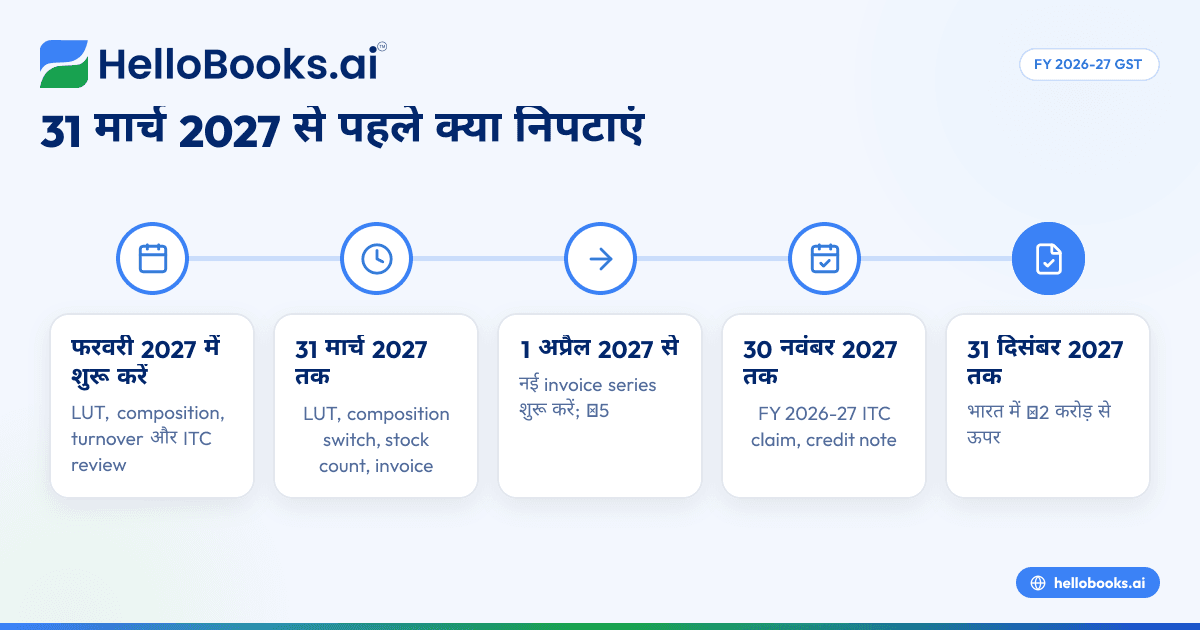

Key takeaways
What this article covers, in order:
- 31 मार्च की rush में GST का असली year-end क्या होता है
- GSTR-2B, purchase bills और ITC की सफाई अभी करें
- sales register को GST portal logic से मिलाइए, सिर्फ revenue से नहीं
- stock count का असर सिर्फ accounts पर नहीं, GST पर भी पड़ सकता है
- April से पहले अगले FY की invoicing और e-invoice readiness तय करें
- bank statement, UPI receipts और books का year-end मिलान
भारत में 31 मार्च से पहले GST year-end बंद करने का सही तरीका यह है: अपने GSTIN-वार sales और purchase data मिलाइए, GSTR-2B से ITC reconcile कीजिए, stock count के असर को books और GST दोनों में दर्ज कीजिए, credit/debit notes और place-of-supply errors साफ कीजिए, और 1 अप्रैल से लागू होने वाली e-invoice, e-way bill, invoice series और filing setup की तैयारी पूरी कीजिए। किसी भी rate, threshold या due date के लिए Central Goods and Services Tax Act, 2017, उसके Rules, और CBIC/GSTN पर published current figures ही मानें।
31 मार्च की rush में GST का असली year-end क्या होता है
बहुत से business owners year-end को सिर्फ profit, stock और auditor की checklist समझते हैं। लेकिन India में GST year-end अलग वजह से sensitive होता है: books, GST portal, bank receipts, supplier filings और physical stock — ये पांचों अगर एक-दूसरे से नहीं मिले, तो अप्रैल में GSTR-1 और GSTR-3B भरना सिर्फ compliance नहीं, damage control बन जाता है।
31 मार्च पर हर काम की legal deadline नहीं होती। फिर भी practical reality यह है कि financial year cut-off के बाद correction मुश्किल हो जाती है, क्योंकि staff को transaction context याद नहीं रहता, supplier जवाब देने में देर करते हैं, और Tally या spreadsheets में back-dated clean-up risk बढ़ा देता है। इसीलिए March close को “GST hygiene window” की तरह treat करना बेहतर है।
अगर आप multiple states में काम करते हैं, तो PAN level turnover समझना अलग बात है और GSTIN-wise return accuracy अलग। यही जगह है जहाँ अलग-अलग GSTIN का sales mix, IGST बनाम CGST/SGST split, और e-way bill trail साथ देखकर closing करना चाहिए। HelloBooks में multi-GSTIN books एक login से संभलते हैं, इसलिए state-wise data अलग रखते हुए consolidated picture निकालना आसान रहता है.
GSTR-2B, purchase bills और ITC की सफाई अभी करें
Year-end के समय सबसे ज्यादा leakage input tax credit में दिखता है। कानून के लिए governing framework Central Goods and Services Tax Act, 2017 और संबंधित Rules हैं; operational matching data GSTN के auto-drafted statements जैसे GSTR-2A/2B और GST portal पर दिखता है। कौन-सा ITC कब और किन conditions पर admissible है, उसकी current position CBIC notifications, circulars और GST portal guidance में verify करनी चाहिए.
March close से पहले कम-से-कम ये checks करें:
- books में दर्ज purchase bills GSTR-2B में दिख रहे हैं या नहीं
- supplier ने सही GSTIN, invoice number और taxable value report की है या नहीं
- reverse charge वाले inward supplies गलती से normal ITC की तरह तो नहीं लिए गए
- blocked credit items गलती से claim bucket में तो नहीं पड़े
- जिन bills पर TDS या commercial deduction हुआ है, उनकी net payment और GST treatment books में match हो रही है या नहीं
कई Indian businesses में supplier bill WhatsApp PDF, email attachment और physical paper तीनों रूप में आता है। यहीं गलती शुरू होती है: bill OCR से books में डाल दिया, लेकिन supplier ने GSTR-1 गलत डाली; या books में invoice date अलग, portal पर अलग। HelloBooks purchase bills को OCR से capture करके GSTR-2A/2B reconciliation और ITC tracking के साथ दिखा सकता है, जिससे missing, mismatched और duplicate bills जल्दी पकड़ में आते हैं.
एक illustrative और invented स्थिति लें: मान लीजिए आपकी books में एक supplier का purchase bill ₹1,18,000 दिख रहा है, जिसमें taxable value और GST components भी दर्ज हैं, लेकिन वही invoice March तक GSTR-2B में नहीं दिखता। यह सिर्फ illustration है; actual eligibility invoice facts, supplier filing, section conditions और CBIC/GSTN records पर depend करेगी, और freight, discounts, reverse charge या blocked credit जैसी बातें इसमें शामिल नहीं हैं। ऐसी स्थिति में safest move यह है कि supplier से corrected filing का follow-up अभी करें, April या audit season तक न टालें.
sales register को GST portal logic से मिलाइए, सिर्फ revenue से नहीं
Year-end review में सिर्फ turnover total देखना काफी नहीं होता। आपको sales register को उसी logic से पढ़ना होता है जिस logic से GSTR-1 बनती है: B2B, B2C, exports, debit notes, credit notes, exempt, nil-rated, advances जहाँ relevant हों, और place of supply की correctness.
India में inter-state और intra-state classification की गलती बहुत common है। इसका legal basis Integrated Goods and Services Tax Act, 2017 और Central Goods and Services Tax Act, 2017 में place-of-supply provisions और tax head treatment से आता है; current guidance CBIC और GST portal documentation में verify करें। अगर customer का GSTIN Karnataka का है लेकिन goods delivery Maharashtra में हुई, या billing और dispatch states अलग हैं, तो सिर्फ party master देखकर invoice बनाना खतरनाक हो सकता है.
यहीं year-end पर ये देखें:
- कहीं IGST की जगह CGST/SGST तो नहीं लगा
- customer GSTIN valid था या नहीं
- B2B sale गलती से B2C bucket में तो नहीं चली गई
- export invoice में shipping/billing references consistent हैं या नहीं
- credit note उस original invoice trail से जुड़ा है या नहीं
- e-invoice applicable business में हर relevant B2B invoice का IRN trail मौजूद है या नहीं
HelloBooks invoice बनाते समय place-of-supply और tax head split को साथ में संभालता है, इसलिए inter-state बनाम local tax head errors कम होते हैं। अगर आपकी category में e-invoice लागू होती है, तो IRN और signed QR वाले documents save time पर generate करने से portal JSON upload की अलग manual प्रक्रिया का risk घटता है। current applicability threshold या reporting timelines के लिए CBIC notifications और NIC/GSTN e-invoice portal पर published figures देखें.
stock count का असर सिर्फ accounts पर नहीं, GST पर भी पड़ सकता है
31 मार्च के आसपास physical stock count एक accounting ritual नहीं है; कई cases में इसका GST impact भी निकलता है। CGST Act, 2017 और Input Tax Credit rules के तहत lost, stolen, destroyed, written-off या gift/sample treatment वाले stock पर अलग implications हो सकते हैं। लेकिन exact tax treatment facts पर depend करता है, इसलिए current law position CBIC circulars, notifications और GST portal guidance से verify करनी चाहिए.
Indian trading businesses में stock issues अक्सर तीन sources से आते हैं:
- godown count books से कम निकलता है
- damaged inventory months से पड़ी थी, लेकिन write-off अब किया जा रहा है
- branch transfer, sample issue या job-work movement की documentation अधूरी है
अगर stock register और purchase register synchronize नहीं हैं, तो closing stock inflated या understated दिख सकता है। इसका असर profit पर भी पड़ेगा और ITC review पर भी। HelloBooks inventory management को sales और purchases के साथ जोड़कर रखता है, इसलिए year-end पर separate handwritten register और accounting file के बीच gap कम होता है.
एक illustrative और invented स्थिति देखें: मान लीजिए books के मुताबिक 500 units होने चाहिए थे, लेकिन physical count में 472 units मिले। प्रति unit purchase cost illustrative रूप से ₹250 मान लें। यह illustration invented है; इसमें normal wastage policy, insurance claim, scrap recovery, valuation method, section-wise ITC rules और industry-specific treatment शामिल नहीं हैं। ऐसे gap का मतलब सिर्फ “stock कम है” नहीं, बल्कि यह भी हो सकता है कि कुछ inward bills गलत quantity से booked हुए हों, कुछ outward entries late हों, या कुछ items damaged/write-off category में हों। GST impact निकालने से पहले transaction trail साफ करें.
April से पहले अगले FY की invoicing और e-invoice readiness तय करें
बहुत सी firms year-end पर FY close तो कर देती हैं, लेकिन 1 April की सुबह वही पुरानी invoice series, वही masters और वही broken workflow चल रहा होता है। इससे first-week compliance errors बनते हैं, खासकर जब business turnover, state expansion, customer mix या e-invoice applicability में बदलाव आया हो। e-invoicing का framework Goods and Services Tax law के तहत notified system से चलता है; current thresholds, document classes और validation rules CBIC notifications तथा NIC/GSTN e-invoice portal पर published रहते हैं.
1 अप्रैल से पहले practical setup यह होना चाहिए:
- नई financial year की invoice series clearly defined हो
- HSN/SAC mapping reviewed हो
- customer masters में GSTIN, state code और place-of-supply defaults verify हों
- transporter और vehicle detail workflow तैयार हो जहाँ e-way bill relevant है
- branch/warehouse transfers का document trail standardized हो
- users को पता हो कि कौन-सा document normal invoice है और कहाँ IRN जरूरी है
अगर goods movement regular है, तो e-way bill readiness को invoicing से अलग मत रखिए। अलग-अलग teams invoice और transport document बनाती हैं तो mismatch बढ़ता है। HelloBooks में invoice से e-way bill raise करने का flow duplicate typing घटाता है, इसलिए consignment details बार-बार भरने की जरूरत कम पड़ती है। e-way bill rules, value conditions और state-specific operational nuances के लिए CBIC framework और official e-way bill system पर current guidance देखें.
bank statement, UPI receipts और books का year-end मिलान
GST errors अक्सर tax invoice में नहीं, money trail में मिलते हैं। India में UPI, NEFT, RTGS और IMPS के कारण receipts fast आती हैं, पर narration messy होती है। March के अंत में unpaid invoice, part-payment, advance adjustment और duplicate receipt की समस्या ज्यादा दिखती है.
यह GST के लिए क्यों जरूरी है? क्योंकि books का sales realization trail, customer ledger, credit note settlement और outward tax reporting एक-दूसरे से जुड़े हैं। अगर revenue books में booked है लेकिन पैसा किसी दूसरे customer ledger में knock-off हो गया, तो ageing, follow-up और sometimes return classification तक गड़बड़ा जाती है.
Year-end पर bank reconciliation में ये देखें:
- March के receipts सही invoices से tagged हैं या नहीं
- advances को final invoices से adjust किया गया या नहीं
- refunds और reversals customer ledger में reflect हुए या नहीं
- bank charges, payment gateway deductions या commercial settlements gross/net confusion तो नहीं बना रहे
- cash, bank और UPI collections का cut-off same date logic से हुआ या नहीं
HelloBooks में monthly bank statement upload करके AI reconciliation करने से March की लंबी bank entries को invoices से match करना तेज होता है। live feed की जरूरत के बिना uploaded statement पर काम हो जाता है, जो Indian SMEs के लिए practical है जहाँ एक ही महीने में UPI, NEFT, IMPS और cheque collections mixed रहते हैं.
Tally, branch books और CA review के बीच एक clean closing file बनाइए
कई Indian businesses pure software stack पर नहीं चलते। billing कहीं और, accounts Tally में, stock Excel में, और GST working CA office में होती है। year-end पर यही fragmentation सबसे महंगी पड़ती है। अगर आपकी core books अभी Tally में हैं, तो closing के समय कम-से-कम यह तय करें कि source of truth क्या है: sales register, purchase register, stock report, bank book और GST workings किस file/system से final मानी जाएँगी।
HelloBooks का Tally migration और connector approach उन teams के लिए useful है जो overnight switch नहीं करना चाहतीं। इसका फायदा year-end में यह है कि आप GST invoicing, reconciliation, reporting और return workflow को tighter बना सकते हैं, जबकि historical books या parallel review Tally context में भी देख सकते हैं।
CA या internal finance team को year-end pack देते समय ये reports निकालकर रखें:
- GSTIN-wise sales summary
- GSTR-1 vs books comparison
- GSTR-3B vs books liability comparison
- GSTR-2B mismatch list
- vendor ageing for unpaid ITC-sensitive bills
- stock summary and adjustments
- receivables ageing
- bank reconciliation summary
इन reports का strength यह है कि GST clean-up और financial close अलग exercises नहीं रहते। HelloBooks के financial reports इसी linked data से निकलते हैं, इसलिए books और GST working के बीच manual rework कम होता है.
एक practical March close routine जो Hindi-speaking owners भी चला सकें
बहुत से owners compliance language से नहीं, business language से काम करते हैं। उन्हें यह नहीं चाहिए कि कोई सिर्फ section numbers सुनाए; उन्हें यह चाहिए कि कौन-सा bill अटका है, कौन-सी receipt unmatched है, और कौन-सा GSTIN issue April में problem बनाएगा। यही वजह है कि year-end checklist usable होनी चाहिए, सिर्फ legally correct नहीं।
एक workable routine यह हो सकता है:
week 1 में purchase bills, OCR capture और GSTR-2B mismatches साफ करें; week 2 में sales register, GSTIN validation, place-of-supply और e-invoice trail देखें; week 3 में stock count, write-off review, e-way bill trail और branch transfers चेक करें; last stretch में bank statement upload, reconciliation, draft GSTR-1/GSTR-3B review और next FY masters lock करें। यह calendar illustrative है, invented planning aid है; actual staffing, document volume, industry rules और statutory deadlines इसमें शामिल नहीं हैं.
अगर owner Hindi या Hinglish में काम करता है, तो WhatsApp पर question-based support practical पड़ता है। HelloBooks का Noor assistant WhatsApp पर Hindi, English और Hinglish में books-related सवालों पर मदद कर सकता है, जिससे छोटे business owners और accountant के बीच year-end follow-up आसान होता है.
किन official sources पर current figures verify करें
क्योंकि rates, thresholds, due dates, penalties, interest और form timelines बदल सकते हैं, किसी भी specific number को memory से operate मत कीजिए। India में current position verify करने के लिए प्राथमिक sources ये हैं:
- Central Goods and Services Tax Act, 2017 और संबंधित Rules
- Integrated Goods and Services Tax Act, 2017 जहाँ place of supply या inter-state treatment relevant हो
- CBIC notifications, circulars और advisories
- GSTN/GST portal पर published return, e-invoice और reconciliation guidance
- e-way bill system और NIC e-invoice system की official documentation
- जहाँ income tax overlap हो, वहाँ Income-tax Act, 1961 और Income Tax Department guidance
HelloBooks के free India tools जैसे GST calculator, GSTIN validator, HSN code search और GST reconciliation checker preliminary checks में मदद कर सकते हैं, लेकिन final legal position हमेशा official source और आपके tax advisor से confirm करें.
HelloBooks के साथ इस checklist को कम manual कैसे रखें
इस तरह के March close में software का काम “feature दिखाना” नहीं, बल्कि double entry of effort हटाना है। अगर invoices सही tax heads के साथ बनें, eligible cases में IRN और signed QR workflow smooth हो, purchase bills OCR से आएँ, GSTR-2A/2B reconciliation live रहे, bank statement upload से receipts match हों, inventory continuously update हो, और GSTR-1 तथा GSTR-3B उसी data से file हों, तो year-end अलग spreadsheet project नहीं बनता।
अगर आप India setup देखना चाहते हैं, तो smart invoicing, e-invoicing software, GST return filing software, bank reconciliation software और inventory pages useful starting points हैं। Product fit या implementation समझने के लिए demo देखें, और plans के लिए /in/pricing पर current details check करें.


