


Key takeaways
What this article covers, in order:
- కొత్తగా GSTIN వచ్చినవారికి GSTR అంటే అసలు ఏమిటి?
- చాలా మందికి మళ్లీ మళ్లీ ఎదురయ్యే returns ఏవి?
- CGST, SGST, IGST ఎప్పుడు వస్తాయి?
- GSTR-2A, GSTR-2B ఎందుకు ముఖ్యం? ITC కోసం ఇది హృదయం
- quarterlyనా, monthlyనా? కొత్త business కి నిజంగా తెలుసుకోవాల్సింది
- ఒక చిన్న కల్పిత పరిస్థితితో అర్థం చేసుకుందాం
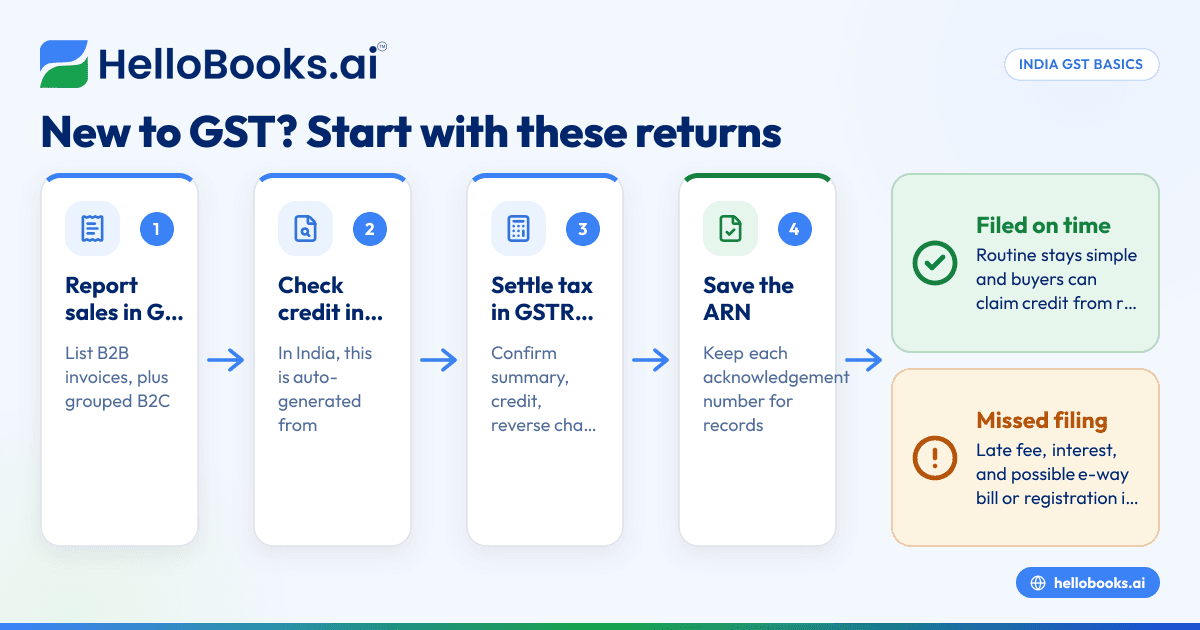
Indiaలో GSTR ఫైలింగ్ అంటే మీ GSTINకు సంబంధించిన అమ్మకాలు, కొనుగోళ్లు, input tax credit claim, మరియు చెల్లించాల్సిన GST summary ని GST Portal మీద GSTN వ్యవస్థ ద్వారా సమర్పించడం. కొత్తగా GST registration తీసుకున్న చాలా regular taxpayers కి రోజూ ఎదురయ్యేవి ప్రధానంగా GSTR-1, GSTR-3B. ఏ return మీకు వర్తిస్తుంది, invoice ఎలా వేయాలి, CGST/SGST లేదా IGST ఎప్పుడు పడుతుంది, GSTR-2B ఎందుకు చూడాలి అన్నదే మొదట అర్థమైతే filing అంత భయంకరం కాదు.
కొత్తగా GSTIN వచ్చినవారికి GSTR అంటే అసలు ఏమిటి?
GSTR అంటే Goods and Services Tax return. ఇది ఒకే ఒక్క form కాదు; GST చట్టం కింద వేర్వేరు అవసరాల కోసం వేర్వేరు returns ఉంటాయి. కానీ కొత్తగా registration తీసుకున్న ఒక సాధారణ వ్యాపారి, service provider, freelancer, agency, shop, trader — వీరిలో చాలామందికి మొదట అవసరమయ్యేది రెండు పనులు మాత్రమే:
- sales ని సరిగ్గా record చేయడం
- ఆ figures మీద ఆధారపడి return submit చేయడం
GST భారతదేశంలో Central Goods and Services Tax Act, 2017, State Goods and Services Tax Acts, మరియు Integrated Goods and Services Tax Act, 2017 కింద నడుస్తుంది. దీని పరిపాలనలో CBIC (Central Board of Indirect Taxes and Customs), state GST authorities, మరియు technology backbone గా GSTN ఉంటాయి. filing rules, current formats, advisories, enabled features, due schedules వంటి తాజా వివరాలు GST Portal మరియు CBIC notifications లో ప్రచురించబడతాయి. ఏదైనా ప్రస్తుత సంఖ్య, తేదీ, turnover condition, లేదా late fee గురించి నిర్ణయం తీసుకునే ముందు అక్కడి official publication చూడాలి.
చాలా మందికి మళ్లీ మళ్లీ ఎదురయ్యే returns ఏవి?
కొత్త taxpayer కి అన్ని forms గుర్తుపెట్టుకోవాల్సిన అవసరం లేదు. regular scheme లో ఉన్న చాలా businesses కి recurring compliance దృష్టిలో ముఖ్యమైనవి ఇవి:
GSTR-1
ఇది outward supplies return — అంటే మీరు చేసిన taxable sales, credit notes, debit notes, B2B invoice details, కొన్ని B2C summaries వంటి సమాచారం ఇక్కడికి వెళ్తుంది. మీ customer registered person అయితే, అతని GSTINతో report చేసిన invoice అతని GSTR-2A/2B మీద ప్రభావం చూపుతుంది. అందుకే GSTR-1 కేవలం “governmentకి report” మాత్రమే కాదు; మీ buyer యొక్క ITC chain లో ఇది భాగం.
GSTR-3B
ఇది summary return. outward tax liability, eligible ITC, reverse charge impact, tax payment summary వంటి అంశాలు ఇందులో ఉంటాయి. సాధారణంగా business owner కి “ఎంత pay చేయాలి?” అనే practical ప్రశ్నకు సమాధానం ఇక్కడే వస్తుంది.
కొత్తవాళ్లు ఒక ముఖ్యమైన విషయం గుర్తుపెట్టుకోవాలి: GSTR-1 లో report చేసిన sales, GSTR-3Bలో చూపిన liability, booksలోని sales register — ఈ మూడు చాలా దూరంగా వెళ్లిపోతే తర్వాత reconciliation కష్టమవుతుంది.
అందుకే invoicing నుంచే discipline అవసరం. smart invoicing తో invoice సృష్టించే సమయంలో customer GSTIN, place of supply, HSN/SAC, tax head split సరిగ్గా పడితే, తర్వాత return figures కూడా సులభంగా align అవుతాయి.
CGST, SGST, IGST ఎప్పుడు వస్తాయి?
GST filingలో beginners ఎక్కువగా చేసే పొరపాటు return fill సమయంలో కాదు — invoice వేస్తున్నప్పుడు. అదే తర్వాత GSTRలో mismatch గా బయటపడుతుంది.
మూల logic ఏమిటంటే, supply nature బట్టి tax head మారుతుంది:
- intra-state supply అయితే సాధారణంగా CGST + SGST
- inter-state supply అయితే సాధారణంగా IGST
ఇది place of supply rules మీద ఆధారపడుతుంది, ఇవి IGST Act, 2017 లో ఉన్నాయి. వివరమైన current interpretation కోసం CBIC circulars, GST Portal help content, మరియు law text చూడాలి. కొన్ని service transactions, bill-to ship-to situations, exports, SEZ supplies, reverse charge cases లో nuance ఉంటుంది; అందుకే facts-specific review అవసరం.
ఇక్కడ software ఉపయోగపడే చోటు పెద్దది. invoice save చేసే సమయంలో place-of-supply logic బట్టి CGST/SGST లేదా IGST split రావడం వల్ల manual error తగ్గుతుంది. అదే sales register, GSTR-1, financial reports మధ్య consistency ఇస్తుంది. goods movement ఉంటే అదే invoice నుంచి e-way bill software ద్వారా e-way bill raise చేయడం కూడా duplicate typing తగ్గిస్తుంది.
GSTR-2A, GSTR-2B ఎందుకు ముఖ్యం? ITC కోసం ఇది హృదయం
కొత్త GST usersకి ఒక common misunderstanding ఉంటుంది: “నేను purchase bill దగ్గర పెట్టుకున్నా చాలు, credit తీసుకోవచ్చు.” practical worldలో అంత simple కాదు.
supplier మీకు tax invoice ఇచ్చాడంటే సరిపోదు; అతను తన side నుంచి return properly upload చేశాడా లేదా అన్నది కూడా కీలకం అవుతుంది. అందుకే GSTR-2A మరియు GSTR-2B చూడటం అలవాటు కావాలి. ఇవి మీరు file చేసే returns కావు; GSTN auto-generated statements. ITC claim చేసే ముందు, supplier-uploaded data తో మీ purchase register సరిపోతుందా లేదో చూసే reference వీటివే.
ఈ point CGST Act, 2017 లోని input tax credit frameworkతో సంబంధం ఉంది, మరియు current operational guidance GST Portal advisoriesలో కనిపిస్తుంది. eligible ITC rules facts మీద బాగా ఆధారపడతాయి; అందుకే specific claim కోసం CA లేదా tax professional review మంచిది.
OCRతో supplier bills capture చేసి, తర్వాత gst-return-filing-software లో GSTR-2A/2B reconciliation చూడగలిగితే missing invoices ముందుగానే కనిపిస్తాయి. అప్పుడు month-endకి “ఇది 2Bలో లేదే” అనే surprise తక్కువ అవుతుంది.
quarterlyనా, monthlyనా? కొత్త business కి నిజంగా తెలుసుకోవాల్సింది
ప్రతి కొత్త taxpayerకు ఒకే cadence ఉండదు. మీ registration type, scheme, turnover condition, optional scheme selection వంటి అంశాలు matter అవుతాయి. ఉదాహరణకు QRMP వంటి facility మీకు అందుబాటులో ఉందా లేదా అనేది CBIC notifications మరియు GST Portal లోని current eligibility conditions చూసి నిర్ణయించాలి. ఏ turnover cap లేదా frequency గురించి కూడా official source చూసి confirm చేయాలి, ఎందుకంటే ఇవి policy updates తో మారొచ్చు.
ప్రాక్టికల్గా మీరు అడగాల్సిన ప్రశ్నలు ఇవి:
- నేను regular taxpayerనా లేదా compositionనా?
- నా customers B2B ఎక్కువా, B2C ఎక్కువా?
- నా buyers ITC కోసం నా timely reporting మీద ఆధారపడుతున్నారా?
- నెల నెల sales data cleanగా maintain చేయగలనా?
- bank receipts, cash sales, credit notes వెంటనే record అవుతున్నాయా?
మీరు quarterly file చేసే optionకి eligible అయినా, bookkeeping మాత్రం quarterly చేయడం ప్రమాదం. Indiaలో UPI, NEFT, RTGS, IMPS వంటి payment rails ద్వారా receipts వస్తుంటాయి. bank statement upload చేసి AI reconciliation చేస్తే, rupee entries invoiceలతో త్వరగా match అవుతాయి. ఇదే తర్వాత GSTR-3B summaryకి backbone అవుతుంది. దీనికి bank reconciliation software ఉపయోగపడుతుంది.
ఒక చిన్న కల్పిత పరిస్థితితో అర్థం చేసుకుందాం
ఇప్పుడు పూర్తిగా illustrative and invented figures తో ఒక పరిస్థితి చూద్దాం; ఇవి training కోసం మాత్రమే, official tax advice కాదు. current tax rates, eligibility, deadlines, blocked credits, exemptions, reverse charge exceptions, and sector-specific rules ని ఈ illustration పరిగణనలోకి తీసుకోలేదు.
హైదరాబాద్లో ఉన్న ఒక small wholesaler కి ఒక GSTIN ఉందని అనుకుందాం. ఒక నెలలో అతను:
- Telangana లోని registered buyers కి కొన్ని sales చేశాడు
- Karnataka buyer కి ఒక inter-state sale చేశాడు
- suppliers నుంచి purchase bills తీసుకున్నాడు
- అన్ని receipts bankలోకి వచ్చాయి, కొన్నింటి payments UPI ద్వారా settled అయ్యాయి
ఇప్పుడు అతను booksలో entries ఇలా సరిచూస్తాడు:
- local sales invoiceలపై place of supply Telangana అయితే CGST/SGST split
- Karnataka customer invoiceపై IGST
- purchase billsలో supplier GSTIN, invoice number, tax amount, date capture
- month-endలో bank statement upload చేసి receipts match
- తర్వాత GSTR-2Bతో supplier-uploaded purchase data compare
Suppose, పూర్తిగా invented illustrationగా, అతని outward liability rupee termsలో ₹1,20,000లా కనిపించింది, inward eligible credit ₹70,000లా కనిపించింది, ఇంకా ఒక supplier bill GSTR-2Bలో కనబడకపోవడంతో ₹10,000 credit hold చేశాడు అని ఊహిద్దాం. అప్పుడు working liability illustration ప్రకారం ₹50,000లా కనిపించవచ్చు; కానీ ఆ missing bill వెంటనే claim చేయొచ్చా, later claim చేయాలా, blocked creditనా, reverse charge ఉందా వంటి విషయాలు facts మరియు current law మీద ఆధారపడతాయి — NEEDS EXPERT REVIEW.
ఈ illustration నుంచి beginner నేర్చుకోవాల్సింది ఒకటే: invoice entry, purchase capture, 2B check, bank reconciliation — ఇవన్నీ కలిసి పని చేస్తే GSTR filing clear అవుతుంది.
e-invoice, IRN, signed QR, e-way bill — ఇవి GSTRకి ఎలా కలుస్తాయి?
ప్రతి taxpayerకి e-invoice వర్తించదు. eligibility threshold, notified class, exemptions వంటి current criteria CBIC notifications మరియు GST Portal లో ప్రచురించబడతాయి. అందుకే “నాకు e-invoicing తప్పనిసరిగా ఉందా?” అన్న ప్రశ్నకు తాజా official source చూసి నిర్ణయించాలి.
అయితే concept beginnersకి అర్థం కావాలి:
- e-invoice అంటే invoiceని ఒక notified system ద్వారా report చేసి IRN generate చేయడం
- signed QR ఉన్న invoice data తర్వాత GST reporting consistencyకి సహాయపడుతుంది
- goods movement ఉంటే e-way bill అవసరం వచ్చి ఉండొచ్చు; దాని rules కూడా CBIC/GST system publicationsలో చూసుకోవాలి
మీ business e-invoicing scopeలో ఉంటే, invoice save చేసే సమయంలోనే IRN మరియు signed QR రావడం manual portal work తగ్గిస్తుంది. అలాగే movement ఉన్న consignments కి invoice నుంచి e-way bill raise చేయడం practical relief. ఈ flow e-invoicing-software మరియు smart invoicing లో కలిసిపోతే sales team, accounts team, CA మధ్య coordination సులభమవుతుంది.
books మరియు returns వేర్వేరుగా నడిపితే ఏ సమస్యలు వస్తాయి?
Indiaలో చాలా చిన్న businesses ఇప్పటికీ మూడు చోట్ల data ఉంచుతాయి:
- invoice book లేదా Excel
- bank entries వేరే sheetలో
- return figures CAకి WhatsAppలో లేదా tally notesలో
అక్కడే mismatch మొదలవుతుంది.
ఒక invoice booksలో ఉంది కానీ GSTR-1కి వెళ్లలేదు.
ఒక purchase bill OCR లేకపోవడంతో entry మిస్ అయింది.
ఒక receipt UPIలో వచ్చింది కానీ customer outstanding తగ్గలేదు.
ఒక inter-state saleని పొరపాటున local saleగా పెట్టారు.
ఇవన్నీ చివరికి:
- customer ledger తప్పు
- receivables ageing తప్పు
- stock valuation తప్పు
- GSTR-3B summary confusing
- CA review slow
ఇది టెక్నాలజీతో సులభంగా సరిచేయగల భాగం. inventory ఉన్న business అయితే invoiceతో stock move కావాలి; లేకపోతే closing stock మరియు GST books disconnect అవుతాయి. Tally నుంచి మారాలని లేదా parallelగా trial చేయాలని అనుకునేవారికి tally-alternative లేదా Tally connector practical bridge అవుతుంది. multiple statesలో GSTINలు ఉంటే ఒక loginలో separate GSTIN-wise work చేయడం కూడా useful, ముఖ్యంగా branch operations ఉన్నప్పుడు.
beginnerకి మొదటి మూడు నెలల్లో పెట్టుకోవాల్సిన routine
GSTR filing నేర్చుకోవడం అంటే form fields మైండ్లో పెట్టుకోవడం కాదు; ఒక repeatable routine build చేయడం.
మంచి routine ఇలా ఉంటుంది:
- sale జరిగిన రోజే tax invoice issue చేయడం
- customer GSTIN validate చేయడం
- place of supply సరిచూడడం
- purchase bills photo లేదా PDF నుంచి capture చేయడం
- bank statement upload చేసి receipts/payments reconcile చేయడం
- month closeకి ముందు 2B mismatchలు చూడడం
- return submit చేసే ముందు books vs liability cross-check చేయడం
ఈ routineలో owner, accountant, CA ముగ్గురూ ఒకే numbers చూస్తే best. mobile నుంచి invoice లేదా expense add చేయగలగడం field businessesకి ఉపయోగం. Noor assistant WhatsAppలో Hindi, English, Hinglishలో books-related queriesకి సహాయపడటం కొన్ని ownersకి comfortable workflow ఇస్తుంది, కానీ return file చేయడానికి core discipline మాత్రం entries qualityపైనే ఆధారపడి ఉంటుంది.
HelloBooks ఈ ప్రక్రియలో ఎక్కడ నిజంగా ఉపయోపడుతుంది?
GSTR filing articleలో relevance ఉన్నంతవరకే చెప్పాలంటే, HelloBooks invoice stage నుంచే GST logic ని cleanగా ఉంచడంలో సహాయపడుతుంది. customer GSTIN, HSN/SAC, place of supply, CGST/SGST లేదా IGST split సరిగ్గా invoiceలో పడితే తర్వాత GSTR-1 figures less messy అవుతాయి. business e-invoice scopeలో ఉంటే IRN, signed QR workflow practical benefit ఇస్తుంది. goods movement ఉంటే e-way bill అదే invoice నుంచి raise చేయడం typing తగ్గిస్తుంది.
return timeకి, recorded invoices ఆధారంగా GSTR-1 మరియు GSTR-3B prepare చేసి direct filing చేయగలగడం manual compilation effort తగ్గిస్తుంది. purchase sideలో OCRతో bills capture చేసి GSTR-2A/2B reconciliation ద్వారా ITC tracking చూడడం useful. bank statement upload చేసి AI reconciliation చేయడం వల్ల UPI, NEFT, IMPS, RTGS receipts booksలో త్వరగా settle అవుతాయి. inventory, receivables, financial reports కూడా అదే entries నుంచి రావడం వల్ల GST numbers మరియు books numbers మధ్య gap తగ్గుతుంది.
India-specific tools కావాలంటే gstin validator, gst reconciliation checker, gst calculator వంటి free tools quick checksకి ఉపయోగపడతాయి. HelloBooks India setup గురించి మరింత చూడాలంటే accounting software india, in, లేదా pricing details కోసం /in/pricing చూడొచ్చు.
చివరిగా: beginnerకి నిజంగా గుర్తుంచుకోవాల్సింది
GSTR filing అంటే form భయం కాదు; data discipline. Indiaలో GST compliance ని సులభంగా చూడాలంటే ఈ క్రమం గుర్తుంచుకోండి: సరైన invoice, సరైన tax head, సరైన purchase capture, GSTR-2B check, bank reconciliation, ఆ తర్వాత return filing. CBIC, GSTN, GST Portal ప్రచురించే current rulesే final reference. CGST Act, IGST Act, SGST law framework అర్థమైతే confusion తగ్గుతుంది. సంఖ్య, deadline, threshold, లేదా ITC eligibilityపై doubt ఉంటే official source verify చేసి, అవసరమైతే expert review తీసుకోవడం safest route.


