


Key takeaways
What this article covers, in order:
- GSTR filing નો સાચો અર્થ શું છે?
- નવા regular taxpayer માટે સામાન્ય રીતે કયા return કેન્દ્રમાં રહે છે?
- GSTR filing ને invoice entry થી અલગ સમજો નહીં
- GST portal પર return ફાઇલ કરવું એટલે શું શું reconcile કરવું પડે?
- QRMP, monthly view અને શરૂઆત કરનારની ગૂંચવણ
- એક કલ્પિત પરંતુ ઇમાનદાર દૃશ્યથી સમજીએ
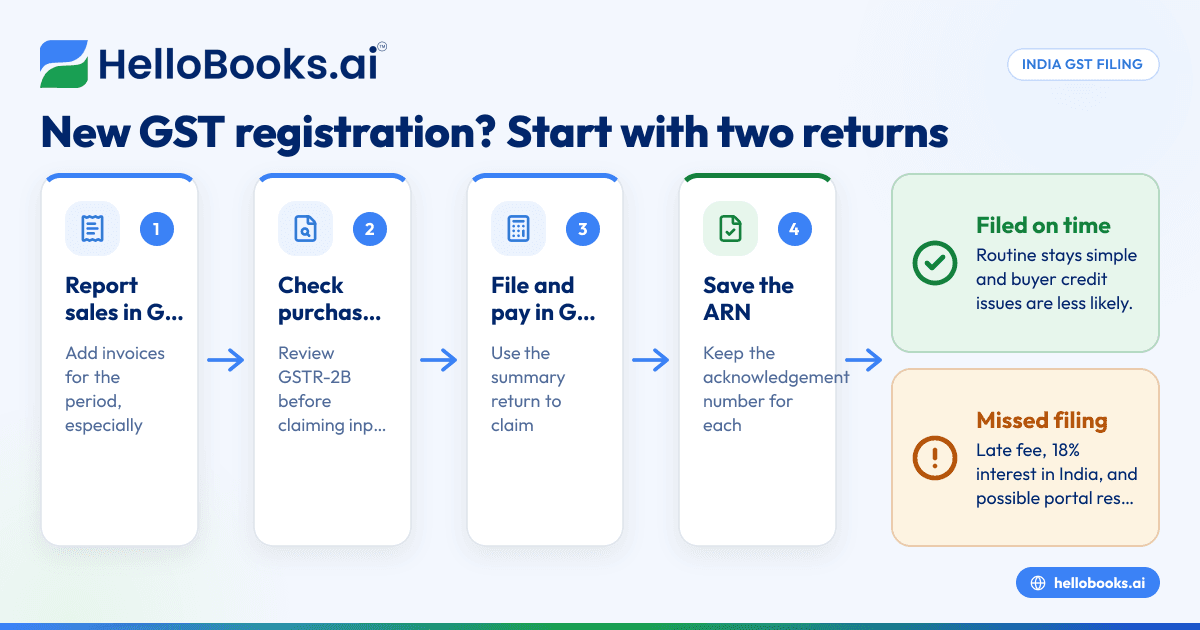
India માં GSTR filing નો સીધો અર્થ એ છે કે તમે GST law હેઠળ તમારી outward supplies, tax liability અને input tax credit વિશેની માહિતી GST portal પર GSTN સિસ્ટમ મારફતે રિપોર્ટ કરો. નવા GSTIN ધરાવતા મોટા ભાગના regular taxpayers માટે રોજબરોજમાં મુખ્ય ધ્યાન GSTR-1 અને GSTR-3B પર રહે છે. હાલના due dates, late fee, interest, eligibility અને filing frequency જેવી વિગતો Central Goods and Services Tax Act, 2017, સંબંધિત Rules, અને CBIC તથા GST Portal પર પ્રસિદ્ધ સર્ક્યુલર/નોટિફિકેશનમાં ચકાસવી જોઈએ.
GSTR filing નો સાચો અર્થ શું છે?
GSTR filing એટલે માત્ર “એક ફોર્મ અપલોડ કરવું” નહીં. ભારતમાં GST હેઠળ તમે જે invoice કાપો, purchase bill મેળવો, advance લો, debit note અથવા credit note બનાવો, interstate supply કરો, intrastate supply કરો, reverse charge લાગુ પડે તેવી ખરીદી કરો—એ બધું આખરે return filing સુધી પહોંચે છે.
સરળ ભાષામાં કહીએ તો:
- GSTR-1 તમારા sales data નું reporting layer છે
- GSTR-3B tax payment અને summary declaration નું layer છે
- GSTR-2A/2B તમને supplier side પરથી દેખાતી ITC position સમજવામાં મદદ કરે છે
આ માળખું Central Goods and Services Tax Act, 2017, Integrated Goods and Services Tax Act, 2017 અને સંબંધિત Rules હેઠળ ચાલે છે. GST network infrastructure GSTN ચલાવે છે, જ્યારે policy અને administration માટે CBIC કેન્દ્રિય સ્તરે મુખ્ય regulator છે. State GST authorities પણ CGST/SGST administration માં ભાગ ભજવે છે.
નવા business owner માટે હકીકતમાં મુશ્કેલી return ના નામમાં નથી; મુશ્કેલી એમાં છે કે invoice બનાવતી વખતે place of supply, GSTIN, HSN/SAC, tax head split, e-invoice અથવા e-way bill જેવી બાબતો સાચી રાખવી પડે. return તો પછી એ જ data નો પરિપૂર્ણ હિસાબ બને છે.
નવા regular taxpayer માટે સામાન્ય રીતે કયા return કેન્દ્રમાં રહે છે?
જો તમે regular GST registration હેઠળ છો—માને trader, service provider, small manufacturer, agency, consultant, wholesaler, retailer અથવા online/offline વેચાણ કરતો business—તો રોજિંદા compliance માં બે return સૌથી વધુ મહત્વના રહે છે: GSTR-1 અને GSTR-3B.
GSTR-1 શું કરે છે?
GSTR-1 માં outward supplies રિપોર્ટ થાય છે. એટલે કે:
- B2B invoices
- B2C sales ના સંબંધિત summary figures
- credit notes / debit notes
- export supplies, જો લાગુ પડે
- કેટલાક અન્ય outward supply categories
જો B2B customer ને આપેલો invoice અહીં સાચો ન દર્શાવો, તો સામે પક્ષની ITC reconciliation પર અસર પડે છે. એટલે GSTR-1 માત્ર “તમારો return” નથી; ઘણી વખત તમારા customer ના books, ITC claim અને vendor follow-up નો આધાર પણ એ બને છે.
GSTR-3B શું કરે છે?
GSTR-3B summary return છે જેમાં સામાન્ય રીતે tax liability, eligible ITC, exempt/nil/non-GST classification, reverse charge જેવી વિગતો આવે છે, અને net payable tax set-off પછી ચૂકવાય છે. payment aspect અહીં કેન્દ્રમાં હોય છે.
હાલના tax payment rules, utilisation sequence, interest implications, late fee structure અને filing mechanism ની નવીનતમ સ્થિતિ CBIC notifications, CGST Rules, અને GST Portal help content માં તપાસવી જરૂરી છે.
GSTR filing ને invoice entry થી અલગ સમજો નહીં
ઘણા નવા taxpayers માને છે કે “પહેલા મહિના ના અંતે return ફાઇલ કરી દઈશું.” પરંતુ India માં GST compliance invoice ના દિવસે શરૂ થાય છે, return ના દિવસે નહીં.
જો invoice કાપતી વખતે જ તમે આ પ્રશ્નોનો યોગ્ય જવાબ ન આપો, તો પછી return સમયે ગડબડ થાય છે:
- customer નું GSTIN સાચું છે?
- supply Gujarat અંદર છે કે interstate છે?
- એટલે CGST+SGST લાગશે કે IGST?
- HSN/SAC યોગ્ય છે?
- bill-to / ship-to case છે?
- goods માટે e-way bill લાગુ પડે છે?
- turnover મુજબ e-invoice with IRN અને signed QR લાગુ પડે છે?
આ કારણથી bookkeeping, invoicing અને GSTR filing એક જ સતત પ્રક્રિયા છે. invoice ખોટું, તો return પણ ખોટું.
અહીં software ની મદદ વાસ્તવમાં invoice ના stage પર શરૂ થવી જોઈએ. HelloBooks માં GST invoice બનાવતી વખતે customer GSTIN, place of supply અને tax head split પરથી CGST/SGST કે IGST યોગ્ય રીતે ગોઠવાય, જેથી પછી GSTR-1 અને GSTR-3B direct filing કરતી વખતે data mismatch ઓછો રહે. જો business પર e-invoicing લાગુ પડતું હોય, તો IRN અને signed QR સાથે invoice workflow વધુ ગોઠવાયેલો બને છે.
વધુ માટે GST invoicing અને GST return filing વિશે જોઈ શકો.
GST portal પર return ફાઇલ કરવું એટલે શું શું reconcile કરવું પડે?
શરૂઆતમાં લોકોનું ધ્યાન માત્ર “submit” બટન સુધી જ રહે છે. પરંતુ સારો filing cycle નીચેના reconciliations પર ટકેલો હોય છે:
1) Sales register vs GSTR-1
તમારા books માં જે outward supplies છે, એ return માં દેખાવા જોઈએ. missing invoice, duplicate invoice, wrong GSTIN, wrong place of supply—આ બધું અહીં પકડાય છે.
2) Purchase register vs GSTR-2B
supplier એ invoice upload કર્યું છે કે નહીં, credit note reflect થયું છે કે નહીં, ITC claim માટે line item available છે કે નહીં—આ બધું GSTR-2B reconciliation માં જોવું પડે છે.
3) GSTR-1 vs GSTR-3B
sales reported અને tax paid માં અસમંજસ ન રહે તે મહત્વનું છે. ઘણી વખત outward supplies books માં સાચી હોય, પણ summary tax reporting અથવા adjustment ખોટી પડે.
4) Books vs bank receipts/payments
જો bank statement અને books મળતા ન હોય, તો taxable receipt, expense, advance અથવા unrecorded transaction રહી શકે. India માં ઘણા small businesses UPI, NEFT, RTGS, IMPS અને cash મિક્સમાં કામ કરે છે, એટલે bank-side cleanup પણ return readiness નો ભાગ છે.
આ માટે bank statement upload કરીને AI reconciliation કરવાનું કામ ઉપયોગી બને છે. purchase bills માટે OCR થી data capture થાય, તો manual typing ઓછું રહે. supplier invoice books માં છે પણ GSTR-2B માં નથી, કે payment book થયું પણ invoice create નથી—આ પ્રકારના પ્રશ્નો filing પહેલાં જ શોધી શકાય.
આ સંદર્ભે bank reconciliation, AI bookkeeping અને GST reconciliation checker ઉપયોગી થાય છે.
QRMP, monthly view અને શરૂઆત કરનારની ગૂંચવણ
નવા registrants નો સામાન્ય પ્રશ્ન હોય છે: “મારે દર મહિને ફાઇલ કરવું કે quarter માં?” તેનો એકજ સચોટ જવાબ બધાને લાગુ પડતો નથી.
India માં filing frequency અને payment mechanism business ની category, aggregate turnover, option exercised અને લાગુ નોટિફિકેશન પર નિર્ભર રહે છે. આ માટે હાલની eligibility, due structure અને monthly tax payment requirements CBIC notifications અને GST Portal પર ચકાસવી જરૂરી છે.
વ્યવહારમાં તમને આ સમજવું વધારે ઉપયોગી છે:
- invoice તો real time અથવા નિયમિત રીતે જ record થવું જોઈએ
- filing quarterly હોય તો પણ books quarterly ન હોવા જોઈએ
- customer follow-up, supplier ITC, stock movement અને bank matching monthly basis પર જોવું સારું રહે
માને કે return quarterly હોય, તો પણ sales register, purchase bills, e-way bill data, stock movement અને bank statement મહિના પ્રમાણે ગોઠવો. નહીં તો quarter ના અંતે એકસાથે બધું ભેગું થાય અને error વધી જાય.
જો તમે એકથી વધુ state માં GSTIN સાથે કામ કરો, તો multi-GSTIN setup ખાસ જરૂરી બને છે. અલગ GSTIN માટે અલગ outward supplies, stock transfers, place-of-supply issues અને state-wise liability track કરવી પડે. HelloBooks માં એક login હેઠળ multi-GSTIN books અને direct GSTR-1/GSTR-3B filing જેવી બાબતો growing businesses માટે ઉપયોગી બને છે.
એક કલ્પિત પરંતુ ઇમાનદાર દૃશ્યથી સમજીએ
આ આંકડા સંપૂર્ણ illustrative અને invented છે; હાલના tax rates, thresholds, set-off rules, due dates, late fee, interest, e-invoice applicability અથવા e-way bill limits બતાવવા માટે નથી. actual compliance માટે CBIC, GST Portal, GST law અને તમારા CA અથવા tax advisor ની સલાહ જોવી જરૂરી છે. આ ગણતરીમાં sector-specific exemptions, blocked credit, valuation disputes, freight treatment, discounts, export rules અને special cases સામેલ નથી.
માનો Ahmedabad માં એક electrical goods trader પાસે regular GST registration છે. મહિના દરમિયાન તેણે ત્રણ પ્રકારના transaction કર્યા:
- Gujarat અંદર registered dealer ને ₹1,20,000 ની taxable sale
- Maharashtra ના customer ને ₹80,000 ની interstate sale
- local retail customers ને મળીને ₹45,000 ની B2C sale
- suppliers પાસેથી purchase bills મળીને ₹90,000
- bank statement માં UPI અને NEFT receipts દેખાય છે, જેમાંથી એક ₹18,000 receipt books માં record નથી
હવે return readiness માટે શું થાય?
- પ્રથમ sale માં intrastate nature હોય તો tax head split CGST અને SGST માં જવો જોઈએ
- બીજી sale માં place of supply interstate હોય તો IGST head લાગુ પડે
- B2B invoice માટે customer GSTIN સાચું હોવું જોઈએ
- purchases માટે supplier invoices GSTR-2B સાથે મળે છે કે નહીં તે જોવું પડે
- bank reconciliation બતાવે છે કે ₹18,000 ની receipt invoice વિના છે; એ advance છે, omitted invoice છે કે non-GST receipt છે, એ તપાસવું પડે
જો invoice stage પર tax head ખોટો પડ્યો હોય—માને interstate sale પર પણ CGST/SGST charge થયું—તો GSTR-1 માં classification error જશે. જો purchase bill books માં છે પણ supplier એ upload નથી કર્યું, તો ITC claim position અલગ દેખાશે. એટલે filing નો સાચો અર્થ submit કરતાં પહેલાં data structure સાફ કરવો છે.
Gujarat જેવા વેપારી રાજ્યોમાં ખાસ કઈ બાબતો ધ્યાનમાં રાખવી?
Gujarati business ecosystem માં trader, wholesaler, distributor, manufacturer, transporter, textile, chemicals, engineering parts, ceramics, pharma support, job-work અને service firmsનું mix ઘણું મજબૂત છે. આથી GST filing ની practical સમસ્યાઓ થોડું અલગ રૂપ લે છે.
Goods movement અને e-way bill
રાજ્ય અંદર અને રાજ્ય બહાર dispatch વધુ હોય, તો invoice data અને e-way bill data વચ્ચે consistency જરૂરી બને છે. vehicle details, consignee, value અને quantity mismatch થાય તો operational friction વધે છે. invoice માંથી e-way bill raise થાય તો duplicate typing ઓછું થાય છે.
આ માટે e-way bill software જોવો ઉપયોગી રહે છે.
Stock અને GST ને જુદા ન પાડો
ઘણા SMEs inventory અલગ register માં રાખે છે અને GST billing અલગ. પછી closing stock, purchase entry અને outward supply માં તફાવત આવે છે. inventory movement વેચાણ અને ખરીદી સાથે જ link હોય, તો books, GST અને financial reports ત્રણેય વધારે વિશ્વસનીય બને.
Inventory management અને accounting software India જેવા workflows અહીં કામના છે.
Tally થી transition
ઘણા businesses હજુ Tally પર છે, અને CA office પણ એ સાથે પરિચિત હોય છે. પરંતુ return filing, reconciliation અને modern GST workflow માટે parallel system ગોઠવવાની જરૂર પડે છે. Tally migration અથવા connector હોય, તો switch એક જ દિવસે કરવો પડે એવું નથી; વ્યવસાય ધીમે ધીમે shift કરી શકે.
તુલના માટે Tally alternative અને HelloBooks vs Tally જોઈ શકો.
માત્ર return નહિ, records પણ કાયદેસર રીતે ગોઠવો
GST filing નો અર્થ records discipline પણ છે. invoice, debit note, credit note, purchase bill, transport document, payment proof, bank statement, stock record—આ બધું books સાથે જોડાયેલું હોવું જોઈએ. Companies Act, 2013 હેઠળ company entities માટે books of account રાખવાની ફરજ અલગથી આવે છે, જે MCA ની framework હેઠળ ચાલે છે. income recognition, TDS, expense booking અને year-end reporting માટે Income-tax Act, 1961 પણ parallel રીતે સંબંધિત બની શકે.
અટલેકે, GST return “માત્ર indirect tax” છે એવું માનીને books ઢીલા રાખવા યોગ્ય નથી. એક receipt bank માં આવી ગઈ પણ invoice નથી; supplier bill છે પણ GSTIN ખોટો છે; expense છે પણ reverse charge તપાસ્યું નથી; TDS deduct થયું છે પણ bill સામે adjust નથી—આ બધું પછી compliance chain માં અસર કરે છે.
અહીં HelloBooks માં purchase bill OCR, bank statement upload, TDS/TCS અને reverse charge handling, financial reports અને mobile app જેવા ઉપયોગી workflows owners અને accountants ને એક જ data set પરથી કામ કરાવવામાં મદદ કરે છે. WhatsApp પર Hinglish/English/Hindi માં Noor assistant સાથે basic bookkeeping પ્રશ્ન પૂછવાની સગવડ પણ field owner માટે કામની બને છે, ખાસ કરીને જ્યારે owner shop floor, warehouse અથવા travel માં હોય.
નોંધનીય છે કે data protection અને personal data handling માટે India નું DPDP framework broader compliance context નો ભાગ છે, તેથી vendor પસંદ કરતી વખતે operational process, access control અને record discipline વિષે સવાલ પૂછવા યોગ્ય છે.
શરૂઆતમાં તમને શું ગોઠવવું જોઈએ?
નવા GST registration પછી સૌથી યોગ્ય શરૂઆત “કયું return ક્યારે?” કરતાં “મારું system કેવી રીતે સાચું ચાલશે?” એ પ્રશ્નથી થાય છે.
આ પાંચ ગોઠવણીઓ વાસ્તવમાં મહત્વની છે:
- customer master અને GSTIN validation
- item master સાથે HSN/SAC અને tax treatment
- intrastate vs interstate logic માટે place of supply discipline
- purchase bill capture અને GSTR-2B reconciliation habit
- bank statement upload કરીને receipts/payments match કરવાની monthly routine
GSTIN ચકાસવા માટે GSTIN validator કામ આવે છે. tax impact rough-check માટે GST calculator ઉપયોગી થઈ શકે. જો તમે software explore કરો છો, તો India-specific setup માટે HelloBooks India અથવા pricing જોઈ શકો, અને જરૂર હોય તો demo બુક કરી શકો.
GSTR filing ને “એક કામ” નહીં, business operating rhythm માનો
India માં GSTR filing નો સારો અર્થ એ નથી કે તમે deadline ના દિવસે portal માં login કરીને somehow submit કરી દીધું. સારો અર્થ એ છે કે invoiceથી bank સુધી, purchase bill થી ITC સુધી, stock થી outward supply સુધી તમારો record flow ગોઠવાયેલો છે.
નવા taxpayer માટે practical rule આ છે: GSTR-1 અને GSTR-3B ના નામ યાદ રાખવા કરતાં પહેલાં sales, purchases, GSTIN, place of supply, CGST/SGST/IGST split, e-invoice, e-way bill, bank reconciliation અને GSTR-2B match કરવાનું flow સમજો. પછી return filing ડરાવણી બાબત નહીં રહે; તે તમારા books નું સ્વાભાવિક output बनी જાય છે.
હાલના rates, thresholds, due dates, penalties, e-invoice applicability, QRMP eligibility અને statutory instructions માટે હંમેશા CBIC, GST Portal, GSTN advisories અને સંબંધિત GST law/Rules ની નવીનતમ official publication ચકાસો, અને જરૂર પડે ત્યાં qualified GST practitioner અથવા CA ની સલાહ લો.


