


Key takeaways
What this article covers, in order:
- RCM નો અર્થ ખરીદદારે GST ભરવો
- કઈ inward supplies RCM હેઠળ આવતી હોય છે
- GSTR-3B માં RCM ક્યા ટેબલમાં જાય છે
- Registered supplier અને unregistered supplier હોય ત્યારે paperwork શું બદલાય
- Time of supply ખોટો પકડો તો મહિનો ખસી જાય
- ITC ક્યારે અને કેવી રીતે લેવાય
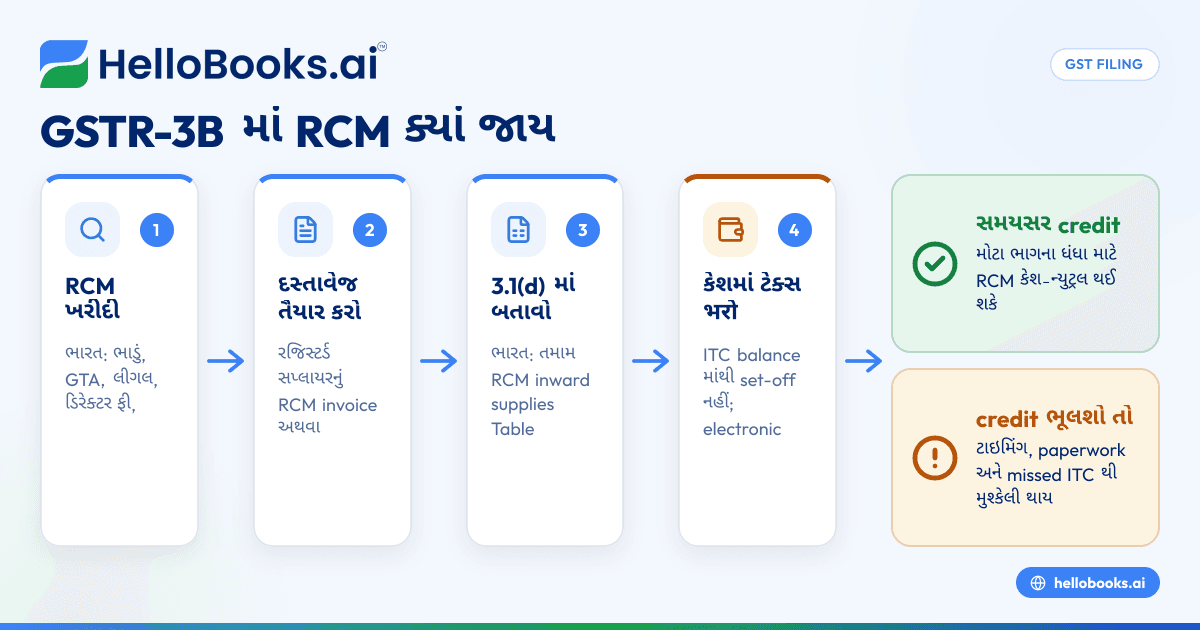
ભારતમાં GSTR-3B માં reverse charge mechanism (RCM) નો મૂળ જવાબ આ છે: RCM હેઠળની inward supply નો ટેક્સ પહેલા GSTR-3B ના Table 3.1(d) માં બતાવવો પડે છે, એ ટેક્સ electronic cash ledgerમાંથી ભરવો પડે છે, અને ખરીદી GST કાયદા હેઠળ ITC માટે લાયક હોય તો પછી ક્રેડિટ Table 4 માં લેવાય છે. Services import હોય તો ITC અલગ જગ્યાએ જાય છે. ગડબડ સૌથી વધારે classification, self-invoice, time of supply અને ITC timing માં થાય છે.
RCM નો અર્થ ખરીદદારે GST ભરવો
સામાન્ય GST મોડેલમાં supplier ટેક્સ વસૂલે છે અને GSTN પર રિટર્ન દ્વારા સરકારને ભરે છે. પરંતુ reverse charge માં liability recipient પર shift થાય છે. ભારતમાં આ framework Central Goods and Services Tax Act, 2017 ના Section 9(3) અને Section 9(4) માં આવે છે; inter-State supplies માટે સમાન વિચાર Integrated Goods and Services Tax Act, 2017 ના Section 5(3) અને Section 5(4) માં છે. Notifications, clarifications અને operative categories Central Board of Indirect Taxes and Customs (CBIC) જાહેર કરે છે, અને compliance GST Portal/GSTN પર થાય છે.
અર્થાત, supplier ના invoice પર GST દેખાતું હોવું જ જરૂરી નથી. ક્યારેક registered supplier invoice પર reverse charge applicable બતાવે છે; ક્યારેક unregistered supplier હોય ત્યારે recipient એ પોતાના records થી liability ઊભી કરવી પડે. એટલે જ RCM એ return-filing કરતાં પણ પહેલા bookkeeping discipline નો વિષય છે.
કઈ inward supplies RCM હેઠળ આવતી હોય છે
બધું જ RCM નથી. કઈ goods અથવા services reverse charge હેઠળ આવે છે તે CBIC ની current notifications માં publish થાય છે, અને specific facts માટે latest notification check કરવી જરૂરી છે. નાના અને મધ્યમ ધંધામાં વારંવાર દેખાતી categoriesમાં સામાન્ય રીતે આ પ્રકારના કેસ જોવા મળે છે:
- goods transport agency (GTA) ની કેટલીક services
- advocate અથવા law firm ની business entity ને services
- company director દ્વારા company ને services
- sponsorship services ના ચોક્કસ કેસ
- security services ના કેટલાક notified કેસ
- registered person દ્વારા કેટલીક property-rental situations
- import of services
- notified goods ના ચોક્કસ કેસ
અહીં બે practical બાબતો ખૂબ મહત્વની છે. પહેલી: trade practice થી નહીં, notification થી નિર્ણય લેવો. બીજું: supplier એ GST charge કર્યો કે નહીં, એટલાથી alone RCM decide ન કરવો. Law, notification wording, supplier status, recipient status, place of supply અને use-case સાથે મળીને conclusion આવે છે.
જો તમારે purchase entry કરતી વેળાએ જ RCM flag સાચું રાખવું હોય, તો accounting software India જેવી systemમાં purchase bills capture કરતી વખતે reverse charge treatment, tax head split અને place-of-supply logic સાચું બેસે તો month-end surprises ઘટે છે. HelloBooks માં purchase bill OCR અને reverse charge handling સાથે entry કરતી વખતે CGST/SGST કે IGST split context પ્રમાણે સાચું રાખવામાં મદદ મળે છે.
GSTR-3B માં RCM ક્યા ટેબલમાં જાય છે
GSTR-3B માં RCM liability reporting નો મૂળ ખાંચો straightforward છે, પણ ITC placement ઘણી વાર mix-up થાય છે.
Table 3.1(d) માં reverse charge ને પાત્ર inward supplies નું taxable value અને tax amount report થાય છે. અહીં liability બતાવવામાં આવે છે.
Cash payment જરૂરી બને છે. RCM liability સામાન્ય ITC balance થી offset થતી નથી; payment electronic cash ledgerમાંથી કરવો પડે છે, subject to the manner provided on the GST Portal under the CGST Rules and portal workflow published by GSTN/CBIC.
ITC claim પછી આવે છે, જો inward supply business use માટે હોય અને blocked credit ના નિયમોમાં અટકતી ન હોય. RCM પર ભરેલો tax eligible હોય તો Table 4 માં credit તરીકે reflect થાય છે. Import of services માટે placement અલગ હોઈ શકે છે, અને current return instructions GST Portal પર publish થાય છે; specific cell mapping માટે latest GSTR-3B instructions જોવી જોઈએ.
જે businesses માસિક books અને GST સાથે reconcile કરે છે, તેઓ માટે return figures invoice register સાથે tie થવી જરૂરી છે. HelloBooks માં GSTR-3B direct filing invoices અને purchase entries પરથી build થાય છે, એટલે manual retyping ઓછું પડે છે અને RCM entries returnમાં છોડાઈ જવાની શક્યતા ઘટે છે.
Registered supplier અને unregistered supplier હોય ત્યારે paperwork શું બદલાય
RCM નો paperwork supplier status પ્રમાણે બદલાય છે.
જ્યારે supplier registered હોય
કેટલાક notified services માં registered supplier tax invoice issue કરે છે અને reverse charge applicability દર્શાવે છે. આવા cases માં recipient પાસે supplier invoice, contract/supporting papers, payment proof અને tax payment trail હોવી જોઈએ. કેટલીક inward supplies GSTR-2A/2B માં reflect થતી હોય શકે, પરંતુ recipient એ blind reliance ન રાખવી. 2B માં દેખાય એટલે claim સદા સાચી જ છે, એવો નિયમ નથી; અને 2B માં ન દેખાય એટલે RCM liability જ નથી, એવો પણ નિયમ નથી.
જ્યારે supplier unregistered હોય
અહીં bookkeeping વધુ મહત્વની બને છે. CGST Act, 2017 ના Section 31 અને સંબંધિત CGST Rules self-invoicing અને payment voucher જેવી requirements નક્કી કરે છે જ્યાં applicable હોય. Current wording, timelines અને document requirements CBIC notifications/rules updates માં publish થાય છે. આવા કેસમાં supplier GST invoice આપતો નથી; recipient પોતે self-invoice બનાવે છે અને payment voucher/supporting note રાખે છે.
આ practical રીતે મહત્વનું છે કારણ કે આવા entries auto-populate થતી નથી. એટલે business પાસે પોતાનું inward register, agreement copy, rent note, transport bill, legal fee memo, import document અથવા other support પૂર્ણ હોવું જોઈએ.
HelloBooks માં supplier bills OCR થી PDF અથવા photo પરથી entry ખેંચીને, reverse charge tag સાથે record રાખી શકાય છે. તેમાં unregistered supplier bills માટે પણ documentation trail જળવાઈ રહે છે, જેથી return બનાવતી વખતે side spreadsheet પર આધાર ઓછો પડે.
Time of supply ખોટો પકડો તો મહિનો ખસી જાય
RCM માં સૌથી સામાન્ય ભૂલ taxable value નહીં, પણ કયા tax period માં liability ઊભી થાય છે એ છે. Reverse charge માટે time-of-supply rules normal forward charge supply કરતાં અલગ હોઈ શકે છે. Goods અને services માટે નિયમો CGST Act, 2017 માં અલગ sections હેઠળ છે, અને detailed interpretation CBIC circulars, notifications, advance rulings અને case facts પરથી બદલાઈ શકે છે.
આથી બે safe principles યાદ રાખવા જેવાં છે:
- invoice date, receipt date અને payment date ત્રણેય preserve કરો
- part-payment, advance, debit note, import arrangement, continuous supply અથવા rental arrangement હોય તો current legal position verify કરો
જો recurring commercial rent, GTA bills અથવા legal retainership હોય, તો month-end closing પહેલાં inward entries bank outflow સાથે match કરવી ખૂબ જરૂરી છે. અહીં bank reconciliation software ઉપયોગી બને છે. HelloBooks માં live bank feed નથી; ભારતમાં bank statement upload કરવામાં આવે છે અને પછી AI reconciliationથી NEFT, RTGS, IMPS અથવા other bank entries purchase bills અને expenses સાથે મેળ ખવડાવવામાં મદદ મળે છે. આ ખાસ કરીને ત્યારે કામ લાગે છે જ્યારે tax team invoice date જોઈ રહી હોય અને owner payment date પરથી કામ કરી રહ્યો હોય.
ITC ક્યારે અને કેવી રીતે લેવાય
RCM પર ભરેલો tax automatic benefit નથી. પહેલા liability discharge કરવી પડે, પછી જ credit claim નો પ્રશ્ન આવે છે, અને credit eligibility માટે regular ITC rules લાગુ પડે છે. Relevant restrictions CGST Act, 2017 ના Section 16 અને blocked credits માટે Section 17(5) માં છે; latest interpretation CBIC circulars, FAQs અને judicial developments થી પ્રભાવિત થઈ શકે છે.
એટલે નીચેની બાબતો ચકાસો:
- inward supply business purpose માટે છે કે નહીં
- document trail પૂરતી છે કે નહીં
- tax actual pay થયો છે કે નહીં
- expense blocked credit category માં તો નથી ને
- import of services છે કે domestic RCM
- books, GSTR-3B અને supporting vouchers match થાય છે કે નહીં
એક practical trap એ છે કે business Table 3.1(d) માં liability તો મૂકી દે છે, પણ Table 4 માં eligible ITC લેવાનું ભૂલી જાય છે. બીજો trap એ છે કે ITC વહેલું લઈ લે છે, payment પહેલાં અથવા wrong period માં. જો તમે regular vendor data સાથે 2A/2B reconciliation ચલાવો છો, તો RCM અને non-RCM purchases અલગ નજરે દેખાવા જોઈએ. HelloBooks માં GST reconciliation checker જેવી utility અને system-level GSTR-2A/2B reconciliation and ITC tracking સાથે missing supplier invoices, claimed ITC અને inward records વચ્ચે gap ઝડપી શકાય છે.
આ આંકડા illustrative અને invented છે: ગણતરીનું logic સમજવા માટે
માનો કે અમદાવાદની એક registered trading firm એ એક મહિને બે inward services લીધી. પહેલી legal service માટે invented taxable value ₹50,000 છે અને બીજી notified transport service માટે invented taxable value ₹30,000 છે. અહીં total taxable value illustrative રીતે ₹80,000 માનીએ. હવે માનીએ કે official GST rate, જે સંબંધિત notification અને CBIC/GST Portal પર publish થાય છે, આ બંને facts માટે illustrative રીતે સમાન રીતે લાગુ પડે છે, અને invented tax amount કુલ ₹14,400 થાય છે. આ માત્ર સમજાવટ માટે બનાવેલો આંકડો છે; actual rate, category, exemption, place of supply, eligibility અને documentation અમે અહીં છોડ્યા છે.
આ સ્થિતિમાં firm GSTR-3B ના Table 3.1(d) માં inward supplies liable to reverse charge report કરશે અને ₹14,400 equivalent liability cash ledgerથી pay કરશે. પછી, જો બંને services business use માટે eligible હોય અને Section 17(5) હેઠળ blocked ન હોય, તો એ જ ₹14,400 ને eligible ITC તરીકે Table 4 માં claim કરી શકશે, subject to current return instructions published on the GST Portal. Cash flow impact એ મહિને real છે, even if credit later available બને. તેથી RCM ને “net zero” માનવાની આદત ખોટી છે; ledger timing મહત્વની છે.
Gujarat અને ભારતના SMEs માં practical friction ક્યાં થાય છે
ગુજરાતમાં ઘણા વેપારીઓ હજુ Tally, Excel, bank statement PDF અને CA-led month-end process સાથે કામ કરે છે. RCM માં મુશ્કેલી ત્યાં થાય છે જ્યાં operations અને accounts વચ્ચે માહિતી અડધી-અધૂરી રહે છે. કેટલાક સામાન્ય friction points આ છે:
- rent agreement accounts સુધી મોડું પહોંચે છે
- GTA bill expense તરીકે book થાય છે, RCM flag વગર
- advocate invoice “professional fees” તરીકે book થાય છે, tax review વગર
- unregistered supplier માટે self-invoice બનાવાતું નથી
- inter-State case માં IGST ની બદલે CGST/SGST split થાય છે
- import of services books માં expense બને છે, GST implication અલગથી વિચારાતો નથી
- cash ledger funding છેલ્લી ઘડીએ થાય છે
અહીં place of supply નું judgment ખાસ મહત્ત્વનું છે. Wrong tax head split થી return mismatch અને later notices બંને આવી શકે. HelloBooks માં purchase અને invoicing context પરથી place-of-supply અને tax head split જાળવી શકાય છે, જેથી local supply માટે CGST/SGST અને inter-State facts માટે IGST treatment consistent રહે. જો outward side પર invoice, smart invoicing, e-invoicing software અને e-way bill software સાથે connected process રાખો, તો books overall cleaner રહે છે—even though RCM inward side નો વિષય છે.
Multi-GSTIN business માટે RCM વધુ સંવેદનશીલ બને છે
જે businesses પાસે એકથી વધુ GSTIN હોય—માનો ગુજરાત અને મહારાષ્ટ્ર બંનેમાં registration—ત્યાં recipient GSTIN કયું છે તે ખોટું પકડાય તો આખું treatment ખસી જાય છે. Place of supply, contract entity, branch payment, expense booking અને ITC claim એક જ state registration પર align હોવા જોઈએ. CGST/SGST સામે IGST નો પ્રશ્ન પણ ત્યાંથી ઊભો થાય છે.
HelloBooks માં multi-GSTIN setup અને unlimited users હોવાથી HO accounts team, branch staff અને CA એક જ system માં અલગ registrations પર inward entries review કરી શકે છે. Tally છોડ્યા વગર પણ transition કરવું હોય તો Tally alternative તરીકે evaluate કરી શકાય છે, અને Tally migration/connector થી old data અને current working વચ્ચે continuity રાખવી સરળ બને છે. જો તમે comparison જોઈ રહ્યા હો, તો HelloBooks vs Tally પણ ઉપયોગી છે.
Return ભરતા પહેલાં આ evidence ready રાખો
RCM માટે perfect file નો અર્થ માત્ર invoice folder નથી. Ideally તમારા પાસે નીચેના categories ના records હોવા જોઈએ:
- supplier invoice, memo અથવા bill copy
- self-invoice જ્યાં applicable હોય
- payment voucher/supporting voucher
- bank statement line proving payment via UPI, NEFT, RTGS અથવા IMPS, as applicable
- agreement, consignment note, legal engagement letter, rent deed અથવા import support
- purchase register entry with RCM flag
- tax payment trail from electronic cash ledger
- ITC claim working paper
જો purchase volume વધારે હોય, તો OCR-based bill capture અને bank statement upload સાથે reconciliation સમય બચાવે છે. HelloBooks માં uploaded bank statement પરથી AI reconciliation થાય છે; Indian bank માટે live feed claim કરવામાં આવતું નથી. Expense documents, purchase bills અને payment entries એક જ flow માં જોડાતા હોવાથી month-end review વધુ audit-friendly બને છે. Inventory-linked businesses માટે inventory પણ મદદરૂપ બને છે, કારણ કે goods movement અને inward tax records વચ્ચે consistency જળવાઈ રહે છે.
Professional review ક્યાં જરૂરી બને છે
કેટલાક RCM પ્રશ્નો article વાંચીને close થતા નથી. નીચેના કેસમાં CA અથવા GST practitioner ની specific advice લો:
- import of services with foreign currency contracts
- mixed supplies અથવા composite supply disputes
- exemption notification overlap
- director remuneration treatment
- real-estate related reverse charge positions
- composition-related edge cases
- old period corrections and DRC exposure NEEDS EXPERT REVIEW
- blocked credit versus business-use disputes
Current rates, thresholds, due dates, return instructions, notification numbers અને operative categories CBIC, GSTN/GST Portal અને relevant Acts/Rules હેઠળ publish થાય છે. કારણ કે આ framework બદલાઈ શકે છે, filing પહેલાં latest official source match કરવું જ જોઈએ.
જ્યાં સુધી software assistance નો પ્રશ્ન છે, RCM સંપૂર્ણપણે automation નો વિષય નથી—judgment તો જોઈએ જ. પણ good system ઘણી manual ભૂલો અટકાવે છે. HelloBooks માં GST invoicing, direct GSTR-1 અને GSTR-3B filing, OCR purchase capture, uploaded bank statement reconciliation, ITC tracking, reverse charge handling, financial reports અને mobile app સાથે owner, accountant અને CA એક જ data set પર કામ કરી શકે છે. If you want to explore fitment for your business in India, demo બુક કરશો અથવા India pricing જુઓ. Free checks માટે GST calculator અને GSTIN validator પણ ઉપયોગી છે.


