Key takeaways
What this article covers, in order:
- Key takeaways
- What are quarterly estimated tax payments?
- When are quarterly estimated tax payments due?
- How do you calculate your quarterly estimated tax?
- What if my income varies throughout the year?
- How do I make quarterly estimated tax payments?
Navigating quarterly estimated tax payments is essential for US freelancers to avoid penalties and manage their tax responsibilities efficiently. These payments are prepayments of income tax made four times a year based on your expected earnings. Understanding how to calculate, schedule, and pay quarterly estimated taxes helps freelancers stay compliant and avoid surprises at tax time.
Key takeaways
- Quarterly estimated tax payments help freelancers avoid underpayment penalties and manage cash flow.
- Payments are made four times per year: April, June, September, and January.
- Estimated tax is based on expected income, self-employment tax, and deductions.
- Use IRS Form 1040-ES to calculate and pay quarterly estimated taxes.
- Underpayment can lead to penalties; filing accurate estimates helps stay compliant.
- Automating calculations and payments with AI quarterly estimated tax tools reduces errors and saves time.
What are quarterly estimated tax payments?
Quarterly estimated taxes are advance payments of tax on income that is not subject to withholding, such as freelance earnings, contract work, or side jobs. Since freelancers do not have employers withholding taxes from paychecks, they must proactively pay the IRS four times a year to avoid large tax bills and penalties when they file their annual tax return.
The payments cover both income tax and self-employment tax, which includes Social Security and Medicare contributions. This method keeps tax obligations spread throughout the year. Understanding your estimated tax amount and deadlines is critical for smooth financial management as a self-employed individual.
When are quarterly estimated tax payments due?
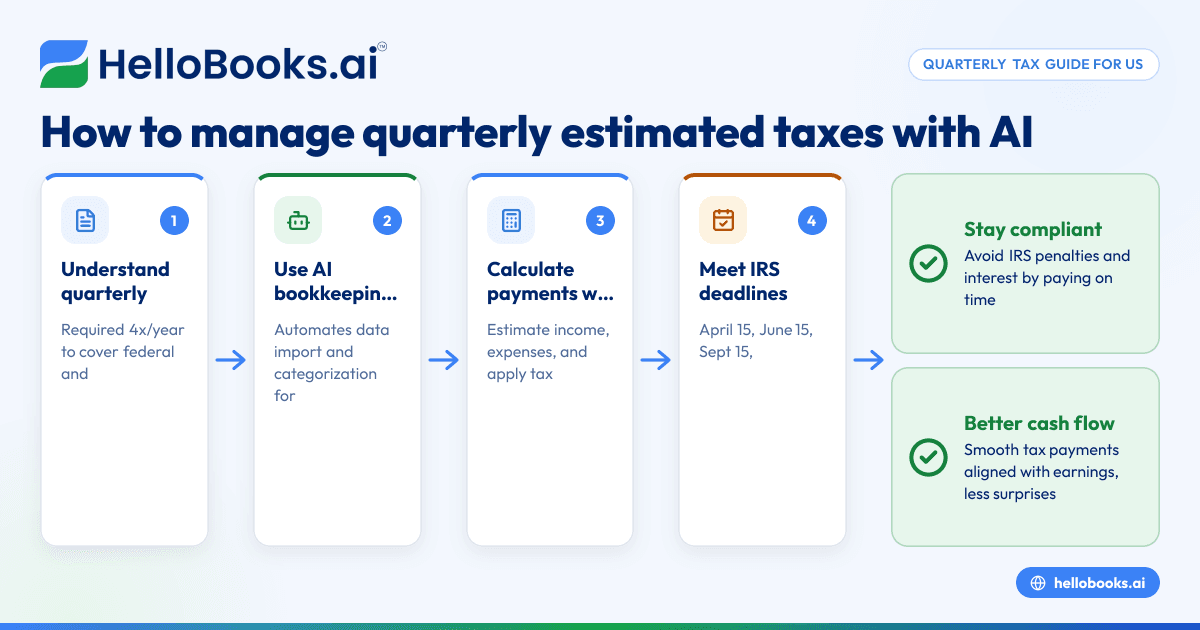
The IRS sets four quarterly estimated tax deadlines every year:
- April 15 – for income earned January 1 through March 31
- June 15 – for income earned April 1 through May 31
- September 15 – for income earned June 1 through August 31
- January 15 (of the following year) – for income earned September 1 through December 31
If these dates fall on a weekend or holiday, the deadline shifts to the next business day. Missing payments can lead to penalties, so mark these dates clearly in your calendar.
How do you calculate your quarterly estimated tax?
Calculating quarterly estimated tax involves estimating your expected income, deductions, and credits for the year, then determining the tax liability based on those figures. Here’s a step-by-step process:
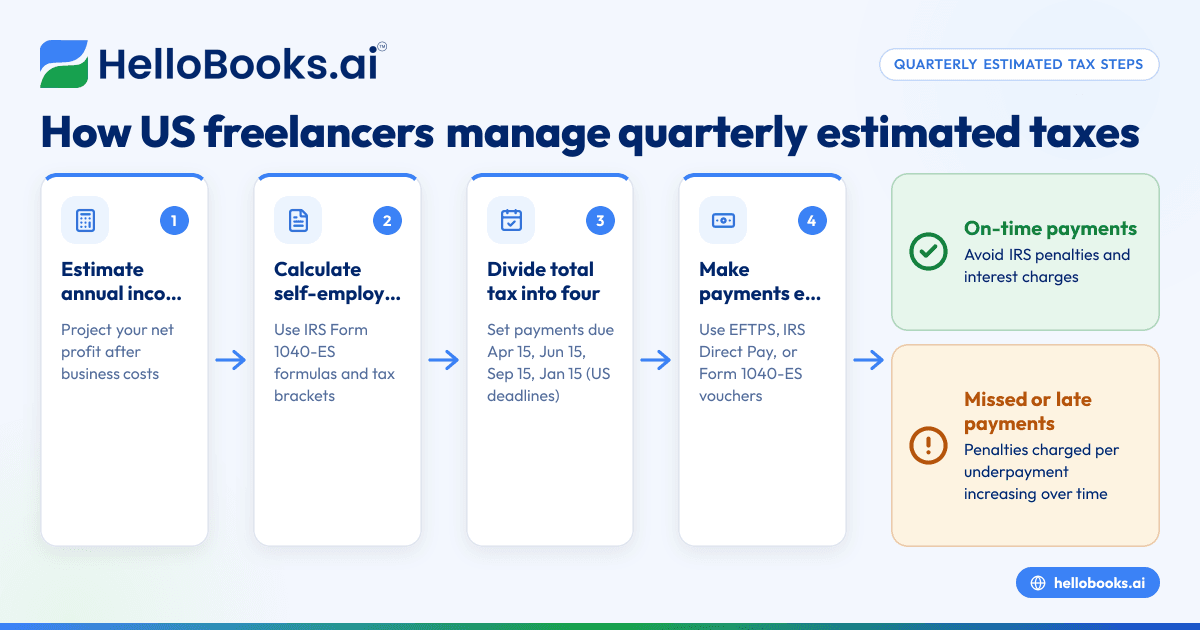
- Estimate Annual Income: Predict your gross freelance income for the year.
- Subtract Business Expenses: Deduct all legitimate business expenses, including equipment, supplies, and travel.
- Calculate Net Profit: Subtract expenses from your income to get taxable income.
- Determine Self-Employment Tax: Calculate self-employment tax (15.3% on net earnings) to cover Social Security and Medicare.
- Calculate Income Tax: Use IRS tax brackets for your filing status (single, married filing jointly, etc.) to compute income tax owed.
- Subtract Tax Credits and Withholdings: Account for any credits or taxes already withheld.
- Divide by Four: The total estimated tax amount is divided into four equal payments.
Using IRS Form 1040-ES helps you organize these numbers and calculate accurate payment amounts.
What if my income varies throughout the year?
If your freelance income fluctuates, you can use the annualized income installment method to calculate estimated taxes based on income earned during each period rather than dividing estimates equally. This requires more calculations but allows you to match payments closely to actual earnings, preventing overpayment or underpayment.
Form 2210 and instructions guide you through this approach. Many freelancers find this useful if they earn more in some quarters than others.
How do I make quarterly estimated tax payments?
Payments can be made in several ways:
- Online through IRS Direct Pay: The fastest, no-fee method to pay directly from your bank.
- Electronic Federal Tax Payment System (EFTPS): Requires enrollment but supports scheduled payments.
- By check or money order: Mail with payment voucher from Form 1040-ES.
- Through IRS2Go app: Mobile payments from smartphone or tablet.
Keep your payment confirmations for records. Many freelancers automate payments with financial software to avoid missing deadlines.
Can AI simplify managing quarterly estimated taxes?
AI quarterly estimated tax tools can significantly ease managing your tax payments. These software solutions use your income data, expense records, and filing history to calculate estimated taxes accurately and remind you of deadlines. They reduce manual data entry, lower calculation errors, and can even schedule payments automatically.
Using software that includes AI bookkeeping and accounting software for small business features tailored for freelancers is increasingly popular to gain precision and save time.
Why is paying quarterly estimated tax important for freelancers?
Freelancers do not have taxes withheld from paychecks, so the IRS expects them to pay taxes as they earn income to fund government functions continuously. Failure to pay enough during the year triggers penalties and interest.
Paying quarterly estimated tax helps you:
- Avoid year-end tax shocks.
- Prevent penalties for underpayment.
- Manage cash flow by spreading tax liability.
- Stay compliant with IRS regulations.
Regular payments also promote better financial discipline for your business.
What happens if I miss a quarterly estimated tax payment?
Missing a quarterly payment can lead to underpayment penalties and interest on the amount owed. The IRS calculates penalties based on how much and how long you underpaid. Even if you file your annual return and pay the total amount owed, the penalty can still apply.
If you expect to miss a payment, it’s advisable to pay as soon as possible to minimize penalties. Adjust future payments to make up the difference when your income is irregular.
How much should freelancers set aside for quarterly estimated taxes?
Freelancers should set aside approximately 25%-30% of their net earnings to cover federal income tax and self-employment tax. State taxes may add to this amount depending on where you reside.
The exact percentage varies based on your tax bracket and deductions, so estimating with an AI tool or IRS worksheets can provide tailored guidance.
What records should I keep for quarterly estimated tax purposes?
Maintaining organized records is critical:
- Income invoices and receipts
- Expense receipts and bills
- Bank and credit card statements
- Previous year tax returns and Forms 1099
- Payment vouchers and confirmation receipts
Good records support your estimates, help if the IRS questions payments, and simplify annual tax filing.
How does quarterly estimated tax relate to year-end filing?
Quarterly estimated tax payments are prepayments. When you file your annual tax return (Form 1040 and Schedule C for freelancers), you calculate your actual tax liability and subtract quarterly payments made.
If you overpaid, you get a refund. If you underpaid, you owe the remainder plus interest and possible penalties. Timely quarterly payments minimize surprises and balance-due risks.
Accounting for quarterly estimated taxes as a freelancer can be complex but necessary. Using tools with AI quarterly estimated tax features can streamline the process and keep you compliant without the headache. To simplify your bookkeeping, tax calculations, and payment scheduling all in one place, consider how HelloBooks AI Accounting Software can help. Book a personalized demo today at [/book-a-demo] or explore the options at [/pricing].
Frequently asked questions
Who must pay quarterly estimated taxes?
Freelancers, independent contractors, and anyone with income not subject to withholding must pay quarterly estimated taxes if they expect to owe $1,000 or more in tax after withholding and credits.
How do I estimate my tax if I am new to freelancing?
Start with a conservative income estimate based on contracts or past earnings. Use IRS Form 1040-ES and consider self-employment tax. It’s safer to overestimate to avoid penalties and adjust future payments as you gain more accurate data.
Can I pay quarterly estimated taxes for state taxes too?
Yes, many states require estimated tax payments for state income tax. Check your state's tax agency for deadlines and rules specific to your location, such as California’s Franchise Tax Board or New York State Department of Taxation and Finance.
What if I have other sources of income with withholding?
You can reduce your estimated tax payments by the amount withheld from other income (like W-2 wages or pensions). Combine all income sources to calculate total tax liability and subtract withholding before dividing estimated payments.
Are penalties waived if I pay late due to COVID-19 or hardship?
The IRS has issued relief in certain situations, but general rules for penalties apply. It’s best to check the latest IRS announcements or consult a tax professional if you think you qualify for penalty waiver due to hardship.
Can HelloBooks help me manage estimated tax payments?
HelloBooks offers AI bookkeeping and bank reconciliation software that track income and expenses continuously. This provides real-time insights to calculate accurate quarterly estimated taxes and reminders to submit payments on time, helping you avoid underpayment penalties and stay organized year-round.
Read next
This article covers one part of a bigger topic. For the complete picture, read our guide to quarterly estimated tax.