


Key takeaways
What this article covers, in order:
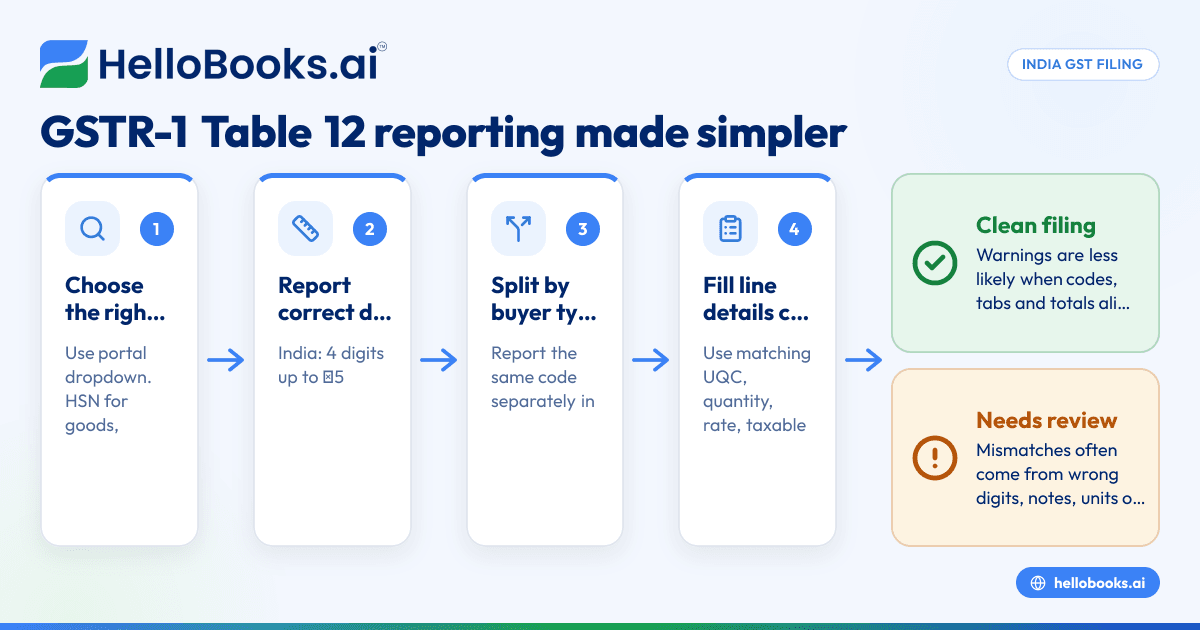
- Table 12 உண்மையில் எதைச் சோதிக்கிறது?
- HSN, SAC இரண்டின் வித்தியாசம்: ஆனால் filing-ல் முக்கியமானது classification consistency
- எத்தனை digit code report செய்ய வேண்டும் என்று எங்கே பார்க்க வேண்டும்?
- B2B, B2C split Table 12-ல் ஏன் இப்போது அதிக கவனம் கேட்கிறது?
- UQC, quantity, taxable value: Table 12 mismatch-ல் மறைந்திருக்கும் உண்மையான காரணம்
- தவறான HSN அல்லது SAC code போட்டுவிட்டால் திருத்தம் எப்படி யோசிக்க வேண்டும்?
India-வில் GSTR-1 Table 12 சரியாக நிரப்ப வேண்டுமெனில், முதலில் ஒரு விஷயம் தெளிவு: HSN என்பது goods-க்கு, SAC என்பது services-க்கு; ஆனால் GST Portal-ல் இவை இரண்டும் summary reporting ஆக ஒன்றே இடத்தில் சந்திக்கிறது. Table 12 error பெரும்பாலும் code itself காரணமாக மட்டும் வராது; invoice-ல் வைத்த classification, B2B/B2C split, UQC, taxable value, மற்றும் GST head split ஒன்றுக்கொன்று பொருந்தாததால் வரும். இந்திய GST சட்டத்தின் கீழ் CBIC வெளியிடும் notifications, GSTN இயக்கும் GST Portal help content, மற்றும் CGST Rules-ல் invoice particulars பற்றிய வழிகாட்டுதல்கள்தான் இங்கே ஆதாரம்.
Table 12 உண்மையில் எதைச் சோதிக்கிறது?
GSTR-1 என்பது outward supplies return. அதை உருவாக்கும் அமைப்பு GSTN; சட்ட அடித்தளம் Central Goods and Services Tax Act, 2017 மற்றும் அதனுடன் உள்ள Rules. Table 12-ன் வேலை, உங்கள் period-இல் issue செய்த outward supplies-ஐ HSN அல்லது SAC அடிப்படையில் தொகுத்துக் காட்டுவது. அதனால் இது வெறும் “code entry” அல்ல; உங்கள் invoice books என்ன சொல்கிறது, அதே கதையை summary வடிவில் repeat செய்ய வேண்டும்.
அதனால் கீழ்க்கண்ட mismatch-கள் வந்தால் portal warning கொடுக்கும்:
- item master-ல் தவறான HSN/SAC
- ஒரே code-க்கு பல UQC-கள் குழப்பமாகப் பயன்படுதல்
- registered customer sale B2C summary-க்கு சென்றுவிடுதல்
- intra-state supply-க்கு CGST/SGST ஆகாமல் IGST போடுதல் அல்லது அதற்கு மாறாக போடுதல்
- rate-wise split இல்லாமல் ஒரே line-ஆக club செய்தல்
- credit note impact எடுத்துக்கொள்ளாமல் gross figures மட்டும் report செய்தல்
இந்தியாவில் பல small business-கள் Tally export, Excel cleanup, பிறகு GST Portal upload என்ற habit-ல் இருப்பதால் Table 12 தவறு late stage-ல் தெரியும். ஆனால் invoice issue செய்யும் தருணத்திலேயே GSTIN, place of supply, tax head split, HSN/SAC ஒத்துப்போக அமைத்தால் இந்தப் பிரச்சனை பெரிதும் குறையும். அதற்காக GST invoicing மற்றும் GSTR-1 filing ஒரே data-விலிருந்து வேலை செய்யும் setup உதவும்.
HSN, SAC இரண்டின் வித்தியாசம்: ஆனால் filing-ல் முக்கியமானது classification consistency
HSN என்பது Harmonised System of Nomenclature; goods classification-க்கு. SAC என்பது Services Accounting Code; services classification-க்கு. இந்திய GST framework-ல் services-related SAC headings பெரும்பாலும் 99-இல் தொடங்குவது readers-க்கு பரிச்சயமான pattern. ஆனால் filing perspective-ல் முக்கியமான கேள்வி “goods vs services” மட்டும் அல்ல. உங்கள் supply nature invoice-ல் எப்படி பதிவு செய்யப்பட்டிருக்கிறது என்பதே முக்கியம்.
உதாரணமாக:
- ஒரு trader spare parts விற்கிறார் என்றால் HSN தேவை.
- ஒரு consultant retainer fee வசூலிக்கிறார் என்றால் SAC தேவை.
- installation உடன் machinery supply இருந்தால் principal supply analysis தேவைப்படலாம்; இது legal classification matter என்பதால் CBIC clarifications, tariff guidance, மற்றும் உங்கள் tax advisor view முக்கியம்.
இங்கே ஒரு practical point: உங்கள் business-ல் Tamil Nadu, Karnataka, Telangana போன்ற பல மாநிலங்களில் GSTIN இருந்தால், same item எல்லா GSTIN-களிலும் ஒரே HSN master பயன்படுத்துவது later reconciliation-ஐ எளிதாக்கும். Multi-GSTIN environment-ல் inconsistency வந்தால் GSTR-1 summary மட்டுமல்ல, inventory reports, branch comparisons, auditor queries எல்லாம் சிரமமாகும்.
எத்தனை digit code report செய்ய வேண்டும் என்று எங்கே பார்க்க வேண்டும்?
இந்தியாவில் HSN digit requirement அல்லது reporting scope போன்ற current figures-ஐ bare fact ஆக நினைவில் வைத்துப் பயன்படுத்த வேண்டாம். அது எந்த period-க்கு பொருந்துகிறது, எந்த class of taxpayer-க்கு பொருந்துகிறது என்பதைக் CBIC notification-கள் மற்றும் GST Portal advisory-களில்தான் பார்க்க வேண்டும். இந்த requirement-ன் சட்ட அடிப்படை GST law framework-இல் உள்ளது; operational publication GSTN/GST Portal-ல் வெளியாகும். எனவே current digit requirement பற்றி உங்கள் filing month-க்கு applicable notification-ஐ GST Portal மற்றும் CBIC site-ல் confirm செய்ய வேண்டும்.
நடைமுறையில் நினைவில் கொள்ள வேண்டியது:
- minimum required digits வேறு, internally நீங்கள் maintain செய்யும் detailed classification வேறு
- portal dropdown என்ன accept செய்கிறது என்பதே filing reality
- item master-ல் old or custom shorthand code இருந்தால் portal stage-ல் failure வரும்
ஒரு trader inventory-யை Tally-யில் short code-களாக வைத்திருக்கலாம்; ஆனால் GST filing software அல்லது accounting system-க்கு migrate செய்யும்போது அந்த masters cleanup செய்யாமல் விட்டால் Table 12 compilation wrong buckets-க்கு போகும். Tally alternative அல்லது accounting software India setup-க்கு மாறும்போது item masters review செய்வது அதனால் முக்கியம்.
B2B, B2C split Table 12-ல் ஏன் இப்போது அதிக கவனம் கேட்கிறது?
GSTR-1 Table 12-ல் HSN summary என்பது இனி ஒரு single dump அல்ல; registered recipients மற்றும் unregistered recipients பற்றிய reporting logic தனித்தனியாக பொருந்துகிறதா என்று portal பார்க்கிறது. இதனால் invoice-level discipline முக்கியமானது.
இந்திய நடைமுறையில் பிழை எங்கே வருகிறது?
- customer GSTIN capture செய்யாமல் cash sale போல போடுவது
- GSTIN valid ஆனாலும் customer state code mismatch
- place of supply wrong ஆக இருப்பதால் IGST பதிலாக CGST/SGST split தவறு
- export, deemed export, SEZ-type supplies போன்றவற்றை ordinary B2C போல tag செய்தல் NEEDS EXPERT REVIEW
ஒரு Chennai supplier Bengaluru GSTIN கொண்ட customer-க்கு supply செய்தால், place-of-supply and tax head split சரியாக இருக்க வேண்டும்; இல்லையெனில் Table 12 value மட்டும் அல்ல, outward tax liability summary-யும் distort ஆகும். Invoice issue நேரமே GSTIN-இலிருந்து state context எடுத்துக் கொண்டு CGST/SGST அல்லது IGST split அமைப்பது later correction-ஐ குறைக்கும். அதுதான் e-invoicing software பயன்படுத்தும் larger businesses-க்கும், standard GST invoicing பயன்படுத்தும் SMEs-க்கும் useful pattern.
UQC, quantity, taxable value: Table 12 mismatch-ல் மறைந்திருக்கும் உண்மையான காரணம்
பலர் HSN code சரியாக இருந்தால் போதும் என்று நினைக்கிறார்கள். ஆனால் Table 12-ல் unit quantity code, total quantity, taxable value, rate-wise breakup போன்ற fields consistency equally முக்கியம்.
இந்திய retail மற்றும் wholesale trade-ல் ஒரே item-ஐ ஒருவர் NOS, மற்றொருவர் PCS, இன்னொருவர் BOX என வைத்திருப்பது சாதாரணம். Stock register-க்கு இது manageable போல தோன்றினாலும் GSTR-1 summary-க்கு இது mess ஆகலாம். Portal accept செய்தாலும் business intelligence level-ல் figures useful ஆக இருக்காது.
அதேபோல் services side-ல் quantity field practical meaning இல்லாதது போல தோன்றலாம். ஆனால் portal expects a structured row. அந்த row-க்கு எந்த UQC பொருந்துகிறது, அல்லது NA/OTH வகை handling எப்படி இருக்க வேண்டும் என்பதைக் GST Portal instructions மற்றும் current utility rules-ல் பார்க்க வேண்டும்.
இதை ஒரு illustrative, invented calculation மூலம் பாருங்கள்; figures purely demonstration மட்டுமே, current law figures அல்லது portal schema முழுவதையும் reflect செய்யவில்லை, credits and amendments impact-ஐயும் முழுமையாக எடுத்துக் கொள்ளவில்லை.
ஒரு Madurai business மாதத்திற்குள் கீழ்க்கண்ட outward supplies செய்ததாகக் கொள்ளலாம்:
- HSN A பொருள்: 120 NOS, taxable value ₹1,20,000
- அதே HSN A-க்கே மற்ற invoices-ல் 10 BOX என்று பதிவு
- SAC consulting service: 3 engagements, taxable value ₹60,000
இப்போது system HSN A-க்கு quantity total செய்யும்போது NOS மற்றும் BOX mixed ஆக இருப்பதால் clean summary உருவாக்க முடியாமல் warning வரலாம். Taxable value total சரியாக இருந்தாலும் quantity field unreliable ஆகிவிடும். இதே business invoices அனைத்தையும் ஒரே item master-இல் standard UQC-ஆக map செய்திருந்தால் Table 12 row straight-forward ஆகும்.
இதற்காக inventory and invoicing ஒரே system-ல் இருக்கிறது என்பதற்கே value உண்டு. Inventory management data மற்றும் invoice data பிரிந்து இருந்தால் HSN summary cleanup ஒவ்வொரு மாதமும் manual வேலை ஆகும்.
தவறான HSN அல்லது SAC code போட்டுவிட்டால் திருத்தம் எப்படி யோசிக்க வேண்டும்?
இது “கடைசிமாதம் தவறாகப் போட்டேன், இம்மாதம் சரியாகப் போட்டு விடலாம்” என்ற அளவுக்கு simple இல்லை. ஏனெனில் HSN/SAC error சில நேரங்களில் mere descriptive error; சில நேரங்களில் tax treatment-ஐ itself பாதிக்கும் classification error. இரண்டிற்கும் approach வேறு.
நீங்கள் முதலில் கண்டுபிடிக்க வேண்டியது:
- code typo தானா?
- description mismatch தானா?
- rate impact இருக்கிறதா?
- goods vs service classification issue தானா?
- e-invoice IRN உருவான invoice-களில் correction trail தேவைப்படுகிறதா?
Current amendment process, whether through subsequent period correction, credit note/debit note route, or invoice amendment logic, is governed by the GST law framework and GST Portal functionality published by GSTN and backed by CBIC notifications/circulars. அதனால் exact method மற்றும் time limits போன்ற current figures official source-ல் verify செய்யப்பட வேண்டும்.
ஒரு practical discipline:
- affected invoices list எடுக்கவும்
- same wrong code எத்தனை customers-க்கு போயுள்ளது பார்க்கவும்
- tax impact இருந்தால் CA அல்லது GST practitioner review எடுக்கவும்
- next period filing-க்கு முன் item master correct செய்யவும்
- purchase side ITC reconciliation-க்கும் impact இருக்கிறதா பார்க்கவும், குறிப்பாக reverse charge அல்லது mixed supplies context இருந்தால் NEEDS EXPERT REVIEW
இந்த clean-up வேலையில் OCR மூலம் purchase bills capture செய்ததும், outward and inward entries ஒரே ledger logic-ல் இருக்கும் setup உதவும். AI bookkeeping அல்லது bank reconciliation software itself HSN classification தீர்க்காது; ஆனால் books clean ஆக இருந்தால் anomaly spotting விரைவாகும்.
Table 12 சரியாக வர invoice stage-லேயே என்ன கட்டுப்பாடுகள் வேண்டும்?
GSTR-1 Table 12 பிரச்சனை return filing screen-ல் தொடங்குவதில்லை. அது item creation screen-ல் தொடங்குகிறது. இந்திய GST compliance-இல் நல்ல process என்பது கீழ்க்கண்டவைகளை invoice issue முன்பே control செய்வது:
- item master-க்கு fixed HSN or SAC mapping
- customer master-க்கு GSTIN validation
- place of supply rule சரியான capture
- tax head split automatic logic
- rate changes இருந்தால் invoice templates update
- goods dispatch இருந்தால் e-way bill data consistency
Goods movement உள்ள businesses-க்கு e-way bill data, invoice data, HSN data ஒரே source-இலிருந்து வருவது duplication-ஐக் குறைக்கிறது. இல்லையெனில் invoice-ல் ஒரு description, e-way bill-ல் வேறு description, GSTR-1 Table 12-ல் மூன்றாவது classification என்று ஆகிவிடும். e-way bill software integrated flow அதனால் helpful.
E-invoice mandate உள்ள businesses-க்கு இது இன்னும் sensitive. IRN generation போது item data structured format-ல் செல்கிறது; அங்கே தவறான code repeatedly சென்றால் later summary மட்டும் அல்ல, customer-side scrutiny-க்கும் கேள்வி எழலாம். Current e-invoicing applicability figures மற்றும் scope CBIC notifications மற்றும் Invoice Registration Portal/GST Portal publications-ல் பார்க்கப்பட வேண்டும்.
Indian businesses-க்கு மாதந்தோறும் பயன்படும் ஒரு filing discipline
Table 12 clean ஆக வர வேண்டும் என்றால் month-end வரை காத்திருக்க வேண்டாம். இந்த India-specific operating rhythm work ஆகும்:
வாராந்திரமாக:
- புதிய items add செய்தால் HSN/SAC review
- GSTIN capture இல்லாத B2B customers இருப்பதா பார்க்கவும்
- UPI, NEFT, RTGS, IMPS போன்ற receipt modes-ல் வந்த collections books-க்கு சரியாக match ஆனதா உறுதிப்படுத்தவும்
- stock-moving items description invoice-ல் consistent ஆ இருக்கிறதா பார்க்கவும்
மாத முடிவில்:
- outward supplies HSN-wise draft summary பார்க்கவும்
- B2B/B2C split anomalies flag செய்யவும்
- bank statement upload செய்து receipts reconcile செய்யவும்; cash/transfer receipt mismatch இருந்தால் invoice tagging சரி செய்யவும்
- GSTR-1 draft numbers மற்றும் books compare செய்யவும்
இந்த process-ஐ software support செய்தால் owner அல்லது accountant GST Portal-ல் last-minute firefighting குறையும். HelloBooks-ல் bank statement upload செய்து India-specific AI reconciliation பயன்படுத்தி receipts match செய்யலாம்; அதே system-லிருந்து GSTR-1 direct filing build ஆகும் போது outward data மற்றும் books இடையிலான gap விரைவாகத் தெரியும். Free checks வேண்டுமெனில் GSTIN validator, HSN code search, மற்றும் GST reconciliation checker போன்ற tools useful starting point ஆக இருக்கலாம்.
HelloBooks இந்த குறிப்பிட்ட வேலைக்கு எப்படிச் சம்பந்தமாக உதவும்?
இந்த article-ன் context-ல் முக்கியமானது filing software என்பது மட்டும் அல்ல; invoice-entry stage-ல் correct data capture ஆகிறதா என்பதே. HelloBooks-ல் GST invoice உருவாக்கும்போது customer GSTIN, place of supply, மற்றும் அதற்கேற்ப CGST/SGST அல்லது IGST split consistent ஆக வைத்துக்கொள்ள முடியும். Item master-ல் HSN/SAC discipline வைத்தால் அதே invoices-லிருந்து GSTR-1 build ஆகும் போது Table 12 summary manual rework குறையும்.
E-invoice scope-க்கு உட்பட்ட businesses-க்கு IRN மற்றும் signed QR flow structured invoice data discipline-ஐ enforce செய்ய உதவும். Goods dispatch businesses-க்கு invoice data-இலிருந்தே e-way bill உருவாக்கும் நடைமுறை duplicate typing குறைக்கும். பல GSTIN-கள் உள்ள entity-கள் ஒரே login-ல் different state registrations manage செய்தால் branch-wise consistency பார்க்க எளிதாகும். Tally-யிலிருந்து மாறாமல் trial செய்ய வேண்டுமெனில் migration/connector path useful ஆகலாம். Product details அல்லது India setup பார்க்க HelloBooks India, feature fit பார்க்க pricing, guided walkthrough வேண்டுமெனில் demo பார்க்கலாம்.
முடிவாக நினைவில் கொள்ள வேண்டியது
Table 12 என்பது “portal-ல் code தேர்வு” என்ற சின்ன வேலை அல்ல; அது உங்கள் books, inventory, invoice discipline, GST classification, மற்றும் customer master hygiene-ஐ ஒரே இடத்தில் expose செய்யும் summary. இந்தியாவில் CBIC வெளியிடும் notifications, GSTN/GST Portal advisories, CGST Act மற்றும் CGST Rules ஆகியவை current compliance position-க்கு ஆதாரம். அதனால் digit requirements, applicability, amendment windows, மற்றும் schema changes போன்ற current figures எதையும் filing month-க்கு official source-ல் confirm செய்ய வேண்டும்.
நீங்கள் இன்று செய்ய வேண்டிய மிகப் பயனுள்ள வேலை ஒன்று இருந்தால், அது item master audit. HSN/SAC, UQC, GST rate mapping, customer GSTIN quality, மற்றும் state-wise tax split logic சரியாக இருந்தால் GSTR-1 Table 12 பெரும்பாலும் itself சரியாகிவிடும்.


