Key takeaways
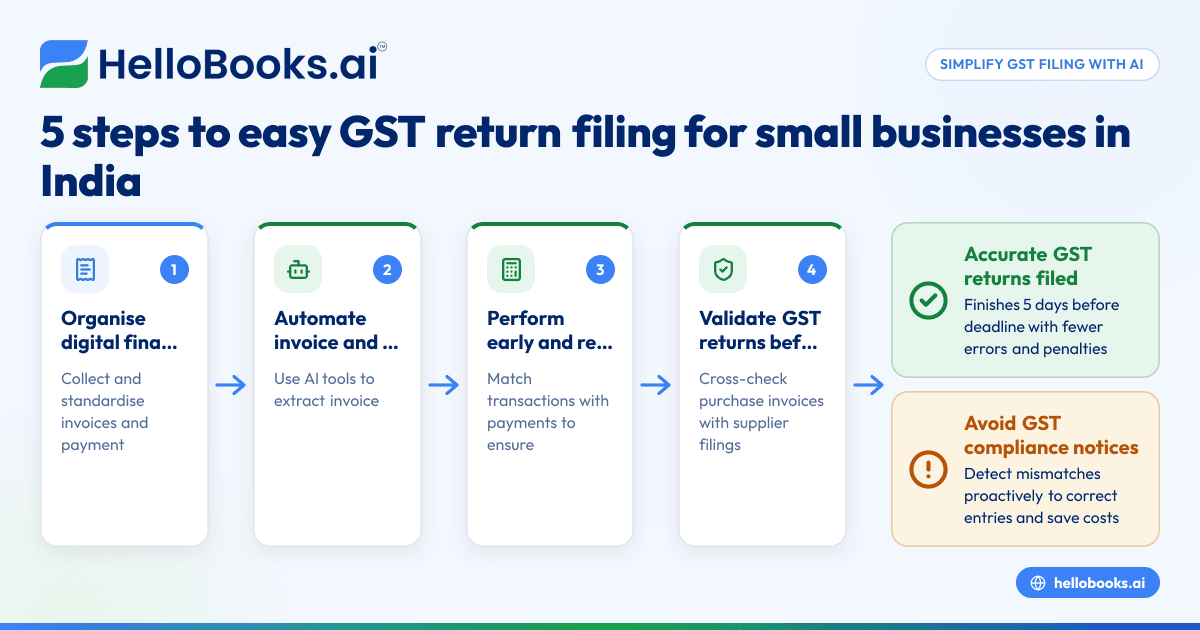
What this article covers, in order:
- Before you start
- Step 1: Why should I switch to AI GST return filing software?
- Step 2: How do I prepare my data for GST return filing?
- Step 3: How does AI GST return filing software help with reconciliation?
- Step 4: How do I generate and verify GST returns using AI software?
- Step 5: What are the caveats when using AI for GST return filing?
How to Perform Accurate GST Return Filing in India Using AI Bookkeeping Software, Supported with Caveats
======================================================================================================
This guide is for small business owners, finance leads, and accountants in India who want to simplify and improve their GST return filing process. By the end, you will know how to use AI bookkeeping software to file GST returns accurately and on time, while avoiding common pitfalls.
Before you start
- Have your GST registration details and GSTIN handy.
- Ensure your purchase and sales invoices are digitised and organised.
- Maintain access to your bank statements for reconciliation.
- Know your filing deadlines: usually, GSTR-1 by 11th and GSTR-3B by 20th of the following month.
Step 1: Why should I switch to AI GST return filing software?
Manually managing GST returns using spreadsheets or traditional software like Tally can be time-consuming and error-prone. AI GST return filing software automates key tasks such as invoice data extraction, tax calculation, and reconciliation. It can scan digital or uploaded invoices, auto-populate GST fields, and flag mismatches between purchase and sales data.
This automation reduces manual data entry and human errors, helping you avoid penalties for incorrect or late filings. It also speeds up the process, freeing up time for other finance tasks or business growth activities.
Common mistake: Relying solely on manual spreadsheet updates or manual Tally entries often leads to missed invoices or mismatched figures. This increases the risk of audit queries and GST notices.
Step 2: How do I prepare my data for GST return filing?
Accurate GST filing depends on clean, verified data. Start by gathering all purchase and sales invoices for the filing period. Check each invoice for:
- Correct GSTIN of buyer and seller
- Proper invoice numbers and dates
- Accurate tax rates (5%, 12%, 18%, 28%, or exempt)
- Complete details of taxable value and tax amounts
Next, upload these invoices into your AI bookkeeping software. Most platforms allow bulk upload from Excel, PDF, or direct integration with marketplaces like IndiaMART or JustDial. Also upload your bank statements (Axis Bank, SBI, HDFC, etc.) for automatic reconciliation.
Why this matters: Errors in invoice data cause mismatches in GST returns and can trigger delays or notices from the GST portal.
Common mistake: Uploading incomplete or inconsistent invoice data causes the software to generate inaccurate GST reports.
Step 3: How does AI GST return filing software help with reconciliation?
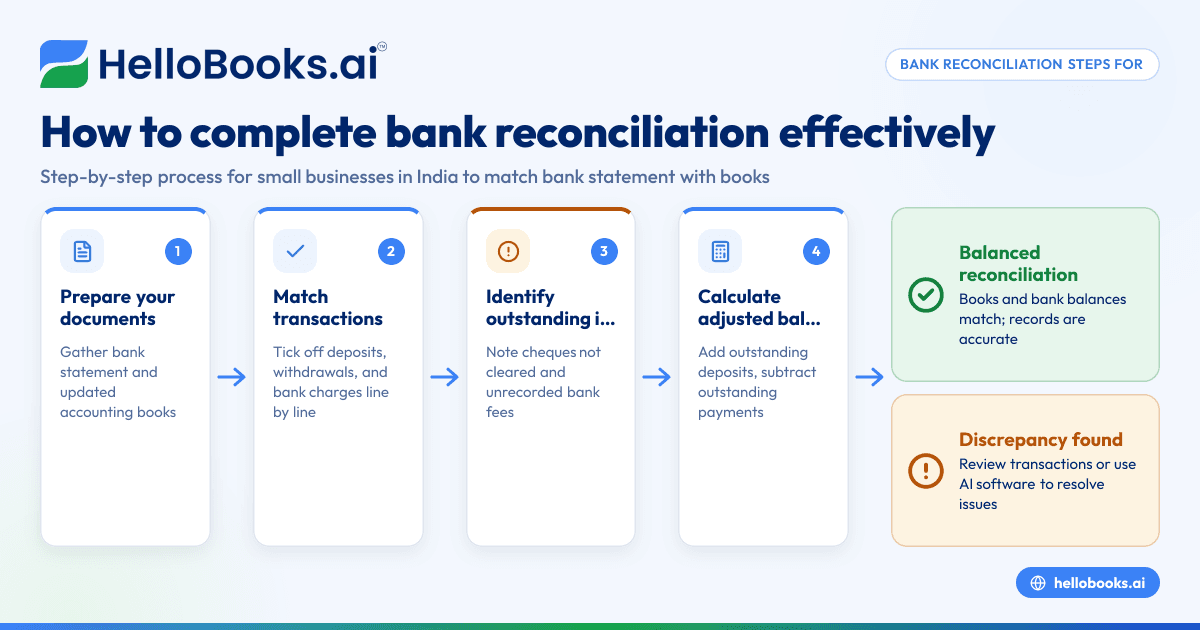
Reconciliation matches your sales and purchase invoices with bank transactions and payments. AI software automatically compares these records to highlight:
- Missing invoices or payments not recorded
- Duplicate entries or mismatched amounts
- Unclaimed input tax credits
This ensures that all taxable supplies and input tax credits are accounted for correctly in your returns.
Why this helps: Proper reconciliation prevents underreporting sales or input tax credits, reducing the risk of penalties. It also improves the accuracy of your financial reports.
Common mistake: Skipping reconciliation or doing it manually leads to errors like overlooked sales or unclaimed credits.
Step 4: How do I generate and verify GST returns using AI software?
After data preparation and reconciliation, your AI bookkeeping software will generate draft GST returns:
- GSTR-1: Details of outward supplies (sales) with tax breakdown.
- GSTR-3B: Summary return showing total taxable sales, GST liability, input tax credits, and net payable/refundable GST.
Review these drafts carefully. Check that all invoices are included, tax rates and amounts are correct, and input tax credits claimed are valid and supported by purchase invoices.
You can then export the return data in the GST portal’s prescribed format or file directly if the software supports integration.
Why verification is key: The GST portal requires accurate filing. Mistakes can lead to returns being rejected or notices demanding corrections.
Common mistake: Filing returns without review, blindly trusting software outputs, can cause compliance issues.
Step 5: What are the caveats when using AI for GST return filing?
AI tools assist but do not replace your responsibility to verify data accuracy and compliance with GST laws. Consider:
- Complex transactions like advance receipts, reverse charge supplies, or exempt sales often require manual checks.
- Late fees and interest on delayed payments may not be automatically calculated by AI.
- Certain GST notifications or amendments might require changes that your software doesn’t immediately reflect.
- Data privacy laws under the DPDP Act 2023 mean you must handle personal data in invoices securely.
Common mistake: Assuming AI software handles every GST nuance perfectly can lead to overlooked compliance gaps.
Worked example: Filing monthly GST returns for a Pune-based textile SME
Consider a textile SME in Pune with ₹50 lakh monthly turnover, sourcing leads from IndiaMART and JustDial.
- Invoice upload: The business uploads all purchase and sales invoices for March 2024 into the AI bookkeeping software. These include sales to retail shops and purchases of raw materials.
- Bank reconciliation: Axis Bank statements for March are imported. The software matches payments received with sales invoices and payments made to suppliers.
- Error detection: AI flags a ₹2 lakh sale invoice missing GST details. The user updates the GSTIN and confirms the tax rate of 12%.
- E-invoice compliance: For sales above ₹20 lakh, the software generates and submits an e-invoice automatically.
- Draft return generation: The software creates draft GSTR-1 showing ₹50,00,000 taxable sales and ₹6,00,000 GST output tax, and GSTR-3B with ₹6,00,000 output tax and ₹3,50,000 input tax credit.
- Review: The user verifies all data, ensuring no invoices are missing and reconciled payments match.
- Filing: The returns are filed electronically through the GST portal using the software’s filing interface.
- Post-filing: The software alerts the user about a pending e-way bill for a large goods dispatch, which is generated promptly to avoid penalties.
This workflow saves the SME several hours each month, reduces errors, and ensures compliance with GST deadlines.
What should I do if there are mismatches or notices after filing?
Mismatches happen when your GST return data differs from your suppliers’ or customers’ filings. Your AI bookkeeping software can help identify these by comparing your records with GST portal data, highlighting discrepancies.
If you receive a notice from the GST department:
- Review the notice promptly to understand the issue.
- Use your software’s reports to gather supporting documents and reconcile mismatches.
- Consult your GST consultant or tax officer if needed.
- Respond or rectify within the stipulated time to avoid penalties.
Common mistake: Ignoring notices or delaying action can lead to interest, penalties, or audits.
Can AI GST return filing software guarantee 100% compliance?
No software can guarantee perfect compliance because GST rules evolve and some cases require human judgement. AI tools are powerful for reducing errors and speeding up filing, but you must stay informed about GST notifications and audit your returns regularly.
For complex transactions, disputes, or legal interpretations, consulting a GST expert remains essential.
Next steps
Start by organising your invoices and bank data digitally. Then, explore AI bookkeeping options that offer integrated GST return filing features. To see how AI can simplify your GST return filing process, book a demo or compare plans at HelloBooks.ai today. Accurate GST compliance saves time, avoids penalties, and lets you focus on growing your business.
Related reading
- GST return filing software
- How AI Bookkeeping Software Fully Supports Indian SMEs in Managing Complex GST Return Filing
- How Small Businesses Can Use AI Bookkeeping Tools Without Losing Control, Supported with Caveats
Read next
This article covers one part of a bigger topic. For the complete picture, read our guide to supported with caveat.