


Key takeaways
What this article covers, in order:
- GSTR-3B ખરેખર શું છે, અને ફ્રી filing નો અર્થ શું?
- Return ખોલતા પહેલાં કયા records તૈયાર રાખવા
- GSTR-3Bમાં સૌથી મહત્વના ભાગ ક્યાં છે
- GST Portal પર GSTR-3B ફાઇલ કરવાની સચોટ રીત
- ગુજરાતના વેપારીઓને ખાસ જ્યાં ગડબડ થાય છે
- આ ગણતરી કલ્પિત છે, ફક્ત સમજાવવા માટે
Indiaમાં GSTR-3B તમે ફ્રીમાં સીધું GST Portal પર ફાઇલ કરી શકો છો, પણ સાચો પડકાર typing નહીં—મેળવણી છે: GSTR-1માંથી outward liability, GSTR-2Bમાંથી ITC, reverse charge, અને cash ledgerમાં ચુકવણી. જો આ ચાર વસ્તુ પહેલેથી ચકાસેલી હોય, તો filing સરળ બને છે. જો ન હોય, તો portal પર return ખોલ્યા પછી પણ ગડબડ રહે છે. આ માર્ગદર્શિકા ખાસ India માટે છે: GSTN, CBIC, GST law, e-invoice, e-way bill, GSTIN, Tally data અને bank statement upload જેવી દૈનિક વસ્તુઓને ધ્યાનમાં રાખીને.
GSTR-3B ખરેખર શું છે, અને ફ્રી filing નો અર્થ શું?
GSTR-3B એ GST હેઠળની summary return છે. તેનો કાયદાકીય આધાર Central Goods and Services Tax Act, 2017 અને સંબંધિત Rulesમાં આવે છે, અને તેની કાર્યકારી અમલવારી GSTN દ્વારા GST Portal પર થાય છે, જ્યારે નીતિ અને સૂચનાઓ CBIC પ્રકાશિત કરે છે. Return ભરવાનો અર્થ માત્ર turnover લખવો નથી; તેનો અર્થ છે કે તમે tax liability, input tax credit, reverse charge અને tax payment ને એક મહિનાના summary સ્વરૂપે declare કરો છો.
"ફ્રીમાં file કરવું" એટલે software fee ચૂકવ્યા વગર GST Portal પર return submit કરવી. તેનો અર્થ આ નથી કે tax પણ free છે. જો tax payable બને, તો તે GST law હેઠળ જ ચૂકવવો પડે. કયો amount, કઈ head હેઠળ, અને ક્યારે સુધી—તેની current માહિતી CBIC notifications, GST Portal advisories અને applicable lawમાં જ તપાસવી જોઈએ.
ઘણા વેપારીઓ માટે મુશ્કેલી return file કરવી નથી; મુશ્કેલી એ છે કે વેચાણ, purchase bills, ITC અને bank entries અલગ-અલગ જગ્યાએ પડેલી હોય છે. એ માટે books જો સમયસર લખાયેલા હોય, GST invoiceમાં CGST/SGST કે IGST યોગ્ય split થયેલો હોય, place of supply સાચી હોય, અને purchase bills OCRથી capture થયા હોય, તો GSTR-3B filing પહેલાંનું rework ઓછું થાય છે.
Return ખોલતા પહેલાં કયા records તૈયાર રાખવા
GST Portal પર login કરતાં પહેલાં આ data સાથે બેસો:
- તે tax period માટેનું filed GSTR-1 અથવા draft figures
- GSTR-2B, કારણ કે ITC claim માટે એ મુખ્ય આધાર બને છે
- purchase bills, ખાસ કરીને જ્યાં supplier upload વિલંબિત હોય
- reverse charge લાગુ પડતા ખર્ચ
- credit note, debit note અને sales return entries
- cash ledger અને electronic credit ledger નો snapshot
- bank statement, જેથી receipt અને payment reality books સાથે મળે
Indiaમાં નાના business માટે એક સામાન્ય સમસ્યા એ છે કે invoice booksમાં છે, payment bankમાં છે, અને purchase bill WhatsApp અથવા PDFમાં છે. જ્યારે bank statement upload કરીને reconciliation થાય, ત્યારે ઘણી વાર unadjusted receipt, duplicate expense અથવા missing sales entry ઝડપાય છે. આ ખાસ કરીને ત્યારે મદદરૂપ બને છે જ્યારે UPI, NEFT, RTGS કે IMPS મારફતે payment મળતા હોય અને narration પરથી party તરત ઓળખાતી ન હોય.
જો તમે Tallyમાંથી migrate થયા હો અથવા હજુ parallel Tally data રાખો છો, તો return પહેલાં opening mismatch, ledger grouping, stock valuation અને GST heads mapping ખાસ ચકાસો. Tally connector અથવા Tally alternative જેવો વિકલ્પ bookkeeping ને return સાથે વધુ નજીક લાવે છે, પણ migration પછી review તો જરૂરી જ છે.
GSTR-3Bમાં સૌથી મહત્વના ભાગ ક્યાં છે
GSTR-3Bની દરેક table સમજવી ઉપયોગી છે, પરંતુ બધું સમાન રીતે critical નથી. વ્યવહારમાં ચાર વિસ્તાર સૌથી વધુ error-prone હોય છે.
Outward supplies
આ ભાગમાં taxable outward supplies, zero-rated supplies, nil-rated અથવા exempt supplies, non-GST supplies અને reverse charge સંબંધિત figures આવે છે. છેલ્લા કેટલાક સમયથી GSTN દ્વારા auto-population અને lock સંબંધિત ફેરફારો કરવામાં આવ્યા છે, પણ કયા periodથી કયો field editable છે તે current advisory મુજબ જ જોવું. આ માહિતી GST Portal news/advisory section અને CBIC updatesમાં પ્રકાશિત થાય છે.
જો તમારું invoicing system sale સમયે જ place of supply પરથી tax head split કરે—સ્થાનિક supply માટે CGST/SGST અને interstate માટે IGST—તો 3Bમાં mismatch ઓછી રહે છે. એ જ કારણથી smart invoicing માત્ર invoice print કરવાની વસ્તુ નથી; return accuracyમાં તેનો સીધો ફાયદો છે.
ITC
Input Tax Credit માટે GSTR-2Bનું reconciliation કેન્દ્રસ્થાને છે. GST law હેઠળ ITC claim માટેની શરતો Central Goods and Services Tax Act, 2017 અને Rulesમાં આપવામાં આવી છે, અને supplier reporting સામે recipient view GSTNના portal dataથી દેખાય છે. તમે booksમાં bill દાખલ કર્યો હોય એ પૂરતું નથી; supplierએ returnમાં યોગ્ય રીતે report કર્યું છે કે નહીં, તે પણ જોવું પડે.
અહીં OCRથી purchase bills capture કરવાથી અને GST return filing softwareમાં 2A/2B reconciliation થાય તો missing invoices ઝડપથી દેખાય છે. Manual filing free છે, પણ blind filing મોંઘી પડી શકે છે.
Reverse charge
બહુ વેપારીઓ outward tax અને ITC પર ધ્યાન આપે છે, પરંતુ reverse charge entries રહી જાય છે. ચોક્કસ supplies પર liability recipient તરફ આવે છે. કયા cases covered છે તે CBIC notifications અને GST lawમાં આપવામાં આવે છે. Current applicability official sourceમાંથી જ ચકાસવી જોઈએ.
Payment set-off
Return submit કરતાં પહેલાં tax liability credit ledger અને cash ledgerથી set off થાય છે. અહીં short payment, wrong tax head allocation અથવા interest/late fee visibility જેવી બાબતો આવે છે. Current payable figures portal જ બતાવે છે; કોઈ પણ amount official challan view વિના માનવો નહીં.
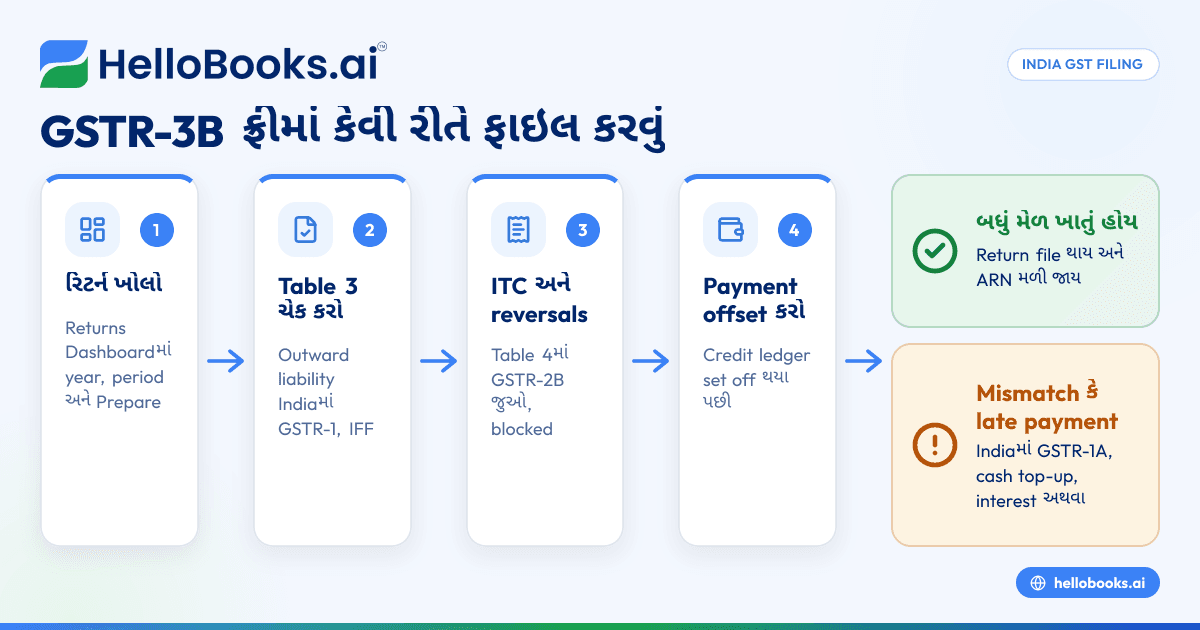
GST Portal પર GSTR-3B ફાઇલ કરવાની સચોટ રીત
Portal filingનો actual flow મોટાભાગે એકસરખો રહે છે, ભલે interfaceમાં નાના ફેરફાર થતા રહે. GSTN portalનું current navigation જ અંતિમ માનવું.
Login કરો અને period પસંદ કરો. GST Portal પર જઈ Returns Dashboard ખોલો. Financial year અને return period પસંદ કરો. ત્યારબાદ GSTR-3B open કરો.
System-generated figuresને blind accept ન કરો. જો outward liability auto-populated દેખાય, તો તેને તમારા GSTR-1 સામે cross-check કરો. જો source returnમાં ભૂલ હોય, તો 3Bમાં માત્ર symptom દેખાશે, કારણ નહીં.
Sales register સામે Portal figures બેસાડો. ખાસ કરીને interstate B2B, local B2B, B2C large invoice, credit note અને export entries ચકાસો. e-invoice applicable businessમાં IRN અને signed QR સાથે generated invoice booksમાં હોય તો later correction ઓછી થાય છે. Indiaમાં e-invoice સંબંધિત threshold અને applicability CBIC notifications હેઠળ જાહેર થાય છે; current figure official sourceમાંથી જ જુઓ.
ITC માટે GSTR-2B reconcile કરો. supplier bills, import-related credits જો લાગુ પડે, debit notes અને amendments અલગથી જુઓ. જો portal view અને books mismatch હોય, તો પહેલા reason શોધો: supplier non-filing, wrong GSTIN, invoice date mismatch, duplicate entry કે blocked credit.
Reverse charge અને ineligible credit manually review કરો. આ ભાગ ઘણી વાર auto-fillથી ઉકેલાતો નથી. TDS/TCS entries booksમાં હોય તો પણ તે GSTR-3B logic સાથે ગૂંથાઈ જાય એવું નથી; TDS/TCS અને reverse charge handling યોગ્ય રીતે ledgerમાં record કરવું પડે.
Exempt, nil-rated, non-GST inward/outward data હોય તો અલગથી verify કરો. ઘણી વખત business petrol, freight, reimbursement, composition purchase અથવા non-GST expense ને tax purchase સાથે mix કરી દે છે.
Preview કાઢો. Final submit પહેલાં preview PDF/summary જોઇ લો. અહીં company name, GSTIN, tax heads અને payment bifurcation ફરી દેખાય છે.
Payment કરો અને file કરો. tax liability create થયા પછી challan/payment step પર જાઓ. UPI, net banking અથવા અન્ય ઉપલબ્ધ banking modes portal પર સમયાંતરે બદલાઈ શકે; current options GST Portal પર જ જુઓ. Payment પછી filing authorisation પૂર્ણ કરો.
જો તમે monthly data એક જ systemમાં જાળવો છો, તો GSTR-1 અને GSTR-3B direct filing વચ્ચે continuity રહે છે. એટલે જ sales invoice, purchase bill, reconciliation અને returns અલગ-अलग spreadsheetમાં રાખવાને બદલે connected booksમાં રાખવાથી rework ઘટે છે.
ગુજરાતના વેપારીઓને ખાસ જ્યાં ગડબડ થાય છે
ગુજરાતમાં trading, textile, chemicals, engineering parts, ceramic, FMCG distribution અને job-work જેવી પ્રવૃત્તિઓમાં volume વધુ હોય છે. Issue tax law કરતાં વધુ operational બને છે.
એક સામાન્ય ગડબડ: Ahmedabad કે Suratના trader પાસે multiple godown movement હોય, invoice સમયસર બને પણ e-way bill અલગથી મોડું બને. પછી dispatch data books, invoice અને movement record વચ્ચે mismatch પેદા કરે. જો invoiceમાંથી જ e-way bill software દ્વારા EWB બનાવાય, તો consignment detail ફરીથી type કરવાની જરૂર ઓછી પડે છે.
બીજી ગડબડ: Rajkot કે Morbi જેવી supply chainsમાં party GSTIN ખોટો capture થાય. પછી GSTR-1માં report થયેલો invoice recipientને 2Bમાં જ ન દેખાય. એ માટે filing પહેલાં GSTIN validatorથી basic validation ઉપયોગી રહે છે.
ત્રીજી ગડબડ: sales local છે કે interstate, તે billing સમયે સ્પષ્ટ ન હોવાથી CGST/SGST અને IGST ખોટી રીતે લાગુ પડે. Place-of-supply rules Integrated Goods and Services Tax Act, 2017 હેઠળ આવે છે, અને current interpretive guidance official law/CBIC materialsમાં જોવી જોઈએ. Billing સમયે જ સાચો split રાખવો જરૂરી છે.
ચોથી ગડબડ: WhatsApp પર આવેલ purchase bill bookkeeping સુધી મોડું પહોંચે. OCRથી purchase bills capture થવાથી આ વિલંબ ઓછો થાય છે. Noor assistant WhatsApp પર Hindi, English અથવા Hinglishમાં books સંબંધિત સવાલ સમજવામાં મદદરૂપ થઈ શકે છે, પણ final legal judgement માટે qualified professional review જ કરવો.
આ ગણતરી કલ્પિત છે, ફક્ત સમજાવવા માટે
માનો કે Gujaratમાં એક electrical trader માટે એક tax periodમાં નીચેની figures છે. આ આંકડા સંપૂર્ણપણે illustrative અને invented છે; એમાં cess, sector-specific adjustments, prior-period amendments, export documentation detail, blocked credit nuances અને interest computation જેવી બાબતોને સરળતા માટે છોડવામાં આવી છે.
- Local taxable sales: ₹8,40,000
- Interstate taxable sales: ₹3,10,000
- Credit note issued: ₹40,000
- Eligible purchase ITC as per reconciled records: ₹1,18,000
- One reverse charge expense on a service: ₹12,000 taxable value, related tax payable portal rules મુજબ ગણાશે
- Cash ledger opening balance: ₹25,000
આ illustrative સ્થિતિમાં outward liability books અને GSTR-1 વચ્ચે first reconcile થશે. પછી credit note adjust થશે. ત્યારબાદ GSTR-2B અને purchase records સામે ITC માત્ર એટલું જ માનશો જે claim માટે support થાય. Reverse charge liability separately ઉમેરશો. છેલ્લે electronic credit ledger અને cash ledgerથી set-off જોઈને balance payable આવે.
અહીં સૌથી મહત્વની વાત આંકડા નથી; ક્રમ છે. પહેલા sales truth, પછી ITC truth, પછી reverse charge, પછી payment. ઘણા વેપારીઓ સીધું payable figure પર કૂદી પડે છે અને પછી mismatchનો cycle શરૂ થાય છે.
આ પ્રકારની ચકાસણી માટે GST reconciliation checker અથવા GST calculator જેવી free India tools પ્રાથમિક sanity check માટે ઉપયોગી બની શકે છે.
Free portal filing ક્યારે પૂરતી છે, અને ક્યારે software યોગ્ય બને
જો તમારું business સરળ છે—એક GSTIN, ઓછા invoices, બહુ ઓછા purchase bills, inventory complexity નથી, interstate transactions મર્યાદિત છે—તો portal filing પૂરતી બની શકે છે.
પણ નીચેની સ્થિતિઓમાં માત્ર portal ઘણી વાર late-stage tool बनी જાય છે:
- invoicesની સંખ્યા વધુ હોય
- multiple GSTIN હોય
- stock અને GST data જોડાયેલું રાખવું પડે
- e-invoice/IRN લાગુ પડતું હોય
- e-way bill નિયમિત બને
- purchase ITC reconciliation recurring pain point હોય
- bank statementથી receipts match કરવી પડે
- Tally data ચાલુ હોય પણ return workflow અલગ ચાલતો હોય
આવી પરિસ્થિતિમાં accounting software India અથવા bank reconciliation software જેવા connected workflowનો ફાયદો એ છે કે books, GST અને payment reality એકબીજા સાથે જોડાય છે. Inventory management હોવાથી stock movement અને invoice quantity વચ્ચે તફાવત ઓછો રહે છે. Financial reports પરથી P&L, receivables અને GST figures એક જ dataમાંથી આવે છે. Mobile appથી owner fieldમાંથી પણ invoice કે expense નોંધાવી શકે છે. Multi-GSTIN અને unlimited usersથી branch, accountant અને CA એક જ ecosystemમાં કામ કરી શકે છે.
જો તમે price compare કરવા માંગતા હો, તો current plans માટે pricing જુઓ અથવા product fit સમજવા demo માગો.
Filing પહેલાં છેલ્લી practical checklist
Return file કરતાં પાંચ મિનિટ પહેલાં આ સવાલોના જવાબ આપો:
- શું sales register અને GSTR-1 એકસરખા છે?
- શું purchase bills booksમાં છે અને 2B સામે reconcile થયા છે?
- શું કોઈ supplier invoice missing છે જેને તમે ભૂલથી claim તો નથી કરતા?
- શું reverse charge લાગુ પડતી entry રહી નથી ગઈ?
- શું local અને interstate supplies પર સાચો tax head લાગ્યો છે?
- શું cash ledgerમાં પૂરતું balance છે, અથવા challan બનાવવું પડશે?
- શું bank statement અને booksમાં receipt/payment broadly match થાય છે?
- શું multiple GSTIN businessમાં સાચા GSTIN માટે return ખોલી છે?
આ checklist boring લાગે, પણ actual filing success અહીંથી આવે છે. GST Portal પર button દબાવવું અંતિમ પગલું છે; સાચી filing તેની પહેલાં થાય છે.
અંતમાં
Indiaમાં GSTR-3B ફ્રીમાં file કરવી સંપૂર્ણ શક્ય છે, કારણ કે GSTN portal એ સુવિધા આપે છે. પરંતુ accurate filing માટે GST law, CBIC guidance, GST Portal data, GSTR-1, GSTR-2B, reverse charge records અને bank-backed bookkeeping વચ્ચે મેળ જરૂરી છે. જ્યાં data scattered હોય ત્યાં portal free છે પણ મહેનત મોંઘી બને છે. જ્યાં invoice, ITC tracking, bank statement upload reconciliation, inventory, e-invoice, e-way bill અને direct GSTR-1/GSTR-3B filing એક જગ્યાએ ચાલે, ત્યાં return end-of-month panic કરતાં routine close વધુ બને છે.
Current rates, due dates, thresholds, penalties, interest and applicability figures માટે હંમેશાં CBIC, GST Portal, GSTN advisories, Income Tax Act જ્યાં સંબંધિત હોય ત્યાં Income Tax Department, અને company law મુદ્દે MCAના official publications જ તપાસો. કોઈ specific case—ખાસ કરીને IGST vs CGST/SGST, reverse charge, blocked credit, TDS interaction અથવા multi-state setup—માં qualified tax professional પાસેથી review લેવું યોગ્ય છે.


