


Key takeaways
What this article covers, in order:
- GSTR-1 என்றால் இந்தியாவில் என்ன report செய்கிறீர்கள்?
- Login செய்வதற்கு முன் சரி பார்க்க வேண்டிய இந்திய-specific checks
- எல்லா tables-யும் உங்களுக்கு தேவை இல்லை
- GST Portal-ல் கையால் file செய்வது எந்த சூழலில் சரி?
- Books-லிருந்து நேராக GSTR-1 file செய்வது எப்போது மேல்?
- ஒரு கற்பனை கணக்கு வைத்து பார்த்தால் எங்கு தவறு நடக்கும்?
India-வில் GSTR-1-ஐ ஆன்லைனில் ஃபைல் செய்வதற்கான எளிய பதில் இது: உங்கள் sales invoice data சரியாக இருந்தால், GST Portal-ல் கையால் upload செய்யலாம், அல்லது accounting software-லிருந்தே நேராக file செய்யலாம். GSTR-1 என்பது outward supplies return; இதன் format, filing flow, instructions ஆகியவை GSTN இயக்கும் GST Portal-லிலும், சட்ட அடிப்படை Central Goods and Services Tax Act, 2017 மற்றும் அதின் rules-லும்தான் வெளியாகின்றன. நீங்கள் எந்த வழியைத் தேர்வு செய்தாலும், GSTIN, place of supply, tax head split, credit notes, HSN summary ஆகியவை முதலில் சரியாக இருக்க வேண்டும்.
GSTR-1 என்றால் இந்தியாவில் என்ன report செய்கிறீர்கள்?
GSTR-1 என்பது ஒரு business வெளியிட்ட taxable outward supplies, சில non-taxable outward supplies, debit note, credit note போன்ற விபரங்களை report செய்வதற்கான return. இதை GSTN platform-ஆக இயங்கும் GST Portal-ல் file செய்கிறீர்கள்; framework-ஐ CBIC நிர்வகிக்கும் GST law அமைக்கிறது. இங்கே முக்கியமானது “வரி எவ்வளவு” என்பதைக் கணிப்பது மட்டும் அல்ல; “எந்த invoice எந்த bucket-க்கு போகிறது” என்பதுதான்.
பொதுவாக இதில் நீங்கள் பார்க்க வேண்டியவை:
- B2B invoices
- சில B2C supplies
- credit note / debit note
- export or SEZ-related disclosures, if relevant
- HSN/SAC summary
- document series summary
ஒரு Chennai trader-க்கு UPI, NEFT, RTGS, IMPS மூலம் collection வந்திருக்கலாம்; payment mode எதுவாக இருந்தாலும், GSTR-1-ல் report ஆகுவது supply data, bank receipt list அல்ல. அதனால் bank statement-ஐப் பார்த்து sales-ஐ match செய்வது ஒரு நல்ல internal check, ஆனால் filing-க்கு அடிப்படை invoice register தான்.
Login செய்வதற்கு முன் சரி பார்க்க வேண்டிய இந்திய-specific checks
பலர் நினைப்பது portal தான் பிரச்சனை என்று. நிஜத்தில், பெரும்பாலான filing errors invoice stage-லேயே தொடங்கிவிடும். இந்திய GST-ல் குறிப்பாக இந்த ஆறு checks மிகவும் முக்கியம்:
1. GSTIN சரியா?
B2B invoice-ல் buyer GSTIN தவறாக இருந்தால், supply wrong table-க்கு போகலாம். GST Portal மற்றும் GSTN validation logic இதை முக்கியமாகப் பார்க்கும். நீங்கள் விரைவாக cross-check செய்ய GSTIN validator உதவியாக இருக்கும்.
2. Place of supply சரியா?
இது inter-state supply ஆ, intra-state supply ஆ என்பதை முடிவு செய்கிறது. அதனால் IGST போக வேண்டிய இடத்தில் CGST + SGST போகக்கூடாது; அல்லது மாறாகவும் இல்லை. இந்த tax head split என்பது GSTR-1 mismatch-களின் மிகவும் common காரணங்களில் ஒன்று.
3. Invoice numbering தொடர்ச்சியா?
Rule-based invoice controls GST compliance-க்கு முக்கியம். Cancelled document, skipped serial, revised note ஆகியவை document summary-யில் விளக்கமில்லாமல் தெரிந்தால் later scrutiny-க்கு சிக்கல் தரலாம்.
4. Credit note, debit note link செய்யப்பட்டிருக்கிறதா?
Sales return, price revision, post-sale discount போன்றவை side Excel-ல் இருந்துவிட்டால் GSTR-1 figures books-ஐ match செய்யாது.
5. HSN/SAC data complete ஆ?
HSN summary table-ல் blank அல்லது mixed coding இருந்தால் return finalise செய்ய நேரம் செல்லும். நீங்கள் doubt இருந்தால் HSN code search மூலம் முதலில் verify செய்து கொள்ளலாம்.
6. E-invoice / e-way bill impact இருக்கிறதா?
உங்கள் business-க்கு e-invoice framework பொருந்தினால், IRN-generated invoice data மற்றும் books data ஒன்று போல இருக்க வேண்டும். Goods movement இருந்தால் e-way bill details கூட underlying invoice-உடன் consistent ஆக இருக்க வேண்டும். E-way bill system, GST system இரண்டும் வேறு workflows என்றாலும், invoice mismatch இரண்டிலும் தொந்தரவு தரும்.
HelloBooks போன்ற software-ல் invoice உருவாக்கும்போதே buyer GSTIN, place of supply, CGST/SGST அல்லது IGST split, HSN போன்றவை ஒழுங்காக capture ஆகும்; அதனால் filing நேரத்தில் data cleaning குறையும். E-invoicing பொருந்தும் businesses-க்கு IRN மற்றும் signed QR invoice save செய்யும் நேரத்திலேயே வருவது, later re-entry-யை தவிர்க்க உதவும்.
எல்லா tables-யும் உங்களுக்கு தேவை இல்லை
GSTR-1 பயமுறுத்துவதற்கான காரணம் அதன் table count. ஆனால் எல்லா taxpayer-மும் எல்லா tables-யும் பயன்படுத்த மாட்டார்கள். உங்கள் business model தான் எந்த tables முக்கியம் என்பதை முடிவு செய்கிறது.
பெரும்பாலான small business-களுக்கு நடைமுறையில் முக்கியமாக எதிர்கொள்ளப்படுவது:
- B2B invoice reporting
- சில categories of B2C reporting
- credit/debit notes
- nil/exempt/non-GST outward supplies, if any
- HSN summary
- document summary
ஒரு Tamil Nadu wholesaler பல GSTIN buyers-க்கு supply செய்தால் B2B data முக்கியம். ஒரு local retail shop-க்கு bulk B2C summary முக்கியமாகலாம். Amazon/marketplace போன்ற channels மூலம் sales இருந்தால் classification இன்னும் கவனமாக பார்க்க வேண்டும், ஏனெனில் operator-led flows மற்றும் books data ஒன்று போல map செய்யப்பட வேண்டும்.
இங்கே current threshold அல்லது specific table-condition பற்றி bare number சொல்ல வேண்டாம்: அவை CBIC notifications, GST Portal help content, மற்றும் GSTN-published return instructions-ல் current version-ஆக பார்க்கப்பட வேண்டும். நீங்கள் file செய்யும் மாதம் அல்லது quarter-க்கான exact applicability portal-லேயே confirm செய்ய வேண்டும். NEEDS EXPERT REVIEW
GST Portal-ல் கையால் file செய்வது எந்த சூழலில் சரி?
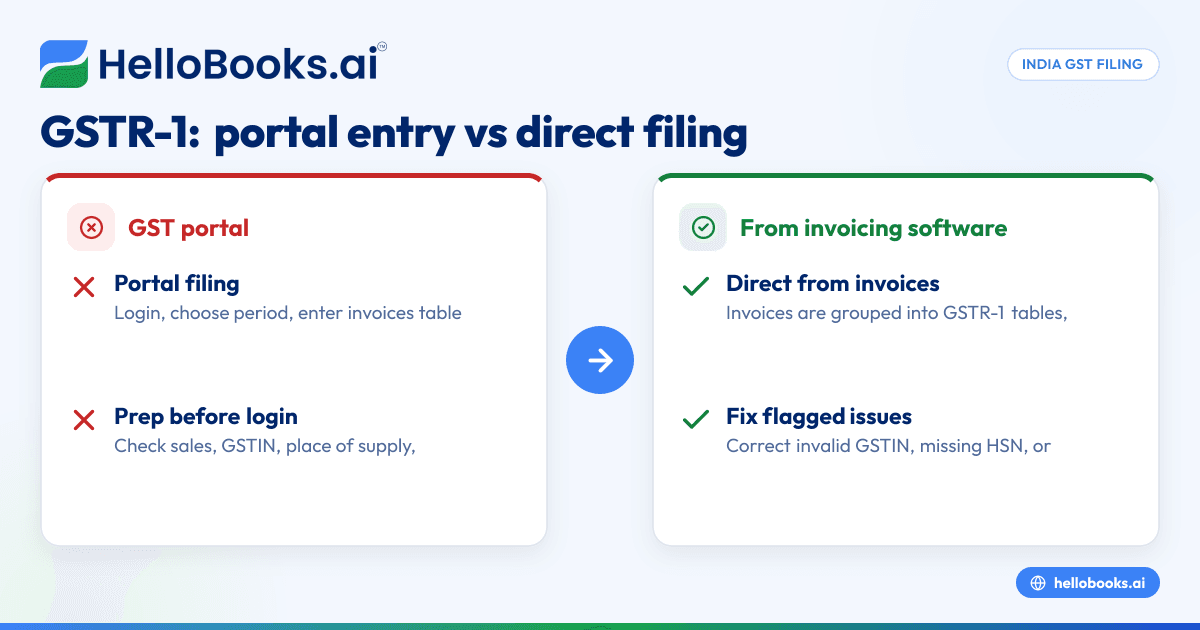
உங்களிடம் மிகக் குறைந்த invoice count இருந்தால், அல்லது ஒரு மாதத்தில் சில B2B invoices மட்டும் இருந்தால், GST Portal-ல் prepare online செய்து file செய்வது போதுமான வழி. இது இந்தியாவில் பல proprietors, freelancers, consultants இன்னும் பயன்படுத்தும் method.
பொதுவான flow:
- GST Portal-ல் login செய்யுங்கள்
- Returns dashboard-க்கு செல்லுங்கள்
- relevant financial year மற்றும் period தேர்வு செய்யுங்கள்
- GSTR-1 tile-ஐத் திறக்குங்கள்
- applicable tables-ல் records add செய்யுங்கள்
- preview / summary பார்க்குங்கள்
- submit செய்து file செய்யுங்கள்
இது theory-யில் simple. ஆனால் practice-ல் சிரமம் வருவது:
- ஒவ்வொரு invoice-யும் மீண்டும் type செய்ய வேண்டி வருதல்
- B2B vs B2C classification குழப்பம்
- place-of-supply தவறுகள்
- note adjustments தவறவிடுதல்
- HSN summary கைமுறையாக compile செய்ய வேண்டியது
- invoice register, bank credits, inventory movement, GST return மூன்றும் வேறு வேறு files-ல் இருப்பது
Invoice count அதிகமாகும் போது manual entry-யின் hidden cost time அல்ல; rework. அதனால்தான் பல Indian businesses books-லிருந்தே return file செய்யும் வழிக்கு மாறுகின்றன.
Books-லிருந்து நேராக GSTR-1 file செய்வது எப்போது மேல்?
நீங்கள் ஏற்கெனவே software-ல் invoices raise செய்கிறீர்கள் என்றால், அதே records-லிருந்து GSTR-1 உருவாகுவது தான் cleanest method. இது duplicate typing-ஐக் குறைக்கும். குறிப்பாக:
- மாதத்திற்கு பல invoices இருந்தால்
- பல GSTINs இருந்தால்
- one state-க்கும் மேல் registrations இருந்தால்
- inventory மற்றும் sales ஒன்றோடு ஒன்று link ஆக வேண்டுமெனில்
- Tally-யிலிருந்து migrate ஆகி இருந்தால் அல்லது parallel-ஆக பயன்படுத்தினால்
HelloBooks-ல் outward invoice entries-லிருந்தே GSTR-1 build ஆகி, நேராக file செய்ய முடியும்; அதே books-லிருந்து GSTR-3B-யும் direct filing செய்யப்படுவது monthly workflow-ஐ tighter ஆக்குகிறது. Tamil Nadu + Karnataka போன்ற multi-state setup-களில் multi-GSTIN handling இருப்பதால் ஒரு login-ல் registrations பிரித்து வேலை பார்க்க முடியும். Tally பயன்படுத்தி வந்த business-க்கு connector அல்லது migration route இருப்பது, all-at-once switch செய்யாமலேயே transition செய்ய உதவும். இதைப் பற்றி Tally alternative மற்றும் HelloBooks vs Tally பக்கங்களில் context பார்க்கலாம்.
ஒரு கற்பனை கணக்கு வைத்து பார்த்தால் எங்கு தவறு நடக்கும்?
இப்போது purely illustrative and invented figures வைத்து பார்ப்போம்; இது official rate advice அல்ல, current GST rate, threshold, due date, notification changes, or sector-specific exceptions ஆகியவற்றை எடுத்துக்கொள்ளவில்லை. Current figures CBIC notifications, GST Portal instructions, மற்றும் GST law updates-ல் verify செய்யப்பட வேண்டும்.
Suppose Coimbatore-ல் உள்ள ஒரு machinery spare parts seller ஒரு period-ல் இந்த outward supplies செய்தார் என்று வைத்துக்கொள்வோம்:
- registered dealer-களுக்கு 14 invoices
- local walk-in customers-க்கு many retail sales
- ஒரு post-sale discount credit note
- இரண்டு consignments goods movement உடன் சென்றதால் e-way bill generated
- collections bank-க்கு NEFT, IMPS, UPI வழியாக வந்தது
இந்த business manual filing செய்தால்,
- B2B invoices ஒவ்வொன்றாக type செய்ய வேண்டும்
- retail sales-ஐ correct B2C summary bucket-களில் சேர்க்க வேண்டும்
- credit note மறக்கக்கூடாது
- HSN summary தனியாக total செய்ய வேண்டும்
- document count சரி பார்க்க வேண்டும்
இங்கே ஒரு invented illustration: books-ல் outward taxable value ₹4,80,000 என்று தெரிகிறது, ஆனால் portal entry-யில் ஒரு B2B invoice duplicate ஆக type செய்யப்பட்டதால் summary ₹5,20,000 போல வந்துவிட்டதாக நினைத்துக் கொள்ளுங்கள். Bank statement-ல் credited amount வேறு இருக்கும்; stock movement-ம் sold quantity-க்கு align ஆகாமல் தோன்றலாம். இப்படி mismatch வந்தால் பிரச்சனை tax calculation மட்டும் அல்ல; books credibility itself பாதிக்கப்படும்.
அதே business software-ல் invoices உருவாக்கி இருந்தால், place-of-supply, tax head split, HSN, buyer GSTIN ஆகியவை invoice stage-லேயே capture ஆகும். Goods dispatch நடந்த invoices-லிருந்து e-way bill raise செய்திருந்தால் consignment details மீண்டும் type செய்ய வேண்டிய அவசியம் குறையும். Bank statement upload செய்து AI reconciliation மூலம் receipts-ஐ invoices-உடன் match செய்தால், “இந்த invoice return-ல் போய் இருக்கிறதா, payment வந்ததா?” என்ற operational doubt குறையும். இதற்கான நடைமுறை workflow-ஐ bank reconciliation software மற்றும் GST return filing software பக்கங்களில் பார்க்கலாம்.
Filing-க்கு முன் books மற்றும் return ஒன்றாக இருக்க வேண்டியது ஏன்?
India-வில் GST filing-ஐ பலர் tax task-ஆக மட்டும் பார்க்கிறார்கள். ஆனால் நல்ல compliance என்பது sales, stock, receipts, purchase, ITC visibility ஆகியவை ஒன்றோடு ஒன்று முரண்படாமல் இருப்பது.
GSTR-1 filing-க்கு நேரடியாக உதவும் supporting controls:
- purchase bills OCR மூலம் capture செய்தல்
- GSTR-2A/2B reconciliation மூலம் supplier-side visibility பார்க்குதல்
- reverse charge அல்லது TDS/TCS entries side-sheet-ல் அல்ல, books-லேயே capture செய்தல்
- inventory movement invoice-உடன் link செய்தல்
- financial reports மூலம் turnover vs receivables review செய்தல்
GSTR-1 outward return ஆனாலும், inward side discipline இல்லாத business-ல் overall GST workflow பலவீனமாகிவிடும். உதாரணமாக, supplier invoice OCR-ஆக scan செய்து books-ல் வந்துவிட்டால், later ITC tracking எளிதாகும்; அதே ledger discipline outward reporting-க்கும் உதவும். HelloBooks-ல் OCR for purchase bills, GSTR-2A/2B reconciliation, ITC tracking, inventory, financial reports ஆகியவை ஒரே system-ல் இருப்பது இந்த alignment-ஐ உருவாக்க உதவும். Mobile app மூலம் owner field-லேயே expense அல்லது invoice பதிவு செய்யலாம்; WhatsApp-ல் Noor assistant-ஐ Hindi, English, Hinglish-ல் கேட்டு quick clarification எடுக்கலாம், though final filing judgement business மற்றும் advisor வசம் தான் இருக்க வேண்டும்.
Tamil-speaking business owner-க்கு practical workflow என்ன?
Tamil article படிக்கும் ஒருவர் பல நேரங்களில் pure tax professional அல்ல; owner, accountant, or admin person ஆக இருப்பார். அவருக்கு நல்ல workflow இதுதான்:
முதலில் invoice source ஒன்றை fix செய்யுங்கள். Excel, paper, Tally export, bank credits, WhatsApp order messages—இவை எல்லாவற்றையும் கலக்கி வைத்து GSTR-1 செய்யாதீர்கள். ஒரு single books source வேண்டும்.
அடுத்து, outward sales register clean செய்யுங்கள்:
- buyer name
- GSTIN where applicable
- invoice number and date
- place of supply
- taxable value
- tax split
- note adjustments
பிறகு bank statement upload செய்து receipts match செய்யுங்கள். இது GST law requirement அல்ல; ஆனால் operational confidence தரும். குறிப்பாக NEFT/RTGS/IMPS/UPI entries அதிகமாக இருந்தால், unmatched receipt அல்லது missing invoice எளிதாகப் பிடியும்.
அடுத்து portal-க்கு முன் ஒரு dry run summary பார்த்துக்கொள்ளுங்கள்:
- B2B total
- B2C total
- notes
- HSN summary
- document count
இந்த point-க்கு வந்தபின் தான் portal entry அல்லது direct filing செய்யுங்கள். நீங்கள் இன்னும் manual portal route-ஐ விரும்பினால், small volume-க்கு அது சரி. இல்லையெனில் software-லிருந்து direct filing safer.
Invoice creation முதல் filing வரை ஒரே flow வேண்டும் என்றால் smart invoicing, e-invoicing software, accounting software India, மற்றும் accounting software for small business போன்ற resources உதவும்.
இந்திய சட்டமும் regulator-மும் எதைப் பார்க்கச் சொல்கின்றன?
Current compliance details-க்கு unofficial blog numbers-ஐ நம்பாதீர்கள். GSTR-1 பற்றிய சட்ட அடிப்படை Central Goods and Services Tax Act, 2017, அதனுடன் வந்த rules, CBIC notifications, circulars, மற்றும் GSTN இயக்கும் GST Portal instructions-ல் பார்க்கப்பட வேண்டும். E-invoice applicability, IRN process, e-way bill rules, filing windows, nil return options, and table-level changes போன்றவை காலத்துக்கு காலம் update ஆகலாம். Exact current figure, condition, due date, threshold, or late consequence ஏதாவது தேவைப்பட்டால், அதை CBIC, GST Portal help content, மற்றும் regulator-published notifications-லிருந்து check செய்ய வேண்டும்; இல்லை என்றால் NEEDS EXPERT REVIEW.
Companies Act, 2013 கீழ் MCA compliance வைத்திருக்கும் companies-க்கு books discipline தனியாகவும் முக்கியம். Income Tax Act, 1961 கீழ் turnover, receipts, TDS accounting, audit trail போன்றவை GST records-உடன் practical-ஆக முரண்படக்கூடாது. RBI rules payment system level-ல் இருக்கும்; ஆனால் books-ல் recorded receipts bank proof-ஐ ஒத்திருக்க வேண்டும். Customer data and invoices handle செய்யும் போது DPDP Act context-லும் data handling discipline அவசியம்.
HelloBooks இந்த வேலைச்சுமையை எங்கே குறைக்கிறது?
இந்த article-க்கு relevant ஆவது filing flow-ஐ சுருக்குவது தான். HelloBooks-ல் GST invoice உருவாக்கும்போதே GSTIN, place of supply, HSN, tax head split சரியாக capture ஆகும்; அதிலிருந்து GSTR-1 direct filing நடப்பதால் மீண்டும் portal-ல் அதே invoice data type செய்ய வேண்டியதில்லை. GSTR-3B direct filing இருப்பதால் outward reporting மற்றும் summary return workflow வேறு வேறு files-ஆக சிதறுவதில்லை. E-invoice பொருந்தும் businesses-க்கு IRN மற்றும் signed QR save நேரத்திலேயே வருவது compliance duplication-ஐத் தடுக்கிறது; goods movement உள்ள invoices-க்கு e-way bill அதே flow-ல் உருவாக்க முடிவதால் dispatch data இரண்டுமுறை நிரப்ப வேண்டிய அவசியம் குறைகிறது.
Bank statement upload செய்து AI reconciliation செய்வது payment matching-க்கு உதவும்; purchase bills OCR inward capture-ஐ வேகப்படுத்தும்; TDS/TCS மற்றும் reverse charge handling side spreadsheet தேவையை குறைக்கும். Tally-யிலிருந்து வரும் businesses-க்கு migration அல்லது connector practical bridge-ஆக இருக்கும். Multi-GSTIN support பல state registrations உள்ள Indian businesses-க்கு நேரடி பயன்பாடு. தேவைப்பட்டால் pricing details-ஐ எண்ணிக்கையுடன் இங்கே சொல்லவில்லை; official page pricing தான் பார்க்க வேண்டிய இடம். Product பார்க்க demo useful.
முடிவில்: இலவசமாக file செய்வது சாத்தியம், ஆனால் “மீண்டும் type செய்யாமல்” file செய்வதே நல்லது
India-வில் GSTR-1-ஐ இலவசமாக file செய்யும் அடிப்படை வழி GST Portal தான். Invoice count குறைவாக இருந்தால் அது போதும். ஆனால் business வளரும்போது real problem filing fee அல்ல; data quality. GSTIN தவறு, place-of-supply தவறு, IGST/CGST-SGST split தவறு, credit note miss, HSN summary mismatch—இவைகள்தான் நேரத்தையும் நம்பகத்தன்மையையும் சாப்பிடும்.
அதனால் நல்ல நடைமுறை: invoices-ஐ சரியாக உருவாக்குங்கள், bank statement-ஐ match செய்யுங்கள், stock மற்றும் sales align ஆகட்டும், பிறகு books-லிருந்தே GSTR-1 file செய்யுங்கள். Current law points, rates, thresholds, deadlines, and notifications-க்கு எப்போதும் CBIC, GSTN, GST Portal official publications-ஐ consult செய்யுங்கள்.


