


Key takeaways
What this article covers, in order:
- GSTR-1 फाइल करने से पहले India-specific checklist
- GSTR-1 में आपके लिए कौन-सी tables सच में relevant होती हैं
- GST Portal पर खुद GSTR-1 फाइल करने का practical flow
- अपनी books से GSTR-1 direct file करना कब बेहतर होता है
- जगह-जगह mismatch क्यों बनते हैं: GST, bank, stock और customer data
- एक छोटी काल्पनिक स्थिति, ताकि calculation का logic साफ हो
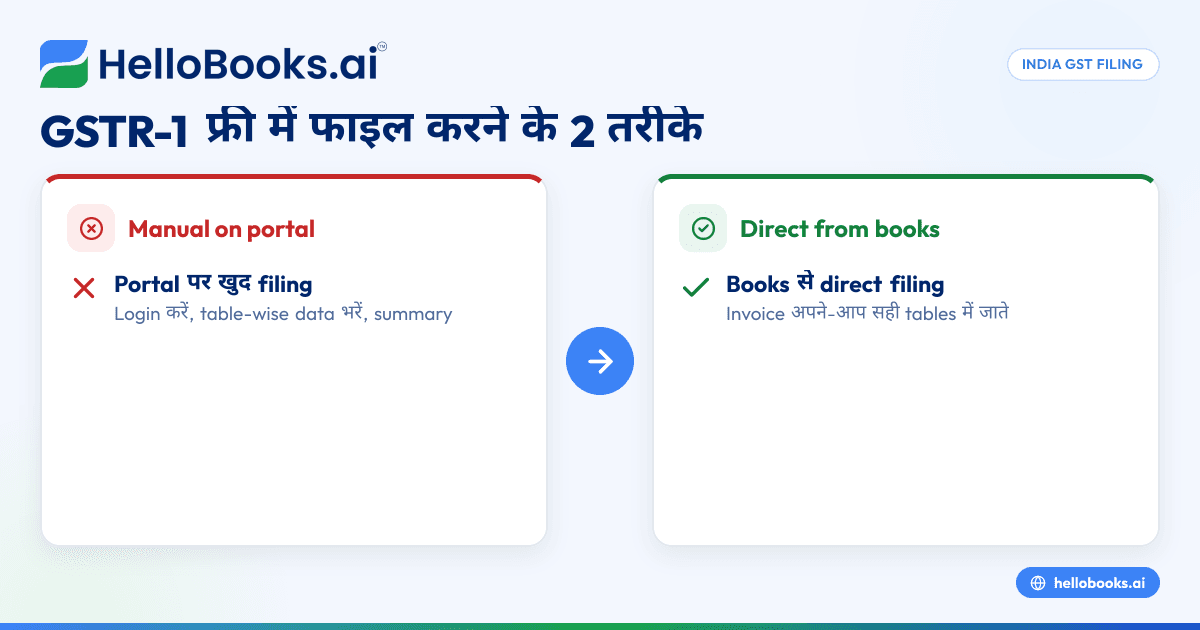
India में GSTR-1 ऑनलाइन फ्री में फाइल करने के दो सीधे रास्ते हैं: पहला, GST Portal पर खुद data भरकर; दूसरा, अपनी accounting/invoicing entries से return तैयार करके submit करना, अगर आपका software GSTR-1 direct filing देता है। GSTR-1 आपका outward supplies return है, इसलिए सबसे जरूरी काम portal खोलने से पहले invoices, GSTIN, place of supply, HSN/SAC, credit notes और B2C totals को साफ करना है। यही वह जगह है जहां ज़्यादातर गलतियां होती हैं, खासकर CGST/SGST बनाम IGST के split में।
GSTR-1 फाइल करने से पहले India-specific checklist
GSTR-1 technically portal पर भरा जाता है, लेकिन practically इसकी quality आपके sales data पर depend करती है। भारत में GST compliance का framework Central Goods and Services Tax Act, 2017, उसके तहत बने rules, और Central Board of Indirect Taxes and Customs (CBIC) तथा Goods and Services Tax Network (GSTN) के portal ecosystem पर चलता है। जो current filing rules, notifications, advisories, table mapping और utilities लागू हैं, वे CBIC, GST Council updates, और GST Portal/GSTN पर published होते हैं।
Portal में login करने से पहले यह देख लें:
- उस tax period की पूरी sales entry हो चुकी हो — cash sale, UPI receipt, NEFT/RTGS/IMPS से आए payment वाली sale, marketplace sale, सब।
- हर B2B invoice पर buyer का सही GSTIN हो।
- Place of supply सही हो, ताकि intra-state पर CGST+SGST और inter-state पर IGST सही लगे।
- HSN/SAC mapping adhoori न हो।
- Credit note, debit note, advances, export/SEZ entries अगर relevant हों तो recorded हों।
- Invoice number series में unexplained gaps न हों।
- अगर goods move हुए हैं, तो invoice और e-way bill details एक-दूसरे से टकरा न रही हों।
- अगर business e-invoicing regime में आता है, तो invoice पर IRN और signed QR data proper हो। Current applicability threshold CBIC notifications and the GST Portal पर published होती है; कोई specific figure वहीं verify करें.
अगर आप invoices smart invoicing से बनाते हैं, तो place-of-supply और tax head split पहले stage पर ही consistent रखना आसान हो जाता है। इसी वजह से बाद में GSTR-1 की B2B tables में manual corrections कम पड़ते हैं।
GSTR-1 में आपके लिए कौन-सी tables सच में relevant होती हैं
हर taxpayer को GSTR-1 की हर table नहीं भरनी पड़ती। Small trader, service provider, freelancer, distributor, manufacturer, D2C seller — सबका pattern अलग होता है। इसलिए पहले यह समझिए कि आपकी supplies किस bucket में जाती हैं। Current table structure और return schema GST Portal/GSTN पर published utility और instructions में मिलता है।
आम तौर पर practical उपयोग कुछ इस तरह होता है:
- B2B invoices: registered buyers को invoices, GSTIN-wise.
- Large inter-state B2C invoices, अगर आपकी category में applicable हों; current treatment और reporting rules GST Portal instructions पर verify करें.
- B2CS: unregistered customers की बाकी outward supplies, rate और state-wise summary में.
- Exports / SEZ / deemed export, अगर business profile में आते हों.
- Credit/debit notes.
- Nil-rated, exempt, non-GST supplies, अगर हैं.
- HSN summary.
- Documents issued summary.
- E-commerce operator related tables, अगर आपके sales उस channel से report होते हों.
यहां सबसे बड़ी India-specific problem यह होती है कि books में sale record तो है, लेकिन GST classification साफ नहीं है। उदाहरण के लिए, invoice Tally में बना, payment UPI से आया, dispatch पर e-way bill भी बना, लेकिन place of supply गलत पड़ा हुआ है। Return के समय वही गलती CGST/SGST बनाम IGST mismatch बन जाती है। HelloBooks में GST invoice बनाते वक्त customer GSTIN, place of supply और tax head split साथ में handle होने से यह mismatch पहले ही पकड़ा जा सकता है, और अगर goods dispatch होते हैं तो invoice से ही e-way bill raise करना duplication कम करता है।
GST Portal पर खुद GSTR-1 फाइल करने का practical flow
अगर invoices कम हैं, या आप filing structure सीखना चाहते हैं, तो GST Portal route ठीक है। Filing facility free है, लेकिन time-cost आपका अपना होता है। Current navigation, offline utility availability, JSON import options, EVC/DSC flow और advisories GST Portal पर published रहती हैं।
सामान्य flow यह रहता है:
- GST Portal में login करें।
- Returns dashboard पर relevant financial year और period चुनें।
- GSTR-1 open करें।
- Nil return तभी चुनें जब उस period में reportable outward supply सच में न हो।
- Relevant tables में invoice-wise या summary-wise data भरें।
- Summary generate करें।
- Preview देखें और sales register से मिलान करें।
- Declaration के बाद EVC या DSC से file करें, जैसा आपके GSTIN type पर applicable हो; current authentication rules GST Portal पर verify करें.
Portal पर manual filing करते समय ये practical बातें याद रखें:
- B2B invoice में buyer GSTIN की typo सबसे महंगी गलती बन सकती है, क्योंकि सामने वाले buyer की 2A/2B visibility और आपकी outward reporting का link इसी से बनता है।
- B2CS summary में state-wise aggregation गलत करना आसान है, खासकर जब payment channels mixed हों — cash, UPI, card, bank transfer।
- HSN summary और documents issued table अक्सर लोग आख़िर में छोड़ देते हैं।
- अगर portal timeout दे रहा हो, तो पहले data sales register या spreadsheet में clean करके रखें।
अगर आपका data scattered है — कुछ Tally में, कुछ Excel में, कुछ bank statement में, कुछ purchase docs PDF में — तो filing से पहले books clean करना ज्यादा जरूरी हो जाता है। यही वह जगह है जहां uploaded bank statement से reconciliation useful होती है: monthly bank statement upload करके receipts match करने से sale omission पकड़ना आसान होता है। ध्यान रहे, India use case में bank statement upload किया जाता है, live feed नहीं। यह bank reconciliation और ai-bookkeeping वाले workflow का practical हिस्सा है।
अपनी books से GSTR-1 direct file करना कब बेहतर होता है
जब invoice volume बढ़ जाता है, portal पर एक-एक invoice भरना जल्दी थका देता है। तब accounting software से return बनाना बेहतर रहता है, बशर्ते entries साफ हों। HelloBooks भारत में invoices से GSTR-1 और GSTR-3B direct file करता है, इसलिए return का base वही data बनता है जो आपने day-to-day billing में use किया था। इससे duplicate typing घटती है। आप इसे gst return filing और accounting software India के combined workflow की तरह समझ सकते हैं।
यह route खासकर तब useful है जब:
- आपका B2B invoice count बढ़ रहा हो
- Multiple GSTINs हों
- Sales team, accountant और CA सबको same system access चाहिए
- Tally से migration या parallel use चल रहा हो
- Inventory और GST books को अलग-अलग नहीं रखना चाहते हों
India में बहुत businesses अब भी Tally-centric हैं। इसलिए transition का practical सवाल होता है: क्या पुराना data छूट जाएगा? यदि आप tally alternative route explore कर रहे हैं, तो Tally migration/connector workflow मदद कर सकता है ताकि trial के दौरान books और GST process एकदम टूटे नहीं।
जगह-जगह mismatch क्यों बनते हैं: GST, bank, stock और customer data
GSTR-1 filing को लोग सिर्फ return-filing task मानते हैं, जबकि यह data-discipline task ज़्यादा है। भारत में mismatches आम तौर पर इन कारणों से बनते हैं:
- Invoice तो बना, पर receipt bank statement में किसी short name से आई
- Customer registered था, पर B2C treat कर दिया
- Local supply पर IGST या inter-state supply पर CGST+SGST लगा दिया
- Credit note books में है, पर return period में map नहीं हुआ
- E-invoice IRN वाला final invoice और books का draft invoice अलग record हो गया
- Inventory outward movement हुई, पर sale posting pending रह गई
- Branches या states अलग GSTIN से काम कर रहे हैं, पर sales एक ही ledger में गिर रही हैं
HelloBooks जैसे system में place-of-supply logic, GST head split, inventory movement और return filing का data एक ही flow में रहने से ये mismatches जल्दी सामने आते हैं। अगर आप multiple states में काम करते हैं, तो multi-GSTIN support useful होता है; और team-based work में unlimited users से owner, accountant और CA अलग-अलग login से वही data देख सकते हैं।
Purchase side भी indirectly relevant है। GSTR-1 outward return है, लेकिन जब books overall clean होते हैं, तभी GSTR-3B और ITC side पर consistency रहती है। Supplier bills को OCR से capture करना और 2A/2B reconciliation से ITC tracking करना direct GSTR-1 feature नहीं है, फिर भी overall GST discipline सुधारता है, क्योंकि sales और purchase books अलग-अलग spreadsheet islands में नहीं रहते।
एक छोटी काल्पनिक स्थिति, ताकि calculation का logic साफ हो
मान लीजिए यह illustrative और invented स्थिति है, असली advice नहीं। Figures सिर्फ समझाने के लिए हैं, और यह calculation कई real-life complexities छोड़ती है — जैसे mixed supplies, later amendments, sector-specific rules, export documentation, e-commerce adjustments, और legal interpretation। Current reporting treatment हमेशा CGST Act, 2017, relevant rules, CBIC notifications, और GST Portal instructions से verify करें.
मान लीजिए पुणे का एक seller अप्रैल के लिए तीन तरह की outward supplies record करता है:
- एक registered buyer, Karnataka को B2B invoice
- Maharashtra के walk-in customers को कई B2C sales
- एक credit note, जो पिछले invoice के against issue हुआ
Illustrative invented numbers लें: B2B taxable value ₹80,000, Maharashtra B2C total taxable value ₹35,000, और credit note taxable reduction ₹5,000। अगर Karnataka supply inter-state है, तो उसका reporting bucket B2B side में जाएगा और tax head सामान्यतः IGST side पर reflect होगा, subject to actual place-of-supply rule under GST law. Maharashtra walk-in sales B2CS summary में state-wise aggregate हो सकती हैं, subject to current portal instructions. Credit note original invoice linkage के साथ note table में रिपोर्ट होगा।
इस स्थिति में return भरते समय accountant को तीन चीज़ें cross-check करनी होंगी:
- Karnataka buyer का GSTIN सही है या नहीं
- Maharashtra B2C totals payment mode से नहीं, supply reporting logic से aggregate हुए हैं या नहीं
- Credit note सही period और correct original reference के साथ capture हुआ है या नहीं
यही वह काम है जो manual portal filing में time खाता है। अगर invoices पहले से compliant format में बने हों, e-invoice applicable होने पर IRN वहीं capture हो, और return books से generate हो, तो same data दोबारा टाइप नहीं करना पड़ता।
“फ्री” का मतलब क्या है, और कहां hidden effort लगता है
Search करने वाला अक्सर पूछता है: “GSTR-1 free में कैसे file करें?” सही जवाब यह है कि GST Portal पर filing facility free है, लेकिन आपका समय free नहीं है। अगर आप खुद filing करते हैं, तो hidden effort यहां लगता है:
- data cleaning
n- GSTIN correction
- HSN/SAC mapping
- place of supply review
- invoice series check
- amendment/credit note linkage
- summary reconciliation
इसीलिए बहुत businesses पहले invoice system सुधारते हैं, बाद में return filing आसान हो जाती है। अगर आपको सिर्फ invoice compliance tighten करनी है, तो smart invoicing और e-invoicing software relevant पड़ते हैं। अगर main problem return upload है, तो gst return filing ज़्यादा relevant होगा। Pricing देखने के लिए cost figures article में quote करने के बजाय official page देखना बेहतर है: pricing.
Hindi में काम करने वाले owners के लिए practical workflow
India में owner अक्सर desktop accounting language और रोज़मर्रा की business language अलग रखते हैं। Books Tally/Excel में होती हैं, payment UPI/NEFT से आता है, staff WhatsApp पर बात करता है, और filing CA के साथ होती है। इस reality में best workflow वही है जो Hindi या Hinglish usage को disturb न करे।
अगर owner phone से bill raise करना चाहता है, mobile app useful है। अगर accountant supplier bills photo/PDF से डालता है, OCR entry speed बढ़ाती है। अगर owner को WhatsApp पर Hindi/Hinglish में bookkeeping सवाल पूछने हैं, Noor assistant practical हो सकता है। लेकिन filing की core quality फिर भी invoices, GSTIN, place of supply, HSN, credit notes और bank reconciliation पर टिकी रहती है।
Free India tools भी शुरुआती checking में काम आते हैं। Filing से पहले GSTIN verify करना, HSN check करना, invoice field validation या reconciliation sanity check useful हो सकता है। इस context में GSTIN validator, HSN code search, GST invoice validator और GST reconciliation checker practical support दे सकते हैं।
किन मामलों में CA या GST expert से review लेना चाहिए
कुछ situations में DIY filing risky हो सकती है। जैसे:
- export, SEZ, LUT/bond related reporting
- e-commerce operator based sales complexity
- heavy amendments across months
- reverse charge questions
- TDS/TCS interaction in books
- multiple states और multiple GSTIN structure
- business transfer, merger, cancellation, or unusual document series issues
यहां law का exact application facts पर depend करता है। Governing law CGST Act, 2017, IGST Act, 2017, relevant rules, और CBIC/GST Portal guidance है। Company law angle हो तो Companies Act, 2013 और filings for corporate governance Ministry of Corporate Affairs (MCA) ecosystem में आते हैं; payment and banking operations broader sense में Reserve Bank of India (RBI) regulated rails जैसे NEFT, RTGS, IMPS, UPI से जुड़े हो सकते हैं। Data handling करते समय privacy compliance context में Digital Personal Data Protection Act, 2023 (DPDP Act) का broader relevance भी ध्यान में रखना चाहिए, especially जब invoices, customer data और bank records process हो रहे हों।
अगर आपके numbers material हैं — कहें rupee terms में lakh या crore level exposure — या books messy हैं, तो final filing से पहले expert review prudent है।
सीधे जवाब में निष्कर्ष
India में GSTR-1 फ्री में फाइल करने का सबसे सरल जवाब यह है: कम invoices हों तो GST Portal पर खुद file करें; volume बढ़े, multiple GSTIN हों, e-invoice/IRN, e-way bill, stock, bank receipts और GST reconciliation साथ संभालनी हो, तो books से direct filing बेहतर रहती है। सबसे अहम काम due date के दिन portal से लड़ना नहीं, बल्कि उससे पहले invoices और classifications को साफ करना है। वही आपकी GSTR-1 को सही बनाता है, और वही GSTR-3B, ITC tracking, customer reconciliation और financial reports को भी stable रखता है.


