


Key takeaways
What this article covers, in order:
- सबसे पहले तय करें: गलती GSTR-1 में है, GSTR-3B में है, या दोनों में
- छूटा हुआ sales invoice कैसे पकड़ें और कैसे रिपोर्ट करें
- buyer का GSTIN गलत हो गया तो correction अलग तरह से सोचें
- CGST+SGST की जगह IGST लगा दिया, या उलटा कर दिया
- ITC छूट गया या ज़्यादा claim हो गया तो क्या करें
- GSTR-3B में tax कम भर दिया हो या nil return गलती से file हो गया हो
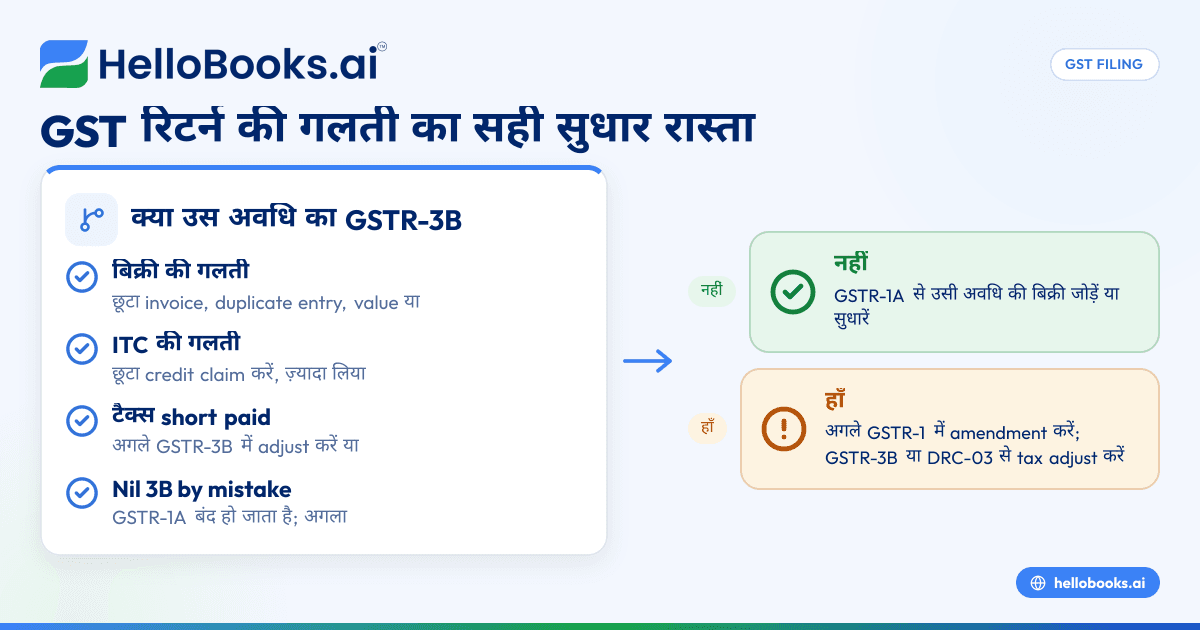
भारत में फाइल हो चुका GST रिटर्न आम तौर पर “revise” नहीं होता, लेकिन इसका मतलब यह नहीं कि गलती हमेशा के लिए फँस गई। GSTR-1 की बिक्री-संबंधित गलतियाँ आमतौर पर बाद के GSTR-1 में amendment या missed invoice reporting से सुधरती हैं, GSTR-3B की tax liability या ITC की गलतियाँ बाद के GSTR-3B या जरूरत पड़े तो DRC-03 से संभाली जाती हैं। सही रास्ता इस बात पर निर्भर है कि गलती sales में है, ITC में है, tax head में है, या आपने nil return गलती से भर दिया।
सबसे पहले तय करें: गलती GSTR-1 में है, GSTR-3B में है, या दोनों में
भारत के GST सिस्टम में यह फर्क बहुत महत्वपूर्ण है क्योंकि GSTR-1 outward supplies का return है, जबकि GSTR-3B self-assessed summary return है। इन रिटर्न्स का ढांचा Central Goods and Services Tax Act, 2017, Integrated Goods and Services Tax Act, 2017 और उनके तहत बने नियमों से निकलता है; इन्हें लागू और administer CBIC करती है, और filing flow GSTN तथा GST Portal पर चलता है। किसी भी current table, functionality, advisory, due date या amendment window की latest position आपको GST Portal, GSTN advisories और CBIC notifications/circulars में देखनी चाहिए।
व्यावहारिक तौर पर अपने आप से ये चार सवाल पूछिए:
- क्या छूटा हुआ या गलत डेटा sales invoice से जुड़ा है?
- क्या गलती buyer GSTIN, place of supply, CGST/SGST बनाम IGST या taxable value में है?
- क्या समस्या ITC की है, यानी purchase bill claim/reversal से जुड़ी है?
- क्या tax कम जमा हुआ, ज़्यादा जमा हुआ, या return nil चला गया?
अगर आपकी books और GST data अलग-अलग spreadsheet, Tally export और portal entry में बिखरे रहते हैं, तो correction के समय confusion बढ़ता है। इसी वजह से कई businesses return filing से पहले invoices, purchase bills और bank collections को एक जगह मिलाकर देखते हैं। HelloBooks में invoice से ही GSTR-1 और GSTR-3B तैयार और file करने का flow इस mismatch को कम करता है, और bank statement upload के बाद AI reconciliation से receipt-vs-invoice gaps जल्दी दिख जाते हैं।
छूटा हुआ sales invoice कैसे पकड़ें और कैसे रिपोर्ट करें
सबसे आम गलती यही होती है: invoice बना, माल निकला, कभी e-way bill भी बन गया, payment UPI, NEFT, RTGS या IMPS से आ गई, लेकिन वह invoice filed return में नहीं गया। ऐसे मामले में correction का रास्ता इस पर निर्भर करता है कि उस tax period का GSTR-3B file हो चुका है या नहीं।
अगर sales invoice outward supplies का हिस्सा था, तो उसका source document, invoice date, GSTIN, place of supply और tax head सही होना जरूरी है। Current correction mechanics GST Portal पर उपलब्ध filing journey, tables और advisories के अनुसार follow करनी चाहिए; exact workflow portal updates के साथ बदल सकता है, इसलिए latest instruction वहीं देखें।
यहाँ एक illustrative and invented स्थिति मान लीजिए: दिल्ली का एक trader अपने books में ₹48,000 का एक B2B invoice दर्ज कर चुका था, buyer का GSTIN भी सही था, लेकिन वह invoice filed sales data में शामिल नहीं हुआ। यह सिर्फ समझाने के लिए invented figure है; इसमें interest computation, sector-specific exemption, credit notes और portal auto-population behavior शामिल नहीं हैं. ऐसे में आमतौर पर व्यवसाय अगले eligible return cycle में उस original invoice date के संदर्भ के साथ missing invoice report करता है, ताकि buyer के GSTR-2B flow पर भी असर eventually सही दिशा में जाए।
यहीं पर compliant GST invoicing मदद करती है। अगर invoice बनाते समय GSTIN, HSN/SAC, place of supply और CGST/SGST या IGST split ठीक capture हो, तो बाद में छूटे invoice को पहचानना आसान होता है। HelloBooks में sales invoice बनाते समय tax head split और place-of-supply logic साथ चलता है, और जहाँ e-invoice लागू है वहाँ IRN और signed QR के साथ document trail भी साफ रहता है।
buyer का GSTIN गलत हो गया तो correction अलग तरह से सोचें
buyer का GSTIN गलत डालना सिर्फ typing error नहीं होता; उसका असर recipient के ITC पर पड़ सकता है। भारतीय GST framework में B2B invoice सही GSTIN पर report न हो तो buyer अपने GSTR-2B में उसे नहीं देख पाएगा, और फिर payment hold, vendor follow-up और CA escalation शुरू हो जाती है।
इस तरह की गलती में आपको दो स्तर पर सोचना पड़ता है:
- books में invoice master data सही करें,
- return side पर eligible amendment route से correction करें।
क्योंकि GST data GSTN पर flow होता है और invoice-level matching recipient visibility को प्रभावित करती है, इसलिए current amendment facility, permissible fields और time limit की latest position GST Portal और CBIC notifications में verify करनी चाहिए. अगर आप कोई specific cut-off बताना चाहते हैं, तो उसे official source से ही लें; otherwise NEEDS EXPERT REVIEW.
एक illustrative and invented उदाहरण लें: मान लीजिए जयपुर के supplier ने ₹1,20,000 की taxable value वाला invoice अपने regular customer को दिया, लेकिन GSTIN में एक digit गलत चली गई। यह figure invented है, और इसमें sector-specific documentation, debit/credit note implications, e-invoice cancellation window या litigation risk शामिल नहीं हैं। ऐसी स्थिति में practical correction का मकसद यह होता है कि गलत recipient mapping हटे और सही GSTIN पर invoice visibility आए। buyer को proactively सूचित करना अच्छा रहता है, ताकि वह अपने GSTR-2B और vendor reconciliation को उसी अनुसार देख सके।
ऐसी गलती कम करने के लिए GSTIN validation useful होता है। यदि invoice बनाने से पहले GSTIN verify हो जाए, तो amendment की नौबत कम आती है। HelloBooks के साथ invoice बनाते समय GST details structured रहती हैं, और quick checks के लिए GSTIN validator जैसे India tools भी काम आते हैं।
CGST+SGST की जगह IGST लगा दिया, या उलटा कर दिया
भारत में place of supply की गलती बहुत costly confusion बन सकती है। intra-state supply में सामान्यतः CGST और SGST का split आता है, जबकि inter-state supply में IGST लागू होता है; लेकिन exact tax treatment supply type, location facts और law-specific exceptions पर निर्भर करता है। इस व्यवस्था का आधार CGST Act, 2017, IGST Act, 2017 और place-of-supply provisions हैं; official interpretation के लिए CBIC circulars, notifications और the text of the law देखें।
जब गलत tax head report हो जाता है, तो correction सिर्फ arithmetic नहीं होता। आपको outward supply reporting, books classification, customer communication और cash flow impact सब साथ देखना पड़ता है। कई बार सही head में tax discharge और गलत head में paid amount के adjustment/refund process अलग से arise होते हैं। उसका exact treatment facts पर निर्भर करेगा, इसलिए specific liability, refund route या interest consequence बिना official source देखे adopt न करें — NEEDS EXPERT REVIEW.
एक illustrative and invented स्थिति लें: मुंबई का supplier गलती से पुणे के buyer के local supply invoice को IGST के रूप में रिकॉर्ड कर देता है, जबकि उसे CGST और SGST split देखना चाहिए था. यहाँ figures deliberately omitted हैं, क्योंकि actual tax amount, adjustment pathway और supporting evidence facts पर depend करेंगे. यह सिर्फ concept समझाने के लिए है कि source invoice correction, place-of-supply review और return amendment साथ-साथ सोचना पड़ता है।
ऐसी गलती रोकने में software का real value correction के बाद नहीं, correction से पहले दिखता है। HelloBooks invoice बनाते समय place-of-supply के आधार पर tax head split को guide करता है, और e-way bill की जरूरत हो तो invoice data से वही विवरण आगे ले जाना आसान हो जाता है, जिससे retyping error कम होते हैं। अगर आप portal पर draft invoice fields cross-check करना चाहते हैं, तो GST invoice validator भी उपयोगी हो सकता है।
ITC छूट गया या ज़्यादा claim हो गया तो क्या करें
Input Tax Credit की गलती outward supply से अलग तरह से handle होती है। ITC का framework Section 16 of the CGST Act, 2017 सहित संबंधित प्रावधानों, rules और CBIC guidance से govern होता है। supplier filing, recipient eligibility, blocked credit, possession of tax invoice, receipt of goods/services और reflection issues जैसी बातें facts के अनुसार महत्व रखती हैं। GSTR-2A/2B की utility और current matching behavior GST Portal/GSTN पर प्रकाशित guidance से verify करनी चाहिए।
दो प्रकार की practical situations आती हैं:
ITC claim करना भूल गए
अगर purchase bill genuine है, business use से जुड़ा है, documentation available है और law के तहत claim admissible है, तो कई मामलों में बाद की eligible return period में claim किया जाता है, subject to the statutory time limit published in the CGST Act/Rules and reflected in official GST guidance. Specific cut-off quote करने से पहले official source देखें; otherwise NEEDS EXPERT REVIEW.
एक illustrative and invented स्थिति: लुधियाना का wholesaler एक supplier bill books में OCR से capture कर चुका था, लेकिन month-end return बनाते समय उसे ITC working में शामिल नहीं किया। bill value यहाँ जानबूझकर omitted है, क्योंकि admissibility सिर्फ amount से तय नहीं होती; reverse charge, blocked credit, goods receipt status और supplier filing जैसे पहलू इसमें शामिल नहीं हैं। अगर bill बाद में GSTR-2B reconciliation में दिखता है, तो taxpayer typically अपने advisor के साथ eligibility check करके subsequent period में claim route देखता है।
ITC ज़्यादा claim हो गया
यह अधिक संवेदनशील स्थिति है क्योंकि इसमें excess claim reversal, tax payment, possible interest implications और documentation का सवाल उठता है। Exact computation, interest basis और disclosure method official law text, CBIC clarifications और GST Portal instructions से verify करें. कोई bare figure इस्तेमाल करने के बजाय updated official source देखें।
ऐसे मामलों में purchase-side discipline बहुत मदद करता है। HelloBooks में OCR से purchase bills capture करना, GSTR-2A/2B reconciliation और ITC tracking देखना, तथा reverse charge या TDS/TCS treatment को books में सही दिखाना corrections को ज्यादा defensible बनाता है। अगर आप पहले sanity check करना चाहते हैं, तो GST reconciliation checker उपयोगी starting point हो सकता है।
GSTR-3B में tax कम भर दिया हो या nil return गलती से file हो गया हो
कई taxpayers की सबसे stressful गलती यही होती है: data books में था, लेकिन GSTR-3B filed summary में liability कम चली गई, या nil filing हो गई। GSTR-3B self-assessed return है, इसलिए underpayment को lightly नहीं लेना चाहिए। Tax payment, electronic liability register, cash ledger utilization, DRC-03, interest exposure और correction mechanics की current position GST Portal, CBIC instructions और relevant statutory provisions से verify की जानी चाहिए।
अगर tax short-paid है, तो आम तौर पर आपको यह देखना होगा:
- short payment books में कैसे पैदा हुई,
- क्या source sales data ही गलत था,
- क्या GSTR-1 और GSTR-3B mismatch है,
- और क्या regular subsequent return adjustment sufficient है या DRC-03 route देखना चाहिए।
एक illustrative and invented स्थिति लें: किसी service provider ने अपने ledger में ₹3,75,000 की taxable outward supply दर्ज की, bank statement में receipt भी दिख रही है, पर filed GSTR-3B में उससे कम liability चली गई। यह invented figure है; इसमें advance adjustment, exempt turnover, export treatment, TDS credit, amendments और exact interest computation शामिल नहीं हैं। ऐसी स्थिति में advisor आमतौर पर books, bank statement, invoice register और filed return को line-by-line मिलाकर shortfall quantify करता है और फिर official correction route अपनाता है।
nil return गलती से file होना भी इसी परिवार की समस्या है। अगर period में वास्तव में supplies, expenses, reverse charge items या ITC activity थी, तो nil filing के बाद correction strategy facts-driven होगी। bare procedural promise देना सुरक्षित नहीं है; portal functionality, subsequent amendment scope और payment mechanics official source से confirm करें — NEEDS EXPERT REVIEW.
Bank statement upload यहाँ surprisingly useful होता है, क्योंकि कई owners को असली mismatch books से नहीं, collections से पकड़ में आता है। HelloBooks में uploaded bank statement का AI reconciliation receipts को invoices से मिलाकर दिखा सकता है, जिससे “return nil था लेकिन पैसा आया था” जैसी red flag जल्दी सामने आती है।
correction करते समय books, stock और portal तीनों को साथ मिलाइए
GST correction सिर्फ portal activity नहीं है। अगर आपने invoice return में amend कर दिया लेकिन books, inventory, e-way bill reference, party ledger या Tally data update नहीं किया, तो बाद में audit trail टूट जाता है। भारतीय businesses में अक्सर यही होता है कि accountant portal पर कुछ और ठीक करता है, owner WhatsApp पर कुछ और बताता है, और books में अलग entry रह जाती है।
इसलिए correction checklist को तीन भागों में देखें:
- Source document — tax invoice, purchase bill, debit note, credit note, e-invoice IRN, e-way bill, GSTIN.
- Books impact — sales register, purchase register, output tax, ITC ledger, stock movement, receivables/payables.
- Return impact — GSTR-1, GSTR-3B, reconciliation, cash payment, possible DRC-03.
अगर आपका legacy setup Tally में है, तब भी transition period में data consistency बनाए रखना जरूरी है। HelloBooks का Tally migration/connector और multi-GSTIN setup उन businesses के लिए practical रहता है जो एक से अधिक राज्य में GSTIN चलाते हैं और अलग-अलग users को same books पर काम कराते हैं। Inventory management भी useful है, क्योंकि कभी-कभी return mistake का पहला संकेत stock movement और outward supply में mismatch से मिलता है।
correction करने से पहले किन official sources को ज़रूर देखें
GST में rates, deadlines, thresholds, interest, penalties, amendment windows और filing behavior बदल सकते हैं। इसलिए किसी blog के आधार पर final filing decision मत लीजिए। भारत में reliable source hierarchy सामान्यतः यह रहती है:
- CBIC की notifications, circulars, press releases और law text
- GST Portal की advisories, help content और filing screens
- GSTN के system updates
- आपके facts पर लागू CGST Act, 2017, IGST Act, 2017 और rules
- जहाँ company law interaction हो, वहाँ Companies Act, 2013 और MCA records
- जहाँ payment trail या banking evidence matter करे, वहाँ RBI-regulated banking records and account statements
- customer/vendor data handling के context में privacy process सोचते समय Digital Personal Data Protection Act, 2023 का operational impact भी relevant हो सकता है
यदि आप correction से पहले working बनाना चाहते हैं, तो GST calculator, HSN code search और GST return filing software जैसे resources आपकी preparation आसान कर सकते हैं। invoice discipline मजबूत करना हो तो smart invoicing, और अगर e-invoice/IRN flow आपके business पर लागू है तो e-invoicing software देखना उपयोगी रहेगा।
HelloBooks correction को कैसे आसान बनाता है
गलती हो जाने के बाद कोई software कानून नहीं बदल सकता, लेकिन correction का pain काफी कम कर सकता है। जब sales invoices, purchase bills, GSTR-1, GSTR-3B, bank statement reconciliation और ITC tracking एक ही system में दिखते हैं, तो “गलती कहाँ हुई” यह जल्दी पकड़ में आता है। buyer GSTIN, place of supply, CGST/SGST बनाम IGST, reverse charge और inventory impact साथ दिखें तो amendment working भी साफ बनती है।
HelloBooks में India-focused GST invoicing, direct GSTR-1 और GSTR-3B filing, GSTR-2A/2B reconciliation, OCR-based purchase capture, uploaded bank statement reconciliation और multi-GSTIN handling इस तरह के correction workflow में practical मदद देते हैं। अगर आपको हिंदी या Hinglish में quick guidance चाहिए, तो Noor assistant on WhatsApp से books-related सवाल पूछना भी कई owners के लिए आसान पड़ता है। product fit, setup या workflow समझना हो तो demo देख सकते हैं, और plan details के लिए /in/pricing सही जगह है।
अंतिम बात सीधी है: filed GST return को आमतौर पर वापस खोलकर rewrite नहीं किया जाता, लेकिन भारत में ज़्यादातर गलतियों का corrective route होता है। फर्क बस इतना है कि सही route चुनना होगा — amendment, subsequent claim/reversal, tax payment adjustment, या DRC-03 — और वह official law, CBIC guidance और GST Portal की current functionality देखकर ही चुनना चाहिए।


