


Key takeaways
What this article covers, in order:
- GSTR-3B में ITC claim का असली आधार क्या है
- GSTR-2B, purchase register और supplier filing का रिश्ता
- कौन-सी बुनियादी शर्तें पूरी हों तभी ITC सुरक्षित माना जाए
- किन खरीदों पर credit नहीं मिलता, चाहे invoice कितना भी साफ हो
- Mixed use, exempt supply और reversal को नज़रअंदाज़ करना क्यों खतरनाक है
- GSTR-3B की Table 4 भरते समय कहाँ सबसे ज़्यादा गलती होती है
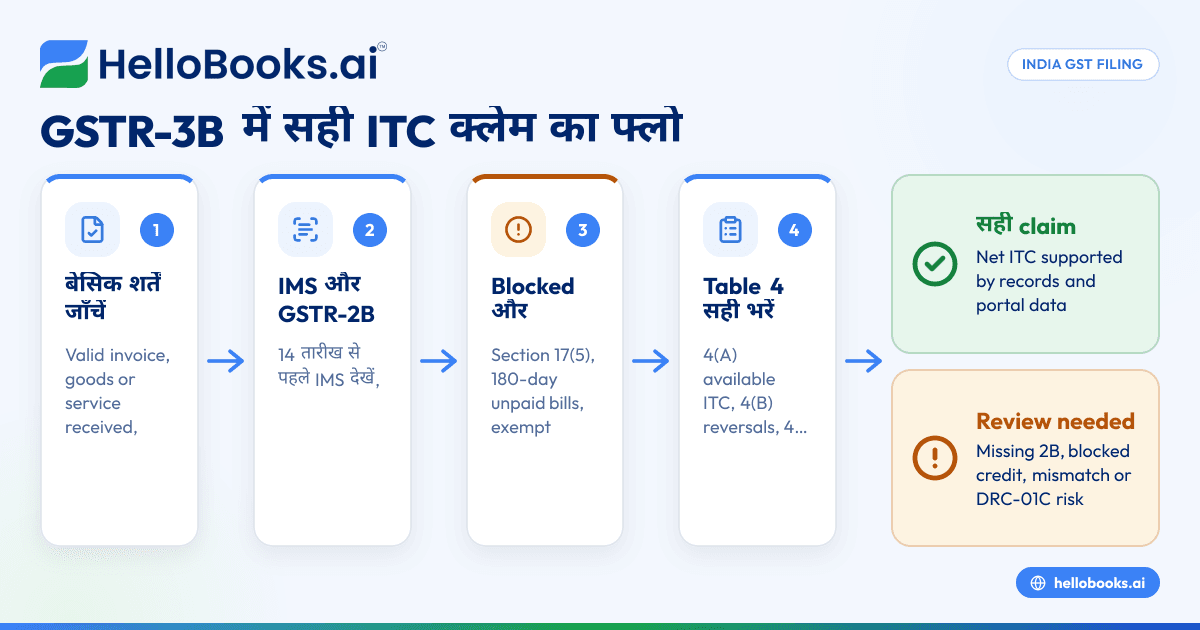
India में GSTR-3B में इनपुट टैक्स क्रेडिट सही तरीके से क्लेम करने का सीधा जवाब यह है: सिर्फ वही ITC लें जिसे आप GST कानून के तहत साबित कर सकें—वैध tax invoice या debit note हो, supply वास्तव में मिली हो, आपका GSTIN सही हो, entry GSTR-2B से reconcile होती हो, blocked credit न हो, और जहाँ reversal बनता हो वहाँ उसे घटाया गया हो। भारत में यह ढांचा Central Goods and Services Tax Act, 2017, CGST Rules, 2017 और Central Board of Indirect Taxes and Customs (CBIC) तथा GSTN/GST Portal पर प्रकाशित guidance से चलता है.
GSTR-3B में ITC claim का असली आधार क्या है
बहुत से कारोबारियों को लगता है कि purchase register में GST दिख गया तो credit मिल ही जाएगा। भारत में ऐसा नहीं है। GST के तहत ITC का सवाल सिर्फ accounting entry का नहीं, legal eligibility का है। आपका accountant, आपका CA, और अंततः GST Portal—तीनों यह देखेंगे कि credit लेने की शर्तें पूरी हुईं या नहीं।
यहाँ मुख्य कानूनी आधार CGST Act, 2017 की section 16, section 17, और ज़रूरत पड़ने पर section 18 से आता है। इन sections की आधिकारिक wording CBIC द्वारा प्रकाशित Act text और GST Portal पर उपलब्ध सामग्री में देखी जा सकती है। GSTR-3B के Table 4 में जो ITC आप दिखाते हैं, वह ideally आपकी books, supplier filings, और GSTR-2B के बीच align होना चाहिए।
सीधी भाषा में, claim वही मजबूत है जो इन बातों पर टिकता हो:
- supplier registered हो और invoice tax invoice/debit note के रूप में वैध हो,
- goods या services आपको मिल चुकी हों,
- invoice details आपकी records और GSTR-2B से मेल खाती हों,
- खर्च business use के लिए हो,
- credit section 17(5) के तहत blocked न हो,
- जहाँ proportionate reversal या 180-day payment rule जैसा मुद्दा हो, वहाँ उचित adjustment किया गया हो.
अगर आप multiple states में काम करते हैं, अलग GSTINs रखते हैं, या interstate billing करते हैं, तो place of supply और tax head split की गलती भी ITC risk पैदा करती है। इसी वजह से invoice बनाते समय CGST/SGST बनाम IGST का सही split ज़रूरी है। smart invoicing और accounting software India जैसे workflows तभी उपयोगी बनते हैं जब invoice data बाद में return filing और reconciliation से जुड़ता हो।
GSTR-2B, purchase register और supplier filing का रिश्ता
भारत में ITC dispute का सबसे आम कारण यह नहीं कि buyer ने expense record नहीं किया; कारण यह है कि supplier data और buyer data आपस में नहीं मिलता। GSTN के ecosystem में GSTR-2B एक महत्वपूर्ण reference statement है। इसका legal effect और operational use CBIC circulars, CGST Rules और GST Portal/GSTN documentation में समझाया जाता है। current treatment और portal behaviour हमेशा official source पर verify करना चाहिए, क्योंकि return system features समय-समय पर update होते रहते हैं.
आपकी books में कोई purchase bill हो सकता है, OCR से capture भी हो सकता है, payment भी NEFT, RTGS, IMPS या UPI से हो चुका हो; फिर भी अगर supplier ने सही GSTIN पर सही invoice report नहीं किया, तो ITC claim पर सवाल उठ सकता है। इसलिए practical routine यह होना चाहिए:
- purchase bill books में दर्ज करें,
- supplier GSTIN validate करें,
- bill values और tax heads reconcile करें,
- GSTR-2B से match करें,
- mismatch होने पर supplier से correction माँगें,
- तभी GSTR-3B में Table 4 numbers final करें.
यहीं gst return filing software तब उपयोगी होता है जब purchase-side data और GSTR-2A/2B reconciliation एक ही flow में दिखे। HelloBooks में purchase bills को OCR से capture करके GSTR-2A/2B reconciliation और ITC tracking के साथ देखा जा सकता है, ताकि missing invoice, duplicate claim, wrong GSTIN, या tax amount mismatch filing से पहले पकड़ा जा सके।
अगर business पहले से Tally में data maintain करता है, तो migration या connector approach भी मदद करती है, क्योंकि कई Indian firms GST working एक जगह और books दूसरी जगह रखने के कारण mismatch बढ़ा देती हैं। ऐसे cases में tally alternative या compare/hellobooks-vs-tally जैसे pages decision support दे सकते हैं, पर final compliance view books और portal data के मेल पर ही निर्भर रहेगा।
कौन-सी बुनियादी शर्तें पूरी हों तभी ITC सुरक्षित माना जाए
कानून की बुनियादी eligibility conditions समझे बिना GSTR-3B भरना risky है। CGST Act, 2017 section 16(2) इस विषय की core provision है। इसके तहत broadly यह देखा जाता है कि recipient के पास prescribed document हो, supply प्राप्त हुई हो, tax सरकार तक पहुँचा हो, और return properly furnished हो। exact wording और latest interpretation CBIC notifications, circulars और judicial rulings में देखना चाहिए।
Practical level पर आप यह checklist अपनाएँ:
1) document सही हो
Cash memo, estimate, quotation, proforma invoice या सिर्फ WhatsApp image पर्याप्त नहीं होते जब तक prescribed tax document requirements पूरी न हों। Invoice पर supplier का GSTIN, आपका GSTIN (जहाँ लागू हो), invoice number, date, taxable value, tax breakup, place of supply जैसी बातें सही होनी चाहिए, जैसा Rule 46 और संबंधित GST provisions में prescribed है; official text CBIC/GST Portal पर उपलब्ध है।
2) supply वास्तव में मिली हो
Goods physically received हों, या services वास्तव में render हुई हों। अगर goods multiple lots में आए हों, तो entitlement का timing अलग हो सकता है; इसका official legal basis CGST Act/Rules में published text से verify करें।
3) supplier data reconcile हो
अगर supplier ने wrong GSTIN पर upload किया, B2B के बजाय B2C report कर दिया, या taxable value/tax amount गलत डाल दिया, तो buyer के लिए claim मुश्किल हो सकता है।
4) business purpose हो
Personal use की purchases पर ITC सामान्यतः उपलब्ध नहीं होती। Business और personal खर्च mix हों तो allocation और reversal जरूरी हो सकता है।
5) payment-related conditions न टूटें
कुछ स्थितियों में supplier payment न होने पर reversal का मुद्दा आता है। इस rule की exact time limit, interest implications और restoration mechanics bare fact के रूप में नहीं बतानी चाहिए; current legal position CGST Act, 2017 section 16 और CBIC/GST Portal पर प्रकाशित material में verify करें।
HelloBooks में purchase bill entry, OCR capture, tax head split और reconciliation एक साथ होने से यह visibility मिलती है कि कौन-सा bill केवल books में है, कौन-सा GSTR-2B में है, और कौन-सा ITC के लिए hold पर रखना चाहिए। अगर owner Hindi या Hinglish में काम करता है, तो Noor assistant on WhatsApp पर basic bookkeeping context समझना आसान हो सकता है, लेकिन legal interpretation के लिए CA review फिर भी ज़रूरी रहता है।
किन खरीदों पर credit नहीं मिलता, चाहे invoice कितना भी साफ हो
भारत में ITC का सबसे misunderstood हिस्सा blocked credits है। इसका primary source CGST Act, 2017 section 17(5) है, जिसकी latest official wording CBIC द्वारा प्रकाशित Act text में देखी जानी चाहिए। व्यापारी अक्सर यह मान लेते हैं कि अगर GST invoice है और payment bank से हुई है, तो credit मिल जाएगा। यह हमेशा सही नहीं है।
आम business situations में risk वाले खर्च ये हो सकते हैं:
- motor vehicles और उनसे जुड़ी कुछ expenses,
- food and beverages, outdoor catering, beauty treatment, health services,
- club, health, fitness membership,
- employee travel benefit type expenses,
- construction of immovable property on own account,
- personal consumption,
- lost, stolen, destroyed, written off goods,
- gifts और free samples.
लेकिन हर line item का treatment fact-specific हो सकता है। उदाहरण के लिए, अगर vehicle transportation business के core use में है, या employer पर कोई statutory obligation है, तो analysis अलग हो सकता है। इसलिए section 17(5) को mechanically पढ़ना पर्याप्त नहीं; business model के हिसाब से पढ़ना पड़ता है।
मान लीजिए, यह illustrative और invented स्थिति है: एक Jaipur-based design studio ने महीने में कुल ₹1,18,000 के purchase bills record किए। इनमें से ₹18,000 एक staff celebration catering bill का GST component है, ₹9,000 founder के personal travel-linked expense पर tax है, और ₹21,000 software subscriptions व office supplies पर tax है। यह calculation सिर्फ समझाने के लिए invented है और इसमें mixed-use apportionment, legal exceptions, या judicial interpretation शामिल नहीं है। इस तरह की स्थिति में पूरा ₹1,18,000 eligible मान लेना गलत हो सकता है; blocked या personal-use items पहले अलग करने पड़ेंगे। Exact treatment NEEDS EXPERT REVIEW.
Mixed use, exempt supply और reversal को नज़रअंदाज़ करना क्यों खतरनाक है
कई Indian businesses सिर्फ taxable outward supply नहीं करते। कोई trader कुछ goods taxable बेचता है, साथ में exempt items भी; कोई consultant taxable services देता है लेकिन कुछ receipts GST से बाहर हो सकती हैं; कोई company common office rent, electricity, software, admin costs दोनों तरह के supplies के लिए use करती है। ऐसे cases में ITC पूरी तरह available नहीं भी हो सकती।
इस area का कानूनी आधार CGST Act, 2017 section 17(1), section 17(2) और संबंधित CGST Rules, विशेषकर apportionment/reversal से जुड़ी rules में मिलता है। Latest formulas, methodology और disclosures CBIC notifications/rules text तथा GST Portal guidance में verify किए जाने चाहिए।
अगर आप common input services पर पूरा credit ले लेते हैं और बाद में exempt turnover factor निकलता है, तो annual adjustment या periodic reversal का issue बन सकता है। यही वह जगह है जहाँ ad hoc अंदाज़ सबसे ज़्यादा नुकसान करते हैं।
एक illustrative और invented स्थिति लें: एक trader की books में महीने का input tax ₹84,000 दिख रहा है। उसमें से ₹30,000 सिर्फ taxable business line से जुड़ा है, ₹14,000 clearly blocked category में है, और बाकी ₹40,000 common overheads से जुड़ा है। अब यदि business taxable और exempt supplies दोनों करता है, तो इस ₹40,000 का treatment apportionment rules के अनुसार होगा। यह figure पूरी तरह समझाने के लिए invented है; इसमें turnover definition, non-business use, annual true-up, capital goods adjustment या specific rule mechanics शामिल नहीं हैं। इसलिए इसे filing figure की तरह use नहीं करना चाहिए—NEEDS EXPERT REVIEW.
यहीं अच्छी accounting hygiene बहुत काम आती है। अगर inventory, expense heads और GST tagging साफ रहे, तो common credits और ineligible credits जल्दी अलग किए जा सकते हैं। inventory और expense management software जैसे workflows किताबों और GST working के बीच clarity बढ़ाते हैं।
GSTR-3B की Table 4 भरते समय कहाँ सबसे ज़्यादा गलती होती है
GSTR-3B एक summary return है, लेकिन summary का मतलब guesswork नहीं है। Table 4 में eligible ITC, ineligible ITC, reversals और net figures का logic समझना पड़ता है। Table labels और latest portal instructions GSTN/GST Portal पर published user guidance में देखने चाहिए, क्योंकि portal UI और disclosure buckets समय के साथ बदल सकते हैं।
व्यवहार में सबसे आम errors ये हैं:
- books से gross GST उठा लेना, blocked credits घटाए बिना,
- GSTR-2B mismatch invoices को भी claim में शामिल कर लेना,
- reverse charge entries का गलत treatment,
- credit note impact ignore करना,
- import/ISD/other source buckets को गलत map करना,
- same invoice का दो बार claim,
- किसी previous month hold item को current month में claim करते समय audit trail न रखना.
अगर आपका business reverse charge, TDS/TCS adjustments, interstate purchases, e-invoice vendors, या multiple branches handle करता है, तो manual spreadsheet जल्दी unreliable हो जाती है। HelloBooks में GSTR-1 और GSTR-3B direct filing का लाभ तब सामने आता है जब outward data उसी system से आता है जिसमें invoices और tax heads पहले से recorded हों, और purchase side पर GSTR-2A/2B reconciliation और ITC tracking available हो। इससे Table 4 तैयार करते समय कम-से-कम यह दिखता है कि कौन-सा amount books-driven है और कौन-सा portal-backed.
जहाँ outward supply invoice side पर IRN और signed QR की requirement लागू होती है, वहाँ e-invoicing discipline indirect रूप से ITC environment भी सुधारता है क्योंकि source data structured रहता है। उसी तरह, e-way bill details invoice data से flow हों तो goods movement trail भी साफ रहता है। इन workflows के बारे में e-invoicing software और e-way bill software पर और देखा जा सकता है।
Supplier follow-up, bank proof और document trail कितनी अहम है
India में ITC सिर्फ portal mismatch का मामला नहीं; documentation trail का भी मामला है। अगर notice आए, तो आपको अक्सर यह दिखाना पड़ता है कि purchase genuine थी, supply मिली थी, payment हुआ था, और business use था। यहाँ accounting records, invoice copies, delivery proofs, GRN, agreements, email trail, and bank evidence सब महत्व रखते हैं।
ध्यान रहे: bank proof का मतलब यह नहीं कि bank transaction अपने-आप ITC दे देता है। Payment evidence केवल एक supporting fact है। फिर भी NEFT/RTGS/IMPS/UPI entries और vendor ledger का मेल genuine transaction establish करने में सहायक होता है। HelloBooks में India के लिए bank statement upload करके AI reconciliation किया जा सकता है, यानी monthly statement upload कर के receipts/payments को books से match किया जाता है; यह live bank feed नहीं है। bank reconciliation software और ai bookkeeping इस काम की practical context देते हैं।
Purchase side पर OCR से supplier bill capture करने का फायदा यह है कि PDF, scan या phone photo से bill जल्दी books में आ जाता है, जिससे later-stage scramble कम होता है। लेकिन OCR entry के बाद GSTIN, invoice number, taxable value, tax amount और place-of-supply जैसी fields verify करना अभी भी ज़रूरी है। आप basic checks के लिए GSTIN validator, HSN code search, GST invoice validator और GST reconciliation checker जैसे free India tools का use कर सकते हैं।
India में एक practical monthly routine जो notices का जोखिम घटाता है
हर business का volume अलग है—किसी का turnover lakh में है, किसी का crore में। किसी के पास एक GSTIN है, किसी के पास multiple states में registrations हैं। फिर भी एक disciplined monthly routine ITC disputes को काफी कम कर सकता है।
पहला, inward bills जल्दी capture करें। अगर staff email, paper file, WhatsApp image और vendor portal—चार जगह bills फैले रहेंगे, तो omission तय है।
दूसरा, supplier master साफ रखें। GSTIN, legal name, state, place of supply logic और whether supplier normally files on time—ये notes उपयोगी होते हैं।
तीसरा, month close से पहले books बनाम GSTR-2B mismatch रिपोर्ट देखें। Missing invoices supplier को तुरंत escalate करें।
चौथा, blocked credit bucket अलग रखें। Office pantry, staff welfare, personal-use blended costs, promo samples, vehicle-related spends—इनको शुरुआत से टैग करें।
पाँचवाँ, common credits को identify करें। अगर business taxable और exempt दोनों supplies करता है, तो CA के साथ reversal logic पहले से तय रखें।
छठा, bank statement upload करके payment trail reconcile करें। यह खास तौर पर तब मदद करता है जब vendor follow-up करना हो या 180-day payment-related issue पर evidence चाहिए हो।
सातवाँ, return file करने से पहले outward और inward data को एक साथ देखें। अगर outward side पर गलत place-of-supply split है, तो customer disputes, amendment workload और downstream reconciliation सब बढ़ते हैं।
आठवाँ, multi-GSTIN business हो तो state-wise books discipline रखें। One-login visibility useful है, पर return और ITC eligibility अंततः GSTIN level पर ही देखी जाती है।
HelloBooks का उपयोग यहाँ practical हो जाता है क्योंकि एक ही setup में GST invoicing, सही CGST/SGST या IGST split, purchase bill OCR, GSTR-2A/2B reconciliation, ITC tracking, GSTR-1 और GSTR-3B filing, inventory movement, financial reports और multi-GSTIN work संभाला जा सकता है। Mobile app से invoices और expenses capture हो सकते हैं, और team size बढ़ने पर unlimited users वाला setup internal coordination आसान बनाता है। Product fit देखने के लिए demo या India overview यहाँ देखा जा सकता है; pricing details के लिए केवल India pricing देखें.
CA को कब involve करना चाहिए और कब software अकेला काफी नहीं होता
Software discipline देता है, proof trail बनाता है, और reconciliation तेज करता है; लेकिन हर ITC question software-only answer नहीं है। निम्न स्थितियों में CA या GST specialist की राय लेना बेहतर है:
- section 17(5) के grey-area expenses,
- mixed taxable/exempt business,
- reverse charge-heavy model,
- imports, cross-charge, or branch allocation issues,
- old-period corrections,
- departmental notice या scrutiny,
- supplier default के बावजूद buyer defense तैयार करना,
- Companies Act, MCA reporting और GST books alignment.
अगर आपका business proprietorship से company structure में move हुआ है, या funding/audit discipline बढ़ रही है, तो GST working का Companies Act, MCA filings, financial statements और Income-tax Act effects से तालमेल भी महत्वपूर्ण हो जाता है। Payment data, vendor KYC, record retention और privacy handling पर broader compliance context में RBI-facing payment practices और DPDP law awareness भी useful हो सकती है, भले ITC question का core answer GST law से ही आता हो।
अंत में, GSTR-3B में सही ITC claim करना formula याद करने का काम नहीं; यह evidence, classification, reconciliation और timing का काम है। भारत में जो ITC सबसे सुरक्षित है, वह वही है जो invoice से लेकर bank statement, GSTR-2B, business purpose और legal eligibility तक एक coherent trail बनाता हो.


