
Key takeaways
What this article covers, in order:
- What should you check before switching to AI bookkeeping?
- How does AI bookkeeping help small businesses save time and reduce errors?
- What is the best way to prepare my team for this change?
- How long does it take to fully switch from manual bookkeeping?
- Common gaps small businesses miss when switching to AI bookkeeping
- What compliance checks do I need after switching?
When your small business in India still handles bookkeeping manually, it can take up valuable time and lead to avoidable mistakes. This checklist helps owners and finance leads plan the shift from spreadsheets or Tally to AI bookkeeping solutions, so you can save effort, improve accuracy, and focus on growing your business.
What should you check before switching to AI bookkeeping?
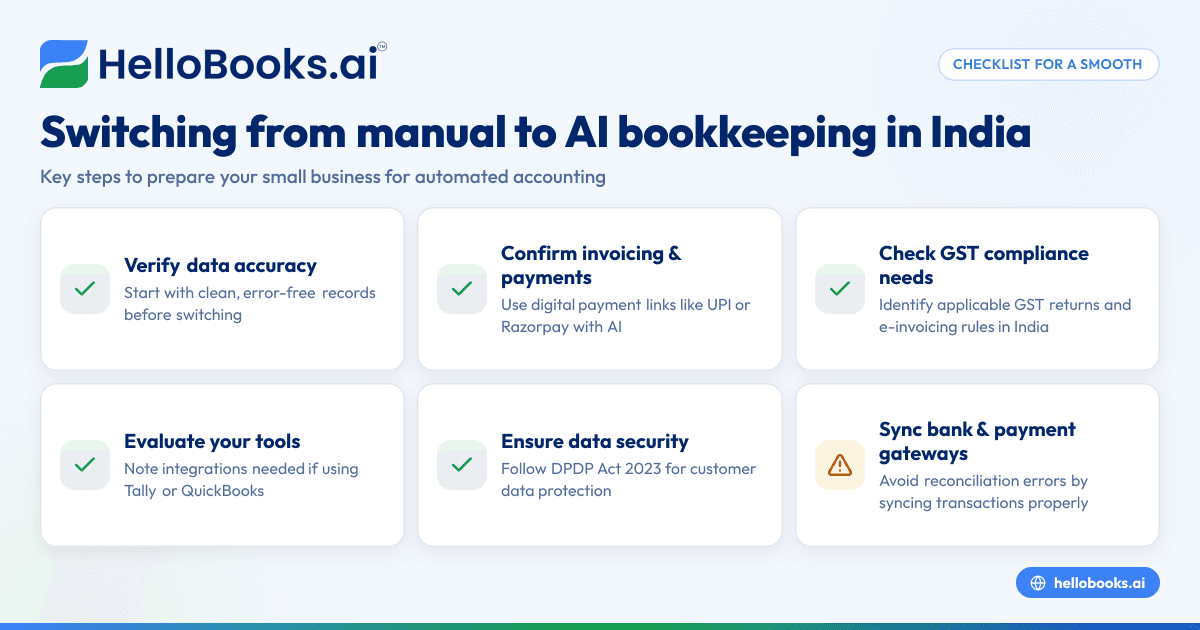
Before switching to AI bookkeeping, confirm your data accuracy, GST needs, digital payment links, and current accounting tools compatibility. Also, ensure your data security practices comply with the DPDP Act 2023.
- [ ] Verify data accuracy in your current records — clean, error-free data ensures the AI software starts with reliable inputs.
- [ ] Confirm your invoicing and payment processes — automated bookkeeping works best when linked with digital payments like UPI or Razorpay.
- [ ] Identify your GST and compliance requirements — check which GST returns and e-invoicing regulations apply to your business.
- [ ] Evaluate your existing accounting tools — note any integrations needed if you currently use Tally or QuickBooks.
- [ ] Ensure your backup and data security practices meet the DPDP Act 2023 — keeping customer data safe is crucial during transition.
Checking these factors upfront helps prevent surprises and makes adoption smoother.
How does AI bookkeeping help small businesses save time and reduce errors?
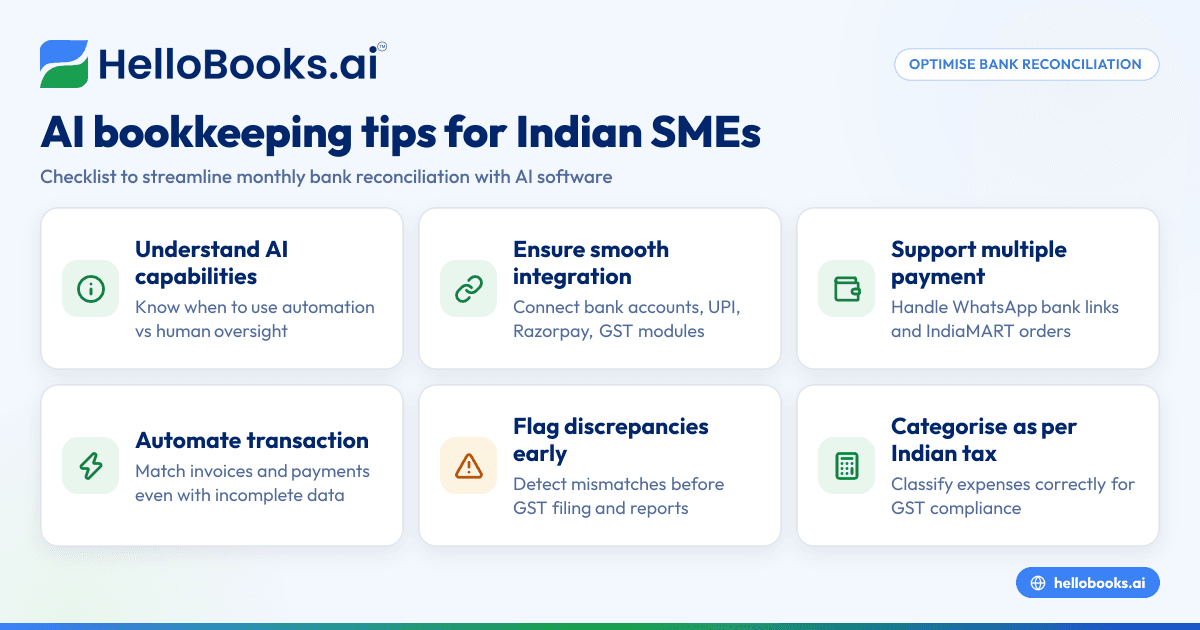
AI bookkeeping automates tasks like data entry, bank reconciliation, invoicing, and GST filing, cutting down manual work and mistakes.
This automation means you spend less time copying numbers from bills and bank statements into spreadsheets or Tally. It reduces human errors, like wrongly entered figures or duplicate invoices. Cloud-based AI software also updates financial data in real time, so you always see the latest position of your cash flows and expenses, critical for decisions especially in fast-moving markets like Mumbai or Bengaluru.
What is the best way to prepare my team for this change?
Preparing your team for AI bookkeeping starts with clear communication of benefits and hands-on training.
Explain how AI bookkeeping will reduce repetitive tasks and speed up reports. Arrange a demo to show practical use, including automated invoicing and bank reconciliation. Assign a point person to test the system with past data and focus training on your workflows, like supplier expenses or GST returns. Address concerns about job security by emphasizing automation frees time for strategic tasks.
How long does it take to fully switch from manual bookkeeping?
A full transition time varies but typically takes 4 to 8 weeks for most SMEs, depending on your data volume and complexity.
In practice, you’ll run the AI bookkeeping system in parallel with manual books initially, spotting discrepancies early. This phase is crucial to fine-tune rules the AI uses to categorise expenses or handle GST. Once your team trusts the system’s reports and reconciliations, you can confidently stop manual entries. Consistent monthly reviews during transition catch gaps and ensure on-time GST filing compliance using GST return filing software features.
Common gaps small businesses miss when switching to AI bookkeeping
- [ ] Not syncing bank accounts and payment gateways properly — missing transactions cause reconciliation errors.
- [ ] Overlooking e-invoicing requirements — if your turnover is ₹10 crore or above, you must generate e-invoices from the prescribed portal, which AI bookkeeping can automate if set up right.
- [ ] Forgetting to regularly update master data like vendor contacts and item codes — this affects GST reporting accuracy.
Checking these prevents costly rework and compliance penalties.
What compliance checks do I need after switching?
After switching, regular GST return accuracy and timely filing are essential.
Reconcile your Input Tax Credit claims to avoid mismatches. Verify e-way bills align with shipments to prevent transport issues or penalties. Your AI bookkeeping software will provide alerts and reports to monitor compliance, but periodic audits with your accountant’s help ensure ongoing accuracy.
Transitioning from manual to AI bookkeeping is a strategic move for your India-based small business. Beginning with a clear review of your current setup and preparing your team makes the change smoother. The right AI accounting software reduces errors, speeds GST compliance, and frees your finance team for more valuable tasks.
Explore how solutions like those from hellobooks.ai automate bookkeeping, bank reconciliation, invoicing, and expenses in one platform. Book a demo today at /book-a-demo to see how AI bookkeeping can transform your accounting workflow or compare plans at /pricing.
Related reading
- Quarterly Estimated Tax Payments for Delaware Small Businesses: How AI Bookkeeping Can Simplify Your Process
- How AI Bookkeeping Software Can Simplify Bank Reconciliation for Small Businesses in the United States
Read next
This article covers one part of a bigger topic. For the complete picture, read our guide to bookkeeping india.