
Key takeaways
What this article covers, in order:
- Before you start
- What are the common caveats in the GST return filing process?
- How can AI GST return filing help reduce errors and save time?
- Step 1: Collect and digitise all invoice data accurately
- Step 2: Why should I reconcile purchase data with input tax credit (ITC) claims?
- Step 3: Prepare and validate your GSTR-1 (outward supplies)
How AI Bookkeeping Can Handle Caveats in GST Return Filing Process for Indian SMEs
This post is for small business owners and finance leads in India who want to simplify their GST return filing process. By the end, you will understand how AI bookkeeping can help you handle common GST filing challenges and reduce errors.
Before you start
- Have your GST registration details and GSTIN ready.
- Gather all purchase and sales invoices for the filing period.
- Ensure your bank statements and payment records are accessible.
- Familiarise yourself with basic GST return types: GSTR-1 (outward supplies) and GSTR-3B (summary return).
What are the common caveats in the GST return filing process?
Common GST return filing challenges include invoice mismatches, incorrect or missing data, late submissions, and confusion around e-invoicing rules. These issues cause errors, delays, and penalties. Manual data entry and reconciliation are often the root causes of these problems.
The GST filing process requires accurate data from multiple sources. Mistakes such as incorrect invoice numbers or GSTINs, missing purchase invoices, and mismatched input tax credits (ITC) are frequent. Many SMEs face penalties due to late filing or errors in GSTR-1 and GSTR-3B returns. Handling e-invoicing and e-way bills adds further complexity, increasing the chances of mistakes.
How can AI GST return filing help reduce errors and save time?
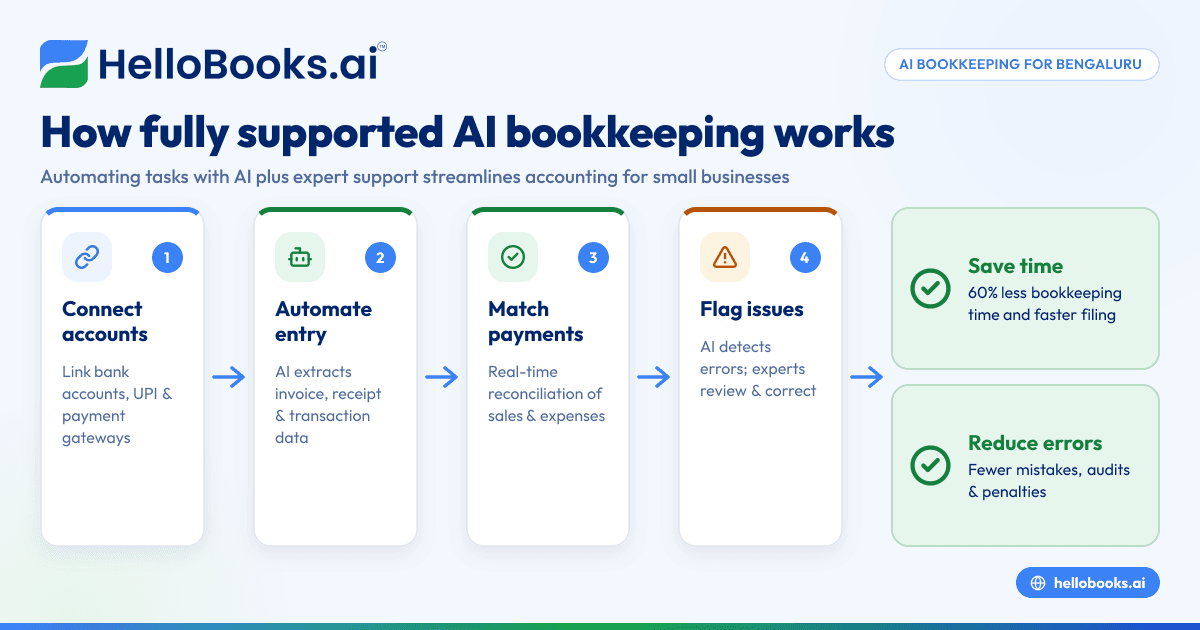
AI GST return filing automates invoice data extraction, validation, and reconciliation to minimise errors and speed up filing. It flags discrepancies and auto-populates returns, reducing manual effort and compliance risks.
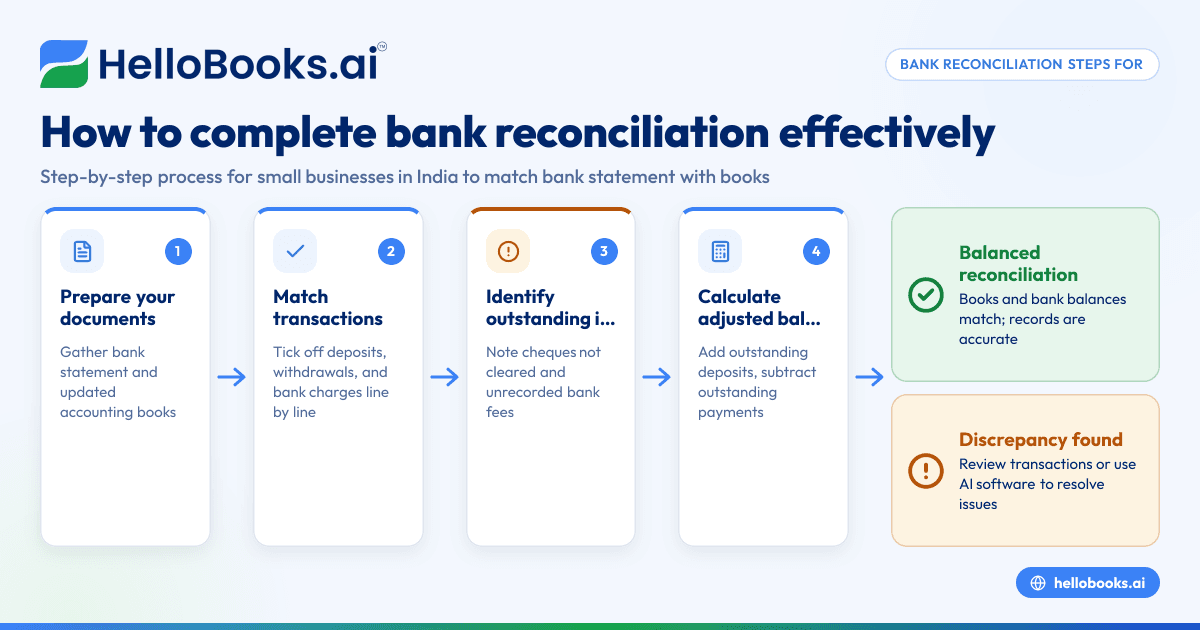
AI bookkeeping software integrates invoice capture, bank reconciliation, and GST return filing into one workflow. This ensures data consistency and compliance with GST portal requirements. By automating repetitive tasks, it frees up your time and reduces costly errors.
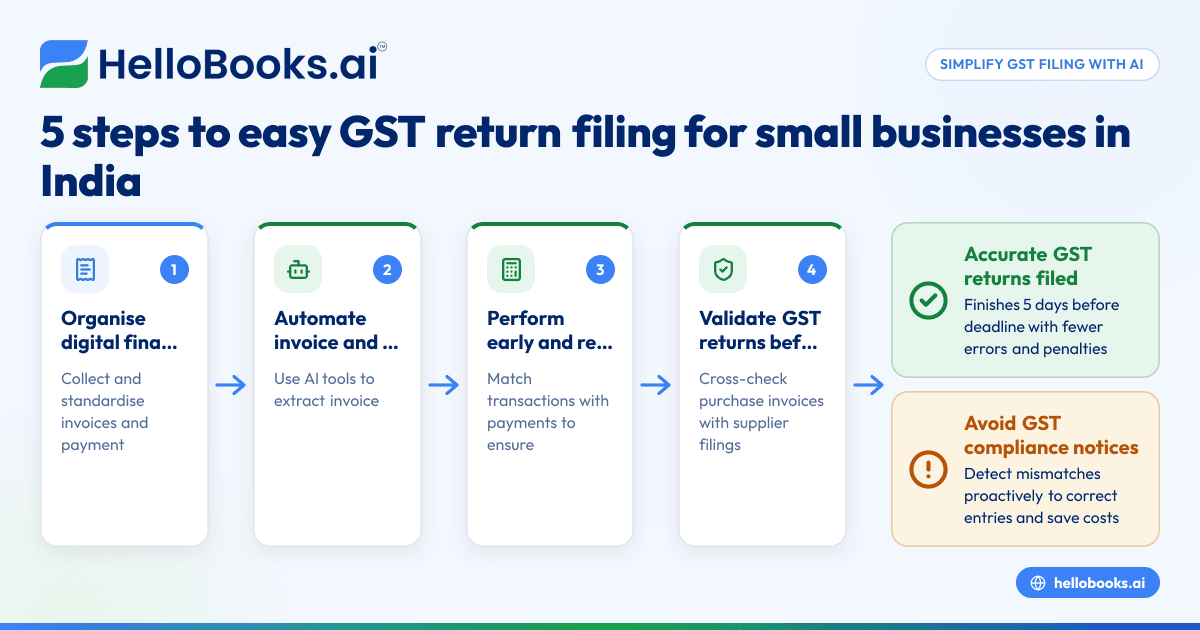
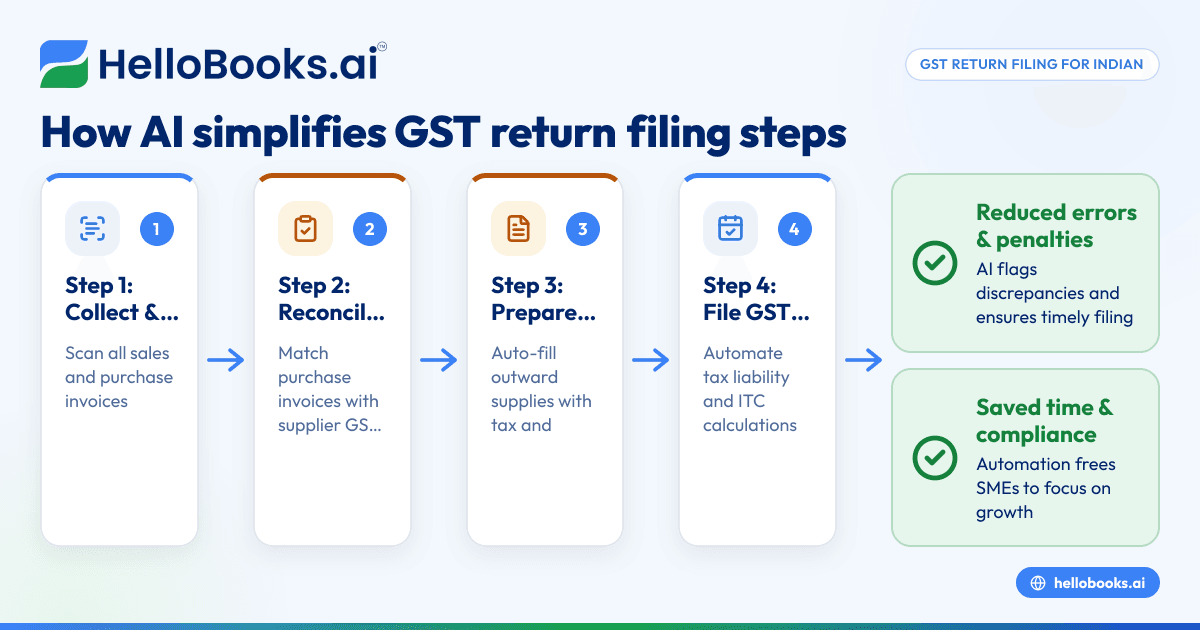
Step 1: Collect and digitise all invoice data accurately
Start by gathering all sales and purchase invoices for the GST period you are filing for. Digitise physical invoices using scanning or mobile apps. This is crucial for accurate data capture and later reconciliation. A common mistake is missing invoices or entering wrong invoice numbers or dates, which leads to filing errors.
Using AI-powered invoice software can automatically capture invoice details like GSTIN, invoice value, tax rates, and invoice date. This reduces manual typing errors and ensures completeness.
Step 2: Why should I reconcile purchase data with input tax credit (ITC) claims?
Reconciliation ensures your ITC claims match the supplier’s sales data filed in their GSTR-1. Discrepancies cause ITC rejections or notices from tax authorities. Many SMEs miss legitimate ITC due to reconciliation errors.
AI bookkeeping tools automatically match your purchase invoices against supplier data reported on the GST portal. They highlight mismatches and missing invoices, enabling you to resolve issues before filing GSTR-3B. Ignoring reconciliation risks blocked credit and compliance troubles.
Step 3: Prepare and validate your GSTR-1 (outward supplies)
GSTR-1 requires reporting all outward supplies with correct tax rates and invoice details. Mistakes here can cause downstream errors in GSTR-3B and attract penalties. A common error is incorrect classification of goods or services under GST HSN/SAC codes.
AI GST return filing software helps pre-fill this return from your digitised sales data and checks for inconsistencies. It alerts you to missing invoices, incorrect tax rates, or mismatched GSTINs before submission. This reduces the risk of rejected returns or audits.
Step 4: File your GSTR-3B summary return accurately and on time
GSTR-3B is a monthly summary of your outward and inward supplies, tax liability, and ITC claimed. Filing it late or with errors attracts interest and penalties. Many SMEs struggle with manual calculations and reconciling ITC claims against purchases.
AI bookkeeping automates the calculation of tax liabilities and ITC using your reconciled data. It generates a ready-to-file GSTR-3B return that aligns with your GSTR-1 and purchase records. This saves time and ensures compliance with deadlines (usually 20th of the next month).
Step 5: How do I manage e-invoicing and e-way bills compliance?
E-invoicing and e-way bills are mandatory for businesses with turnover above ₹10 crore. Errors in generating IRN or e-way bill details can cause GST filing failures or transport delays.
AI accounting software for small business integrates e-invoicing and e-way bill generation seamlessly. It automates creation of IRN and e-way bill numbers as per GSTN rules, reducing manual work and ensuring compliance with updated regulations.
Worked example: Filing GST returns for a Bengaluru-based SME
Imagine a Bengaluru-based SME selling handicrafts online with ₹8 crore turnover. They use manual spreadsheets and spend 5 days monthly reconciling invoices and preparing returns.
By switching to AI GST return filing software, they scan all invoices through the app, which auto-extracts data and matches supplier invoices. The software flags 3 purchase invoices missing GSTIN details and alerts the team to correct them.
The AI tool pre-fills GSTR-1 and GSTR-3B with accurate tax calculations, saving 3 days of manual work. It also generates e-way bills automatically for shipments, avoiding delays.
This SME avoids late filing penalties, improves ITC claims by ₹50,000 (illustrative), and frees up time to focus on business growth.
What should I do next to implement AI bookkeeping for GST filing?
Review your current GST filing process and identify pain points like manual data entry or reconciliation delays. Explore AI bookkeeping options offering integrated GST return filing, e-invoicing, and bank reconciliation features. Book a demo to see how this fits your workflow and reduces compliance risks.
Investing in AI GST return filing software is a practical step to save time, reduce errors, and ensure timely GST compliance for your SME.
For a closer look, you can book a demo of AI bookkeeping software or compare plans to find the best fit for your GST return filing needs.
Related reading
- GST return filing software
- How AI Bookkeeping Can Help Indian SMEs Manage GST Return Filing Efficiently, Supported with Caveats
- How Small Businesses in Andhra Pradesh Can Streamline GST Return Filing with AI Bookkeeping
Read next
This article covers one part of a bigger topic. For the complete picture, read our guide to supported with caveat.