Key takeaways
What this article covers, in order:
- How does AI bookkeeping automate data entry for small businesses in India?
- Why should I use AI-powered bookkeeping software in India for my small business?
- What limitations or caveats come with AI automation of bookkeeping?
- How do I ensure my AI bookkeeping data stays accurate and compliant?
- Example: How did AI bookkeeping help a Bengaluru tech startup save time?
- How can I get started with AI bookkeeping for my small business?
Small businesses in India often spend hours on bookkeeping tasks such as data entry, bank reconciliation and expense management. Manual work leads to errors and delays in obtaining timely financial insights. AI-powered bookkeeping software automates data entry, helping you maintain accurate books quickly and focus on growing your business.
How does AI bookkeeping automate data entry for small businesses in India?
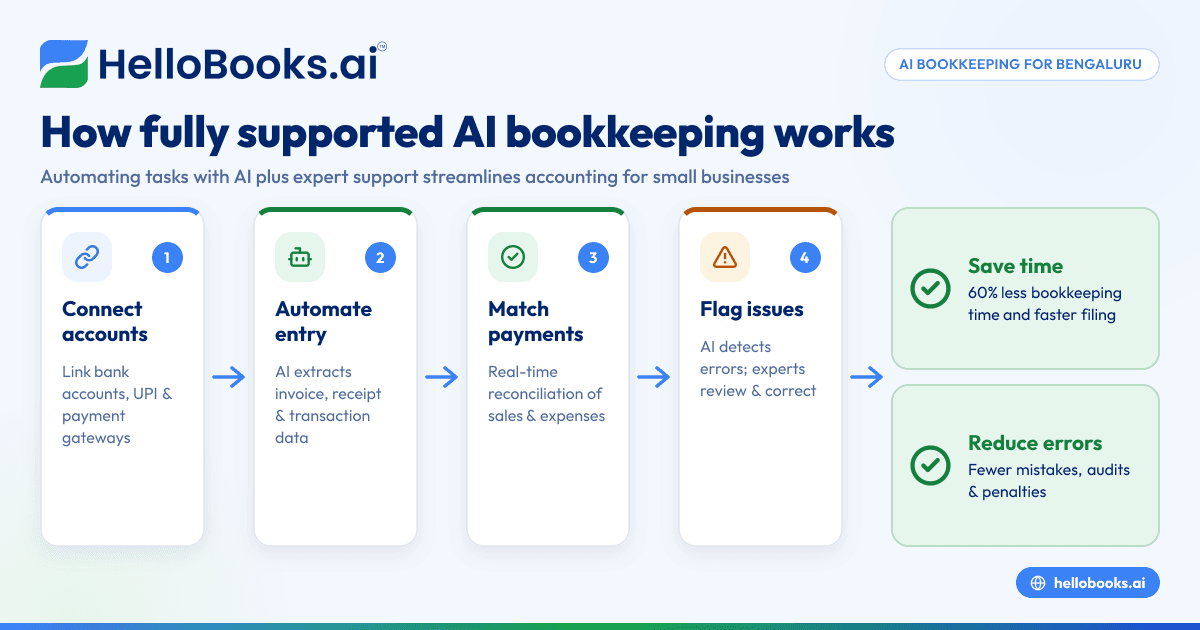
AI bookkeeping uses ai automation with machine learning and OCR to capture and categorise financial data from documents and bank feeds automatically. It recognises invoices, bills, payments and receipts, then enters details correctly into your books without manual typing.
This ai tool scans invoices (paper or PDF), extracting fields like vendor name, invoice date, amount and GSTIN. It connects to bank statements through APIs or uploads, matching transactions against invoices or payments. Expenses via UPI or Razorpay get identified and linked to the right ledger accounts. The software updates your books daily, giving you near real-time financial data. Unlike manual entry or traditional software like Tally, this process is largely paperless and hands-off, with you reviewing only exceptions.
Why should I use AI-powered bookkeeping software in India for my small business?
AI-powered bookkeeping software massively cuts the time and errors involved in manual data entry and reconciliation. For example, a Mumbai retail SME receiving hundreds of invoices monthly would usually assign a junior staff member to painstakingly enter data. With an AI tool, this happens instantly and accurately.
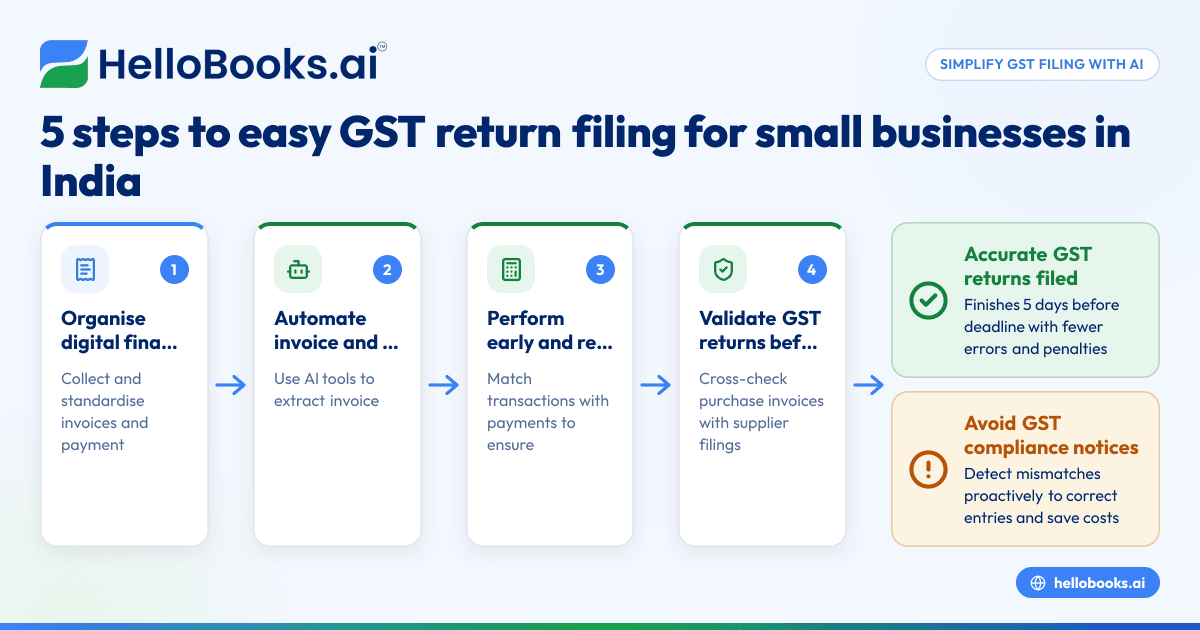
This speeds up GST return generation and financial reporting. The automation ensures compliance readiness and reduces risks of misreporting tax credits or filing errors that invite penalties. Your accounting or finance team can focus on analysis and cash flow instead of tedious tasks.
What limitations or caveats come with AI automation of bookkeeping?
AI automation helps a lot but isn’t perfect or fully hands-free. It relies on quality source documents and data feeds. Poor scans, missing GSTINs or handwritten notes cause errors or incomplete capture.
Some invoices or expenses need manual review to verify GST rates or ledger mapping, especially in complex Indian tax situations. Bank details can be ambiguous and confuse the AI. Initial setup—connecting banks, configuring chart of accounts, training AI for your vendors and customers—takes effort. For users used to Tally, the learning curve can be steep. The system improves over time but human oversight remains essential.
How do I ensure my AI bookkeeping data stays accurate and compliant?
Regular review is key. Your finance lead or accountant should check data quality and GST compliance often, ensuring input tax credits are correctly claimed. Keep software updated with GST changes like e-invoicing and e-way bill requirements.
Archive source documents digitally and maintain audit trails, important if GST authorities inspect your records. Using an AI tool integrated with GST return filing software and bank reconciliation software helps spot anomalies automatically.
Combining AI automation with human oversight delivers speed and accuracy without risking compliance. This hybrid approach fits Indian SMEs moving beyond spreadsheets but not ready to outsource accounting fully.
Example: How did AI bookkeeping help a Bengaluru tech startup save time?
A Bengaluru SaaS startup with ₹50 lakh annual revenue struggled with monthly data entry and reconciliation in Tally, spending 12 hours a month. After adopting an AI-powered accounting software built for Indian SMEs, their invoices—including vendor bills and utility payments—were automatically read by OCR and categorised.
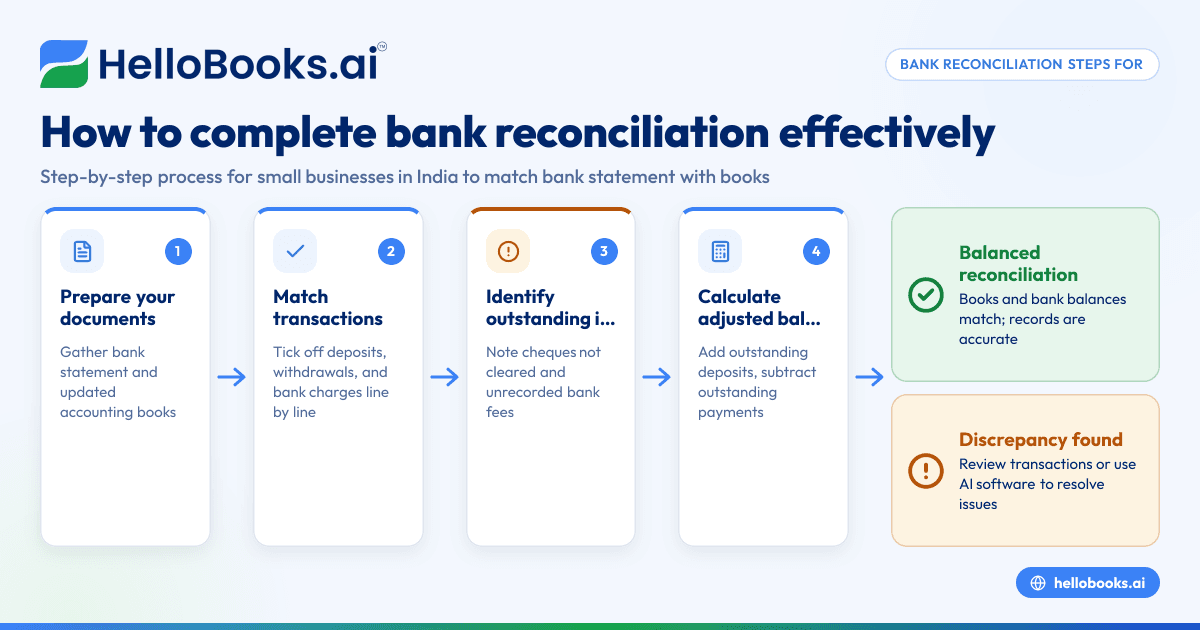
Bank transactions uploaded daily were automatically reconciled, and GST input credits matched precisely. Data entry time dropped to under 2 hours monthly. Finance staff focused on cash flow forecasting and budgeting. Tax filing became faster and more accurate. The software’s AI learning improved accuracy as it adapted to their vendor and tax nuances.
How can I get started with AI bookkeeping for my small business?
Start by evaluating accounting software in India that includes AI bookkeeping features. Verify it offers easy bank integration, GST and e-invoicing support, plus expense management software.
Trial demos are useful to test AI automation on your documents. Remember, implementation involves more than installation—it requires data migration, staff training, and GST setup. Choosing software integrating with the full compliance workflow, such as GST return filing software, helps too.
To explore how AI bookkeeping fits your business, you can book a demo or compare plans tailored for your needs.
AI software streamlines bookkeeping, boosts your finance team’s productivity, and helps maintain GST compliance effortlessly. With the right setup and periodic human review, it’s a practical, cost-effective upgrade from spreadsheets or Tally.
While AI automation cuts manual effort drastically, it depends on quality inputs and ongoing checks for GST and tax compliance. This article offers general information, not tax advice—consult qualified professionals before filing.
Using AI automation, small Indian businesses from Mumbai to Pune can gain valuable time and faster financial clarity, enabling stronger decisions and growth at every stage.
Related reading
- AI bookkeeping
- How US Small Businesses Can Automate Sales Tax Filing with AI Accounting Software
- How AI Bookkeeping Software Helps US Small Businesses Automate Month-End Close Processes
Read next
This article covers one part of a bigger topic. For the complete picture, read our guide to supported with caveat.