

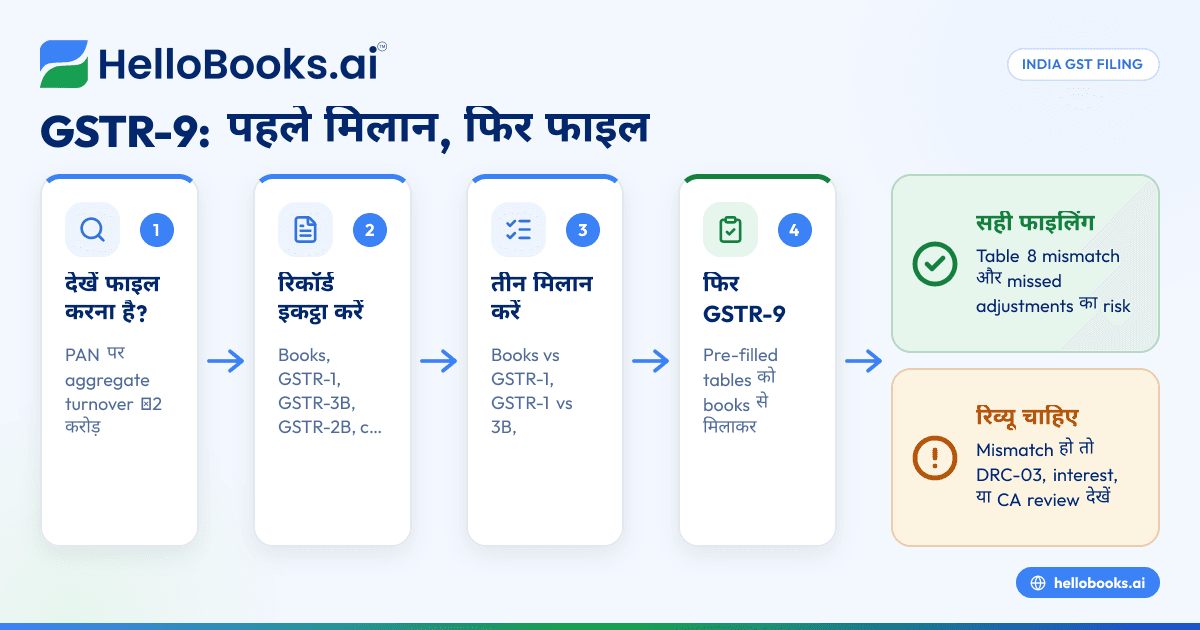

Key takeaways
What this article covers, in order:
- GSTR-9 असल में क्या है, और यह किसके लिए महत्वपूर्ण बनता है
- Eligibility समझते समय turnover, registration type और category को साथ देखें
- GSTR-9 को सिर्फ portal data से नहीं, books से पढ़ना चाहिए
- कौन-से मिलान सबसे पहले करें ताकि सालाना रिटर्न सुरक्षित रहे
- GSTR-9 के अंदर किन हिस्सों पर कारोबारी सबसे ज्यादा अटकते हैं
- Transport, stock और cash trail भी annual review में क्यों matter करते हैं
भारत में GSTR-9 एक सालाना GST रिटर्न है, लेकिन ज्यादातर कारोबारियों के लिए असली सवाल फॉर्म भरना नहीं, बल्कि यह समझना है कि क्या आपके GSTIN पर यह लागू होता है, कौन-से आंकड़े GST portal के auto-filled data से मिलाने हैं, और कहाँ books, GSTR-1, GSTR-3B और GSTR-2B अलग बोल रहे हैं। मौजूदा eligibility, late fee, due date और filing window की आधिकारिक स्थिति Central Goods and Services Tax Act, 2017, उसके rules, और CBIC व GSTN/GST portal पर प्रकाशित notifications/instructions में देखनी चाहिए।
GSTR-9 असल में क्या है, और यह किसके लिए महत्वपूर्ण बनता है
GSTR-9 को annual return इसलिए कहा जाता है क्योंकि यह पूरे वित्त वर्ष की outward supplies, inward supplies, input tax credit (ITC), tax paid, refunds, demands और amendments का एक consolidated picture देता है। यह monthly या quarterly return का replacement नहीं है; यह साल का summary-plus-reconciliation document है।
भारत के GST ढांचे में हर registered person के लिए एक जैसा treatment नहीं होता। किस category के taxpayer को कौन-सा annual compliance करना है, यह Central Goods and Services Tax Act, 2017 और CBIC की समय-समय पर जारी notifications से तय होता है। इसलिए “किसे GSTR-9 भरना है” का current answer हमेशा GST portal की filing instructions और relevant notification से verify करें। अगर आपका business multiple states में registered है, तो PAN-level aggregate turnover और GSTIN-wise filing obligation को अलग-अलग समझना पड़ता है; official position का source वही law और notification है, कोई पुराना blog नहीं।
Practical point यह है: अगर आपके पास एक से ज्यादा GSTIN हैं—मान लीजिए दिल्ली, हरियाणा और महाराष्ट्र—तो annual return की review GSTIN-wise होती है, लेकिन turnover tests PAN-level aggregation से जुड़ सकते हैं। यह distinction miss होने पर बहुत confusion होता है।
Eligibility समझते समय turnover, registration type और category को साथ देखें
GSTR-9 के बारे में सबसे बड़ी गलती यह है कि लोग सिर्फ एक rupee figure याद रखते हैं और मान लेते हैं कि वही rule हमेशा लागू रहेगा। ऐसा नहीं करना चाहिए। Applicability के current thresholds, exemptions और categories CGST Act, 2017, CGST Rules, और CBIC notifications में प्रकाशित होते हैं; filing utility की practical availability GSTN के portal पर दिखती है।
कुछ taxpayers के लिए अलग annual return framework हो सकता है, कुछ categories को exclusion मिल सकता है, और composition taxpayer का compliance path regular taxpayer से अलग होता है। इसी वजह से “मेरे CA ने पिछले साल जो कहा था” को current year का rule नहीं मानना चाहिए।
Illustrative और invented स्थिति लें: “Shree Udyog” नाम का व्यापार एक PAN पर दो GSTIN से काम करता है—एक गुजरात में, एक राजस्थान में। मान लें गुजरात GSTIN की sales ₹78 lakh और राजस्थान GSTIN की sales ₹64 lakh हैं। ये आंकड़े केवल समझाने के लिए invented हैं। Calculation में exempt turnover, branch transfers, और law की technical definitions की पूरी जटिलता शामिल नहीं है। ऐसे case में annual return applicability चेक करते समय सिर्फ एक registration की figure नहीं, PAN-level aggregate turnover की official definition देखनी होगी, जो CGST Act, 2017 और CBIC guidance में मिलती है. NEEDS EXPERT REVIEW
अगर आप अभी books cleanup कर रहे हैं, तो sales invoices में सही GSTIN, place of supply, और tax head split बहुत matter करता है। यहीं पर smart invoicing से निकली साफ invoice trail बाद में annual return review को आसान बनाती है, क्योंकि intra-state supplies पर CGST/SGST और inter-state supplies पर IGST का split शुरुआत से consistent रहता है।
GSTR-9 को सिर्फ portal data से नहीं, books से पढ़ना चाहिए
बहुत से businesses GSTR-9 खोलते हैं और देखते हैं कि कई fields auto-populated हैं, तो उन्हें लगता है कि काम लगभग हो गया। लेकिन annual return में risk वहीं पैदा होता है जहाँ books और filed returns अलग हैं। Auto-fill convenience है, audit-proof truth नहीं।
भारत में एक practical review flow अक्सर इस तरह बनता है:
- sales register बनाम filed GSTR-1
- tax liability as per books बनाम GSTR-3B
- purchase register बनाम GSTR-2B
- ITC claimed बनाम eligible ITC
- cash/bank receipts बनाम invoiced turnover
- credit notes, debit notes और year-end adjustments
अगर आपने साल भर Tally में entries रखीं, कुछ invoices Excel में बनाए, कुछ purchase bills WhatsApp PDF से आए, और bank reconciliation अलग sheet में किया, तो annual return के समय mismatch स्वाभाविक है। इसी कारण bank statement upload करके AI-based matching useful हो सकता है; receipt entries को invoice trail से मिलाना आसान होता है, खासकर जब payment UPI, NEFT, RTGS या IMPS से आया हो और narration perfect न हो। bank reconciliation software और ai bookkeeping जैसा workflow इस phase में data cleanup में मदद करता है, पर final legal position फिर भी books और official GST records से ही तय होगी।
कौन-से मिलान सबसे पहले करें ताकि सालाना रिटर्न सुरक्षित रहे
GSTR-9 की quality का फैसला form filling से पहले के reconciliations करते हैं। तीन areas पर सबसे पहले ध्यान दें।
Sales register बनाम GSTR-1
यहाँ mismatch के आम कारण हैं:
- B2B invoice books में है, पर GSTR-1 में गलत GSTIN या गलत period में गया
- credit note books में है, पर GST return में नहीं गया
- export/SEZ supply का tax treatment अलग दिख रहा है
- e-invoice applicable होने पर IRN data और reported invoice में फर्क है
अगर आपका business e-invoice regime में आता है, तो IRN और signed QR से validated invoice trail बाद की annual review को मजबूत करता है। e-invoicing software का practical फायदा यहीं दिखता है: invoice master record, IRN और reported details को अलग-अलग files में ढूंढना नहीं पड़ता।
GSTR-3B बनाम books
कई businesses में outward tax liability sales register के मुकाबले कम या ज्यादा दिखाई देती है क्योंकि advances, amendments, reverse charge, debit notes, credit notes, या गलत tax head postings छूट गईं। Table-wise annual return review से पहले month-wise bridge तैयार करना बेहतर रहता है।
Illustrative और invented mini-case लें: मान लें “Asha Traders” ने एक month में books में taxable outward supplies ₹4,80,000 दिखाईं, पर filed summary में ₹4,20,000 reflect हुआ। यह संख्या सिर्फ समझाने के लिए invented है; इसमें rate-wise break-up, exempt supplies, and post-period amendments शामिल नहीं हैं। ऐसा gap यह संकेत दे सकता है कि कुछ invoices अगले tax period में report हुए, कोई B2C sale omitted रही, या place of supply mapping गलत हुई। Correct treatment current law, books और filed return history देखकर ही निकलेगा. NEEDS EXPERT REVIEW
Purchase register बनाम GSTR-2B
Annual return के समय सबसे अधिक scrutiny ITC area में आती है। GSTR-2B static statement है, लेकिन business reality static नहीं होती। Supplier late filing, wrong GSTIN, duplicate booking, blocked credit, reverse charge और goods/services classification सब असर डालते हैं।
यदि purchase bills OCR से capture हुए हों और supplier-wise reconciliation चलती रही हो, तो missing invoices जल्दी दिखते हैं। gst return filing software के साथ GSTR-2A/2B reconciliation और ITC tracking जैसे workflows annual return से पहले useful होते हैं, क्योंकि आपको कम से कम यह दिख जाता है कि कौन-से supplier invoices books में हैं लेकिन 2B में नहीं, और किन entries पर follow-up चाहिए।
GSTR-9 के अंदर किन हिस्सों पर कारोबारी सबसे ज्यादा अटकते हैं
Form के table numbers year-specific utility और official instructions में देखकर ही finalize करने चाहिए, क्योंकि GSTN utility notes और CBIC instructions practical interpretation clear करते हैं। फिर भी substance broadly कुछ buckets में समझी जा सकती है:
Outward supplies
यह section taxable, non-taxable, exempt, nil-rated, export, SEZ, advances और notes का annual picture चाहता है। यहाँ books और GSTR-1 का मेल होना चाहिए। अगर आपने place of supply गलत रखा, तो IGST बनाम CGST/SGST classification बिगड़ सकती है। यही reason है कि invoicing stage पर सही place-of-supply logic बाद में बहुत समय बचाता है।
ITC claimed, reversed और available
यहीं सबसे ज्यादा notice-risk पैदा होता है। GSTR-2B में available credit, purchase register में booked bills, GSTR-3B में claimed credit, और blocked credit policy का clear trail होना चाहिए। अगर कोई invoice March का है लेकिन supplier ने बाद में upload किया, तो claim timing का question बनता है; इसका current treatment official law और CBIC guidance से verify करें।
Tax paid
Cash ledger, credit ledger, DRC payments, reverse charge liability, और regular output tax का combined picture देखना पड़ता है। कई businesses cash tax को bank payment proof से मिला लेते हैं, पर ledger postings अलग मिलती हैं। Bank statement upload से challan-related outflows identify करना आसान हो सकता है, लेकिन final return figure portal ledger के हिसाब से ही validate करनी चाहिए।
Amendments and next-year effects
Financial year से जुड़े credit notes, debit notes या corrections अगले वर्ष में filed returns में reflect हुए हों, तो annual return review में उनका bridge बनाना पड़ता है। यहीं बहुत लोग period confusion में पड़ते हैं। Books का date, invoice का date, reporting period और legal cut-off एक ही चीज़ नहीं हैं।
Transport, stock और cash trail भी annual review में क्यों matter करते हैं
कई लोग GSTR-9 को purely return form मानते हैं, जबकि practical review में inventory movement और logistics records भी काम आते हैं। अगर आपकी outward supplies large quantity goods से जुड़ी हैं, तो invoice, stock movement और e-way bill trail का broad consistency useful evidence बन सकता है।
उदाहरण के लिए, अगर books में बड़ी dispatches दिख रही हैं पर sales reporting low है, या inventory closing unusual लग रही है, तो annual return review गहरा हो जाता है। e-way bill software और inventory से निकला connected trail internal checking के लिए मददगार हो सकता है—खासकर manufacturing, trading और interstate movement वाले cases में।
Illustrative और invented स्थिति: मान लें किसी trader ने books में year-end closing stock ₹9,40,000 दिखाया, purchases ₹28,00,000 और sales ₹31,50,000। यह केवल समझाने के लिए invented numbers हैं; इसमें valuation method, wastage, returns, freight-in, job work adjustments और accounting policy शामिल नहीं हैं। अगर इसी period में invoice count और e-way bill trail unusually low दिखे, तो annual return filing से पहले stock and dispatch records दोबारा देखना समझदारी होगी. NEEDS EXPERT REVIEW
Multi-GSTIN business, Tally data और scattered records वाले cases में क्या करें
भारत में एक common reality यह है कि business एक state में invoice बनाता है, दूसरे state में stock रखता है, accountant Tally चलाता है, owner WhatsApp पर approvals देता है, और CA quarter-end में GST review करता है। ऐसे setup में annual return का सबसे बड़ा risk law नहीं, fragmented data है।
अगर आपके पास multiple GSTIN हैं, तो consolidated management view और GSTIN-wise reporting दोनों चाहिए। एक login में अलग-अलग registrations संभालना helpful होता है, क्योंकि outward supplies, ITC positions और tax head splits state-wise अलग हैं। Tally historical data छोड़ना भी हर business के लिए practical नहीं होता; इसलिए migration या connector approach useful हो सकती है जब आप current-year cleanup करना चाहें लेकिन पुरानी process एकदम बंद न करें। tally-alternative पर comparison context मिल सकता है, लेकिन annual return review का point यह है कि source data consistent हो।
Field teams या owner-driven businesses में mobile entry भी फर्क डालती है: purchase bill की photo, expense capture, और quick sales entry से later reconstruction कम करनी पड़ती है। वहीं अगर Hindi या Hinglish में owner को basic clarification चाहिए—जैसे reverse charge booking, TDS-adjusted supplier payment, या GSTIN mismatch—तो WhatsApp-based assistance day-to-day bookkeeping discipline improve कर सकती है।
Filing से पहले किन official स्रोतों पर current position verify करें
क्योंकि India में GST compliance rules notifications, advisories और portal changes से evolve होते रहते हैं, इसलिए GSTR-9 पर current position verify करने के लिए ये source hierarchy अपनाएँ:
- Central Goods and Services Tax Act, 2017 और relevant rules
- CBIC द्वारा जारी notifications, circulars और press releases
- GSTN / GST portal की filing instructions, advisories और help content
- अपने facts के मुताबिक CA या GST practitioner की review note
यहीं से eligibility, due date, late fee, waiver, amnesty, portal availability, and utility changes की authoritative स्थिति मिलती है। कोई भी bare figure—चाहे rupee amount हो, late fee cap हो, या deadline—official publication से verify किए बिना rely नहीं करना चाहिए।
अगर आप filing readiness check करना चाहते हैं, तो useful starting points हैं: GSTIN validator, HSN code search, GST invoice validator, और GST reconciliation checker। ये tools legal advice replace नहीं करते, लेकिन data hygiene बेहतर करते हैं।
HelloBooks इस काम में कहाँ fit बैठता है
GSTR-9 खुद direct file कराने वाला return यहाँ focus नहीं है, इसलिए इसे annual summary समझकर backwards काम करना बेहतर है: साल भर के invoices, purchases, ITC, bank entries और stock movement सही हों तो year-end pain कम होता है। HelloBooks का relevance इसी operational side में आता है। GST invoice बनाते समय सही GSTIN, place of supply, HSN/SAC और CGST/SGST या IGST split संभालना बाद की reconciliation आसान करता है। जहाँ e-invoice लागू है, IRN और signed QR वाला invoice trail records को मजबूत बनाता है। GSTR-1 और GSTR-3B सीधे file होने से filed returns और source invoices के बीच disconnect कम होता है। Purchase side पर OCR और GSTR-2A/2B reconciliation missing ITC clues जल्दी दिखाते हैं। Bank statement upload से UPI, NEFT, RTGS या IMPS receipts की matching आसान होती है। Multi-GSTIN setup, TDS/TCS or reverse charge handling, inventory records और financial reports annual review के समय खास काम आते हैं। Product fit और setup देखने के लिए demo ले सकते हैं, और India plans के लिए /in/pricing देखें।
GSTR-9 को “एक annual form” मानकर जल्दी निपटाने की चीज़ समझना महंगा पड़ सकता है। भारत में सही approach यह है: पहले law और CBIC/GST portal की current position verify करें, फिर books, GSTR-1, GSTR-3B, GSTR-2B, bank trail, stock movement और GSTIN-wise data का साफ bridge बनाएं। तभी annual return defensible बनता है।


