


Key takeaways
What this article covers, in order:
- GSTR-2B చూసి ITC ఎందుకు నిర్ణయించాలి
- ఫ్రీ reconciliation అంటే నిజంగా ఏ data ని ఏదితో పోల్చాలి
- Excel లో ఖర్చు లేకుండా workable process
- mismatchలు ఎక్కడి నుంచి ఎక్కువగా వస్తాయి
- IMS, supplier actions, మరియు portal discipline
- ఒక కల్పిత, illustrative working scene: Vijayawada wholesaler
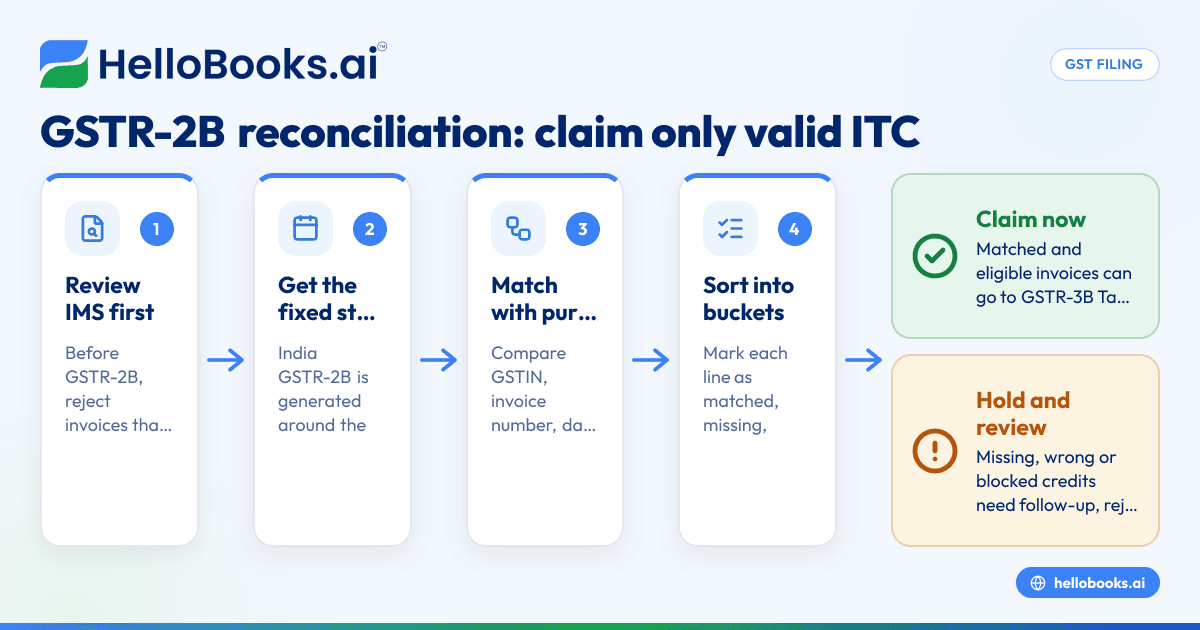
Indiaలో GSTR-2B reconciliation అంటే మీ purchase register ని GST Portal లో కనిపించే GSTR-2B statement తో పోల్చి, నిజంగా claim చేయగల ITC ఏది, ఇప్పుడే ఆపాల్సింది ఏది అనేది తేల్చడం. ఫ్రీగా చేయాలంటే GSTN portal నుంచి GSTR-2B download చేసి, Excel లో supplier GSTIN, invoice number, tax values match చేయాలి. అసలు point ఒక్కటే: books లో bill ఉండటం సరిపోదు; CBIC కింద నడిచే GST law ప్రకారం, claim ముందు portal view ని verify చేయాలి.
GSTR-2B చూసి ITC ఎందుకు నిర్ణయించాలి
Indiaలో ITC claim చేయడానికి ప్రధాన చట్టపరమైన frame Central Goods and Services Tax Act, 2017 మరియు దాని కిందున్న CGST Rules, 2017. ఈ వ్యవస్థను అమలు చేసే regulator CBIC; data flow, statement generation, filing layer ను GSTN మరియు GST Portal నడుపుతాయి. ఏ section, rule, advisory తాజా wording ఉందో అది CBIC notifications, GST Portal help content, మరియు అధికారిక law publication లోనే చూడాలి.
ప్రాక్టికల్గా చూస్తే, మీరు ఒక purchase bill books లో record చేశారనుకోండి. Supplier invoice ఇచ్చాడు, మీరు NEFT, RTGS, IMPS లేదా UPI ద్వారా payment కూడా చేసేశారు. అయినా GSTR-2B లో అది కనిపించకపోతే, ఆ credit ని GSTR-3B లో వెంటనే తీసుకోవచ్చా అన్నది law text, CBIC circulars, GST Portal guidance చూసి నిర్ణయించాలి. Bare fact గా shortcut తీసుకోవడం risky. Current legal position కోసం CBIC Act/Rules text మరియు GST Portal instructions చూడాలి.
GSTR-2A మరియు GSTR-2B మధ్య difference కూడా ఇక్కడే ముఖ్యం. GSTR-2A dynamic view; supplier later filing చేస్తే మారుతుంది. GSTR-2B మాత్రం ఒక tax period కి statement-style snapshot. Reconciliation routine కట్టడానికి అది ఎక్కువ ఉపయోగపడుతుంది, ఎందుకంటే మీరు ఒక నెల close చేసే సమయంలో fixed reference point దొరుకుతుంది.
ఫ్రీ reconciliation అంటే నిజంగా ఏ data ని ఏదితో పోల్చాలి
చాలా businesses వద్ద సమస్య Excel కాదు; inputs గందరగోళంగా ఉండటం. మంచి ఫ్రీ process కోసం కనీసం ఈ fields clean గా ఉండాలి:
- supplier GSTIN
- invoice number
- invoice date
- taxable value
- CGST, SGST, IGST split
- credit note లేదా debit note అయితే అది వేరుగా mark చేయడం
ఇవే mismatchలకు మూలం అవుతాయి. ఉదాహరణకు Hyderabad లో local purchase అయితే CGST+SGST ఉండాలి; Karnataka supplier నుంచి interstate inward supply అయితే IGST రావచ్చు. Place of supply, tax head split తప్పితే credit eligibility review కూడా తప్పు దారి పడుతుంది.
మీ purchase register export ను books నుంచి తీసుకుని, GSTR-2B Excel/JSON export ను GST Portal నుంచి తీసుకుని, line-by-line compare చేయాలి. OCR లేకుండా manual entry చేసిన bills లో invoice number formatting ఎక్కువగా తప్పుతుంది. అందుకే spaces, slash, hyphen, leading zeros, letter case normalize చేయడం reconciliation లో మొదటి పని.
మీరు accounting software వాడుతున్నట్లయితే, purchase bills capture చేసిన వెంటనే GSTR-2A/2B reconciliation కనిపిస్తే పని తేలికవుతుంది. HelloBooks లో purchase bills ని OCR తో capture చేసి, అదే entries ను GSTR-2A/2B view తో compare చేయడం వల్ల missing invoices, mismatched tax heads త్వరగా కనిపిస్తాయి. అది Excel logic నే అయినా, manual clean-up సమయం తగ్గుతుంది.
Excel లో ఖర్చు లేకుండా workable process
ఈ process చిన్న business, ఒక్క GSTIN, తక్కువ monthly purchase volume ఉన్నప్పుడు బాగా పని చేస్తుంది.
1) రెండు exports తీసుకోండి
GST Portal నుంచి ఆ period GSTR-2B download చేయండి. మీ books నుంచి purchase register export చేయండి. CSV లేదా Excel సరిపోతుంది.
2) invoice number clean చేయండి
AB-0012, AB/12, ab0012 లాంటి formats ను ఒక helper column లో common format గా మార్చండి. ఇది perfect కాదు, కానీ obvious formatting mismatches తగ్గిస్తుంది.
3) match key తయారు చేయండి
సాధారణంగా GSTIN + cleaned invoice number తో key చేస్తారు. కొన్ని cases లో invoice date కూడా add చేస్తారు.
4) matched, missing, extra, mismatch అని tag చేయండి
ప్రతి line చివరకు ఒక status రావాలి:
- books లో ఉంది, 2B లో కూడా ఉంది
- books లో ఉంది, 2B లో లేదు
- 2B లో ఉంది, books లో లేదు
- రెండింట్లో ఉంది కానీ values తేడా
5) tax head ని వేరుగా verify చేయండి
కొన్ని సార్లు taxable value same ఉంటుంది, కానీ CGST/SGST బదులు IGST report అయి ఉంటుంది. ఇది clerical issue మాత్రమే అనుకోవడం ప్రమాదం. Supplier return error అయ్యి ఉండొచ్చు, లేదా మీ booking తప్పు అయ్యి ఉండొచ్చు.
6) supplier follow-up tracker పెట్టండి
Reconciliation అసలు value matching లో కాదు; unresolved items close చేయడంలో ఉంది. Vendor-wise pending list ఉంచాలి.
ఫ్రీగా చేయాలంటే ఇదే సరైన minimum viable process. కానీ branches ఎక్కువ, bills volume ఎక్కువ, multiple GSTINs ఉంటే spreadsheet control త్వరగా విరిగిపోతుంది.
mismatchలు ఎక్కడి నుంచి ఎక్కువగా వస్తాయి
Telugu-speaking traders, distributors, contractors, service firms దగ్గర recurring కారణాలు దాదాపు ఒకేలా ఉంటాయి.
Supplier filing delay
మీరు bill record చేశారు, stock inward కూడా అయ్యింది, payment కూడా partly/fully చేశారు. కానీ supplier GSTR-1 లో report చేయలేదు లేదా తప్పుగా report చేశాడు. అప్పుడు 2B లో line రావడం ఆలస్యం అవుతుంది.
Wrong GSTIN
Branch, HO, another state GSTIN confusion common. Multi-state businesses లో ఒక purchase Telangana GSTIN books లో పడాలి కానీ Andhra Pradesh GSTIN మీద supplier invoice చేశాడు అంటే 2B mismatch మాత్రమే కాదు, compliance issue కూడా అవుతుంది.
Invoice number formatting
19/A, 19A, 019A లాంటి చిన్న variations Excel ను మభ్యపెడతాయి.
Credit notes ignored
Vendor later credit note ఇచ్చాడు. Books లో adjust చేశారు, కానీ reconciliation sheet లో అది base invoice కి against గా properly link చేయలేదు.
Tax head error
IGST రావాల్సిన చోట CGST/SGST booking, లేదా reverse charge applicable item ను normal purchase గా వేసేయడం. Reverse charge, TDS/TCS handling entries side spreadsheet లో ఉంటే main books మరియు GST working విడిపోతాయి.
Unrecorded bills
GSTR-2B లో line ఉంది, కానీ మీ accounts team purchase bill ఇంకా enter చేయలేదు. ఈ issue year-end లో ఎక్కువ కనిపిస్తుంది.
HelloBooks లాంటి system లో OCR తో purchase bills లో data capture చేసి, bank statement upload తర్వాత AI reconciliation తో payment trail కూడా చూసుకుంటే, unrecorded bill vs recorded-but-unpaid vs duplicate entry తేడా త్వరగా తెలుస్తుంది. ప్రత్యేకంగా Tally నుంచి migrate అయిన businesses వద్ద invoice history scattered గా ఉండే సందర్భాల్లో Tally alternative లేదా accounting software India లాంటి setup comparison ఉపయోగపడుతుంది.
IMS, supplier actions, మరియు portal discipline
ఇప్పుడు reconciliation అంటే కేవలం month-end Excel exercise కాదు. GST system లో invoice visibility, taxpayer action, statement refresh మధ్య operational discipline అవసరం. IMS మీద current behaviour, document actions, recomputation logic ఏవైతే అమలులో ఉన్నాయో అవి GST Portal advisories మరియు CBIC updates లో verify చేయాలి. Process మారితే old blog advice పనికిరాదు.
ప్రాక్టికల్గా మీరు చేయాల్సింది:
- మీ GSTIN మీద వచ్చిన supplier documents ని periodic గా review చేయడం
- అసలు మీవి కాని entries ఉంటే వెంటనే flag చేయడం
- genuine purchase అయితే books లో ఉందో లేదో confirm చేయడం
- unresolved vendor issues ని next period కు carry చేస్తే written tracker ఉంచడం
ఇక్కడ WhatsApp chats, phone promises, “next month reflect అవుతుంది” అన్న మాటలపై ఆధారపడకండి. Vendor-wise proof trail ఉంచాలి: invoice copy, ledger extract, acknowledgement, revised filing confirmation. Noor assistant WhatsApp మీద general bookkeeping help ఇవ్వగలిగినా, supplier compliance dispute close చేయడానికి underlying documents మీ దగ్గరే ఉండాలి.
ఒక కల్పిత, illustrative working scene: Vijayawada wholesaler
ఈ figures పూర్తిగా illustrative మరియు invented. Current law లో ఏ specific ceiling, timeline, eligibility nuance apply అవుతుందో CBIC publications, CGST Act/Rules, GST Portal guidance లో verify చేయాలి. ఈ చిన్న scene interest, blocked credit, reverse charge edge cases, import documents, and legal disputes అన్నింటినీ cover చేయదు.
Vijayawadaలో ఒక electrical wholesaler కి ఒక నెల purchase register లో 40 bills ఉన్నాయనుకోండి. వాటిలో invented figures ప్రకారం మొత్తం input tax ₹1,86,000 గా books లో కనిపిస్తుంది. GSTR-2B download చేసి match చేస్తే ఇలా బయటపడింది అనుకుందాం:
- ₹1,42,000 equivalent tax ఉన్న bills clean match అయ్యాయి
- ₹18,000 equivalent tax ఉన్న bills books లో ఉన్నాయి కానీ 2B లో లేవు
- ₹11,000 equivalent tax ఉన్న entries 2B లో ఉన్నాయి కానీ books లో లేవు
- ₹15,000 equivalent tax ఉన్న lines mismatch bucket లో పడ్డాయి
ఇప్పుడు practical treatment ఎలా ఉంటుంది?
Matched bucket మీద documentation complete అయితే claim consideration కు వెళ్తారు. Books లో ఉంది కానీ 2B లో లేదు అంటే supplier follow-up list. 2B లో ఉంది కానీ books లో లేదు అంటే unrecorded purchase bill వెతకాలి; అది genuine కాకపోతే reject/escalate చేయాలి. Mismatch bucket లో taxable value ఒకలా ఉండి tax head split వేరుగా ఉంటే, purchase booking లేదా supplier filing రెండింటిలో దేనిలో తప్పో trace చేయాలి.
ఈ invented illustration లో owner ఒకే sheet లో నాలుగు tabs పెట్టాడు: match, missing in 2B, missing in books, value mismatch. ఈ structure వల్ల CA కి discussion సులభమైంది. ఇదే పని software లో చేస్తే status tagging, ITC tracking continuous గా కనిపిస్తుంది; spreadsheet లో అయితే ప్రతి నెల manual discipline అవసరం.
చిన్న business కి ఫ్రీ method ఎప్పటివరకు సరిపోతుంది
ఒక్క GSTIN, తక్కువ bills, ఒక owner-led business అయితే Excel సరిపోవచ్చు. ఉదాహరణకు boutique agency, small trader, local service business. కానీ ఈ signs కనిపిస్తే manual method expensive అవుతుంది:
- every month purchase bills volume పెరగడం
- one state కంటే ఎక్కువ GSTINs ఉండటం
- stock business కావడంతో inventory linkage అవసరం అవడం
- Tally data, new software data రెండు చోట్ల ఉండటం
- GSTR-3B numbers finalize చేసే సమయానికి ITC uncertainty ఎక్కువగా ఉండటం
- bank receipts/payments match చేయడానికి వేరే sheet, GST working కి వేరే sheet వాడటం
ఈ stage లో books, GST, inventory, reconciliation ఒకే place లో ఉండటం మంచిది. HelloBooks లో multiple GSTINs handle చేయడం, purchase OCR, GSTR-2A/2B reconciliation, ITC tracking, bank statement upload, AI reconciliation—all ఒక workflow లో వస్తాయి. Returns filing stage వద్ద [GSTR-1 and GSTR-3B direct filing] విషయం practical advantage ఇస్తుంది, ఎందుకంటే sales side data మరియు outward return disconnect తగ్గుతుంది. మీరు details చూడాలంటే GST return filing software, bank reconciliation software, inventory, లేదా overall accounting software for small business pages ఉపయోగపడతాయి.
ITC కాపాడుకోవాలంటే accounts team నెలలో ఏ rhythm పెట్టాలి
Month-end వరకు wait చేయడం వల్ల problems pile up అవుతాయి. Better rhythm:
Week one: all purchase bills enter చేయండి. Photo/PDF bills ఉంటే వెంటనే capture చేయండి.
Week two: supplier GSTIN, invoice number quality check చేయండి. Wrong branch GSTIN issues early గా కనిపిస్తాయి.
Week three: bank statement upload చేసి payments match చేయండి. NEFT/RTGS/IMPS references వల్ల vendor settlement clarity వస్తుంది.
Statement available అయిన తర్వాత: GSTR-2B compare చేసి unresolved items vendor-wise share చేయండి.
GSTR-3B finalise చేసే ముందు: only reviewed credit position మీద decision తీసుకోండి, not rough register total మీద.
ఈ cadence వల్ల year-end surprise తగ్గుతుంది. Financial reports కూడా same books నుంచి రావడం వల్ల P&L, payables, GST working మధ్య drift తగ్గుతుంది.
law, regulator, and numbers గురించి safe way ఏమిటి
GST గురించి online content లో పెద్ద risk ఏమిటంటే current rate, threshold, due date, cutoff, penalty వంటి figures bare fact గా చూసి నమ్మేయడం. Indiaలో ఇవి CBIC notifications, GST Council changes as implemented in law, GST Portal advisories, మరియు కొన్ని సందర్భాల్లో Income Tax Act, 1961, Companies Act, 2013, MCA updates వంటి separate frameworks తో కలిసి చూడాలి. Data privacy లేదా customer data handling context వస్తే DPDP Act implications కూడా ignore చేయకూడదు, though అది ITC matching rule కాదు.
అందుకే మీరు ఏ current number చూసినా official source check చేయాలి. Useful starting points కోసం free tools ఉపయోగపడతాయి: GSTIN validator, HSN code search, GST invoice validator, GST reconciliation checker. Software ఎంపిక చూడాలంటే HelloBooks India లేదా pricing చూడండి; price figures ఈ article లో quote చేయడం కన్నా official page నుంచే చూడటం మంచిది.
Telugu business owners కి చివరి practical point
GSTR-2B reconciliation “CA చూసుకుంటారు” అనుకుని వదిలేస్తే late అవుతుంది. Real control మీ purchase entry quality, supplier follow-up, GSTIN accuracy, మరియు monthly review discipline లో ఉంటుంది. Rupee-by-rupee ITC కాపాడుకోవాలంటే books లో bill ఉండటం, bank payment జరగటం, stock inward అవటం మాత్రమే కాదు; GSTN statement తో agree అవ్వాలి. ఫ్రీగా Excel లో మొదలుపెట్టండి. కానీ volume పెరిగాక reconciliation ని accounting system లోకి తీసుకురావడం usually cheaper than losing ITC quietly.


