


Key takeaways
What this article covers, in order:
- ਸਭ ਤੋਂ ਪਹਿਲਾਂ ਆਪਣਾ GST filing pattern ਪੱਕਾ ਕਰੋ
- ਪੰਜਾਬ ਵਾਲੇ business ਲਈ calendar ਵਿੱਚ ਸਭ ਤੋਂ ਵੱਧ ਗਲਤੀ ਕਿੱਥੇ ਹੁੰਦੀ ਹੈ
- ਮਹੀਨਾਵਾਰ filer ਲਈ FY 2026-27 ਵਿੱਚ ਕਿਹੜੇ ਕੰਮ ਲਗਾਤਾਰ ਆਉਂਦੇ ਹਨ
- QRMP ਵਿੱਚ calendar ਤਾਰੀਖਾਂ ਨਾਲੋਂ workflow ਜ਼ਿਆਦਾ matter ਕਰਦਾ ਹੈ
- ਤਾਰੀਖ ਯਾਦ ਕਰਨ ਤੋਂ ਪਹਿਲਾਂ ਇਹ ਜਾਣੋ ਕਿ official source ਕੀ ਹੈ
- ਰਿਟਰਨ ਕੈਲੰਡਰ ਦੀ ਅਸਲੀ ਮੁਸ਼ਕਲ: books, portal ਅਤੇ bank ਇੱਕ-ਦੂਜੇ ਨਾਲ ਮਿਲਣੇ ਚਾਹੀਦੇ ਹਨ
India ਵਿੱਚ FY 2026-27 ਲਈ GST ਰਿਟਰਨ ਦੀਆਂ ਤਾਰੀਖਾਂ ਯਾਦ ਕਰਨ ਤੋਂ ਵੱਧ ਜ਼ਰੂਰੀ ਗੱਲ ਇਹ ਹੈ ਕਿ ਤੁਸੀਂ ਆਪਣਾ filing pattern—monthly ਜਾਂ QRMP—GST portal ਤੇ GSTN ਦੀ ਪ੍ਰੋਫ਼ਾਈਲ ਵਿੱਚ ਪੱਕਾ ਕਰੋ, ਅਤੇ ਹਰ ਤਾਰੀਖ ਨੂੰ CBIC ਦੇ notification/circular ਜਾਂ portal advisory ਨਾਲ ਮਿਲਾ ਕੇ ਹੀ ਮੰਨੋ। ਪੰਜਾਬ ਵਰਗੇ ਰਾਜ ਲਈ QRMP ਵਿੱਚ GSTR-3B ਦਾ state-group ਵੀ matter ਕਰਦਾ ਹੈ. ਜੇ ਤੁਹਾਨੂੰ ਇੱਕ working calendar ਚਾਹੀਦਾ ਹੈ, ਤਾਂ ਹੇਠਾਂ ਉਹ workflow ਦੇ ਹਿਸਾਬ ਨਾਲ ਦਿੱਤਾ ਹੈ, ਨਾ ਕਿ ਸਿਰਫ਼ ਰਟਣ ਲਈ.
ਸਭ ਤੋਂ ਪਹਿਲਾਂ ਆਪਣਾ GST filing pattern ਪੱਕਾ ਕਰੋ
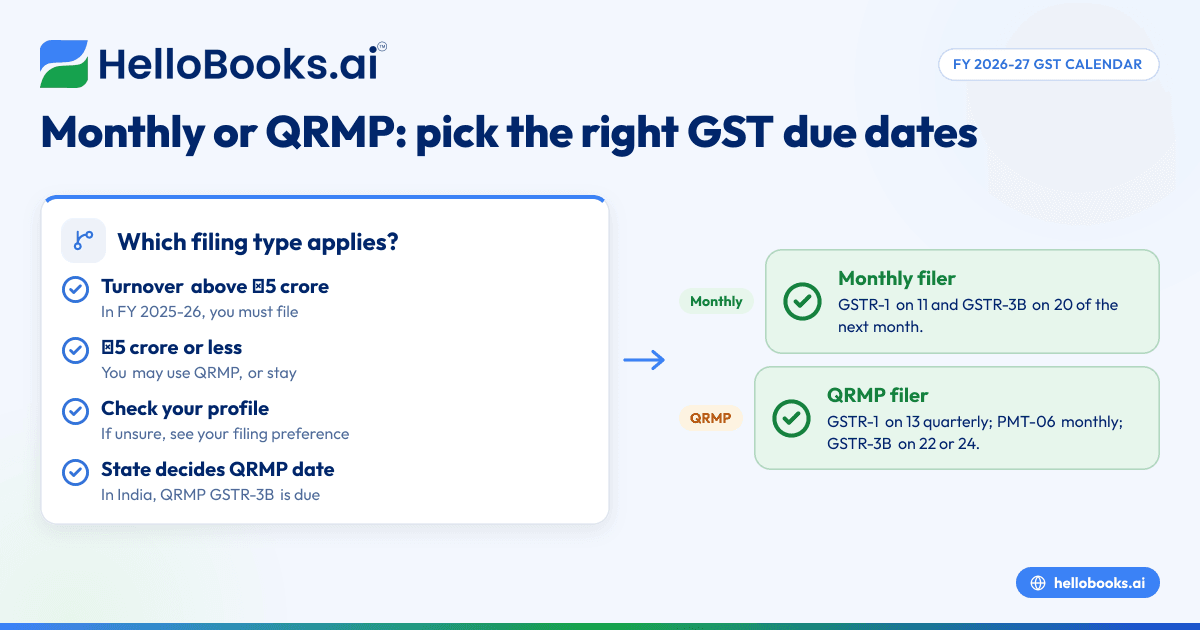
FY 2026-27 ਦਾ calendar ਇਕੋ ਜਿਹਾ ਨਹੀਂ ਹੁੰਦਾ। India ਦੇ GST framework ਵਿੱਚ regular taxpayer ਲਈ ਮੁੱਖ ਸਵਾਲ ਇਹ ਹੈ: ਤੁਸੀਂ ਹਰ ਮਹੀਨੇ GSTR-1 ਅਤੇ GSTR-3B ਫਾਈਲ ਕਰਦੇ ਹੋ, ਜਾਂ QRMP scheme ਹੇਠ ਤਿਮਾਹੀ return ਅਤੇ ਵਿਚਕਾਰ monthly tax payment ਵਾਲੇ pattern ਤੇ ਹੋ?
ਇਹ classification Central Goods and Services Tax Act, 2017 ਅਤੇ ਉਸ ਦੇ rules ਹੇਠ operate ਕਰਦੀ ਹੈ, ਅਤੇ ਇਸ ਦੀ practical visibility GSTN-managed GST portal ਤੇ ਮਿਲਦੀ ਹੈ। Eligibility, option window, state grouping, ਅਤੇ current compliance instructions ਦੀ authoritative publication CBIC notifications, circulars, ਅਤੇ GST portal advisories ਵਿੱਚ ਹੁੰਦੀ ਹੈ। ਕੋਈ ਵੀ threshold ਜਾਂ option rule ਜੇ ਤੁਸੀਂ verify ਕਰਨਾ ਚਾਹੁੰਦੇ ਹੋ, ਤਾਂ ਉਸ ਦਾ current figure GST portal ਅਤੇ CBIC publication ਤੋਂ ਹੀ ਚੈੱਕ ਕਰੋ.
ਜੇ ਤੁਹਾਡੇ ਕੋਲ ਇਕ ਤੋਂ ਵੱਧ GSTIN ਹਨ—ਮਿਸਾਲ ਵਜੋਂ ਪੰਜਾਬ ਅਤੇ ਹਰਿਆਣਾ—ਤਾਂ filing pattern ਅਤੇ state-group ਹਰ GSTIN ਅਧਾਰ ਤੇ ਚੈੱਕ ਕਰੋ। ਇੱਕ business entity ਦੇ ਅੰਦਰ ਵੀ compliance calendar ਇਕੋ ਨਹੀਂ ਰਹਿੰਦਾ.
ਪੰਜਾਬ ਵਾਲੇ business ਲਈ calendar ਵਿੱਚ ਸਭ ਤੋਂ ਵੱਧ ਗਲਤੀ ਕਿੱਥੇ ਹੁੰਦੀ ਹੈ
Punjabi article ਹੋਣ ਕਰਕੇ ਸਭ ਤੋਂ practical ਗੱਲ ਪਹਿਲਾਂ: ਪੰਜਾਬ ਦੇ ਕਈ trader, distributor, workshop, wholesaler ਅਤੇ service business calendar ਨੂੰ “11, 20, 22, 24, 25” ਵਾਲੀਆਂ ਤਾਰੀਖਾਂ ਦੇ shortcut ਵਾਂਗ ਯਾਦ ਕਰਦੇ ਹਨ। ਸਮੱਸਿਆ ਇਹ ਹੈ ਕਿ ਇਸ ਤਰੀਕੇ ਨਾਲ return type, tax payment, invoice upload, ਅਤੇ state-group ਆਪਸ ਵਿੱਚ mix ਹੋ ਜਾਂਦੇ ਹਨ.
ਅਸਲ ਵਿੱਚ ਤੁਸੀਂ ਇਹ ਚਾਰ ਵੱਖ ਚੀਜ਼ਾਂ ਸੰਭਾਲ ਰਹੇ ਹੁੰਦੇ ਹੋ:
- outward supplies ਦੀ reporting
- tax payment
- input side matching
- books vs portal reconciliation
ਜੇ sales invoice ਬਣਾਉਣ ਵੇਲੇ ਹੀ place of supply, GSTIN, HSN/SAC, ਅਤੇ CGST/SGST ਜਾਂ IGST ਦਾ split ਸਹੀ ਨਾ ਹੋਵੇ, ਤਾਂ ਬਾਅਦ ਵਿੱਚ GSTR-1, GSTR-3B ਅਤੇ GSTR-2B matching ਸਭ ਪ੍ਰਭਾਵਿਤ ਹੋ ਸਕਦੇ ਹਨ। ਇਸ ਲਈ calendar ਸਿਰਫ਼ reminder ਨਹੀਂ; ਇਹ data discipline ਦਾ ਨਤੀਜਾ ਹੈ.
ਇੱਥੇ GST invoicing ਅਤੇ GSTR-1, GSTR-3B filing ਵਾਲਾ workflow useful ਹੁੰਦਾ ਹੈ, ਕਿਉਂਕਿ sales entry ਤੋਂ return ਬਣੇ ਤਾਂ figures ਅਲੱਗ spreadsheet ਤੋਂ ਜੋੜਣ ਦੀ ਲੋੜ ਘੱਟ ਰਹਿੰਦੀ ਹੈ। ਜੇ sale Punjab ਤੋਂ Delhi ਜਾਂ Rajasthan ਨੂੰ ਹੈ, ਤਾਂ place-of-supply ਦੇ ਅਧਾਰ ਤੇ tax head split ਸਹੀ ਹੋਣਾ ਹੀ calendar accuracy ਦੀ ਸ਼ੁਰੂਆਤ ਹੈ.
ਮਹੀਨਾਵਾਰ filer ਲਈ FY 2026-27 ਵਿੱਚ ਕਿਹੜੇ ਕੰਮ ਲਗਾਤਾਰ ਆਉਂਦੇ ਹਨ
Monthly filer ਲਈ ਮੁੱਖ routine ਆਮ ਤੌਰ ਤੇ ਹਰ tax period ਤੋਂ ਬਾਅਦ outward supplies report ਕਰਨਾ ਅਤੇ summary return ਨਾਲ tax liability discharge ਕਰਨਾ ਹੁੰਦਾ ਹੈ। ਪਰ exact due date ਨੂੰ bare fact ਵਾਂਗ ਯਾਦ ਨਾ ਕਰੋ। CGST Act, 2017, सम्बੰਧਤ rules, CBIC notification, ਅਤੇ GST portal dashboard ਤੇ published current due date ਹੀ final authority ਹੈ.
FY 2026-27 ਲਈ monthly filer ਨੂੰ ਇਹ operating rhythm ਰੱਖਣੀ ਚਾਹੀਦੀ ਹੈ:
- ਮਹੀਨਾ ਬੰਦ ਹੋਣ ਤੋਂ ਪਹਿਲਾਂ sales invoices lock ਕਰੋ।
- debit notes/credit notes identify ਕਰੋ।
- purchase side entries ਅਤੇ supplier GSTIN validation ਕਰੋ।
- bank statement upload ਕਰਕੇ receipt matching ਕਰੋ।
- GSTR-2A/2B ਨਾਲ purchase mismatch ਵੇਖੋ।
- ਫਿਰ GSTR-1 ਅਤੇ GSTR-3B prepare ਅਤੇ file ਕਰੋ.
ਕਿਉਂਕਿ India ਵਿੱਚ payment rails—UPI, NEFT, RTGS, IMPS—ਰਾਹੀਂ receipt lines ਬਹੁਤ fragmented ਆਉਂਦੀਆਂ ਹਨ, bank reconciliation late ਹੋਵੇ ਤਾਂ taxable turnover vs realised receipts ਦੀ confusion ਪੈ ਸਕਦੀ ਹੈ। ਇਸ ਕਰਕੇ bank reconciliation ਅਤੇ OCR ਨਾਲ purchase bills capture ਕਰਨਾ monthly close ਨੂੰ ਤੇਜ਼ ਕਰਦਾ ਹੈ.
ਜੇ ਤੁਸੀਂ inventory-led business ਹੋ—ਜਿਵੇਂ Ludhiana ਦਾ auto parts distributor ਜਾਂ Amritsar ਦੀ garment wholesaler—ਤਾਂ invoice, stock movement ਅਤੇ tax liability ਇਕੋ system ਵਿੱਚ ਹੋਣੀ ਵਧੀਆ ਰਹਿੰਦੀ ਹੈ। inventory linked ਹੋਵੇ ਤਾਂ outward supplies ਅਤੇ closing stock ਵੱਖ registers ਵਿੱਚ ਨਹੀਂ ਭੱਜਦੇ.
QRMP ਵਿੱਚ calendar ਤਾਰੀਖਾਂ ਨਾਲੋਂ workflow ਜ਼ਿਆਦਾ matter ਕਰਦਾ ਹੈ
QRMP scheme ਨੂੰ ਕਈ business “quarterly return” ਸਮਝ ਕੇ ਆਰਾਮ ਨਾਲ ਲੈਂਦੇ ਹਨ, ਪਰ India ਵਿੱਚ ਇਹ often cash-flow ਅਤੇ compliance ਦਾ double-track ਬਣ ਜਾਂਦਾ ਹੈ: return quarter-end ਤੇ, ਪਰ tax payment ਅਤੇ B2B visibility ਦੇ ਕੰਮ ਵਿਚਕਾਰ ਵੀ ਰਹਿੰਦੇ ਹਨ.
Current due dates, PMT-06 related obligations, IFF availability, ਅਤੇ state-wise GSTR-3B grouping CBIC ਅਤੇ GST portal ਤੇ published instructions ਤੋਂ verify ਕਰਨੇ ਚਾਹੀਦੇ ਹਨ। ਇੱਥੇ ਕੋਈ ਵੀ exact number ਜਾਂ date notification ਤੋਂ ਬਿਨਾਂ final ਨਾ ਮੰਨੋ.
Punjab ਵਾਲੇ GSTIN ਲਈ ਖਾਸ ਗੱਲ ਇਹ ਹੈ ਕਿ QRMP ਵਿੱਚ GSTR-3B ਦੀ applicable date state-group ਤੇ depend ਕਰਦੀ ਹੈ, ਅਤੇ ਇਹ grouping CBIC/GST portal publication ਤੋਂ ਹੀ confirm ਕਰੋ। ਇਹ business location ਨਾਲ ਨਹੀਂ, ਸਬੰਧਤ GSTIN state registration ਨਾਲ ਜੁੜੀ ਹੁੰਦੀ ਹੈ.
QRMP business ਲਈ practical monthly rhythm ਇਹ ਹੋ ਸਕਦੀ ਹੈ:
- Month 1: B2B invoices ਤੁਰੰਤ clean ਕਰੋ, ਤਾਂ recipient ਦੀ ITC visibility ਨਾ ਰੁਕੇ
- Month 1 end: tax payment working ਤਿਆਰ ਕਰੋ
- Month 2: purchase reconciliation ਅਤੇ missing supplier invoices ਫੜੋ
- Quarter close: GSTR-1 ਅਤੇ GSTR-3B finalise ਕਰੋ
ਜੇ ਤੁਹਾਡੇ customers input tax credit ਤੇ sensitive ਹਨ, ਤਾਂ invoice upload delay directly customer relationship issue ਬਣ ਸਕਦੀ ਹੈ। ਇਸ ਲਈ QRMP “less frequent work” ਨਹੀਂ; “different timing” ਹੈ.
ਤਾਰੀਖ ਯਾਦ ਕਰਨ ਤੋਂ ਪਹਿਲਾਂ ਇਹ ਜਾਣੋ ਕਿ official source ਕੀ ਹੈ
GST calendar ਬਾਰੇ ਸਭ ਤੋਂ unsafe advice ਇਹ ਹੈ ਕਿ ਕੋਈ static blog table print ਕਰ ਲਓ ਅਤੇ ਸਾਲ ਭਰ ਉਸੇ ਨੂੰ follow ਕਰੋ। India ਵਿੱਚ due dates ਅਤੇ relief measures ਕਦੇ-kade notification, order, advisory ਜਾਂ portal announcement ਨਾਲ shift ਹੋ ਸਕਦੇ ਹਨ। Authority chain broadly ਇਹ ਹੈ:
- Law: Central Goods and Services Tax Act, 2017 ਅਤੇ rules
- Regulator: Central Board of Indirect Taxes and Customs (CBIC)
- Portal operator / compliance interface: GSTN through GST portal
ਇਸ ਕਰਕੇ ਕਿਸੇ ਵੀ ਤਾਰੀਖ ਨੂੰ final ਮੰਨਣ ਤੋਂ ਪਹਿਲਾਂ ਤਿੰਨ ਥਾਵਾਂ ਵੇਖੋ:
- GST portal dashboard/login advisory
- CBIC notification or circular
- ਤੁਹਾਡੇ return period ਦਾ auto-populated portal screen
ਜੇ extension ਸਿਰਫ਼ ਕਿਸੇ particular class of taxpayers, region, technical issue ਜਾਂ notified relief ਲਈ ਹੋਵੇ, ਤਾਂ ਉਹ ਸਾਰਿਆਂ ਤੇ ਲਾਗੂ ਨਹੀਂ ਹੁੰਦੀ। Weekend ਜਾਂ gazetted holiday ਪੈ ਜਾਣ ਨਾਲ date ਆਪਣੇ-ਆਪ move ਹੋ ਜਾਵੇਗੀ—ਇਹ assumption unsafe ਹੈ, ਜਦ ਤੱਕ competent authority ਤੋਂ publication ਨਾ ਹੋਵੇ.
ਰਿਟਰਨ ਕੈਲੰਡਰ ਦੀ ਅਸਲੀ ਮੁਸ਼ਕਲ: books, portal ਅਤੇ bank ਇੱਕ-ਦੂਜੇ ਨਾਲ ਮਿਲਣੇ ਚਾਹੀਦੇ ਹਨ
ਬਹੁਤ ਸਾਰੇ GST delays ਦੀ root cause date ਨਹੀਂ, data mismatch ਹੁੰਦੀ ਹੈ। Sales register ਕੁਝ ਹੋਰ ਦਿਖਾ ਰਿਹਾ ਹੈ, bank credits ਕੁਝ ਹੋਰ, ਅਤੇ GSTR-2B ਵਿੱਚ supplier bills ਅਧੂਰੇ ਹਨ। ਫਿਰ last day ਤੇ CA ਜਾਂ accounts team ਨੂੰ rupee-level mismatch ਲੱਭਣਾ ਪੈਂਦਾ ਹੈ.
India ਦੇ SME context ਵਿੱਚ ਇਹ mismatch ਇਨ੍ਹਾਂ ਕਾਰਨਾਂ ਨਾਲ ਆਉਂਦੀ ਹੈ:
- Tally ਤੋਂ export ਲਿਆ, ਪਰ latest correction ਨਹੀਂ ਆਈ
- cash, UPI ਅਤੇ bank receipts ਵੱਖ sheets ਵਿੱਚ ਪਏ ਹਨ
- purchase bill photo ਤਾਂ ਹੈ, entry ਨਹੀਂ
- interstate sale ਵਿੱਚ IGST ਦੀ ਥਾਂ CGST/SGST ਲੱਗ ਗਿਆ
- e-invoice applicable case ਵਿੱਚ IRN data books ਨਾਲ align ਨਹੀਂ
- e-way bill details dispatch register ਨਾਲ ਨਹੀਂ ਮਿਲੀਆਂ
ਇਸ ਕਰਕੇ calendar management ਦਾ practical ਮਤਲਬ ਹੈ ਕਿ return filing ਤੋਂ ਪਹਿਲਾਂ books ready ਹੋਣ। accounting software for small business ਵਾਲਾ setup ਅਤੇ AI bookkeeping approach ਇੱਥੇ ਕੰਮ ਆਉਂਦੀ ਹੈ, ਖਾਸ ਕਰਕੇ ਜਦ owner khud accounts ਨਹੀਂ ਬੈਠਦਾ.
ਜੇ ਤੁਸੀਂ Tally ਤੋਂ shift ਸੋਚ ਰਹੇ ਹੋ ਜਾਂ parallel run ਕਰਨਾ ਚਾਹੁੰਦੇ ਹੋ, ਤਾਂ Tally alternative context useful ਰਹਿੰਦਾ ਹੈ, ਕਿਉਂਕਿ GST compliance ਤਦ smooth ਹੁੰਦੀ ਹੈ ਜਦ migration ਜਾਂ connector ਨਾਲ opening data ਅਤੇ current invoices ਵੱਖ systems ਵਿੱਚ conflict ਨਾ ਕਰਨ.
ਇਕ ਛੋਟੀ ਗਿਣਤੀ ਨਾਲ ਸਮਝੋ ਕਿ late close ਕਿਵੇਂ calendar ਖਰਾਬ ਕਰਦਾ ਹੈ
ਹੇਠਾਂ ਦਿੱਤੇ ਅੰਕ illustrative ਅਤੇ invented ਹਨ। ਇਹ ਸਿਰਫ਼ process ਸਮਝਾਉਣ ਲਈ ਹਨ; ਇਨ੍ਹਾਂ ਵਿੱਚ surcharge, interest, late fee, exact utilisation rules, sector-specific treatment, ਅਤੇ official portal validations ਸ਼ਾਮਲ ਨਹੀਂ। ਕਿਸੇ ਵੀ actual computation ਲਈ CGST Act, 2017, CBIC publication, ਅਤੇ GST portal figures ਵੇਖੋ.
ਮੰਨ ਲਓ Mohali ਦੇ ਇੱਕ distributor ਕੋਲ ਇੱਕ ਮਹੀਨੇ ਵਿੱਚ invented sales ₹12,40,000 ਹਨ। ਇਸ ਵਿੱਚੋਂ invented local sales ₹7,20,000 ਹਨ ਅਤੇ invented interstate sales ₹5,20,000 ਹਨ। Accounts team ਨੇ local sale ਦੀ ਇੱਕ invoice galti ਨਾਲ IGST ਵਿੱਚ ਪਾ ਦਿੱਤੀ, ਅਤੇ ਦੋ purchase bills OCR ਤੋਂ capture ਤਾਂ ਹੋ ਗਏ ਪਰ books ਵਿੱਚ approve ਨਹੀਂ ਹੋਏ.
ਹੁਣ quarter/ month close ਤੇ ਇਹ ਹੋਇਆ:
- outward tax heads books ਵਿੱਚ split ਗਲਤ
- customer GSTIN ਵਾਲੀ ਇੱਕ B2B invoice pending
- bank statement upload ਨਾ ਹੋਣ ਕਰਕੇ ₹1,80,000 ਦੀ UPI/NEFT receipts unmatched
- GSTR-2B ਵਿੱਚ ਇੱਕ supplier invoice missing
Result: return date technically calendar ਵਿੱਚ ਮੌਜੂਦ ਹੈ, ਪਰ usable figures ready ਨਹੀਂ। Last day ਤੇ team ko sales register, bank statement, stock movement, supplier bill ਅਤੇ portal data ਇਕੱਠੇ reconcile ਕਰਨੇ ਪੈਂਦੇ ਹਨ। ਇਸੇ ਕਰਕੇ compliance stress calendar ਦੀ ਨਹੀਂ, closing discipline ਦੀ ਸਮੱਸਿਆ ਬਣ ਜਾਂਦੀ ਹੈ.
HelloBooks ਵਰਤੋਂ ਤਾਂ ਕੈਲੰਡਰ “ਤਾਰੀਖਾਂ” ਤੋਂ “ਰੁਟੀਨ” ਵਿੱਚ ਬਦਲ ਸਕਦਾ ਹੈ
ਜੇ ਤੁਹਾਡਾ ਟੀਚਾ FY 2026-27 ਵਿੱਚ sirf dates yaad rakhna ਨਹੀਂ, ਬਲਕਿ GST routine stable ਕਰਨਾ ਹੈ, ਤਾਂ workflow integrated ਹੋਣਾ ਚਾਹੀਦਾ ਹੈ। HelloBooks ਵਿੱਚ invoice ਬਣਾਉਂਦੇ ਸਮੇਂ GSTIN, place of supply ਅਤੇ CGST/SGST ਜਾਂ IGST split ਸਹੀ ਰੱਖਣਾ return errors ਘਟਾਉਂਦਾ ਹੈ। Applicable businesses ਲਈ e-invoice ਬਣਾਉਂਦੇ ਵੇਲੇ IRN ਅਤੇ signed QR ਦਾ flow ਵੀ same process ਵਿੱਚ ਰਹਿ ਸਕਦਾ ਹੈ, ਜਿਸ ਨਾਲ portal ਲਈ ਵੱਖ JSON handling ਘੱਟਦੀ ਹੈ.
ਜਦ sales data books ਵਿੱਚ ਹੀ clean ਹੋਵੇ, ਤਦ GSTR-1 ਅਤੇ GSTR-3B direct filing practical ਬਣਦੀ ਹੈ। Purchase side ਤੇ GSTR-2A/2B reconciliation ਅਤੇ ITC tracking ਨਾਲ ਇਹ ਜਲਦੀ ਪਤਾ ਲੱਗਦਾ ਹੈ ਕਿ ਕਿਹੜਾ supplier bill portal ਵਿੱਚ ਨਹੀਂ ਦਿੱਖ ਰਿਹਾ। ਜੇ dispatch-heavy business ਹੈ, ਤਾਂ invoice ਤੋਂ e-way bill raise ਕਰਨਾ duplicate typing ਘਟਾਉਂਦਾ ਹੈ.
India-specific bank statement upload ਅਤੇ AI reconciliation ਇਸ ਲਈ useful ਹੈ ਕਿ live feed ਨਾ ਹੋਣ ਦੇ ਬਾਵਜੂਦ uploaded statement ਤੋਂ matching ਹੋ ਜਾਂਦੀ ਹੈ, ਅਤੇ UPI/IMPS/NEFT receipts ਦੀ manual ticking ਘੱਟਦੀ ਹੈ। Purchase bills ਲਈ OCR, stock-led business ਲਈ inventory, ਅਤੇ finance review ਲਈ P&L/receivables reports ਇਕੋ ਜਗ੍ਹਾ ਹੋਣ ਨਾਲ monthly ਜਾਂ QRMP close ਦੋਵੇਂ better ਹੁੰਦੇ ਹਨ.
ਜੇ owner office ਤੋਂ ਬਾਹਰ ਰਹਿੰਦਾ ਹੈ, ਤਾਂ mobile app ਨਾਲ invoice/expense capture ਹੋ ਸਕਦੇ ਹਨ। ਅਤੇ ਜੇ accountant ਜਾਂ owner WhatsApp 'ਤੇ ਕੰਮ ਕਰਦਾ ਹੈ, ਤਾਂ Noor assistant Hindi, English ਜਾਂ Hinglish ਵਿੱਚ books ਬਾਰੇ basic help ਦੇ ਸਕਦਾ ਹੈ। Multi-GSTIN businesses ਲਈ ਇਕ login ਤੋਂ ਵੱਖ GSTIN handle ਕਰਨਾ ਵੀ useful ਰਹਿੰਦਾ ਹੈ, ਖਾਸ ਕਰਕੇ ਜਦ Punjab ਦੇ ਨਾਲ ਕਿਸੇ ਹੋਰ state registration ਵੀ ਹੋਵੇ.
Pricing ਦੇ ਲਈ ਸਿੱਧਾ pricing ਵੇਖੋ, ਜਾਂ product fit ਸਮਝਣ ਲਈ demo ਬੁੱਕ ਕਰੋ.
FY 2026-27 ਲਈ ਆਪਣਾ personal GST calendar ਕਿਵੇਂ ਬਣਾਓ
Ready-made wall chart ਨਾਲੋਂ ਵਧੀਆ personal compliance calendar ਇਹ ਹੁੰਦਾ ਹੈ:
- ਹਰ GSTIN ਲਈ ਵੱਖ sheet/routine
- monthly vs QRMP status clearly marked
- sales close date return date ਤੋਂ ਕਾਫ਼ੀ ਪਹਿਲਾਂ
- purchase bill cut-off fixed
- bank statement upload day fixed
- GSTR-2B review day fixed
- filing day ਤੋਂ ਪਹਿਲਾਂ internal review day fixed
ਇਸ routine ਨਾਲ ਤੁਸੀਂ official due date change ਹੋਣ ਤੇ ਵੀ process ਨਹੀਂ ਗੁਆਂਦੇ। Due date final source ਤੋਂ verify ਕਰ ਲਓ; data preparation ਪਹਿਲਾਂ ਹੀ done ਰਹੇਗੀ.
ਇਸ ਨਾਲ ਸਹਾਇਤਾ ਲਈ HelloBooks ਦੇ free India tools ਵੀ handy ਹਨ। GSTIN verify ਕਰਨ ਲਈ GSTIN validator, HSN check ਕਰਨ ਲਈ HSN code search, ਅਤੇ invoice field sanity check ਲਈ GST invoice validator ਵਰਗੇ tools pre-filing errors ਘਟਾ ਸਕਦੇ ਹਨ.
ਇੱਕ ਸੁਰੱਖਿਅਤ ਨਤੀਜਾ: FY 2026-27 ਦੀਆਂ ਤਾਰੀਖਾਂ ਹਨ, ਪਰ blind trust ਨਾ ਕਰੋ
India ਵਿੱਚ FY 2026-27 ਲਈ GST return calendar ਦਾ ਸਹੀ answer ਇਹ ਨਹੀਂ ਕਿ ਕੋਈ ਇੱਕ blog table ਹਮੇਸ਼ਾ ਲਈ final ਹੈ। ਸਹੀ answer ਇਹ ਹੈ ਕਿ ਤੁਹਾਨੂੰ ਆਪਣਾ filing type, ਆਪਣੇ GSTIN ਦਾ state-group, ਅਤੇ ਹਰ period ਦੀ current due date CBIC ਅਤੇ GST portal ਤੋਂ verify ਕਰਨੀ ਹੈ, ਕਿਉਂਕਿ authority ਉੱਥੇ ਹੈ—ਕਿਸੇ copied calendar ਵਿੱਚ ਨਹੀਂ.
ਜੇ ਤੁਸੀਂ monthly filer ਹੋ, ਤਾਂ ਹਰ ਮਹੀਨੇ books close discipline ਸਭ ਤੋਂ ਵੱਡੀ ਚੀਜ਼ ਹੈ। ਜੇ ਤੁਸੀਂ QRMP ਤੇ ਹੋ, ਤਾਂ quarterly filing ਦੇ ਬਾਵਜੂਦ monthly tax/payment workflow ਅਤੇ B2B invoice visibility ignore ਨਾ ਕਰੋ। ਅਤੇ ਜੇ ਤੁਹਾਡੀ ਟੀਮ ਅਜੇ ਵੀ Tally exports, Excel sheets, bank PDFs, ਅਤੇ WhatsApp photos ਨਾਲ return ਬਣਾਉਂਦੀ ਹੈ, ਤਾਂ ਸਮੱਸਿਆ dates ਨਹੀਂ—system fragmentation ਹੈ.
ਇਸ ਲਈ FY 2026-27 ਲਈ best move ਇਹ ਹੈ: official source ਤੋਂ date verify ਕਰੋ, books ਨੂੰ same month ਵਿੱਚ close ਕਰੋ, ਅਤੇ return filing ਨੂੰ invoice, bank, purchase, ITC, inventory ਅਤੇ e-way bill workflow ਨਾਲ ਜੋੜੋ। ਤਦ GST calendar yaad ਕਰਨ ਦੀ ਲੋੜ ਘੱਟ ਰਹੇਗੀ.


