

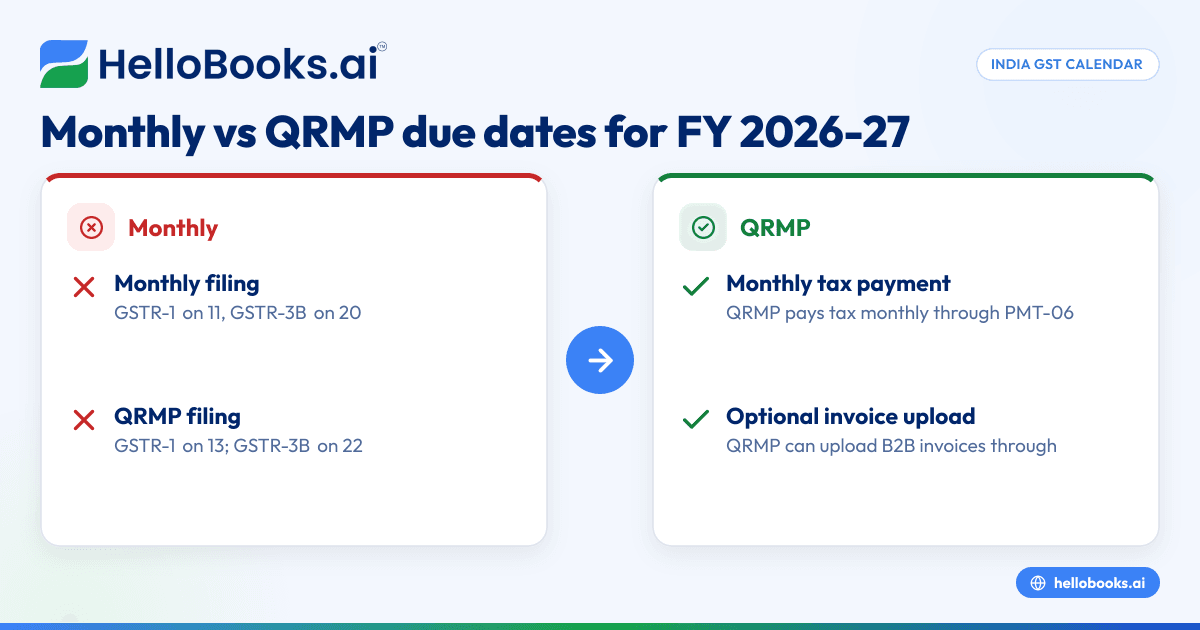

Key takeaways
What this article covers, in order:
- ആദ്യം നോക്കേണ്ടത്: നിങ്ങളുടെ ബിസിനസ് മാസാന്ത ഫയലറാണോ QRMP-യിലാണോ?
- FY 2026-27-ൽ calendar ഓർക്കുന്നതിന് പകരം workflow ഓർക്കുക
- മാസാന്ത ഫയലർമാർക്ക് കലണ്ടർ വായിക്കേണ്ട ശരിയായ രീതി
- QRMP-യിൽ ഉള്ളവർക്ക് തീയതിയേക്കാൾ cash-flow ശീലമാണ് പ്രധാനത്
- “ഡ്യൂ ഡേറ്റ്” എന്നതിനേക്കാൾ “official source” എന്ത്?
- ഒരു സത്യസന്ധമായ ചിത്രീകരണം: തീയതി തെറ്റിയത് കൊണ്ടല്ല, data വൈകിയത് കൊണ്ട് പ്രശ്നം ഉണ്ടാകുന്നത്
Indiaയിൽ FY 2026-27-ലെ GST റിട്ടേൺ ഡ്യൂ ഡേറ്റുകൾ അറിയാൻ ഏറ്റവും സുരക്ഷിതമായ ഉത്തരമിതാണ്: ആദ്യം നിങ്ങളുടെ GSTIN ഏത് filing frequency-ലാണ് എന്ന് GST Portal-ിൽ പരിശോധിക്കുക, പിന്നെ GSTR-1, GSTR-3B, QRMP-യിൽ ആണെങ്കിൽ PMT-06/IFF എന്നിവയുടെ നിലവിലെ തീയതികൾ CBIC notifications-ഉം GSTN portal calendar-ഉം നോക്കി ഉറപ്പാക്കുക. കാരണം Central Goods and Services Tax Act, 2017-നും അതിന്റെ Rules-നും കീഴിൽ തീയതികൾ ചിലപ്പോൾ CBIC പ്രത്യേക അറിയിപ്പിലൂടെ നീളാം; സംസ്ഥാന ഗ്രൂപ്പിംഗും return type-ഉം തീയതിയെ മാറ്റും.
ആദ്യം നോക്കേണ്ടത്: നിങ്ങളുടെ ബിസിനസ് മാസാന്ത ഫയലറാണോ QRMP-യിലാണോ?
GST calendar വായിക്കുമ്പോൾ ഏറ്റവും വലിയ പിഴവ് മാസംപോലെ തീയതി ഓർത്തുവയ്ക്കുന്നതാണ്; ശരിയായ വഴി നിങ്ങളുടെ filing profile മനസ്സിലാക്കുന്നതാണ്. ഇന്ത്യയിൽ GST return compliance, Central Goods and Services Tax Act, 2017, Integrated Goods and Services Tax Act, 2017 എന്നിവയുടെ ഫ്രെയിംവർക്കിനുള്ളിലും GSTN പ്രവർത്തിപ്പിക്കുന്ന GST Portal വഴിയും നടക്കുന്നു; നോട്ടിഫിക്കേഷനുകൾ പ്രസിദ്ധീകരിക്കുന്നത് സാധാരണയായി Central Board of Indirect Taxes and Customs (CBIC) ആണ്.
നിങ്ങൾ monthly filer ആണോ QRMP taxpayer ആണോ എന്നത് പഴയ ഒരു WhatsApp forward കൊണ്ടല്ല തീരുമാനിക്കേണ്ടത്. നിങ്ങളുടെ GSTIN profile-ൽ, return dashboard-ൽ, തിരഞ്ഞെടുക്കപ്പെട്ട filing option എന്താണ് എന്ന് നേരിട്ട് നോക്കണം. eligibility, opt-in/opt-out windows, aggregate turnover സംബന്ധിച്ച നിലവിലെ പരിധികൾ CBIC notifications-ലും GST Portal help content-ലും പ്രസിദ്ധീകരിക്കപ്പെടുന്നു; ഏതെങ്കിലും സംഖ്യ ഒരു CA അല്ലെങ്കിൽ tax professional കൂടെ cross-check ചെയ്യാതെ bare fact ആയി ആശ്രയിക്കരുത്.
കേരളം, തമിഴ്നാട്, മഹാരാഷ്ട്ര, കര്ണാടക, ഡൽഹി—എവിടെയായാലും ഈ ആദ്യ പരിശോധന അത്യാവശ്യമാണ്. കാരണം monthly calendar-ും QRMP calendar-ും ഒരുപോലെ തോന്നിയാലും, ജോലിഭാരം, cash planning, invoice upload timing, ITC visibility എല്ലാം വേറെയാകും.
FY 2026-27-ൽ calendar ഓർക്കുന്നതിന് പകരം workflow ഓർക്കുക
ഒരു നല്ല GST calendar തീയതികളുടെ പട്ടിക മാത്രമല്ല. അത് നിങ്ങളുടെ മാസത്തിന്റെ പ്രവർത്തനക്രമമാണ്. ഇന്ത്യയിലെ ചെറിയ ബിസിനസുകൾ—retail shop, distributor, service firm, contractor, D2C seller—എല്ലാവർക്കും ഒരു practical pattern ഉണ്ടാകും:
- invoice issue ചെയ്യൽ
- purchase bills capture ചെയ്യൽ
- bank receipts reconcile ചെയ്യൽ
- outward supplies ശരിയാക്കൽ
- inward supplies-ന്റെ ITC check ചെയ്യൽ
- പിന്നെ GSTR-1, GSTR-3B ഫയൽ ചെയ്യൽ
ഇതിൽ ഏതെങ്കിലും ഘട്ടം വൈകിയാൽ അവസാന ദിവസമാണ് പ്രശ്നം തോന്നുക. ഉദാഹരണത്തിന്, place of supply തെറ്റിയാൽ CGST/SGST വേണമോ IGST വേണമോ എന്ന tax head split തെറ്റും. അതേ പിഴവ് invoice-ൽ തുടങ്ങി GSTR-1-ൽ എത്തും; തുടർന്ന് GSTR-3B summary-യും books-ഉം mismatch ആകാം. അതുകൊണ്ടാണ് തീയതി calendar-ിനുമുമ്പ് transaction calendar സജ്ജമാക്കേണ്ടത്.
ഈ പശ്ചാത്തലത്തിൽ GST return filing software ഉപകാരപ്പെടുന്നത് filing screen-ിൽ അവസാന ദിവസം മാത്രം അല്ല, invoice മുതൽ return വരെ ഒരേ data flow നിലനിർത്തുന്നതിനാലാണ്. അതുപോലെ smart invoicing ഉപയോഗിച്ച് invoice ഉണ്ടാക്കുമ്പോൾ തന്നെ customer GSTIN, place of supply, HSN/SAC, CGST/SGST അല്ലെങ്കിൽ IGST split എന്നിവ ഒത്തുവരുത്തിയാൽ return month-ൽ repair work കുറയും.
മാസാന്ത ഫയലർമാർക്ക് കലണ്ടർ വായിക്കേണ്ട ശരിയായ രീതി
Monthly filer ആണെങ്കിൽ FY 2026-27 മുഴുവൻ ഓരോ tax period-നും outward supplies return-ും summary return-ും നിരന്തരം വരും. പക്ഷേ ഇവിടെ പ്രധാനപ്പെട്ടത് “എന്ത് തീയതി?” എന്നതിലേക്കാൾ “ആ തീയതിക്ക് മുമ്പ് എന്തെല്ലാം lock ചെയ്യണം?” എന്നതാണ്.
പ്രായോഗികമായി monthly workflow ഇങ്ങനെ ആലോചിക്കാം:
- മാസം അവസാനിക്കുന്നതിന് മുമ്പ് എല്ലാ sales invoices post ചെയ്തിട്ടുണ്ടോ എന്ന് നോക്കുക.
- e-invoice ബാധകമായ ബിസിനസാണെങ്കിൽ IRN, signed QR എന്നിവ invoice save സമയത്ത് generate ആയിട്ടുണ്ടോ എന്ന് ഉറപ്പാക്കുക; നിലവിലെ applicability threshold CBIC notification-ൽ പ്രസിദ്ധീകരിക്കുന്നതാണ്.
- goods movement ഉണ്ടെങ്കിൽ ആവശ്യമായിടത്ത് e-way bill raise ചെയ്തിട്ടുണ്ടോ എന്ന് പരിശോധിക്കുക.
- purchase bills OCR അല്ലെങ്കിൽ manual entry വഴി books-ലേക്ക് കൊണ്ടുവരിക.
- GSTR-2A/2B-നോടൊപ്പം supplier invoices reconcile ചെയ്ത് eligible ITC track ചെയ്യുക.
- bank statement upload ചെയ്ത് receipts, payments, NEFT/RTGS/IMPS/UPI credits എന്നിവ invoices അല്ലെങ്കിൽ expenses-നോട് match ചെയ്യുക.
- പിന്നെ GSTR-1 build ചെയ്യുക; ശേഷം GSTR-3B finalize ചെയ്യുക.
ഇതിൽ monthly filer-ന്റെ യഥാർത്ഥ റിസ്ക് അവസാന രണ്ടുദിവസമല്ല. മാസംമധ്യേ incomplete books ആണ്. HelloBooks പോലൊരു system-ൽ invoices-ൽ നിന്നുതന്നെ GSTR-1, GSTR-3B draft build ആകുന്നത് ഇതുകൊണ്ടാണ് ഗുണം ചെയ്യുന്നത്; return figures books-ിൽ നിന്ന് വേർപെടാതെ നിൽക്കും. Bank statement upload ചെയ്ത് AI reconciliation നടത്തുന്നതും സഹായിക്കും, പ്രത്യേകിച്ച് rupee receipts പല ചെറിയ UPI collections ആയി വന്നാൽ.
QRMP-യിൽ ഉള്ളവർക്ക് തീയതിയേക്കാൾ cash-flow ശീലമാണ് പ്രധാനത്
QRMP taxpayers പലപ്പോഴും “ത്രൈമാസം ഫയൽ ചെയ്യാം, പിന്നെ സമയം plenty” എന്ന് കരുതുന്നു. ഇന്ത്യയിൽ അതാണ് പലപ്പോഴും വലിയ തെറ്റിദ്ധാരണ. കാരണം outward return quarter-end-ൽ ആയാലും tax payment planning മാസംതോറും വരാം, B2B customers-ന് അവരുടെ ITC timing പ്രധാനമാകാം, optional invoice furnishing ഉപയോഗിക്കുമോ ഇല്ലയോ എന്ന തീരുമാനവും working capital-നെ ബാധിക്കും.
QRMP-യിൽ ശ്രദ്ധിക്കേണ്ട മൂന്ന് കാര്യങ്ങൾ:
- quarter അവസാനിക്കാൻ കാത്തിരിക്കാതെ books close ചെയ്യുക
- ആദ്യ രണ്ട് മാസങ്ങളിലെ liability estimate ശരിയായി കൈകാര്യം ചെയ്യുക
- B2B customers ഉള്ളപ്പോൾ invoice visibility timing മനസ്സിലാക്കുക
PMT-06, IFF എന്നിവയുടെ നിലവിലെ due dates, QRMP scheme conditions, state-wise GSTR-3B grouping എന്നിവ CGST Rules പ്രകാരമുള്ള official instructions-ലും CBIC/GST Portal updates-ലും പ്രസിദ്ധീകരിക്കപ്പെടുന്നു. അതിനാൽ calendar printout ഒട്ടിക്കുന്നതിനു മുൻപ് തന്നെ source check വേണം.
കേരളത്തിലെ ഒരു trader, മഹാരാഷ്ട്രയിലെ ഒരു wholesaler, തമിഴ്നാട്ടിലെ ഒരു manufacturer—എല്ലാവർക്കും QRMP ഒരേ പോലെ തോന്നാം. പക്ഷേ customer mix B2B ആണോ B2C ആണോ, e-way bill frequency കൂടുതലാണോ, inventory movement എത്രയാണോ എന്നതനുസരിച്ച് ശീലം മാറണം. inventory books-നോട് കൂടെ move ചെയ്താൽ quarter-end stock corrections കുറയും. Goods dispatch invoice-ിൽ നിന്നുതന്നെ e-way bill software വഴി EWB തയ്യാറാക്കുന്നത് data വീണ്ടും retype ചെയ്യേണ്ടതില്ലാത്തതിനാൽ compliance load കുറക്കും.
“ഡ്യൂ ഡേറ്റ്” എന്നതിനേക്കാൾ “official source” എന്ത്?
GST തീയതികൾ ഇന്ത്യയിൽ bare fact ആയി blog-ിൽ വായിച്ച് ഓർക്കുന്നത് അപകടമാണ്. ശരിയായ sources ഇവയാണ്:
- CBIC notifications and circulars
- GST Portal announcements/dashboard
- applicable law: Central Goods and Services Tax Act, 2017 and CGST Rules, 2017
- relevant return instructions on GSTN-managed systems
ഒരു തീയതി holiday-യിൽ വീണാൽ സ്വയം മാറും എന്ന് കരുതരുത്. അത്തരം extension ഉണ്ടെങ്കിൽ CBIC അതിന് notification അല്ലെങ്കിൽ order വഴി അറിയിക്കും; അതിന്റെ publication GST Portal announcements-ൽ കാണാം. അതിനാൽ ഒരു PDF calendar download ചെയ്താലും filing-ിന് മുമ്പ് official notice വീണ്ടും പരിശോധിക്കണം.
ഇവിടെ annual adjustments, amendment windows, prior financial year ITC claim cut-offs പോലുള്ള വിഷയങ്ങളും വരും. ഇവയ്ക്ക് നിലവിലെ തീയതികൾ നിയമപ്രകാരം മാറാമെന്നും അവ CGST Act provisions, Rules, CBIC notifications എന്നിവയിൽ പ്രസിദ്ധീകരിക്കപ്പെടുന്നുമാണ്. അതുകൊണ്ട് ഏതെങ്കിലും article-ലുള്ള സംഖ്യയെ അവസാന വാക്കായി കാണരുത്.
HelloBooks-ന്റെ utility ഇവിടെ filing മാത്രം അല്ല. GSTR-2A/2B reconciliation, ITC tracking, invoice-origin data എന്നിവ ഒറ്റ സിസ്റ്റത്തിൽ നിൽക്കുമ്പോൾ official due date change വന്നാലും നിങ്ങൾ source data വീണ്ടും ചേർക്കേണ്ട സ്ഥിതി വരില്ല.
ഒരു സത്യസന്ധമായ ചിത്രീകരണം: തീയതി തെറ്റിയത് കൊണ്ടല്ല, data വൈകിയത് കൊണ്ട് പ്രശ്നം ഉണ്ടാകുന്നത്
ഇവിടെ വരുന്ന rupee figures മുഴുവൻ illustrative and invented ആണ്; യഥാർത്ഥ tax advice അല്ല. നിയമത്തിലെ എല്ലാ conditions, blocked credits, valuation issues, reverse charge edge cases, supplier compliance defaults എന്നിവ ഇത് ഒഴിവാക്കുന്നു.
കരുതുക കോഴിക്കോട് ഉള്ള ഒരു wholesaler-ന് ഒരു മാസത്തിൽ invented ആയി ₹8,40,000 taxable sales ഉം ₹5,10,000 taxable purchases ഉം ഉണ്ടായി. അതിൽ ചില sales Kerala-യ്ക്കകത്തും ചിലത് Karnataka-യിലേക്കും പോയി. രണ്ട് interstate invoices-ിൽ place of supply തെറ്റായി local sale ആയി post ചെയ്തു. കൂടാതെ മൂന്ന് supplier bills PDF inbox-ിൽ കിടന്നു; books-ലേക്ക് വന്നില്ല. Bank statement-ൽ UPI, NEFT receipts വന്നെങ്കിലും അവ invoices-നോട് match ചെയ്തില്ല.
ഇപ്പോൾ പ്രശ്നം “GSTR-1 ഏത് തീയതിയ്ക്ക്?” എന്നതല്ല. പ്രശ്നം:
- രണ്ട് invoice-ൽ IGST വേണ്ടിടത്ത് CGST/SGST split ആയിരിക്കുന്നു
- supplier bills books-ലില്ലാത്തതിനാൽ 2B compare ചെയ്യുമ്പോൾ gap വരുന്നു
- collections match ആകാത്തതിനാൽ outstanding report തെറ്റുന്നു
- അതേ തെറ്റായ base കൊണ്ടാണ് GSTR-3B draft build ചെയ്യപ്പെടുന്നത്
ഇത്തരം സാഹചര്യത്തിൽ bank reconciliation software ഉപയോഗിച്ച് bank statement upload ചെയ്ത് receipts match ചെയ്യുന്നതും, OCR വഴി purchase bills capture ചെയ്യുന്നതും, place-of-supply logic invoice സമയത്ത് ശരിയാക്കുന്നതും, filing-ിനു മുമ്പ് 2A/2B reconcile ചെയ്യുന്നതും തീയതി ഓർക്കുന്നതിനെക്കാൾ ഏറെ മൂല്യമുള്ളതാണ്.
Kerala ഉൾപ്പെടെ multi-state businesses ശ്രദ്ധിക്കേണ്ട state issue
“ഞങ്ങളുടെ office Kochi-യിൽ ആണ്, customer Bengaluru-യിൽ ആണ്; അതുകൊണ്ട് return date മാറുമോ?” എന്ന സംശയം പതിവാണ്. Return grouping, GSTIN state, registration structure, scheme എന്നിവ ഒന്നാണ്; place of supply വേറെയാണ്. അതിനാൽ multi-state business-ുകൾക്ക് calendar discipline കൂടുതൽ പ്രധാനമാണ്.
ഉദാഹരണത്തിന്, ഒരു company-ക്ക് Kerala GSTIN, Karnataka GSTIN, Tamil Nadu GSTIN എന്നിവ ഉണ്ടെങ്കിൽ, outward supplies, e-invoice applicability, branch-wise stock transfer, e-way bill documentation, GSTR-1/GSTR-3B data എല്ലാം GSTIN-wise clean ആയിരിക്കണം. ഒരേ Tally data dump-ൽ എല്ലാം മിക്സ് ചെയ്താൽ quarter-end stress കൂടും. അതിനാലാണ് multi-GSTIN handling ഒരു practical requirement ആകുന്നത്, പ്രത്യേകിച്ച് users പലരും ചേർന്ന് ജോലി ചെയ്യുന്നപ്പോൾ.
Tally വിട്ട് ഉടൻ മാറാൻ താത്പര്യമില്ലാത്ത CA firms-ക്കും businesses-ക്കും migration ഒരു sensitive വിഷയമാണ്. tally-alternative വായിച്ച് workflow compare ചെയ്യാം; transition period-ൽ Tally connector/migration support ഉപയോഗിക്കുന്നത് historical books വേർപെടാതെ നിലനിർത്താൻ സഹായിക്കും. ഇത് India context-ൽ വളരെ relevant ആണ്, കാരണം ഇന്നും പല SMEs-ക്കും Tally ആണ് accounting base.
FY 2026-27-ൽ കലണ്ടർ നിയന്ത്രണത്തിലാക്കാൻ ഉപയോഗപ്രദമായ 7 ശീലങ്ങൾ
ഒരൊറ്റ master calendar-ിനേക്കാൾ, താഴെയുള്ള operational habits ആണ് കൂടുതൽ dependable:
1. മാസം അവസാനിക്കുന്നതിന് മുമ്പ് invoice cut-off fix ചെയ്യുക.
Backdated edits കുറയ്ക്കുക. e-invoice ബാധകമാണെങ്കിൽ IRN failure pending ആയി വിടരുത്.
2. purchase bills same week capture ചെയ്യുക.
PDF, photo, paper bill—എന്തായാലും OCR വഴി books-ലേക്ക് വേഗം കൊണ്ടുവരുക.
3. 2A/2B review filing week-ൽ അല്ല, മുൻകൂട്ടി ചെയ്യുക.
Supplier non-reporting late ആയി മനസ്സിലായാൽ ITC planning ബാധിക്കും.
4. bank statement മാസംതോറും upload ചെയ്യുക.
UPI collections, IMPS transfers, NEFT receipts, cash deposits—എന്താണ് open invoice-നും എന്താണ് advance-നും എന്ന് മുൻകൂട്ടി match ചെയ്യുക.
5. place of supply check ഒരു habit ആക്കുക.
Local rupee sale ആണോ interstate dispatch ആണോ എന്ന് invoice സമയത്ത് തന്നെ സ്ഥിരീകരിക്കുക.
6. stock and dispatch books sync വയ്ക്കുക.
Inventory mismatch പിന്നീട് GST mismatch ആകാം, പ്രത്യേകിച്ച് e-way bill ഉണ്ടാക്കുമ്പോൾ.
7. official source without fail re-check ചെയ്യുക.
Due dates, extensions, advisories—എല്ലാം filing-ിനു മുൻപ് CBIC/GST Portal-ൽ ഉറപ്പാക്കുക.
ഈ ശീലങ്ങൾ സിസ്റ്റത്തിൽ embed ചെയ്യാൻ accounting software india ഉപയോഗിക്കുന്നത് നല്ലതാണ്, കാരണം accounting, GST, inventory, receivables, reports എന്നിവ ഒരേ books-ൽ നിന്ന് പ്രവർത്തിക്കുമ്പോൾ compliance calendar ഒരു extra spreadsheet ആവേണ്ടതില്ല.
HelloBooks ഈ കലണ്ടർ സമ്മർദ്ദം എവിടെ കുറയ്ക്കുന്നു
ഈ ലേഖനത്തിന്റെ ഉദ്ദേശം software pitch അല്ല; പക്ഷേ FY 2026-27 calendar manage ചെയ്യുമ്പോൾ ചില ഉപയോഗങ്ങൾ നേരിട്ട് relevant ആണ്. Invoice തയ്യാറാക്കുമ്പോൾ ശരിയായ CGST/SGST അല്ലെങ്കിൽ IGST split വരുന്നത് filing month-ലെ manual correction കുറയ്ക്കും. e-invoicing ബാധകമായ businesses-ക്ക് IRN, signed QR എന്നിവ save സമയത്തുതന്നെ കിട്ടുന്നത് portal round-trip കുറയ്ക്കും. GSTR-1, GSTR-3B direct filing data already recorded invoices-ിൽ നിന്ന് build ചെയ്യുന്നത് numbers reconcile ചെയ്യാൻ സഹായിക്കും.
Purchase side-ൽ OCR, GSTR-2A/2B reconciliation, ITC tracking എന്നിവ supplier mismatch നേരത്തെ കാണിക്കും. Bank statement upload ചെയ്ത് AI reconciliation ഉപയോഗിക്കുമ്പോൾ UPI/NEFT/RTGS entries books-നോട് പൊരുത്തപ്പെടുത്താൻ എളുപ്പമാകും. Goods movement ഉണ്ടെങ്കിൽ invoice-ിൽ നിന്ന് e-way bill raise ചെയ്യാം. Multi-state registrations ഉള്ളവർക്ക് multiple GSTINs ഒരേ login-ൽ കൈകാര്യം ചെയ്യുന്നത് practical ആണ്. Owners field-ൽ ആയിരിക്കുമ്പോൾ mobile app സഹായിക്കും; quick clarifications വേണമെങ്കിൽ Noor assistant WhatsApp-ിൽ Hindi, English, Hinglish-ൽ ഉപയോഗിക്കാം.
If you want to see whether that fits your setup, demo എടുക്കാം; pricing നോക്കണമെങ്കിൽ /in/pricing ആണ് ശരിയായ പേജ്.
FY 2026-27-ക്കുള്ള ഏറ്റവും സുരക്ഷിതമായ സമാപന ഉത്തരമെന്നാൽ
Indiaയിൽ GST റിട്ടേൺ due dates ഒരു wall chart ആയി മാത്രം കാണുന്നത് പോരാ. നിങ്ങളുടെ GSTIN monthly ആണോ QRMP ആണോ എന്ന് ഉറപ്പാക്കുക, current dates CBIC notifications-ലും GST Portal-ലും നോക്കുക, CGST Act/Rules framework അനുസരിച്ചുള്ള മാറ്റങ്ങൾ ശ്രദ്ധിക്കുക, പിന്നെ invoice-to-return workflow നിയന്ത്രണത്തിലാക്കുക. തീയതി മനപ്പാഠമാകുന്നതിനെക്കാൾ data ready ആകുന്നതാണ് പ്രധാനത്.
Official source cross-check ചെയ്യാൻ free utilities ഉപകാരപ്പെടും: GST calculator, GSTIN validator, GST reconciliation checker. ഇവ filing advice-നെ പകരം വയ്ക്കില്ല; പക്ഷേ FY 2026-27 calendar-ിനായി കൂടുതൽ clean, less stressful routine സൃഷ്ടിക്കാൻ സഹായിക്കും.


