


Key takeaways
What this article covers, in order:
- FY 2026-27 में आपका असली GST कैलेंडर किस बात से तय होता है
- Monthly filer और QRMP में फर्क सिर्फ तारीख का नहीं, workflow का है
- तारीख याद करने से पहले official source कहाँ देखें
- GSTR-1 और GSTR-3B के बीच असली coordination कहाँ बिगड़ता है
- Purchase side ढीली हो तो due date पर भी return साफ नहीं बनती
- E-invoice, e-way bill, और return calendar एक-दूसरे से जुड़े हुए हैं
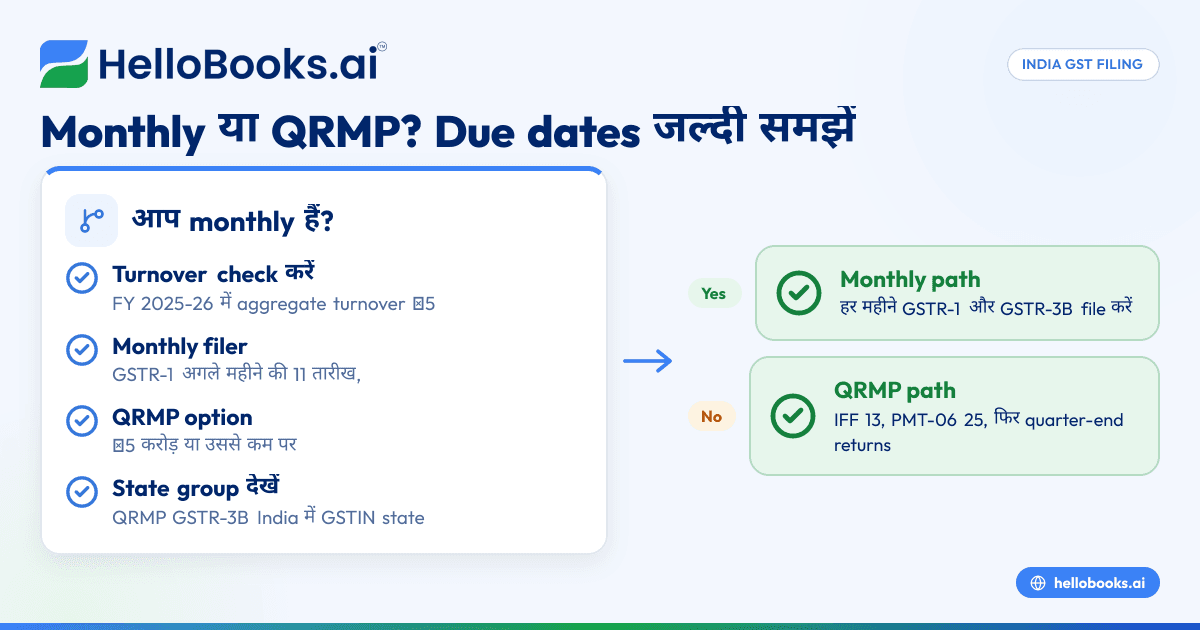
India में FY 2026-27 के GST return due dates जानने का सही जवाब यह है: किसी भी तारीख को याद करके भरोसा मत कीजिए, पहले यह तय कीजिए कि आपका GSTIN monthly filer है या QRMP, फिर वही तारीख GST Portal और CBIC की latest notification/advisory पर verify कीजिए। Central Goods and Services Tax Act, 2017, उससे जुड़े Rules, और GSTN/GST Portal पर प्रकाशित calendar ही authoritative source हैं; portal पर extension, state-group mapping, और filing window बदल सकती है।
FY 2026-27 में आपका असली GST कैलेंडर किस बात से तय होता है
हर business का GST calendar एक जैसा नहीं होता। एक kirana wholesaler, एक D2C seller, एक services firm, और multi-state distributor—सबका काम एक जैसे महीनों में चलता हुआ दिख सकता है, लेकिन filing pressure अलग बनता है। कारण सीधा है: आपकी filing frequency, आपके GSTIN का state, invoice volume, e-invoice की applicability, purchase bills की quality, और bank reconciliation discipline—ये सब मिलकर तय करते हैं कि आपको किस तारीख पर सच में क्या तैयार रखना है।
India में GST compliance का legal framework Central Goods and Services Tax Act, 2017, Integrated Goods and Services Tax Act, 2017, और इनके Rules से बनता है। इनके administration में CBIC policy और notifications जारी करता है, जबकि return filing infrastructure GSTN के जरिए GST Portal पर चलता है। इसलिए कोई भी article, PDF calendar, CA का old WhatsApp forward, या office wall chart सिर्फ reference है; अंतिम भरोसा official publication पर ही होना चाहिए।
अगर आपका turnover, scheme preference, या filing profile बदला है, तो FY 2026-27 का आपका अनुभव FY 2025-26 जैसा जरूरी नहीं रहेगा। यही वजह है कि “सबके लिए एक table” अक्सर practical life में fail हो जाता है।
Monthly filer और QRMP में फर्क सिर्फ तारीख का नहीं, workflow का है
लोग अक्सर monthly बनाम QRMP को सिर्फ “कम बार return file करना” समझते हैं। असल फर्क cash-flow rhythm, document readiness, B2B customer expectations, और month-end closing discipline में आता है।
Monthly filer के लिए challenge यह है कि sales register, purchase register, credit notes, debit notes, tax head split, reverse charge items, और output tax working हर महीने tidy होनी चाहिए। अगर आपने month-end तक invoices साफ नहीं रखे, place of supply गलत चुना, या inter-state sale पर CGST/SGST लगा दिया, तो GSTR-1 और GSTR-3B का mismatch जल्दी सामने आ सकता है।
QRMP taxpayer के लिए outward return कम बार दिखती है, लेकिन काम कम नहीं होता। Quarter end पर backlog बनना बहुत आसान है। ऊपर से monthly tax payment discipline, B2B buyers की input visibility, और supplier invoices की timing अलग pressure पैदा करती है। इसलिए QRMP वालों के लिए calendar quarter-based दिखता है, मगर bookkeeping monthly करनी पड़ती है।
यहीं software discipline matters करता है। अगर invoices बनाते समय GSTIN, place of supply, HSN/SAC, और CGST/SGST या IGST split सही बैठ जाए, तो बाद की filing stress बहुत घटती है। HelloBooks में GST invoicing और place-of-supply based tax head split इसी practical problem को address करते हैं, ताकि invoice stage की गलती return stage पर surprise बनकर न आए।
तारीख याद करने से पहले official source कहाँ देखें
FY 2026-27 के लिए specific dates, cut-offs, late fee, interest, scheme eligibility limits, या any extension को bare fact की तरह लेना unsafe है। इनके current figures और operative dates आपको इन official sources पर check करने चाहिए:
- GST Portal पर Returns Dashboard, advisories, system messages, और filing tiles
- CBIC की notifications, circulars, orders, और press releases
- GSTN की portal updates और technical advisories
- Applicable law text: CGST Act, 2017, CGST Rules, 2017, IGST Act, 2017
अगर कोई consultant या article आपको एक final calendar दे भी दे, तब भी month of filing में GST Portal खोलकर देखना जरूरी है। India में flood, state-specific disruption, portal maintenance, judicial directions, या policy changes के कारण relief notifications आ सकती हैं। कुछ changes all-India होते हैं, कुछ limited class of taxpayers पर लागू होते हैं।
यानी safest habit यह है: wall calendar बनाइए, लेकिन filing से पहले official portal check किए बिना submit मत कीजिए।
GSTR-1 और GSTR-3B के बीच असली coordination कहाँ बिगड़ता है
Business owners अक्सर due date पूछते हैं, जबकि असली pain-point due date नहीं बल्कि preparation lag होता है। GSTR-1 outward supplies की detail-driven return है; GSTR-3B summary payment return की तरह work करती है। Practical problem तब आती है जब books, invoices, bank receipts, purchase bills, stock movement, और ITC view एक-दूसरे से बात नहीं कर रहे होते।
कुछ typical Indian situations देखिए:
- Invoice accounting system में बना, लेकिन dispatch e-way bill record से match नहीं हुआ
- Customer Delhi का था, goods Haryana से भेजे गए, place of supply logic गलत बैठ गया
- Supplier bill photo में पड़ा रहा, OCR या entry नहीं हुई, इसलिए ITC working incomplete रही
- NEFT/RTGS/IMPS/UPI receipt bank statement में दिखी, लेकिन invoice से match नहीं हुई
- Credit note books में pass हुई, return working में शामिल नहीं हुई
- Multi-GSTIN business में Maharashtra और Karnataka registrations की sales mix हो गई
ऐसे mismatch की वजह से filing last day का काम बन जाती है। HelloBooks में GSTR-1 and GSTR-3B direct filing useful तब होती है जब invoices और books पहले से disciplined हों; return अलग spreadsheet से नहीं, recorded transactions से build होती है। इसी तरह bank statement upload and AI reconciliation India workflows में helpful है क्योंकि आप statement upload करके receipts match कर सकते हैं, live bank feed पर निर्भर हुए बिना।
Purchase side ढीली हो तो due date पर भी return साफ नहीं बनती
India में GST stress सिर्फ sales side से नहीं आता। कई SMEs sales invoices समय पर बना लेते हैं, लेकिन purchase side loose छोड़ देते हैं। Supplier invoice PDF inbox में है, transporter copy अलग है, accountant के पास photo अलग है, और GSTIN mismatch बाद में पता चलता है। तब GSTR-2A/2B review और ITC claim decision messy हो जाता है।
याद रखिए: ITC का current eligibility framework, reversals, blocked credits, और claim conditions CGST Act, 2017 और संबंधित Rules के under governed हैं; latest interpretation के लिए CBIC circulars और GST Portal/GSTN views check करने चाहिए। कोई भी number—चाहे claim cut-off हो, reversal working हो, या amendment window—official publication से verify होना चाहिए।
Practical control क्या है? Purchase bills जल्दी capture करना, supplier GSTIN validate करना, duplicate bills हटाना, और 2A/2B view से compare करना। HelloBooks में purchase bills के लिए OCR use करने से PDF या photo से data जल्दी books में आता है, और GSTR-2A/2B reconciliation and ITC tracking जैसे workflow से missing supplier invoices पहले दिख जाते हैं। अगर आप चाहें, GSTIN validator और GST reconciliation checker जैसे India tools से spot-check भी कर सकते हैं।
E-invoice, e-way bill, और return calendar एक-दूसरे से जुड़े हुए हैं
कई businesses due dates को सिर्फ return filing की घटना समझते हैं, जबकि compliance chain earlier शुरू हो जाती है। अगर आपका business e-invoicing scope में आता है, तो invoice generation stage पर IRN और signed QR की accuracy downstream reporting को influence करती है. Eligibility threshold और operative applicability का current figure CBIC notifications under GST law और official portal publications पर verify किया जाना चाहिए; कोई old threshold memory से use न करें।
Goods movement वाले businesses में e-way bill data भी important support record बनता है। Consignment value rules, document requirements, validity, and exceptions की current position CGST Rules और CBIC/GST Portal/e-way bill system पर published guidance में check करनी चाहिए। Return filing के समय यह consistency useful होती है कि dispatch, invoice, stock, और tax posting एक-दूसरे से जुड़ें।
HelloBooks में अगर आप invoice से ही e-invoicing software workflow चलाते हैं, तो IRN और signed QR अलग manual JSON process के बिना संभल सकते हैं। Goods movement के लिए e-way bill software invoice-linked process को आसान बनाता है, जिससे same data बार-बार type करने की जरूरत घटती है। Inventory-driven businesses के लिए inventory records भी helpful हैं, क्योंकि stock move और sale entry disconnect नहीं होते।
एक ईमानदार, invented illustration: calendar नहीं, backlog महंगा पड़ता है
मान लीजिए यह पूरी तरह illustrative और invented example है; numbers सिर्फ समझाने के लिए हैं, current tax rates, penalty, interest, threshold, due dates या legal consequences का statement नहीं हैं, और इसमें sector-specific exemptions, blocked credit, valuation disputes, RCM edge cases, amendments, और litigation risk शामिल नहीं हैं। NEEDS EXPERT REVIEW.
एक Jaipur-based trader के पास दो GSTIN हैं—Rajasthan और Delhi। अप्रैल महीने में उसने invented figures के तौर पर Rajasthan GSTIN से ₹8,40,000 की local B2B sales और ₹3,20,000 की inter-state sales रिकॉर्ड कीं, जबकि Delhi GSTIN से ₹2,10,000 की B2C sales हुईं। Purchases invented figures के हिसाब से कुल ₹6,75,000 थीं, जिनमें से ₹95,000 के supplier bills upload ही नहीं हुए। Bank statement में UPI, NEFT और IMPS receipts मिलाकर invented ₹4,60,000 आए, पर उनमें से ₹1,25,000 invoices से unreconciled रहे।
अब problem due date की नहीं, readiness की है। अगर outward invoices सही GST head split के साथ दर्ज हैं, purchase bills OCR से आ गए हैं, 2B reconciliation ने missing supplier invoices flag कर दिए हैं, और uploaded bank statement से receipts match हो गई हैं, तो filing week में accountant summary review करता है। लेकिन अगर यह सब last day पर शुरू हुआ, तो वही business spreadsheet, Tally export, WhatsApp photos, transporter slip, और customer ledger के बीच अटक जाएगा।
इस तरह के setup में HelloBooks का accounting software India approach useful है क्योंकि books, GST invoices, bank reconciliation, inventory, और reports अलग-अलग silos में नहीं रहते। Multi-GSTIN business होने पर one-login view भी काम आता है, और Tally छोड़ने या साथ में चलाने की स्थिति में Tally alternative या migration/connector workflow transition को softer बना सकता है।
India में practical filing discipline कैसे बनती है
अगर आप FY 2026-27 के GST calendar को बिना panic के चलाना चाहते हैं, तो dates से ज्यादा routines fix कीजिए:
पहला, sales invoice same day या next working day से आगे मत छोड़िए। GSTIN, place of supply, HSN/SAC, taxable value, और tax head split सही होना चाहिए।
दूसरा, purchase bills को weekly capture कीजिए। Photo, PDF, email attachment—जो भी source हो, books में जल्दी आना चाहिए। OCR सिर्फ convenience नहीं, month-end backlog control है।
तीसरा, bank statement हर महीने upload करके receipts और payments reconcile कीजिए। India में UPI, NEFT, RTGS, और IMPS के mix के कारण narration-based matching messy हो सकती है; इसलिए month close से पहले reconciliation helpful है।
चौथा, 2A/2B और vendor follow-up को filing week तक मत टालिए। Supplier ने return नहीं भरी, invoice गलत GSTIN पर डाली, या amount mismatch है—तो ITC planning पर असर पड़ेगा।
पांचवां, अगर आपका business Companies Act compliance, MCA filing, TDS under the Income-tax Act, या internal MIS भी संभालता है, तो GST books अलग universe न बनें। P&L, receivables ageing, purchase trend, और stock report वही entries reflect करें जिनसे return निकल रही है। HelloBooks में financial reports और inventory records इसी वजह से useful हैं: books और GST अलग कहानी न सुनाएँ।
छठा, owner-level visibility phone पर रखें। Accountant office में हो और owner market में, तब भी invoice, expense, या approval flow अटका नहीं रहना चाहिए। Mobile app और Hindi/English/Hinglish context में Noor assistant on WhatsApp owner को bookkeeping conversation के करीब रखते हैं, खासकर तब जब वह pure accounting jargon में comfortable न हो।
Multi-state business, TDS, reverse charge और real-world Indian clutter
India के SME landscape में compliance rarely single-layer होता है। एक business के पास Maharashtra और Gujarat में अलग GSTIN हो सकते हैं, vendors पर TDS implications हो सकते हैं, कुछ expenses reverse charge review मांग सकते हैं, और books अभी भी partial Tally environment में चल रही हो सकती हैं। इसी clutter में due date article useless लगता है अगर वह सिर्फ table दे और practical system की बात न करे।
TDS की current sections, rates, thresholds, deposit timings, and return obligations Income-tax Act, 1961 और Income Tax Department publications में check किए जाने चाहिए; GST और TDS को mix करके bare assumptions नहीं बनानी चाहिए। इसी तरह reverse charge की applicability CGST Act/Rules, IGST Act, और CBIC notifications के आधार पर review होनी चाहिए।
अगर आपके पास multiple registrations हैं, तो state-wise calendar discipline और user access control दोनों matter करते हैं। HelloBooks का multi-GSTIN setup और unlimited users इस तरह के operation में practical है: branch accountant, owner, CA, और finance lead सब same books context में काम कर सकते हैं। अगर आपका legacy data Tally में है, तो migration/connector bridge useful रहता है ताकि switch एकदम से disruptive न हो। Comparison देखना हो तो HelloBooks vs Tally भी useful starting point है।
FY 2026-27 के लिए safest approach: तारीख नहीं, source और system याद रखिए
इस पूरे विषय का short answer यह नहीं है कि “monthly वालों की यह date, QRMP वालों की वह date” और बात खत्म। सही answer यह है कि India में GST due date हमेशा तीन layers में पढ़ी जानी चाहिए: आपकी filing category, आपका GSTIN/state context, और official source की latest publication। Current figures, deadlines, late fee, interest, threshold, and form-wise applicability को CBIC notifications, GSTN/GST Portal, और governing law text से confirm कीजिए।
अगर आप सिर्फ calendar सेव करना चाहते हैं, तो वह आधा काम है। बाकी आधा काम invoicing accuracy, purchase capture, 2B reconciliation, bank statement upload, stock discipline, और return-ready books का है। तभी GSTR-1 और GSTR-3B filing aakhri din ka firefighting नहीं बनती।
अगर आप अपने current setup को streamline करना चाहते हैं, तो GST return filing software, smart invoicing, bank reconciliation software, और accounting software for small business जैसे pages से workflow देख सकते हैं। Pricing देखने के लिए /in/pricing है, और hands-on walkthrough के लिए /demo पर request की जा सकती है।


