


Key takeaways
What this article covers, in order:
- Gujarat business માટે calendar વાંચવાનો સાચો રસ્તો
- Monthly કે QRMP? આખું વર્ષ એથી નક્કી થાય છે
- FY 2026-27 માં કયા return cycle પર નજર રાખવી
- Gujarat માટે state-group checking કેવી રીતે કરશો
- Calendar તૂટે છે ત્યાં: invoice, purchase bill અને bank entry વચ્ચેનો ગોટાળો
- દિવાળી, year-end અને quarter-close: Gujarat ની વાસ્તવિક rush season
India માં FY 2026-27 માટે GST return calendar શોધો છો તો પહેલી સાચી વાત આ છે: તમારી સાચી due date કોઈ generic table નહીં, પરંતુ તમારા filing type, તમારા GSTIN ના રાજ્ય, અને CBIC તથા GST Portal પર પ્રકાશિત હાલની સૂચનાઓથી નક્કી થાય છે. Gujarat ના વેપારી માટે ખાસ કરીને monthly કે QRMP નો ફરક, GSTR-1 અને GSTR-3B નો workflow, અને invoice-data પહેલેથી સાફ રાખવું—આ ત્રણ બાબત calendar કરતાં વધુ મહત્વની છે.
Gujarat business માટે calendar વાંચવાનો સાચો રસ્તો
Gujarati article માં સીધું table આપવું સહેલું છે, પણ India માં GST compliance એટલું સીધું નથી. GST, એટલે Goods and Services Tax, Central Goods and Services Tax Act, 2017, Integrated Goods and Services Tax Act, 2017 અને સંબંધિત rules હેઠળ ચાલે છે. તેનો અમલ Central Board of Indirect Taxes and Customs (CBIC) અને GSTN દ્વારા ચાલતા GST Portal પર થાય છે. એટલે FY 2026-27 માટે કોઈ પણ તારીખ, cut-off કે filing window જોવી હોય તો તેની હાલની સત્તાવાર આવૃત્તિ CBIC notifications, circulars અને GST Portal ના return dashboard પર જ ચકાસવી.
Gujarat ના વેપારીઓ માટે એક સામાન્ય ગેરસમજ એ છે કે “અમારે તો દર મહિને એક જ તારીખ યાદ રાખવાની.” હકીકતમાં, તમે regular monthly filer છો કે QRMP scheme હેઠળ છો, એ મુજબ તમારું આખું compliance rhythm બદલાય છે. જો તમારી પાસે એક કરતાં વધુ GSTIN હોય—ધારો Gujarat અને Maharashtra બંનેમાં registration—તો state-wise filing view પણ અલગ હોઈ શકે. તેથી calendar ને wall poster નહીં, operating system સમજો.
Monthly કે QRMP? આખું વર્ષ એથી નક્કી થાય છે
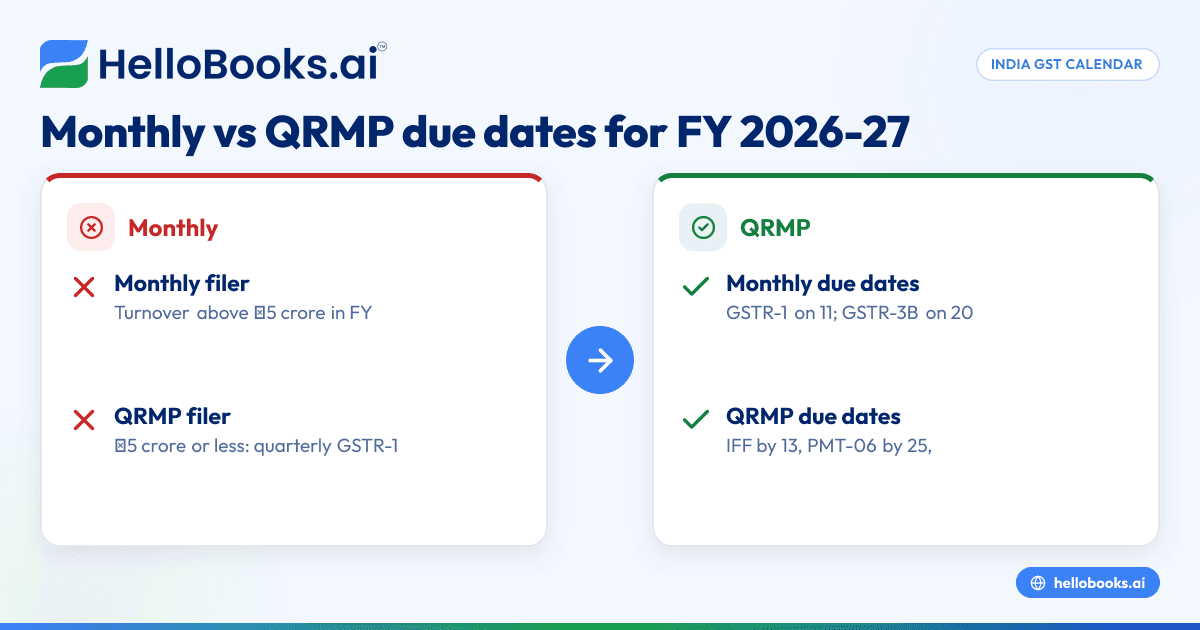
FY 2026-27 માટે તમે monthly filer છો કે QRMP taxpayer, એ નક્કી કરવા માટે turnover limits અને eligibility conditions CBIC notifications અને GST Portal પર પ્રકાશિત થાય છે. અહીં કોઈ આંકડો bare fact તરીકે યાદ રાખવા કરતાં સત્તાવાર source જોવો વધુ સુરક્ષિત છે, કારણ કે scheme rules બદલાય પણ શકે અને opt-in/opt-out preference quarter-wise અસર કરે છે.
વ્યવહારમાં Gujarat ના wholesaler, trader, manufacturer અને service provider માટે ફરક આવો પડે છે:
- monthly filer સામાન્ય રીતે દર tax period માટે outward supplies અને summary tax return ના cycle માં રહે છે
- QRMP filer quarter-end compliance કરે છે, પરંતુ cash flow અને monthly tax payment discipline રાખવું જ પડે છે
- B2B customer base હોય, ખાસ કરીને interstate supplies હોય, તો invoice reporting time sensitive બને છે
- e-invoice, IRN, signed QR, e-way bill અને place-of-supply errors return calendar ને સીધું અસર કરે છે
તમારી filing preference GST Portal ના dashboard પર ચકાસો. એ જ સૌથી વિશ્વસનીય starting point છે.
FY 2026-27 માં કયા return cycle પર નજર રાખવી
આ લેખનો scope regular GST business workflow સુધી મર્યાદિત છે: GSTR-1, GSTR-3B અને QRMP સંબંધિત monthly payment flow. કારણ કે વેપારીને રોજના કામમાં calendar એ જ જગ્યા પર દુખ આપે છે—invoice બનતી વખતે, purchase bills બેસાડતી વખતે, bank receipt match કરતી વખતે અને અંતે return file કરતી વખતે.
GSTR-1 outward supplies માટે છે. GSTR-3B summary self-assessed return છે. બંનેની હાલની due dates, late fee provisions, interest implications અને extension notifications GST law હેઠળ CBIC દ્વારા સૂચિત થાય છે અને GST Portal પર reflect થાય છે. Gujarat-based business માટે practical point એ છે કે date યાદ કરવાથી વધુ અગત્યનું છે data readiness:
- sale invoice માં GSTIN સાચો છે કે નહીં
- place of supply પરથી CGST+SGST કે IGST યોગ્ય split થયો છે કે નહીં
- e-invoice લાગુ પડે ત્યાં IRN અને signed QR correctly generated છે કે નહીં
- goods movement હોય તો e-way bill data invoice સાથે મેળ ખાતું છે કે નહીં
- supplier invoices GSTR-2A/2B માં દેખાય છે કે નહીં
આ data readiness વગર calendar ફક્ત anxiety calendar બને છે.
Gujarat માટે state-group checking કેવી રીતે કરશો
QRMP હેઠળ કેટલાક taxpayers માટે GSTR-3B filing window state group પર આધારિત હોઈ શકે છે, પરંતુ તેનો current grouping, applicable class of taxpayer અને present due-date structure CBIC notifications તથા GST Portal પર જ verify કરવો જોઈએ. Gujarat historically certain state-group schedules માં આવતું રહ્યું છે, પરંતુ FY 2026-27 માટે blindly copied chart પર ભરોસો ન રાખવો. Official publication જુઓ. જો તમારો business advisor અથવા CA office excel calendar મોકલે, તો પણ છેલ્લો શબ્દ GST Portal dashboard નો જ છે.
ખાસ કરીને Gujarat ના businesses માટે આ ભૂલ સામાન્ય છે:
- principal place of business Gujarat માં છે, તેથી બધાં GSTIN માટે same date માનવી
- company registration MCA હેઠળ એક છે, એટલે GST filing view પણ એક જ હશે એમ માની લેવું
- branch billing interstate છે, છતાં local supply treatment કરી દેવું
Companies Act, 2013 હેઠળ company incorporation MCA દેખાડે છે; પણ GST compliance GST law હેઠળ GSTIN-wise ચાલે છે. એટલે MCA data અને GST return calendar એક જ નથી.
Calendar તૂટે છે ત્યાં: invoice, purchase bill અને bank entry વચ્ચેનો ગોટાળો
Return date ચૂકી જવાની શરૂઆત બહુ વાર date પરથી નથી થતી. તે invoice creation સમયે થાય છે. Gujarat માં ઘણા SMEs હજુ Tally export, PDF bills, WhatsApp approvals, NEFT/RTGS/IMPS receipts અને bank statement download પર કામ ચલાવે છે. અંતે return પહેલા ત્રણ દિવસ:
- outward register અને books ના figures નથી મળતા
- B2B invoice માં GSTIN typo હોય છે
- local sale પર IGST બેસી ગયું હોય છે
- interstate dispatch માટે e-way bill number trace થતો નથી
- supplier purchase bill data books માં છે પણ GSTR-2B માં નથી
- bank receipt UPI થી આવી છે, પણ customer invoice સામે match નથી
એટલા માટે calendar article નો સાચો જવાબ dates ની list નથી; workflow design છે. HelloBooks જેવી system માં invoice બનાવતી વખતે place-of-supply પરથી tax head split બેસે, GST invoice fields consistent રહે, અને જ્યાં e-invoicing લાગુ પડે ત્યાં IRN અને signed QR invoice save સમયે જ આવી જાય, તો GSTR-1 માટે data પાછળથી ભેગું કરવું ઓછું પડે છે. Goods movement હોય તો same workflow માં e-way bill બનાવવાથી double entry ઘટે છે.
Purchase side પર photo કે PDF થી OCR વડે bills capture કરો, પછી GSTR-2A/2B reconciliation અને ITC tracking થી missing supplier invoices વહેલી તકે દેખાય—તો quarter-end surprise ઓછા થાય છે. Bank side પર live feed નહીં, પરંતુ uploaded bank statement પરથી AI reconciliation થાય તો UPI, NEFT, RTGS કે IMPS receipts સામે invoice matching ઝડપથી થાય છે. એ માટે bank reconciliation અને ai bookkeeping જેવા workflows calendar discipline ને practical બનાવે છે.
દિવાળી, year-end અને quarter-close: Gujarat ની વાસ્તવિક rush season
Gujarat market માં festive trading, stock movement, branch transfers અને credit sales ઘણા sectors માં seasonal spikes લાવે છે. ખાસ કરીને textile, electrical, plastic, chemicals, machinery parts અને trading businesses માં invoice volume અચાનક વધે છે. ત્યારે GST calendar નો તણાવ વધે છે કારણ કે:
- dispatch પહેલાં e-way bill જરૂરી બની શકે છે
- B2B customers timely invoice reflection માંગે છે
- stock reconciliation inventory સાથે જોડાઈ જાય છે
- purchase bill entries પાછળ રહી જાય છે
- TDS deduction અથવા reverse charge treatment side-sheet માં અટકી જાય છે
આ સમયે ફક્ત return ભરવાનું tool પૂરતું નથી. Books, inventory અને GST એક જ data spine પર હોવા જોઈએ. HelloBooks માં inventory movement sale/purchase સાથે update થવાથી closing stock view current રહે છે, અને GST returns માટે ઉપયોગમાં લેવાતો same transaction data financial reports માં પણ જાય છે. એટલે P&L, receivables ageing અને tax summary વચ્ચે mismatch ઓછો થાય છે. Gujarat ના owner-managed business માટે mobile app થી on-the-go invoice/expense entry પણ ઉપયોગી પડે છે, ખાસ કરીને જ્યારે owner godown, shop floor અને client site વચ્ચે ફરતો હોય.
એક સાદી, પણ સાચી રીતે કહીેલી illustrative ગણતરી
માનો આ સંપૂર્ણપણે illustrative અને invented પરિસ્થિતિ છે: Ahmedabad નો એક electrical trader quarter ના છેલ્લા અઠવાડિયામાં ₹12,40,000 ના B2B sales invoices books માં રાખે છે. તેમાંમાંથી ₹3,10,000 ની interstate supply છે, બાકીની Gujarat અંદરની. બે invoices માં place of supply ખોટી હોવાથી system બહાર manual entry કરતા CGST+SGST મૂકાઈ જાય છે જ્યાં IGST આવવું જોઈએ. સાથે supplier પાસેથી ₹2,80,000 ના purchase bills છે, પણ તેમાંના ₹90,000 ના bills GSTR-2B માં હજી reflect નથી થતા. ઉપરાંત bank statement માં ત્રણ UPI receipts કુલ ₹1,35,000 ની છે, પણ customer names abbreviated હોવાથી invoices સામે તરત match થતી નથી.
આ invented ગણતરી શું બતાવે છે? return due date પહેલાં problem “date” નથી. problem છે data classification. અહીં અમે tax amount, ITC entitlement, late fee, interest અથવા net liability ની actual ગણતરી નથી કરી રહ્યા, કારણ કે તે applicable GST law, invoice facts, supplier compliance અને CBIC/GST Portal પર પ્રકાશિત current rules પર આધારિત રહેશે. તેથી કોઈ actual filing માટે આ figures નો ઉપયોગ ન કરવો.
જો આ trader invoicing સમયે સાચો GSTIN, HSN/SAC, place of supply અને tax head split સાથે bill બનાવે; purchase bills OCR થી capture કરીને GSTR-2A/2B સામે reconcile કરે; અને uploaded bank statement પરથી receipts match કરે; તો GSTR-1 અને GSTR-3B direct filing much closer to books થાય છે. એટલે calendar manageable બને છે.
GSTR-1 અને GSTR-3B માટે year-round control કેવી રીતે બનાવશો
તારીખો યાદ રાખવી useful છે, પરંતુ India માં reliable compliance માટે નીચેના controls વધુ કામના છે:
- Invoice same day lock કરો. Sale થયા પછી પાછળથી invoice editing કરતા classification errors વધે છે.
- GSTIN validate કરો. Customer onboarding સમયે GSTIN સત્તાવાર format અને status સામે check કરો. માટે GSTIN validator ઉપયોગી છે.
- Place of supply review રાખો. ખાસ કરીને Gujarat થી Rajasthan, Maharashtra અથવા pan-India dispatch કરતી business માટે.
- Purchase bill weekly close કરો. month-end સુધી pile-up ન થવા દો.
- GSTR-2B mismatch વહેલો પકડો. ITC decision quarter-end ના છેલ્લે દિવસે ન છોડો.
- Bank statement upload monthly કરો. receipt matching છેલ્લે મુકો તો collections view અને tax view બંને બગડે.
- E-invoice/EWB dependency સમજો. IRN, signed QR અને e-way bill data broken હોય તો return accuracy પર પણ અસર પડે છે.
- Multi-GSTIN view રાખો. Gujarat અને અન્ય state registrations એક login માં જોવાય, પરંતુ filing GSTIN-wise discipline માંગે છે.
જો તમારો setup હજુ Tally-centered છે, તો full switch એક જ દિવસે કરવો જરૂરી નથી. Tally alternative તરીકે evaluate કરી શકો અથવા migration/connector approach થી books continuity રાખી શકો. Small business owners માટે accounting software India અથવા GST return filing workflow અલગથી જોવો પણ ઉપયોગી છે.
Official numbers ક્યાં જોવાના, અને blind copying કેમ જોખમી છે
FY 2026-27 માટે GST return due dates, QRMP option windows, late fee waivers, extensions, state-specific relaxations, e-invoice applicability, e-way bill rules અને ITC-related cut-offs—આ બધી current figures CBIC notifications, CBIC press releases, GST Council outcomes જ્યાં લાગુ પડે ત્યાં, અને GSTN દ્વારા ચલાવાતા GST Portal પર જ સત્તાવાર રીતે પ્રકાશિત થાય છે. Income-tax side numbers માટે Income-tax Act, 1961 હેઠળ Central Board of Direct Taxes જુદું regulator framework છે; GST માટે તે source નથી. RBI payment rails જેમ કે NEFT, RTGS, IMPS કે UPI settlement practices banking evidence માટે મદદરૂપ છે, પરંતુ GST due date નક્કી કરતી authority RBI નથી.
એટલે કોઈ blog, CA WhatsApp forward, YouTube short અથવા old PDF calendar પરથી final compliance ન કરશો. Official publication જોવી જ પડે.
Useful self-check માટે HelloBooks ના free India tools પણ કામ લાગે છે—જેમ કે GST invoice validator, HSN code search અથવા GST reconciliation checker. પણ final filing પહેલાં GST Portal dashboard અને applicable notification જ authoritative રહેશે.
Gujarati business owner માટે practical bottom line
India માં FY 2026-27 નું GST calendar એક fixed poster નથી; તે GST law, CBIC notifications અને GST Portal ના current status પરથી જીવતું system છે. Gujarat ના taxpayer માટે સૌથી સુરક્ષિત રીત એ છે કે પહેલા filing type confirm કરો, પછી state-group applicability official source પરથી verify કરો, અને ત્યારબાદ invoice, purchase, bank અને reconciliation data due date પહેલાં ready રાખો.
જો તમારે compliance stress ઓછો કરવો હોય, તો calendar ને memory test ન બનાવો. Invoicing, IRN, signed QR, e-way bill, GSTR-2A/2B reconciliation, bank statement upload અને GSTR-1/GSTR-3B direct filing—આ બધું એક flow માં ચાલે ત્યારે જ month-end અને quarter-end control મળે છે. HelloBooks વિશે વધુ જોવું હોય તો India pages અહીં, pricing અહીં અને demo અહીં જોઈ શકો.


