


Key takeaways
What this article covers, in order:
- Late fee और interest में असली फर्क क्या है?
- कौन-से कानून और regulator इस विषय को govern करते हैं?
- Late fee कब लगती है, और किन returns पर ध्यान देना चाहिए?
- Interest किस tax पर बनता है, और किस पर नहीं?
- एक काल्पनिक लेकिन ईमानदार हिसाब: सिर्फ समझाने के लिए
- Nil return, regular return और amended return की practical reality
India में GST return देर से भरने पर दो अलग असर हो सकते हैं: late fee return देर से फाइल करने की कीमत है, और interest उस tax पर लग सकता है जो समय पर cash में जमा नहीं हुआ। दोनों का source एक जैसा नहीं है, दोनों हर case में साथ नहीं लगते, और current amount या rate हमेशा CGST Act, 2017, उसके rules, CBIC notifications, और GST Portal/GSTN पर दिखने वाले latest figures से verify करना चाहिए। नीचे सीधी हिन्दी में वही फर्क समझते हैं।
Late fee और interest में असली फर्क क्या है?
GST में सबसे ज़्यादा confusion यहीं होता है। बहुत से business owners सोचते हैं कि return लेट हुई तो सिर्फ एक ही तरह का charge लगेगा। ऐसा नहीं है।
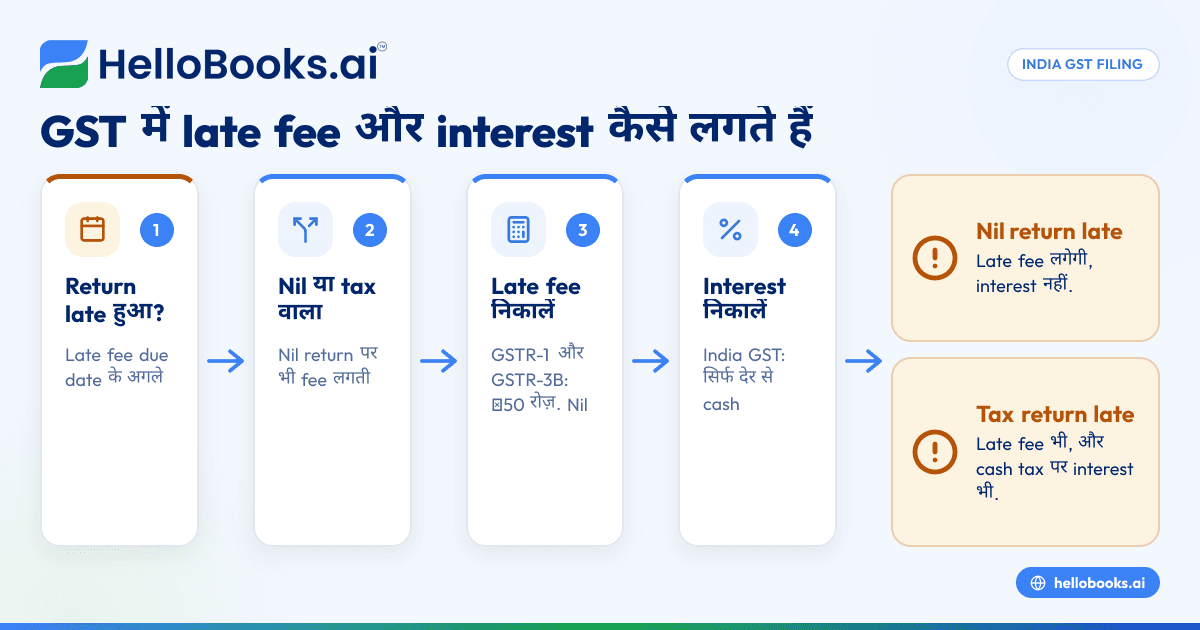
Late fee का संबंध return filing से है। यानी अगर आपने GSTR-1 या GSTR-3B नियत समय के बाद फाइल किया, तो portal late fee दिखा सकता है। यह बात इस पर भी लागू हो सकती है कि उस period में आपका tax payable शून्य था या नहीं। Current per-day fee, nil return treatment, और maximum cap जैसे figures Central Goods and Services Tax Act, 2017 की late fee provisions, संबंधित CGST Rules, और CBIC notifications में publish होते हैं; practically taxpayer इन्हें GST Portal पर filing time पर भी देखता है।
Interest का संबंध tax payment से है, return filing से नहीं। अगर आपकी net tax liability का कोई हिस्सा electronic cash ledger से जाना था और वह समय पर नहीं गया, तो interest बन सकता है। Current interest rate किस section के तहत लागू है, यह CGST Act, 2017 के Section 50 और उसके amendments में stated होता है, और updated position CBIC circulars/notifications तथा official law text में देखनी चाहिए.
सीधी भाषा में:
- return लेट, tax payable नहीं: late fee हो सकती है, interest नहीं भी हो सकता
- return लेट, tax cash में payable था: late fee भी हो सकती है, interest भी
- सिर्फ filing नहीं, बल्कि payment delay भी हुआ: interest का सवाल गंभीर हो जाता है
कौन-से कानून और regulator इस विषय को govern करते हैं?
India में GST का framework Central Goods and Services Tax Act, 2017 (CGST Act), Integrated Goods and Services Tax Act, 2017 (IGST Act), और state GST laws से चलता है। इनके administration में CBIC (Central Board of Indirect Taxes and Customs) की मुख्य भूमिका है, जबकि return filing, liability display, challan, ledger और reconciliation की technology backbone GSTN और GST Portal के जरिए दिखती है।
इसलिए late fee या interest के बारे में किसी भी article, YouTube short, WhatsApp forward, या Tally group message पर भरोसा करने से पहले तीन जगह देखना बेहतर है:
- CGST Act / IGST Act का current text
- CBIC notifications, circulars, press releases
- GST Portal पर आपके specific return period में auto-computed figure
अगर business company structure में है, तो accounting discipline के लिए Companies Act, 2013 और MCA compliance culture भी indirectly matter करता है, क्योंकि books सही नहीं होंगी तो GST mismatch बढ़ेगा। अगर payment trail bank से आ रहा है, तो bank statement, NEFT, RTGS, IMPS, UPI collection entries का साफ record रखना useful होता है, भले GST charge सीधे RBI नहीं regulate करता।
Late fee कब लगती है, और किन returns पर ध्यान देना चाहिए?
इस लेख का practical focus वही returns हैं जो छोटे और mid-size businesses सबसे ज़्यादा भरते हैं: GSTR-1 और GSTR-3B। HelloBooks जैसे system का relevance भी यहीं आता है, क्योंकि अगर invoice data से return बन रहा है और आप GST return filing software के जरिए सीधे GSTR-1 और GSTR-3B file कर रहे हैं, तो delay का chance कम होता है।
Late fee समझते समय कुछ points याद रखें:
- यह हर missed return period के हिसाब से अलग निकल सकती है
- GSTR-1 और GSTR-3B की compliance obligation अलग है
- nil return पर भी late fee का issue उठ सकता है
- cap और per-day amount जैसी figures समय-समय पर CBIC notification से बदल सकती हैं
- old tax period के लिए historical rule अलग हो सकता है, इसलिए portal figure को ignore नहीं करना चाहिए
यह भी समझना ज़रूरी है कि late fee आम तौर पर cash ledger से discharge होती है; input tax credit से adjustment पर भरोसा करने से पहले official portal behaviour और current law text check करें, क्योंकि practical treatment वही मान्य होगा जो GST Portal और applicable law support करे NEEDS EXPERT REVIEW।
अगर आपका business multi-state है, एक GSTIN दिल्ली में और दूसरा कर्नाटक में, तो हर GSTIN की filing discipline अलग रखनी पड़ती है। ऐसे cases में multi-GSTIN handling useful होती है, क्योंकि एक login में अलग GSTINs के invoices, outward supply, inward bills और filing status साफ दिखे तो missed return की संभावना कम रहती है।
Interest किस tax पर बनता है, और किस पर नहीं?
Interest का सबसे practical प्रश्न यह है: क्या यह पूरी liability पर लगेगा या सिर्फ उस हिस्से पर जो cash में भरा जाना था? इसका जवाब हमेशा current law position से verify होना चाहिए, लेकिन सामान्य समझ यह है कि Section 50 के interpretation में net cash liability का concept critical रहा है। Final conclusion period, amendment history, litigation position और facts पर depend कर सकता है; इसलिए exact treatment के लिए CGST Act, 2017, relevant amendment provisions, CBIC clarifications और professional advice देखना चाहिए।
व्यवहार में business owner को यह समझना चाहिए कि:
- अगर sale हुई, GST payable बना, और ITC available था, तो interest analysis net cash component के इर्द-गिर्द घूमता है
- अगर ITC wrongly availed या wrongly utilised हुआ, तो अलग interest consequence बन सकता है
- अगर reverse charge liability थी और समय पर discharge नहीं हुई, तो उसका analysis अलग हो सकता है
- IGST, CGST, SGST head-wise mismatch practical trouble पैदा कर सकता है
यहीं सही classification बहुत मदद करती है। जब invoice बनाते समय place of supply सही हो, और system खुद CGST + SGST बनाम IGST split correctly रखे, तो बाद में tax short-paid या wrong-head issue कम होते हैं। इसी वजह से smart invoicing और place-of-supply logic filing errors कम करने में काम आते हैं।
एक काल्पनिक लेकिन ईमानदार हिसाब: सिर्फ समझाने के लिए
मान लीजिए यह पूरी तरह illustrative और invented स्थिति है; नीचे दिए गए ₹ figures किसी official rate table का substitute नहीं हैं, और calculation में portal-side rounding, historical amendments, state-specific interpretation, wrong ITC disputes, या litigation risk शामिल नहीं हैं। Exact amount के लिए GST Portal, CBIC notifications और आपके tax professional की advice देखनी होगी।
मान लें लखनऊ का एक trader, जिसका turnover लगभग ₹1.2 crore है, अपना GSTR-3B नियत समय के बाद file करता है। Filing के समय portal उसके return period के लिए late fee auto-calculate करके दिखाता है। उसी return में net tax payable का एक हिस्सा electronic cash ledger से जाना है, और उसी पर portal/system interest compute करता है। अगर उस taxpayer का cash tax component ₹40,000 था और delay 15 days का था, तो एक illustrative working इस तरह समझी जा सकती है:
Illustrative interest formula: cash tax × applicable notified annual rate × delayed days ÷ 365
अगर applicable notified annual rate को, सिर्फ illustration के लिए, official source पर देखकर use किया जाए, तो 15 दिनों की देरी पर amount कुछ सौ rupee के आसपास आ सकता है। लेकिन exact figure return period, law version, utilisation facts, और portal computation पर निर्भर करेगी। इसलिए कोई भी article-based number final नहीं मानना चाहिए।
अब late fee की तरफ देखें। वही portal, उसी return period के लिए, per-day fee और cap के अनुसार amount दिखा सकता है। अगर nil return होता, तो portal पर अलग treatment दिख सकता था; अगर tax payable था, तो अलग। इसीलिए business owner के लिए thumb rule होना चाहिए: late fee के लिए portal figure + official notification, interest के लिए Section 50 + portal computation।
Nil return, regular return और amended return की practical reality
India में छोटे businesses, freelancers, consultants, D2C sellers और shop owners अक्सर सोचते हैं कि “इस महीने sale नहीं थी, बाद में भर देंगे।” यहीं late fee quietly बनती है। Nil return होने का मतलब यह नहीं कि filing obligation गायब हो गई। कौन-सी periodicity, कौन-सा return, और nil treatment क्या है—ये current figures GST Portal, CBIC notification और relevant return instructions में publish रहते हैं।
एक freelance designer, consultant या photographer जो UPI और bank transfer से payments लेता है, उसे लगता है कि bank account में transaction कम हैं तो compliance भी हल्की होगी। लेकिन अगर GST registration active है, तो return discipline फिर भी ज़रूरी है। बैंक statement upload करके reconciliation करने वाला workflow यहाँ useful है, क्योंकि uploaded statement से यह पता चल जाता है कि period में कोई taxable receipt, refund, chargeback, NEFT receipt या IMPS credit छूटा तो नहीं। Bank reconciliation software जैसे workflow और AI-assisted matching छोटे teams को manual checking से बचाते हैं।
Regular return में risk थोड़ा अलग है। वहाँ outward supplies, purchase bills, ITC, reverse charge, debit note/credit note और tax payment सब जुड़ते हैं। अगर purchase invoices OCR से capture हो रहे हैं और GSTR-2A/2B reconciliation से missing ITC visible है, तो कम-से-कम यह clarity रहती है कि कौन-सी inward invoice books में है पर supplier side reflect नहीं हुई। इससे return delay भले पूरी तरह खत्म न हो, लेकिन last-minute confusion कम होता है।
ब्याज और late fee बढ़ने की जड़: books में delay, tax में नहीं सिर्फ filing में
बहुत बार problem tax law की complexity से कम, bookkeeping delay से ज़्यादा होती है। Typical Indian pattern कुछ ऐसा होता है:
- sales Excel में, purchases WhatsApp PDFs में
- e-invoice eligible business अलग portal पर JSON upload कर रहा है
- e-way bill details अलग register में
- stock Tally में, filing summary किसी CA के sheet में
- bank statement download month-end तक पड़ा है
फिर GSTR-1 और GSTR-3B से पहले mismatch फूटता है: कहीं IGST की जगह CGST/SGST, कहीं B2B customer का GSTIN गलत, कहीं e-way bill quantity अलग, कहीं purchase bill missing। Delay यहीं पैदा होता है।
अगर same system में GST invoice बने, e-invoice liable business के लिए IRN और signed QR timely आ जाएँ, outward data से GSTR-1 और GSTR-3B तैयार हो, और purchase side पर OCR + 2A/2B reconciliation रहे, तो filing ke पहले firefighting कम होती है। Businesses जो Tally से shift नहीं करना चाहते, वे भी phased approach रखते हैं; tally-alternative या compare/hellobooks-vs-tally जैसे comparison pages देखकर migration planning समझी जा सकती है।
India में किस तरह की गलतियाँ interest dispute तक ले जाती हैं?
सिर्फ return late होने से बात खत्म नहीं होती। कुछ गलतियाँ आगे चलकर interest, notice या reconciliation issue बन सकती हैं:
गलत tax head
अगर intrastate supply पर IGST या interstate supply पर CGST/SGST charge हो गया, तो बाद में amendment और payment issue बन सकता है। Place-of-supply rules का गलत use e-commerce sellers और service providers में common है।
GSTIN गलत capture होना
B2B invoice में GSTIN typo हुआ तो buyer की ITC chain प्रभावित हो सकती है, फिर credit note, amendment और follow-up में देरी होती है। Verification के लिए GSTIN validator जैसा tool उपयोगी है।
purchase bills late enter होना
Supplier invoice किताबों में late आई, ITC tracking बिगड़ गई, फिर GSTR-3B filing hold पर चली गई। OCR और reconciliation इस risk को घटाते हैं।
reverse charge और TDS/TCS entries side sheet में रखना
कुछ businesses reverse charge या TDS/TCS को main books से बाहर spreadsheet में track करते हैं। बाद में liability और payment status अलग-अलग दिखते हैं। अगर accounting system इन्हें bill level पर handle करे, तो return working clearer रहती है।
e-invoice / e-way bill workflow अलग रखना
जहाँ e-invoice और e-way bill applicable हैं, वहाँ duplicated typing errors पैदा करती है। Invoice से EWB raise होना और IRN generation integrated होना data consistency बढ़ाता है। e-invoicing-software और e-way bill software जैसे flows इसी वजह से practical हैं।
अगर return लेट हो गई है, तो अभी क्या check करें?
घबराने से बेहतर है facts साफ करें। Filing से पहले या portal पर login करते समय ये checks useful हैं:
- कौन-सा return pending है — GSTR-1, GSTR-3B, या दोनों
- कौन-सा tax period है — old period में historical rule अलग हो सकता है
- portal auto-calculation क्या दिखा रहा है — late fee और interest manually assume न करें
- cash liability वास्तव में कितनी है — ITC, reversals, reverse charge और prior adjustments verify करें
- bank statement और books match हैं या नहीं — receipt/expense छूटा तो नहीं
- purchase side reconciliation — 2A/2B और books में material mismatch है या नहीं
अगर आप mobile-first business owner हैं—जैसे field sales, transport-linked trade, on-site services—तो phone से invoice, expense और bill capture करने की सुविधा काम आती है। इससे documents month-end तक बिखरते नहीं। Hindi या Hinglish में quick bookkeeping questions पूछने की आदत हो, तो WhatsApp-based assistant workflow भी teams को follow-up में मदद कर सकता है।
Late fee और interest कम रखने का सबसे practical तरीका
India में late fee और interest “hack” से नहीं, discipline से कम होते हैं। इसका मतलब fancy theory नहीं, बस यह:
- invoice issue होते ही सही GST treatment
- customer GSTIN और place of supply सही capture
- purchase bill आते ही OCR/entry
- month-end bank statement upload और reconciliation
- GSTR-2A/2B review before claiming ITC
- GSTR-1 और GSTR-3B books से direct build
- multi-GSTIN business में branch-wise calendar
अगर books और GST अलग-अलग islands की तरह नहीं, बल्कि एक single workflow में चलते हैं, तो देरी की chance काफी घटती है। HelloBooks India market में इसी practical layer पर मदद करता है: invoice बनाते समय GST split सही रहे, eligible cases में IRN और signed QR workflow मिले, GSTR-1 और GSTR-3B direct filing हो, purchase bills OCR से आएँ, bank statement upload से reconciliation हो, और reports से यह दिखे कि books, receivables, inventory और tax data एक-दूसरे से लड़ नहीं रहे। Features तभी useful हैं जब वे filing deadline से पहले clarity दे दें।
अगर आप tool evaluate कर रहे हैं, तो India-specific overview यहाँ और pricing details यहाँ देख सकते हैं। Free checks के लिए GST calculator या GST reconciliation checker भी काम आ सकते हैं।
आख़िरी बात: article नहीं, official source final है
GST late fee और interest पर सबसे बड़ी गलती यह है कि लोग एक पुराने blog post का figure याद रख लेते हैं और उसे हर period पर लागू मान लेते हैं। ऐसा नहीं करना चाहिए। India में current amount, cap, rate, effective date, और return-wise treatment का authoritative source CGST Act, 2017, संबंधित rules, CBIC notifications/circulars, और GST Portal पर आपके period के लिए दिखने वाला computation है।
इसलिए अगर आपका सवाल है—“मेरे case में late fee लगेगी, interest लगेगा, या दोनों?”—तो practical answer है: पहले pending return identify करें, फिर portal computation देखें, फिर law source से verify करें। यही सबसे सुरक्षित रास्ता है, चाहे आप rupee में छोटी proprietary shop चला रहे हों, lakh turnover वाला freelancer हों, या crore-level multi-state business।


