


Key takeaways
What this article covers, in order:
- Zero-rated નો અર્થ exempt જેવો નથી
- Service export ક્યારે ખરેખર export ગણાય
- LUT અને IGSTવાળો રસ્તો: decision cash flow પરથી કરો
- LUT લેતાં પહેલાં કયા records મજબૂત રાખવા
- Export invoiceમાં કયા practical મુદ્દા સૌથી વધુ બગડે છે
- Refund claimમાં ITC tracking અને reconciliation કેમ decisive છે
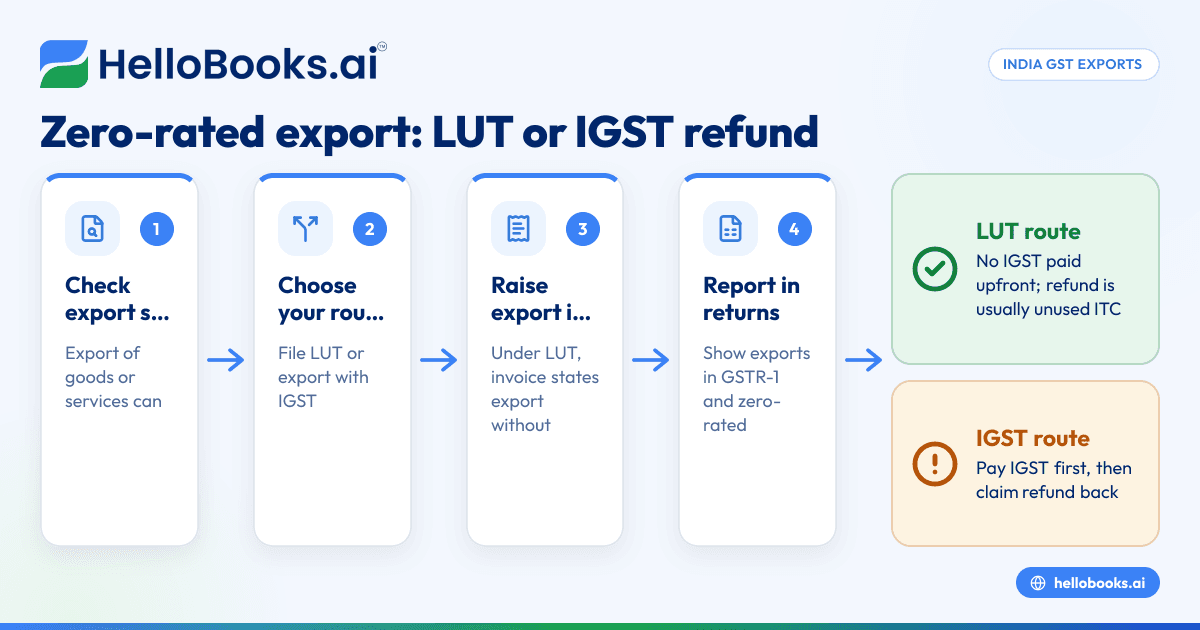
ભારતમાં export of goods અને export of services, Integrated Goods and Services Tax Act, 2017 હેઠળ zero-rated supplies તરીકે ગણાય છે. સરળ ભાષામાં કહીએ તો, વિદેશી buyer માટે GST તમારો cost બનવો ન જોઈએ: તમે સામાન્ય રીતે LUT આપીને IGST ચૂકવ્યા વગર export કરી શકો, અથવા IGST ભરી પછી refund claim કરી શકો. કયો રસ્તો યોગ્ય છે તે તમારા cash flow, ITC buildup, documentation અને GST Portal પર reporting કેવી છે તેના પર આધાર રાખે છે.
Zero-rated નો અર્થ exempt જેવો નથી
આ બે શબ્દો ઘણીવાર mix થાય છે, પણ GSTમાં તેમનો અર્થ જુદો છે. Zero-rated supply પર output tax burden export customer પર નથી રહેતો, અને તમારા inputs પર ભરાયેલ input tax credit (ITC)નો હક સામાન્ય રીતે ચાલુ રહે છે. Exempt supplyમાં બહારથી જોતા tax લાગતું નથી, પણ ત્યાં ITCનો લાભ ઘણીવાર મળતો નથી અથવા restricted થઈ શકે છે.
Exporters માટે આ ફરક મહત્વનો છે કારણ કે purchase bills પર ભરાયેલ GST — જેમ કે packing material, professional services, software subscriptions, transport, warehouse-related services અથવા raw material — booksમાં જમા થતો રહે છે. જો outward supply zero-rated છે, તો આ ITC ક્યાંક તો set-off અથવા refund મારફતે બહાર આવવો જોઈએ, subject to the Central Goods and Services Tax Act, 2017, the Integrated Goods and Services Tax Act, 2017 અને Central Goods and Services Tax Rules, 2017. Current legal text અને notifications માટે CBIC અને GST Portal પર published material ચકાસવો જરૂરી છે.
SEZ supply પણ ઘણીવાર zero-rated ચર્ચામાં આવે છે, પરંતુ exporter માટે practical question સામાન્ય રીતે foreign customer માટે goods કે services exportનો જ હોય છે. તેથી invoice બનાવતાં પહેલાં transaction ખરેખર export છે કે નહીં તે confirm કરવું પહેલા પગલું છે.
Service export ક્યારે ખરેખર export ગણાય
Goodsમાં test સાદું હોય છે: goods Indiaની બહાર જાય છે, અને supporting export documents હોય છે. Servicesમાં વધુ કાળજી જોઈએ. Export of services માટે IGST Actની conditions લાગુ પડે છે, અને place of supply rules અહીં ખૂબ મહત્વના છે. Buyer foreign countryમાં છે એટલું એકલું પૂરતું નથી.
સામાન્ય રીતે તમે નીચેના મુદ્દા ચકાસો:
- supplier Indiaમાં located છે કે નહીં
- recipient Indiaની બહાર છે કે નહીં
- place of supply Indiaની બહાર આવે છે કે નહીં
- payment foreign exchangeમાં મળે છે કે RBI જે રીતે permit કરે તે રીતે INR/rupeeમાં મળતું હોય તો તેની treatment શું છે
- supplier અને recipient એક જ legal personના merely distinct establishments તો નથી ને
અહીં સૌથી વધુ confusion place of supplyમાં થાય છે. કેટલીક servicesમાં general rule લાગુ પડે છે, પરંતુ immovable property, performance-based services, event-related services જેવી categoriesમાં અલગ નિયમો હોઈ શકે. એટલે foreign clientને design, software development, consulting અથવા marketing service આપો તો પણ contract, delivery trail, use location અને place-of-supply analysis જોવું પડે.
Invoiceમાં tax head split ગડબડ થવી exportમાં પણ ખર્ચાળ બની શકે છે. યોગ્ય place-of-supply logic સાથે invoice બનાવવું મહત્વનું છે, જેથી domestic supply પર CGST/SGST અને inter-state/export contextમાં IGST કે LUT treatment સાચું પડે. GST invoicing અને place-of-supply handling સાથે software વાપરો તો manual error ઘટે છે.
LUT અને IGSTવાળો રસ્તો: decision cash flow પરથી કરો
Exporter પાસે બે broad routes રહે છે, પરંતુ બંને માટે applicable law અને current procedure CBIC notifications અને GSTN/GST Portal guidance મુજબ verify કરવી જોઈએ.
એક રસ્તો એ છે કે તમે Letter of Undertaking, એટલે LUT, furnish કરો અને export without payment of IGST કરો. બીજો રસ્તો એ છે કે export on payment of IGST કરો અને પછી applicable refund mechanismથી claim લો. નાના અને મધ્યમ exporters માટે LUT route ઘણીવાર practical બને છે કારણ કે working capital બ્લોક થતું નથી.
ચાલો એક સંપૂર્ણ illustrative અને invented સ્થિતિ લઈએ. માની લો કે અમદાવાદની એક design agencyએ US clientને USD-based contract મુજબ service આપી. agencyએ Indiaમાં વિવિધ vendors પાસેથી software subscriptions, laptops repair, internet services અને contractor invoices લીધા અને purchase side પર કુલ ₹48,000 જેટલું eligible GST credit booksમાં build થયું — આ આંકડા સંપૂર્ણ illustrative અને invented છે, actual legal eligibility, blocked credit rules, foreign exchange realisation, place-of-supply nuances અને documentation requirements અહીં simplify કરેલા છે. જો agency LUT route લે છે, તો export invoice સામાન્ય રીતે IGST વગર issue થાય અને accumulated ITC refund તરફ જઈ શકે. જો agency IGST route લે છે, તો outward tax પહેલાં pay કરવો પડે અને પછી refund process follow કરવી પડે. Cash flowની દ્રષ્ટિએ પ્રથમ route ઘણા service exportersને હળવો પડે છે.
જો તમે goods exporter છો, તો shipping, logistics, port documentation, e-way bill trail, invoice consistency અને customs-side recordsનું alignment પણ મહત્વનું બને છે. Service exporters માટે FIRC/BRC, agreement, email trail, work completion evidence જેવા records વધુ મહત્વના બની જાય છે.
LUT લેતાં પહેલાં કયા records મજબૂત રાખવા
LUT કોઈ casual declaration નથી. તે GST framework હેઠળ એક undertaking છે. તેનું furnishing, validity અને related conditions માટે current process GST Portal પર અને underlying rule position CGST Rules તથા CBIC guidanceમાં જોવી જોઈએ. Form reference, annual validity, eligibility restrictions અને exceptional cases માટે official portal પર latest instructions જ જોવાની.
Practical રીતે LUT route પસંદ કરો તો આ બાબતો તૈયાર રાખો:
- valid GSTIN અને updated registration particulars
- export contracts / purchase orders
- invoice seriesમાં export invoicesની clear identification
- foreign remittance support documents જ્યાં service export છે
- goods માટે shipping documentation અને transport trail
- LUT reference અને invoice narrationમાં consistency
ઘણા businesses એક simple error કરે છે: LUT લઈ લીધા પછી પણ invoice wording, tax treatment અને return reporting mismatch રાખે છે. પછી GSTR-1, books, shipping records અને refund claim વચ્ચે differences આવે છે. જો તમે GSTR-1 and GSTR-3B direct filing જેવા workflowથી invoicesમાંથી return build કરો, તો invoice data અને return data એક જ base પરથી આવે છે, જે mismatchનું જોખમ ઘટાડે છે.
જો business multiple statesમાં operate કરે છે — માની લો Gujarat અને Maharashtraમાં જુદા GSTINs હોય — તો export reporting GSTIN-wise જ જોવી પડે. Multi-GSTIN setupમાં LUT, invoice series, ITC pool અને return reporting state registration પ્રમાણે track કરવી જરૂરી છે.
Export invoiceમાં કયા practical મુદ્દા સૌથી વધુ બગડે છે
Rule-based invoice fieldsની current requirement CGST Rules, 2017 હેઠળ છે અને latest clarifications CBIC/GST Portal પર ઉપલબ્ધ હોય છે. અહીં bare checklist આપવાથી વધુ ઉપયોગી એ છે કે શું સૌથી વધુ ખોટું થાય છે તે સમજવું.
એક exporter invoice બનાવે છે, પણ:
- buyer address foreign છે છતાં place of supply reasoning capture કરતું નથી
- LUT હેઠળ supply છે કે IGST paid export છે તે narration સ્પષ્ટ નથી
- HSN/SAC consistency નથી
- invoice date, shipping record અને remittance record વચ્ચે disconnect રહે છે
- booksમાં INR valuation અને commercial invoiceમાં foreign currency figures reconcile થતા નથી
આવા mismatch refund scrutiny દરમિયાન સમય વધારી શકે છે.
જો business e-invoicing framework હેઠળ આવે, તો IRN અને signed QRની compliance પણ current threshold અને applicability મુજબ જોવી પડે; thresholdનું current figure CBIC notifications અને GST Portal પર published હોય છે. Threshold અથવા exemptionને bare fact તરીકે assume ન કરો; official source verify કરો. જ્યાં applicable હોય, e-invoicing invoice issue વખતે IRN trail clear રાખવામાં મદદ કરે છે.
Goods movementવાળા exporter માટે e-way bill પણ separate pain point બને છે. Export consignment, job work movement, warehouse transfer અથવા port-bound dispatchમાં invoice અને transport data ફરીથી type કરવું પડે તો error વધી જાય છે. Invoiceમાંથી e-way bill raise થાય તો dispatch trail વધુ consistent રહે છે.
Refund claimમાં ITC tracking અને reconciliation કેમ decisive છે
Refund discussionમાં મોટા ભાગે લોકો outward export invoice પર ફોકસ કરે છે, પણ problem ઘણીવાર inward side પર હોય છે. Supplierએ invoice upload ન કરી હોય, GSTR-2Bમાં document reflect ન થતું હોય, duplicate expense booksમાં બેસી ગયું હોય, blocked credit claim થઈ ગયો હોય — તો refund working itself weak બને છે.
તેથી exporter માટે monthly discipline જરૂરી છે:
- purchase invoices time પર capture કરવી
- supplier GSTIN, invoice number, taxable value અને tax amount validate કરવું
- GSTR-2A/2B સામે reconciliation કરવું
- ineligible અને eligible ITC અલગ track કરવું
- reverse charge અથવા TDS/TCS impact હોય તો ledger clean રાખવો
માની લો એક illustrative અને invented caseમાં Suratનો textile accessories exporter purchases પર ₹1,20,000 જેટલું GST booksમાં લે છે, પણ reconciliation પછી માત્ર ₹96,000 જ clean eligible match દેખાય છે — આ આંકડા સંપૂર્ણ illustrative અને invented છે; actual eligibility, blocked credits, debit notes, amendments, timing differences અને law-specific conditions અહીં simplify કરેલી છે. Exporter જો reconciliation વગર refund working બનાવી દે, તો excess claimનો risk ઊભો થાય.
અહીં GSTR-2A/2B reconciliation and ITC tracking અને OCRથી purchase bills capture કરવાનું practical value આપે છે. Supplier bill PDF અથવા photoમાંથી data ખેંચી booksમાં લાવવો, પછી GSTR-2B સાથે compare કરવો, exporter માટે spreadsheet કરતા ઘણી વાર ઝડપી પડે છે.
Payment receipt side પણ મહત્વની છે. Indiaમાં export proceeds banking channels મારફતે આવે ત્યારે NEFT, RTGS, IMPS સ્થાનિક collection માટે હોય શકે, જ્યારે foreign inward remittance અલગ trailથી આવે. Booksમાં receiptsને invoice સામે સાચા રીતે match ન કરશો તો outstanding ageing ખોટી દેખાય. Uploaded bank statement પરથી reconciliation કરવાથી receipt mapping વધુ વિશ્વસનીય બને છે; bank statement upload and AI reconciliation અહીં manual ticking ઘટાડે છે.
Goods exporter અને service exporter: compliance pain અલગ છે
બન્ને exporter છે, પણ operational reality અલગ હોય છે.
Goods exporter માટે મુખ્ય friction points:
- dispatch, transporter, e-way bill અને port documentation
- inventory movement અને stock valuation
- purchase-to-export traceability
- shipping documents અને GST invoice alignment
Service exporter માટે મુખ્ય friction points:
- place of supply interpretation
- contract wording
- deliverablesનો evidence trail
- foreign receipt proof
- LUT, invoice narration અને return consistency
જો તમે goods export કરો છો, તો inventory records weak હોય તો GST અને accounts બન્નેમાં confusion વધે છે. Purchase, stock issue, finished goods અને export sale એક જ systemમાં હોવા જોઈએ. Inventory અને accounting together રાખો તો closing stock, cost of goods sold અને export turnover વધુ aligned રહે છે.
જો તમે service exporter છો, તો receivables ageing, project-wise billing અને remittance mapping વધારે મહત્વના છે. P&L, debtor ageing અને GST numbers એકબીજા સાથે match હોવા જોઈએ. Financial reports એ માટે accounting luxury નથી; refund working defend કરવા પણ કામ આવે છે.
Tallyથી ચાલતા exporter માટે transition કેવી રીતે વિચારવી
ઘણા Indian exporters આજે પણ Tallyમાં books રાખે છે, અને GST working અલગ Excelમાં કરે છે. આ setup familiar છે, પણ export scenariosમાં duplication બહુ થાય છે: invoice એક જગ્યાએ, LUT note બીજી જગ્યાએ, GSTR-1 data ત્રીજી જગ્યાએ, bank reconciliation ચોથી જગ્યાએ.
જો તમે તરત full migration ન કરો, તો phased approach વધુ sensible છે. Tally alternative જોતા પહેલા તમારી actual export workflow જુઓ: invoice, IRN where applicable, e-way bill જ્યાં goods છે, GSTR-1/GSTR-3B filing, purchase OCR, 2B reconciliation, bank statement upload. જ્યાં સૌથી વધુ re-entry થાય છે ત્યાં changeનો ROI મળે છે.
કેટલાક businesses Tally ચાલુ રાખીને parallel transition ઈચ્છે છે. Tally connector અથવા migration support હોવાથી historic data continuity જળવાઈ શકે છે. Export businessમાં especially debtor balances, GST ledgers, stock figures અને prior-period comparisons preserve કરવું મહત્વનું છે.
Gujarati exporter માટે monthly review શું હોવું જોઈએ
Export GST compliance annual event નથી. It is a monthly discipline. ખાસ કરીને Gujaratના manufacturing, trading અને service export ecosystemમાં invoice volume, multiple buyers, rupee conversion entries અને port-linked documentationને કારણે monthly review જ mismatch અટકાવે છે.
પ્રતિ મહિને તમે ઓછામાં ઓછું આ જુઓ:
- બધા export invoices booksમાં recorded છે?
- LUT route કે IGST route transaction-wise consistent છે?
- goods caseમાં dispatch/e-way bill/shipping record aligned છે?
- services caseમાં remittance evidence pending તો નથી?
- purchase ITC GSTR-2B સાથે match થાય છે?
- GSTR-1 figures books અને invoice register સાથે મળે છે?
- GSTR-3Bમાં zero-rated disclosure logic internally checked છે?
- receivables ageingમાં foreign clientsના pending invoices અલગથી દેખાય છે?
આ review phone પરથી પણ કરવો પડે તેવી સ્થિતિ ઘણા founders માટે હકીકત છે. Mobile app પરથી invoices, expenses અને reports જોવાની સગવડ helpful બને છે, ખાસ કરીને જ્યારે owner travel પર હોય. અને જો ટીમ Hindi, English કે Hinglishમાં WhatsApp પર કામ ચલાવે, તો Noor assistant basic books-related queries સમજવામાં practical convenience આપી શકે છે — ખાસ કરીને owner-led export businessesમાં.
Official sources ક્યાં જોવાં અને software ક્યાં મદદ કરે
Current rate, threshold, due date, form validity, refund procedure nuance અથવા penalty/interest consequences જેવી કોઈ પણ specific બાબત માટે CBIC, GSTN/GST Portal, relevant Acts, Rules, notifications, circulars અને advisories જ primary source છે. Income-tax sideથી TDS implications હોય તો Income Tax Act, 1961 અને Income Tax Departmentની published guidance જોવી. Company exporters માટે board records અથવા filingsની contextમાં Companies Act, 2013 અને MCA requirements પણ સંબંધિત બની શકે. Data handlingની internal process બનાવતા DPDP Act context ધ્યાનમાં લેવો યોગ્ય છે, ખાસ કરીને customer documents અને banking records manage કરતાં.
Softwareનો role law replace કરવાનો નથી; paperwork અને consistency સુધારવાનો છે. Exporter માટે useful combination સામાન્ય રીતે આ હોય છે: compliant invoicing, place-of-supply logic, e-invoicing where applicable, e-way bill for goods movement, direct GSTR-1 and GSTR-3B filing, 2B reconciliation, OCR purchase capture, bank statement upload-based reconciliation, inventory for goods businesses, and report-level visibility.
જો તમે શરૂઆતમાં છો, તો HelloBooksના India GST tools અને free utilities જેમ કે GSTIN validator, HSN code search, GST invoice validator અને GST reconciliation checker પ્રાથમિક checks માટે ઉપયોગી થઈ શકે છે. Plans જોવા માટે /in/pricing જુઓ, અને real workflow સમજવો હોય તો /demo વધુ યોગ્ય છે.
અંતમાં મૂળ વાત એટલી: export zero-rated છે એટલે compliance zero નથી. સાચું classification, clean invoice, LUT અથવા IGST routeની informed પસંદગી, GST Portal પર consistent reporting, અને reconciliation-ready books — આ ચાર બાબતો મજબૂત હોય તો refund process પણ વધુ defendable બને છે અને GST તમારા export margin પર ઓછું બોજ નાખે છે.


