

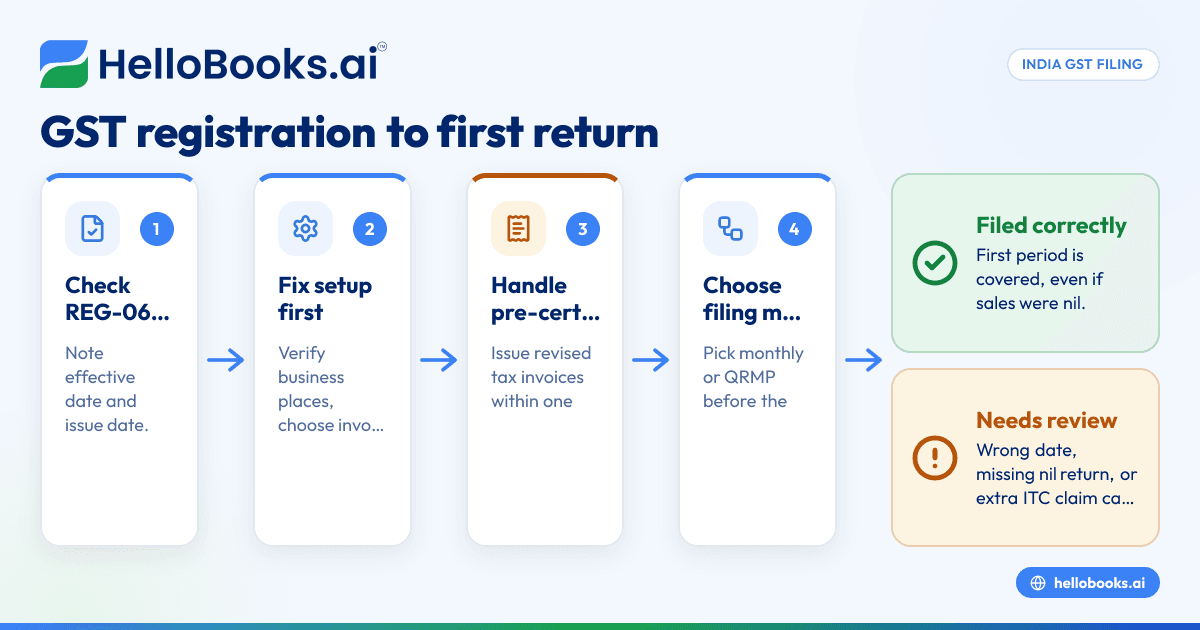

Key takeaways
What this article covers, in order:
- ਰਜਿਸਟ੍ਰੇਸ਼ਨ ਸਰਟੀਫਿਕੇਟ ਨੂੰ ਧਿਆਨ ਨਾਲ ਪੜ੍ਹੋ
- ਪਹਿਲਾ tax period ਤੁਹਾਡੀ ਤਿਆਰੀ ਤੋਂ ਪਹਿਲਾਂ ਵੀ ਸ਼ੁਰੂ ਹੋ ਸਕਦਾ ਹੈ
- ਪਹਿਲੀ sale ਤੋਂ ਪਹਿਲਾਂ master data ਸਹੀ ਕਰੋ
- GSTR-1 ਸਿਰਫ਼ sales upload ਨਹੀਂ, buyer ਦੇ ITC ਦਾ ਵੀ ਮਾਮਲਾ ਹੈ
- GSTR-3B ਤੋਂ ਪਹਿਲਾਂ purchases ਅਤੇ ITC ਦਾ discipline ਬਣਾਓ
- stock, e-way bill ਅਤੇ books ਇਕ ਦੂਜੇ ਨਾਲ ਮਿਲਣੇ ਚਾਹੀਦੇ ਹਨ
ਭਾਰਤ ਵਿੱਚ GST ਰਜਿਸਟ੍ਰੇਸ਼ਨ ਮਿਲਦੇ ਹੀ ਤੁਹਾਡਾ ਅਗਲਾ ਕੰਮ ਸਿਰਫ਼ invoice ਕੱਟਣਾ ਨਹੀਂ, ਸਗੋਂ ਆਪਣੀ effective date, GSTIN, place of supply, purchase records ਅਤੇ ਪਹਿਲੇ tax period ਦੀ reporting ਸਮਝਣਾ ਹੁੰਦਾ ਹੈ। ਆਮ regular taxpayer ਲਈ ਪਹਿਲੀ ਫਾਈਲਿੰਗ ਅਕਸਰ GSTR-1 ਅਤੇ GSTR-3B ਹੁੰਦੀ ਹੈ, ਪਰ ਸਹੀ ਆਵਰਤੀ, liability ਅਤੇ input tax credit ਦੇ ਨਿਯਮ Central Goods and Services Tax Act, 2017, ਉਸ ਨਾਲ ਬਣੇ Rules, ਅਤੇ CBIC ਤੇ GSTN/GST Portal ਉੱਤੇ ਛਪੇ ਮੌਜੂਦਾ directions ਤੋਂ verify ਕਰਨੇ ਚਾਹੀਦੇ ਹਨ।
ਰਜਿਸਟ੍ਰੇਸ਼ਨ ਸਰਟੀਫਿਕੇਟ ਨੂੰ ਧਿਆਨ ਨਾਲ ਪੜ੍ਹੋ
ਸਭ ਤੋਂ ਪਹਿਲਾਂ ਆਪਣਾ registration certificate ਖੋਲ੍ਹੋ ਅਤੇ ਦੋ ਚੀਜ਼ਾਂ ਵੱਖਰਾ ਸਮਝੋ: effective date of registration ਅਤੇ date of issue। ਕਾਰੋਬਾਰੀ ਗੜਬੜ ਇੱਥੇ ਹੀ ਸ਼ੁਰੂ ਹੁੰਦੀ ਹੈ। ਕਈ ਲੋਕ ਸੋਚਦੇ ਹਨ ਕਿ ਜਦੋਂ certificate email ਵਿੱਚ ਆਇਆ, ਉਸੇ ਦਿਨ ਤੋਂ GST ਲਾਗੂ ਹੋਇਆ। ਪਰ liability ਕਿਸ ਦਿਨ ਤੋਂ ਮੰਨੀ ਜਾਏਗੀ, ਇਹ CGST Act ਅਤੇ GST registration order ਵਿੱਚ ਦਿਖਦੀ effective date ਤੋਂ ਸਮਝਿਆ ਜਾਂਦਾ ਹੈ; ਮੌਜੂਦਾ legal position CBIC notifications/circulars ਅਤੇ GST Portal ਉੱਤੇ published material ਵਿੱਚ ਚੈੱਕ ਕਰੋ।
ਇਸੇ certificate ਵਿੱਚ legal name, trade name, principal place of business, additional places, constitution of business ਅਤੇ taxpayer type ਵੀ ਦੇਖੋ। ਜੇ godown ਜਾਂ branch address ਛੁੱਟ ਗਿਆ ਹੋਵੇ, ਤਾਂ ਬਾਅਦ ਵਿੱਚ e-way bill, e-invoice details, transporter paperwork ਜਾਂ notice handling ਵਿੱਚ ਬੇਲੋੜੀ ਮੁਸ਼ਕਲ ਆ ਸਕਦੀ ਹੈ। Punjab, Delhi ਜਾਂ Haryana ਵਰਗੇ ਨੇੜਲੇ ਰਾਜਾਂ ਨਾਲ movement ਵਾਲੇ ਵਪਾਰ ਵਿੱਚ ਇਹ ਖ਼ਾਸ ਜ਼ਰੂਰੀ ਹੈ, ਕਿਉਂਕਿ inter-state supply ਉੱਤੇ IGST, ਅਤੇ local supply ਉੱਤੇ CGST/SGST ਦਾ split address ਅਤੇ place-of-supply ਨਾਲ ਜੁੜ ਜਾਂਦਾ ਹੈ।
ਜੇ ਤੁਸੀਂ ਪਹਿਲੇ ਦਿਨ ਤੋਂ software setup ਕਰ ਰਹੇ ਹੋ, ਤਾਂ invoice ਬਣਾਉਂਦੇ ਸਮੇਂ tax head split ਆਪਣੇ ਆਪ ਸਹੀ ਬੈਠੇ, ਇਹ ਬਹੁਤ ਫਾਇਦੇਮੰਦ ਹੁੰਦਾ ਹੈ। HelloBooks ਵਿੱਚ customer GSTIN, state ਅਤੇ place of supply ਦੇ ਆਧਾਰ ਤੇ CGST/SGST ਜਾਂ IGST ਦੀ logic ਨਾਲ invoice ਬਣਾਉਣਾ ਪਹਿਲੀ filing ਦੀਆਂ basic errors ਘਟਾ ਦਿੰਦਾ ਹੈ।
ਪਹਿਲਾ tax period ਤੁਹਾਡੀ ਤਿਆਰੀ ਤੋਂ ਪਹਿਲਾਂ ਵੀ ਸ਼ੁਰੂ ਹੋ ਸਕਦਾ ਹੈ
ਨਵੇਂ registrant ਲਈ ਸਭ ਤੋਂ ਵੱਡਾ shock ਇਹ ਹੁੰਦਾ ਹੈ ਕਿ ਪਹਿਲਾ return period ਉਸ ਵੇਲੇ ਤੋਂ ਚੱਲ ਰਿਹਾ ਹੁੰਦਾ ਹੈ ਜਦੋਂ books ਹਾਲੇ set ਵੀ ਨਹੀਂ ਹੋਏ ਹੁੰਦੇ। ਜੇ ਤੁਸੀਂ certificate issue ਹੋਣ ਤੋਂ ਪਹਿਲਾਂ supplies ਕਰ ਚੁੱਕੇ ਹੋ, ਤਾਂ ਉਹ sales ਬਾਅਦ ਵਿੱਚ ignore ਨਹੀਂ ਕੀਤੀਆਂ ਜਾ ਸਕਦੀਆਂ। Revised invoice ਕਦੋਂ ਅਤੇ ਕਿਵੇਂ issue ਹੋ ਸਕਦੀ ਹੈ, ਇਹ CGST Act ਅਤੇ CGST Rules ਵਿੱਚ prescribed ਹੈ; ਮੌਜੂਦਾ time limit CBIC ਦੇ official law material ਅਤੇ GST Portal ਉੱਤੇ verify ਕਰੋ, ਕਿਉਂਕਿ bare number ਯਾਦ ਰੱਖ ਕੇ ਕੰਮ ਕਰਨਾ risky ਹੈ.
ਮੰਨ ਲਓ ਇਕ illustrative and invented ਹਾਲਤ ਵਿੱਚ Ludhiana ਦਾ ਇੱਕ fabric trader effective date ਤੋਂ ਬਾਅਦ, ਪਰ certificate issue ਹੋਣ ਤੋਂ ਪਹਿਲਾਂ, ਕੁਝ B2B sales ਕਰ ਲੈਂਦਾ ਹੈ। ਉਸ ਨੇ ਸ਼ੁਰੂ ਵਿੱਚ plain commercial bills ਬਣਾਏ। Certificate ਮਿਲਣ ਤੋਂ ਬਾਅਦ ਉਸ ਨੂੰ ਆਪਣੀ tax invoice trail ਠੀਕ ਕਰਨੀ ਪੈ ਸਕਦੀ ਹੈ, ਨਹੀਂ ਤਾਂ buyer ਦੀ GSTR-2B ਵਿੱਚ data ਨਹੀਂ ਆਵੇਗਾ ਅਤੇ ਉਸ ਦਾ ITC cycle ਅਟਕ ਸਕਦਾ ਹੈ। ਇਸ illustrative scenario ਵਿੱਚ ਮੈਂ ਕੋਈ current deadline ਨਹੀਂ ਦੇ ਰਿਹਾ; ਉਹ CBIC ਅਤੇ GST Portal ਤੋਂ current law ਅਨੁਸਾਰ check ਕਰੋ.
ਜੇ goods move ਹੋਏ ਸਨ, ਤਾਂ invoice trail ਦੇ ਨਾਲ e-way bill trail ਵੀ ਮਿਲਦੀ ਹੋਣੀ ਚਾਹੀਦੀ ਹੈ। Invoice ਕੁਝ ਹੋਰ, vehicle movement ਕੁਝ ਹੋਰ, ਅਤੇ books ਵਿੱਚ ਕੁਝ ਹੋਰ — ਇਹ mismatch ਪਹਿਲੇ ਹੀ ਮਹੀਨੇ scrutiny ਦਾ ਕਾਰਨ ਬਣ ਸਕਦਾ ਹੈ। ਇਸ ਲਈ invoice ਤੋਂ ਹੀ e-way bill generate ਕਰਨ ਵਾਲਾ flow ਵੱਡੀ typing duplication ਬਚਾ ਸਕਦਾ ਹੈ।
ਪਹਿਲੀ sale ਤੋਂ ਪਹਿਲਾਂ master data ਸਹੀ ਕਰੋ
ਤੁਹਾਡੀ ਪਹਿਲੀ return ਅਸਲ ਵਿੱਚ ਉਸ data ਦੀ quality ਦਾ ਨਤੀਜਾ ਹੁੰਦੀ ਹੈ ਜੋ ਤੁਸੀਂ day one ਤੋਂ ਭਰਦੇ ਹੋ। ਹੇਠਾਂ ਦੇ fields boring ਲੱਗਦੇ ਹਨ, ਪਰ GST compliance ਇਨ੍ਹਾਂ ਉੱਤੇ ਹੀ ਖੜੀ ਹੁੰਦੀ ਹੈ:
- customer name ਅਤੇ GSTIN
- supplier GSTIN
- HSN/SAC
- place of supply
- item taxable value
- tax rate actually applicable to that supply
- reverse charge, if relevant
- whether goods movement happened
- debit/credit note trail
ਇੱਥੇ ਇੱਕ ਜ਼ਰੂਰੀ legal ਗੱਲ: ਕੋਈ ਵੀ rate, HSN reporting requirement, e-invoice applicability threshold, e-way bill threshold ਜਾਂ return frequency rule bare fact ਵਾਂਗ ਨਾ ਮੰਨੋ। ਇਹ figures CGST Act, IGST Act, relevant Rules, CBIC notifications, ਅਤੇ GST Portal/ einvoice portal/ e-way bill portal ਉੱਤੇ publish ਹੁੰਦੀਆਂ ਹਨ। ਮੌਜੂਦਾ figure ਉੱਥੇ verify ਕਰੋ ਜਾਂ tax professional ਨਾਲ confirm ਕਰੋ।
ਇਸ stage ਉੱਤੇ GST invoicing ਵਾਲਾ system ਸਭ ਤੋਂ ਵਧੀਆ ਤਦੋਂ ਕੰਮ ਕਰਦਾ ਹੈ ਜਦੋਂ invoice numbering financial year ਅਨੁਸਾਰ consistent ਹੋਵੇ, HSN/SAC mapping item level ਉੱਤੇ locked ਹੋਵੇ, ਅਤੇ inter-state vs intra-state tax split manual guesswork ਨਾਲ ਨਾ ਚੱਲੇ। HelloBooks ਇਸ setup ਨੂੰ billing ਦੇ ਨਾਲ books ਵਿੱਚ ਵੀ ਲਿਆਉਂਦਾ ਹੈ, ਇਸ ਲਈ return ਬਣਾਉਂਦੇ ਸਮੇਂ sales register ਅਤੇ filed data ਵਿੱਚ ਘੱਟ ਤਫ਼ਾਵਤ ਰਹਿੰਦੀ ਹੈ।
GSTR-1 ਸਿਰਫ਼ sales upload ਨਹੀਂ, buyer ਦੇ ITC ਦਾ ਵੀ ਮਾਮਲਾ ਹੈ
ਨਵੇਂ taxpayer ਨੂੰ GSTR-1 ਨੂੰ ਅਕਸਰ “sales statement” ਸਮਝਾਇਆ ਜਾਂਦਾ ਹੈ, ਪਰ practical ਤੌਰ ਤੇ ਇਹ buyer ecosystem ਨਾਲ ਤੁਹਾਡੀ credibility ਦਾ ਹਿੱਸਾ ਹੈ। ਜੇ ਤੁਸੀਂ B2B invoice ਵਿੱਚ GSTIN ਗਲਤ ਲਿਖ ਦਿੱਤਾ, place of supply ਉਲਟ ਹੋ ਗਿਆ, ਜਾਂ taxable value ਅਤੇ tax amount mismatch ਹੋ ਗਏ, ਤਾਂ buyer ਦੀ ITC visibility ਪ੍ਰਭਾਵਿਤ ਹੋ ਸਕਦੀ ਹੈ। GSTR-1 ਦੇ tables, amendment rules ਅਤੇ filing frequency ਦੀ current details GSTN ਦੁਆਰਾ run ਕੀਤੇ GST Portal ਉੱਤੇ ਅਤੇ governing framework CGST Act/Rules ਵਿੱਚ published ਹਨ.
Punjab ਦੇ manufacturer ਲਈ ਇਹ ਹੋਰ ਵੀ ਮਹੱਤਵਪੂਰਨ ਹੈ ਜੇ ਉਹ Chandigarh, Himachal Pradesh, Rajasthan ਜਾਂ Delhi ਵਿੱਚ buyers ਨੂੰ supply ਕਰਦਾ ਹੈ। ਇੱਕ local Punjab supply ਉੱਤੇ CGST+SGST ਅਤੇ inter-state supply ਉੱਤੇ IGST ਦੀ logic basic ਲੱਗਦੀ ਹੈ, ਪਰ practical mistake place-of-supply field ਵਿੱਚ ਹੁੰਦੀ ਹੈ, rate field ਵਿੱਚ ਨਹੀਂ।
ਜੇ ਤੁਸੀਂ e-invoicing ਦੇ ambit ਵਿੱਚ ਆਉਂਦੇ ਹੋ, ਤਾਂ IRN ਅਤੇ signed QR ਵਾਲੀ invoice trail sales reporting ਨਾਲ aligned ਹੋਣੀ ਚਾਹੀਦੀ ਹੈ। e-invoicing ਦੀ applicability, exemptions ਅਤੇ technical schema ਦੀ current position CGST Rules, CBIC notifications, ਅਤੇ authorized Invoice Registration Portal documentation ਵਿੱਚ published ਹੁੰਦੀ ਹੈ। HelloBooks ਵਿੱਚ eligible businesses save time ਤੇ IRN ਅਤੇ signed QR ਵਾਲੀ flow use ਕਰ ਸਕਦੇ ਹਨ, ਤਾਂ later JSON upload ਵਾਲੀ extra clerical layer ਘਟਦੀ ਹੈ। ਇਸ ਲਈ e-invoicing setup day one ਤੋਂ ਸਹੀ ਕਰਨਾ ਵਧੀਆ ਹੁੰਦਾ ਹੈ।
GSTR-3B ਤੋਂ ਪਹਿਲਾਂ purchases ਅਤੇ ITC ਦਾ discipline ਬਣਾਓ
ਪਹਿਲੀ GSTR-3B ਸਿਰਫ਼ “ਕਿੰਨਾ tax ਭਰਨਾ ਹੈ” ਦਾ ਸਵਾਲ ਨਹੀਂ। ਇਹ ਵੀ ਦੇਖਣਾ ਹੁੰਦਾ ਹੈ ਕਿ ਕਿਹੜਾ input tax credit legally available ਹੈ, ਕਿਹੜਾ supplier ਨੇ report ਨਹੀਂ ਕੀਤਾ, ਅਤੇ ਕਿਹੜੀਆਂ purchases reverse charge ਜਾਂ blocked credit ਨਾਲ ਜੁੜਦੀਆਂ ਹਨ। ITC claim ਦੀ eligibility ਦਾ framework CGST Act, 2017 ਵਿੱਚ ਹੈ, ਅਤੇ practical matching visibility GSTR-2A/2B data ਰਾਹੀਂ GSTN infrastructure ਉੱਤੇ ਮਿਲਦੀ ਹੈ। Current restrictions, conditions, and procedural guidance CBIC circulars/notifications ਅਤੇ GST Portal ਤੋਂ ਹੀ verify ਕਰੋ.
ਇੱਥੇ spreadsheet culture ਬਹੁਤ ਨੁਕਸਾਨ ਕਰਦਾ ਹੈ। ਜੇ purchase bill photo ਵਿੱਚ ਪਈ ਹੈ, payment bank statement ਵਿੱਚ ਵੱਖਰੀ line ਹੈ, ਅਤੇ supplier invoice books ਵਿੱਚ late enter ਹੋਈ, ਤਾਂ first return ਤੱਕ ਆਉਂਦੇ-ਆਉਂਦੇ confusion ਬਣ ਜਾਂਦਾ ਹੈ। OCR ਨਾਲ purchase bill capture ਕਰਨਾ ਅਤੇ ਫਿਰ GSTR-2A/2B ਨਾਲ reconcile ਕਰਨਾ ਵਕਤ ਬਚਾਉਂਦਾ ਹੈ, ਖ਼ਾਸ ਕਰਕੇ ਜਦੋਂ supplier small trader ਹੋਣ ਅਤੇ PDF/WhatsApp scan ਭੇਜਣ। HelloBooks purchase bills ਨੂੰ OCR ਨਾਲ record ਕਰਨ ਅਤੇ GSTR-2A/2B reconciliation ਨਾਲ missing invoices ਜਾਂ ITC mismatch ਦੇਖਣ ਵਿੱਚ practical ਮਦਦ ਦਿੰਦਾ ਹੈ।
Payment side ਉੱਤੇ ਵੀ discipline ਚਾਹੀਦਾ ਹੈ। India ਵਿੱਚ collections UPI, NEFT, RTGS, IMPS ਜਾਂ cash mix ਨਾਲ ਆ ਸਕਦੀਆਂ ਹਨ। Live feed ਦੀ ਗੱਲ ਛੱਡੋ; practical bookkeeping ਵਿੱਚ ਅਕਸਰ monthly bank statement upload ਕਰਕੇ reconciliation ਕਰਨਾ ਹੀ real-world process ਹੁੰਦਾ ਹੈ। Bank statement upload ਕਰਕੇ receipts ਅਤੇ payments match ਕਰਨ ਵਾਲੀ workflow ਪਹਿਲੀ 3B ਤੋਂ ਪਹਿਲਾਂ liability ਅਤੇ receipt trail ਦੋਵੇਂ ਸਾਫ਼ ਕਰਦੀ ਹੈ। ਇਸ ਲਈ bank reconciliation ਜਲਦੀ ਸ਼ੁਰੂ ਕਰੋ, return week ਦੀ ਰਾਤ ਨਹੀਂ।
stock, e-way bill ਅਤੇ books ਇਕ ਦੂਜੇ ਨਾਲ ਮਿਲਣੇ ਚਾਹੀਦੇ ਹਨ
ਜੇ ਤੁਸੀਂ goods deal ਕਰਦੇ ਹੋ, ਤਾਂ GST compliance inventory ਤੋਂ ਵੱਖਰਾ ਨਹੀਂ ਹੈ। Sale books ਵਿੱਚ ਹੈ ਪਰ stock ਨਹੀਂ ਘਟਿਆ; purchase book ਹੋਈ ਪਰ goods receipt ਨਹੀਂ; e-way bill ਬਣਿਆ ਪਰ invoice value ਹੋਰ ਸੀ — ਇਹ ਤਿੰਨ-way mismatch audit trail ਨੂੰ ਕਮਜ਼ੋਰ ਕਰਦੇ ਹਨ। Inventory records, tax invoices, dispatch details ਅਤੇ transporter movement ਇੱਕੋ factual story ਦੱਸਣੀ ਚਾਹੀਦੀ ਹੈ।
ਇਹ ਖ਼ਾਸ ਕਰਕੇ ਉਹਨਾਂ businesses ਲਈ important ਹੈ ਜੋ mandi trade, wholesale distribution, hardware, auto parts, garments ਜਾਂ FMCG handling ਕਰਦੇ ਹਨ। Punjab ਵਿੱਚ district-to-district movement ਅਤੇ nearby state dispatch ਕਾਫ਼ੀ common ਹੈ, ਇਸ ਕਰਕੇ e-way bill setup afterthought ਨਹੀਂ ਹੋ ਸਕਦਾ। HelloBooks ਵਿੱਚ invoice ਤੋਂ stock movement reflect ਹੋਣਾ ਅਤੇ ਉਸੇ data ਤੋਂ e-way bill workflow ਬਣਨਾ double entry errors ਘਟਾਉਂਦਾ ਹੈ। ਜੇ ਤੁਸੀਂ ਹਾਲੇ ਵੀ Tally ਤੋਂ migrate ਕਰ ਰਹੇ ਹੋ, ਤਾਂ Tally alternative ਜਾਂ connector approach ਨਾਲ opening balances ਅਤੇ item masters ਨੂੰ clean-up ਕਰਕੇ ਲਿਆਉਣਾ ਪਹਿਲੀ return ਤੋਂ ਪਹਿਲਾਂ ਲਾਜ਼ਮੀ ਹੈ।
ਇਕ ਇਮਾਨਦਾਰ illustrative ਗਿਣਤੀ: ਪਹਿਲੇ period ਵਿੱਚ ਕੀ ਜੋੜਨਾ ਪੈਂਦਾ ਹੈ
ਹੇਠਾਂ ਦੀ ਗਿਣਤੀ illustrative and invented ਹੈ। ਇਹ current rates, thresholds, filing dates ਜਾਂ your-facts-specific treatment ਨਹੀਂ ਦਿੰਦੀ। Figures sirf samjhaun ਲਈ ਹਨ, ਅਤੇ ਇਹ freight nuances, discounts, credit notes, exempt supplies, blocked ITC, reverse charge details, TDS/TCS interactions ਅਤੇ sector-specific rules ਨੂੰ ਪੂਰੀ ਤਰ੍ਹਾਂ cover ਨਹੀਂ ਕਰਦੀਆਂ.
ਮੰਨੋ Jalandhar ਦਾ ਇੱਕ trader ਪਹਿਲੇ tax period ਵਿੱਚ ਇਹ entries ਕਰਦਾ ਹੈ:
- B2B intra-state sales: ₹1,20,000 taxable value
- B2B inter-state sales: ₹80,000 taxable value
- B2C local sales: ₹40,000 taxable value
- purchases for resale from registered suppliers: ₹1,10,000 taxable value
- office expense bill from registered supplier: ₹10,000 taxable value
- ਇੱਕ expense reverse charge ਦੇ ambit ਵਿੱਚ ਹੋ ਸਕਦੀ ਹੈ, ਪਰ ਉਸ ਦਾ legal treatment actual facts ਤੇ ਨਿਰਭਰ ਕਰੇਗਾ NEEDS EXPERT REVIEW
ਇਸ invented picture ਵਿੱਚ ਤੁਸੀਂ ਪਹਿਲਾਂ supplies ਨੂੰ local vs inter-state ਵਿੱਚ ਵੰਡੋਗੇ, ਫਿਰ applicable GST heads map ਕਰੋਗੇ, ਫਿਰ purchase-side credits ਲਈ supplier invoices, GSTIN correctness ਅਤੇ GSTR-2B visibility ਦੇਖੋਗੇ। ਜੇ bank statement ਵਿੱਚ customer ਨੇ ₹50,000 UPI ਰਾਹੀਂ ਭੇਜਿਆ ਅਤੇ books ਵਿੱਚ ਉਸ ਨੂੰ wrong invoice ਨਾਲ match ਕਰ ਦਿੱਤਾ, ਤਾਂ receivable ageing ਵੀ ਗਲਤ ਹੋ ਸਕਦੀ ਹੈ ਅਤੇ tax working ਵੀ confusion ਪੈਦਾ ਕਰ ਸਕਦੀ ਹੈ।
ਇਸ ਲਈ first period ਵਿੱਚ arithmetic ਤੋਂ ਵੱਧ ਮਹੱਤਵ classification ਦਾ ਹੈ। HelloBooks ਤੋਂ direct GSTR-1 and GSTR-3B filing ਵਾਲਾ flow ਤਦੋਂ ਹੀ useful ਬਣਦਾ ਹੈ ਜਦੋਂ invoices, purchase bills ਅਤੇ reconciliation ਪਹਿਲਾਂ ਹੀ reasonably clean ਹੋਣ। Software return ਭਰਨਾ ਆਸਾਨ ਕਰ ਸਕਦਾ ਹੈ; facts invent ਨਹੀਂ ਕਰ ਸਕਦਾ।
ਪਹਿਲੀ filing ਤੋਂ ਪਹਿਲਾਂ Punjab ਵਾਲੇ practical checks
Punjab market ਲਈ ਕੁਝ checks real-life ਵਿੱਚ ਵਧੇਰੇ ਕੰਮ ਦੇ ਹੁੰਦੇ ਹਨ:
1. State border logic
Ludhiana ਤੋਂ Chandigarh ਜਾਂ Delhi supply ਹੋਵੇ ਤਾਂ team “nearby” ਦੇ ਆਧਾਰ ਤੇ local treatment ਨਾ ਲਗਾ ਦੇਵੇ। GST ਵਿੱਚ “ਨੇੜੇ” ਨਾਲ ਨਹੀਂ, place of supply ਅਤੇ registration state ਨਾਲ treatment ਬਣਦਾ ਹੈ, governed by the IGST Act and administered through CBIC/GSTN systems.
2. GSTIN capture discipline
B2B customer onboarding ਵਿੱਚ GSTIN phone call ਨਾਲ ਸੁਣ ਕੇ ਨਾ ਲਿਖੋ। Official validation GST Portal ਤੇ ਕਰੋ, ਜਾਂ ਵਰਤੋਂ ਤੋਂ ਪਹਿਲਾਂ GSTIN validator ਜਿਹਾ check ਕਰੋ। Wrong GSTIN buyer relation ਖਰਾਬ ਕਰ ਸਕਦਾ ਹੈ.
3. Purchase bill images
Supplier ਨੇ WhatsApp ਤੇ PDF ਜਾਂ photo ਭੇਜੀ ਹੈ ਤਾਂ ਉਸ ਨੂੰ “ਬਾਅਦ ਵਿੱਚ ਦੇਖਾਂਗੇ” folder ਵਿੱਚ ਨਾ ਸੁੱਟੋ। OCR ਕਰਕੇ books ਵਿੱਚ ਲਿਆਓ, ਨਹੀਂ ਤਾਂ month-end ਵਿੱਚ ITC miss ਹੋ ਸਕਦੀ ਹੈ.
4. Bank statement versus cash book
UPI collection, IMPS receipts ਅਤੇ NEFT payments ਦਾ month-end reconciliation ਕਰੋ। India ਵਿੱਚ small business accounting ਦੀ ਬਹੁਤ ਗੜਬੜ ਇੱਥੇ ਹੀ ਬਣਦੀ ਹੈ.
5. Multi-GSTIN reality
ਜੇ business ਨੇ ਵੱਖ-ਵੱਖ states ਵਿੱਚ registrations ਲਏ ਹਨ, ਤਾਂ har GSTIN ਦਾ data ਅਤੇ return ਅਲੱਗ discipline ਮੰਗਦਾ ਹੈ। One-login visibility helpful ਹੁੰਦੀ ਹੈ, ਪਰ legal entity structure ਅਤੇ place-of-business facts separately accurate ਹੋਣੇ ਚਾਹੀਦੇ ਹਨ.
6. TDS/TCS and reverse charge side notes
ਇਹ entries side spreadsheet ਵਿੱਚ ਰੱਖਣ ਨਾਲ books ਅਤੇ GST trail ਵੱਖ ਹੋ ਜਾਂਦੇ ਹਨ। Where relevant, in-software handling better ਰਹਿੰਦੀ ਹੈ, ਪਰ exact applicability Income-tax Act ਵਾਲੇ TDS rules ਅਤੇ GST law ਵਾਲੇ reverse charge rules ਅਨੁਸਾਰ separately verify ਕਰੋ.
software ਕਿੱਥੇ ਮਦਦ ਕਰਦਾ ਹੈ, ਤੇ ਕਿੱਥੇ expert ਦੀ ਲੋੜ ਰਹਿੰਦੀ ਹੈ
ਨਵੇਂ GST registrant ਲਈ best software ਉਹ ਨਹੀਂ ਜੋ ਸਭ ਤੋਂ ਜ਼ਿਆਦਾ buttons ਦਿਖਾਏ; best ਉਹ ਹੈ ਜੋ ਪਹਿਲੇ 30 ਦਿਨ ਵਿੱਚ factual mistakes ਘਟਾਏ। Practical terms ਵਿੱਚ ਇਸ ਦਾ ਮਤਲਬ ਹੈ:
- invoice ਬਣੇ ਤਾਂ GSTIN, HSN/SAC, place of supply ਅਤੇ tax split ਸਹੀ ਆਉਣ
- eligible ਹੋਣ ਤੇ e-invoice ਦਾ IRN ਅਤੇ signed QR trail ਸਹੀ ਬੈਠੇ
- goods movement ਹੋਵੇ ਤਾਂ e-way bill data retype ਨਾ ਕਰਨਾ ਪਵੇ
- purchase bills OCR ਨਾਲ jaldi books ਵਿੱਚ ਆ ਜਾਣ
- GSTR-2A/2B reconciliation ਨਾਲ missing ITC ਦਿਸ ਜਾਏ
- bank statement upload ਨਾਲ receipts/payments trace ਹੋਣ
- filed GSTR-1 ਅਤੇ GSTR-3B books ਤੋਂ ਹੀ ਨਿਕਲਣ
- owner mobile ਤੋਂ ਵੀ invoice, expense ਜਾਂ reports ਦੇਖ ਸਕੇ
HelloBooks ਇਨ੍ਹਾਂ exact workflows ਵਿੱਚ fit ਬੈਠਦਾ ਹੈ: accounting software for small business ਹੋਣ ਦੇ ਨਾਲ ਇਹ GST invoicing, direct GSTR-1/3B filing, e-invoicing, e-way bill, inventory, OCR, reconciliation ਅਤੇ Tally migration ਨੂੰ ਇੱਕ ਹੀ flow ਵਿੱਚ ਲਿਆ ਸਕਦਾ ਹੈ। ਜੇ owner Hindi, English ਜਾਂ Hinglish ਵਿੱਚ jaldi sawal puchhna ਚਾਹੇ, Noor assistant on WhatsApp ਵੀ practical support channel ਬਣ ਸਕਦਾ ਹੈ। Pricing ਲਈ claims ਕਰਨ ਦੀ ਥਾਂ ਸਿੱਧਾ /in/pricing ਜਾਂ guided walkthrough ਲਈ /demo ਦੇਖੋ।
ਫਿਰ ਵੀ, software legal judgement replace ਨਹੀਂ ਕਰਦਾ। Classification disputes, mixed supplies, sector exemptions, job-work, export treatment, reverse charge ambiguity, old-period corrections, Companies Act/MCA reporting alignment, RBI-regulated payment facts ਜਾਂ DPDP compliance questions ਵਿੱਚ CA or tax counsel ਦੀ ਲੋੜ ਰਹਿੰਦੀ ਹੈ।
ਪਹਿਲੀ return ਤੋਂ ਪਹਿਲਾਂ ਛੋਟੀ ਪਰ ਅਸਲ checklist
ਪਹਿਲੀ filing ਤੋਂ ਠੀਕ ਪਹਿਲਾਂ ਇਹ verify ਕਰੋ:
- registration certificate ਦੀ effective date note ਕੀਤੀ ਹੈ
- taxpayer type confirm ਕੀਤਾ ਹੈ
- invoice numbering continuous ਹੈ
- customer ਅਤੇ supplier GSTIN validate ਕੀਤੇ ਹਨ
- intra-state vs inter-state supplies correctly tagged ਹਨ
- purchase bills entered ਹਨ, sirf folder ਵਿੱਚ ਨਹੀਂ ਪਏ
- GSTR-2A/2B visibility checked ਹੈ
- bank statement upload ਕਰਕੇ major receipts/payments match ਕੀਤੀਆਂ ਹਨ
- stock movement ਅਤੇ sales register broadly align ਕਰਦੇ ਹਨ
- e-way bill trail, where applicable, invoice trail ਨਾਲ ਮਿਲਦੀ ਹੈ
- return figures books ਨਾਲ tie ਕਰਦੇ ਹਨ
ਜੇ ਇੱਥੇ friction ਆ ਰਿਹਾ ਹੈ, ਪਹਿਲੀ return ਫਾਈਲ ਕਰਨ ਤੋਂ ਪਹਿਲਾਂ data clean-up ਕਰੋ। GST ਵਿੱਚ speed useful ਹੈ, ਪਰ wrong speed expensive ਹੋ ਸਕਦੀ ਹੈ। Start with accurate facts, verify current figures only from CBIC, GSTN/GST Portal, and the text of the CGST Act/IGST Act and Rules, and then file from clean books rather than from panic.


