


Key takeaways
What this article covers, in order:
- ਸਟਾਰਟਅੱਪ ਲਈ “ਫ੍ਰੀ GST filing” ਅਸਲ ਵਿੱਚ ਕਿਸ ਕੰਮ ਆਉਂਦੀ ਹੈ
- ਰਜਿਸਟ੍ਰੇਸ਼ਨ ਕਦੋਂ ਬਣਦੀ ਹੈ, ਅਤੇ startup label ਨਾਲ ਕੀ ਨਹੀਂ ਬਦਲਦਾ
- ਪੰਜਾਬੀ founder ਨੂੰ ਸਭ ਤੋਂ ਵੱਧ ਜਿੱਥੇ GST ਫਸਾਉਂਦੀ ਹੈ
- place of supply ਦੀ ਗਲਤੀ startup ਨੂੰ ਬਿਨਾ ਪਤਾ ਲੱਗੇ ਮਹਿੰਗੀ ਪੈਂਦੀ ਹੈ
- ਇੱਕ ਬਣਾਇਆ ਹੋਇਆ, ਸਿਰਫ਼ ਸਮਝਾਉਣ ਲਈ ਦ੍ਰਿਸ਼
- ਫ੍ਰੀ tool ਚੁਣਦੇ ਸਮੇਂ founders ਕੀ ਦੇਖਣ, ਸਿਰਫ਼ price ਨਹੀਂ
ਭਾਰਤ ਵਿੱਚ ਸਟਾਰਟਅੱਪਸ ਲਈ ਫ੍ਰੀ GST ਫਾਈਲਿੰਗ ਸਾਫਟਵੇਅਰ ਦਾ ਸਹੀ ਜਵਾਬ ਇਹ ਹੈ: ਸਿਰਫ਼ “ਫ੍ਰੀ” ਦੇਖ ਕੇ ਫੈਸਲਾ ਨਾ ਕਰੋ। ਤੁਹਾਨੂੰ ਐਸਾ ਟੂਲ ਚਾਹੀਦਾ ਹੈ ਜੋ GST invoicing ਕਰੇ, place of supply ਤੋਂ CGST/SGST ਜਾਂ IGST ਦਾ ਸਹੀ split ਰੱਖੇ, GSTR-1 ਅਤੇ GSTR-3B ਸਿੱਧਾ GST Portal ਨਾਲ ਫਾਈਲ ਕਰੇ, purchase bills ਤੋਂ ITC track ਕਰੇ, ਅਤੇ bank statement upload ਨਾਲ books ਮਿਲਾਏ। ਸਟਾਰਟਅੱਪ ਵਿੱਚ ਗਲਤੀ filing ਤੋਂ ਘੱਟ, data capture ਤੇ classification ਵਿੱਚ ਜ਼ਿਆਦਾ ਹੁੰਦੀ ਹੈ।
ਸਟਾਰਟਅੱਪ ਲਈ “ਫ੍ਰੀ GST filing” ਅਸਲ ਵਿੱਚ ਕਿਸ ਕੰਮ ਆਉਂਦੀ ਹੈ
ਸ਼ੁਰੂਆਤੀ ਦੌਰ ਵਿੱਚ founder ਦੀ ਲੋੜ ਇਹ ਨਹੀਂ ਹੁੰਦੀ ਕਿ ਇਕ ਹੋਰ dashboard ਮਿਲ ਜਾਵੇ। ਲੋੜ ਇਹ ਹੁੰਦੀ ਹੈ ਕਿ rupee ਵਿੱਚ ਆਉਣ ਵਾਲੀ ਹਰ sale, vendor bill, refund, UPI receipt, NEFT transfer ਜਾਂ card settlement ਬਾਅਦ ਵਿੱਚ GST return ਨੂੰ ਖਰਾਬ ਨਾ ਕਰੇ। ਇਸੇ ਲਈ ਫ੍ਰੀ filing ਸਿਰਫ਼ ਤਦ value ਦਿੰਦੀ ਹੈ ਜਦੋਂ ਉਹ ਤੁਹਾਡੀ day-to-day bookkeeping ਨਾਲ ਜੁੜੀ ਹੋਵੇ।
ਭਾਰਤ ਵਿੱਚ GST ਦੀ compliance framework Central Goods and Services Tax Act, 2017, Integrated Goods and Services Tax Act, 2017 ਅਤੇ ਸੰਬੰਧਿਤ rules ਹੇਠ ਚੱਲਦੀ ਹੈ; administration ਅਤੇ indirect tax oversight ਲਈ CBIC ਹੈ, ਅਤੇ return system ਅਤੇ invoice data rails GSTN/GST Portal ਚਲਾਉਂਦੇ ਹਨ। registration rules, return obligations, e-invoice applicability, e-way bill guidance, notifications, circulars ਅਤੇ current figures CBIC notifications, GST Portal, GSTN advisories ਅਤੇ law text ਵਿੱਚ publish ਹੁੰਦੇ ਹਨ। founder ਨੂੰ ਇਹ source ਪਤਾ ਹੋਣਾ ਚਾਹੀਦਾ ਹੈ, ਕਿਉਂਕਿ WhatsApp forwards ਅਕਸਰ ਅਧੂਰੇ ਹੁੰਦੇ ਹਨ।
ਜਦੋਂ tool invoice ਬਣਾਉਂਦੇ ਸਮੇਂ customer GSTIN, place of supply, HSN/SAC, taxable value ਅਤੇ tax head split ਨੂੰ ਹੀ ਸਹੀ ਕਰ ਦੇਵੇ, ਤਦ GSTR-1 ਬਾਅਦ ਵਿੱਚ patchwork ਨਹੀਂ ਬਣਦਾ। ਇਸੇ ਕਾਰਨ GST return filing software ਨੂੰ smart invoicing ਅਤੇ accounting software India ਨਾਲ ਜੋੜ ਕੇ ਦੇਖਣਾ ਵਧੀਆ ਹੁੰਦਾ ਹੈ, ਵੱਖਰਾ ਨਹੀਂ।
ਰਜਿਸਟ੍ਰੇਸ਼ਨ ਕਦੋਂ ਬਣਦੀ ਹੈ, ਅਤੇ startup label ਨਾਲ ਕੀ ਨਹੀਂ ਬਦਲਦਾ
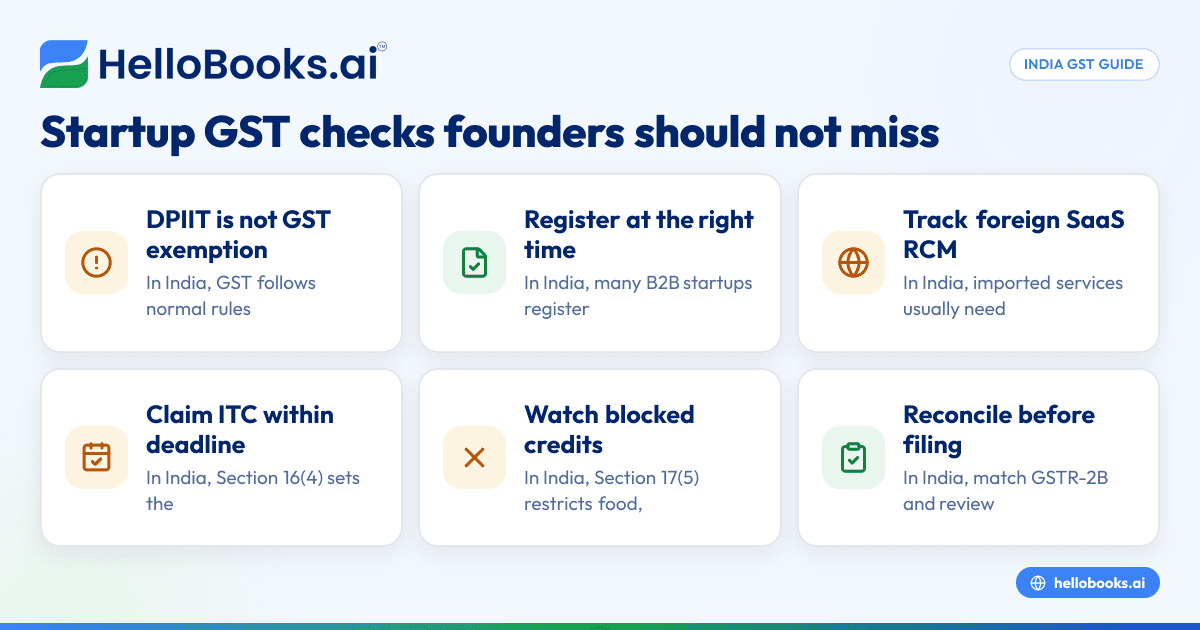
ਬਹੁਤ founders ਸਮਝਦੇ ਹਨ ਕਿ DPIIT recognition ਜਾਂ startup status ਨਾਲ GST ਤੋਂ ਛੋਟ ਮਿਲ ਜਾਂਦੀ ਹੈ। ਭਾਰਤ ਵਿੱਚ ਇਹ ਗੱਲ ਸਹੀ ਨਹੀਂ। GST registration, tax collection, input tax credit ਅਤੇ return filing ਦਾ ਮਾਮਲਾ GST law ਹੇਠ ਆਉਂਦਾ ਹੈ, ਨਾ ਕਿ startup branding ਨਾਲ। registration ਦੀਆਂ current limits, category-wise conditions, composition exclusions, inter-state supply rules ਅਤੇ compulsory registration ਵਾਲੇ points CBIC notifications ਅਤੇ GST Portal guidance ਵਿੱਚ published ਹੁੰਦੇ ਹਨ; specific figure ਉੱਥੋਂ verify ਕਰੋ।
ਅਸਲ ਜ਼ਿੰਦਗੀ ਵਿੱਚ startup ਜਲਦੀ register ਇਸ ਲਈ ਕਰਦਾ ਹੈ ਕਿਉਂਕਿ:
- B2B customer vendor onboarding ਲਈ GSTIN ਮੰਗਦਾ ਹੈ
- expense side ਤੇ GST paid ਹੁੰਦੀ ਹੈ, ਜਿਸ ਦਾ ITC future set-off ਲਈ relevant ਹੋ ਸਕਦਾ ਹੈ
- interstate goods ਜਾਂ ਕੁਝ supply structures compliance ਨੂੰ ਜਲਦੀ trigger ਕਰ ਸਕਦੇ ਹਨ
- procurement ਅਤੇ finance teams unregistered supplier ਨਾਲ deal ਨਹੀਂ ਕਰਨਾ ਚਾਹੁੰਦੀਆਂ
ਇਹ ਵੀ ਯਾਦ ਰੱਖੋ ਕਿ registration ਲੈਣਾ ਸਿਰਫ਼ portal account ਖੋਲ੍ਹਣਾ ਨਹੀਂ। ਇਸ ਤੋਂ ਬਾਅਦ invoice discipline ਚਾਹੀਦਾ ਹੈ। HelloBooks ਵਰਗਾ setup ਜਦੋਂ sale record ਹੁੰਦੇ ਹੀ correct CGST/SGST ਜਾਂ IGST split ਰੱਖਦਾ ਹੈ, ਤਾਂ Punjab ਤੋਂ Haryana, Delhi ਜਾਂ Karnataka ਵਾਲੀਆਂ supplies ਵਿੱਚ basic tax-head mistake ਘੱਟ ਹੁੰਦੀ ਹੈ। ਇਹ startup ਲਈ ਵੱਡੀ ਗੱਲ ਹੈ, ਕਿਉਂਕਿ first finance hire ਆਉਣ ਤੋਂ ਪਹਿਲਾਂ ਆਮ ਤੌਰ ਤੇ founder ਹੀ books ਸੰਭਾਲ ਰਿਹਾ ਹੁੰਦਾ ਹੈ।
ਪੰਜਾਬੀ founder ਨੂੰ ਸਭ ਤੋਂ ਵੱਧ ਜਿੱਥੇ GST ਫਸਾਉਂਦੀ ਹੈ
ਸਟਾਰਟਅੱਪ ਦੀ GST problem ਕਦੇ ਵੀ ਸਿਰਫ਼ output tax ਨਹੀਂ ਹੁੰਦੀ। ਹੇਠਾਂ ਉਹ ਹਾਲਾਤ ਹਨ ਜੋ India ਦੇ young businesses ਵਿੱਚ ਬਹੁਤ ਆਉਂਦੇ ਹਨ।
ਵਿਦੇਸ਼ੀ software tools ਅਤੇ reverse charge
ਜੇ ਤੁਸੀਂ overseas vendor ਤੋਂ SaaS, cloud hosting, analytics, design tools ਜਾਂ developer subscriptions ਲੈਂਦੇ ਹੋ, ਤਾਂ import of services ਅਤੇ reverse charge ਦਾ ਸਵਾਲ ਉੱਠ ਸਕਦਾ ਹੈ। exact treatment invoice facts, supplier status ਅਤੇ contract structure 'ਤੇ depend ਕਰਦਾ ਹੈ. Current legal position IGST Act, 2017, CGST Act, 2017, CBIC notifications ਅਤੇ GST Portal guidance ਵਿੱਚ verify ਕਰੋ. Specific tax effect ਨੂੰ CA ਨਾਲ confirm ਕਰੋ, especially ਜੇ vendor India registration ਨਾਲ charge ਕਰ ਰਿਹਾ ਹੋਵੇ.
HelloBooks ਵਿੱਚ purchase bill capture ਅਤੇ reverse charge handling ਹੋਣ ਕਰਕੇ imported tool invoices side spreadsheet ਵਿੱਚ ਗੁੰਮ ਨਹੀਂ ਹੁੰਦੇ। PDF ਜਾਂ photo ਤੋਂ OCR ਨਾਲ bill ਚੜ੍ਹਾ ਕੇ ਤੁਸੀਂ later month-end panic ਘਟਾ ਸਕਦੇ ਹੋ।
GSTR-2A/2B mismatch ਅਤੇ ITC timing
India ਵਿੱਚ ITC claim ਕਿਤਾਬੀ ਹੱਕ ਨਹੀਂ; practical ਹੱਕ ਤਦ ਬਣਦਾ ਹੈ ਜਦੋਂ supplier compliance, invoice reflection ਅਤੇ law conditions align ਹੋਣ। eligibility conditions ਅਤੇ time limits CGST Act, 2017 ਦੀ Section 16 ਅਤੇ relevant amendments ਹੇਠ ਹਨ; current position law text, CBIC circulars ਅਤੇ GST Portal advisories ਵਿੱਚ published ਹੁੰਦੀ ਹੈ. ਕੋਈ ਵੀ exact cut-off figure official source ਤੋਂ verify ਕਰੋ.
ਇਸ ਲਈ startup ਲਈ purchase capture early stage ਤੋਂ clean ਹੋਣਾ ਚਾਹੀਦਾ ਹੈ। ਜੇ tool GSTR-2A/2B reconciliation ਕਰਦਾ ਹੈ, missing supplier invoices ਦਿਖਾਉਂਦਾ ਹੈ, ਅਤੇ ITC tracking ਰੱਖਦਾ ਹੈ, ਤਾਂ founder ਨੂੰ month-end 'ਤੇ ਇਹ ਪਤਾ ਲੱਗ ਜਾਂਦਾ ਹੈ ਕਿ claim ਕਰਨ ਲਾਇਕ invoice ਕਿਹੜੇ ਹਨ ਅਤੇ ਕਿਹੜਿਆਂ 'ਤੇ vendor follow-up ਕਰਨਾ ਹੈ। GST reconciliation checker ਅਤੇ GSTIN validator ਵਰਗੇ free tools ਵੀ initial sanity check ਲਈ ਕੰਮ ਆ ਸਕਦੇ ਹਨ।
director fee, reimbursements, ਅਤੇ mixed expense trail
Board fee, professional payments, reimbursements, TDS, GST ਅਤੇ company expense ਦਾ overlap startup ਵਿੱਚ ਘਣਾ messy ਹੋ ਜਾਂਦਾ ਹੈ। ਇੱਥੇ indirect tax ਤੇ direct tax ਦੋਵੇਂ touch ਕਰਦੇ ਹਨ: GST side ਤੇ CBIC/GST law; income-tax side ਤੇ Income-tax Act, 1961 under Central Board of Direct Taxes. exact treatment invoice facts ਅਤੇ contract wording ਤੇ depend ਕਰਦਾ ਹੈ. ਇਸ ਲਈ TDS ਅਤੇ GST ਦੋਵੇਂ angles document ਕਰੋ.
ਜਦੋਂ system bill level ਤੇ TDS/TCS ਅਤੇ reverse charge context ਰੱਖੇ, ਤਦ finance view cleaner ਬਣਦਾ ਹੈ। ਇਹ filing ਤੋਂ ਵੱਧ accounting accuracy ਦੀ ਗੱਲ ਹੈ।
goods startup ਹੋਵੇ ਤਾਂ e-way bill ਅਤੇ inventory
ਜੇ ਤੁਹਾਡਾ startup physical goods ਵੇਚਦਾ ਹੈ—D2C, B2B distribution, sample dispatches, replacement units—ਤਾਂ invoice ਬਣਾਉਣ ਤੋਂ ਬਾਅਦ logistics compliance ਵੀ ਆਉਂਦੀ ਹੈ। e-way bill requirements, thresholds, document rules ਅਤੇ state/inter-state conditions current official guidance ਮੁਤਾਬਕ CGST Rules, CBIC publications ਅਤੇ e-way bill system portal 'ਤੇ ਵੇਖਣੀਆਂ ਚਾਹੀਦੀਆਂ ਹਨ। ਕੋਈ figure portal ਤੋਂ verify ਕਰੋ.
ਜੇ invoice ਤੋਂ ਹੀ e-way bill generate ਹੋ ਜਾਵੇ ਅਤੇ stock movement inventory ਵਿੱਚ reflect ਹੋ ਜਾਵੇ, ਤਾਂ warehouse, accounts ਅਤੇ GST data ਤਿੰਨ ਵੱਖ ਕਾਪੀਆਂ ਵਿੱਚ ਨਹੀਂ ਵੰਡਦੇ। ਇਸ ਸੰਦਰਭ ਵਿੱਚ e-way bill software ਅਤੇ inventory ਇਕੱਠੇ relevant ਬਣਦੇ ਹਨ।
place of supply ਦੀ ਗਲਤੀ startup ਨੂੰ ਬਿਨਾ ਪਤਾ ਲੱਗੇ ਮਹਿੰਗੀ ਪੈਂਦੀ ਹੈ
Service startups, SaaS founders, consultants, agencies ਅਤੇ multi-state selling teams ਅਕਸਰ tax rate ਨਹੀਂ, place of supply ਵਿੱਚ ਗਲਤ ਹੁੰਦੇ ਹਨ। ਇਸ ਦਾ ਨਤੀਜਾ ਇਹ ਬਣਦਾ ਹੈ ਕਿ ਤੁਸੀਂ intra-state ਸਮਝ ਕੇ CGST/SGST ਲਾ ਦਿੱਤਾ ਜਿੱਥੇ IGST ਬਣਨਾ ਸੀ, ਜਾਂ ਉਲਟ। correction ਬਾਅਦ ਵਿੱਚ return amendment, customer dispute ਅਤੇ working capital ਦਾ headache ਲਿਆਉਂਦਾ ਹੈ।
Place of supply rules IGST Act, 2017 ਵਿੱਚ ਹਨ; service category, recipient status, location of supplier, location of recipient ਅਤੇ special rules ਦੇ ਅਧਾਰ 'ਤੇ outcome ਨਿਕਲਦਾ ਹੈ। current interpretation ਲਈ bare act, CBIC circulars ਅਤੇ official guidance ਵੇਖੋ।
ਇੱਥੇ invoicing software ਦੀ value ਸਭ ਤੋਂ ਵੱਧ ਹੈ। ਜਦੋਂ customer GSTIN, state code ਅਤੇ supply location ਨਾਲ tax head split ਆਪ ਬੈਠੇ, founder manually ਹਰ invoice 'ਤੇ ਸੋਚਣ ਦੀ ਥਾਂ exceptions 'ਤੇ ਧਿਆਨ ਦੇ ਸਕਦਾ ਹੈ। e-invoicing software ਵੀ ਅੱਗੇ ਜਾ ਕੇ relevant ਹੋ ਸਕਦਾ ਹੈ ਜੇ ਤੁਹਾਡਾ business official applicability band ਵਿੱਚ ਆਵੇ; current applicability figure CBIC notifications ਅਤੇ GST Portal 'ਤੇ published ਹੁੰਦੀ ਹੈ. HelloBooks ਵਿੱਚ ਜਿੱਥੇ e-invoicing applicable ਬਣਦੀ ਹੈ, IRN ਅਤੇ signed QR workflow invoice save ਕਰਨ ਦੇ ਸਮੇਂ integrate ਹੋ ਸਕਦਾ ਹੈ।
ਇੱਕ ਬਣਾਇਆ ਹੋਇਆ, ਸਿਰਫ਼ ਸਮਝਾਉਣ ਲਈ ਦ੍ਰਿਸ਼
ਮੰਨ ਲਵੋ ਇਹ ਅੰਕ illustrative ਅਤੇ invented ਹਨ, ਸਿਰਫ਼ flow ਸਮਝਾਉਣ ਲਈ; ਇਨ੍ਹਾਂ ਵਿੱਚ cess, special valuation issues, export nuances, credit blocks, adjustments ਅਤੇ legal exceptions ਨਹੀਂ ਸ਼ਾਮਲ।
ਚੰਡੀਗੜ੍ਹ ਦਾ ਇੱਕ B2B SaaS startup ਇੱਕ ਮਹੀਨੇ ਵਿੱਚ ਤਿੰਨ invoices ਬਣਾਉਂਦਾ ਹੈ: ਇੱਕ Punjab customer ਨੂੰ, ਇੱਕ Maharashtra customer ਨੂੰ, ਅਤੇ ਇੱਕ refund note ਵੀ issue ਕਰਦਾ ਹੈ। ਉਸੇ ਮਹੀਨੇ ਉਹ ਇੱਕ Indian design agency ਨੂੰ rupee ਵਿੱਚ payment ਕਰਦਾ ਹੈ, ਇੱਕ overseas cloud tool ਲਈ card ਨਾਲ payment ਹੁੰਦੀ ਹੈ, ਦੋ laptop purchase bills upload ਹੁੰਦੇ ਹਨ, ਅਤੇ bank statement ਵਿੱਚ UPI, IMPS ਅਤੇ NEFT receipts mixed ਆਉਂਦੀਆਂ ਹਨ।
ਜੇ founder spreadsheet ਨਾਲ ਚੱਲ ਰਿਹਾ ਹੋਵੇ, ਤਾਂ ਘੱਟੋ-ਘੱਟ ਇਹ ਪੰਜ ਥਾਵਾਂ 'ਤੇ error ਦਾ chance ਹੈ:
- Maharashtra invoice 'ਤੇ IGST ਦੀ ਥਾਂ CGST/SGST
- overseas tool ਨੂੰ normal expense ਮੰਨ ਲੈਣਾ, reverse charge context miss ਕਰਨਾ
- supplier bill OCR ਨਾ ਹੋਣ ਕਰਕੇ ITC ਵਾਲਾ invoice books ਵਿੱਚ ਦੇਰ ਨਾਲ ਆਉਣਾ
- refund note return data ਵਿੱਚ reflect ਨਾ ਕਰਨਾ
- bank statement reconciliation ਨਾ ਹੋਣ ਕਰਕੇ unpaid invoice ਨੂੰ paid ਮੰਨ ਲੈਣਾ
ਜੇ ਇਹੀ flow HelloBooks ਵਿੱਚ ਹੋਵੇ, ਤਾਂ invoice stage 'ਤੇ place-of-supply split consistent ਰਹਿ ਸਕਦਾ ਹੈ, purchase bill OCR ਨਾਲ entry ਤੇਜ਼ ਹੁੰਦੀ ਹੈ, GSTR-2A/2B reconciliation ਨਾਲ supplier reflection check ਹੁੰਦਾ ਹੈ, ਅਤੇ uploaded bank statement ਤੋਂ AI reconciliation receipts ਨੂੰ invoices ਨਾਲ ਮਿਲਾ ਸਕਦੀ ਹੈ। ਇਸ ਨਾਲ founder ਨੂੰ month-end 'ਤੇ ਇਹ ਨਹੀਂ ਖੋਜਣਾ ਪੈਂਦਾ ਕਿ rupee ਕਿੱਥੋਂ ਆਇਆ ਸੀ।
ਫ੍ਰੀ tool ਚੁਣਦੇ ਸਮੇਂ founders ਕੀ ਦੇਖਣ, ਸਿਰਫ਼ price ਨਹੀਂ
“ਫ੍ਰੀ” ਦਾ ਮਤਲਬ ਕਈ ਵਾਰ ਇਹ ਹੁੰਦਾ ਹੈ ਕਿ invoice ਤਾਂ ਬਣ ਜਾਵੇਗੀ, ਪਰ filing manual export-import ਨਾਲ ਕਰਨੀ ਪਵੇਗੀ। startup ਲਈ better test ਇਹ ਹੈ:
- ਕੀ invoice ਤੋਂ GSTR-1 data naturally ਨਿਕਲਦਾ ਹੈ?
- ਕੀ GSTR-3B ਲਈ sales, purchase ਅਤੇ ITC view coherent ਹੈ?
- ਕੀ bank statement upload ਕਰਕੇ reconciliation ਹੋ ਜਾਂਦੀ ਹੈ, ਜਾਂ ਸਭ ਕੁਝ ਹੱਥ ਨਾਲ tick ਕਰਨਾ ਪੈਂਦਾ ਹੈ?
- ਕੀ multiple GSTIN ਹੋਣ 'ਤੇ ਇੱਕ login ਵਿੱਚ ਕੰਮ ਬਣਦਾ ਹੈ?
- ਕੀ mobile app ਤੋਂ founder expense ਜਾਂ invoice record ਕਰ ਸਕਦਾ ਹੈ?
- ਕੀ Tally ਤੋਂ migration practical ਹੈ ਜੇ ਤੁਹਾਡੇ CA ਦੀ ਪੁਰਾਣੀ habit ਉਹੀ ਹੈ?
ਇਸ angle ਤੋਂ bank reconciliation software, tally alternative ਅਤੇ accounting software for small business ਵਰਗੇ pages compare ਕਰਨ ਲਾਇਕ ਹਨ। HelloBooks ਵਿੱਚ Tally migration/connector ਦਾ ਫਾਇਦਾ ਇਹ ਹੈ ਕਿ startup ਇੱਕ ਦਮ ecosystem ਨਹੀਂ ਤੋੜਦਾ; CA firm ਜਿੱਥੇ Tally use ਕਰਦੀ ਹੈ, ਉੱਥੇ transition softer ਹੋ ਸਕਦਾ ਹੈ।
ਜੇ ਤੁਹਾਨੂੰ current plans ਦੇਖਣੇ ਹੋਣ, ਤਾਂ official details pricing 'ਤੇ ਵੇਖੋ।
ਪੰਜਾਬੀ startup ਟੀਮਾਂ ਲਈ daily operations ਵਿੱਚ ਕੀ ਸਹੂਲਤ matter ਕਰਦੀ ਹੈ
ਪੰਜਾਬ, Delhi NCR ਜਾਂ remote team ਵਾਲੇ India startups ਵਿੱਚ accounting ਇੱਕ desk job ਨਹੀਂ ਰਹੀ। founder travel ਕਰਦਾ ਹੈ, sales lead field ਵਿੱਚ ਹੁੰਦਾ ਹੈ, warehouse ਵੱਖ city ਵਿੱਚ ਹੋ ਸਕਦਾ ਹੈ, ਅਤੇ CA external ਹੋ ਸਕਦਾ ਹੈ। ਇਸ ਲਈ mobile-first and shared-access setup practical ਹੁੰਦਾ ਹੈ।
HelloBooks ਦੇ mobile apps ਨਾਲ iOS ਜਾਂ Android ਤੋਂ invoice/expense entry ਕਰਨੀ ਆਸਾਨ ਰਹਿੰਦੀ ਹੈ। Multi-GSTIN ਅਤੇ unlimited users ਵਾਲੀ setup ਉਹਨਾਂ businesses ਲਈ useful ਹੈ ਜਿੱਥੇ ਇੱਕ state ਤੋਂ goods, ਦੂਜੇ ਤੋਂ services ਜਾਂ warehousing ਹੋਵੇ। Noor assistant WhatsApp 'ਤੇ Hindi, English ਅਤੇ Hinglish ਵਿੱਚ books ਬਾਰੇ help ਕਰ ਸਕਦਾ ਹੈ—ਇਹ ਖਾਸ ਕਰਕੇ ਉਹਨਾਂ founders ਲਈ useful ਹੈ ਜੋ formal accounting language ਦੀ ਥਾਂ chat-style ਵਿੱਚ ਕੰਮ ਕਰਦੇ ਹਨ।
ਇੱਥੇ ਇੱਕ legal point ਵੀ ਯਾਦ ਰਹੇ: customer data, invoice records ਅਤੇ personal data handling broader compliance ecosystem ਦਾ ਹਿੱਸਾ ਹਨ। India ਵਿੱਚ privacy ਅਤੇ personal data governance ਦੇ ਸੰਦਰਭ ਵਿੱਚ Digital Personal Data Protection Act, 2023 relevant ਹੋ ਸਕਦੀ ਹੈ, ਜਦਕਿ banking/payment practices broader ecosystem ਵਿੱਚ RBI regulations ਅਤੇ payment rails guidance ਨੂੰ touch ਕਰਦੀਆਂ ਹਨ। GST filing tool privacy law advice ਦੀ ਜਗ੍ਹਾ ਨਹੀਂ ਲੈਂਦਾ, ਪਰ data discipline ਦੀ ਮਹੱਤਤਾ ਵਧਾ ਦਿੰਦਾ ਹੈ।
ਜੇ ਤੁਸੀਂ ਅੱਜ ਹੀ ਸ਼ੁਰੂ ਕਰ ਰਹੇ ਹੋ, ਤਾਂ practical setup ਇਹ ਹੋ ਸਕਦੀ ਹੈ
ਪਹਿਲਾ ਕੰਮ current law figures ਯਾਦ ਕਰਨਾ ਨਹੀਂ; official source bookmark ਕਰਨਾ ਹੈ। GST Portal, CBIC notifications, GSTN advisories ਅਤੇ ਆਪਣੇ CA ਦੀ interpretation—ਇਨ੍ਹਾਂ ਚਾਰਾਂ ਦਾ mix ਹੀ safe ਹੁੰਦਾ ਹੈ। ਦੂਜਾ ਕੰਮ invoices ਅਤੇ purchase bills ਨੂੰ clean structure ਵਿੱਚ ਲਿਆਉਣਾ ਹੈ। ਤੀਜਾ ਕੰਮ return filing ਨੂੰ bookkeeping ਤੋਂ ਵੱਖ ਨਾ ਰੱਖਣਾ ਹੈ।
ਇੱਕ workable founder stack ਅਕਸਰ ਇਹ ਹੁੰਦੀ ਹੈ:
- sale invoice system ਜਿਸ ਵਿੱਚ GSTIN ਅਤੇ place of supply ਸਹੀ ਪੱਕੇ ਹੋਣ
- purchase bill capture with OCR
- GSTR-2A/2B based ITC follow-up
- uploaded bank statement ਤੋਂ reconciliation
- GSTR-1 ਅਤੇ GSTR-3B direct filing
- physical goods ਹੋਣ ਤਾਂ e-way bill and inventory link
ਇਹੀ ਉਹ ਜਗ੍ਹਾ ਹੈ ਜਿੱਥੇ HelloBooks startup ਲਈ useful ਬਣਦਾ ਹੈ: ਤੁਸੀਂ invoice, books ਅਤੇ GST returns ਨੂੰ ਇੱਕੋ flow ਵਿੱਚ ਰੱਖ ਸਕਦੇ ਹੋ, ਨਾ ਕਿ ਤਿੰਨ ਵੱਖ tools ਅਤੇ ਦੋ spreadsheets ਵਿੱਚ। ਜੇ ਤੁਸੀਂ hands-on deਖਣਾ ਚਾਹੋ ਕਿ ਤੁਹਾਡੇ use case—SaaS, services, D2C ਜਾਂ trading—ਵਿੱਚ setup ਕਿਵੇਂ ਬੈਠੇਗੀ, ਤਾਂ demo ਲੈਣਾ ਵਧੀਆ ਰਹੇਗਾ।


