


Key takeaways
What this article covers, in order:
- स्टार्टअप के लिए “फ्री GST filing” का मतलब असल में क्या होना चाहिए
- DPIIT recognition, MCA incorporation और GST: तीनों एक चीज़ नहीं हैं
- जिन GST स्थितियों में भारतीय स्टार्टअप सबसे ज़्यादा फँसते हैं
- startup invoices सिर्फ “बिल” नहीं होते: GST, e-invoice, IRN और e-way bill का रिश्ता
- GSTR-1 और GSTR-3B तभी आसान हैं जब books पहले से साफ हों
- bank statement upload, OCR और Tally migration: यहीं समय बचता है
भारत में स्टार्टअप के लिए फ्री GST फाइलिंग सॉफ्टवेयर चुनते समय सबसे अहम सवाल यह नहीं है कि tool “free” है या नहीं, बल्कि यह है कि क्या वह आपके GST invoicing, GSTR-1 और GSTR-3B filing, purchase bill capture, ITC tracking और bank statement upload के बाद reconciliation जैसे असली काम संभालता है। अगर आप founder हैं, तो short answer यह है: आपको ऐसा system चाहिए जो GSTN और GST portal पर होने वाली filing को आपकी day-to-day books, invoices, e-invoice, e-way bill, TDS/TCS, reverse charge और reports से जोड़ दे—वरना free tool भी बाद में महंगा पड़ता है.
स्टार्टअप के लिए “फ्री GST filing” का मतलब असल में क्या होना चाहिए
कई founders “free GST filing software” खोजते हैं, लेकिन उनकी असली समस्या filing बटन नहीं होती। दिक्कत वहाँ शुरू होती है जहाँ sale invoice एक sheet में, purchase bills email में, bank receipts अलग statement में, और GST return किसी CA के working file में पड़ा हो। तब GSTR-1 एक जगह से बनता है, GSTR-3B दूसरी जगह से, और month-end पर mismatch निकलते हैं।
भारत में GST कानून का ढांचा Central Goods and Services Tax Act, 2017, Integrated Goods and Services Tax Act, 2017 और संबंधित rules से आता है। इनका प्रशासन CBIC (Central Board of Indirect Taxes and Customs) और return/data infrastructure का संचालन GSTN और GST portal के माध्यम से होता है। किसी भी current threshold, due date, late fee, interest, e-invoice applicability या return frequency की ताज़ा जानकारी आपको CBIC notifications, GST Council updates और GST portal पर प्रकाशित current guidance में देखनी चाहिए।
एक early-stage startup के लिए अच्छा software कम-से-कम यह करे:
- invoice बनाते समय customer के GSTIN, place of supply और intra-state vs inter-state nature के हिसाब से CGST/SGST या IGST का सही split लगाए;
- recorded invoices से GSTR-1 और GSTR-3B तैयार करे;
- supplier invoices को GSTR-2A/2B से मिलाकर ITC tracking दिखाए;
- bank statement upload करके receipts और expenses reconcile करने में मदद करे;
- purchase bills को OCR से पढ़कर entry effort घटाए;
- अगर business पर e-invoice rule लागू हो, तो IRN और signed QR को workflow में लाए;
- goods movement हो तो e-way bill को invoice data से जोड़े।
HelloBooks इसी तरह fit बैठता है: आप GST return filing software से सीधे GSTR-1 और GSTR-3B file कर सकते हैं, जबकि invoices, purchase entries और reconciliations उसी books data से आते हैं। इससे founder को यह अलग से साबित नहीं करना पड़ता कि books कुछ और कह रही हैं और GST return कुछ और।
DPIIT recognition, MCA incorporation और GST: तीनों एक चीज़ नहीं हैं
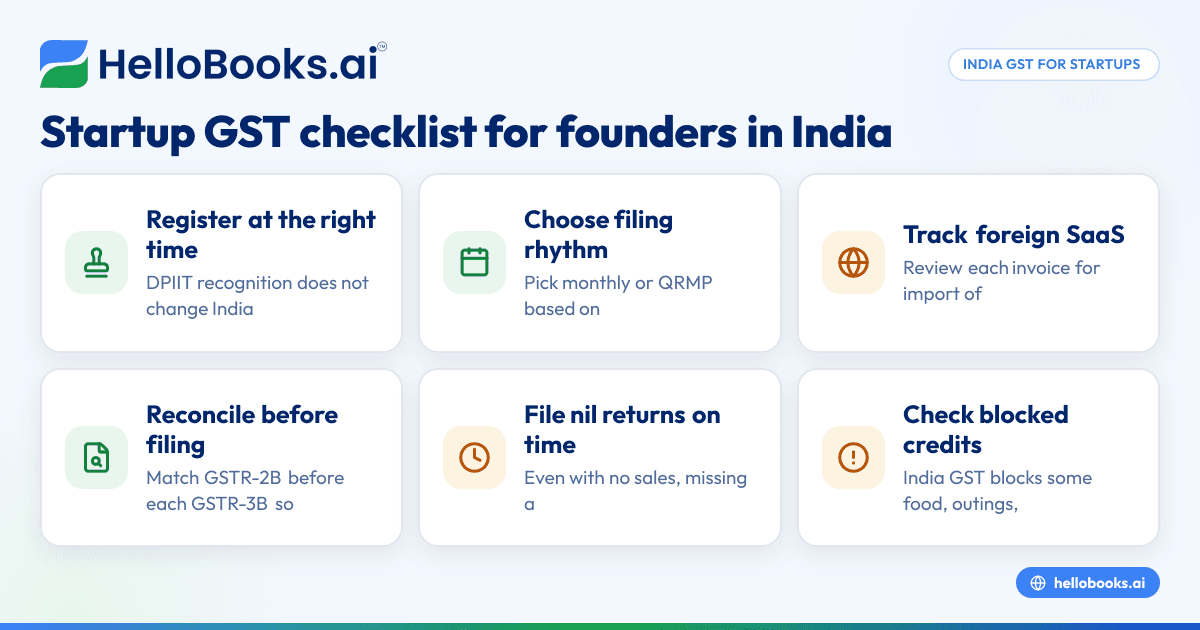
यह भारत के startup ecosystem में बार-बार आने वाला confusion है। आपका company Companies Act, 2013 के तहत MCA में incorporate हुआ हो, और आपको DPIIT recognition भी मिल गया हो, फिर भी GST के नियम अलग चलते हैं। DPIIT recognition का मतलब GST से automatic छूट नहीं है।
GST registration कब चाहिए, यह turnover, nature of supply, inter-state activity, marketplace involvement, import of services, reverse charge और दूसरी legal triggers पर निर्भर करता है। इन triggers की current position हमेशा CBIC notifications, GST Act, और GST portal पर check करनी चाहिए, क्योंकि categories और operational rules समय-समय पर बदल सकते हैं.
Practical point यह है कि कई startups threshold का इंतज़ार ही नहीं करते। क्यों?
- enterprise customer onboarding team GSTIN माँगती है;
- procurement process बिना tax invoice के अटक जाती है;
- co-working, software subscriptions, consultant bills, devices और office expenses पर paid GST को ITC के रूप में track करना useful हो जाता है;
- founder को शुरुआत से proper books और filings की आदत पड़ती है।
अगर आपका business कई राज्यों में operate करता है, तो multi-GSTIN setup भी matter करता है। HelloBooks में एक login के भीतर multiple GSTINs और unlimited users के साथ state-wise books और filing workflows manage किए जा सकते हैं। यह खास तौर पर तब useful होता है जब एक startup Delhi, Karnataka और Maharashtra जैसे अलग registrations के साथ काम कर रहा हो, या warehouse और billing states अलग हों।
जिन GST स्थितियों में भारतीय स्टार्टअप सबसे ज़्यादा फँसते हैं
भारत के startup founders अक्सर यह मान लेते हैं कि GST बस sales invoice पर लगने वाला tax है। असल में शुरुआती pain points revenue से पहले आ जाते हैं।
विदेशी SaaS tools और import of services
आपके AWS, design tool, developer platform, CRM, analytics, AI subscription या other foreign software vendors के bills USD में आ सकते हैं। भारत में registered business के लिए इनमें से कई cases IGST Act, 2017 के तहत import of services analysis में आते हैं, और कुछ स्थितियों में reverse charge implications बन सकते हैं। लेकिन यह vendor setup, place of supply facts, billing entity और invoice details पर निर्भर करता है। Current legal treatment CBIC guidance, GST Act और professional interpretation के आधार पर देखना चाहिए.
यहीं एक accounting system की अहमियत आती है। अगर आप foreign vendor bills को बस corporate card statement में छोड़ देंगे, तो month-end पर reverse charge, eligible ITC और expense classification उलझ सकते हैं। HelloBooks purchase bills को OCR से capture करने, reverse charge handling करने और GSTR-2A/2B-based ITC tracking के साथ books से return तक continuity देने में मदद करता है।
director fee, consultant retainers और TDS/TCS overlap
भारत में startup compliance की मुश्किल सिर्फ GST नहीं है; कई बार एक ही payment पर GST analysis और Income-tax Act, 1961 के तहत TDS analysis दोनों देखना पड़ता है। Director fee, legal retainers, agency contracts, contractor payouts, marketplace collections, seller settlements—इन सबमें books, GST और TDS/TCS का coordination चाहिए।
यहीं spreadsheet-based system सबसे जल्दी टूटता है। HelloBooks entries में TDS/TCS और reverse charge handling साथ आने से founder या finance lead को side-sheet maintain नहीं करनी पड़ती, और बाद में expense, payable और tax position समझना आसान होता है। TDS की current rates, section-wise applicability और deposit/return timelines हमेशा Income Tax Department और official notifications में verify करनी चाहिए.
pre-revenue phase में ITC जमा होना
कई Indian startups incorporation के बाद महीनों तक revenue नहीं बनाते, लेकिन खर्चे शुरू हो जाते हैं: laptops, rent, cloud, legal, recruitment, design, fit-out, internet, devices, software, testing materials, demo inventory। ऐसे में electronic credit ledger में ITC build हो सकता है।
लेकिन हर expense पर ITC allowed हो, ऐसा नहीं है। CGST Act, 2017 की blocked credit provisions, business-use tests, document conditions और timing rules लागू होते हैं। Current claim conditions, blocked credit scope और claim window की ताज़ा स्थिति CBIC circulars, statutory text और GST portal guidance से check करनी चाहिए। अगर office fit-out, food, employee perks, insurance या mixed-use assets जैसे grey areas हैं, तो CA review लेना सही रहता है.
place of supply और गलत tax head
भारत में सबसे common startup errors में से एक है local sale पर IGST लगा देना, या inter-state supply पर CGST/SGST लगा देना। यह सिर्फ invoice error नहीं है; बाद में amendments, customer disputes और return mismatches बन सकते हैं।
HelloBooks invoice बनाते समय place-of-supply logic और tax head split को workflow में लाता है, इसलिए founder को हर बार manually सोचना नहीं पड़ता कि यह Mumbai-to-Pune है या Bengaluru-to-Gurugram। अगर business goods move करता है, तो वही invoice data आगे e-way bill software workflow में काम आता है, जिससे invoice और consignment details दोबारा type नहीं करनी पड़तीं।
startup invoices सिर्फ “बिल” नहीं होते: GST, e-invoice, IRN और e-way bill का रिश्ता
भारत में founder-led teams अक्सर billing को back-office function मानती हैं, लेकिन startup के लिए invoice ही cash flow, GST reporting और customer compliance का केंद्र होता है।
एक compliant tax invoice में Rule-based fields, GSTIN details, HSN/SAC classification, taxable value, tax head breakup, place of supply और customer details जैसी चीज़ें सही होनी चाहिए। इन requirements का current legal source CGST Rules, 2017 और CBIC guidance है। कोई भी field requirement, Rule reference या e-invoicing applicability हमेशा latest official publication पर verify करनी चाहिए.
अगर आपके business पर e-invoicing लागू है, तो invoice बनाते समय IRN और signed QR की operational जरूरत आती है। यह सिर्फ PDF formatting नहीं है; data schema, reporting flow और invoice validity का matter है। HelloBooks e-invoicing software के रूप में save-time workflow में IRN और signed QR लाता है, ताकि टीम को JSON upload process अलग से manage न करनी पड़े।
और अगर आप physical goods भेजते हैं—D2C sample kits, hardware units, spare parts, reseller dispatches, warehouse transfers—तो e-way bill requirement भी साथ आ सकती है। इसकी current threshold, exemptions और rule details e-Way Bill portal, CBIC rules और notifications में published होती हैं; current figures वहीं check करें। HelloBooks invoice data से e-way bill raise करने में मदद करता है, जिससे dispatch team और accounts team अलग-अलग data entry न करें।
GSTR-1 और GSTR-3B तभी आसान हैं जब books पहले से साफ हों
Founders अक्सर पूछते हैं: “क्या software return file कर देता है?” बेहतर सवाल है: “क्या software return-ready books बनाता है?”
GSTR-1 outward supplies का return है और GSTR-3B summary/self-declared liability-and-credit return structure में काम आता है। इन returns की filing mechanics, tables, amendments, frequency options और due dates की current स्थिति GST portal, CBIC notifications और official advisories में published होती है। इन्हें current bare fact की तरह मानने के बजाय official source से check करना चाहिए.
HelloBooks की useful बात यह है कि smart invoicing से निकले invoices और purchases की accounting entries उसी system में रहती हैं, जहाँ से GSTR-1 और GSTR-3B direct filing की जा सकती है। इसका practical असर यह होता है कि:
- B2B invoices और customer GSTIN data scattered नहीं रहते;
- taxable value, tax amount और place-of-supply consistency बनी रहती है;
- nil month हो या active month, filing data books से आता है;
- amendment की जरूरत पड़े तो original transaction तक trace करना आसान रहता है।
साथ ही supplier-side risk के लिए GSTR-2A/2B reconciliation महत्वपूर्ण है। Startup अगर aggressively ITC claim करता है लेकिन supplier ने invoice upload नहीं किया, तो later disputes या reversals का risk बढ़ता है। HelloBooks GST reconciliation checker जैसे free India tool की usefulness भी यहीं दिखती है, और full workflow में GSTR-2A/2B reconciliation तथा ITC tracking founder को बताती है कि कौन-सा purchase bill books में है लेकिन reflected नहीं है।
bank statement upload, OCR और Tally migration: यहीं समय बचता है
भारत में startups का accounting reality glamorous नहीं है। Receipts UPI, NEFT, RTGS, IMPS या payment gateway settlements के ज़रिए आते हैं; expenses corporate card, vendor transfer, petty cash reimbursement और reimbursement claims में बँटे होते हैं। अगर हर line item manually post होगा, तो GST filing हमेशा last-minute exercise बनेगी।
इसलिए bank reconciliation का workflow सिर्फ accounting hygiene नहीं, GST readiness भी है। HelloBooks में Indian businesses bank statement upload कर सकते हैं, और AI reconciliation से receipts तथा payments को invoices या ledger entries से match कर सकते हैं। यह live bank feed नहीं, uploaded bank statement आधारित India workflow है—और यही practical चीज़ ज़्यादातर founders को चाहिए भी होती है, क्योंकि महीने के अंत में statement upload करके reconciliation करना आसान पड़ता है। इसके लिए bank reconciliation software देख सकते हैं।
Purchase-side पर OCR खास काम आता है। Supplier bill की PDF, scan या photo से entry उठ जाने पर invoice number, vendor GSTIN, taxable amount और tax breakup manual typing से कम error के साथ books में आता है। यह खास तौर पर तब useful है जब startup के पास dozens of small vendors हों—courier, ad-hoc contractors, office supplies, cloud resellers, event vendors, freelancers, repairs, packaging.
और अगर team पहले से Tally पर है, तो migration fear real होता है। बहुत से Indian CAs और bookkeepers अभी भी Tally workflows में comfort रखते हैं। HelloBooks का tally-alternative angle और Tally migration/connector इस transition को practical बनाते हैं, ताकि startup पूरी accounting history zero से rebuild न करे। HelloBooks vs Tally comparison भी इसी संदर्भ में useful हो सकता है।
एक छोटी-सी illustrative स्थिति: free tool और usable system में फर्क
मान लीजिए यह पूरी तरह illustrative और invented स्थिति है, official computation नहीं। एक Bengaluru-based SaaS startup के पास एक महीने में INR 3,60,000 की taxable B2B billing, INR 90,000 के Indian vendor purchase bills, और एक foreign software tool का INR 25,000 equivalent expense है। इसके अलावा founders ने office equipment और co-working पर कुछ खर्च किया है। यह illustration valuation, blocked credit rules, exact place-of-supply analysis, foreign exchange conversion method, exemptions, customer credit notes, TDS sections, reverse charge nuances और legal interpretation को simplify करता है; इसे filing advice न मानें.
अब दो setups सोचिए:
पहले setup में founder invoices Google Docs में बनाता है, receipts bank PDF से देखता है, purchase bills email में पड़े हैं, और CA month-end पर numbers मांगता है। यहाँ problems जल्दी आएँगी:
- कौन-सा invoice B2B था और किस GSTIN पर report होना है?
- क्या किसी interstate invoice पर गलत tax head लग गया?
- foreign software bill पर reverse charge analysis हुआ या नहीं?
- कौन-सा vendor invoice GSTR-2B में दिखा, कौन-सा नहीं?
- bank receipt किस invoice से match होती है?
दूसरे setup में startup HelloBooks पर invoices बनाता है, purchase bills OCR से capture करता है, bank statement upload करके receipts reconcile करता है, और GSTR-2A/2B tracking से ITC visibility रखता है। तब founder को अलग-अलग sheets मिलाने की ज़रूरत कम होती है। अगर business goods भेज रहा हो, तो e-way bill invoice data से निकलेगा; अगर e-invoice rule लागू हो, तो IRN और signed QR workflow में आएँगे; और filing के समय GSTR-1 तथा GSTR-3B उसी books stack से बनेंगे।
यह फर्क “free” और “actually usable” के बीच का है।
हिंदी में काम करने वाली टीमों के लिए usability क्यों matter करती है
भारत में compliance tool का adoption सिर्फ feature से तय नहीं होता; language और working style से भी होता है। Founder English में पढ़ सकता है, accountant Hindi में समझता है, sales admin Hinglish बोलता है, और owner WhatsApp पर सवाल पूछता है। ऐसे में tool technically मजबूत हो पर team उसे रोज़ इस्तेमाल न करे, तो फायदा आधा रह जाता है।
HelloBooks का mobile app iOS और Android पर entries, invoices और expenses capture करने में काम आता है, और Noor assistant WhatsApp पर Hindi, English और Hinglish में सवाल लेने का practical layer देता है। यह खास तौर पर small teams, family-run startups, regional operators और non-metro founders के लिए useful है जहाँ accounting desk हमेशा laptop के सामने नहीं बैठा होता। WhatsApp यहाँ marketing gimmick नहीं, daily operating habit है।
इसके साथ inventory वाले startups—जैसे D2C brands, light manufacturing units, electronics resellers, pharma distributors या hardware startups—के लिए stock और GST को अलग systems में रखना बाद में painful हो जाता है। HelloBooks inventory और accounting को साथ रखता है, इसलिए sales, purchases, stock movement और financial reports एक ही data backbone पर चलते हैं। P&L, receivables ageing और tax-facing books एक-दूसरे से disconnect नहीं होते।
founder को decision लेते समय किन बातों पर ध्यान देना चाहिए
अगर आप भारत में startup हैं और free GST filing software देख रहे हैं, तो इन questions से shortlist कीजिए:
- क्या tool सिर्फ return upload करता है, या invoice से return तक full path संभालता है?
- क्या यह GSTR-1 और GSTR-3B direct filing देता है?
- क्या GSTIN, place of supply, CGST/SGST/IGST split और HSN/SAC workflow में हैं?
- क्या GSTR-2A/2B reconciliation और ITC tracking है?
- क्या bank statement upload और AI reconciliation India use-case के लिए है?
- क्या OCR purchase bills को entry में बदल सकता है?
- क्या e-invoice, IRN, signed QR और e-way bill जैसी चीज़ें जरूरत पड़ने पर available हैं?
- क्या Tally से migration practical है?
- क्या multiple GSTINs और team users support होते हैं?
- क्या founder mobile app या WhatsApp जैसे familiar surface से काम कर सकता है?
अगर आपका use case ऊपर की चीज़ों से match करता है, तो HelloBooks को accounting software India या accounting software for small business के रूप में evaluate करना समझदारी होगी। Pricing देखने के लिए /in/pricing और product walkthrough के लिए demo सही starting points हैं।
आख़िर में, भारत में GST compliance सिर्फ filing event नहीं है; यह invoices, payments, purchase evidence, ITC discipline, return consistency और audit trail का daily system है। Founder के लिए सबसे अच्छा “free GST filing software” वही है जो CBIC/GSTN reality, Indian payment rails, rupee bookkeeping, GSTIN-based trade और startup speed—इन सबको एक साथ संभाल सके।


