


Key takeaways
What this article covers, in order:
- ફ્રી GST filing માટે foundersએ ખરેખર શું જોવું જોઈએ
- registration પછી startupની real મુશ્કેલી nil return નહીં, data discipline છે
- startupમાં GSTના કયા cases વારંવાર આવે છે
- invoiceની એક ભૂલથી GST, cash flow અને collections ત્રણેય બગડી શકે
- ITC માટે purchase bills booksમાં હોવા જોઈએ, inboxમાં નહીં
- e-invoice અને e-way bill startup માટે ક્યારે relevant બને
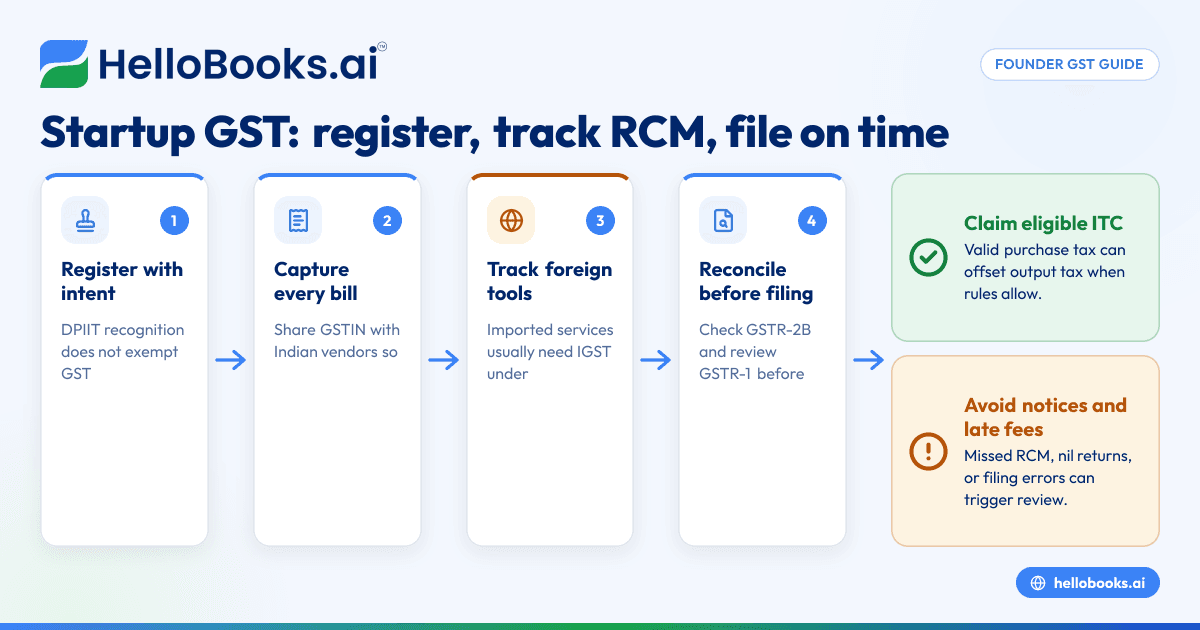
ભારતમાં સ્ટાર્ટઅપ માટે ફ્રી GST ફાઇલિંગ સોફ્ટવેર શોધો છો તો ટૂંકું જવાબ આ છે: માત્ર “return submit” કરાવતું tool પૂરતું નથી. તમને એવું software જોઈએ જે GST invoice સાચી રીતે બનાવે, place of supply મુજબ CGST/SGST કે IGST જુદું પાડે, purchase bills અને GSTR-2B reconcile કરે, અને એ જ data પરથી GSTR-1 અને GSTR-3B સીધું GST Portal પર ફાઇલ કરે. સ્ટાર્ટઅપમાં ભૂલ return ભરવામાં ઓછી, પણ bookkeeping, RCM, vendor bills અને bank matchingમાં વધારે થાય છે.
ફ્રી GST filing માટે foundersએ ખરેખર શું જોવું જોઈએ
ઘણા founders “free GST filing” સાંભળે ત્યારે એક જ પ્રશ્ન પૂછે છે: GSTR-1 અને GSTR-3B ફાઇલ થઈ જાય છે ને? હા, એ મહત્વનું છે. પણ startup contextમાં સાચો પ્રશ્ન થોડો મોટો છે: શું software તમારા invoice, expense, ITC અને payment trailને એક જ જગ્યાએ જોડે છે?
ભારતમાં GSTનો framework Central Goods and Services Tax Act, 2017, Integrated Goods and Services Tax Act, 2017 અને સંબંધિત rules હેઠળ ચાલે છે. તેનો અમલ CBIC અને return/invoice data rails પર GSTN દ્વારા થાય છે, અને current notifications, advisories, return schema અને portal behaviour સત્તાવાર રીતે GST Portal, CBIC notifications અને circularsમાં પ્રકાશિત થાય છે. એટલે registration threshold, filing frequency option, e-invoice applicability, e-way bill trigger કે ITC conditions વિશે કોઈ પણ current figure official sourceમાં cross-check કરવો જોઈએ.
સ્ટાર્ટઅપ માટે સારી પસંદગી એવી હોય છે કે:
- invoice બનાવતી વખતે customerના GSTIN અને place of supply પરથી tax head split બગડે નહીં,
- purchase bill photo/PDFમાંથી details ખેંચી શકાય,
- GSTR-2A/2B સામે reconciliation થાય,
- bank statement upload કરીને receipts અને payments match થઈ જાય,
- અને founders, finance lead, CA — સૌ એક જ books પર કામ કરી શકે.
આ માટે GST return filing software જુદું અને accounting software India જુદું ન જોવું, workflow તરીકે જોવું સારું.
registration પછી startupની real મુશ્કેલી nil return નહીં, data discipline છે
એકવાર GSTIN લઈ લો પછી નિયમિત compliance શરૂ થાય છે. પરંતુ શરૂઆતની કંપનીઓમાં typical સમસ્યા એવી હોય છે કે sales invoice spreadsheetમાં છે, purchase bills emailમાં છે, bank entries statementમાં છે, અને CA પાસે અલગ working file છે. ત્યારબાદ GSTR-1, GSTR-3B, ITC tracking અને management reporting વચ્ચે mismatch શરૂ થાય છે.
ઉદાહરણ તરીકે, અમદાવાદની SaaS startup એક enterprise clientને invoice કરે, બે vendor પાસેથી software subscription લે, office rent ભરે, અને founder reimbursement અલગ રીતે કરે. જો invoice વખતે GSTIN, SAC/HSN, place of supply અને tax split સાચું ન લખાય, તો પછી return તૈયારી વખતે જ પ્રશ્નો ઊભા થાય છે. જો vendor bill booksમાં દાખલ જ ન થાય, તો GSTR-2Bમાં દેખાતી credit અને તમારા ledger વચ્ચે તફાવત આવે. જો bank receipt invoice સાથે match ન થાય, તો receivables ageing પણ ખોટી બને.
અહીં softwareનું value “free filing”થી આગળ છે. HelloBooksમાં startup invoice બનાવે ત્યારે GST fields સાથે compliant invoice તૈયાર કરી શકે છે, અને inter-state તથા intra-state supply મુજબ CGST/SGST કે IGST split બેસાડે છે. પછી એ જ recorded invoicesમાંથી GSTR-1 અને GSTR-3B સીધું file થાય છે, એટલે books અને return વચ્ચે manual re-entry ઓછી રહે છે. Bank statement upload કરીને AI reconciliation કરવાથી NEFT, RTGS, IMPS કે UPIથી આવેલી receipts invoice સામે match કરવી પણ સહેલી બને છે.
startupમાં GSTના કયા cases વારંવાર આવે છે
સ્ટાર્ટઅપ માટે GST હંમેશા “અમે શું વેચીએ છીએ?” એટલા સુધી મર્યાદિત રહેતો નથી. ઘણી વાર પ્રશ્ન “અમે શું ખરીદીએ છીએ?” ત્યાંથી શરૂ થાય છે.
વિદેશી SaaS અને import of services
જો તમે બહારની company પાસેથી design tool, cloud tool, analytics, developer platform કે subscription લો, તો transactionનું GST treatment invoice-by-invoice તપાસવું પડે. આ વિસ્તાર IGST Act, 2017 અને સંબંધિત rules હેઠળ આવે છે; current interpretation માટે CBIC circulars, notifications અને GST Portal guidance જોવી જોઈએ. ઘણા founders USD billing જોઈને ignore કરે છે, પરંતુ import of services અને reverse chargeનો angle હોય શકે છે. બીજી બાજુ કેટલાક overseas suppliers Indian GST પણ charge કરતા હોય છે. એટલે દરેક vendor invoice read કરવો જરૂરી છે.
HelloBooksમાં purchase bills OCRથી capture કરી શકાય છે, અને reverse charge તથા TDS/TCS handling જેવી entries booksમાં side spreadsheet વગર રાખી શકાય છે. આ startup માટે ખાસ ઉપયોગી છે કારણ કે imported toolsના bills સામાન્ય રીતે scattered હોય છે.
director fee, professional fee અને contract payments
કંપની structure વધે એટલે board sitting fee, advisor invoice, consultant retainership, legal fee, recruiter fee જેવા ખર્ચા આવે છે. એ બધું એક જ tax bucketમાં નથી પડતું. કેટલાક casesમાં GST treatment જુદો હોય શકે, અને Income Tax Act હેઠળ TDSનો angle પણ હોય શકે. TDS figures, sections અને current rates/thresholds માટે Income Tax Act, 1961, CBDT material અને official utility/reference publications જોવાના રહે; GST side માટે CBIC/GST Portal.
Software ત્યાં મદદ કરે જ્યાં entry discipline રહે: supplier bill દાખલ થાય, TDS/TCS tag થાય, અને expense books તથા GST working એકબીજાથી અલગ ન પડે.
inventory ધરાવતી startup
ફક્ત SaaS startup નહીં, D2C brand, light manufacturing venture, distributor-led startup કે omni-channel seller માટે stockની movement પણ GST workflowનો ભાગ છે. Invoice booksમાં અને stock Excelમાં રાખશો તો mismatch બનશે. HelloBooksમાં inventory sale અને purchase સાથે ચાલે છે, એટલે closing stock, purchase register અને GST invoice data વચ્ચે continuity રહે છે. Goods movement હોય ત્યાં e-way bill workflow પણ પ્રાસંગિક બને છે; તેના માટે e-way bill software સમજવું useful છે.
invoiceની એક ભૂલથી GST, cash flow અને collections ત્રણેય બગડી શકે
Startup invoice “બિલ મોકલ્યું” એટલું જ નથી. એ compliance document, payment trigger અને audit trail — ત્રણેય છે. ભારતમાં tax invoice માટે કયા particulars જોઈએ તે CGST Rules, 2017ના સંબંધિત provisionsમાં આપવામાં આવ્યા છે, અને latest changes CBIC notifications તથા GST Portal updatesમાં પ્રકાશિત થાય છે.
Founders માટે ખાસ ધ્યાનના મુદ્દા:
- customerનો સાચો GSTIN,
- place of supply,
- correct HSN/SAC,
- CGST/SGST સામે IGST split,
- credit note/debit note trail,
- export/LUT scenario હોય તો યોગ્ય wording,
- અને applicable હોય તો e-invoice/IRN.
જો company multiple statesમાં expand થાય, warehouse જુદા હોય, કે અલગ GSTIN પરથી billing થતી હોય, તો single-login visibility અગત્યની બને છે. HelloBooksમાં multi-GSTIN setup અને unlimited users હોવાથી founder, accounts executive અને CA અલગ-alag Excel circulate કર્યા વગર કામ કરી શકે છે.
Invoice validation માટે founders free checkથી શરૂઆત કરવા માંગે તો GST invoice validator, GSTIN validator અને HSN code search જેવા tools ઉપયોગી બની શકે.
ITC માટે purchase bills booksમાં હોવા જોઈએ, inboxમાં નહીં
સ્ટાર્ટઅપનો સૌથી under-rated pain point ITC છે. Founders વેચાણ ઓછી હોય ત્યારે ખરીદી bills પરનું GST “પછી જોઈશું” તરીકે મૂકી દે છે. પરંતુ eligible credit claim કરવા માટે supplier compliance, document quality, business use, blocked credit rules અને GSTR-2B reflection જેવી બાબતો મહત્વની છે. આ શરતો CGST Act, 2017ની Section 16 અને Section 17 તથા સંબંધિત rules હેઠળ આવે છે; current legal position માટે CBIC circulars/notifications અને GST Portal guidance જોવી જોઈએ.
વ્યવહારિક રીતે મુશ્કેલી ક્યાં થાય?
- vendorએ invoice આપ્યું પણ GSTIN ખોટું છે,
- invoice booksમાં નથી,
- supplierએ returnમાં upload કર્યું નથી,
- payment evidence અલગ પડી ગયું છે,
- capital item અને blocked credit item ગૂંચવાઈ ગયા છે.
HelloBooksમાં purchase bills OCRથી capture થાય છે અને GSTR-2A/2B reconciliation સાથે ITC tracking રાખી શકાય છે. એટલે foundersને month-endમાં “આ credit લઈ શકીએ?” એવો પ્રશ્ન estimateથી નહીં, record પરથી જોઈ શકાય. આ ખાસ કરીને ત્યારે કામ આવે જ્યારે company laptop, coworking, software tools, agency invoices, freight અને inventory purchases જેવી mixed spends ધરાવે છે.
જો reconciliation health ચકાસવી હોય તો GST reconciliation checker પણ useful starting point છે.
e-invoice અને e-way bill startup માટે ક્યારે relevant બને
બધા startups માટે પ્રથમ દિવસથી e-invoice જરૂરી નથી. પણ જેમ turnover scale, enterprise clients, inter-state goods movement અથવા formal procurement વધે, તેમ e-invoice અને e-way bill compliance suddenly urgent બની શકે. Applicability thresholds, document classes, exemptions અને current procedural requirements CBIC notifications, NIC/Invoice Registration Portal documentation અને GST Portal પર official રીતે પ્રકાશિત થાય છે. કોઈ current threshold કે cut-off figure official notification વગર માનવી નહીં.
જો તમારી company પર e-invoicing લાગુ પડે, તો invoice save કરતી વેળાએ IRN અને signed QR મળવું manual portal upload કરતાં ઘણું better છે. HelloBooksમાં applicable businesses માટે e-invoice workflowમાં IRN અને signed QR generate થાય છે, જેથી JSON upload-downloadનો extra manual cycle ટળે. આ enterprise customersને invoice acceptanceમાં પણ મદદરૂપ બને છે. વધુ માટે e-invoicing software જુઓ.
Goods movement હોય ત્યાં e-way bill invoice data પરથી જ raise થાય તો transporter, value, item details અને vehicle-related data ફરી ટાઈપ કરવાની જરૂર ઓછી પડે છે. આ ખાસ કરીને Gujaratમાં manufacturing, trading અને dispatch-heavy startups માટે practical matter છે.
એક નાનું, invented illustration બતાવે છે કે “free filing”થી વધુ શું જોઈએ
આ આંકડા સંપૂર્ણપણે illustrative અને invented છે; current tax rates, thresholds, place-of-supply outcomes, blocked-credit treatment, TDS sections, export conditions, valuation disputes અને legal exceptions આ ગણતરીમાં સમાવવામાં આવેલ નથી. Official position માટે CBIC, GST Portal, સંબંધિત law અને તમારા CA/indirect tax expertની સલાહ જ માન્ય છે.
માનો વડોદરાની એક startupે એક મહિને ત્રણ transactions કર્યા:
- ગુજરાતના clientને ₹1,20,000નું software implementation invoice,
- મહારાષ્ટ્રના clientને ₹80,000નું subscription invoice,
- અને vendor bills તરીકે ₹30,000 coworking, ₹20,000 design tool, ₹15,000 internet/ops ખર્ચ.
જો founder invoiceમાં state logic ખોટું મૂકે અને inter-state supply પર પણ local split લગાવી દે, તો client procurement query ઊભી થાય. જો vendor bills booksમાં દાખલ ન થાય, તો ITC working અધૂરી રહે. જો bank statement upload ન થાય, તો ₹80,000ની receipt outstanding બતાતી રહે. Return ફાઇલિંગ technically થઈ શકે, પણ books ખોટી રહેશે.
એ જ કેસ structured systemમાં શું બદલાય? Invoice બનાવતી વખતે place of supply મુજબ tax head split બેસે, purchase bills OCRથી દાખલ થાય, GSTR-2B સામે vendor invoice દેખાય, અને bank statement upload પછી NEFT/UPI receipts reconcile થાય. પછી GSTR-1 અને GSTR-3B build થાય ત્યારે data એક જ sourceમાંથી આવે. Founder માટે આનો અર્થ compliance સાથે better cash-flow visibility પણ છે.
ગુજરાતી founder માટે software પસંદ કરતાં practical checklist
Gujaratના ઘણા startups આજે પણ Tally, Excel અને CA workingનો mix ચલાવે છે. એ model શરૂઆતમાં ચાલે, પરંતુ transaction count, GSTIN count અથવા team size વધતાં bottleneck બને છે. Software પસંદ કરતાં આ practical પ્રશ્નો પૂછો:
- શું invoice બનાવતાં જ GST fields, GSTIN, HSN/SAC અને place-of-supply logic controlમાં રહે છે?
- શું GSTR-1 અને GSTR-3B સીધું file થઈ શકે છે કે data export-import કરવું પડે?
- શું purchase bills photo/PDFમાંથી capture થાય છે?
- શું GSTR-2A/2B સામે ITC tracking મળે છે?
- શું bank statement uploadથી reconciliation થાય છે, ખાસ કરીને UPI, NEFT, RTGS, IMPS collections માટે?
- શું inventory અને GST books એકબીજાથી જોડાયેલા છે, જો business goods વેચે છે?
- શું multiple GSTIN હોય તો એક systemમાં manage થાય છે?
- શું existing Tally data સાથે migration કે connector path છે?
HelloBooks startup use-caseમાં આ workflow જોડે છે: smart invoicing, direct GST return filing software, bank reconciliation software, inventory-heavy teams માટે inventory, અને Tallyમાંથી ખસવું હોય તો tally alternative. Pricing માટે figures અહીં ન આપતાં, official page pricing જોવો. Product fit live જોવા હોય તો demo લઇ શકો.
founderને છેલ્લે શું યાદ રાખવું જોઈએ
ભારતમાં startup માટે “free GST filing software”નો અર્થ માત્ર zero-cost return upload નથી. સાચો અર્થ એ છે કે complianceનો core workflow — invoice, purchase, ITC, bank matching, e-invoice, e-way bill અને reporting — clutter વગર ચાલે. GST કાયદો CGST Act, IGST Act, rules અને CBIC/GSTN ecosystemથી ચાલે છે; current figures, thresholds, dates અને applicability હંમેશા official source પરથી verify કરવી.
જો તમે શરૂઆતમાં છો, તો ઓછામાં ઓછું એટલું કરો: invoice system સુધારો, vendor bills booksમાં લાવો, GSTR-2B reconcile કરો, bank statement નિયમિત upload કરો, અને return filingને bookkeepingથી જુદું ન માનો. એ approach startupને sirf compliant નહીં, પણ investable અને scalable પણ બનાવે છે.


