


Key takeaways
What this article covers, in order:
- ਟ੍ਰੇਡਰ ਅਤੇ ਹੋਲਸੇਲਰ ਲਈ GST ਦੀ ਅਸਲ ਦਿੱਕਤ ਕਿੱਥੇ ਹੁੰਦੀ ਹੈ
- ਰਜਿਸਟ੍ਰੇਸ਼ਨ, composition ਅਤੇ inter-state supply ਬਾਰੇ ਕੀ ਚੈਕ ਕਰਨਾ ਚਾਹੀਦਾ ਹੈ
- invoice ਸਹੀ ਨਾ ਹੋਵੇ ਤਾਂ ITC ਅਤੇ cash flow ਦੋਵੇਂ ਹਿਲਦੇ ਹਨ
- place of supply, tax head split ਅਤੇ B2B trade ਦੀ ground reality
- e-invoice ਅਤੇ e-way bill ਕਿਸ ਨੂੰ seriously ਲੈਣਾ ਚਾਹੀਦਾ ਹੈ
- ਇੱਕ ਕਲਪਨਾਤਮਕ ਪਰ ਇਮਾਨਦਾਰ ਹਿਸਾਬ: ਜਿੱਥੇ margin ਤੋਂ ਵੱਧ pressure cash flow ‘ਤੇ ਪੈਂਦਾ ਹੈ
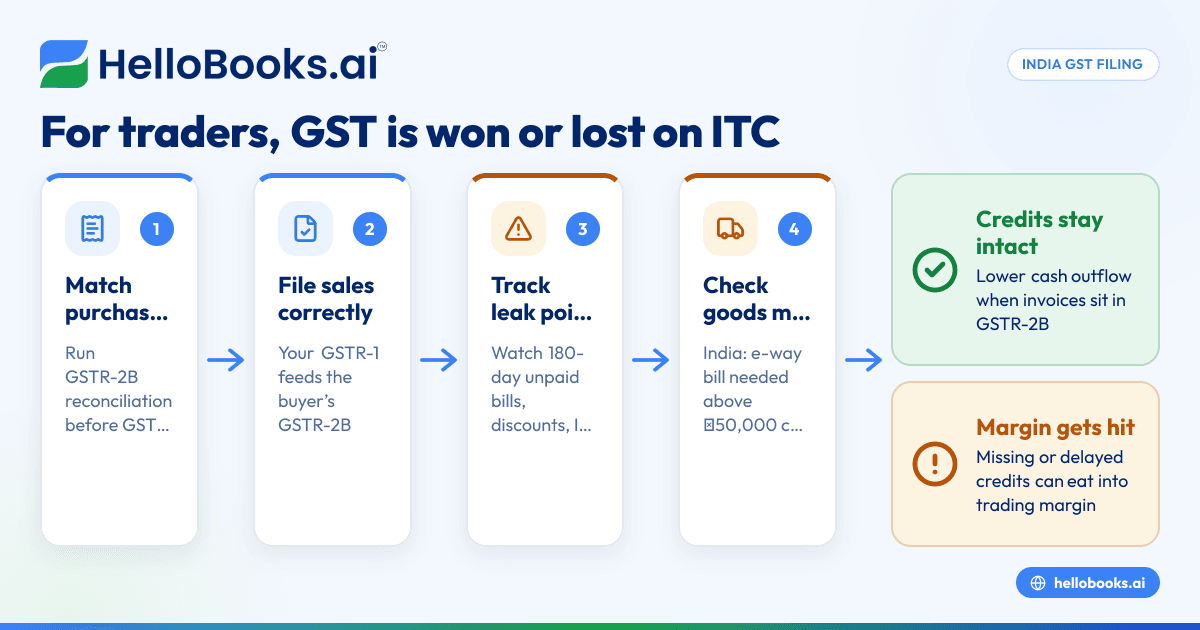
ਭਾਰਤ ਵਿੱਚ ਟ੍ਰੇਡਰਾਂ ਅਤੇ ਹੋਲਸੇਲਰਾਂ ਲਈ GST ਫਾਈਲਿੰਗ ਸਿਰਫ਼ return ਭੇਜਣ ਦਾ ਕੰਮ ਨਹੀਂ; ਅਸਲ ਗੱਲ ਇਹ ਹੈ ਕਿ ਤੁਹਾਡੀ sale invoice, supplier ਦੀ upload ਕੀਤੀ details, GSTR-2B ਵਿੱਚ ਦਿਸਦੀ ITC, e-way bill ਅਤੇ bank receipt ਆਪਸ ਵਿੱਚ ਮਿਲਣ। ਜੇ ਤੁਸੀਂ B2B supply ਕਰਦੇ ਹੋ, ਤਾਂ ਤੁਹਾਡੀ GSTR-1 ਤੁਹਾਡੇ customer ਦੀ input tax credit story ਦਾ ਹਿੱਸਾ ਬਣਦੀ ਹੈ. ਇਸ ਲਈ trader ਲਈ “free GST filing” ਦਾ ਮਤਲਬ ਤਦ ਹੀ ਬਣਦਾ ਹੈ ਜਦੋਂ invoicing, reconciliation ਅਤੇ filing ਇਕੱਠੇ ਚੱਲਣ।
ਟ੍ਰੇਡਰ ਅਤੇ ਹੋਲਸੇਲਰ ਲਈ GST ਦੀ ਅਸਲ ਦਿੱਕਤ ਕਿੱਥੇ ਹੁੰਦੀ ਹੈ
ਰਿਟੇਲ ਦੁਕਾਨਦਾਰ ਕਈ ਵਾਰ mostly B2C sales ਕਰਦਾ ਹੈ, ਪਰ wholesaler ਜਾਂ distributor ਅਕਸਰ GSTIN ਵਾਲੇ buyers ਨਾਲ ਕੰਮ ਕਰਦਾ ਹੈ। ਇਸ ਕਰਕੇ invoice ਦੀ ਇੱਕ typo ਵੀ buyer ਦੇ ITC ਨੂੰ affect ਕਰ ਸਕਦੀ ਹੈ। GST ਦਾ framework Central Goods and Services Tax Act, 2017, Integrated Goods and Services Tax Act, 2017 ਅਤੇ ਸੰਬੰਧਿਤ State GST laws ਹੇਠ ਚੱਲਦਾ ਹੈ; ਇਸ ਦੀ administration CBIC ਅਤੇ GSTN-backed GST Portal ਰਾਹੀਂ ਹੁੰਦੀ ਹੈ। ਸਹੀ field requirements ਅਤੇ current compliance rules ਦੀ updated position official notifications, circulars ਅਤੇ portal advisories ਵਿੱਚ published ਹੁੰਦੀ ਹੈ।
ਟ੍ਰੇਡਰ ਦੇ case ਵਿੱਚ ਤਿੰਨ friction points ਵਾਰ-ਵਾਰ ਆਉਂਦੇ ਹਨ:
- purchase bills books ਵਿੱਚ ਹਨ, ਪਰ GSTR-2B ਵਿੱਚ ਨਹੀਂ ਦਿਸਦੇ;
- local ਅਤੇ inter-state supply ਵਿੱਚ CGST/SGST বনਾਮ IGST ਗਲਤ ਲੱਗ ਜਾਂਦਾ ਹੈ;
- goods movement ਲਈ e-way bill ਅਤੇ invoice details ਅਲੱਗ-ਅਲੱਗ ਟਾਈਪ ਹੁੰਦੀਆਂ ਹਨ, ਜਿਸ ਨਾਲ mismatch ਬਣਦਾ ਹੈ।
ਇਸੇ ਕਰਕੇ sirf return filing software ਕਾਫ਼ੀ ਨਹੀਂ ਹੁੰਦਾ। ਜੇ invoice ਬਣਾਉਂਦੇ ਵੇਲੇ place of supply ਅਤੇ tax head split ਠੀਕ ਨਾ ਹੋਵੇ, ਤਾਂ ਬਾਅਦ ਵਿੱਚ GSTR-3B “fix” ਨਹੀਂ ਕਰਦਾ; ਉਹ ਸਿਰਫ਼ books ਵਿੱਚ ਪਈ ਗਲਤੀ ਨੂੰ report ਕਰਦਾ ਹੈ। HelloBooks ਵਿੱਚ GST invoice ਬਣਾਉਂਦੇ ਸਮੇਂ customer GSTIN, place of supply ਅਤੇ item tax treatment ਦੇ ਆਧਾਰ ‘ਤੇ CGST, SGST ਜਾਂ IGST split consistent ਰਹਿੰਦਾ ਹੈ, ਜਿਸ ਨਾਲ trader ਦੀ first-entry error ਘਟਦੀ ਹੈ।
ਰਜਿਸਟ੍ਰੇਸ਼ਨ, composition ਅਤੇ inter-state supply ਬਾਰੇ ਕੀ ਚੈਕ ਕਰਨਾ ਚਾਹੀਦਾ ਹੈ
ਟ੍ਰੇਡਰ ਅਕਸਰ ਪੁੱਛਦੇ ਹਨ: registration ਕਦੋਂ ਲੈਣੀ ਹੈ, composition theek ਹੈ ਜਾਂ regular GST? ਇਸ ਦਾ current answer bare fact ਵਾਂਗ ਨਹੀਂ ਦੇਣਾ ਚਾਹੀਦਾ, ਕਿਉਂਕਿ threshold, category ਅਤੇ state-specific treatment official source ਤੋਂ verify ਕਰਨਾ ਲਾਜ਼ਮੀ ਹੈ. Registration liability ਅਤੇ composition levy ਦੀ current position CGST Act, 2017, CGST Rules, 2017, CBIC notifications ਅਤੇ GST Portal guidance notes ਵਿੱਚ published ਹੁੰਦੀ ਹੈ. Specific turnover limits ਜਾਂ eligibility condition official source ਤੋਂ check ਕਰੋ; ਨਹੀਂ ਤਾਂ NEEDS EXPERT REVIEW.
ਪਰ practical angle ਸਾਫ਼ ਹੈ: ਜੇ ਤੁਸੀਂ wholesaler ਹੋ, ਦੂਜੇ ਰਾਜ ਤੋਂ stock ਮੰਗਾਉਂਦੇ ਹੋ, ਜਾਂ Punjab ਤੋਂ Haryana, Himachal, Delhi, Rajasthan ਜਾਂ ਹੋਰ state ਵਿੱਚ supply ਕਰਦੇ ਹੋ, ਤਾਂ inter-state treatment ਨੂੰ seriously ਦੇਖਣਾ ਪੈਂਦਾ ਹੈ. IGST Act, 2017 ਅਧੀਨ place-of-supply logic ਅਤੇ inter-state vs intra-state classification decisive ਹੁੰਦੇ ਹਨ. Current interpretive position CBIC material ਅਤੇ GST Portal resources ‘ਤੇ ਮਿਲਦੀ ਹੈ.
Composition scheme ਕਈ ਛੋਟੇ business ਲਈ attractive lag ਸਕਦੀ ਹੈ, ਪਰ B2B trader ਲਈ sawal ਇਹ ਹੁੰਦਾ ਹੈ ਕਿ buyer ਨੂੰ ITC ਚਾਹੀਦੀ ਹੈ ਜਾਂ ਨਹੀਂ. ਜੇ ਤੁਹਾਡਾ customer registered business ਹੈ, ਉਹ compliant tax invoice ਅਤੇ supplier-side return discipline expect ਕਰਦਾ ਹੈ. Isliye decision sirf tax outgo ਨਹੀਂ; market expectation ਵੀ ਹੈ.
invoice ਸਹੀ ਨਾ ਹੋਵੇ ਤਾਂ ITC ਅਤੇ cash flow ਦੋਵੇਂ ਹਿਲਦੇ ਹਨ
ਟ੍ਰੇਡਰ ਦਾ ਮੁੱਖ risk “zyada tax” ਨਹੀਂ, “galat credit timing” ਹੁੰਦਾ ਹੈ। Input tax credit ਦਾ law CGST Act, 2017 ਅਤੇ ਉਸ ਦੇ rules ਹੇਠ governed ਹੈ; claim conditions ਦੀ current position CBIC circulars, GST Portal FAQs ਅਤੇ GSTR-2B related advisories ਵਿੱਚ published ਹੁੰਦੀ ਹੈ। Supplier-uploaded data GSTN system ਰਾਹੀਂ flow ਕਰਦੀ ਹੈ, ਇਸ ਲਈ buyer side bookkeeping alone ਕਾਫ਼ੀ ਨਹੀਂ.
ਜਿਹੜੀਆਂ ਗਲਤੀਆਂ ਸਭ ਤੋਂ ਵੱਧ ਪੈਂਦੀਆਂ ਹਨ:
- supplier ਦਾ GSTIN books ਵਿੱਚ ਗਲਤ save ਹੋਣਾ;
- purchase bill ਦੀ date ਜਾਂ invoice number typo ਨਾਲ enter ਹੋਣਾ;
- goods receipt ਹੋ ਗਿਆ, ਪਰ supplier ਨੇ return upload ਨਾ ਕੀਤਾ;
- freight, packing, loading ਵਰਗੇ charges ਨੂੰ reverse charge ਜਾਂ normal tax treatment ਦੇ context ਵਿੱਚ review ਨਾ ਕਰਨਾ;
- debit note/credit note books ਵਿੱਚ ਹੈ, ਪਰ GST impact ਨਹੀਂ ਜੋੜਿਆ ਗਿਆ।
ਇੱਥੇ reconciliation essential ਹੈ. HelloBooks ਵਿੱਚ GSTR-2A/2B reconciliation ਅਤੇ ITC tracking trader ਨੂੰ ਇਹ ਦਿਖਾਉਂਦੀ ਹੈ ਕਿ ਕਿਹੜਾ supplier invoice portal-side data ਨਾਲ match ਕਰ ਰਿਹਾ ਹੈ, ਕਿਹੜਾ missing ਹੈ, ਅਤੇ ਕਿਹੜੇ bill ‘ਤੇ follow-up ਲੋੜੀਂਦਾ ਹੈ. ਜੇ purchase bills photo ਜਾਂ PDF ਵਿੱਚ ਆਉਂਦੇ ਹਨ, OCR ਨਾਲ entry speed ਵੱਧਦੀ ਹੈ ਅਤੇ manual typing errors ਘਟਦੇ ਹਨ. ਇਹ ਖਾਸ ਕਰਕੇ ਉਹਨਾਂ wholesaler shops ਲਈ useful ਹੈ ਜਿੱਥੇ roz dozens bills WhatsApp, email ਜਾਂ print form ਵਿੱਚ ਆਉਂਦੇ ਹਨ.
place of supply, tax head split ਅਤੇ B2B trade ਦੀ ground reality
ਲੁਧਿਆਣਾ, ਜਲੰਧਰ, ਅੰਮ੍ਰਿਤਸਰ, ਬਠਿੰਡਾ ਜਾਂ ਮੋਹਾਲੀ ਦੇ trader ਲਈ local sale ਅਤੇ out-of-state dispatch ਇਕੱਠੇ ਚੱਲ ਸਕਦੇ ਹਨ. ਇੱਕ buyer Punjab ਵਿੱਚ ਹੈ, ਦੂਜਾ Chandigarh route ਰਾਹੀਂ dispatch ਲੈਂਦਾ ਹੈ, ਤੀਜਾ Delhi ਵਿੱਚ registered entity ਹੈ. ਇਸ ਲਈ invoice ਬਣਾਉਂਦੇ ਵੇਲੇ place of supply ਸਹੀ ਪੜ੍ਹਨਾ ਬਹੁਤ ਜ਼ਰੂਰੀ ਹੈ. Place-of-supply rules ਦੀ current position IGST Act, 2017 ਅਤੇ CBIC explanatory material ਵਿੱਚ published ਹੁੰਦੀ ਹੈ.
ਜੇ tax head split ਗਲਤ ਲੱਗ ਗਿਆ, buyer side ITC dispute ਬਣ ਸਕਦਾ ਹੈ ਜਾਂ return correction work ਵੱਧ ਸਕਦਾ ਹੈ. Trader ਲਈ ਇਹ sirf compliance ਨਹੀਂ; relationship issue ਵੀ ਹੈ. B2B customer ਪੁੱਛਦਾ ਹੈ: invoice ਠੀਕ ਹੈ? GSTIN ਠੀਕ ਹੈ? HSN/description sensible ਹੈ? goods dispatch proof ਹੈ?
HelloBooks ਵਿੱਚ invoice ਬਣਾਉਂਦੇ ਵੇਲੇ place of supply ਅਤੇ tax head split logic woven ਰਹਿੰਦੀ ਹੈ, ਇਸ ਲਈ local supply ‘ਤੇ CGST/SGST ਅਤੇ inter-state supply ‘ਤੇ IGST apply ਕਰਨ ਦੀ consistency better ਰਹਿੰਦੀ ਹੈ. HSN validation ਲਈ readers HSN code search ਵੀ ਵਰਤ ਸਕਦੇ ਹਨ, ਅਤੇ GSTIN verify ਕਰਨ ਲਈ GSTIN validator helpful ਹੈ.
e-invoice ਅਤੇ e-way bill ਕਿਸ ਨੂੰ seriously ਲੈਣਾ ਚਾਹੀਦਾ ਹੈ
ਹਰ trader ਨੂੰ e-invoice ਦੀ obligation ਨਹੀਂ ਹੁੰਦੀ, ਅਤੇ ਨਾ ਹੀ ਹਰ movement ਲਈ identical treatment ਹੁੰਦੀ ਹੈ. Current applicability, turnover criteria ਅਤੇ document rules e-invoicing provisions under GST law, CBIC notifications, NIC/Invoice Registration Portal documentation ਅਤੇ GST Portal material ਵਿੱਚ published ਹੁੰਦੇ ਹਨ. Koi bhi specific threshold official source ਤੋਂ verify ਕਰੋ; ਨਹੀਂ ਤਾਂ NEEDS EXPERT REVIEW.
ਪਰ ਜਿਨ੍ਹਾਂ business ਉੱਤੇ e-invoicing लागू ਹੁੰਦੀ ਹੈ, ਉਨ੍ਹਾਂ ਲਈ IRN ਅਤੇ signed QR invoice workflow ਦਾ ਹਿੱਸਾ ਬਣ ਜਾਂਦੇ ਹਨ. Manual JSON upload approach error-prone ਹੋ ਸਕਦੀ ਹੈ, ਖਾਸ ਕਰਕੇ ਜਦੋਂ dispatch jaldi ਕਰਨੀ ਹੋਵੇ. HelloBooks ਵਿੱਚ relevant business ਲਈ IRN ਅਤੇ signed QR invoice-save flow ਨਾਲ generated ਹੋ ਸਕਦੇ ਹਨ, ਇਸ ਨਾਲ billing desk ਤੇ accounts desk ਵਿਚ back-and-forth ਘਟਦਾ ਹੈ. ਜੇ ਤੁਸੀਂ detail ਚਾਹੁੰਦੇ ਹੋ, e-invoicing software page ਇਸ workflow ਦਾ context ਦਿੰਦੀ ਹੈ.
Goods movement side ‘ਤੇ e-way bill equally practical issue ਹੈ. Applicability, value-linked requirement, exceptions ਅਤੇ validity logic Central GST Rules ਅਤੇ official e-Way Bill System resources ਵਿੱਚ published ਹੁੰਦੀ ਹੈ; exact current figure official portal ਤੋਂ verify ਕਰੋ. Trader ਲਈ important point ਇਹ ਹੈ ਕਿ dispatch ਦੇ ਵੇਲੇ invoice, vehicle details ਅਤੇ consignment description aligned ਹੋਣ. HelloBooks ਵਿੱਚ e-way bill invoice ਤੋਂ raise ਹੋ ਸਕਦੀ ਹੈ, ਤਾਂ item, taxable value ਅਤੇ party details ਦੁਬਾਰਾ type ਨਹੀਂ ਕਰਨੀਆਂ ਪੈਂਦੀਆਂ. Related context ਲਈ e-way bill software ਵੇਖ ਸਕਦੇ ਹੋ.
ਇੱਕ ਕਲਪਨਾਤਮਕ ਪਰ ਇਮਾਨਦਾਰ ਹਿਸਾਬ: ਜਿੱਥੇ margin ਤੋਂ ਵੱਧ pressure cash flow ‘ਤੇ ਪੈਂਦਾ ਹੈ
ਮੰਨ ਲਓ ਇਹ figures ਪੂਰੀ ਤਰ੍ਹਾਂ illustrative ਅਤੇ invented ਹਨ; ਇਹ ਕੋਈ official rate chart, threshold, penalty table ਜਾਂ legal opinion ਨਹੀਂ ਹਨ. ਇਹ ਹਿਸਾਬ freight valuation nuances, stock loss, credit notes, reverse charge edge cases, set-off sequence ke portal-specific behavior, aur sector-specific exceptions ਨੂੰ simplify ਕਰਦਾ ਹੈ.
ਇੱਕ Punjab-based wholesaler “Maan Fasteners” ਨੇ ਇੱਕ ਮਹੀਨੇ ਵਿੱਚ invented numbers ਅਨੁਸਾਰ rupee terms ਵਿੱਚ inr 12 lakh ਦੀ taxable purchases ਕੀਤੀਆਂ, ਅਤੇ inr 14 lakh ਦੀ taxable sales. ਉਸ ਵਿੱਚ ਕੁਝ supply local ਸੀ, ਕੁਝ inter-state. Purchase side ਦੇ invoices ਵਿੱਚੋਂ invented scenario ਵਿੱਚ inr 2 lakh ਵਾਲੀ supply GSTR-2B ਵਿੱਚ missing ਨਿਕਲੀ, ਕਿਉਂਕਿ supplier ਨੇ upload ਨਹੀਂ ਕੀਤਾ. Books ਦੇਖ ਕੇ owner ਨੂੰ ਲੱਗਿਆ ਕਿ ITC full ਮਿਲ ਜਾਵੇਗੀ, ਪਰ filing time ‘ਤੇ cash requirement ਵੱਧ ਗਈ.
ਹੁਣ practical effect ਸਮਝੋ: trader ਦਾ margin lakh ਜਾਂ do lakh ਦੀ range ਵਿੱਚ ਹੋ ਸਕਦਾ ਹੈ, ਪਰ ਜੇ supplier-side mismatch ਆ ਜਾਵੇ, ਤਾਂ cash payment temporary ਤੌਰ ‘ਤੇ disproportionate feel ਹੁੰਦੀ ਹੈ. ਇਹੀ ਕਾਰਨ ਹੈ ਕਿ wholesalers monthly closing ਵੇਲੇ sirf sales total ਨਹੀਂ ਦੇਖਦੇ; ਉਹ 2B match, pending supplier follow-up, dispatch documents ਅਤੇ bank receipts ਵੀ ਵੇਖਦੇ ਹਨ.
ਇਸ situation ਵਿੱਚ HelloBooks purchase OCR ਨਾਲ bill capture ਕਰ ਸਕਦਾ ਹੈ, GSTR-2B reconciliation ਨਾਲ missing credit flag ਕਰ ਸਕਦਾ ਹੈ, ਅਤੇ recorded invoices ਤੋਂ GSTR-1 ਤੇ GSTR-3B prepare karke direct file ਕਰ ਸਕਦਾ ਹੈ. That matters because filing ਤੋਂ ਪਹਿਲਾਂ ਹੀ mismatch ਨਜ਼ਰ ਆ ਜਾਵੇ ਤਾਂ supplier ਨੂੰ nudge ਕਰਨਾ possible ਹੋ ਜਾਂਦਾ ਹੈ, instead of discovering the issue after cash outflow.
free GST filing useful ਕਦੋਂ ਹੈ, ਅਤੇ ਕਦੋਂ system ਜ਼ਰੂਰੀ ਹੋ ਜਾਂਦਾ ਹੈ
ਜੇ ਤੁਹਾਡਾ ਕੰਮ simple ਹੈ—limited invoices, low item variety, ek GSTIN, little stock movement—ਤਾਂ filing cost ਬਚਾਉਣਾ meaningful ho sakta hai. ਪਰ trader ਅਤੇ wholesaler ਦਾ pain point invoice count ਨਾਲ ਜ਼ਿਆਦਾ item complexity, supplier quality ਅਤੇ stock movement ਹੁੰਦਾ ਹੈ. Ten invoices ਵੀ headache ਹੋ ਸਕਦੇ ਹਨ ਜੇ ਹਰ ਇੱਕ ਵਿੱਚ अलग HSN, inter-state dispatch ਅਤੇ pending receipts ਹੋਣ. Hundred invoices manageable ਹੋ ਸਕਦੇ ਹਨ ਜੇ masters clean ਹੋਣ.
ਇਸ ਲਈ “free filing” ਨੂੰ isolated feature ਵਾਂਗ ਨਾ ਦੇਖੋ. Better question ਇਹ ਹੈ:
- ਕੀ invoices GST-ready ਹਨ?
- ਕੀ party GSTIN clean ਹੈ?
- ਕੀ stock ledger updated ਹੈ?
- ਕੀ bank receipts NEFT, RTGS, IMPS ਜਾਂ UPI narration ਤੋਂ match ਹੋ ਰਹੀਆਂ ਹਨ?
- ਕੀ purchase side bills GSTR-2B ਨਾਲ reconcile ਹਨ?
HelloBooks ਦਾ value ਇੱਥੇ process ਵਿੱਚ ਆਉਂਦਾ ਹੈ: recorded sales ਤੋਂ GSTR-1/GSTR-3B direct filing, uploaded bank statement ਤੋਂ AI reconciliation, inventory movement ਨਾਲ closing stock visibility, ਅਤੇ financial reports ਜਿਨ੍ਹਾਂ ਨਾਲ P&L ਅਤੇ receivables ageing same books ਤੋਂ ਨਿਕਲਦੇ ਹਨ. Banker, CA, partner ਜਾਂ internal manager ਲਈ ਇਹ much more useful ਹੈ than a plain return upload. Filing details ਲਈ GST return filing software, banking workflow ਲਈ bank reconciliation software, ਅਤੇ broader setup ਲਈ accounting software India useful starting points ਹਨ.
trader ਦੀ daily operations: Tally, multi-GSTIN, mobile approvals ਅਤੇ team access
India ਵਿੱਚ ਬਹੁਤ traders ਅੱਜ ਵੀ Tally ਨਾਲ comfortable ਹਨ. ਕਈ cases ਵਿੱਚ owner Tally ਛੱਡਣਾ ਨਹੀਂ ਚਾਹੁੰਦਾ, ਪਰ GST workflow aur visibility modern ਚਾਹੁੰਦਾ ਹੈ. HelloBooks ਵਿੱਚ Tally migration ਅਤੇ connector helpful ਹੋ ਸਕਦੇ ਹਨ, ਖਾਸ ਕਰਕੇ ਜਦੋਂ firm phased transition ਚਾਹੁੰਦੀ ਹੋਵੇ. Agar business ਦੇ do ya teen GSTIN ਹਨ—say Punjab, Haryana, Delhi—ਤਾਂ same login ਵਿੱਚ multi-GSTIN handling operational simplicity ਦਿੰਦੀ ਹੈ.
Wholesaler environment ਵਿੱਚ accounts sirf office desktop ‘ਤੇ ਨਹੀਂ ਚਲਦਾ. Salesperson godown ‘ਚ ਹੈ, owner travel ‘ਤੇ ਹੈ, transporter line ‘ਤੇ ਹੈ. Mobile app ਨਾਲ invoice, expense ਜਾਂ quick check phone ਤੋਂ ਹੋ ਸਕਦੀ ਹੈ. Noor assistant on WhatsApp Hindi, English ਅਤੇ Hinglish ਵਿੱਚ bookkeeping-related queries ਵਿੱਚ helpful ਹੈ; ਇਹ ਉਹਨਾਂ owners ਲਈ practical ਬਣਦਾ ਹੈ ਜੋ formal accounting dashboard ਨਾਲ ਘੱਟ comfortable ਹੁੰਦੇ ਹਨ ਪਰ WhatsApp routinely ਵਰਤਦੇ ਹਨ.
TDS/TCS ਅਤੇ reverse charge handling ਵੀ ਕੁਝ trade setups ਵਿੱਚ relevant ਰਹਿੰਦੀ ਹੈ, ਜਿਵੇਂ contract transport, certain purchase arrangements ਜਾਂ platform-linked collections. Current legal treatment Income-tax Act, 1961, GST law ਅਤੇ official departmental guidance ਤੋਂ verify ਕਰਨੀ ਚਾਹੀਦੀ ਹੈ, but accounting side ‘ਤੇ these adjustments clean entry structure ਮੰਗਦੇ ਹਨ.
ਲੇਖਾ-ਜੋਖਾ ਸਾਫ਼ ਰੱਖਣ ਲਈ ਕੀ workflow ਬਣਾਉਣਾ ਚਾਹੀਦਾ ਹੈ
Trader ਲਈ best compliance habit monthly ਨਹੀਂ, daily discipline ਹੁੰਦੀ ਹੈ:
- seller master ਵਿੱਚ GSTIN, state, place-of-supply defaults ਅਤੇ payment terms ਸਹੀ ਰੱਖੋ;
- item master ਵਿੱਚ HSN, unit ਅਤੇ tax treatment clean ਰੱਖੋ;
- purchase bill receive ਹੋਣ ਨਾਲ ਹੀ capture ਕਰੋ;
- dispatch ਵਾਲੇ invoice ਤੋਂ e-way bill workflow align ਰੱਖੋ;
- bank statement month-end ‘ਤੇ upload ਕਰਕੇ receipts reconcile ਕਰੋ;
- filing ਤੋਂ ਪਹਿਲਾਂ GSTR-2B mismatch list ਵੇਖੋ;
- receivables ageing ਅਤੇ stock report monthly review ਕਰੋ.
ਇਹ ਸਾਰੇ ਕੰਮ ਇੱਕ connected system ਵਿੱਚ ਹੋਣ ਤਾਂ duplication ਘਟਦੀ ਹੈ. Otherwise trader ko Excel, Tally export, GST Portal, e-way bill portal ਅਤੇ bank PDF ਵਿਚ ਘੁੰਮਣਾ ਪੈਂਦਾ ਹੈ. HelloBooks ਇਸ connected flow ਨੂੰ small business friendly ਬਣਾਉਣ ਦੀ ਕੋਸ਼ਿਸ਼ ਕਰਦਾ ਹੈ, ਖਾਸ ਤੌਰ ‘ਤੇ GST invoicing, returns, reconciliation, inventory ਅਤੇ reporting ਇਕੱਠੇ ਰੱਖ ਕੇ.
ਜੇ ਤੁਸੀਂ setup explore ਕਰਨਾ ਚਾਹੁੰਦੇ ਹੋ, smart invoicing, inventory ਅਤੇ tally alternative pages relevant ਹਨ. India-specific overview ਲਈ HelloBooks India ਅਤੇ plans ਲਈ /in/pricing ਵੇਖੋ, ਜਾਂ live walkthrough ਲਈ demo book ਕਰ ਸਕਦੇ ਹੋ.
ਨਤੀਜਾ: trader ਲਈ ਸਸਤੀ filing ਤੋਂ ਵੱਧ ਕੀਮਤੀ ਚੀਜ਼ ਸਹੀ matching ਹੈ
Punjab ਜਾਂ India ਦੇ ਕਿਸੇ ਵੀ trading business ਲਈ GST ਦਾ core rule simple lag ਸਕਦਾ ਹੈ: sale report ਕਰੋ, purchase credit claim ਕਰੋ. ਪਰ ground reality ਵਿੱਚ game invoice accuracy, GSTN data matching, e-invoice/e-way bill alignment, stock movement ਅਤੇ bank reconciliation ਦੀ ਹੈ. CBIC-regulated GST framework ਵਿੱਚ compliance ਤਦ smooth ਹੁੰਦੀ ਹੈ ਜਦੋਂ books ਅਤੇ portal-data ਇਕੋ ਕਹਾਣੀ ਦੱਸਣ.
ਇਸ ਲਈ free GST filing useful ਹੈ, ਪਰ sirf ਤਦ ਜਦੋਂ ਉਸ ਤੋਂ ਪਹਿਲਾਂ ਵਾਲਾ data clean ਹੋਵੇ. Trader ਅਤੇ wholesaler ਲਈ asli faida ਉਹ system ਦਿੰਦਾ ਹੈ ਜੋ invoice ਤੋਂ return ਤੱਕ same records ਵਰਤੇ, supplier mismatch jaldi ਦਿਖਾਏ, ਅਤੇ rupee-level cash flow surprises ਘਟਾਏ.


