


Key takeaways
What this article covers, in order:
- ટ્રેડર અને હોલસેલર માટે GST નો નફા સાથે સીધો સંબંધ
- રજિસ્ટ્રેશન, scheme અને inter-state supply બાબતે શું સમજવું
- invoice માં કયા fields ટ્રેડર માટે ખરેખર critical છે
- ITC ત્યાં જ બચશે જ્યાં purchase data સાચું અને timely હશે
- e-way bill અને goods movement ને invoice થી અલગ ન ચલાવો
- illustrative અને invented હિસાબ: રાજકોટના electrical wholesaler ને cash કેમ અટકે છે
ભારતમાં ટ્રેડર અને હોલસેલર માટે GST ફાઇલિંગનો સાચો મુદ્દો માત્ર GSTR-1 અને GSTR-3B સબમિટ કરવાનો નથી; મુદ્દો એ છે કે invoice પર સાચો GSTIN, HSN, place of supply, CGST/SGST કે IGST split, purchase ITC અને e-way bill એકબીજા સાથે મેળ ખાતા હોવા જોઈએ. CBIC હેઠળનો GST કાયદો—કેન્દ્રિય માલ અને સેવા કર અધિનિયમ, 2017 અને સંબંધિત નિયમો—લાગુ પડે છે, અને હાલના દર, મર્યાદા, due dates અને notifications સત્તાવાર રીતે GST Portal તથા CBIC પર પ્રકાશિત થાય છે.
ટ્રેડર અને હોલસેલર માટે GST નો નફા સાથે સીધો સંબંધ
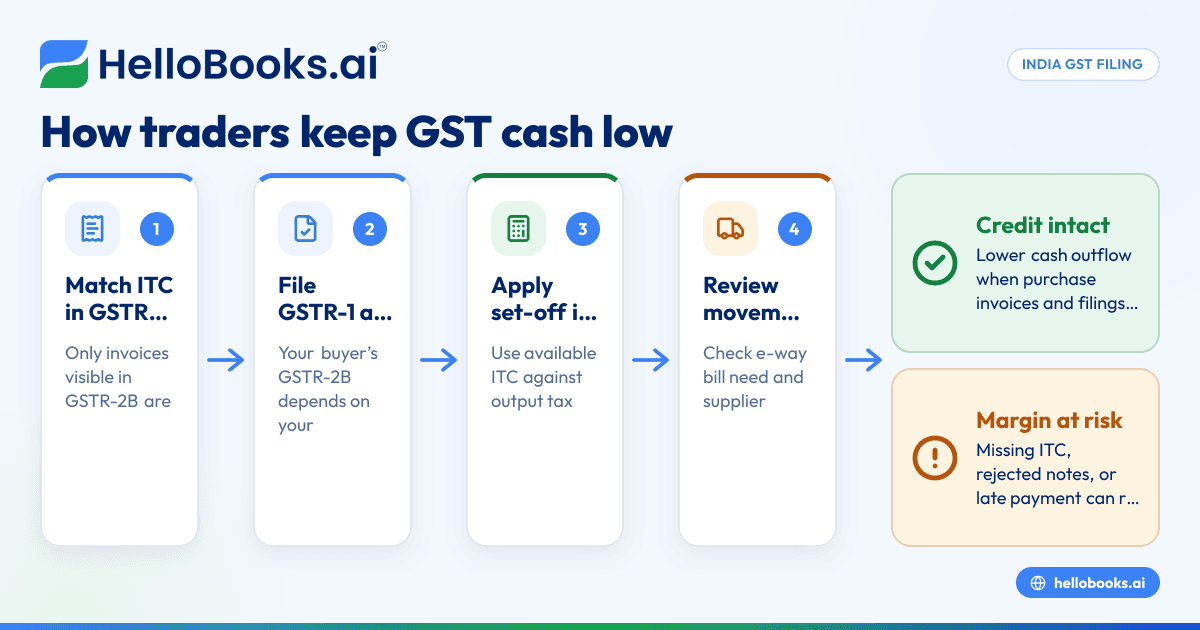
રિટેલમાં ઘણી વાર invoice ગ્રાહક માટે ફક્ત બિલ હોય છે. પરંતુ હોલસેલમાં તમારું invoice બીજા ધંધા માટે ITC નો આધાર બને છે. એટલે તમારા GSTR-1 માં દેખાતી માહિતી સામે ખરીદનાર પોતાનું GSTR-2B જુએ છે. ત્યાં mismatch થયો, તો સંબંધ બગડે છે, માત્ર return નહીં.
ટ્રેડરનું margin ઘણી વાર પાતળું હોય છે—ક્યારેક થોડાં હજાર રૂપિયા પ્રતિ lakh turnover. આવી સ્થિતિમાં ખરીદીની ITC ખોટી બેસે, supplier એ invoice upload ન કર્યું હોય, GSTIN ખોટો હોય, અથવા inter-state sale પર ખોટો tax head લાગ્યો હોય, તો cash outflow વધે છે. કાગળ પર નાનો clerical error, actualમાં working capital નો પ્રશ્ન બની જાય છે.
ગુજરાત, મહારાષ્ટ્ર, રાજસ્થાન કે પંજાબ વચ્ચે માલ હલતો હોય ત્યારે IGST, e-way bill, transporter details, dispatch location અને bill-to/ship-to જેવી બાબતો વધારે મહત્વની થાય છે. ખાસ કરીને hardware, electricals, FMCG distribution, textiles, plastic goods અથવા spare parts જેવા trading business માં stock ઝડપથી ફરે છે; એટલે books, inventory અને GST return અલગ-અલગ જગ્યાએ ચલાવશો તો mismatch વધે છે.
રજિસ્ટ્રેશન, scheme અને inter-state supply બાબતે શું સમજવું
GST registration ક્યારે ફરજિયાત બને છે તે અંગેની હાલની turnover limits, category-wise exceptions અને composition scheme સંબંધિત શરતો CBIC ની notifications અને GST Portal પર પ્રકાશિત થાય છે; કોઈપણ ચોક્કસ આંકડો ઉપયોગમાં લો તે પહેલાં સત્તાવાર source ચેક કરવો જોઈએ. ઘણા વેપારીઓ માટે practical rule આ છે: જો તમે અલગ રાજ્યોમાં supply કરો છો, marketplace અથવા branch structure છે, અથવા B2B ગ્રાહકોને tax invoice આપો છો, તો registration analysis CA સાથે વહેલો કરવો વધુ સલામત રહે છે.
Composition scheme કેટલાક નાના વેપારીઓ માટે સરળ હોઈ શકે, પરંતુ wholesale trade માં ઘણીવાર સમસ્યા એ થાય છે કે ખરીદનારને ITC જોઈએ છે. જો તમારો buyer GST credit લેવા ઇચ્છે છે, તો તે સામાન્ય રીતે એવી supply પસંદ કરે છે જ્યાં regular tax invoice અને proper GST reporting થાય. એટલે scheme પસંદગી માત્ર “ઓછો compliance” સામે “વધુ business acceptance” નો નિર્ણય નથી; તે sales strategy નો પણ ભાગ છે.
Companies Act, 2013 હેઠળ company તરીકે business ચાલે તો MCA filings, audited books અને GST figures વચ્ચે consistency વધુ મહત્વની બને છે. Proprietorship અથવા partnership હોય તોય Income-tax Act, 1961 હેઠળ turnover, purchases, TDS, stock અને expense evidence books સાથે aligned હોવું જરૂરી રહે છે.
invoice માં કયા fields ટ્રેડર માટે ખરેખર critical છે
ટ્રેડર માટે tax invoice એ માત્ર વેચાણનો પુરાવો નથી; તે GST chain નો foundation છે. CBIC ના GST Rules હેઠળ invoice particulars માટેના fields નિયમિત રીતે જોવાના હોય છે, અને હાલની field-level validation GSTN/GST Portal પર live system behaviour તરીકે પણ દેખાય છે.
ખાસ ધ્યાન આપવાના મુદ્દા:
- customer નો સાચો GSTIN
- supply intra-state છે કે inter-state
- place of supply
- item-wise HSN
- taxable value અને tax head split
- e-invoice લાગુ પડે તો IRN અને signed QR
- goods movement હોય તો e-way bill data
inter-state sale માં IGST ક્યાં લાગશે અને local sale માં CGST/SGST ક્યાં લાગશે તે પ્રશ્ન ખૂબ સામાન્ય છે. Bill-to અને ship-to અલગ હોય, drop shipment હોય, branch transfer હોય, અથવા warehouse બીજા રાજ્યમાં હોય ત્યારે error ની શક્યતા વધે છે. આવી જગ્યાએ invoice બનાવતી વખતે system place-of-supply અને tax head split આપમેળે check કરે તો manual ભૂલ ઓછી થાય છે. HelloBooks માં GST invoicing કરતી વખતે આ split invoice level પર દેખાય છે, એટલે Gujarat ની local supply પર CGST/SGST અને બીજા રાજ્યની supply પર IGST ખોટું લાગવાની શક્યતા ઘટે છે.
જો તમારા પર e-invoicing લાગુ પડે, તો applicable turnover criteria અને notified class of taxpayers વિશેનો હાલનો નિયમ CBIC notification અને NIC/GST system documentation માં પ્રકાશિત થાય છે. એવી સ્થિતિમાં invoice save કરતી વેળા IRN અને signed QR generate થવું manual JSON upload કરતાં સરળ બને છે; HelloBooks માં e-invoicing software flow એ કામ invoice entry સાથે જ જોડે છે.
ITC ત્યાં જ બચશે જ્યાં purchase data સાચું અને timely હશે
ટ્રેડરનો GST pain point sales નહીં, purchases હોય છે. supplier એ invoice upload ન કર્યું હોય, amount mismatch હોય, GSTIN mismatch હોય, debit note અલગ રીતે બેઠું હોય, અથવા reverse charge case અજાણતાં ચૂકી જતું હોય—અહીં cash અટકે છે.
GSTR-2A અને GSTR-2B reconciliation એટલા માટે મહત્વના છે કે ITC claim કરતાં પહેલાં તમને સમજાય કે books માં દાખલ purchase bills અને portal પર reflected documents વચ્ચે કયો ફરક છે. હાલની ITC eligibility rules, blocked credit provisions, reversal requirements અને matching position વિશેની સત્તાવાર માહિતી CGST Act, 2017, સંબંધિત Rules અને CBIC circulars માં ઉપલબ્ધ છે; portal view GSTN પર મળે છે.
દુકાનદાર અથવા wholesaler માટે practical workflow આ પ્રકારનો બને છે:
- supplier bill photo અથવા PDF માં આવે
- તે books માં capture થાય
- GSTIN, invoice number, tax amount, HSN ચકાસાય
- month-end પર GSTR-2B સામે match થાય
- missing ITC follow-up માટે supplier list તૈયાર થાય
આમાં OCRથી purchase bill entry કરવી ઉપયોગી બને છે, કારણ કે હાથથી entry કરતા invoice number અથવા tax amount માં error થવાની સંભાવના રહે છે. HelloBooks માં purchase bills photo/PDF પરથી capture કરી શકાય છે અને પછી GSTR-2A/2B reconciliation સાથે ITC tracking જોઈ શકાય છે. એટલે “books માં દાખલ છે” અને “portal પર reflected છે” વચ્ચેનો ફરક દેખાય છે.
કેટલાક trading business માં freight, packing, local loading, commission, TDS deduction, TCS collection અથવા reverse charge જેવી entries પણ આવે છે. Income-tax Act હેઠળ TDS અને GST હેઠળ reverse charge અલગ compliances છે; બંનેનું accounting એક જ ledger disciplineથી કરવું પડે છે. HelloBooks આવી entries ને side spreadsheet વગર books માં જ handle કરી શકે છે, તેથી payable અને tax working અલગ ન પડે.
e-way bill અને goods movement ને invoice થી અલગ ન ચલાવો
જ્યાં માલ actual movement માં હોય, ત્યાં invoice અને transport documents વચ્ચે consistency જરૂરી છે. e-way bill rules, distance conditions, document requirements અને exceptions માટેની હાલની વિગતો CBIC rules અને e-Way Bill system documentation પર પ્રકાશિત થાય છે. ચોક્કસ threshold કે validity number અહીં bare fact તરીકે માનવાને બદલે official portal પર current rule જોવો જોઈએ.
ટ્રેડર માટે આ ખાસ ઉપયોગી છે કારણ કે ઘણીવાર dispatch office, godown, transporter અને buyer location ચારેય અલગ હોય છે. જો invoice એક software માં, e-way bill બીજી site પર અને stock register Excel માં હોય, તો disputes સર્જાય છે:
- invoice date અને movement date mismatch
- quantity mismatch
- vehicle/update oversight
- bill-to/ship-to confusion
HelloBooks માં invoice પરથી e-way bill તૈયાર કરી શકાય છે, એટલે consignment details ફરીથી type કરવાની જરૂર ઓછી પડે છે. ખાસ કરીને Gujaratમાંથી Rajasthan, Maharashtra અથવા Madhya Pradesh માં માલ મોકલતા wholesalers માટે આ duplication ઘટાડે છે.
illustrative અને invented હિસાબ: રાજકોટના electrical wholesaler ને cash કેમ અટકે છે
આ આંકડા સંપૂર્ણ રીતે illustrative અને invented છે; હાલના tax rates, eligibility, set-off logic ના system nuances, exempt supplies, freight treatment, blocked credit, prior-period adjustments અને portal validations બધું અહીં સમાવાયું નથી. ચોક્કસ return filing માટે CA અથવા GST practitioner સાથે current law, CBIC updates અને GST Portal data પરથી જ કામ કરવું.
માનો રાજકોટનો એક electrical wholesaler એક મહિનામાં INR 12 lakh ના taxable goods Gujaratમાં વેચે છે અને INR 8 lakh ના goods Rajasthanમાં વેચે છે. તે જ મહિને તેણે suppliers પાસેથી INR 15 lakh ની purchases કરી, જેમાં કેટલાક local invoices છે અને કેટલાક inter-state. Books મુજબ purchase tax credit સારી દેખાય છે, પણ GSTR-2B માંથી INR 1.2 lakh જેટલી ITC reflected નથી, કારણ કે બે suppliers એ invoices હજુ upload કર્યા નથી.
હવે wholesaler પાસે બે પરિસ્થિતિ ઉભી થાય છે:
- books મુજબ payable ઓછું લાગે છે
- portal reflected credit મુજબ cash માં વધુ tax ભરવું પડે છે
જો એ business નો gross margin માનીએ કે illustrative રીતે INR 1.6 lakh જેટલો છે, તો missing ITC ના કારણે month-end cash strain margin ને દબાવી શકે છે. આ જ કારણ છે કે traders માટે return filing પહેલાં supplier follow-up report એટલી જ જરૂરી છે જેટલી sales summary.
આ પરિસ્થિતિમાં જો bank statement upload કરીને receipts reconcile કરો, તો સમજાય કે કયા invoices actualમાં વસૂલ થયા, કયા outstanding છે, અને કયા purchase bills paid છતાં supplier compliance pending છે. HelloBooks માં bank statement upload કરીને AI reconciliation કરવાથી NEFT, RTGS, IMPS અથવા UPI થી આવેલા receipts ને invoice સામે match કરવું સરળ બને છે. live feed ની જગ્યાએ statement upload આધારિત approach ઘણા Indian business માટે practical છે.
trader માટે books, stock અને GST એક જ system માં કેમ હોવું જોઈએ
Trading business માં stock movement books થી તૂટે એટલે GST issues ઊભા થાય છે. તમે 500 units ખરીદો, 420 વેચો, 30 transit માં હોય અને 50 damaged/returned હોય—તો month-end closing stock, purchase register અને outward supply summary એક જ હકીકત કહેવી જોઈએ. નહીં તો auditor, banker, GST officer કે partner—બધાને જુદા આંકડા મળે.
Inventory management એ માટે compliance tool પણ છે, માત્ર operations tool નહીં. Item masterમાં HSN, unit, tax treatment, opening quantity, reorder logic અને purchase/sales price discipline રાખશો તો return તૈયાર કરવી સરળ બને છે. HelloBooks માં inventory sale અને purchase સાથે જ move થાય છે, એટલે અલગ stock register જાળવવાની મહેનત ઘટે છે.
ઘણા વેપારીઓ હજુ Tally પર વર્ષોનું data રાખે છે. જો તમે migration વિચારો છો, તો બધું એક જ દિવસે બદલી નાખવાની જરૂર નથી. HelloBooks પાસે Tally migration અને connector છે, એટલે business trial mode માં પણ books compare કરી શકે છે. Tally છોડવું કે નહીં તે અલગ પ્રશ્ન છે; પરંતુ GST filing, reconciliation અને reporting માટે current-period data વધુ usable બને છે.
return filing “free” હોય તો પણ કઈ બાબતો તપાસવી જરૂરી છે
જો કોઈ tool અથવા software GSTR-1 અને GSTR-3B filing સરળ બનાવે, તો પણ free filing નો અર્થ zero review નથી. Return submit કરતા પહેલાં ટ્રેડર માટે નીચેના controls મહત્વના છે:
- sales register અને GSTR-1 summary match થાય છે?
- B2B customers ના GSTIN સાચા છે?
- credit notes proper month માં છે?
- 2B માં missing suppliers દેખાય છે?
- tax head split સાચો છે?
- e-invoice લાગુ પડે ત્યાં IRN generated છે?
- stock movement અને outward supply quantity તર્કસંગત છે?
HelloBooks નું GST return filing software invoice data પરથી GSTR-1 અને GSTR-3B તૈયાર કરે છે, એટલે return numbers books થી અલગથી compile કરવાની જરૂર ઓછી પડે છે. જો તમે પહેલા invoice જ systemમાં સાચું બનાવો, તો filing પાછળથી compilation project ન બને.
જે વેપારીઓ invoice volume ઓછું રાખે છે અથવા શરૂઆતમાં હોય છે, તેઓ accounting software India કે accounting software for small business પ્રકારના setup થી શરૂઆત કરી શકે છે. Inventory-heavy business માટે inventory વાંચવું ઉપયોગી છે. જો e-invoice લાગુ પડે તો e-invoicing software, અને goods movement વધારે હોય તો e-way bill software સંબંધિત workflow જોવો જોઈએ. Pricing જાણવા માટે સીધું /in/pricing જુઓ.
ગુજરાતી વેપારી માટે practical checklist
ગુજરાતમાં distributor, trader, stockist, commission-based reseller અથવા wholesale merchant—જે પણ model હોય—આ પાંચ બાબતોથી મોટાભાગનો GST ગોટાળો અટકે છે:
- customer master માં GSTIN અને state code verify કરો; જરૂર પડે તો GSTIN validator જેવી free India tool મદદરૂપ બને.
- item master માં HSN અને tax treatment એકવાર સાફ કરો.
- sales સમયે intra-state સામે inter-state split system પરથી verify કરો.
- purchase bills OCRથી capture કરીને 2B reconciliation દર મહિને કરો.
- bank statement upload કરીને receipts અને payments reconcile કરો.
જો તમારી પાસે એકથી વધુ GSTIN હોય—માનો Gujarat અને Maharashtra—તો અલગ login અથવા અલગ spreadsheet કરતાં single setup વધુ ઉપયોગી બને છે. HelloBooks માં multi-GSTIN handling અને unlimited users હોવાથી owner, accountant અને CA એક જ data base પર કામ કરી શકે છે.
મોબાઇલથી invoice અથવા expense entry કરવી પડે એવા business માટે phone-based usage પણ મહત્વની છે. ખાસ કરીને salesman road પર હોય, godown supervisor dispatch કરે, અને owner office બહાર હોય ત્યારે mobile app કામ આવે છે. કેટલાક વેપારીઓને WhatsApp પર Hinglish અથવા Hindiમાં books વિશે પ્રશ્ન પૂછવાની ટેવ હોય છે; એવી પરિસ્થિતિમાં Noor assistant પણ ઉપયોગી બની શકે છે, પરંતુ core GST accuracy હંમેશાં books અને portal reconciliation પરથી જ નક્કી થાય છે.
અંતિમ વાત એટલી: ભારતમાં GST compliance નો સવાલ “return ભરાઈ ગયું?” એટલો જ નથી. સાચો સવાલ છે—શું તમારા invoices, purchases, ITC, e-way bill, stock, bank receipts અને GST Portal પરનું data એક જ સત્ય બતાવે છે? ટ્રેડર અને હોલસેલર માટે નફો ઘણીવાર એ જ એકીકરણમાં બચી જાય છે.


